
How to Choose an F2 Concentration Analyzer for Accuracy and Safety


Selecting the right F2 concentration analyzer is rarely a simple instrument comparison. For technical evaluators, the decision usually sits at the intersection of measurement performance, hazardous-area safety, process compatibility, maintenance burden, and audit readiness. A unit that looks acceptable on a quotation sheet can become a weak point once it meets real-world conditions: corrosive media, unstable sampling, temperature drift, cross-interference, or stricter documentation demands than expected.
That is why the best selection process starts with the application, not the catalog. Whether the analyzer is intended for industrial fluorine-related gas handling, specialty chemical production, emissions control, or a tightly controlled analytical environment, accuracy and safety must be evaluated together. In practice, separating them creates risk. A highly sensitive analyzer that cannot survive the operating environment is not accurate for long. A rugged analyzer with poor selectivity can be safe to install yet unsafe to rely on.
Start by defining what “accuracy” actually means in your process
When buyers ask for an accurate F2 concentration analyzer, they often mean different things. One site needs low-level leak detection. Another needs tight concentration control in a process stream. A third may need confirmation that residual fluorine has dropped below an internal safety threshold before maintenance access. These are different measurement problems, and they should not be forced into one specification.
Before comparing suppliers, pin down five basic points:
- Expected concentration range, including normal, upset, and shutdown conditions
- Required detection limit or alarm point
- Acceptable response time for control or safety action
- Operating temperature, pressure, humidity, and sample composition
- How the result will be used: indication, trend monitoring, interlock input, or compliance documentation
This sounds obvious, but many selection errors begin here. A concentration analyzer that performs well in a clean, dry stream may behave very differently in a wet, reactive, or mixed-gas application. If fluorine is only one component in a chemically aggressive matrix, selectivity and sample conditioning become just as important as the stated accuracy figure.
Measurement principle matters more than the brochure headline
Not every F2 concentration analyzer is built on the same detection principle, and that difference is often where the real decision lies. Depending on the design, the instrument may rely on electrochemical, optical, spectroscopic, or other specialized analytical methods. Each approach brings trade-offs in sensitivity, interference tolerance, drift behavior, consumable life, calibration frequency, and suitability for continuous duty.
A technical evaluator should resist reducing the comparison to a single line such as “accuracy ±x%.” That number can be misleading without context. Ask instead:
- At what concentration and under what environmental conditions was the accuracy stated?
- What cross-sensitive species are known to affect the reading?
- How quickly does the sensor recover after exposure to high concentrations?
- Does the method require frequent zeroing, span checks, or replacement parts?
- How does the analyzer behave during process transients rather than under stable lab conditions?
For many industrial buyers, the better instrument is not the one with the most impressive headline specification, but the one whose performance is predictable across the full operating envelope.
Safety is not only about hazardous-area certification
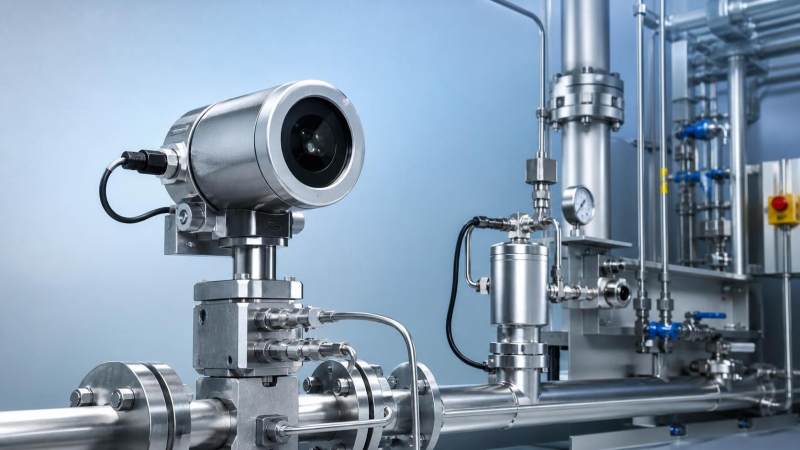
Because fluorine is highly reactive, safety evaluation has to go beyond enclosure ratings and electrical approvals. ATEX or IECEx certification may be essential in many facilities, but it is only one layer. The analyzer’s wetted materials, sealing strategy, sample path design, purge arrangement, and failure behavior can be just as important.
Material compatibility deserves special attention. In fluorine service, poor choices in tubing, valve seats, gaskets, or sample cell materials can shorten instrument life or create a contamination and leak risk. Evaluators should request a clear wetted-parts list and confirm compatibility against the actual gas composition, pressure, moisture content, and cleaning regime. It is unwise to assume that a supplier’s “corrosion-resistant” description is sufficient.
Then look at failure mode. What happens if sample flow is lost, the sensor saturates, the optics foul, or the analyzer drifts out of tolerance? Does it fail high, fail low, freeze the last value, or generate a clear diagnostic? In a safety-related application, ambiguous failure behavior is a procurement risk even if the instrument is otherwise well built.
The sampling system often determines whether the analyzer succeeds
In concentration measurement, the analyzer gets most of the attention, but the sample system usually decides the quality of the result. This is especially true when dealing with reactive gases. Dead legs, adsorption, condensation, pressure swings, or poor flow control can distort readings long before the gas reaches the sensor.
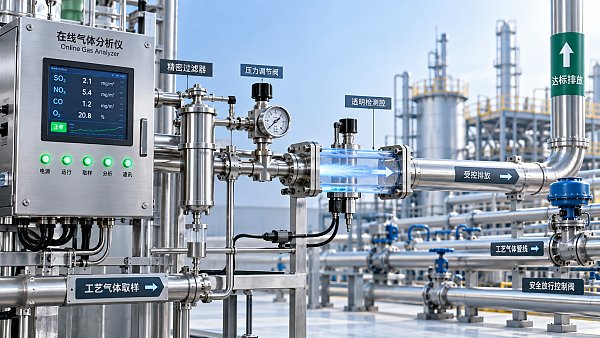
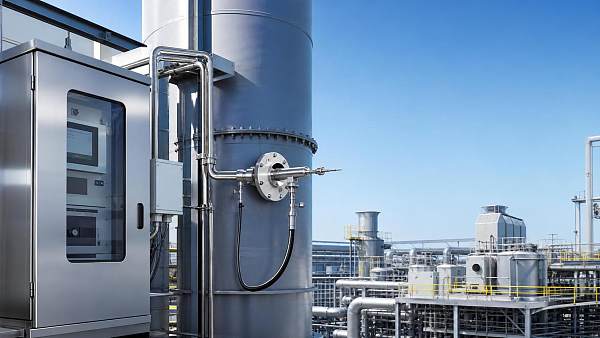
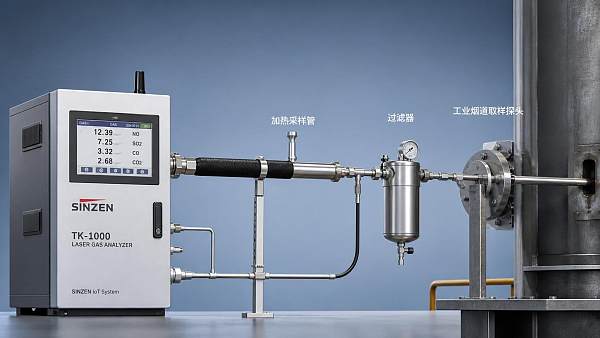
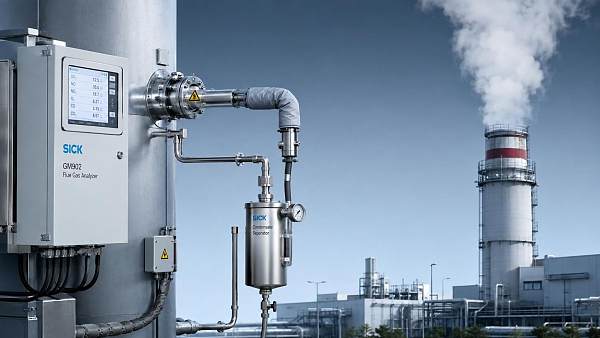
If your process needs an extractive setup, review the full sampling train: probe, filters, pressure reduction, flow regulation, moisture management, bypass design, and vent handling. If it is an in-situ arrangement, then installation geometry, contamination exposure, and service access become critical. In both cases, response time should be evaluated as a system value, not just the analyzer’s internal specification.
This is one area where cross-disciplinary review helps. Teams focused only on analytics may miss maintainability issues. Process engineers may underestimate calibration access. Safety teams may focus on containment but not on sample lag. Good decisions usually come from putting all three perspectives in the same room.
Documentation and validation should be part of selection, not an afterthought
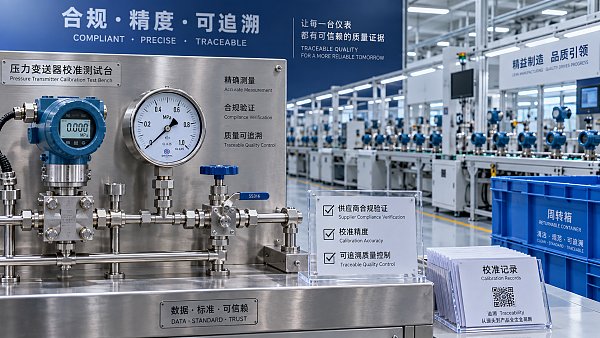
A technically acceptable analyzer can still fail a project if the documentation package is weak. For technical evaluators working across regulated or high-consequence environments, documentation quality is often a reliable proxy for supplier maturity. You may need calibration procedures, material certificates, hazardous-area documentation, traceability details, spare parts lists, maintenance intervals, communication mapping, and factory acceptance test records. Some projects will also require evidence aligned with internal quality systems or external standards.
This is where a market-intelligence view becomes useful. Global Instrument Hub (GIH) has long approached instrumentation sourcing as a decision problem, not a listing problem. In practice, buyers are not only comparing analyzer technologies; they are comparing the confidence level behind supplier claims, service capability, and compliance readiness. That distinction matters more in specialized analyzers than in commodity sensors.
If calibration traceability is important, ask how it is maintained and documented. If the analyzer will feed a control system, confirm signal integrity, alarm logic, and protocol support early. If local rules or site standards impose additional constraints, those should be checked before vendor shortlisting, not after PO release.
A lower-maintenance analyzer is not always the lower-cost choice
Operating cost comparisons often become too simplistic. One model may have fewer consumables but require more frequent validation. Another may offer better stability but depend on specialized service support. A third may be inexpensive to buy yet difficult to integrate into the plant historian or DCS. Over a multi-year period, those differences matter more than a narrow purchase-price comparison.
Ask practical questions that reflect how the analyzer will actually live in the plant:
- How often does calibration interrupt operation?
- Can maintenance be performed safely by site technicians, or is vendor intervention required?
- Are replacement sensors or key components regionally available?
- What diagnostics are available before a reading becomes unreliable?
- How easy is it to verify performance after an upset event?
For multinational procurement teams, service geography and spare-parts resilience can be as important as the analyzer itself. That is especially true when the application is safety-critical and downtime is expensive.
A practical comparison framework
What experienced evaluators usually catch early
There are a few warning signs that deserve attention. One is a proposal that talks at length about analyzer precision but says little about sample handling. Another is a specification sheet that lists certifications without clarifying which exact configuration is covered. A third is vague language around interference, calibration gas requirements, or maintenance intervals.
Experienced teams also check whether the supplier understands the process hazard, not just the instrument. In fluorine-related applications, that distinction is not cosmetic. A vendor that asks about moisture, pressure reduction, cleaning condition, vent routing, and shutdown scenarios is usually taking the application seriously. One that immediately jumps to model selection may not be.
Choose the decision path, not just the device
The strongest F2 concentration analyzer selection is usually the result of disciplined elimination rather than feature accumulation. Start with the safety envelope. Narrow by process compatibility. Then compare measurement principle, sampling design, validation burden, and service practicality. That order helps prevent a familiar mistake: choosing the analytically attractive instrument before checking whether it can be safely and reliably deployed.
If the project still has uncertainty, the next useful step is not another generic quotation request. It is a structured review of operating range, sample composition, hazardous classification, required approvals, maintenance capability, and the exact role the analyzer will play in your control or safety strategy. In complex instrumentation sourcing, that level of definition usually saves more time than it costs.
For teams navigating these decisions across multiple regions and supplier bases, independent technical intelligence can be as valuable as the hardware itself. The point is not to find the most impressive analyzer on paper. It is to choose one that stays trustworthy when the process, the auditors, and the operating environment all start asking hard questions.
Recommended for You
 When does a laser gas analyzer meet stack emissions monitoring needs?Laser gas analyzer for stack emissions: learn when it delivers fast, reliable data, how to assess installation risks, and what to verify for CEMS compliance.
 How to select a hazardous gas analyzer for confined spacesHazardous gas analyzer selection for confined spaces: compare sensors, sampling, certifications, alarms, and maintenance to protect workers and choose with confidence.
 When is a single gas analyzer sufficient for workplace safety monitoring?Discover when a single gas analyzer delivers reliable workplace safety monitoring, and learn the key limits, calibration needs, and risks that require broader detection.
 How to choose an ambient gas analyzer for low-level leak detectionAmbient gas analyzer selection for low-level leak detection: compare sensitivity, cross-sensitivity, sampling design, alarms, and calibration for reliable site performance.
 How to tell when an oxygen sensor needs replacementOxygen sensor replacement signs explained: learn how live data, fault codes, wiring checks, and exhaust inspections pinpoint the real issue before you buy.
 How laser gas analyzers improve combustion control in steel furnacesLaser gas analyzer for steel industry applications delivers fast in-situ O₂ and CO data to optimize furnace combustion, cut fuel waste, and improve steel heating stability.
 How to verify whether explosion proof equipment meets site requirementsExplosion proof equipment verification made practical: match zones, gas or dust groups, temperature classes, certificates, and installation conditions for confident compliance.
 How industrial gas analysis helps detect contamination before releaseIndustrial Gas Analysis helps detect moisture, oil, oxygen, and toxic contaminants before release—protecting processes, ensuring compliance, and reducing costly risks.
 When is electrochemistry detection the right choice for water analysis?Electrochemistry detection for water analysis: learn when fast, reliable monitoring of ions, chlorine, pH, and more delivers actionable results.
 How industrial standards reduce quality risks in supplier selectionIndustrial Standard guidance helps quality and safety managers reduce supplier risks, verify compliance, strengthen traceability, and build resilient instrumentation supply chains.
 When does a multi-component system reduce installation complexity?Multi component systems reduce installation complexity when they eliminate field interfaces, streamline commissioning, and provide proven compatibility. Learn how to assess total cost and supplier accountability.
 How to size an industrial control shelter for outdoor equipmentIndustrial control shelter sizing guide: optimize layout, HVAC, access, safety, and expansion space for reliable outdoor equipment operations.
 How flue analysis helps verify combustion efficiencyFlue analysis verifies combustion efficiency by assessing O2, CO, CO2, and stack temperature to identify excess air, incomplete combustion, and heat losses.
 How to select industrial gas detectors for confined spacesIndustrial gas detectors for confined spaces: learn how to match sensors, sampling methods, alarms, and certifications to real atmospheric hazards.
 When does a laser oxygen analyzer outperform zirconia sensors?Laser oxygen analyzer vs. zirconia sensors: compare speed, selectivity, maintenance, gas chemistry, and installation needs to choose the right oxygen measurement solution.
 How to select a percent range analyzer for process measurementsPercent range analyzer selection made practical: compare accuracy, sample systems, calibration, gas matrix, integration, and lifecycle cost for reliable process measurements.
 How explosion proof analysis verifies safe equipment for hazardous areasExplosion proof analysis verifies hazardous-area equipment by matching certifications, temperature ratings, installation details, and inspection controls for safer compliance.
 When does fixed gas detection need point sensors instead of open-path monitoring?Fixed gas detection: discover when point sensors outperform open-path monitoring for predictable leaks, enclosed zones, local alarms, and safer design decisions.
 How to choose industrial metrology systems for tight-tolerance partsIndustrial metrology guide for tight-tolerance parts: compare CMMs, optical scanners, gauges, uncertainty, workflow, and traceable inspection strategies.
 How process metrology reduces measurement variation in productionProcess metrology reduces production measurement variation by improving traceability, uncertainty control, calibration, and reliable quality decisions.
 How to select an industrial monitoring analyzer for harsh environmentsIndustrial monitoring analyzer selection for harsh environments: evaluate sampling, durability, hazardous-area compliance, accuracy, maintenance, and data reliability.
 How calibration intervals affect test and measurement equipment accuracyTest and measurement equipment calibration intervals directly affect accuracy, risk, compliance, and uptime. Learn how to set evidence-based schedules that protect critical decisions.
 When does process gas monitoring need continuous measurement?Process gas monitoring needs continuous measurement when rapid changes threaten safety, quality, compliance, or uptime. Learn how to specify reliable, actionable monitoring systems.
 How to prevent false alarms in power plant instrumentationPower plant instrumentation guide: prevent false alarms with reliable signal checks, smarter alarm settings, mode-based control, and actionable operator responses.
 How fixed gas detectors help prevent leaks in enclosed workspacesFixed gas detectors provide continuous leak monitoring in enclosed workspaces, enabling faster alarms, safer responses, and stronger protection for people and processes.
 How industrial gas analysis helps detect process contamination earlyIndustrial Gas Analysis helps detect oxygen, moisture, and hydrocarbon contamination early, enabling faster fault isolation, safer operations, and stronger process control.
 What drives environmental compliance continuous monitoring setup cost?Environmental compliance continuous monitoring setup cost: uncover hidden expenses, compare bids accurately, and build a reliable, audit-ready system.
 How to select gas analysis equipment for continuous emissions monitoringGas analysis equipment selection guide for reliable continuous emissions monitoring—compare technologies, sampling, calibration, compliance, and maintenance needs.
 What detection limit is needed for NH3 environmental monitoring?High accuracy NH3 analyzer for environmental monitoring: learn how to set the right detection limit, improve sampling reliability, and make defensible decisions.
 How to select a NOX analyzer for power plant emissions complianceNOX analyzer for power plant emissions: learn how to select a compliant, reliable CEMS solution with the right range, sample handling, calibration, and data integrity.
 How to evaluate a laser gas analyzer manufacturer in GermanyLaser gas analyzer manufacturer in Germany: compare accuracy, sample handling, interference control, calibration, and service to select a reliable solution.
 How does a flue gas analyzer maintain accuracy in wet stack gas?Flue gas analyzer accuracy in wet stack gas depends on heated sampling, moisture correction, reliable sensors, and calibration. Explore key selection tips.


Search Categories
Search Categories
- Smart Meters & Power Quality
- Transformer Gas Analyzers
- BESS Thermal Runaway Detectors
- Energy, Power & Smart Grid Monitoring
- Optical Profilers & CMM
- Ultrasonic & X-Ray NDT
- Calibration Standards
- Precision Metrology & NDT
- Water Quality Analyzers
- CEMS & VOCs Monitors
- Price Trends
- Import & Export Updates
- Market Trends
- Industry News
- Industry Insights
Latest Article
- When does a laser gas analyzer meet stack emissions monitoring needs?Laser gas analyzer for stack emissions: learn when it delivers fast, reliable data, how to assess installation risks, and what to verify for CEMS compliance.Posted by:
- How to select a hazardous gas analyzer for confined spacesHazardous gas analyzer selection for confined spaces: compare sensors, sampling, certifications, alarms, and maintenance to protect workers and choose with confidence.Posted by:
- When is a single gas analyzer sufficient for workplace safety monitoring?Discover when a single gas analyzer delivers reliable workplace safety monitoring, and learn the key limits, calibration needs, and risks that require broader detection.Posted by:
Please give us a message
