
How measurement and control reduces process drift


[Technical Procurement Intelligence Summary]:Process drift rarely appears as a single failure; it emerges through small deviations in pressure, temperature, flow, composition, or calibration that gradually weaken quality, safety, and efficiency.
For technical evaluation, understanding how measurement and control detects, quantifies, and corrects these shifts is essential to selecting reliable instrumentation and automation architectures.
This article examines how sensing, real-time monitoring, closed-loop control, and diagnostics reduce variability and keep processes operating within validated limits.
How measurement and control reduces process drift in real operating scenarios
Process drift means a process slowly moves away from its intended state, even when equipment still appears functional.

The causes vary by site. Sensor aging, valve stiction, fouled heat exchangers, raw material changes, and poor calibration can all contribute.
Effective measurement and control turns these weak signals into actionable evidence before quality, yield, or safety margins deteriorate.
In cross-industry operations, drift affects chemical processing, food production, utilities, pharmaceuticals, laboratories, environmental systems, and energy infrastructure.
The practical question is not whether drift occurs. It is whether measurement and control systems recognize it early enough.
Scenario background: why drift risks differ by process environment
Different processes tolerate drift differently. A cooling loop may absorb small changes, while a sterile bioreactor may not.
Measurement and control must therefore match the risk profile, response speed, and compliance burden of each scenario.
A high-pressure reactor requires fast pressure measurement, redundant safety layers, and robust alarms tied to shutdown logic.
A laboratory analyzer requires traceable calibration, stable environmental conditions, and reliable data integrity across repeated test cycles.
A wastewater system may prioritize online pH, turbidity, conductivity, and flow monitoring to maintain permit compliance.
A power distribution asset depends on thermal monitoring, harmonics analysis, and fault detection to prevent cascading instability.
These differences explain why measurement and control selection should begin with scenario judgment, not device preference.
Scenario one: continuous production where small deviations accumulate
Continuous production lines often expose drift slowly. Flow imbalance, temperature offset, or pressure loss can remain hidden for hours.
In this scenario, measurement and control must provide stable real-time visibility across critical process variables.
Core judgment points include sensor accuracy, sampling frequency, signal stability, and control loop responsiveness.
A flow transmitter with poor repeatability may create false confidence. A slow actuator may correct deviations too late.
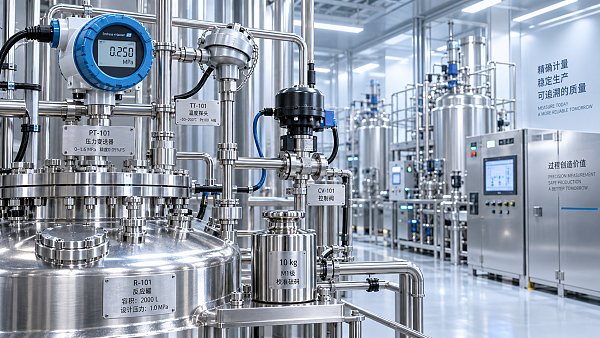
Closed-loop measurement and control compares actual values with setpoints, then adjusts valves, pumps, heaters, or drives automatically.
For continuous plants, trend analysis is especially valuable. A stable average can still conceal widening variability.
The best systems flag drift direction, rate, and root contributors, not only high and low threshold violations.
Scenario two: batch processes where repeatability defines quality
Batch operations depend on repeatability between cycles. Drift may appear as longer heating time, altered mixing behavior, or inconsistent endpoint quality.
Measurement and control supports repeatability by recording each batch profile, including ramp rates, hold times, and final conditions.
This is critical in specialty chemicals, food processing, pharmaceutical preparation, coatings, and advanced materials production.
The key question is whether the system can compare a current batch with a validated golden batch.
If deviations appear early, measurement and control can adjust agitation, dosing, thermal input, or residence time.
Batch drift often comes from raw material variability, sensor offset, manual intervention, or recipe changes without proper validation.
A strong architecture stores time-stamped data, operator actions, alarm history, and calibration status for each production cycle.
Scenario three: safety-critical assets under pressure, heat, or hazardous media
Safety-critical assets cannot depend on delayed inspection. Drift in these environments can quickly become a containment or explosion risk.
Measurement and control must combine reliable sensing, diagnostics, alarm management, and independent protection layers.
Typical examples include reactors, boilers, pipelines, LNG systems, refineries, hydrogen facilities, and high-temperature furnaces.
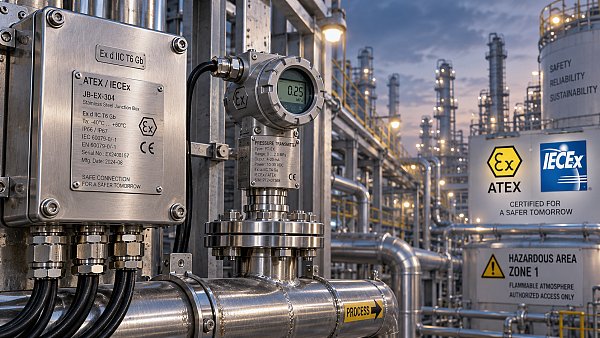
The judgment points are harsher here. Instruments must suit pressure rating, temperature range, corrosion exposure, and hazardous-area certification.
ATEX, IECEx, SIL, and functional safety requirements may shape the final measurement and control architecture.
Redundancy is often necessary. Two-out-of-three voting, independent transmitters, and separate safety controllers reduce single-point failure risk.
In these scenarios, drift reduction is not only about optimization. It directly protects personnel, assets, and environmental boundaries.
Scenario four: environmental and utility systems with compliance exposure
Environmental systems face another form of drift: regulatory nonconformance caused by unnoticed measurement bias or process instability.
Measurement and control is essential for wastewater treatment, emissions monitoring, air quality networks, cooling water, and steam utilities.
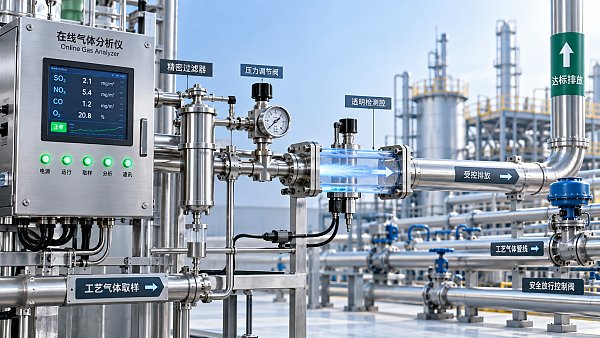
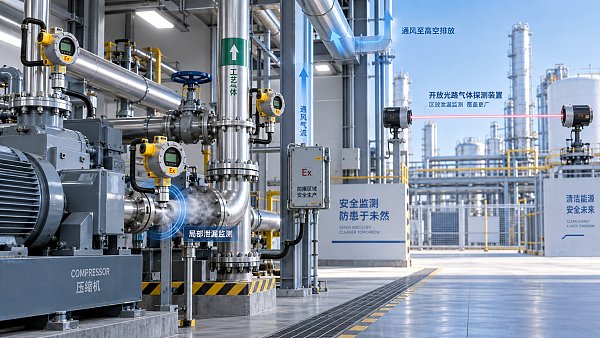
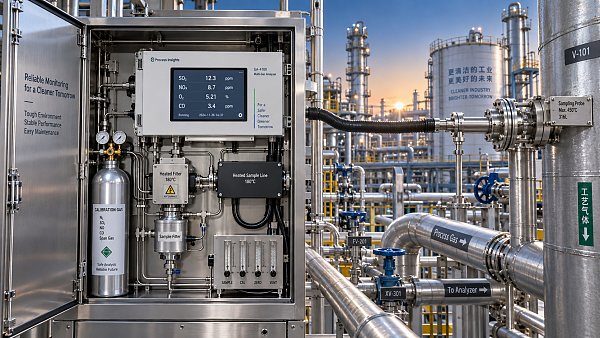
Online analyzers track pH, dissolved oxygen, COD, conductivity, particulate matter, gas concentration, and discharge flow.
The system must distinguish real process movement from analyzer fouling, sample line blockage, or calibration gas degradation.
A strong measurement and control strategy includes automatic validation, maintenance alerts, and cross-checks against laboratory reference data.
For utilities, drift affects energy efficiency. Steam pressure loss or compressed air leakage can quietly increase operating cost.
Early detection helps stabilize service conditions and prevents utility disturbances from spreading into production quality problems.
Different scenarios require different measurement and control priorities
This comparison shows why one universal specification rarely works. Measurement and control should reflect process criticality and drift consequences.
Scenario adaptation: how to build a practical anti-drift strategy
A practical strategy starts by identifying which variables most strongly influence quality, safety, cost, and compliance.
Then measurement and control points should be placed where deviation begins, not only where failure becomes visible.
- Define critical process parameters and acceptable operating limits.
- Select instruments with suitable accuracy, stability, range, and environmental protection.
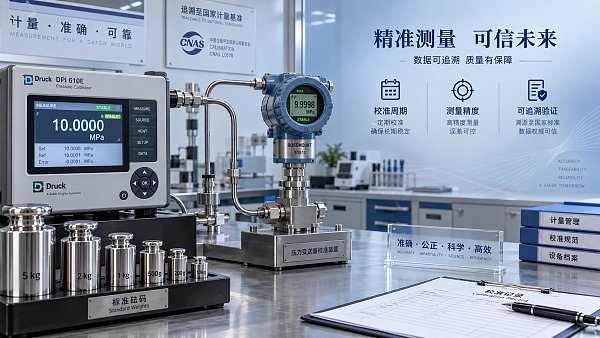
- Use calibration intervals based on risk, history, and instrument drift behavior.
- Apply closed-loop control where manual correction is too slow or inconsistent.
- Review trends, not only alarms, because drift often develops below alarm thresholds.
- Connect maintenance data with process data to reveal hidden equipment causes.
Advanced measurement and control also uses soft sensors, model predictive control, and anomaly detection for complex multivariable processes.
However, digital analytics cannot compensate for poor field measurement. Reliable data remains the foundation.
Common misjudgments that allow process drift to continue
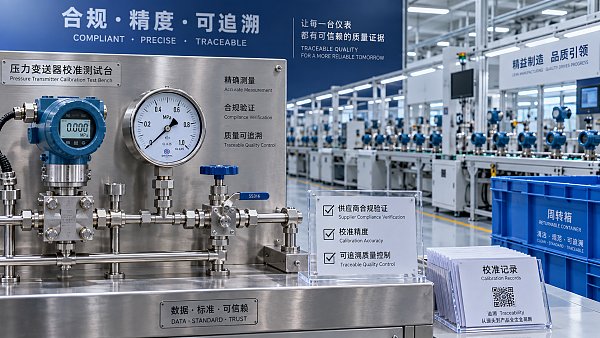
One common mistake is treating calibration as paperwork instead of evidence of measurement confidence.
If calibration records are isolated from operating data, measurement and control teams may miss recurring offset patterns.
Another mistake is over-relying on alarms. Alarms indicate boundary crossing, while drift analysis explains movement toward that boundary.
Poor sensor placement is also frequent. A transmitter installed after a mixing dead zone may understate real variability.
Ignoring actuator health weakens measurement and control performance. Even accurate measurements cannot correct drift through sticking valves.
Data overload creates another risk. Too many signals without context can hide the few variables that matter.
The best approach combines engineering judgment, statistical review, field inspection, and validated automation logic.
Decision framework for selecting measurement and control architecture
Architecture selection should begin with the required confidence level, not only the purchase price of instruments.
For low-risk utilities, standard transmitters and scheduled calibration may be sufficient when trend monitoring is strong.
For validated manufacturing, measurement and control should support audit trails, electronic records, and controlled parameter changes.
For hazardous processes, independent safety functions and certified hardware may be required beyond normal process control.
For laboratory and analytical workflows, traceability to recognized standards, such as ISO/IEC 17025, strengthens data credibility.
The final architecture should balance sensor quality, controller capability, network reliability, cybersecurity, maintenance access, and lifecycle support.
Global Instrument Hub evaluates these factors across instrumentation categories, supplier capabilities, compliance standards, and automation trends.
Action guide: turning drift reduction into measurable improvement
Start with a drift audit. Select one process line, one utility system, or one analytical workflow with measurable variability.
Review historical trends, calibration records, maintenance events, alarms, operator interventions, and quality outcomes together.
Map where measurement and control currently detects deviation, and where the process actually begins to move.
Then prioritize upgrades that reduce uncertainty fastest: better sensing, smarter diagnostics, improved loop tuning, or stronger analyzer validation.
Measure improvement through reduced variance, fewer interventions, lower scrap, better energy performance, and fewer compliance exceptions.
Process drift will never disappear completely, because materials, equipment, and environments always change.
But disciplined measurement and control makes drift visible, explainable, and correctable before it becomes operational loss.
For deeper supplier research, standards interpretation, and instrumentation intelligence, Global Instrument Hub supports evidence-based automation decisions across global industries.
Recommended for You
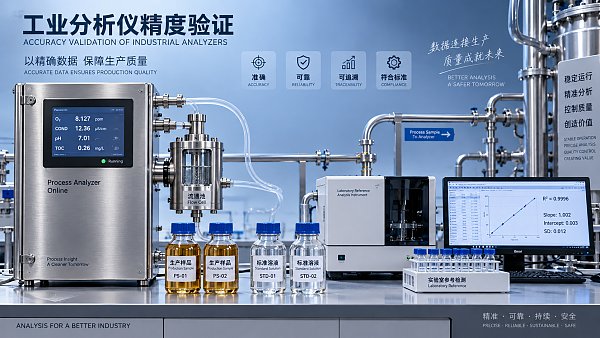
 How to verify accuracy claims for industrial quality analyzersVerify accuracy claims for industrial quality analyzers with calibration checks, independent testing, and clear acceptance criteria. Learn how to reduce risk and buy with confidence.
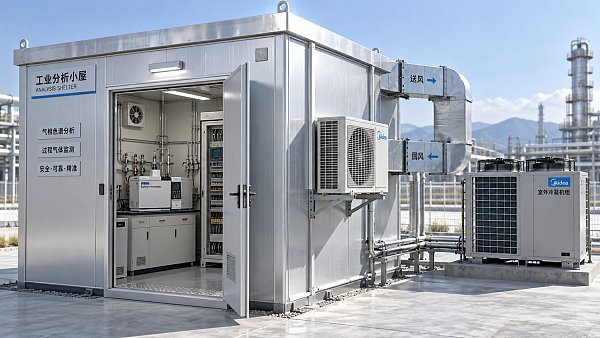
 How to calculate cooling loads for an industrial analyzer shelterSize industrial analyzer shelter cooling with confidence. Learn to calculate equipment heat, solar gains, and ventilation loads, then select HVAC capacity for reliable analyzer performance.
 Industrial Safety vs. Emission Monitoring: What Are the Differences?What are the main differences between industrial safety and emission monitoring? Compare goals, sensors, response times, and compliance needs to choose the right systems for your facility.
 Is Remote Monitoring Worth the Cost for Small Emission Sources?Is it worth investing in remote monitoring for small emission sources? Compare costs, compliance needs, and potential savings to choose the right solution for your operation.
 How Do You Handle Analyzer Failure During an Environmental Audit?Learn how to handle analyzer failure during environmental compliance audit procedures. Protect evidence, verify data, and restore monitoring with this practical response guide.
 Do VOC Monitors Require Explosion-Proof Certification?Does VOC monitoring require explosion-proof certification? Learn when approval is needed, compare ATEX and IECEx, and choose the right monitor for your site.
 How sample conditioning affects accuracy in petrochemical analyzersImprove accuracy in petrochemical analyzers with smarter sample conditioning. Discover how phase control, filtration, and transport design prevent bias and deliver reliable process data.
 How to troubleshoot sensor drift in industrial gas detectorsIndustrial gas detectors showing sensor drift? Learn how to verify calibration gas, identify root causes, and determine when sensor replacement is needed for reliable monitoring.
 How to judge whether a competitive price reflects real valueCompetitive Price: learn how to compare scope, compliance, performance, and lifecycle costs to identify real value, reduce risk, and make smarter purchasing decisions.
 When custom gas analysis is the right fit for complex process streamsCustom gas analysis for complex process streams: learn when tailored sampling, interference control, and reliable measurement design deliver confident decisions.
 When does a laser gas analyzer meet stack emissions monitoring needs?Laser gas analyzer for stack emissions: learn when it delivers fast, reliable data, how to assess installation risks, and what to verify for CEMS compliance.
 How to select a hazardous gas analyzer for confined spacesHazardous gas analyzer selection for confined spaces: compare sensors, sampling, certifications, alarms, and maintenance to protect workers and choose with confidence.
 When is a single gas analyzer sufficient for workplace safety monitoring?Discover when a single gas analyzer delivers reliable workplace safety monitoring, and learn the key limits, calibration needs, and risks that require broader detection.
 How to choose an ambient gas analyzer for low-level leak detectionAmbient gas analyzer selection for low-level leak detection: compare sensitivity, cross-sensitivity, sampling design, alarms, and calibration for reliable site performance.
 How to tell when an oxygen sensor needs replacementOxygen sensor replacement signs explained: learn how live data, fault codes, wiring checks, and exhaust inspections pinpoint the real issue before you buy.
 How laser gas analyzers improve combustion control in steel furnacesLaser gas analyzer for steel industry applications delivers fast in-situ O₂ and CO data to optimize furnace combustion, cut fuel waste, and improve steel heating stability.
 How to verify whether explosion proof equipment meets site requirementsExplosion proof equipment verification made practical: match zones, gas or dust groups, temperature classes, certificates, and installation conditions for confident compliance.
 How industrial gas analysis helps detect contamination before releaseIndustrial Gas Analysis helps detect moisture, oil, oxygen, and toxic contaminants before release—protecting processes, ensuring compliance, and reducing costly risks.
 When is electrochemistry detection the right choice for water analysis?Electrochemistry detection for water analysis: learn when fast, reliable monitoring of ions, chlorine, pH, and more delivers actionable results.
 How industrial standards reduce quality risks in supplier selectionIndustrial Standard guidance helps quality and safety managers reduce supplier risks, verify compliance, strengthen traceability, and build resilient instrumentation supply chains.
 When does a multi-component system reduce installation complexity?Multi component systems reduce installation complexity when they eliminate field interfaces, streamline commissioning, and provide proven compatibility. Learn how to assess total cost and supplier accountability.
 How to size an industrial control shelter for outdoor equipmentIndustrial control shelter sizing guide: optimize layout, HVAC, access, safety, and expansion space for reliable outdoor equipment operations.
 How flue analysis helps verify combustion efficiencyFlue analysis verifies combustion efficiency by assessing O2, CO, CO2, and stack temperature to identify excess air, incomplete combustion, and heat losses.
 How to select industrial gas detectors for confined spacesIndustrial gas detectors for confined spaces: learn how to match sensors, sampling methods, alarms, and certifications to real atmospheric hazards.
 When does a laser oxygen analyzer outperform zirconia sensors?Laser oxygen analyzer vs. zirconia sensors: compare speed, selectivity, maintenance, gas chemistry, and installation needs to choose the right oxygen measurement solution.
 How to select a percent range analyzer for process measurementsPercent range analyzer selection made practical: compare accuracy, sample systems, calibration, gas matrix, integration, and lifecycle cost for reliable process measurements.
 How explosion proof analysis verifies safe equipment for hazardous areasExplosion proof analysis verifies hazardous-area equipment by matching certifications, temperature ratings, installation details, and inspection controls for safer compliance.
 When does fixed gas detection need point sensors instead of open-path monitoring?Fixed gas detection: discover when point sensors outperform open-path monitoring for predictable leaks, enclosed zones, local alarms, and safer design decisions.
 How to choose industrial metrology systems for tight-tolerance partsIndustrial metrology guide for tight-tolerance parts: compare CMMs, optical scanners, gauges, uncertainty, workflow, and traceable inspection strategies.
 How process metrology reduces measurement variation in productionProcess metrology reduces production measurement variation by improving traceability, uncertainty control, calibration, and reliable quality decisions.
 How to select an industrial monitoring analyzer for harsh environmentsIndustrial monitoring analyzer selection for harsh environments: evaluate sampling, durability, hazardous-area compliance, accuracy, maintenance, and data reliability.
 How calibration intervals affect test and measurement equipment accuracyTest and measurement equipment calibration intervals directly affect accuracy, risk, compliance, and uptime. Learn how to set evidence-based schedules that protect critical decisions.


Search Categories
Search Categories
- Smart Meters & Power Quality
- Transformer Gas Analyzers
- BESS Thermal Runaway Detectors
- Energy, Power & Smart Grid Monitoring
- Optical Profilers & CMM
- Ultrasonic & X-Ray NDT
- Calibration Standards
- Precision Metrology & NDT
- Water Quality Analyzers
- CEMS & VOCs Monitors
- Price Trends
- Import & Export Updates
- Market Trends
- Industry News
- Industry Insights
Latest Article
- How to verify accuracy claims for industrial quality analyzersVerify accuracy claims for industrial quality analyzers with calibration checks, independent testing, and clear acceptance criteria. Learn how to reduce risk and buy with confidence.Posted by:
- How to calculate cooling loads for an industrial analyzer shelterSize industrial analyzer shelter cooling with confidence. Learn to calculate equipment heat, solar gains, and ventilation loads, then select HVAC capacity for reliable analyzer performance.Posted by:
- Industrial Safety vs. Emission Monitoring: What Are the Differences?What are the main differences between industrial safety and emission monitoring? Compare goals, sensors, response times, and compliance needs to choose the right systems for your facility.Posted by:
Please give us a message
