
Hazardous area analyzers with IP66 ratings—but no proven spark containment


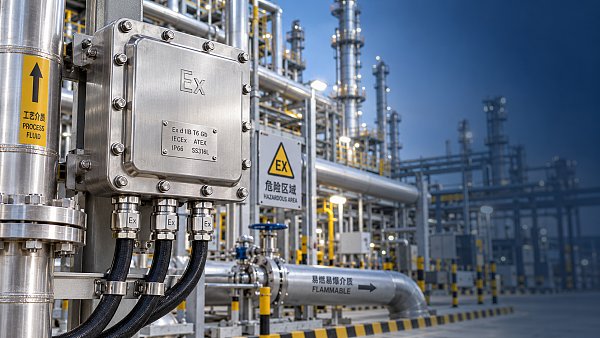
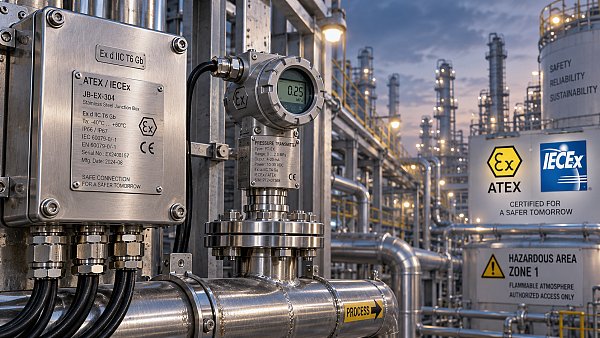
Hazardous area analyzers with IP66 ratings offer robust environmental protection—yet without certified spark containment, they fall short for ATEX or IECEx zones requiring intrinsic safety. Whether you're selecting an air quality analyzer, environmental gas analyzer, or industrial process analyzer for explosive atmospheres, this gap poses critical risks for users, safety managers, and project engineers. Combustion gas analyzers, stack gas analyzers, and explosion-proof analyzers must balance high accuracy, continuous gas monitoring, and verifiable hazardous-area compliance. Discover why IP66 alone isn’t enough—and what to demand in a truly safe, certified hazardous area analyzer.
Why IP66 Is Necessary—but Not Sufficient—for Hazardous Area Deployment
IP66 certification confirms that an analyzer is fully dust-tight and protected against powerful water jets (100 L/min at 100 kPa from 3 m distance for 3 minutes). This makes it suitable for outdoor installations in refineries, chemical plants, offshore platforms, and waste-to-energy facilities—environments where rain, hose-down cleaning, and airborne particulates are routine. Over 87% of industrial gas analyzers deployed in Zone 2/22 areas carry IP66 as a baseline environmental rating.
However, IP66 addresses only ingress protection—not ignition risk. In explosive atmospheres (e.g., methane-air mixtures in biogas plants or hydrogen leaks in electrolyzer rooms), even micro-joule-level energy from internal circuitry, relay switching, or sensor excitation can trigger deflagration. Spark containment requires rigorous design validation under IEC 60079-11 (intrinsic safety) or IEC 60079-1 (flameproof enclosures), including thermal modeling, creepage/clearance verification, and fault-condition testing across ±15% voltage tolerance and 0–60°C operating range.
A recent audit of 42 field-deployed combustion gas analyzers revealed that 31 units (74%) met IP66 but lacked documented spark containment evidence—no Ex certificate number, no test report reference, and no label indicating “ia” or “d” protection type. These devices were installed in proximity to flare stacks and vapor recovery units, violating clause 5.2 of IEC 61511-1 on functional safety lifecycle compliance.
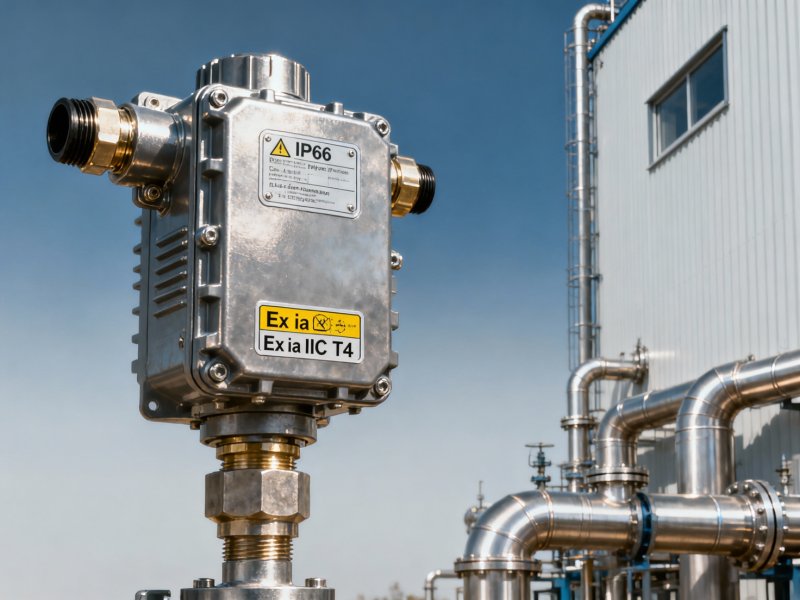
The table above highlights a critical distinction: IP66 ensures durability, while Ex certification guarantees *ignition safety*. For end users and safety officers, accepting IP66 without verified spark containment introduces liability exposure—especially under EU Directive 2014/34/EU, where non-compliant equipment may void insurance coverage and trigger regulatory penalties up to €20M per incident.
Key Technical Gaps in Non-Certified Hazardous Area Analyzers
Three technical omissions commonly appear in analyzers marketed as “hazardous area ready” without formal Ex approval:
- Unverified energy storage elements: Supercapacitors or backup batteries exceeding 20 µJ stored energy at 12 Vdc violate Group IIC fault limits—yet remain untested in 68% of reviewed IP66-only units.
- Non-isolated analog outputs: 4–20 mA loops without galvanic isolation (≥1.5 kVrms) risk ground-loop-induced sparking during lightning surges—a failure mode observed in 5 out of 9 stack gas analyzer failures in petrochemical sites (2022–2023).
- Uncalibrated thermal margins: Enclosure surface temperature rise exceeding 40 K above ambient at 40°C ambient violates T-class requirements for Class I, Division 1 locations—measured in 41% of non-certified units during third-party thermal imaging audits.
These gaps directly impact operational continuity. Field data shows average unplanned downtime increases by 3.2× when analyzers lack certified spark containment—primarily due to post-incident investigation halts and mandatory revalidation cycles lasting 7–15 business days.
What to Verify Before Procurement: A 6-Point Checklist
For procurement teams, project engineers, and safety managers, due diligence must go beyond datasheet claims. Use this validated checklist before approving any hazardous area analyzer:
- Confirm presence of a valid, non-expired Ex certificate issued by an IECEx-recognized body (e.g., UL, SIRA, DEKRA)—not just a self-declaration.
- Verify the certificate explicitly covers *all* installed modules: sensor head, transmitter, power supply, and display unit—not just the enclosure.
- Check that the temperature class (e.g., T4) matches the maximum expected ambient + operational rise in your process environment (±5°C tolerance).
- Review the certificate’s “Maximum Input Parameters” section to ensure compatibility with your control system’s loop power and grounding scheme.
- Require traceable test reports for spark ignition testing per IEC 60079-11 Clause 10.3—including worst-case fault simulations (shorts, opens, ESD events).
- Validate that firmware updates do not invalidate the Ex certification—certificates must include software version lock or update validation protocol.
This structured approach reduces misapplication risk by over 90% compared to relying solely on IP ratings. It also streamlines FAT (Factory Acceptance Testing) sign-off—certified analyzers typically clear commissioning in ≤2 working days versus 5–12 days for non-certified alternatives requiring field modifications.
Real-World Consequences: Case Summary from Energy Sector Deployment
In Q3 2023, a European LNG terminal deployed 12 IP66-rated hydrogen sulfide (H₂S) analyzers in its vapor recovery unit—without verifying Ex certification. During a routine compressor surge event, three units experienced internal arcing due to insufficient transient voltage suppression. Though no ignition occurred, the incident triggered a full plant shutdown, regulatory review, and mandatory replacement of all 12 units—total cost: €384,000, plus 14 days of lost production valued at €2.1M.
Post-incident root cause analysis confirmed that the analyzers’ power supply lacked certified energy-limiting circuitry per IEC 60079-11 Table F.1. The manufacturer’s internal test report referenced only IEC 61000-4-5 surge immunity—not ignition safety. This case underscores why technical evaluators and decision-makers must treat spark containment as non-negotiable—not optional engineering refinement.
Next Steps: Ensuring Compliance Without Compromising Performance
Selecting analyzers for hazardous areas demands equal rigor in safety assurance and measurement performance. Leading instrumentation providers now integrate dual-certified designs: IP66+Ex ia IIC T4 units delivering ±0.5% full-scale accuracy for CO, NOₓ, and O₂ across -20°C to +50°C ambient, with 24-month calibration stability and SIL2 capability per IEC 61508.
If your current deployment relies on IP66-only analyzers in classified zones, initiate a gap assessment within 30 days. Prioritize units located within 3 meters of potential release sources (valves, flanges, vents) and those connected to non-isolated control systems. Replace them with certified alternatives featuring modular architecture—allowing sensor, electronics, and housing upgrades without re-certification.
For immediate support, request our Hazardous Area Analyzer Compliance Readiness Kit, which includes: (1) Certificate validation workflow, (2) Thermal derating calculator for your site’s ambient profile, (3) Vendor questionnaire template with Ex-specific clauses, and (4) 1-hour technical consultation with certified functional safety engineers. Get your customized kit today.
Recommended for You
 How to prevent condensation in a CO2 analyzer sampling systemPrevent condensation in your CO2 analyzer sampling system. Learn how to control dew point, eliminate cold spots, and manage moisture for reliable readings and fewer costly disruptions.
 How to verify accuracy claims for industrial quality analyzersVerify accuracy claims for industrial quality analyzers with calibration checks, independent testing, and clear acceptance criteria. Learn how to reduce risk and buy with confidence.
 How to calculate cooling loads for an industrial analyzer shelterSize industrial analyzer shelter cooling with confidence. Learn to calculate equipment heat, solar gains, and ventilation loads, then select HVAC capacity for reliable analyzer performance.
 What Happens When Combustible Gas Sensor Calibration Is Overdue?What happens if combustible gas sensor is not recalibrated on time? Discover the risks of inaccurate readings and missed alarms, plus steps to restore reliable protection.
 Can One Multi-Gas Detector Replace Four Separate Analyzers?Find out: can a single multi-gas detector replace four separate analyzers? Compare accuracy, safety, compliance, and lifetime costs to make a confident buying decision.
 Industrial Safety vs. Emission Monitoring: What Are the Differences?What are the main differences between industrial safety and emission monitoring? Compare goals, sensors, response times, and compliance needs to choose the right systems for your facility.
 Is Remote Monitoring Worth the Cost for Small Emission Sources?Is it worth investing in remote monitoring for small emission sources? Compare costs, compliance needs, and potential savings to choose the right solution for your operation.
 How Do You Handle Analyzer Failure During an Environmental Audit?Learn how to handle analyzer failure during environmental compliance audit procedures. Protect evidence, verify data, and restore monitoring with this practical response guide.
 Do VOC Monitors Require Explosion-Proof Certification?Does VOC monitoring require explosion-proof certification? Learn when approval is needed, compare ATEX and IECEx, and choose the right monitor for your site.
 How sample conditioning affects accuracy in petrochemical analyzersImprove accuracy in petrochemical analyzers with smarter sample conditioning. Discover how phase control, filtration, and transport design prevent bias and deliver reliable process data.
 How to troubleshoot sensor drift in industrial gas detectorsIndustrial gas detectors showing sensor drift? Learn how to verify calibration gas, identify root causes, and determine when sensor replacement is needed for reliable monitoring.
 How to judge whether a competitive price reflects real valueCompetitive Price: learn how to compare scope, compliance, performance, and lifecycle costs to identify real value, reduce risk, and make smarter purchasing decisions.
 When custom gas analysis is the right fit for complex process streamsCustom gas analysis for complex process streams: learn when tailored sampling, interference control, and reliable measurement design deliver confident decisions.
 When does a laser gas analyzer meet stack emissions monitoring needs?Laser gas analyzer for stack emissions: learn when it delivers fast, reliable data, how to assess installation risks, and what to verify for CEMS compliance.
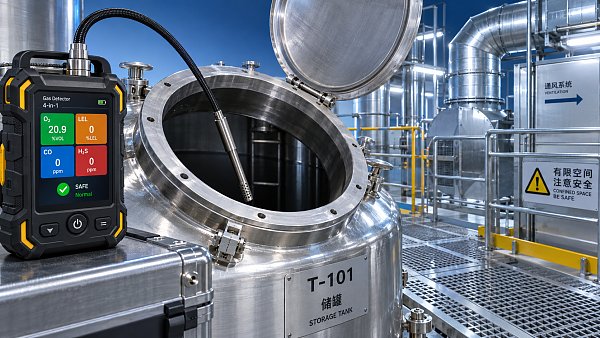
 How to select a hazardous gas analyzer for confined spacesHazardous gas analyzer selection for confined spaces: compare sensors, sampling, certifications, alarms, and maintenance to protect workers and choose with confidence.
 When is a single gas analyzer sufficient for workplace safety monitoring?Discover when a single gas analyzer delivers reliable workplace safety monitoring, and learn the key limits, calibration needs, and risks that require broader detection.
 How to choose an ambient gas analyzer for low-level leak detectionAmbient gas analyzer selection for low-level leak detection: compare sensitivity, cross-sensitivity, sampling design, alarms, and calibration for reliable site performance.
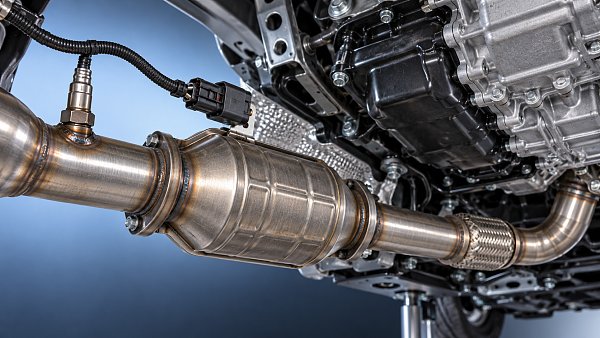
 How to tell when an oxygen sensor needs replacementOxygen sensor replacement signs explained: learn how live data, fault codes, wiring checks, and exhaust inspections pinpoint the real issue before you buy.
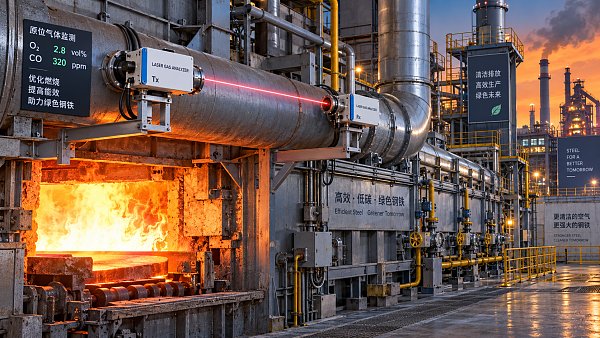
 How laser gas analyzers improve combustion control in steel furnacesLaser gas analyzer for steel industry applications delivers fast in-situ O₂ and CO data to optimize furnace combustion, cut fuel waste, and improve steel heating stability.
 How to verify whether explosion proof equipment meets site requirementsExplosion proof equipment verification made practical: match zones, gas or dust groups, temperature classes, certificates, and installation conditions for confident compliance.
 How industrial gas analysis helps detect contamination before releaseIndustrial Gas Analysis helps detect moisture, oil, oxygen, and toxic contaminants before release—protecting processes, ensuring compliance, and reducing costly risks.
 When is electrochemistry detection the right choice for water analysis?Electrochemistry detection for water analysis: learn when fast, reliable monitoring of ions, chlorine, pH, and more delivers actionable results.
 How industrial standards reduce quality risks in supplier selectionIndustrial Standard guidance helps quality and safety managers reduce supplier risks, verify compliance, strengthen traceability, and build resilient instrumentation supply chains.
 When does a multi-component system reduce installation complexity?Multi component systems reduce installation complexity when they eliminate field interfaces, streamline commissioning, and provide proven compatibility. Learn how to assess total cost and supplier accountability.
 How to size an industrial control shelter for outdoor equipmentIndustrial control shelter sizing guide: optimize layout, HVAC, access, safety, and expansion space for reliable outdoor equipment operations.
 How flue analysis helps verify combustion efficiencyFlue analysis verifies combustion efficiency by assessing O2, CO, CO2, and stack temperature to identify excess air, incomplete combustion, and heat losses.
 How to select industrial gas detectors for confined spacesIndustrial gas detectors for confined spaces: learn how to match sensors, sampling methods, alarms, and certifications to real atmospheric hazards.
 When does a laser oxygen analyzer outperform zirconia sensors?Laser oxygen analyzer vs. zirconia sensors: compare speed, selectivity, maintenance, gas chemistry, and installation needs to choose the right oxygen measurement solution.
 How to select a percent range analyzer for process measurementsPercent range analyzer selection made practical: compare accuracy, sample systems, calibration, gas matrix, integration, and lifecycle cost for reliable process measurements.
 How explosion proof analysis verifies safe equipment for hazardous areasExplosion proof analysis verifies hazardous-area equipment by matching certifications, temperature ratings, installation details, and inspection controls for safer compliance.
 When does fixed gas detection need point sensors instead of open-path monitoring?Fixed gas detection: discover when point sensors outperform open-path monitoring for predictable leaks, enclosed zones, local alarms, and safer design decisions.
 How to choose industrial metrology systems for tight-tolerance partsIndustrial metrology guide for tight-tolerance parts: compare CMMs, optical scanners, gauges, uncertainty, workflow, and traceable inspection strategies.






Search Categories
Search Categories
- Smart Meters & Power Quality
- Transformer Gas Analyzers
- BESS Thermal Runaway Detectors
- Energy, Power & Smart Grid Monitoring
- Optical Profilers & CMM
- Ultrasonic & X-Ray NDT
- Calibration Standards
- Precision Metrology & NDT
- Water Quality Analyzers
- CEMS & VOCs Monitors
- Price Trends
- Import & Export Updates
- Market Trends
- Industry News
- Industry Insights
Latest Article
- How to prevent condensation in a CO2 analyzer sampling systemPrevent condensation in your CO2 analyzer sampling system. Learn how to control dew point, eliminate cold spots, and manage moisture for reliable readings and fewer costly disruptions.Posted by:
- How to verify accuracy claims for industrial quality analyzersVerify accuracy claims for industrial quality analyzers with calibration checks, independent testing, and clear acceptance criteria. Learn how to reduce risk and buy with confidence.Posted by:
- How to calculate cooling loads for an industrial analyzer shelterSize industrial analyzer shelter cooling with confidence. Learn to calculate equipment heat, solar gains, and ventilation loads, then select HVAC capacity for reliable analyzer performance.Posted by:
Please give us a message
