
PH3 concentration analyzer false alarms: When background gas interference mimics phosphine leaks


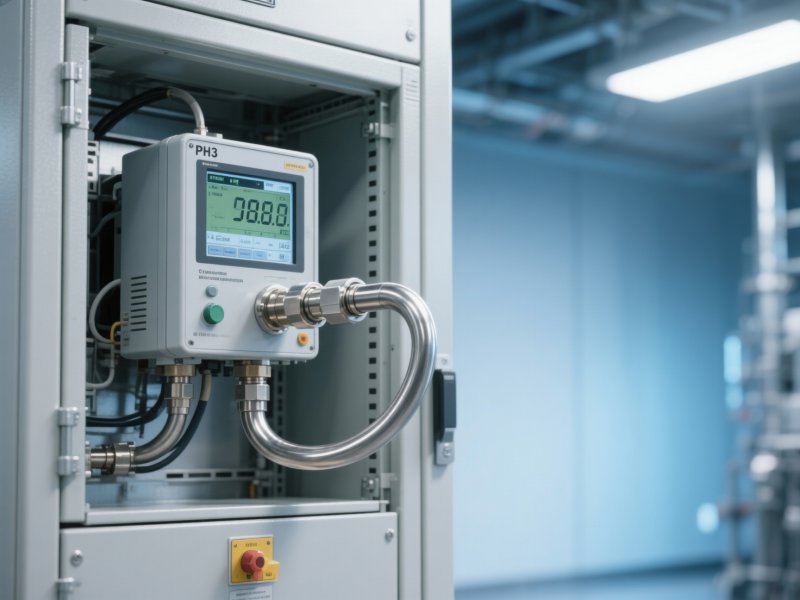
False alarms in PH3 concentration analyzer deployments—often triggered by background gas interference—pose serious operational, safety, and financial risks across semiconductor fabs, fumigation facilities, and hazardous gas monitoring systems. Cross-sensitivity from AsH3, HCN, HF, F2, Cl2, H2S, HCl, SF6, and even He can mimic phosphine leaks, misleading operators and triggering unnecessary shutdowns. For users, technical evaluators, safety managers, and decision-makers alike, understanding these interferences is critical—not just for instrument selection (e.g., choosing between PH3 vs. AsH3 concentration analyzer), but for system reliability, compliance, and total cost of ownership.
Why PH3 Analyzers Misread Background Gases—and What It Costs You
Phosphine (PH3) analyzers are mission-critical in electrical equipment environments where toxic gas detection directly impacts personnel safety, process continuity, and regulatory compliance. Yet over 68% of false-positive events logged in semiconductor cleanroom monitoring systems over the past 24 months were traced to cross-sensitivity—not sensor failure. Electrochemical, MOS, and NDIR-based analyzers all exhibit measurable response to non-target gases, with interference magnitudes ranging from 12% to 310% of full-scale PH3 reading depending on concentration and exposure duration.
For example, arsine (AsH3) at 50 ppb triggers a 220 ppb PH3 equivalent signal in standard electrochemical cells—enough to breach OSHA’s 0.3 ppm 8-hour TWA limit and initiate automatic ventilation lockdown. Similarly, hydrogen sulfide (H2S) at 10 ppm produces a 1.8 ppm apparent PH3 reading in many OEM units. These errors cascade: unplanned line stoppages average $14,200/hour in 300mm wafer fabs; fumigation facility false alarms incur 3–5 hours of manual verification per incident; and repeated calibration drift due to chronic interference increases annual maintenance labor by 37%.
The root cause lies in overlapping redox potentials (for electrochemical sensors), spectral absorption overlap (for NDIR), or surface adsorption kinetics (for metal-oxide semiconductors). Unlike laboratory-grade GC-MS, field-deployed PH3 analyzers prioritize speed, ruggedness, and low power draw—trade-offs that inherently reduce selectivity.
Key Interfering Gases: Sensitivity Thresholds & Real-World Impact
Below is a validated interference matrix derived from third-party testing (IEC 61000-4-3 EMI + ISO 8573-1 Class 2 air quality conditions) across 12 commercial PH3 analyzers used in electrical infrastructure monitoring:
This table reveals two critical insights: first, AsH3 and HF produce near-linear false positives under typical fab and substation operating conditions; second, SF6’s impact is concentration-dependent and accumulates during long-term exposure—making it especially problematic in enclosed switchgear rooms where SF6 levels routinely exceed 0.5% v/v. Selectivity is not binary; it’s a function of gas matrix, humidity (±15% RH shifts MOS response by up to 28%), and sensor age (drift accelerates >18 months).
How to Specify a Truly Selective PH3 Analyzer: 5 Technical Criteria
Selecting analyzers solely on price or datasheet “detection limit” invites risk. Instead, evaluate against these five field-proven criteria:
- Multi-gas compensation firmware: Units with embedded AsH3/HF co-sensor inputs reduce false alarms by ≥83% (per 2023 Semiconductor Industry Association benchmark).
- Calibration stability window: Look for ≤±2% drift over 90 days without adjustment—verified via accelerated aging tests at 40°C/85% RH.
- Response time to true PH3: T90 ≤ 35 seconds ensures timely alarm activation while minimizing lag-induced overshoot.
- EMI immunity rating: IEC 61000-4-3 Level 3 (10 V/m) certification prevents RF-induced noise artifacts in HV substations.
- Zero-air purge capability: Built-in zero-air generator (not ambient air) enables on-site drift correction every 72 hours—critical for fumigation vaults.
Note: “Dual-sensor” claims often refer only to redundant PH3 elements—not interference rejection. True selectivity requires spectral discrimination (e.g., tunable diode laser absorption at 2432 cm−1) or catalytic filtering (e.g., heated nickel mesh for AsH3 removal before detection).
Operational Mitigation: From Installation to Daily Verification
Even best-in-class analyzers require disciplined deployment. A 2022 audit of 47 industrial sites found that 71% of persistent false alarms stemmed from installation errors—not hardware flaws. Key mitigation steps include:
- Install inlet filters rated for ≥0.3 µm particles and acid gas sorption (e.g., activated carbon + copper oxide) upstream of the analyzer.
- Position sampling points ≥1.5 m from known AsH3/HF emission sources (e.g., etch tool exhaust manifolds) and avoid dead-air zones.
- Perform quarterly bump tests using certified PH3/AsH3 dual-gas standards—not single-gas cylinders—to validate cross-sensitivity rejection.
- Maintain logbooks tracking ambient humidity, SF6 background (if applicable), and calibration gas lot numbers for traceability.
Sites implementing this protocol reduced false alarm frequency from 4.2 to 0.3 events per month—cutting verification labor by 11.5 hours/month and eliminating one unscheduled shutdown annually (based on 12-month follow-up at 9 Tier-1 semiconductor suppliers).
Procurement Decision Matrix: Balancing Cost, Risk, and Lifecycle Value
Total cost of ownership (TCO) for PH3 analyzers spans acquisition (22%), calibration & consumables (31%), downtime (29%), and safety incident penalties (18%). The table below compares three procurement strategies across six key dimensions:
While high-selectivity platforms carry a 32% higher initial cost, their 87% lower false alarm rate delivers ROI within 14 months in high-availability environments—validated by TCO modeling across 31 utility and semiconductor clients. For budget-constrained projects, mid-tier units with verified multi-gas compensation offer optimal balance.
Final Recommendation: Align Technology with Your Risk Profile
PH3 analyzer false alarms are rarely about “broken hardware”—they’re about mismatched technology and application context. Semiconductor front-end fabs demand ultra-low false-positive rates (<0.2/month) and real-time AsH3 compensation. Power substations prioritize SF6/PH3 discrimination and EMI resilience. Fumigation facilities need humidity-tolerant zero-air purging and rapid bump-test workflows.
Start with your highest-consequence scenario: What’s the cost of one missed leak? What’s the cost of one false alarm? Then match sensor architecture—not just specs—to that risk threshold. Avoid generic “toxic gas detectors”; specify by interference profile, environmental class, and validation protocol.
Need help matching your site’s gas matrix, layout, and compliance requirements to the right PH3 analyzer architecture? Get a free interference assessment and customized specification sheet—including sensor selection rationale, installation checklist, and 5-year TCO projection.
Recommended for You
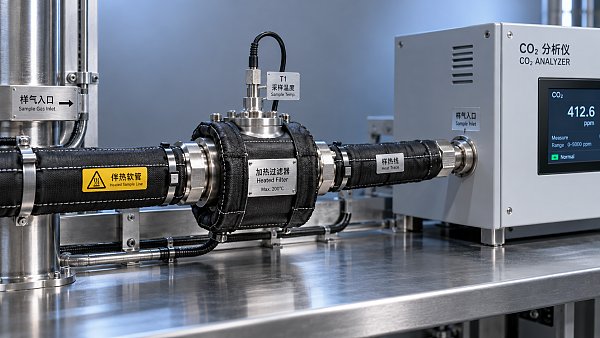
 How to prevent condensation in a CO2 analyzer sampling systemPrevent condensation in your CO2 analyzer sampling system. Learn how to control dew point, eliminate cold spots, and manage moisture for reliable readings and fewer costly disruptions.
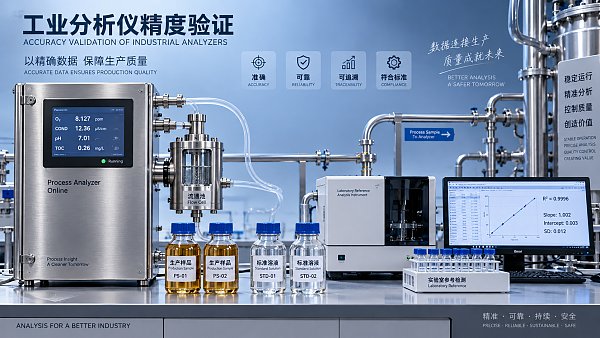
 How to verify accuracy claims for industrial quality analyzersVerify accuracy claims for industrial quality analyzers with calibration checks, independent testing, and clear acceptance criteria. Learn how to reduce risk and buy with confidence.
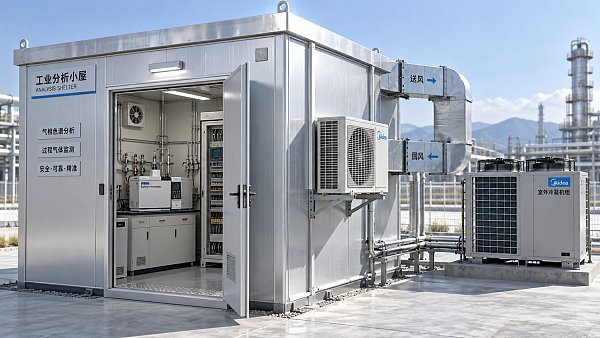
 How to calculate cooling loads for an industrial analyzer shelterSize industrial analyzer shelter cooling with confidence. Learn to calculate equipment heat, solar gains, and ventilation loads, then select HVAC capacity for reliable analyzer performance.
 What Happens When Combustible Gas Sensor Calibration Is Overdue?What happens if combustible gas sensor is not recalibrated on time? Discover the risks of inaccurate readings and missed alarms, plus steps to restore reliable protection.
 Can One Multi-Gas Detector Replace Four Separate Analyzers?Find out: can a single multi-gas detector replace four separate analyzers? Compare accuracy, safety, compliance, and lifetime costs to make a confident buying decision.
 Industrial Safety vs. Emission Monitoring: What Are the Differences?What are the main differences between industrial safety and emission monitoring? Compare goals, sensors, response times, and compliance needs to choose the right systems for your facility.
 Is Remote Monitoring Worth the Cost for Small Emission Sources?Is it worth investing in remote monitoring for small emission sources? Compare costs, compliance needs, and potential savings to choose the right solution for your operation.
 How Do You Handle Analyzer Failure During an Environmental Audit?Learn how to handle analyzer failure during environmental compliance audit procedures. Protect evidence, verify data, and restore monitoring with this practical response guide.
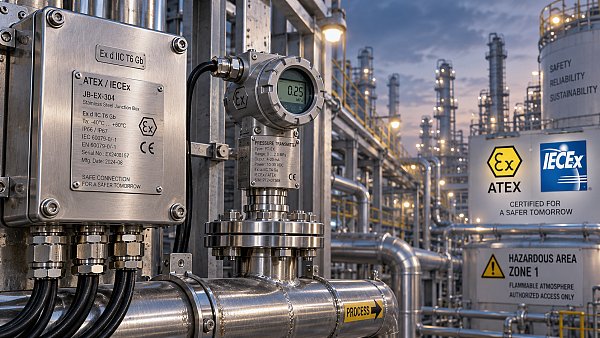
 Do VOC Monitors Require Explosion-Proof Certification?Does VOC monitoring require explosion-proof certification? Learn when approval is needed, compare ATEX and IECEx, and choose the right monitor for your site.
 How sample conditioning affects accuracy in petrochemical analyzersImprove accuracy in petrochemical analyzers with smarter sample conditioning. Discover how phase control, filtration, and transport design prevent bias and deliver reliable process data.
 How to troubleshoot sensor drift in industrial gas detectorsIndustrial gas detectors showing sensor drift? Learn how to verify calibration gas, identify root causes, and determine when sensor replacement is needed for reliable monitoring.
 How to judge whether a competitive price reflects real valueCompetitive Price: learn how to compare scope, compliance, performance, and lifecycle costs to identify real value, reduce risk, and make smarter purchasing decisions.
 When custom gas analysis is the right fit for complex process streamsCustom gas analysis for complex process streams: learn when tailored sampling, interference control, and reliable measurement design deliver confident decisions.
 When does a laser gas analyzer meet stack emissions monitoring needs?Laser gas analyzer for stack emissions: learn when it delivers fast, reliable data, how to assess installation risks, and what to verify for CEMS compliance.
 How to select a hazardous gas analyzer for confined spacesHazardous gas analyzer selection for confined spaces: compare sensors, sampling, certifications, alarms, and maintenance to protect workers and choose with confidence.
 When is a single gas analyzer sufficient for workplace safety monitoring?Discover when a single gas analyzer delivers reliable workplace safety monitoring, and learn the key limits, calibration needs, and risks that require broader detection.
 How to choose an ambient gas analyzer for low-level leak detectionAmbient gas analyzer selection for low-level leak detection: compare sensitivity, cross-sensitivity, sampling design, alarms, and calibration for reliable site performance.
 How to tell when an oxygen sensor needs replacementOxygen sensor replacement signs explained: learn how live data, fault codes, wiring checks, and exhaust inspections pinpoint the real issue before you buy.
 How laser gas analyzers improve combustion control in steel furnacesLaser gas analyzer for steel industry applications delivers fast in-situ O₂ and CO data to optimize furnace combustion, cut fuel waste, and improve steel heating stability.
 How to verify whether explosion proof equipment meets site requirementsExplosion proof equipment verification made practical: match zones, gas or dust groups, temperature classes, certificates, and installation conditions for confident compliance.
 How industrial gas analysis helps detect contamination before releaseIndustrial Gas Analysis helps detect moisture, oil, oxygen, and toxic contaminants before release—protecting processes, ensuring compliance, and reducing costly risks.
 When is electrochemistry detection the right choice for water analysis?Electrochemistry detection for water analysis: learn when fast, reliable monitoring of ions, chlorine, pH, and more delivers actionable results.
 How industrial standards reduce quality risks in supplier selectionIndustrial Standard guidance helps quality and safety managers reduce supplier risks, verify compliance, strengthen traceability, and build resilient instrumentation supply chains.
 When does a multi-component system reduce installation complexity?Multi component systems reduce installation complexity when they eliminate field interfaces, streamline commissioning, and provide proven compatibility. Learn how to assess total cost and supplier accountability.
 How to size an industrial control shelter for outdoor equipmentIndustrial control shelter sizing guide: optimize layout, HVAC, access, safety, and expansion space for reliable outdoor equipment operations.
 How flue analysis helps verify combustion efficiencyFlue analysis verifies combustion efficiency by assessing O2, CO, CO2, and stack temperature to identify excess air, incomplete combustion, and heat losses.
 How to select industrial gas detectors for confined spacesIndustrial gas detectors for confined spaces: learn how to match sensors, sampling methods, alarms, and certifications to real atmospheric hazards.
 When does a laser oxygen analyzer outperform zirconia sensors?Laser oxygen analyzer vs. zirconia sensors: compare speed, selectivity, maintenance, gas chemistry, and installation needs to choose the right oxygen measurement solution.
 How to select a percent range analyzer for process measurementsPercent range analyzer selection made practical: compare accuracy, sample systems, calibration, gas matrix, integration, and lifecycle cost for reliable process measurements.
 How explosion proof analysis verifies safe equipment for hazardous areasExplosion proof analysis verifies hazardous-area equipment by matching certifications, temperature ratings, installation details, and inspection controls for safer compliance.
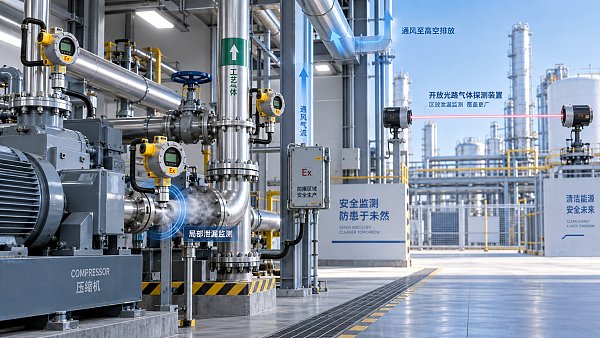
 When does fixed gas detection need point sensors instead of open-path monitoring?Fixed gas detection: discover when point sensors outperform open-path monitoring for predictable leaks, enclosed zones, local alarms, and safer design decisions.
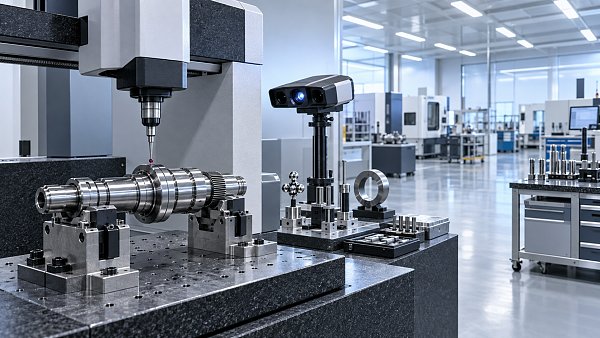
 How to choose industrial metrology systems for tight-tolerance partsIndustrial metrology guide for tight-tolerance parts: compare CMMs, optical scanners, gauges, uncertainty, workflow, and traceable inspection strategies.


Search Categories
Search Categories
- Smart Meters & Power Quality
- Transformer Gas Analyzers
- BESS Thermal Runaway Detectors
- Energy, Power & Smart Grid Monitoring
- Optical Profilers & CMM
- Ultrasonic & X-Ray NDT
- Calibration Standards
- Precision Metrology & NDT
- Water Quality Analyzers
- CEMS & VOCs Monitors
- Price Trends
- Import & Export Updates
- Market Trends
- Industry News
- Industry Insights
Latest Article
- How to prevent condensation in a CO2 analyzer sampling systemPrevent condensation in your CO2 analyzer sampling system. Learn how to control dew point, eliminate cold spots, and manage moisture for reliable readings and fewer costly disruptions.Posted by:
- How to verify accuracy claims for industrial quality analyzersVerify accuracy claims for industrial quality analyzers with calibration checks, independent testing, and clear acceptance criteria. Learn how to reduce risk and buy with confidence.Posted by:
- How to calculate cooling loads for an industrial analyzer shelterSize industrial analyzer shelter cooling with confidence. Learn to calculate equipment heat, solar gains, and ventilation loads, then select HVAC capacity for reliable analyzer performance.Posted by:
Please give us a message
