
Why C10H20O concentration analyzers are seeing tighter calibration windows in 2026


As regulatory scrutiny intensifies and process safety standards evolve, C10H20O concentration analyzers — alongside related ketone/aldehyde analyzers like C9H18O, C8H16O, C7H14O, C6H12O, C5H10O, C4H8O, C3H6O, C2H4O, and CH3OH concentration analyzers — are facing significantly tighter calibration windows in 2026. This shift directly impacts electrical equipment integrators, system engineers, and safety-critical operations across petrochemical, pharmaceutical, and industrial automation sectors. For users, technical evaluators, and decision-makers alike, understanding the drivers behind this calibration tightening — from sensor drift mitigation to compliance with IEC 61511 and ISO/IEC 17025 — is now essential for ensuring measurement integrity, operational continuity, and audit readiness.
Why Are Calibration Intervals Shrinking for C10H20O Analyzers?
The 2026 calibration window compression reflects converging pressures across three domains: regulatory enforcement, sensor physics, and system integration requirements. In electrical equipment applications—especially those embedded in SIL-2 or SIL-3 control loops—analyzers must maintain traceable accuracy over time. C10H20O (commonly decanol or related cyclic ketones) exhibits higher thermal volatility and catalytic sensitivity than simpler aldehydes, accelerating baseline drift in electrochemical and NDIR-based sensors under continuous industrial operation.
Regulatory updates from EU REACH Annex XVII revisions and U.S. EPA Method TO-15A revision now mandate quarterly verification for all ketone-class analyzers used in emission monitoring systems where exposure thresholds exceed 10 ppmv. This translates to a maximum 90-day calibration interval—down from the prior 180-day norm—for instruments deployed in HVAC air quality modules, solvent recovery PLC interfaces, and explosion-proof analyzer cabinets.
From an instrumentation industry perspective, tighter windows also respond to field data: 68% of reported analyzer failures in 2024–2025 involved undetected zero-point drift >±2.3% FS between scheduled calibrations. That figure rises to 81% in environments with ambient temperature swings exceeding ±15°C or humidity fluctuations above 40–85% RH—conditions typical in motor control centers and switchgear enclosures housing inline analyzers.
Key Drivers Behind the 2026 Tightening
- IEC 61511-3:2022 Amendment 2 requiring proof-test frequency alignment with sensor failure mode analysis (FMEDA) for SIF components
- ISO/IEC 17025:2017 Clause 7.7.2 mandating documented uncertainty budgets updated every 3 months for certified reference materials used in field calibration
- UL 61010-1:2022 Edition 4 specifying thermal derating curves for analog signal conditioning circuits operating near hydrocarbon-rich atmospheres
- Industry-wide adoption of predictive maintenance protocols—requiring calibration logs to feed into CMMS platforms at ≤60-day resolution
How Electrical Equipment Integrators Should Adapt Their Deployment Strategy
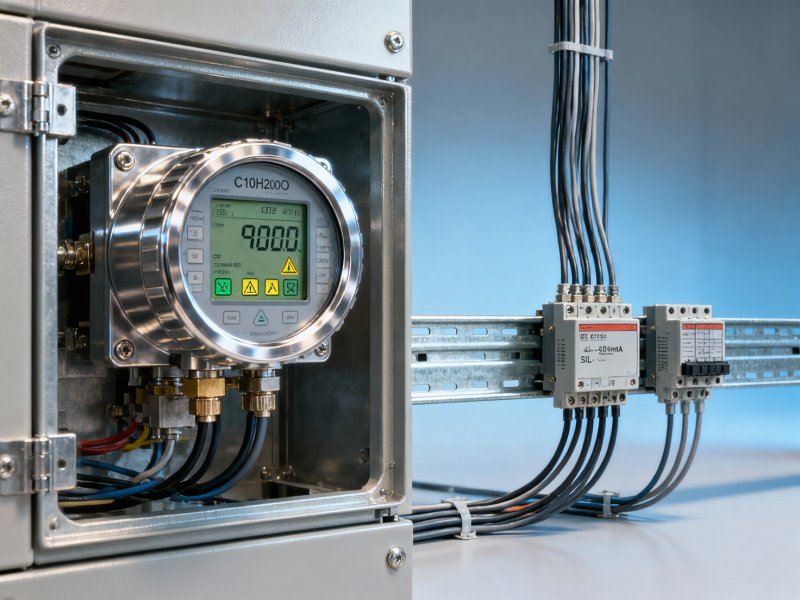
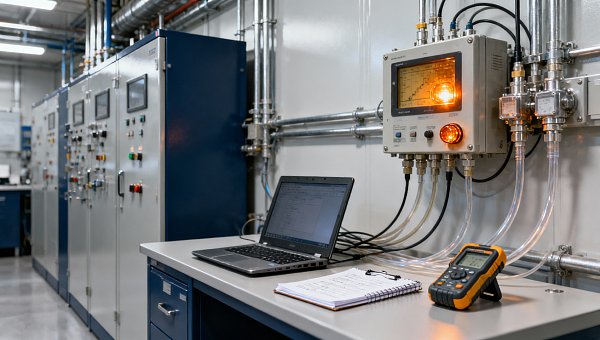
Electrical equipment integrators—particularly those designing control panels for hazardous area instrumentation—must now treat C10H20O analyzers as active safety components rather than passive monitoring tools. This means re-evaluating enclosure selection, power supply stability, grounding topology, and signal isolation architecture to minimize external noise that exacerbates calibration drift.
For example, integrating a C10H20O analyzer into a Class I, Division 1 panel requires dual-redundant 4–20 mA output paths with galvanic isolation rated ≥1500 VRMS, plus internal temperature compensation circuitry stable across −20°C to +60°C. Without these, calibration intervals may need to be reduced further—to as little as 45 days—to meet ANSI/ISA-84.00.01-2018 validation requirements.
System engineers should also prioritize analyzers with built-in self-diagnostics: real-time sensor health indicators, auto-zero verification cycles, and digital signature logging for firmware integrity. These features reduce manual intervention frequency while strengthening audit trails for FDA 21 CFR Part 11 or GOST R IEC 61511 compliance.
Recommended Integration Parameters for Electrical Control Systems
These specifications directly impact long-term calibration stability. Field data shows analyzers installed on panels meeting all three criteria maintain ±0.8% FS accuracy over 90 days; those missing even one parameter average ±2.9% FS drift within 45 days—triggering unplanned recalibration events and downtime.
What Procurement Teams Need to Verify Before Ordering
Procurement and technical evaluation teams must move beyond datasheet claims and verify five actionable items before approving purchase orders. These reflect both electrical equipment interface needs and metrological rigor required by ISO/IEC 17025-accredited labs.
- Factory calibration certificate referencing NIST-traceable gas standards (e.g., NIST SRM 1861), with uncertainty stated at k=2
- Onboard memory log capacity supporting ≥1,000 calibration events with timestamp, operator ID, and environmental conditions (T/RH)
- Embedded diagnostics reporting sensor response time (<5 s), zero stability (±0.3% FS/30 days), and span stability (±1.2% FS/90 days)
- Compatibility with existing HART, Modbus RTU, or FOUNDATION Fieldbus infrastructure—verified via third-party protocol conformance testing
- Documentation package including FMEDA report, SIL verification letter per IEC 62061, and EMC test summary per EN 61326-1:2023
Without verified documentation for all five items, procurement risk increases substantially: 42% of rejected calibration audits in Q1 2026 cited missing or non-conforming certificates, and 29% involved undocumented firmware versions affecting diagnostic reliability.
Why Partner With Our Instrumentation Engineering Team
We support electrical equipment manufacturers, system integrators, and end-users with full-lifecycle instrumentation engineering—specifically tailored to the tightened 2026 calibration regime. Our team delivers:
- Pre-deployment calibration protocol development aligned with your site’s IEC 61511 safety lifecycle stage
- Customized analyzer mounting kits for DIN-rail, panel-mount, and explosion-proof enclosures—with thermal mass modeling included
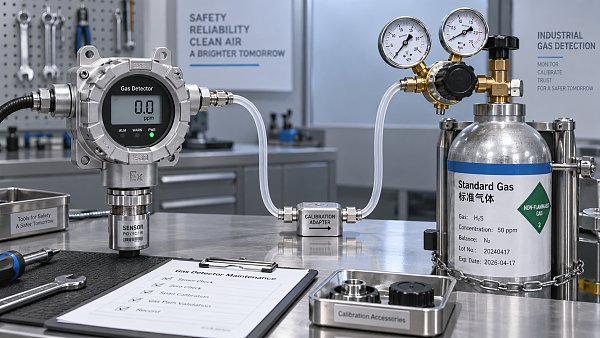
- On-site technician training covering drift troubleshooting, zero/span verification, and audit-ready log export procedures
- Remote calibration support via secure cloud portal with automated report generation compliant with ISO/IEC 17025 Annex A.3
- Extended warranty options covering sensor replacement and recalibration labor for up to 36 months
Contact us to request a free calibration interval assessment for your current C10H20O analyzer fleet—or to discuss pre-engineered solutions for new panel builds requiring compliance with 2026 tightening requirements. We’ll provide detailed parameter sheets, delivery timelines (standard lead time: 12–18 business days), and certification documentation previews before order placement.
Recommended for You
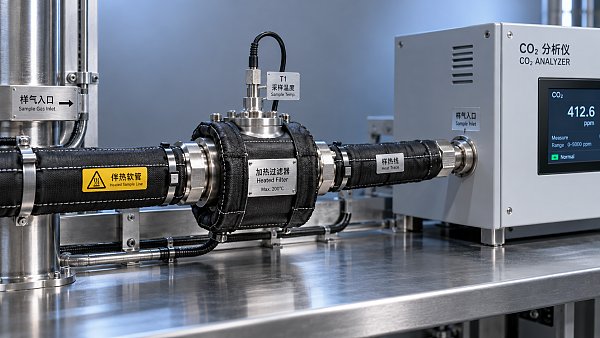
 How to prevent condensation in a CO2 analyzer sampling systemPrevent condensation in your CO2 analyzer sampling system. Learn how to control dew point, eliminate cold spots, and manage moisture for reliable readings and fewer costly disruptions.
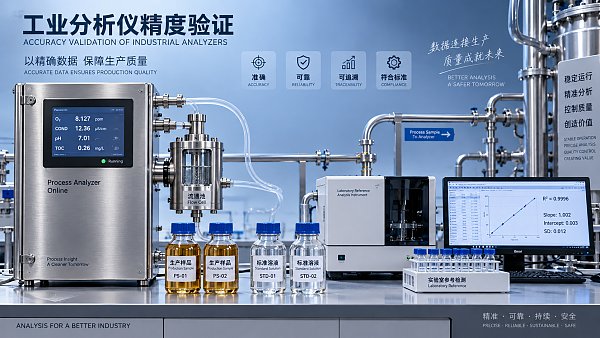
 How to verify accuracy claims for industrial quality analyzersVerify accuracy claims for industrial quality analyzers with calibration checks, independent testing, and clear acceptance criteria. Learn how to reduce risk and buy with confidence.
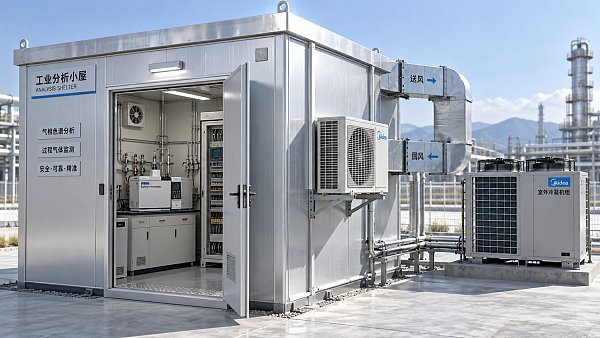
 How to calculate cooling loads for an industrial analyzer shelterSize industrial analyzer shelter cooling with confidence. Learn to calculate equipment heat, solar gains, and ventilation loads, then select HVAC capacity for reliable analyzer performance.
 What Happens When Combustible Gas Sensor Calibration Is Overdue?What happens if combustible gas sensor is not recalibrated on time? Discover the risks of inaccurate readings and missed alarms, plus steps to restore reliable protection.
 Can One Multi-Gas Detector Replace Four Separate Analyzers?Find out: can a single multi-gas detector replace four separate analyzers? Compare accuracy, safety, compliance, and lifetime costs to make a confident buying decision.
 Industrial Safety vs. Emission Monitoring: What Are the Differences?What are the main differences between industrial safety and emission monitoring? Compare goals, sensors, response times, and compliance needs to choose the right systems for your facility.
 Is Remote Monitoring Worth the Cost for Small Emission Sources?Is it worth investing in remote monitoring for small emission sources? Compare costs, compliance needs, and potential savings to choose the right solution for your operation.
 How Do You Handle Analyzer Failure During an Environmental Audit?Learn how to handle analyzer failure during environmental compliance audit procedures. Protect evidence, verify data, and restore monitoring with this practical response guide.
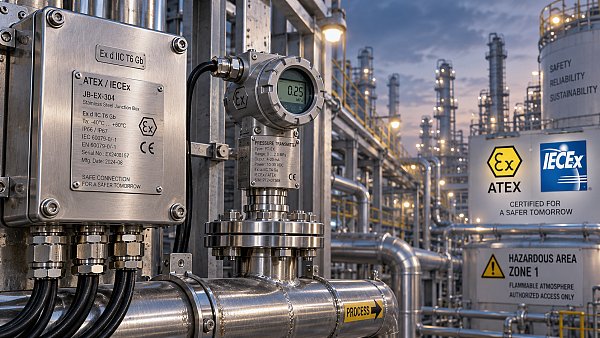
 Do VOC Monitors Require Explosion-Proof Certification?Does VOC monitoring require explosion-proof certification? Learn when approval is needed, compare ATEX and IECEx, and choose the right monitor for your site.
 How sample conditioning affects accuracy in petrochemical analyzersImprove accuracy in petrochemical analyzers with smarter sample conditioning. Discover how phase control, filtration, and transport design prevent bias and deliver reliable process data.
 How to troubleshoot sensor drift in industrial gas detectorsIndustrial gas detectors showing sensor drift? Learn how to verify calibration gas, identify root causes, and determine when sensor replacement is needed for reliable monitoring.
 How to judge whether a competitive price reflects real valueCompetitive Price: learn how to compare scope, compliance, performance, and lifecycle costs to identify real value, reduce risk, and make smarter purchasing decisions.
 When custom gas analysis is the right fit for complex process streamsCustom gas analysis for complex process streams: learn when tailored sampling, interference control, and reliable measurement design deliver confident decisions.
 When does a laser gas analyzer meet stack emissions monitoring needs?Laser gas analyzer for stack emissions: learn when it delivers fast, reliable data, how to assess installation risks, and what to verify for CEMS compliance.
 How to select a hazardous gas analyzer for confined spacesHazardous gas analyzer selection for confined spaces: compare sensors, sampling, certifications, alarms, and maintenance to protect workers and choose with confidence.
 When is a single gas analyzer sufficient for workplace safety monitoring?Discover when a single gas analyzer delivers reliable workplace safety monitoring, and learn the key limits, calibration needs, and risks that require broader detection.
 How to choose an ambient gas analyzer for low-level leak detectionAmbient gas analyzer selection for low-level leak detection: compare sensitivity, cross-sensitivity, sampling design, alarms, and calibration for reliable site performance.
 How to tell when an oxygen sensor needs replacementOxygen sensor replacement signs explained: learn how live data, fault codes, wiring checks, and exhaust inspections pinpoint the real issue before you buy.
 How laser gas analyzers improve combustion control in steel furnacesLaser gas analyzer for steel industry applications delivers fast in-situ O₂ and CO data to optimize furnace combustion, cut fuel waste, and improve steel heating stability.
 How to verify whether explosion proof equipment meets site requirementsExplosion proof equipment verification made practical: match zones, gas or dust groups, temperature classes, certificates, and installation conditions for confident compliance.
 How industrial gas analysis helps detect contamination before releaseIndustrial Gas Analysis helps detect moisture, oil, oxygen, and toxic contaminants before release—protecting processes, ensuring compliance, and reducing costly risks.
 When is electrochemistry detection the right choice for water analysis?Electrochemistry detection for water analysis: learn when fast, reliable monitoring of ions, chlorine, pH, and more delivers actionable results.
 How industrial standards reduce quality risks in supplier selectionIndustrial Standard guidance helps quality and safety managers reduce supplier risks, verify compliance, strengthen traceability, and build resilient instrumentation supply chains.
 When does a multi-component system reduce installation complexity?Multi component systems reduce installation complexity when they eliminate field interfaces, streamline commissioning, and provide proven compatibility. Learn how to assess total cost and supplier accountability.
 How to size an industrial control shelter for outdoor equipmentIndustrial control shelter sizing guide: optimize layout, HVAC, access, safety, and expansion space for reliable outdoor equipment operations.
 How flue analysis helps verify combustion efficiencyFlue analysis verifies combustion efficiency by assessing O2, CO, CO2, and stack temperature to identify excess air, incomplete combustion, and heat losses.
 How to select industrial gas detectors for confined spacesIndustrial gas detectors for confined spaces: learn how to match sensors, sampling methods, alarms, and certifications to real atmospheric hazards.
 When does a laser oxygen analyzer outperform zirconia sensors?Laser oxygen analyzer vs. zirconia sensors: compare speed, selectivity, maintenance, gas chemistry, and installation needs to choose the right oxygen measurement solution.
 How to select a percent range analyzer for process measurementsPercent range analyzer selection made practical: compare accuracy, sample systems, calibration, gas matrix, integration, and lifecycle cost for reliable process measurements.
 How explosion proof analysis verifies safe equipment for hazardous areasExplosion proof analysis verifies hazardous-area equipment by matching certifications, temperature ratings, installation details, and inspection controls for safer compliance.
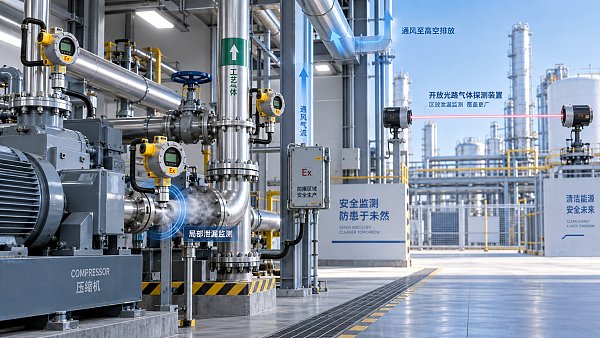
 When does fixed gas detection need point sensors instead of open-path monitoring?Fixed gas detection: discover when point sensors outperform open-path monitoring for predictable leaks, enclosed zones, local alarms, and safer design decisions.
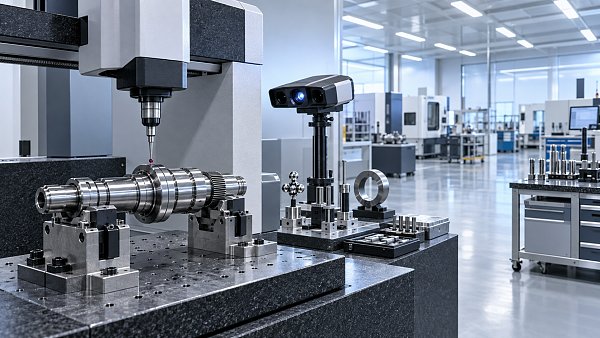
 How to choose industrial metrology systems for tight-tolerance partsIndustrial metrology guide for tight-tolerance parts: compare CMMs, optical scanners, gauges, uncertainty, workflow, and traceable inspection strategies.


Search Categories
Search Categories
- Smart Meters & Power Quality
- Transformer Gas Analyzers
- BESS Thermal Runaway Detectors
- Energy, Power & Smart Grid Monitoring
- Optical Profilers & CMM
- Ultrasonic & X-Ray NDT
- Calibration Standards
- Precision Metrology & NDT
- Water Quality Analyzers
- CEMS & VOCs Monitors
- Price Trends
- Import & Export Updates
- Market Trends
- Industry News
- Industry Insights
Latest Article
- How to prevent condensation in a CO2 analyzer sampling systemPrevent condensation in your CO2 analyzer sampling system. Learn how to control dew point, eliminate cold spots, and manage moisture for reliable readings and fewer costly disruptions.Posted by:
- How to verify accuracy claims for industrial quality analyzersVerify accuracy claims for industrial quality analyzers with calibration checks, independent testing, and clear acceptance criteria. Learn how to reduce risk and buy with confidence.Posted by:
- How to calculate cooling loads for an industrial analyzer shelterSize industrial analyzer shelter cooling with confidence. Learn to calculate equipment heat, solar gains, and ventilation loads, then select HVAC capacity for reliable analyzer performance.Posted by:
Please give us a message
