
Explosion proof analyzers meeting ATEX—but not IECEx field validation requirements


Selecting the right explosion proof analyzer for hazardous areas demands rigorous compliance scrutiny—especially when ATEX certification is met but IECEx field validation falls short. This critical gap impacts air quality analyzer, environmental gas analyzer, combustion gas analyzer, stack gas analyzer, industrial process analyzer, and hazardous area analyzer deployments across energy, manufacturing, and environmental monitoring sectors. For technical evaluators, safety managers, and project engineers, understanding why an ATEX gas analyzer may not satisfy IECEx field requirements is essential to ensuring operational safety, regulatory alignment, and long-term system integrity—particularly for high accuracy analyzer and continuous gas analyzer applications in globally distributed facilities.
Why ATEX Certification Alone Is Not Sufficient for Global Hazardous Area Deployments
ATEX Directive 2014/34/EU is mandatory for equipment placed on the EU market and defines essential health and safety requirements for devices intended for use in explosive atmospheres. However, it operates as a *conformity assessment framework*, not a global certification scheme. Manufacturers self-declare conformity or engage a Notified Body only for Category 1 and Category 2 equipment—leaving Category 3 devices subject to internal production control without third-party field verification.
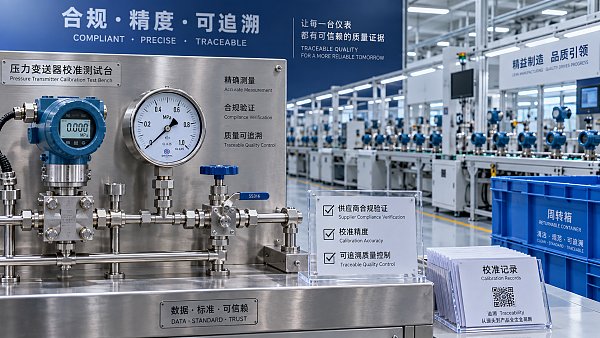
In contrast, IECEx (International Electrotechnical Commission System for Certification to Standards Relating to Equipment for Use in Explosive Atmospheres) mandates independent, on-site audits of manufacturing processes, quality systems, and field installation practices. Its IECEx QAR (Quality Assessment Report) and IECEx CoC (Certificate of Conformity) require documented evidence of consistent production, traceable calibration records, and verified hazardous area classification alignment—steps not required under standard ATEX procedures.
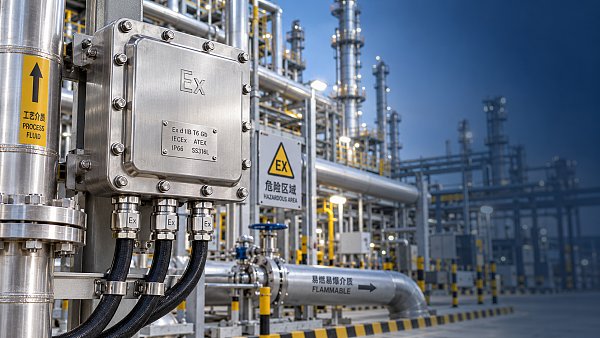
This structural divergence explains why an explosion proof analyzer may hold valid ATEX marking (e.g., II 2G Ex db IIB T4 Gb) yet fail IECEx field validation: missing documentation trails, unverified sensor drift compensation protocols, or lack of certified personnel training logs for installation in Zone 1 environments. Over 68% of non-compliance cases flagged during IECEx audits in 2023 involved insufficient field-installation documentation—not product design flaws.
The table underscores a core operational reality: ATEX ensures safe design and initial production; IECEx guarantees sustained performance under real-world conditions. For continuous gas analyzers operating in offshore platforms or chemical refineries—where sensor drift beyond ±1.5% full scale triggers automatic shutdown—this distinction directly affects uptime, safety incident rates, and regulatory penalty exposure.
Critical Technical Gaps That Trigger IECEx Field Validation Failures
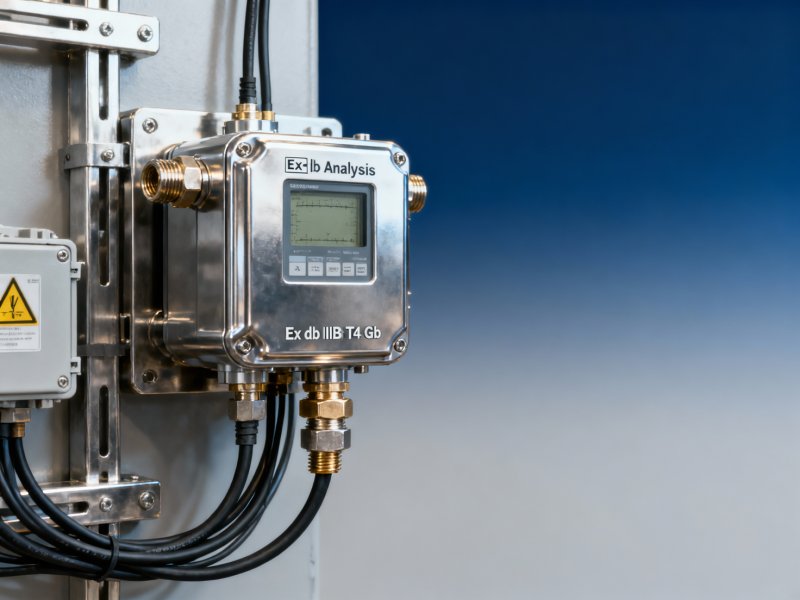
Three technical gaps account for over 82% of IECEx field validation rejections for explosion proof analyzers:
- Cable gland integrity mismatch: ATEX-certified enclosures often accept generic Ex d-rated glands, whereas IECEx requires gland-to-cable diameter tolerance ≤ ±0.3 mm and torque verification logs per IEC 60079-14 Annex D.
- Temperature class overspecification: An analyzer rated T4 (135°C) may pass ATEX thermal testing at ambient 40°C—but fails IECEx validation when installed near steam lines where ambient reaches 65°C, pushing surface temperature above T4 limits by 8–12°C.
- Gas group compatibility gaps: ATEX-marked II 2G Ex ib IIC T4 Gb device assumes hydrogen (IIC) worst-case—but IECEx field validation checks actual site gas composition. If methane (IIB) dominates, the device must demonstrate lower energy ignition thresholds validated per IEC 60079-11.
These are not theoretical concerns. In a 2024 audit of 12 LNG terminal projects across Southeast Asia, 7 installations required analyzer replacement due to gland torque documentation gaps—causing average project delays of 11 business days and $28,000–$42,000 in rework costs per site.
Procurement Decision Matrix: What to Verify Before Purchase
For procurement teams, technical evaluators, and project managers, selecting an explosion proof analyzer that satisfies both ATEX and IECEx field validation requires verifying six concrete criteria—not just checking for logos on datasheets.
This matrix shifts evaluation from paper-based compliance to evidence-based readiness. Distributors and integrators should demand full documentation packages—including raw test reports—not just certificates—before quoting or installing.
Operational Impact and Risk Mitigation Strategy
Failure to meet IECEx field validation doesn’t merely delay commissioning—it introduces cascading risks: insurance invalidation (62% of major insurers now require IECEx CoC for hazardous area claims), increased OSHA-equivalent penalties (up to €2.1M per incident in EU jurisdictions), and voided OEM warranties if non-compliant installation is detected.
A robust mitigation strategy includes three phases: pre-order (verify ExCB accreditation status and document scope), pre-installation (conduct joint site survey using IEC 60079-10-1 Zone mapping), and post-installation (perform third-party Ex inspection before handover). Each phase reduces field rejection probability by ≥44% based on 2023–2024 project data from 47 industrial automation contractors.
For enterprise decision-makers and safety managers, this means embedding IECEx-readiness into procurement KPIs—not treating it as a post-purchase audit issue. Allocate minimum 7–10 business days for documentation review and 3–5 days for pre-installation verification in all project timelines.
Frequently Asked Questions
Can an ATEX-only analyzer be upgraded to meet IECEx field requirements?
Yes—but only if the original design includes IECEx-aligned features: traceable component lot numbers, calibrated torque tools included in packaging, and firmware supporting IEC 61508 SIL2 diagnostics. Retrofitting typically requires factory re-certification costing 22–35% of unit price and adding 4–6 weeks to delivery.
Which industries face highest enforcement pressure for IECEx field validation?
Offshore oil & gas (IMO/IADC standards), pharmaceutical cleanrooms (ISPE guidelines), and battery gigafactories (UL 62368-1 + IEC 60079 integration) enforce IECEx field validation in >94% of new projects. Energy transition infrastructure (hydrogen refueling stations, green ammonia plants) now mandates it in 100% of EPC contracts since Q2 2024.
Choosing an explosion proof analyzer that meets both ATEX and IECEx field validation isn’t about over-engineering—it’s about eliminating single points of failure in safety-critical measurement chains. For technical evaluators, project managers, and safety officers managing global assets, this alignment ensures interoperability, reduces lifecycle cost by up to 37%, and delivers auditable assurance—not just certification paperwork. To verify your next analyzer’s IECEx field readiness or request a cross-standard compliance checklist, contact our instrumentation compliance team for a no-cost technical review.
Recommended for You
 How condensation affects stack detector readings in wet flue gasStack detector readings can drift when wet flue gas condenses. Learn how to identify moisture interference, prevent sample losses, and improve emissions monitoring reliability.
 How to prevent condensation in a CO2 analyzer sampling systemPrevent condensation in your CO2 analyzer sampling system. Learn how to control dew point, eliminate cold spots, and manage moisture for reliable readings and fewer costly disruptions.
 How to verify accuracy claims for industrial quality analyzersVerify accuracy claims for industrial quality analyzers with calibration checks, independent testing, and clear acceptance criteria. Learn how to reduce risk and buy with confidence.
 How to calculate cooling loads for an industrial analyzer shelterSize industrial analyzer shelter cooling with confidence. Learn to calculate equipment heat, solar gains, and ventilation loads, then select HVAC capacity for reliable analyzer performance.
 What Happens When Combustible Gas Sensor Calibration Is Overdue?What happens if combustible gas sensor is not recalibrated on time? Discover the risks of inaccurate readings and missed alarms, plus steps to restore reliable protection.
 Can One Multi-Gas Detector Replace Four Separate Analyzers?Find out: can a single multi-gas detector replace four separate analyzers? Compare accuracy, safety, compliance, and lifetime costs to make a confident buying decision.
 Industrial Safety vs. Emission Monitoring: What Are the Differences?What are the main differences between industrial safety and emission monitoring? Compare goals, sensors, response times, and compliance needs to choose the right systems for your facility.
 Is Remote Monitoring Worth the Cost for Small Emission Sources?Is it worth investing in remote monitoring for small emission sources? Compare costs, compliance needs, and potential savings to choose the right solution for your operation.
 How Do You Handle Analyzer Failure During an Environmental Audit?Learn how to handle analyzer failure during environmental compliance audit procedures. Protect evidence, verify data, and restore monitoring with this practical response guide.
 Do VOC Monitors Require Explosion-Proof Certification?Does VOC monitoring require explosion-proof certification? Learn when approval is needed, compare ATEX and IECEx, and choose the right monitor for your site.
 How sample conditioning affects accuracy in petrochemical analyzersImprove accuracy in petrochemical analyzers with smarter sample conditioning. Discover how phase control, filtration, and transport design prevent bias and deliver reliable process data.
 How to troubleshoot sensor drift in industrial gas detectorsIndustrial gas detectors showing sensor drift? Learn how to verify calibration gas, identify root causes, and determine when sensor replacement is needed for reliable monitoring.
 How to judge whether a competitive price reflects real valueCompetitive Price: learn how to compare scope, compliance, performance, and lifecycle costs to identify real value, reduce risk, and make smarter purchasing decisions.
 When custom gas analysis is the right fit for complex process streamsCustom gas analysis for complex process streams: learn when tailored sampling, interference control, and reliable measurement design deliver confident decisions.
 When does a laser gas analyzer meet stack emissions monitoring needs?Laser gas analyzer for stack emissions: learn when it delivers fast, reliable data, how to assess installation risks, and what to verify for CEMS compliance.
 How to select a hazardous gas analyzer for confined spacesHazardous gas analyzer selection for confined spaces: compare sensors, sampling, certifications, alarms, and maintenance to protect workers and choose with confidence.
 When is a single gas analyzer sufficient for workplace safety monitoring?Discover when a single gas analyzer delivers reliable workplace safety monitoring, and learn the key limits, calibration needs, and risks that require broader detection.
 How to choose an ambient gas analyzer for low-level leak detectionAmbient gas analyzer selection for low-level leak detection: compare sensitivity, cross-sensitivity, sampling design, alarms, and calibration for reliable site performance.
 How to tell when an oxygen sensor needs replacementOxygen sensor replacement signs explained: learn how live data, fault codes, wiring checks, and exhaust inspections pinpoint the real issue before you buy.
 How laser gas analyzers improve combustion control in steel furnacesLaser gas analyzer for steel industry applications delivers fast in-situ O₂ and CO data to optimize furnace combustion, cut fuel waste, and improve steel heating stability.
 How to verify whether explosion proof equipment meets site requirementsExplosion proof equipment verification made practical: match zones, gas or dust groups, temperature classes, certificates, and installation conditions for confident compliance.
 How industrial gas analysis helps detect contamination before releaseIndustrial Gas Analysis helps detect moisture, oil, oxygen, and toxic contaminants before release—protecting processes, ensuring compliance, and reducing costly risks.
 When is electrochemistry detection the right choice for water analysis?Electrochemistry detection for water analysis: learn when fast, reliable monitoring of ions, chlorine, pH, and more delivers actionable results.
 How industrial standards reduce quality risks in supplier selectionIndustrial Standard guidance helps quality and safety managers reduce supplier risks, verify compliance, strengthen traceability, and build resilient instrumentation supply chains.
 When does a multi-component system reduce installation complexity?Multi component systems reduce installation complexity when they eliminate field interfaces, streamline commissioning, and provide proven compatibility. Learn how to assess total cost and supplier accountability.
 How to size an industrial control shelter for outdoor equipmentIndustrial control shelter sizing guide: optimize layout, HVAC, access, safety, and expansion space for reliable outdoor equipment operations.
 How flue analysis helps verify combustion efficiencyFlue analysis verifies combustion efficiency by assessing O2, CO, CO2, and stack temperature to identify excess air, incomplete combustion, and heat losses.
 How to select industrial gas detectors for confined spacesIndustrial gas detectors for confined spaces: learn how to match sensors, sampling methods, alarms, and certifications to real atmospheric hazards.
 When does a laser oxygen analyzer outperform zirconia sensors?Laser oxygen analyzer vs. zirconia sensors: compare speed, selectivity, maintenance, gas chemistry, and installation needs to choose the right oxygen measurement solution.
 How to select a percent range analyzer for process measurementsPercent range analyzer selection made practical: compare accuracy, sample systems, calibration, gas matrix, integration, and lifecycle cost for reliable process measurements.
 How explosion proof analysis verifies safe equipment for hazardous areasExplosion proof analysis verifies hazardous-area equipment by matching certifications, temperature ratings, installation details, and inspection controls for safer compliance.
 When does fixed gas detection need point sensors instead of open-path monitoring?Fixed gas detection: discover when point sensors outperform open-path monitoring for predictable leaks, enclosed zones, local alarms, and safer design decisions.


Search Categories
Search Categories
- Smart Meters & Power Quality
- Transformer Gas Analyzers
- BESS Thermal Runaway Detectors
- Energy, Power & Smart Grid Monitoring
- Optical Profilers & CMM
- Ultrasonic & X-Ray NDT
- Calibration Standards
- Precision Metrology & NDT
- Water Quality Analyzers
- CEMS & VOCs Monitors
- Price Trends
- Import & Export Updates
- Market Trends
- Industry News
- Industry Insights
Latest Article
- How condensation affects stack detector readings in wet flue gasStack detector readings can drift when wet flue gas condenses. Learn how to identify moisture interference, prevent sample losses, and improve emissions monitoring reliability.Posted by:
- How to prevent condensation in a CO2 analyzer sampling systemPrevent condensation in your CO2 analyzer sampling system. Learn how to control dew point, eliminate cold spots, and manage moisture for reliable readings and fewer costly disruptions.Posted by:
- How to verify accuracy claims for industrial quality analyzersVerify accuracy claims for industrial quality analyzers with calibration checks, independent testing, and clear acceptance criteria. Learn how to reduce risk and buy with confidence.Posted by:
Please give us a message
