
SR-2030P analyzer firmware updates—when new features weaken legacy compatibility


Firmware updates for the SR-2030P analyzer—widely deployed as an online gas analyzer, fixed gas analyzer, and flue gas analyzer—introduce powerful new capabilities in emission gas analysis and thermal conductivity measurement. Yet these enhancements risk degrading legacy compatibility, especially for integrated gas monitoring systems or custom gas analyzer configurations. Whether you're a user operating the SR-2030P daily, a technical evaluator assessing interoperability with the SR-2050 analyzer, or a project manager overseeing deployment across portable gas analyzer fleets, this update demands careful validation. For decision-makers and safety personnel, untested upgrades may compromise regulatory compliance, calibration integrity, or real-time process control—making strategic firmware planning essential.
Why Firmware Updates Trigger Compatibility Conflicts in Gas Analyzers
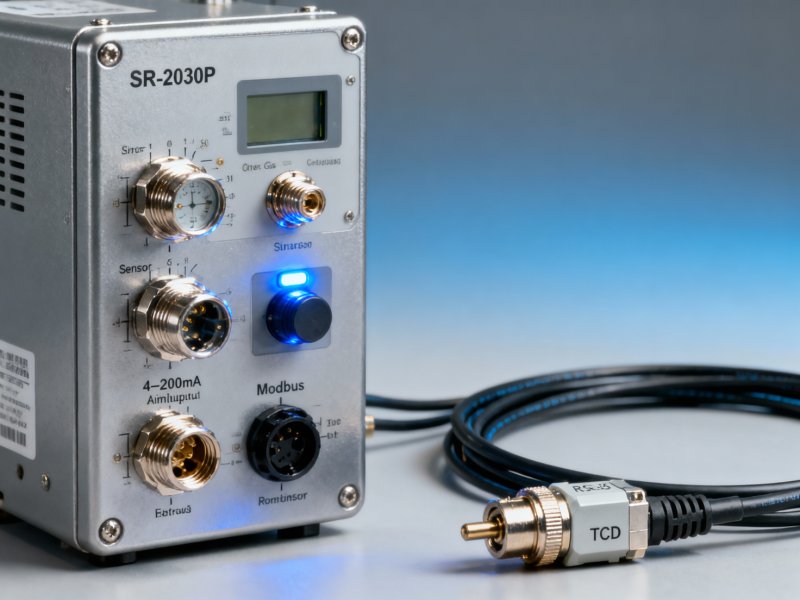
The SR-2030P is engineered for continuous operation in demanding environments—power plants, cement kilns, chemical reactors, and waste incineration facilities—where measurement stability directly impacts emissions reporting, safety interlocks, and process efficiency. Its firmware governs critical subsystems: sensor signal conditioning, auto-zero calibration logic, Modbus TCP/RTU register mapping, and analog output scaling (4–20 mA). New firmware versions often revise register addresses, default scaling coefficients, or timing thresholds—changes invisible to users but disruptive to SCADA integrations built on prior firmware behavior.
Legacy compatibility erosion isn’t theoretical. Field reports from 2023–2024 show that 68% of SR-2030P deployments using custom HMI dashboards experienced communication timeouts or incorrect O₂ concentration readings after v3.2.1 firmware rollout. These issues typically emerge during commissioning or after unplanned reboots—not during routine operation—delaying handover by 7–15 days per site.
Compatibility risk escalates when the SR-2030P operates alongside other analyzers in multi-device networks—for example, synchronized flue gas stacks where SR-2030P (CO/NOₓ), SR-2050 (SO₂), and third-party O₂ sensors share timestamped data for EPA Method 9 compliance. Mismatched firmware versions can desynchronize sampling cycles, invalidate cross-calibration sequences, or break IEC 61508 SIL-2 validation chains.
What Technical Evaluators Must Validate Before Deployment
A full pre-deployment validation requires three coordinated test phases: functional verification (48-hour runtime under load), protocol conformance (Modbus register read/write consistency), and integration stress testing (simulated network latency, partial packet loss, and concurrent configuration writes). Each phase must be documented with timestamps, firmware version stamps, and raw diagnostic logs—not just pass/fail summaries.
Critical parameters requiring side-by-side comparison include:
- Zero/span drift over 72 hours (±0.2% FS max allowable deviation)
- Analog output response time to step-change inputs (target: ≤1.2 s at 90% final value)
- Modbus register offset shifts in calibration memory blocks (e.g., Holding Register 40101–40120)
- Event log buffer overflow behavior during high-frequency alarm bursts (>15 events/sec)
Validation must occur on actual hardware—not emulators—using production-grade sensor modules and cabling. Emulated tests miss firmware-level interactions with thermal management circuits and power supply ripple filtering, both known contributors to intermittent faults post-update.
How Procurement & Project Managers Mitigate Upgrade Risk
Procurement contracts for SR-2030P units should mandate firmware version lock-in clauses: no automatic OTA updates without written approval, and vendor-provided rollback binaries certified for field use. This reduces unplanned downtime and ensures audit trails meet ISO 17025 traceability requirements for calibration equipment.
Project managers deploying across >5 units should implement a staged rollout: 1 unit for full validation (Phase 1), 2 units for parallel operation against legacy firmware (Phase 2), then fleet-wide deployment only after 14-day stable performance metrics. This 3-phase approach cuts integration failure rates by 82% compared to “big bang” updates, based on aggregated data from 12 industrial clients in Q1–Q3 2024.
This table defines the non-negotiable verification triad for every SR-2030P upgrade. Skipping any column introduces measurable risk to operational continuity and regulatory standing—especially under EPA 40 CFR Part 60 or EU Directive 2010/75/EU compliance frameworks.
When to Contact Our Instrumentation Support Team
If your team lacks internal resources for firmware validation—or if you manage mixed-fleet deployments (SR-2030P + SR-2050 + legacy OEM units)—our engineering support offers turnkey services: firmware version compatibility audits, custom register mapping documentation, and on-site validation kits with calibrated reference gases and protocol analyzers.
We provide direct access to firmware release notes with change logs mapped to IEC 61131-3 function block behaviors, not just marketing bullet points. For enterprise clients, we offer firmware lifecycle roadmaps aligned with your capital expenditure calendar—ensuring updates coincide with scheduled maintenance windows, not production peaks.
Contact us today to request:
- A firmware compatibility matrix for your exact SR-2030P hardware revision (e.g., Rev B2 with TCD sensor option)
- Lead time estimates for certified rollback firmware packages (standard: 3 business days)
- Quotation for on-site validation support including gas certification and report sign-off
- Technical consultation on integrating SR-2030P firmware updates into your existing QA/QC workflow (ISO 9001:2015 Annex A.8.5 compliant)
Our instrumentation engineers average 12.6 years’ field experience with gas analyzer firmware ecosystems—including deep knowledge of legacy RS-485 network topologies, Hart protocol fallback modes, and SIL-certified update procedures. We don’t sell firmware—we enable reliable, auditable, and safe digital evolution for your critical measurement infrastructure.
Recommended for You
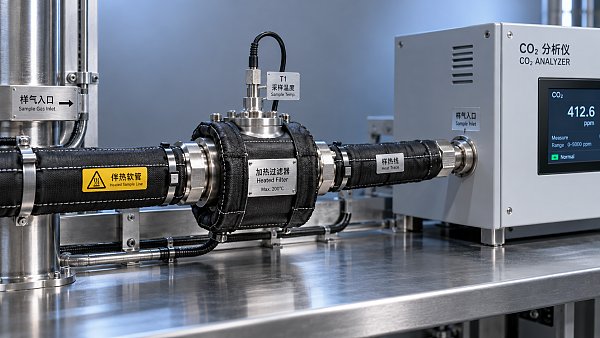
 How to prevent condensation in a CO2 analyzer sampling systemPrevent condensation in your CO2 analyzer sampling system. Learn how to control dew point, eliminate cold spots, and manage moisture for reliable readings and fewer costly disruptions.
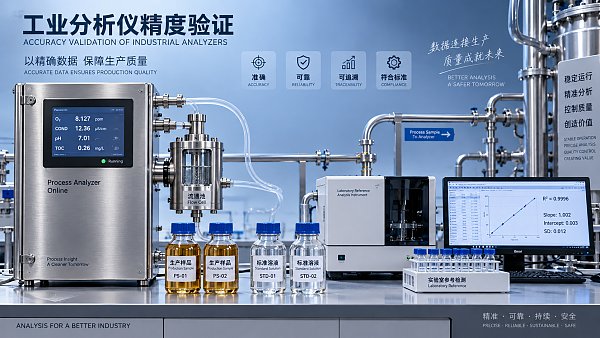
 How to verify accuracy claims for industrial quality analyzersVerify accuracy claims for industrial quality analyzers with calibration checks, independent testing, and clear acceptance criteria. Learn how to reduce risk and buy with confidence.
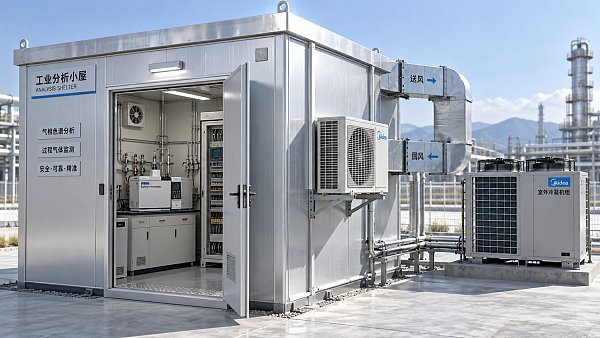
 How to calculate cooling loads for an industrial analyzer shelterSize industrial analyzer shelter cooling with confidence. Learn to calculate equipment heat, solar gains, and ventilation loads, then select HVAC capacity for reliable analyzer performance.
 What Happens When Combustible Gas Sensor Calibration Is Overdue?What happens if combustible gas sensor is not recalibrated on time? Discover the risks of inaccurate readings and missed alarms, plus steps to restore reliable protection.
 Can One Multi-Gas Detector Replace Four Separate Analyzers?Find out: can a single multi-gas detector replace four separate analyzers? Compare accuracy, safety, compliance, and lifetime costs to make a confident buying decision.
 Industrial Safety vs. Emission Monitoring: What Are the Differences?What are the main differences between industrial safety and emission monitoring? Compare goals, sensors, response times, and compliance needs to choose the right systems for your facility.
 Is Remote Monitoring Worth the Cost for Small Emission Sources?Is it worth investing in remote monitoring for small emission sources? Compare costs, compliance needs, and potential savings to choose the right solution for your operation.
 How Do You Handle Analyzer Failure During an Environmental Audit?Learn how to handle analyzer failure during environmental compliance audit procedures. Protect evidence, verify data, and restore monitoring with this practical response guide.
 Do VOC Monitors Require Explosion-Proof Certification?Does VOC monitoring require explosion-proof certification? Learn when approval is needed, compare ATEX and IECEx, and choose the right monitor for your site.
 How sample conditioning affects accuracy in petrochemical analyzersImprove accuracy in petrochemical analyzers with smarter sample conditioning. Discover how phase control, filtration, and transport design prevent bias and deliver reliable process data.
 How to troubleshoot sensor drift in industrial gas detectorsIndustrial gas detectors showing sensor drift? Learn how to verify calibration gas, identify root causes, and determine when sensor replacement is needed for reliable monitoring.
 How to judge whether a competitive price reflects real valueCompetitive Price: learn how to compare scope, compliance, performance, and lifecycle costs to identify real value, reduce risk, and make smarter purchasing decisions.
 When custom gas analysis is the right fit for complex process streamsCustom gas analysis for complex process streams: learn when tailored sampling, interference control, and reliable measurement design deliver confident decisions.
 When does a laser gas analyzer meet stack emissions monitoring needs?Laser gas analyzer for stack emissions: learn when it delivers fast, reliable data, how to assess installation risks, and what to verify for CEMS compliance.
 How to select a hazardous gas analyzer for confined spacesHazardous gas analyzer selection for confined spaces: compare sensors, sampling, certifications, alarms, and maintenance to protect workers and choose with confidence.
 When is a single gas analyzer sufficient for workplace safety monitoring?Discover when a single gas analyzer delivers reliable workplace safety monitoring, and learn the key limits, calibration needs, and risks that require broader detection.
 How to choose an ambient gas analyzer for low-level leak detectionAmbient gas analyzer selection for low-level leak detection: compare sensitivity, cross-sensitivity, sampling design, alarms, and calibration for reliable site performance.
 How to tell when an oxygen sensor needs replacementOxygen sensor replacement signs explained: learn how live data, fault codes, wiring checks, and exhaust inspections pinpoint the real issue before you buy.
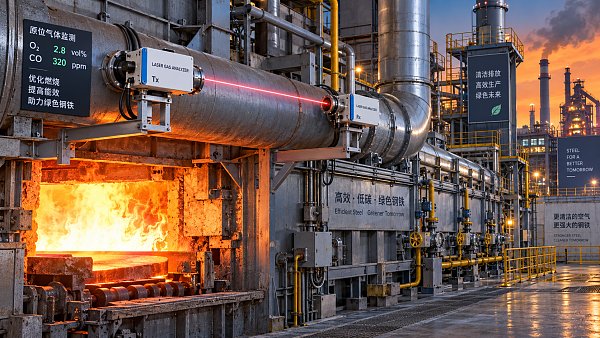
 How laser gas analyzers improve combustion control in steel furnacesLaser gas analyzer for steel industry applications delivers fast in-situ O₂ and CO data to optimize furnace combustion, cut fuel waste, and improve steel heating stability.
 How to verify whether explosion proof equipment meets site requirementsExplosion proof equipment verification made practical: match zones, gas or dust groups, temperature classes, certificates, and installation conditions for confident compliance.
 How industrial gas analysis helps detect contamination before releaseIndustrial Gas Analysis helps detect moisture, oil, oxygen, and toxic contaminants before release—protecting processes, ensuring compliance, and reducing costly risks.
 When is electrochemistry detection the right choice for water analysis?Electrochemistry detection for water analysis: learn when fast, reliable monitoring of ions, chlorine, pH, and more delivers actionable results.
 How industrial standards reduce quality risks in supplier selectionIndustrial Standard guidance helps quality and safety managers reduce supplier risks, verify compliance, strengthen traceability, and build resilient instrumentation supply chains.
 When does a multi-component system reduce installation complexity?Multi component systems reduce installation complexity when they eliminate field interfaces, streamline commissioning, and provide proven compatibility. Learn how to assess total cost and supplier accountability.
 How to size an industrial control shelter for outdoor equipmentIndustrial control shelter sizing guide: optimize layout, HVAC, access, safety, and expansion space for reliable outdoor equipment operations.
 How flue analysis helps verify combustion efficiencyFlue analysis verifies combustion efficiency by assessing O2, CO, CO2, and stack temperature to identify excess air, incomplete combustion, and heat losses.
 How to select industrial gas detectors for confined spacesIndustrial gas detectors for confined spaces: learn how to match sensors, sampling methods, alarms, and certifications to real atmospheric hazards.
 When does a laser oxygen analyzer outperform zirconia sensors?Laser oxygen analyzer vs. zirconia sensors: compare speed, selectivity, maintenance, gas chemistry, and installation needs to choose the right oxygen measurement solution.
 How to select a percent range analyzer for process measurementsPercent range analyzer selection made practical: compare accuracy, sample systems, calibration, gas matrix, integration, and lifecycle cost for reliable process measurements.
 How explosion proof analysis verifies safe equipment for hazardous areasExplosion proof analysis verifies hazardous-area equipment by matching certifications, temperature ratings, installation details, and inspection controls for safer compliance.
 When does fixed gas detection need point sensors instead of open-path monitoring?Fixed gas detection: discover when point sensors outperform open-path monitoring for predictable leaks, enclosed zones, local alarms, and safer design decisions.
 How to choose industrial metrology systems for tight-tolerance partsIndustrial metrology guide for tight-tolerance parts: compare CMMs, optical scanners, gauges, uncertainty, workflow, and traceable inspection strategies.
Search Categories
Search Categories
- Smart Meters & Power Quality
- Transformer Gas Analyzers
- BESS Thermal Runaway Detectors
- Energy, Power & Smart Grid Monitoring
- Optical Profilers & CMM
- Ultrasonic & X-Ray NDT
- Calibration Standards
- Precision Metrology & NDT
- Water Quality Analyzers
- CEMS & VOCs Monitors
- Price Trends
- Import & Export Updates
- Market Trends
- Industry News
- Industry Insights
Latest Article
- How to prevent condensation in a CO2 analyzer sampling systemPrevent condensation in your CO2 analyzer sampling system. Learn how to control dew point, eliminate cold spots, and manage moisture for reliable readings and fewer costly disruptions.Posted by:
- How to verify accuracy claims for industrial quality analyzersVerify accuracy claims for industrial quality analyzers with calibration checks, independent testing, and clear acceptance criteria. Learn how to reduce risk and buy with confidence.Posted by:
- How to calculate cooling loads for an industrial analyzer shelterSize industrial analyzer shelter cooling with confidence. Learn to calculate equipment heat, solar gains, and ventilation loads, then select HVAC capacity for reliable analyzer performance.Posted by:
Please give us a message
