
Why SF6 Concentration Analyzer Demand Is Changing


Demand for the SF6 concentration analyzer is changing because buyers are no longer evaluating these instruments as single-purpose safety tools. Today, they are being selected as part of broader compliance, reliability, digital monitoring, and cost-control strategies. In power systems, manufacturing, and environmental applications, users want faster detection, easier maintenance, better data integration, and clearer return on investment. At the same time, many teams are comparing the SF6 concentration analyzer with related solutions such as the H2S concentration analyzer, HCl concentration analyzer, O2 concentration analyzer, and NOX concentration analyzer to build more complete gas monitoring programs.
For operators, engineers, purchasers, and decision-makers, the key question is not simply whether SF6 still matters. It does. The real question is why purchasing criteria are shifting, which application requirements now matter most, and how to choose an analyzer that fits technical, regulatory, and business needs without overspending.
Why demand for the SF6 concentration analyzer is changing
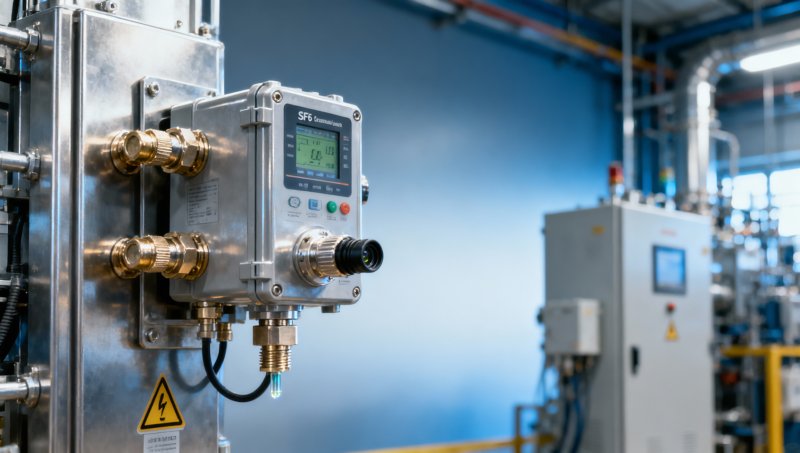
The biggest change is that end users now expect more than basic gas concentration measurement. In the past, many organizations purchased an SF6 concentration analyzer mainly to detect leaks or verify gas conditions in insulated equipment. Now, the buying decision is influenced by a wider set of pressures:
- Tighter safety expectations: Facilities want earlier detection of abnormal conditions to reduce exposure risk and protect personnel.
- Environmental accountability: SF6 is widely recognized as a high-impact greenhouse gas, so monitoring is becoming more important for leak control, reporting, and emission reduction strategies.
- Asset reliability goals: In power and industrial systems, gas quality and concentration data support preventive maintenance and help avoid unexpected downtime.
- Digital operations: More buyers want analyzers that connect with SCADA, PLC, DCS, or cloud-based monitoring systems rather than standalone devices with isolated data.
- Procurement discipline: Purchasing teams are under pressure to justify total lifecycle cost, not just initial price.
As a result, demand is not simply rising or falling in one direction. It is becoming more selective. Buyers are moving away from generic instruments and toward application-matched solutions with stronger performance, easier calibration, lower maintenance burden, and better reporting capabilities.
What different buyer groups care about most
Although many stakeholders are involved in analyzer selection, their priorities are not identical. Understanding this helps explain why market demand appears to be shifting.
Operators and users usually care about ease of use, response time, portability, clear displays, alarm functions, and low daily maintenance. If a device is difficult to use in the field, adoption suffers even if the specifications look impressive on paper.
Technical evaluators and quality or safety managers focus on accuracy, stability, repeatability, sensor life, calibration requirements, interference resistance, and suitability for the actual gas environment. They want confidence that the analyzer delivers dependable results in real operating conditions.
Procurement teams and financial approvers look at acquisition cost, service intervals, consumables, spare parts, training needs, vendor responsiveness, and warranty support. A lower upfront quote may lose appeal if the analyzer creates higher operating cost over time.
Project managers and engineering leaders care about installation compatibility, communication interfaces, commissioning speed, and integration risk. For them, a good analyzer is one that works within the broader project schedule and control architecture.
Distributors and channel partners often prioritize product reliability, market fit, after-sales support, and whether the supplier offers a clear positioning versus alternatives such as the H2S concentration analyzer, HCl concentration analyzer, O2 concentration analyzer, and NOX concentration analyzer.
This mix of priorities is one reason demand is changing. The market is no longer driven by only one technical requirement. It is shaped by cross-functional buying decisions.
What is pushing buyers to review SF6 monitoring strategies now
Several practical market drivers are accelerating reassessment of existing equipment and purchasing plans.
1. Aging infrastructure and maintenance pressure
Many power and industrial assets have been in service for years. As equipment ages, the importance of monitoring gas condition, leakage risk, and system performance increases. Older monitoring methods may no longer meet present maintenance expectations.
2. Stronger environmental and compliance attention
Organizations are under more pressure to document gas management practices and reduce unnecessary emissions. Even where regulations differ by region, the overall direction is toward more visibility and accountability.
3. Shift from reactive to predictive maintenance
Instead of waiting for alarms or failures, facilities increasingly want trend data. This changes demand from simple spot-check tools to analyzers that support continuous or structured periodic monitoring with data history.
4. Multi-gas monitoring needs
Buyers are often not evaluating SF6 instruments in isolation. They may need to monitor corrosive, toxic, oxidizing, or combustion-related gases in the same facility. That is why comparisons with an H2S concentration analyzer, HCl concentration analyzer, O2 concentration analyzer, or NOX concentration analyzer are becoming more common during specification and budgeting.
5. Demand for smarter integration
Modern industrial instrumentation is expected to fit into digital workflows. If an SF6 concentration analyzer cannot export data, support remote diagnostics, or communicate reliably with existing systems, it may be excluded even if its sensing performance is acceptable.
How buyers are comparing an SF6 concentration analyzer with other gas analyzers
One important change in demand is that purchasing teams are now looking at gas analysis more holistically. They want to know whether they need a dedicated SF6 concentration analyzer, a broader gas monitoring package, or a combination of fixed and portable devices.
For example:
- An H2S concentration analyzer is typically considered in petrochemical, wastewater, process safety, and corrosion-sensitive environments.
- An HCl concentration analyzer may be evaluated in emissions monitoring, combustion processes, and chemical processing where acidic gas control matters.
- An O2 concentration analyzer is essential where combustion efficiency, inerting safety, oxidation control, or confined-space monitoring is involved.
- A NOX concentration analyzer is often tied to environmental compliance, combustion optimization, and emissions control systems.
These instruments do not replace the SF6 concentration analyzer where SF6-specific measurement is required, but they do affect budget allocation and system design decisions. In many projects, the real purchasing question becomes: should we buy a standalone SF6 solution, or should we invest in a broader gas analysis framework that covers multiple risks at once?
This is especially relevant for enterprise buyers trying to standardize instrumentation across plants or business units.
What features now matter most when selecting an SF6 concentration analyzer
If demand is becoming more selective, then the selection criteria are also becoming more practical. Buyers increasingly focus on the following areas:
- Measurement performance: accuracy, detection range, repeatability, response speed, and stability under actual site conditions.
- Application fit: portable versus fixed installation, indoor versus outdoor use, and compatibility with the target equipment or process.
- Anti-interference capability: resistance to humidity, temperature fluctuation, contamination, and cross-gas effects.
- Maintenance requirements: calibration frequency, sensor replacement cycle, filter maintenance, and availability of service support.
- Data capability: logging, communication protocols, remote access, alarm records, and integration with plant systems.
- Safety and compliance support: whether the analyzer helps document inspections, track trends, and support environmental or operational audits.
- Total cost of ownership: not just instrument price, but downtime risk, consumables, training cost, and expected service life.
For many buyers, this is where vendor differentiation now happens. A product that only competes on basic concentration reading may struggle if another option offers better lifecycle value or easier integration.
Common purchasing mistakes that lead to poor results
As demand evolves, some buyers still make avoidable mistakes that reduce value after installation.
- Choosing by price alone: A low-cost analyzer can become expensive if it drifts quickly, requires frequent service, or causes unreliable readings.
- Ignoring the operating environment: Dust, humidity, temperature swings, and gas contamination can all affect real-world performance.
- Overlooking data integration: If the analyzer cannot connect to current systems, reporting becomes manual and long-term value drops.
- Underestimating training needs: Even a technically capable instrument may be misused if operating procedures are unclear.
- Failing to define the actual use case: Leak detection, quality verification, continuous monitoring, and compliance documentation are not the same task.
These errors matter because the market is moving toward outcome-based purchasing. Buyers want measurable improvement in safety, reliability, and efficiency, not just a device that meets a line-item requirement.
How to judge whether an investment makes business sense
For managers, financial approvers, and project leaders, the most useful evaluation method is to connect analyzer selection with operational outcomes.
Ask these questions:
- Will the analyzer reduce unplanned downtime or fault investigation time?
- Can it improve leak detection and help reduce gas loss?
- Will it support compliance reporting or strengthen audit readiness?
- Does it lower labor time through faster testing or remote monitoring?
- Can one system architecture support future expansion into other gas measurements?
If the answer to several of these is yes, the business case becomes stronger. In this sense, changing demand is not just about more units being sold. It is about a more mature buying process in which technical performance, operational fit, and financial logic must align.
Where the market is likely headed next
The direction of the instrumentation industry suggests that SF6 analyzer demand will continue to evolve in a few clear ways. Buyers will likely favor products that are easier to connect, easier to maintain, and easier to justify. There will also be more emphasis on complete monitoring solutions rather than single-instrument procurement.
At the same time, application segmentation will become sharper. Some users will need high-accuracy, compliance-oriented systems. Others will need rugged portable analyzers for field service. Still others will want integrated gas monitoring strategies that combine SF6 with technologies such as the O2 concentration analyzer or NOX concentration analyzer depending on plant needs.
Manufacturers and suppliers that understand these use cases, and can provide both product reliability and consultative support, will be better positioned as buyer expectations continue to rise.
Conclusion
The reason SF6 concentration analyzer demand is changing is simple: buyers now expect these instruments to deliver more than measurement alone. They must support safety, environmental responsibility, maintenance efficiency, digital integration, and sound cost control. For technical users, that means focusing on real application fit and dependable performance. For purchasers and managers, it means evaluating lifecycle value, integration potential, and risk reduction instead of only initial price.
In short, the market is not moving away from SF6 monitoring. It is moving toward smarter, more selective, and more outcome-driven purchasing. Organizations that define their use case clearly and compare solutions with a broader operational perspective will make better decisions and gain more long-term value from their instrumentation investments.
Recommended for You
 How to prevent condensation in a CO2 analyzer sampling systemPrevent condensation in your CO2 analyzer sampling system. Learn how to control dew point, eliminate cold spots, and manage moisture for reliable readings and fewer costly disruptions.
 How to verify accuracy claims for industrial quality analyzersVerify accuracy claims for industrial quality analyzers with calibration checks, independent testing, and clear acceptance criteria. Learn how to reduce risk and buy with confidence.
 How to calculate cooling loads for an industrial analyzer shelterSize industrial analyzer shelter cooling with confidence. Learn to calculate equipment heat, solar gains, and ventilation loads, then select HVAC capacity for reliable analyzer performance.
 What Happens When Combustible Gas Sensor Calibration Is Overdue?What happens if combustible gas sensor is not recalibrated on time? Discover the risks of inaccurate readings and missed alarms, plus steps to restore reliable protection.
 Can One Multi-Gas Detector Replace Four Separate Analyzers?Find out: can a single multi-gas detector replace four separate analyzers? Compare accuracy, safety, compliance, and lifetime costs to make a confident buying decision.
 Industrial Safety vs. Emission Monitoring: What Are the Differences?What are the main differences between industrial safety and emission monitoring? Compare goals, sensors, response times, and compliance needs to choose the right systems for your facility.
 Is Remote Monitoring Worth the Cost for Small Emission Sources?Is it worth investing in remote monitoring for small emission sources? Compare costs, compliance needs, and potential savings to choose the right solution for your operation.
 How Do You Handle Analyzer Failure During an Environmental Audit?Learn how to handle analyzer failure during environmental compliance audit procedures. Protect evidence, verify data, and restore monitoring with this practical response guide.
 Do VOC Monitors Require Explosion-Proof Certification?Does VOC monitoring require explosion-proof certification? Learn when approval is needed, compare ATEX and IECEx, and choose the right monitor for your site.
 How sample conditioning affects accuracy in petrochemical analyzersImprove accuracy in petrochemical analyzers with smarter sample conditioning. Discover how phase control, filtration, and transport design prevent bias and deliver reliable process data.
 How to troubleshoot sensor drift in industrial gas detectorsIndustrial gas detectors showing sensor drift? Learn how to verify calibration gas, identify root causes, and determine when sensor replacement is needed for reliable monitoring.
 How to judge whether a competitive price reflects real valueCompetitive Price: learn how to compare scope, compliance, performance, and lifecycle costs to identify real value, reduce risk, and make smarter purchasing decisions.
 When custom gas analysis is the right fit for complex process streamsCustom gas analysis for complex process streams: learn when tailored sampling, interference control, and reliable measurement design deliver confident decisions.
 When does a laser gas analyzer meet stack emissions monitoring needs?Laser gas analyzer for stack emissions: learn when it delivers fast, reliable data, how to assess installation risks, and what to verify for CEMS compliance.
 How to select a hazardous gas analyzer for confined spacesHazardous gas analyzer selection for confined spaces: compare sensors, sampling, certifications, alarms, and maintenance to protect workers and choose with confidence.
 When is a single gas analyzer sufficient for workplace safety monitoring?Discover when a single gas analyzer delivers reliable workplace safety monitoring, and learn the key limits, calibration needs, and risks that require broader detection.
 How to choose an ambient gas analyzer for low-level leak detectionAmbient gas analyzer selection for low-level leak detection: compare sensitivity, cross-sensitivity, sampling design, alarms, and calibration for reliable site performance.
 How to tell when an oxygen sensor needs replacementOxygen sensor replacement signs explained: learn how live data, fault codes, wiring checks, and exhaust inspections pinpoint the real issue before you buy.
 How laser gas analyzers improve combustion control in steel furnacesLaser gas analyzer for steel industry applications delivers fast in-situ O₂ and CO data to optimize furnace combustion, cut fuel waste, and improve steel heating stability.
 How to verify whether explosion proof equipment meets site requirementsExplosion proof equipment verification made practical: match zones, gas or dust groups, temperature classes, certificates, and installation conditions for confident compliance.
 How industrial gas analysis helps detect contamination before releaseIndustrial Gas Analysis helps detect moisture, oil, oxygen, and toxic contaminants before release—protecting processes, ensuring compliance, and reducing costly risks.
 When is electrochemistry detection the right choice for water analysis?Electrochemistry detection for water analysis: learn when fast, reliable monitoring of ions, chlorine, pH, and more delivers actionable results.
 How industrial standards reduce quality risks in supplier selectionIndustrial Standard guidance helps quality and safety managers reduce supplier risks, verify compliance, strengthen traceability, and build resilient instrumentation supply chains.
 When does a multi-component system reduce installation complexity?Multi component systems reduce installation complexity when they eliminate field interfaces, streamline commissioning, and provide proven compatibility. Learn how to assess total cost and supplier accountability.
 How to size an industrial control shelter for outdoor equipmentIndustrial control shelter sizing guide: optimize layout, HVAC, access, safety, and expansion space for reliable outdoor equipment operations.
 How flue analysis helps verify combustion efficiencyFlue analysis verifies combustion efficiency by assessing O2, CO, CO2, and stack temperature to identify excess air, incomplete combustion, and heat losses.
 How to select industrial gas detectors for confined spacesIndustrial gas detectors for confined spaces: learn how to match sensors, sampling methods, alarms, and certifications to real atmospheric hazards.
 When does a laser oxygen analyzer outperform zirconia sensors?Laser oxygen analyzer vs. zirconia sensors: compare speed, selectivity, maintenance, gas chemistry, and installation needs to choose the right oxygen measurement solution.
 How to select a percent range analyzer for process measurementsPercent range analyzer selection made practical: compare accuracy, sample systems, calibration, gas matrix, integration, and lifecycle cost for reliable process measurements.
 How explosion proof analysis verifies safe equipment for hazardous areasExplosion proof analysis verifies hazardous-area equipment by matching certifications, temperature ratings, installation details, and inspection controls for safer compliance.
 When does fixed gas detection need point sensors instead of open-path monitoring?Fixed gas detection: discover when point sensors outperform open-path monitoring for predictable leaks, enclosed zones, local alarms, and safer design decisions.
 How to choose industrial metrology systems for tight-tolerance partsIndustrial metrology guide for tight-tolerance parts: compare CMMs, optical scanners, gauges, uncertainty, workflow, and traceable inspection strategies.
Search Categories
Search Categories
- Smart Meters & Power Quality
- Transformer Gas Analyzers
- BESS Thermal Runaway Detectors
- Energy, Power & Smart Grid Monitoring
- Optical Profilers & CMM
- Ultrasonic & X-Ray NDT
- Calibration Standards
- Precision Metrology & NDT
- Water Quality Analyzers
- CEMS & VOCs Monitors
- Price Trends
- Import & Export Updates
- Market Trends
- Industry News
- Industry Insights
Latest Article
- How to prevent condensation in a CO2 analyzer sampling systemPrevent condensation in your CO2 analyzer sampling system. Learn how to control dew point, eliminate cold spots, and manage moisture for reliable readings and fewer costly disruptions.Posted by:
- How to verify accuracy claims for industrial quality analyzersVerify accuracy claims for industrial quality analyzers with calibration checks, independent testing, and clear acceptance criteria. Learn how to reduce risk and buy with confidence.Posted by:
- How to calculate cooling loads for an industrial analyzer shelterSize industrial analyzer shelter cooling with confidence. Learn to calculate equipment heat, solar gains, and ventilation loads, then select HVAC capacity for reliable analyzer performance.Posted by:
Please give us a message
