
Process Measurement Devices in Export Compliance Updates


As export regulations continue to evolve, distributors, agents, and channel partners must stay alert to how compliance changes affect process measurement devices. From pressure and flow instruments to online analyzers and control systems, shifting requirements can influence product classification, documentation, market access, and delivery timelines. Understanding these updates helps partners reduce trade risks, protect customer trust, and identify new growth opportunities in global instrumentation markets.
For instrumentation distributors, compliance is no longer a back-office issue handled only at shipment stage. It now affects quotation speed, stocking strategy, after-sales commitments, and even which product families are commercially viable in specific regions.
In practical terms, process measurement devices often move across multiple jurisdictions before reaching end users in manufacturing, energy, environmental monitoring, laboratories, and automation projects. A delay of 7 to 15 days caused by missing export documents can disrupt a distributor’s installation schedule and weaken customer confidence.
This article explains what recent export compliance updates mean for channel partners, how to evaluate risk across product categories, and which operating steps help protect margin, lead time, and long-term market access.
Why Export Compliance Has Become a Commercial Issue for Process Measurement Devices
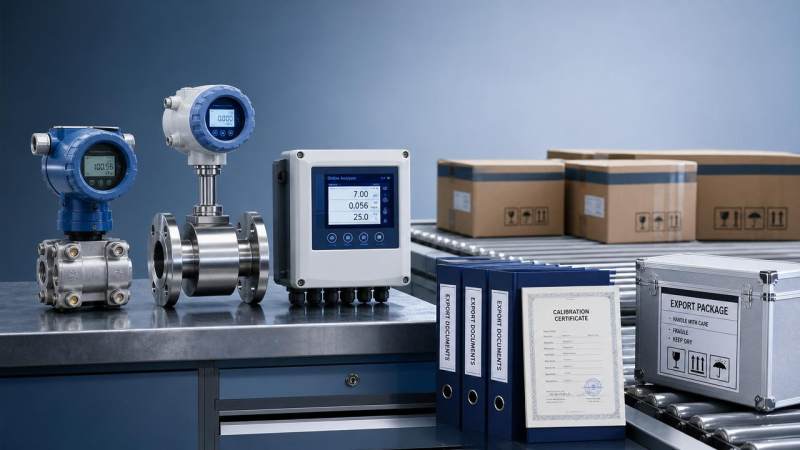
Export compliance has expanded beyond customs declarations. For many process measurement devices, requirements now touch technical specifications, software functions, end-use screening, country-of-origin records, and calibration or testing documents attached to the shipment.
This matters because distributors and agents typically operate on short quotation cycles of 24 to 72 hours. If classification details are unclear, a sales team may miss an RFQ deadline or offer the wrong delivery promise.
What is changing in real channel operations
Instruments once treated as straightforward industrial goods may now require deeper review when they include advanced sensing modules, data logging functions, remote communication, or integration with control systems. Even a pressure transmitter can trigger added questions if documentation does not clearly define its industrial application.
The risk rises when partners carry 50 to 500 SKUs across flow, level, temperature, composition analysis, and online monitoring. A single inconsistent item description can create repeated problems across invoices, packing lists, declarations, and customer import files.
Common compliance pressure points
- HS code classification differences between similar devices
- End-user and end-use checks for sensitive industrial sectors
- Documentation gaps in technical data sheets and origin records
- Software, communication, or control features requiring extra review
- Regional labeling, language, and safety file expectations
For channel partners, these points influence 4 core business outcomes: quote accuracy, shipment release speed, customer acceptance, and post-sale dispute prevention. Each of these affects whether process measurement devices remain profitable in export markets.
Product groups most likely to need closer review
Not every product faces the same level of export scrutiny. Devices with simple mechanical structures usually move faster than products with embedded electronics, advanced analysis capabilities, or networked control functions.
The table below shows where distributors often see more review time, usually adding 2 to 10 working days depending on destination and application.
The main takeaway is not that these product groups are difficult to export by default. It is that process measurement devices with richer functions need cleaner product data and earlier review during the sales cycle.
Key Compliance Updates Distributors Should Track in 2024 and Beyond
Export rules change by country and product type, but most channel partners are seeing updates in 5 recurring areas. Monitoring these areas helps teams respond before inventory is purchased or customer delivery dates are confirmed.
1. Product classification is under greater scrutiny
Many disputes begin with inconsistent item naming. A “digital pressure indicator,” “pressure transmitter,” and “process pressure monitoring unit” may sound similar commercially, but classification outcomes can differ if the technical function is not clearly documented.
Distributors should maintain a standardized data sheet library with at least 6 fields: product function, measuring range, output type, installation environment, control capability, and end-use description. This reduces mismatch between sales language and export paperwork.
2. End-use and end-user screening now matters earlier
For process measurement devices used in energy, advanced manufacturing, laboratories, or environmental systems, screening often needs to happen before order confirmation, not after payment. Waiting until dispatch can create a costly stop-hold situation.
A practical rule is to trigger review when orders involve high-value projects, multi-instrument system packages, unusual destination routes, or requests for configuration changes beyond standard catalog scope.
3. Technical documentation must be more consistent
Commercial invoice text, packing lists, technical files, and certificates often pass through 3 to 5 teams. If each team uses different descriptions, customs or trade control reviewers may question the shipment.
This is especially important for online analyzers, calibration instruments, and integrated control products. A one-page summary sheet attached to every export order can reduce errors and shorten internal review by 20 to 30 minutes per shipment.
4. Regional market access expectations are becoming more detailed
Market access is no longer only about whether a product can physically enter a country. Buyers now expect documentation packages that fit local installation practice, language needs, project files, and acceptance procedures.
For example, instrumentation used in water treatment, food processing, or industrial automation projects may require different supporting files, even when the base device is the same. This affects distributors managing 3 or more regional markets at the same time.
5. Delivery planning must include compliance lead time
A standard lead time of 2 to 4 weeks may no longer be reliable if compliance review is treated as a final shipping step. Smart distributors now build compliance checkpoints into their first quotation and order review process.
For project orders containing 10 to 100 units across multiple process measurement devices, this can prevent partial shipment issues and reduce emergency re-documentation costs.
How to Build a Practical Compliance Workflow for Channel Sales
The most effective response is not more paperwork for its own sake. It is a repeatable workflow that helps sales, purchasing, and logistics teams identify risk at the right moment. For most distributors, a 5-step process is enough to improve control without slowing business.
A five-step operating model
- Screen the inquiry by product type, destination, and application.
- Confirm a standardized technical description for each item.
- Review end-user and end-use indicators before final quotation.
- Prepare a document pack matched to the shipment and destination.
- Run a final pre-dispatch check 24 to 48 hours before release.
This workflow is especially useful when channel partners sell mixed packages such as transmitters, flowmeters, valves, analyzers, and panel instruments in one project. It reduces the chance that one problematic item delays the full order.
Minimum data fields to control
At a minimum, each SKU record should include measuring principle, process connection, output signal, operating range, enclosure or environment note, and application sector. Six clean fields often solve most front-end confusion around process measurement devices.
The next table shows a practical checklist that distributors can adopt across branches, resellers, or regional agents.
The checklist shows that good compliance does not require a large team. It requires stable definitions, disciplined review points, and realistic lead-time communication from the start of the deal.
How Distributors Can Reduce Risk While Protecting Growth
The best channel strategy balances caution with commercial speed. If every order is escalated, sales efficiency drops. If nothing is reviewed, shipment interruptions become more likely. Successful distributors segment process measurement devices by risk and handle each tier differently.
Create a three-tier product risk map
Tier 1 can include routine transmitters, indicators, and simple panel instruments with stable documentation. Tier 2 can cover more configurable flow and level devices. Tier 3 can include analyzers, integrated monitoring skids, and control-linked systems.
Using a 3-tier model helps branch managers decide whether an order can be processed in the same day, within 48 hours, or only after additional review. That protects response speed without ignoring compliance reality.
Train sales teams on high-risk language
Many avoidable issues begin in email communication. Sales staff should avoid vague or inflated terms that do not match technical function. Clear wording lowers the chance of document mismatch and improves customer understanding at the same time.
A 60-minute quarterly training session is often enough to review naming rules, document triggers, and destination-specific warning signs. That is a small investment compared with the cost of one blocked shipment.
Keep documentation ready before demand spikes
Demand for process measurement devices can rise quickly in sectors like water treatment, factory automation, energy retrofits, and environmental monitoring. If a distributor waits until purchase order stage to gather supporting files, urgent business may be lost.
A practical target is to keep document packs ready for the top 20 to 30 fastest-moving SKUs in each regional market. This supports both compliance and faster quote-to-shipment conversion.
Align suppliers, warehouses, and local agents
When products move through 2 or 3 warehouses or trading entities, inconsistent records become more likely. Shared naming standards, revision control, and version dates should be agreed across the chain.
Even a simple monthly document audit covering 10 sample orders can reveal recurring gaps before they become export disruptions.
Common Mistakes and Buyer-Facing Advice for Better Market Access
Distributors often focus on internal compliance but forget its customer-facing value. Buyers care about reliable supply, predictable lead time, and smoother project approval. When channel partners present compliance readiness as part of service quality, conversion can improve.
Frequent mistakes to avoid
- Using sales descriptions that do not match technical documents
- Promising fixed lead times before checking destination requirements
- Bundling high-risk and low-risk devices without separate review
- Assuming previous shipments guarantee future clearance
- Ignoring documentation updates after product revisions
How to communicate better with buyers
Instead of simply warning customers about “compliance delays,” explain the operational benefit. For example, tell buyers that early application disclosure can shorten approval cycles by 3 to 5 working days and reduce the risk of document amendments after dispatch.
This is particularly effective in B2B sectors where engineers, procurement managers, and project coordinators all review the purchase. Better communication turns compliance from a barrier into part of the value proposition for process measurement devices.
Questions channel partners should ask before confirming orders
- What exact process will the device monitor or control?
- Will the item be used alone or integrated into a larger system?
- Does the buyer need special documentation for project approval?
- Is the requested delivery window based on site installation milestones?
These four questions can prevent many misunderstandings and help distributors position the right product package, lead time, and support file set from the beginning.
Export compliance updates are reshaping how process measurement devices are quoted, documented, shipped, and supported across global channel networks. Distributors, agents, and resellers that build stronger classification control, document discipline, and early-stage screening will be better positioned to protect delivery reliability and expand in regulated markets.
For partners serving industrial manufacturing, energy, laboratory, environmental, and automation customers, the opportunity is not just risk reduction. It is faster response, cleaner project execution, and stronger trust across the supply chain. If you want to review product documentation, improve export readiness, or explore a more resilient channel strategy for process measurement devices, contact us today to get tailored support and learn more solutions.
Recommended for You
 Industrial Metrology Tools: When Accuracy Impacts OutputIndustrial metrology tools directly shape output, quality, and cost. Learn how accurate measurement reduces scrap, speeds decisions, and improves production performance.
 Process Measurement Devices in Export Compliance UpdatesProcess measurement devices face new export compliance updates that impact classification, documents, lead times, and market access. Learn practical steps to reduce risk and protect growth.
 Quality Control Analyzers Price Shifts in Global SupplyQuality control analyzers prices are shifting with global supply changes. Learn the key cost drivers, compliance risks, and sourcing tips buyers need to reduce total cost.
 Production Line Monitoring: How to Reduce Downtime FastProduction line monitoring helps reduce downtime fast with practical checklists, smarter alarms, and real-time insights. Learn how to improve visibility, response speed, and line reliability.
 Process Optimization Instruments: ROI vs Maintenance CostsProcess optimization instruments: compare ROI, downtime reduction, and accuracy gains against calibration and maintenance costs. Learn how to choose smarter, lower-risk solutions.
 Manufacturing Process Control Trends Shaping 2026 OutputManufacturing process control trends for 2026: explore real-time monitoring, predictive quality, compliance readiness, and smarter automation strategies to boost output and reduce risk.
 Industrial Inspection Devices for Safer Quality ChecksIndustrial inspection devices help deliver safer quality checks by detecting faults early, reducing downtime, and improving compliance across manufacturing, energy, and infrastructure.
 Industrial Control Instruments: Common Selection MistakesIndustrial control instruments selection mistakes can cause downtime, drift, and safety issues. Learn the most common errors and how to choose the right solution with confidence.
 Industrial Monitoring Solutions: Key Cost Factors in 2026Industrial monitoring solutions in 2026 cost far more than hardware alone. Learn the hidden cost drivers, compare vendor proposals wisely, and make smarter ROI-focused investment decisions.
 How to Compare Test and Measurement Equipment for Factory UseTest and measurement equipment for factory use should be compared by real application, not specs alone. Learn how to choose reliable, connected tools that cut downtime and improve control.
 Stack Gas Analyzers: When Maintenance Delays Start Raising RiskStack gas analyzers can look normal while hidden drift raises compliance, efficiency, and reliability risks. Learn the warning signs and smart maintenance checks before delays become costly.
 Industrial Measurement Systems in Export Projects: Key Compliance ChecksIndustrial measurement systems for export projects: learn the key compliance checks for certifications, calibration, safety, and documents to avoid delays and ensure smooth delivery.
 Pharmaceutical Instrumentation Upgrades: What to Evaluate FirstPharmaceutical instrumentation upgrades start with compliance, data integrity, uptime, and ROI. Learn what to evaluate first to reduce risk and make smarter buying decisions.
 Food Processing Analyzers for Compliance and Batch ConsistencyFood processing analyzers help manufacturers improve compliance, reduce batch variation, and verify quality from raw materials to final release with faster, traceable decisions.
 Biogas Analyzers Market Trends: Accuracy, Maintenance, and ROIBiogas analyzers market trends: explore how accuracy, lower maintenance, and stronger ROI help energy and industrial buyers improve gas quality, uptime, and compliance.
 Safety Monitoring Systems: Common Setup Mistakes to AvoidSafety monitoring systems fail fast when setup is wrong. Discover common installation, calibration, and alarm mistakes to avoid for safer operations and more reliable monitoring.
 Industrial Testing Equipment Costs in 2026: What Drives Pricing?Industrial testing equipment costs in 2026 depend on accuracy, compliance, automation, and lifecycle service. Learn what drives pricing and how to reduce total ownership cost.
 Multi-Component Analyzers vs Single-Gas Units: Which Fits Better?Multi-component analyzers vs single-gas units: compare lifecycle cost, compliance, maintenance, and scalability to choose the best fit for safer, smarter industrial projects.
 Petrochemical Analyzers: Key Specs That Affect Safety and UptimePetrochemical analyzers directly affect safety and uptime. Learn which specs—accuracy, response time, compatibility, and maintenance—matter most for reliable plant performance.
 How to Choose Process Monitoring Instruments for Stable Plant PerformanceProcess monitoring instruments are key to stable plant performance. Learn how to choose the right devices for accuracy, compatibility, lower risk, and better efficiency.
 Brazil INMETRO to Require Portuguese UI and Local Units for Industrial Instruments by 2026Brazil INMETRO mandates Portuguese UI & local units (mbar, kPa, °C) for industrial instruments by Dec 2026—key for exporters, integrators & service providers.
 STMicroelectronics 200mm Line Eases Industrial Sensor Chip ShortageSTMicroelectronics 200mm line eases industrial sensor chip shortage — MCUs & signal-conditioning ICs now ship in 12 weeks. Secure allocation today.
 Southeast Asia Manufacturing Re-shoring Accelerates: Vietnam/Indonesia Industrial Instrument Imports Up 37% YoYSoutheast Asia manufacturing re-shoring accelerates: Vietnam & Indonesia industrial instrument imports up 37% YoY — key insights for suppliers, OEMs & procurement teams.
 First Global White Paper on Humanoid Robot Sensor Calibration ReleasedHumanoid robot sensor calibration: First global white paper released—key for ISO/IEC JWG 23 compliance, export readiness & dynamic torque accuracy. Act now.
 SAMR to Upgrade EV Battery Recycling Standard to MandatorySAMR to upgrade EV battery recycling standard GB/T 34015—202X to mandatory by Dec 2026 — critical for exporters, BMS makers & cert labs.
 Saudi SASO Accelerates AI Energy Efficiency Rules for TransmittersSASO AI energy efficiency rules for transmitters take effect 1 June 2026 — mandatory AI simulation, Saudi climate data, and authorized lab validation required. Act now to avoid export delays.
 IEC 63278:2026 Released for Industrial Instrument CybersecurityIEC 63278:2026 is live — the first global standard mandating cybersecurity verification for industrial instruments. Discover compliance impacts, deadlines, and actionable steps for OT/IT convergence.
 Red Sea Crisis Escalates: Gulf of Aden Navigation Ban Extended to June 15, 2026Red Sea Crisis escalates: Gulf of Aden navigation ban extended to June 15, 2026—disrupting industrial instrumentation shipments to the Middle East with 458% air freight spikes and 12–18 day delays.
 US DOE Updates Efficiency Rules for Industrial SensorsUS DOE updates industrial sensor efficiency rules: AI-driven dynamic calibration required by Sept 2026. Ensure AI-Cal Verified compliance now.
 EU Mandates PEF Carbon Footprint Module for Industrial Instruments from June 2026EU mandates PEF carbon footprint module for industrial instruments from June 2026—key for exporters, OEMs & certifiers. Act now to ensure compliance.
 Explosion-Proof Instruments: Compliance Risks Before You OrderExplosion-proof instruments can trigger delays, failed inspections, and safety risks if compliance is overlooked. Learn what to verify before ordering and make safer, smarter purchasing decisions.
 Gas Quality Monitoring Equipment Import Rules to Watch in 2026Gas quality monitoring equipment import rules for 2026 are tightening. Learn the key compliance, certification, and customs risks distributors must manage to avoid delays and protect margins.

























Search Categories
Search Categories
Latest Article
- Industrial Metrology Tools: When Accuracy Impacts OutputIndustrial metrology tools directly shape output, quality, and cost. Learn how accurate measurement reduces scrap, speeds decisions, and improves production performance.Posted by:
- Process Measurement Devices in Export Compliance UpdatesProcess measurement devices face new export compliance updates that impact classification, documents, lead times, and market access. Learn practical steps to reduce risk and protect growth.Posted by:
- Quality Control Analyzers Price Shifts in Global SupplyQuality control analyzers prices are shifting with global supply changes. Learn the key cost drivers, compliance risks, and sourcing tips buyers need to reduce total cost.Posted by:
Please give us a message
