
Manufacturing Process Control Trends Shaping 2026 Output


As 2026 approaches, manufacturing process control is becoming a decisive factor for companies seeking higher efficiency, stronger compliance, and smarter production. From real-time monitoring and automation integration to data-driven quality management, emerging trends are reshaping how manufacturers reduce risk and improve output. For business decision-makers, understanding these shifts is essential to building resilient, competitive, and future-ready operations.
Why manufacturing process control is moving from plant-floor issue to boardroom priority

For many executives, manufacturing process control used to sit inside engineering, maintenance, or quality departments. That view is changing fast. Process stability now affects margin protection, regulatory exposure, energy use, delivery reliability, and digital transformation outcomes across the wider business.
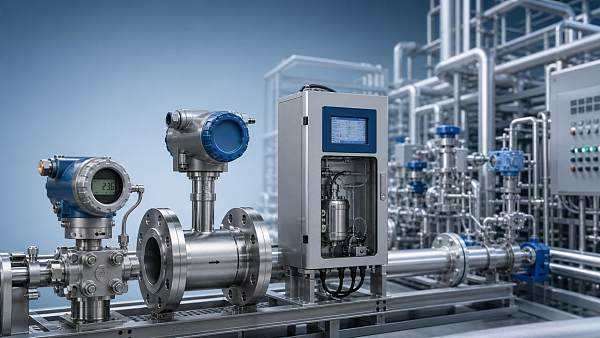
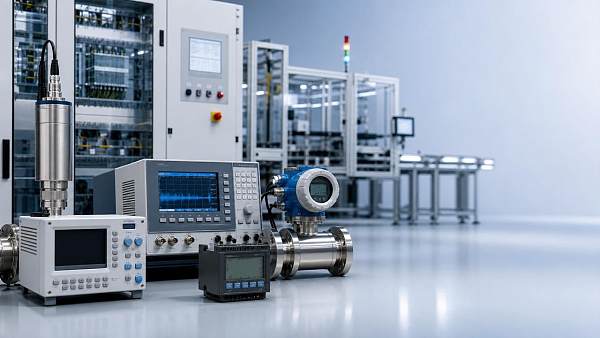
In the instrumentation industry, this shift is especially visible. Measurement, testing, monitoring, analysis, and control equipment no longer serve only as technical tools. They form the data foundation behind industrial automation, intelligent upgrading, and faster operational decisions in manufacturing, energy, environmental monitoring, medical testing, laboratory work, and construction engineering.
For decision-makers, the core question is no longer whether to improve manufacturing process control. The real question is where to invest first, how to reduce implementation risk, and how to build a scalable system that supports output growth in 2026 and beyond.
- Rising compliance pressure requires more traceable records, calibrated instruments, and controlled process conditions.
- Labor shortages and skills gaps increase dependence on automation, alarms, and standardized workflows.
- Volatile raw material and energy costs make real-time optimization more valuable than periodic manual checks.
- Customer expectations for consistency, documentation, and delivery accuracy continue to rise across sectors.
Which 2026 trends are reshaping manufacturing process control?
The next wave of manufacturing process control is not defined by one technology alone. It is driven by the combined use of field instrumentation, connected control platforms, analytics, and service discipline. Companies that align these elements can improve output without increasing risk at the same pace.
1. Real-time visibility replaces delayed reaction
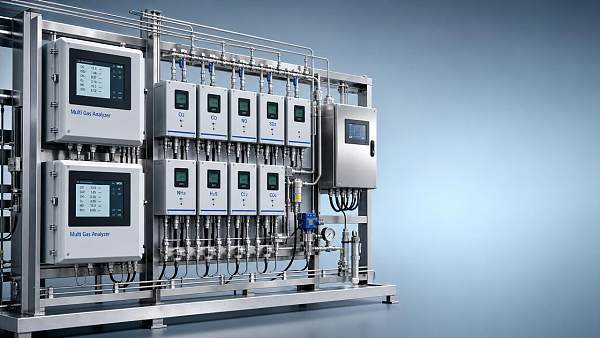
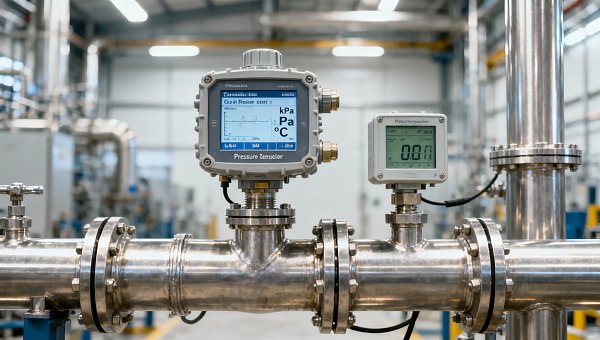
Pressure, temperature, flow, level, and composition data are increasingly monitored continuously rather than sampled occasionally. This reduces the time between deviation and action. In sectors with sensitive materials or continuous production, that time reduction directly protects yield and equipment condition.
2. Integrated automation reduces hidden variation
Many plants already use PLC, DCS, SCADA, or standalone controllers. The trend for 2026 is tighter integration between sensors, analyzers, actuators, and software layers. Better integration means fewer manual handoffs, less data loss, and more consistent process response.
3. Quality control becomes predictive
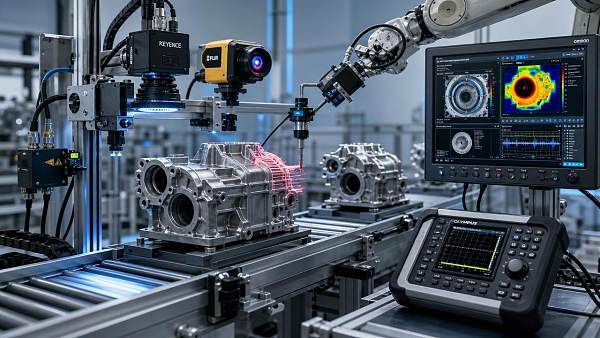
Instead of identifying defects only after production, advanced manufacturing process control detects drift earlier. Online analyzers, metrology tools, and calibration discipline support trend-based intervention. This is highly relevant for industries where rework, scrap, or contamination costs are significant.
4. Compliance and audit readiness are built into operations
Traceability is no longer just a documentation task. It depends on timestamped measurements, instrument status, calibration records, alarm history, and controlled parameter limits. Companies in regulated or safety-sensitive environments need process control systems that support validation and reporting from the start.
5. Instrumentation selection becomes more application-specific
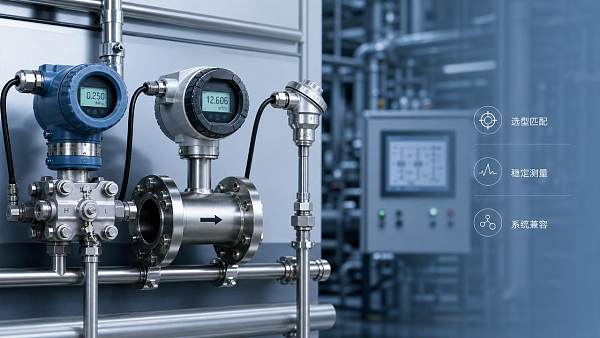
A cheaper device that cannot withstand media characteristics, ambient conditions, or required accuracy will often raise the total cost of manufacturing process control. Buyers are now evaluating lifecycle fit, communication compatibility, maintenance burden, and calibration needs more carefully.
Where do these trends create the biggest operational impact?
The value of manufacturing process control changes by process type, risk level, and production objective. The table below helps business leaders compare common industrial scenarios and the control priorities that matter most in each one.
This comparison shows why one-size-fits-all planning rarely works. Effective manufacturing process control depends on matching instrumentation depth to production risk, not just copying another plant’s equipment list or software stack.
- High-volume plants often benefit first from reducing variability and unplanned stoppages.
- Regulated environments typically prioritize traceability, calibration discipline, and alarm documentation.
- Complex multi-site operators need standardized signals, reporting logic, and remote visibility.
How should decision-makers evaluate manufacturing process control investments?
The strongest investment cases rarely begin with hardware alone. They start with business pain: scrap rates, unstable quality, delayed maintenance, audit gaps, or rising energy intensity. From there, leaders can translate process problems into instrumentation and control requirements.
Key evaluation criteria
- Measurement fitness: Is the required accuracy realistic for the process and downstream decision?
- Environmental suitability: Can instruments handle vibration, dust, corrosive media, humidity, or temperature swings?
- Integration readiness: Will the devices communicate cleanly with the existing control architecture and reporting tools?
- Calibration and service burden: How often will verification, replacement, or maintenance interrupt production?
- Compliance support: Can records, alarms, and parameter histories support internal governance or external review?
For procurement teams, these points reduce the risk of choosing components that look acceptable on paper but fail under actual operating conditions. For operations leaders, they clarify why manufacturing process control should be assessed as a system, not as isolated purchases.
What should a practical selection framework look like?
A selection framework helps align engineering detail with business objectives. The table below outlines a useful structure for evaluating manufacturing process control solutions across technical and commercial dimensions.
This framework is useful across the instrumentation industry because it balances core measurement needs with broader plant realities. It also helps non-technical executives ask the right questions during supplier review, budget approval, and project prioritization.
Why instrumentation depth matters more than simple automation claims
Some organizations invest in software dashboards before they improve field data quality. That often creates a polished interface with weak operational trust. Reliable manufacturing process control depends first on stable sensing, proper range selection, calibrated devices, and clear signal integrity from field to control layer.
This is where instrumentation expertise becomes a business advantage. Pressure, temperature, flow, level, analytical, metrology, and online monitoring devices each bring different installation rules, maintenance behaviors, and data characteristics. Without this foundation, automation can scale confusion rather than performance.
Common mistakes that weaken control performance
- Selecting instruments only by price without considering media compatibility or process range.
- Ignoring calibration planning until after installation, leading to unstable data confidence.
- Treating online monitoring as a reporting tool instead of an operational decision tool.
- Adding more alarms instead of improving parameter design, priority logic, and operator usability.
For executives, the lesson is simple: not every automation project improves manufacturing process control. Better output comes from disciplined measurement architecture supported by practical service and integration planning.
How to manage cost, risk, and implementation timing in 2026 projects
Budget pressure remains a major concern, especially when plants must modernize while maintaining production. The most effective path is often phased implementation. Instead of replacing everything at once, companies can target bottlenecks, quality losses, or high-risk compliance points first.
A phased rollout usually works best when it follows this sequence
- Identify the process areas with the highest cost of variability, downtime, or reporting failure.
- Confirm critical measurement points and current instrumentation gaps.
- Standardize core device and communication choices where practical across lines or sites.
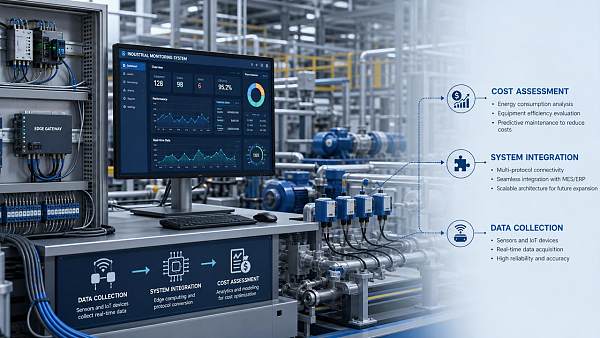
- Integrate data into control and management workflows, not just display screens.
- Measure results by scrap reduction, uptime improvement, energy savings, and audit readiness.
This staged method lowers execution risk and improves financial visibility. It also allows decision-makers to compare quick-win projects with longer-cycle investments such as advanced analyzers, metrology systems, or broader industrial online monitoring networks.
What compliance and governance issues should not be overlooked?
Manufacturing process control is increasingly tied to internal governance, customer audits, and industry expectations. While exact standards differ by application, companies often need disciplined calibration records, traceable measurement chains, controlled alarm handling, and evidence that process limits are defined and reviewed.
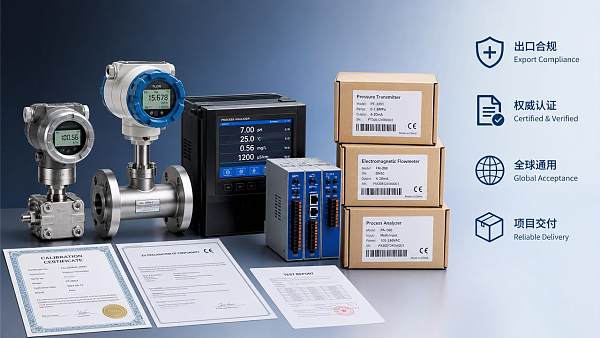
In the instrumentation industry, this means buyers should ask suppliers about documentation completeness, test and inspection support, maintenance recommendations, and compatibility with common industrial communication and data management practices. These details influence acceptance, startup speed, and long-term usability.
- Confirm whether measurement accuracy and repeatability are appropriate for the intended compliance use.
- Review calibration intervals and required traceability procedures before procurement approval.
- Ensure documentation packages match internal engineering, quality, and audit expectations.
FAQ: the questions business leaders ask before upgrading manufacturing process control
How do we know if our current manufacturing process control is no longer sufficient?
Warning signs include recurring quality variation, frequent manual intervention, poor visibility into process drift, delayed root-cause analysis, and difficulty producing consistent records for customers or auditors. If teams rely on operator experience more than on trusted process data, the control framework is usually due for review.
Which plants benefit first from investment in manufacturing process control?
Facilities with high-volume throughput, expensive raw materials, safety-sensitive operations, strict compliance obligations, or unstable utilities often gain the earliest returns. The same applies to sites planning digital transformation but still struggling with inconsistent field measurements and fragmented monitoring tools.
Should we prioritize sensors, control systems, or analytics software?
Start with the weakest link. In many cases, the priority is better field instrumentation and signal reliability. If measurement quality is poor, analytics will not solve the problem. Once data integrity is stable, control logic refinement and higher-level analysis become far more valuable.
What procurement mistake creates the highest hidden cost?
Choosing by unit price alone is often the most expensive mistake. Hidden costs show up through downtime, premature failure, extra calibration work, communication mismatch, or poor documentation. A lower-cost component may still be justified, but only after lifecycle impact is reviewed honestly.
Why choose us for your 2026 process control planning
For companies preparing 2026 upgrades, the real need is not just equipment supply. It is decision support across measurement, monitoring, analysis, and control. With broad instrumentation coverage across pressure, temperature, flow, level, composition analysis, metrology, calibration, laboratory instruments, automatic control, and industrial online monitoring, we can help align manufacturing process control choices with actual operating risk and business goals.
You can consult us on practical topics that affect project success: parameter confirmation, application matching, control point selection, integration considerations, delivery timeline planning, documentation expectations, certification-related questions, sample support, and quotation comparison for phased or customized solutions.
If your team is reviewing modernization priorities, facing unclear selection standards, or balancing budget against compliance and output targets, contact us to discuss the specific manufacturing process control challenges in your plant. A focused technical and commercial review can shorten decision cycles and reduce avoidable project risk.
Recommended for You
 Industrial Metrology Tools: When Accuracy Impacts OutputIndustrial metrology tools directly shape output, quality, and cost. Learn how accurate measurement reduces scrap, speeds decisions, and improves production performance.
 Process Measurement Devices in Export Compliance UpdatesProcess measurement devices face new export compliance updates that impact classification, documents, lead times, and market access. Learn practical steps to reduce risk and protect growth.
 Quality Control Analyzers Price Shifts in Global SupplyQuality control analyzers prices are shifting with global supply changes. Learn the key cost drivers, compliance risks, and sourcing tips buyers need to reduce total cost.
 Production Line Monitoring: How to Reduce Downtime FastProduction line monitoring helps reduce downtime fast with practical checklists, smarter alarms, and real-time insights. Learn how to improve visibility, response speed, and line reliability.
 Process Optimization Instruments: ROI vs Maintenance CostsProcess optimization instruments: compare ROI, downtime reduction, and accuracy gains against calibration and maintenance costs. Learn how to choose smarter, lower-risk solutions.
 Manufacturing Process Control Trends Shaping 2026 OutputManufacturing process control trends for 2026: explore real-time monitoring, predictive quality, compliance readiness, and smarter automation strategies to boost output and reduce risk.
 Industrial Inspection Devices for Safer Quality ChecksIndustrial inspection devices help deliver safer quality checks by detecting faults early, reducing downtime, and improving compliance across manufacturing, energy, and infrastructure.
 Industrial Control Instruments: Common Selection MistakesIndustrial control instruments selection mistakes can cause downtime, drift, and safety issues. Learn the most common errors and how to choose the right solution with confidence.
 Industrial Monitoring Solutions: Key Cost Factors in 2026Industrial monitoring solutions in 2026 cost far more than hardware alone. Learn the hidden cost drivers, compare vendor proposals wisely, and make smarter ROI-focused investment decisions.
 How to Compare Test and Measurement Equipment for Factory UseTest and measurement equipment for factory use should be compared by real application, not specs alone. Learn how to choose reliable, connected tools that cut downtime and improve control.
 Stack Gas Analyzers: When Maintenance Delays Start Raising RiskStack gas analyzers can look normal while hidden drift raises compliance, efficiency, and reliability risks. Learn the warning signs and smart maintenance checks before delays become costly.
 Industrial Measurement Systems in Export Projects: Key Compliance ChecksIndustrial measurement systems for export projects: learn the key compliance checks for certifications, calibration, safety, and documents to avoid delays and ensure smooth delivery.
 Pharmaceutical Instrumentation Upgrades: What to Evaluate FirstPharmaceutical instrumentation upgrades start with compliance, data integrity, uptime, and ROI. Learn what to evaluate first to reduce risk and make smarter buying decisions.
 Food Processing Analyzers for Compliance and Batch ConsistencyFood processing analyzers help manufacturers improve compliance, reduce batch variation, and verify quality from raw materials to final release with faster, traceable decisions.
 Biogas Analyzers Market Trends: Accuracy, Maintenance, and ROIBiogas analyzers market trends: explore how accuracy, lower maintenance, and stronger ROI help energy and industrial buyers improve gas quality, uptime, and compliance.
 Safety Monitoring Systems: Common Setup Mistakes to AvoidSafety monitoring systems fail fast when setup is wrong. Discover common installation, calibration, and alarm mistakes to avoid for safer operations and more reliable monitoring.
 Industrial Testing Equipment Costs in 2026: What Drives Pricing?Industrial testing equipment costs in 2026 depend on accuracy, compliance, automation, and lifecycle service. Learn what drives pricing and how to reduce total ownership cost.
 Multi-Component Analyzers vs Single-Gas Units: Which Fits Better?Multi-component analyzers vs single-gas units: compare lifecycle cost, compliance, maintenance, and scalability to choose the best fit for safer, smarter industrial projects.
 Petrochemical Analyzers: Key Specs That Affect Safety and UptimePetrochemical analyzers directly affect safety and uptime. Learn which specs—accuracy, response time, compatibility, and maintenance—matter most for reliable plant performance.
 How to Choose Process Monitoring Instruments for Stable Plant PerformanceProcess monitoring instruments are key to stable plant performance. Learn how to choose the right devices for accuracy, compatibility, lower risk, and better efficiency.
 Brazil INMETRO to Require Portuguese UI and Local Units for Industrial Instruments by 2026Brazil INMETRO mandates Portuguese UI & local units (mbar, kPa, °C) for industrial instruments by Dec 2026—key for exporters, integrators & service providers.
 STMicroelectronics 200mm Line Eases Industrial Sensor Chip ShortageSTMicroelectronics 200mm line eases industrial sensor chip shortage — MCUs & signal-conditioning ICs now ship in 12 weeks. Secure allocation today.
 Southeast Asia Manufacturing Re-shoring Accelerates: Vietnam/Indonesia Industrial Instrument Imports Up 37% YoYSoutheast Asia manufacturing re-shoring accelerates: Vietnam & Indonesia industrial instrument imports up 37% YoY — key insights for suppliers, OEMs & procurement teams.
 First Global White Paper on Humanoid Robot Sensor Calibration ReleasedHumanoid robot sensor calibration: First global white paper released—key for ISO/IEC JWG 23 compliance, export readiness & dynamic torque accuracy. Act now.
 SAMR to Upgrade EV Battery Recycling Standard to MandatorySAMR to upgrade EV battery recycling standard GB/T 34015—202X to mandatory by Dec 2026 — critical for exporters, BMS makers & cert labs.
 Saudi SASO Accelerates AI Energy Efficiency Rules for TransmittersSASO AI energy efficiency rules for transmitters take effect 1 June 2026 — mandatory AI simulation, Saudi climate data, and authorized lab validation required. Act now to avoid export delays.
 IEC 63278:2026 Released for Industrial Instrument CybersecurityIEC 63278:2026 is live — the first global standard mandating cybersecurity verification for industrial instruments. Discover compliance impacts, deadlines, and actionable steps for OT/IT convergence.
 Red Sea Crisis Escalates: Gulf of Aden Navigation Ban Extended to June 15, 2026Red Sea Crisis escalates: Gulf of Aden navigation ban extended to June 15, 2026—disrupting industrial instrumentation shipments to the Middle East with 458% air freight spikes and 12–18 day delays.
 US DOE Updates Efficiency Rules for Industrial SensorsUS DOE updates industrial sensor efficiency rules: AI-driven dynamic calibration required by Sept 2026. Ensure AI-Cal Verified compliance now.
 EU Mandates PEF Carbon Footprint Module for Industrial Instruments from June 2026EU mandates PEF carbon footprint module for industrial instruments from June 2026—key for exporters, OEMs & certifiers. Act now to ensure compliance.
 Explosion-Proof Instruments: Compliance Risks Before You OrderExplosion-proof instruments can trigger delays, failed inspections, and safety risks if compliance is overlooked. Learn what to verify before ordering and make safer, smarter purchasing decisions.
 Gas Quality Monitoring Equipment Import Rules to Watch in 2026Gas quality monitoring equipment import rules for 2026 are tightening. Learn the key compliance, certification, and customs risks distributors must manage to avoid delays and protect margins.












Search Categories
Search Categories
Latest Article
- Industrial Metrology Tools: When Accuracy Impacts OutputIndustrial metrology tools directly shape output, quality, and cost. Learn how accurate measurement reduces scrap, speeds decisions, and improves production performance.Posted by:
- Process Measurement Devices in Export Compliance UpdatesProcess measurement devices face new export compliance updates that impact classification, documents, lead times, and market access. Learn practical steps to reduce risk and protect growth.Posted by:
- Quality Control Analyzers Price Shifts in Global SupplyQuality control analyzers prices are shifting with global supply changes. Learn the key cost drivers, compliance risks, and sourcing tips buyers need to reduce total cost.Posted by:
Please give us a message
