
Industrial Metrology Tools: When Accuracy Impacts Output


In modern manufacturing and quality control, industrial metrology tools do far more than verify dimensions—they directly influence efficiency, consistency, and product performance.
As industries push for tighter tolerances, smarter automation, and lower waste, understanding how these tools support accurate measurement becomes essential.
This article explains where precision has the greatest operational impact, what risks come from poor measurement control, and how companies can evaluate metrology investments more confidently.
Why accuracy affects output more than many teams expect
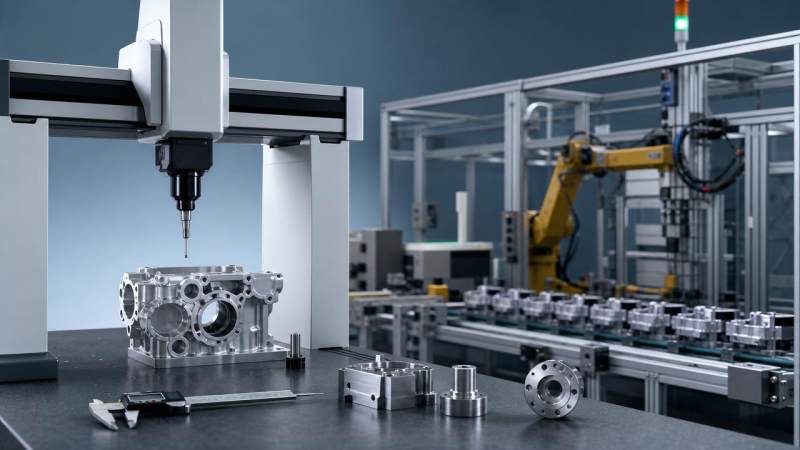
People researching industrial metrology tools usually want a practical answer: do better measurement systems truly improve production results, or are they only a quality department concern?
The short answer is yes. Accuracy directly affects throughput, scrap rates, rework, machine setup, supplier consistency, and confidence in every downstream decision based on measurement data.
When measurements are unreliable, teams waste time checking parts twice, disputing inspection results, adjusting machines unnecessarily, or passing nonconforming components into later production stages.
That creates a hidden output problem. The issue is not only defective product. It is slower release, unstable processes, avoidable downtime, and higher cost per acceptable unit.
In contrast, accurate and repeatable metrology supports faster process correction, better tool wear monitoring, more reliable first-article inspection, and stronger confidence in process capability.
For information researchers, the most important takeaway is this: industrial metrology tools influence output because measurement quality shapes production decisions, not just compliance records.
What users searching for industrial metrology tools usually need to understand
Most readers are not only looking for a list of instruments. They want to understand which tools matter, where they fit, and how to judge their operational value.
That search intent is usually tied to one or more business questions. Where does measurement failure hurt production most? Which tools are appropriate for which tasks?
They also want to know how to compare precision, repeatability, speed, ease of integration, calibration demands, and long-term cost of ownership.
In many industries, the concern is not maximum precision alone. It is whether a tool delivers measurement results that are reliable enough for the process being controlled.
Aerospace, automotive, medical, electronics, machining, energy equipment, and advanced fabrication all depend on metrology differently, but they share one need: trusted measurement data.
That is why a useful article should focus less on definitions and more on application value, risk reduction, and decision criteria.
Where industrial metrology tools have the biggest impact on production performance
The strongest impact usually appears at process points where small dimensional variation leads to large operational consequences.
One major area is machine setup. If initial measurements are inaccurate, operators may offset tooling incorrectly, causing poor first-pass yield and unnecessary adjustment cycles.
Another area is in-process inspection. Real-time or near-line measurement helps teams detect drift before it becomes a batch-level problem.
This is especially important in high-volume manufacturing, where a small error repeated across thousands of parts quickly becomes a major cost event.
Final inspection is also important, but relying only on end-of-line verification is risky. It catches defects after value has already been added.
Incoming material verification is another overlooked use case. If supplied parts or raw materials are not measured accurately, assembly quality and machining consistency suffer later.
Tooling and fixture validation also depend on metrology. Worn or misaligned fixtures can introduce repeatable but misleading errors that affect entire production runs.
For automated environments, metrology becomes even more valuable when integrated with feedback loops that support statistical process control and closed-loop manufacturing.
Types of industrial metrology tools and what they are best suited for
Industrial metrology tools cover a wide range of instruments, from simple handheld devices to advanced optical and coordinate-based systems.
Calipers and micrometers remain essential for routine dimensional checks. They are cost-effective, easy to use, and suitable for many shop-floor measurements.
Dial indicators, bore gauges, height gauges, and gauge blocks support more specialized dimensional tasks and calibration reference work.
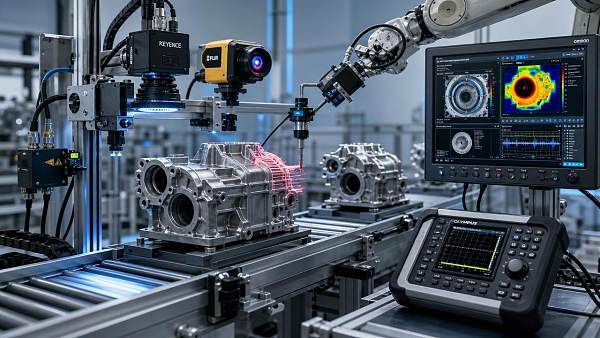
Coordinate measuring machines, or CMMs, are widely used when high precision, geometric complexity, and traceable inspection records are required.
Optical comparators and vision measurement systems are valuable for non-contact inspection, delicate components, and faster measurement of repeat features.
Laser scanners and portable measurement arms are useful for larger parts, reverse engineering, surface capture, and flexible inspection environments.
Surface roughness testers, form measurement systems, and roundness instruments become important when product performance depends on more than size alone.
The right choice depends on tolerance requirements, part geometry, material sensitivity, production speed, inspection location, and data reporting needs.
How poor measurement control reduces efficiency even when production seems normal
One of the hardest problems to see is that weak metrology does not always cause immediate failure. Sometimes it quietly reduces output over time.
For example, teams may compensate for uncertainty by inspecting more often than necessary, increasing labor without improving process understanding.
Operators may also slow machine speeds or widen process margins because they do not fully trust the inspection data.
Quality engineers may spend hours resolving disagreements between gauges, stations, or shifts instead of addressing true process variation.
Management often sees these issues as separate inefficiencies, but they commonly trace back to measurement system capability.
Measurement error can also distort process improvement efforts. If the data itself is unstable, root cause analysis becomes less reliable and corrective action less effective.
In short, output suffers not only when parts fail inspection, but when the organization cannot make fast, confident decisions from its measurement results.
What to evaluate before choosing industrial metrology tools
Readers comparing industrial metrology tools should avoid choosing based only on headline accuracy specifications.
First, compare the required tolerance with the tool’s actual measurement capability under real operating conditions, not just ideal laboratory conditions.
Second, evaluate repeatability and reproducibility. A highly precise device on paper is less useful if different users or environments produce inconsistent results.
Third, consider speed. In many production settings, a slower but extremely precise method may not support operational needs as well as a faster, sufficiently capable one.
Fourth, review environmental sensitivity. Temperature, vibration, dust, humidity, and operator handling can all affect measurement reliability.
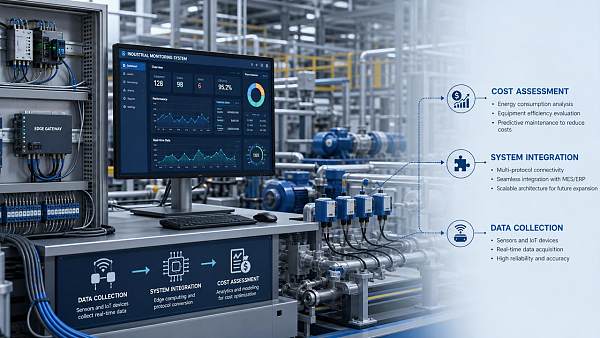
Fifth, assess software and data connectivity. Modern metrology creates more value when results flow into quality systems, SPC platforms, MES, or digital traceability records.
Sixth, think about calibration, maintenance, and training. A tool that performs well initially but is difficult to maintain may create long-term inconsistency.
Finally, look at total economic impact: reduced scrap, faster setup, fewer disputes, better compliance, and improved customer confidence.
How to match the tool to the application instead of chasing maximum precision
One common mistake is assuming the most advanced system is automatically the best investment.
In practice, the best tool is the one that meets process needs with dependable accuracy, acceptable speed, and manageable operating complexity.
For a simple shaft diameter check, a calibrated micrometer may provide better practical value than a complex automated station.
For a turbine blade, molded medical component, or precision aerospace geometry, advanced coordinate or optical systems may be necessary.
Application fit matters because over-specifying equipment can increase cycle time, training burden, maintenance cost, and implementation delays.
Under-specifying is equally risky. If a tool cannot detect meaningful variation, the business may believe the process is stable when it is not.
A useful evaluation approach is to define the measurement objective first: setup verification, in-process control, final acceptance, reverse engineering, or compliance documentation.
Once that objective is clear, the selection process becomes more rational and tied to business outcomes rather than equipment marketing claims.
The growing role of metrology in automation and digital manufacturing
As manufacturing systems become more connected, industrial metrology tools are no longer isolated inspection assets.
They increasingly serve as data sources for automated correction, predictive maintenance, digital twins, and broader quality intelligence initiatives.
In smart factories, measurement data can trigger machine compensation, identify drift patterns, and reduce the delay between defect detection and corrective action.
This matters because modern output goals depend not only on machine speed, but on process stability and decision speed.
Metrology also supports traceability, which is critical in regulated or high-liability sectors where each dimensional result may need to be linked to a part history.
For companies planning digital transformation, metrology should be viewed as a strategic data layer, not only an inspection function.
That perspective helps explain why measurement investment often contributes to broader operational maturity beyond the quality department.
Common decision mistakes buyers and researchers should avoid
One mistake is focusing only on instrument purchase price while ignoring recurring cost from calibration, downtime, retraining, and weak data integration.
Another is choosing a tool without validating the measurement process on actual parts, actual users, and actual production conditions.
Some organizations also buy advanced systems without assigning ownership for programming, upkeep, result interpretation, and process response.
Others fail to define acceptable uncertainty relative to part tolerance, leading to tools that are either inadequate or unnecessarily expensive.
It is also risky to evaluate industrial metrology tools separately from process improvement goals. Measurement should serve production decisions, not exist as an isolated technical function.
The strongest purchasing decisions come from cross-functional input involving quality, production, engineering, maintenance, and where relevant, compliance stakeholders.
Conclusion: accuracy matters because every production decision depends on trusted measurement
Industrial metrology tools matter most when businesses understand them as output enablers, not just inspection devices.
Accurate measurement improves yield, reduces waste, supports faster correction, strengthens traceability, and protects product performance.
For researchers evaluating options, the key is not to ask which tool is most advanced, but which one delivers reliable measurement for the decisions that affect production most.
When accuracy aligns with application, environment, and data use, metrology becomes a direct contributor to better operational results.
That is why, in modern industry, precision is not a side issue. It is part of how quality, efficiency, and output are built every day.
Recommended for You
 Industrial Metrology Tools: When Accuracy Impacts OutputIndustrial metrology tools directly shape output, quality, and cost. Learn how accurate measurement reduces scrap, speeds decisions, and improves production performance.
 Process Measurement Devices in Export Compliance UpdatesProcess measurement devices face new export compliance updates that impact classification, documents, lead times, and market access. Learn practical steps to reduce risk and protect growth.
 Quality Control Analyzers Price Shifts in Global SupplyQuality control analyzers prices are shifting with global supply changes. Learn the key cost drivers, compliance risks, and sourcing tips buyers need to reduce total cost.
 Production Line Monitoring: How to Reduce Downtime FastProduction line monitoring helps reduce downtime fast with practical checklists, smarter alarms, and real-time insights. Learn how to improve visibility, response speed, and line reliability.
 Process Optimization Instruments: ROI vs Maintenance CostsProcess optimization instruments: compare ROI, downtime reduction, and accuracy gains against calibration and maintenance costs. Learn how to choose smarter, lower-risk solutions.
 Manufacturing Process Control Trends Shaping 2026 OutputManufacturing process control trends for 2026: explore real-time monitoring, predictive quality, compliance readiness, and smarter automation strategies to boost output and reduce risk.
 Industrial Inspection Devices for Safer Quality ChecksIndustrial inspection devices help deliver safer quality checks by detecting faults early, reducing downtime, and improving compliance across manufacturing, energy, and infrastructure.
 Industrial Control Instruments: Common Selection MistakesIndustrial control instruments selection mistakes can cause downtime, drift, and safety issues. Learn the most common errors and how to choose the right solution with confidence.
 Industrial Monitoring Solutions: Key Cost Factors in 2026Industrial monitoring solutions in 2026 cost far more than hardware alone. Learn the hidden cost drivers, compare vendor proposals wisely, and make smarter ROI-focused investment decisions.
 How to Compare Test and Measurement Equipment for Factory UseTest and measurement equipment for factory use should be compared by real application, not specs alone. Learn how to choose reliable, connected tools that cut downtime and improve control.
 Stack Gas Analyzers: When Maintenance Delays Start Raising RiskStack gas analyzers can look normal while hidden drift raises compliance, efficiency, and reliability risks. Learn the warning signs and smart maintenance checks before delays become costly.
 Industrial Measurement Systems in Export Projects: Key Compliance ChecksIndustrial measurement systems for export projects: learn the key compliance checks for certifications, calibration, safety, and documents to avoid delays and ensure smooth delivery.
 Pharmaceutical Instrumentation Upgrades: What to Evaluate FirstPharmaceutical instrumentation upgrades start with compliance, data integrity, uptime, and ROI. Learn what to evaluate first to reduce risk and make smarter buying decisions.
 Food Processing Analyzers for Compliance and Batch ConsistencyFood processing analyzers help manufacturers improve compliance, reduce batch variation, and verify quality from raw materials to final release with faster, traceable decisions.
 Biogas Analyzers Market Trends: Accuracy, Maintenance, and ROIBiogas analyzers market trends: explore how accuracy, lower maintenance, and stronger ROI help energy and industrial buyers improve gas quality, uptime, and compliance.
 Safety Monitoring Systems: Common Setup Mistakes to AvoidSafety monitoring systems fail fast when setup is wrong. Discover common installation, calibration, and alarm mistakes to avoid for safer operations and more reliable monitoring.
 Industrial Testing Equipment Costs in 2026: What Drives Pricing?Industrial testing equipment costs in 2026 depend on accuracy, compliance, automation, and lifecycle service. Learn what drives pricing and how to reduce total ownership cost.
 Multi-Component Analyzers vs Single-Gas Units: Which Fits Better?Multi-component analyzers vs single-gas units: compare lifecycle cost, compliance, maintenance, and scalability to choose the best fit for safer, smarter industrial projects.
 Petrochemical Analyzers: Key Specs That Affect Safety and UptimePetrochemical analyzers directly affect safety and uptime. Learn which specs—accuracy, response time, compatibility, and maintenance—matter most for reliable plant performance.
 How to Choose Process Monitoring Instruments for Stable Plant PerformanceProcess monitoring instruments are key to stable plant performance. Learn how to choose the right devices for accuracy, compatibility, lower risk, and better efficiency.
 Brazil INMETRO to Require Portuguese UI and Local Units for Industrial Instruments by 2026Brazil INMETRO mandates Portuguese UI & local units (mbar, kPa, °C) for industrial instruments by Dec 2026—key for exporters, integrators & service providers.
 STMicroelectronics 200mm Line Eases Industrial Sensor Chip ShortageSTMicroelectronics 200mm line eases industrial sensor chip shortage — MCUs & signal-conditioning ICs now ship in 12 weeks. Secure allocation today.
 Southeast Asia Manufacturing Re-shoring Accelerates: Vietnam/Indonesia Industrial Instrument Imports Up 37% YoYSoutheast Asia manufacturing re-shoring accelerates: Vietnam & Indonesia industrial instrument imports up 37% YoY — key insights for suppliers, OEMs & procurement teams.
 First Global White Paper on Humanoid Robot Sensor Calibration ReleasedHumanoid robot sensor calibration: First global white paper released—key for ISO/IEC JWG 23 compliance, export readiness & dynamic torque accuracy. Act now.
 SAMR to Upgrade EV Battery Recycling Standard to MandatorySAMR to upgrade EV battery recycling standard GB/T 34015—202X to mandatory by Dec 2026 — critical for exporters, BMS makers & cert labs.
 Saudi SASO Accelerates AI Energy Efficiency Rules for TransmittersSASO AI energy efficiency rules for transmitters take effect 1 June 2026 — mandatory AI simulation, Saudi climate data, and authorized lab validation required. Act now to avoid export delays.
 IEC 63278:2026 Released for Industrial Instrument CybersecurityIEC 63278:2026 is live — the first global standard mandating cybersecurity verification for industrial instruments. Discover compliance impacts, deadlines, and actionable steps for OT/IT convergence.
 Red Sea Crisis Escalates: Gulf of Aden Navigation Ban Extended to June 15, 2026Red Sea Crisis escalates: Gulf of Aden navigation ban extended to June 15, 2026—disrupting industrial instrumentation shipments to the Middle East with 458% air freight spikes and 12–18 day delays.
 US DOE Updates Efficiency Rules for Industrial SensorsUS DOE updates industrial sensor efficiency rules: AI-driven dynamic calibration required by Sept 2026. Ensure AI-Cal Verified compliance now.
 EU Mandates PEF Carbon Footprint Module for Industrial Instruments from June 2026EU mandates PEF carbon footprint module for industrial instruments from June 2026—key for exporters, OEMs & certifiers. Act now to ensure compliance.
 Explosion-Proof Instruments: Compliance Risks Before You OrderExplosion-proof instruments can trigger delays, failed inspections, and safety risks if compliance is overlooked. Learn what to verify before ordering and make safer, smarter purchasing decisions.
 Gas Quality Monitoring Equipment Import Rules to Watch in 2026Gas quality monitoring equipment import rules for 2026 are tightening. Learn the key compliance, certification, and customs risks distributors must manage to avoid delays and protect margins.
















Search Categories
Search Categories
Latest Article
- Industrial Metrology Tools: When Accuracy Impacts OutputIndustrial metrology tools directly shape output, quality, and cost. Learn how accurate measurement reduces scrap, speeds decisions, and improves production performance.Posted by:
- Process Measurement Devices in Export Compliance UpdatesProcess measurement devices face new export compliance updates that impact classification, documents, lead times, and market access. Learn practical steps to reduce risk and protect growth.Posted by:
- Quality Control Analyzers Price Shifts in Global SupplyQuality control analyzers prices are shifting with global supply changes. Learn the key cost drivers, compliance risks, and sourcing tips buyers need to reduce total cost.Posted by:
Please give us a message
