
Industrial Monitoring Solutions: Key Cost Factors in 2026


For finance approvers evaluating industrial monitoring solutions in 2026, the biggest budgeting mistake is treating the purchase price as the main cost. In practice, hardware is only one part of the investment.
Total cost is shaped more by integration effort, site conditions, compliance needs, cybersecurity, data handling, maintenance planning, and the useful life of the system. These factors directly affect ROI, risk, and approval confidence.
This article explains the key cost factors behind industrial monitoring solutions, with a focus on how finance teams can compare proposals, control hidden expenses, and make more reliable capital decisions.
What finance approvers should assess before looking at vendor pricing
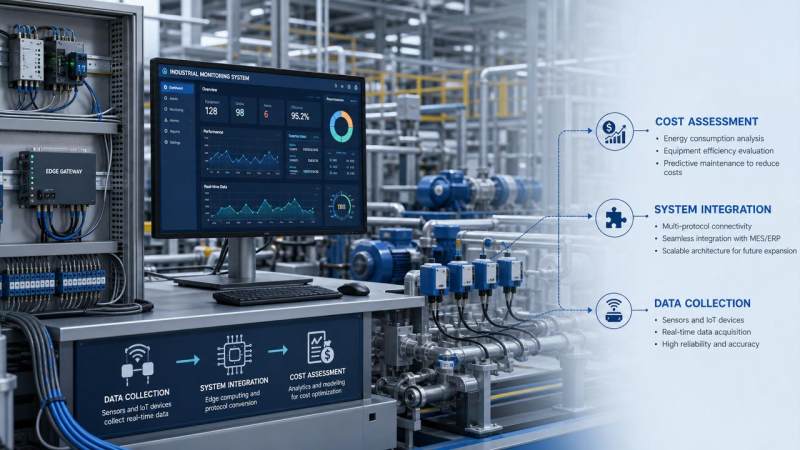
When reviewing industrial monitoring solutions, finance teams should first define the business case. The right question is not “What does the system cost?” but “What problem does it prevent or improve?”
In 2026, most projects are justified by reducing downtime, improving compliance, lowering manual inspection labor, optimizing energy use, and strengthening operational visibility across assets, plants, or distributed sites.
If that value case is unclear, even a competitively priced solution can become a poor investment. If the value case is strong, a higher upfront quote may still deliver a better financial outcome.
For this reason, the approval process should begin with expected outcomes, measurable KPIs, and the cost of doing nothing. That baseline is essential for evaluating total ownership cost and payback.
The biggest cost factor is usually system scope, not unit device price
Many budgets start with sensor counts, controller prices, or software licenses. But total project cost usually grows faster from scope complexity than from the price of individual components.
Scope includes the number of monitored assets, data points per asset, environmental conditions, site dispersion, reporting requirements, alarm workflows, retention periods, and integration with existing platforms.
A solution monitoring ten simple process points in one facility is fundamentally different from one collecting real-time data across multiple plants, remote stations, or regulated operating environments.
For finance approvers, this means vendor quotes should be compared against clearly matched scope definitions. A cheaper proposal may simply exclude implementation work, storage, or support that another quote includes.
Integration costs often exceed expectations
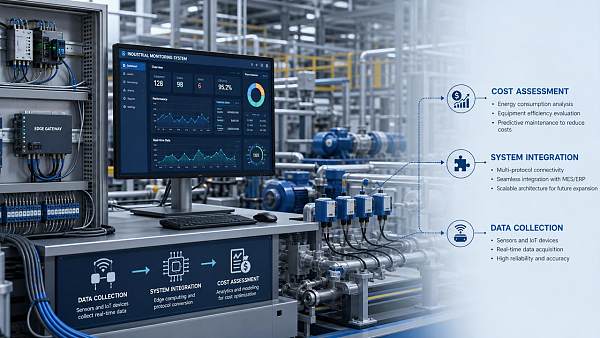
One of the most underestimated expenses in industrial monitoring solutions is integration. New monitoring systems rarely operate in isolation. They must connect with existing control, reporting, and enterprise systems.
Common integration targets include SCADA, PLC networks, DCS environments, MES platforms, ERP systems, CMMS tools, data historians, laboratory systems, and enterprise dashboards used by management teams.
Costs rise when old equipment uses proprietary protocols, when documentation is incomplete, or when plant infrastructure has changed over time without standardized architecture or asset naming.
Integration also requires engineering time, testing, cybersecurity review, mapping of tags and alarms, and user acceptance validation. These tasks are not optional if the system must support real operational decisions.
For financial review, integration should be separated into discovery, interface development, validation, and post-launch tuning. Without that breakdown, proposals may hide meaningful labor and risk.
Site conditions can materially change deployment cost
Industrial environments create cost variability that is easy to overlook during desk-based budgeting. Installation conditions can significantly affect cabling, mounting, protection, labor hours, and commissioning effort.
Examples include high-temperature areas, hazardous zones, corrosive environments, vibration exposure, elevated structures, confined spaces, offshore or remote facilities, and sites with strict shutdown windows.
Wireless architectures may reduce installation costs in some locations, but they can introduce trade-offs in network design, signal reliability, battery maintenance, or security controls depending on the application.
For finance approvers, proposals should state site assumptions clearly. If field realities differ from assumptions, the approved budget may be too low before the project even reaches implementation.
Compliance and cybersecurity are now budget items, not side considerations
In 2026, compliance and cybersecurity are central cost drivers for industrial monitoring solutions, especially in energy, environmental monitoring, pharmaceuticals, critical infrastructure, and regulated manufacturing.
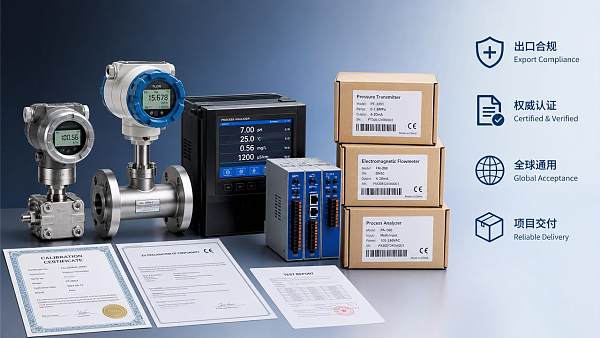
Compliance costs may include documentation, audit trails, traceability functions, calibration support, reporting workflows, validation procedures, and adherence to industry or regional regulatory requirements.
Cybersecurity adds further cost through network segmentation, secure remote access, identity management, patch processes, encrypted communications, log retention, and coordination between OT and IT teams.
These costs are sometimes viewed as overhead, but for finance teams they are risk controls. Underfunding them can lead to delayed approvals, failed audits, incident exposure, or expensive retrofits later.
A proposal that appears less expensive because it excludes compliance engineering or cybersecurity hardening is not necessarily the lower-cost option over the full asset life.
Software, licensing, and data management can outgrow hardware costs
As monitoring systems become more connected, the long-term cost center often shifts from devices to software and data. This is especially true when organizations want analytics, dashboards, remote access, and multi-site visibility.
Key software cost elements include platform licenses, user seats, cloud subscriptions, historian capacity, API access, alarm management, analytics modules, report generation, and mobile interface support.
Data management costs also depend on frequency of sampling, storage duration, backup policies, redundancy, and whether data must remain on premises, in the cloud, or across hybrid environments.
Finance approvers should pay close attention to scaling rules. A system that is affordable at pilot stage may become expensive once additional lines, plants, or users are added.
Ask vendors whether pricing increases by asset count, data volume, connection count, feature tiers, or support level. This prevents budget surprises when the business expands system usage.
Maintenance and lifecycle support determine real ownership cost
Industrial monitoring solutions are not one-time purchases. They require calibration, firmware updates, parts replacement, network upkeep, software maintenance, and technical support over many years.
Hardware components such as sensors, transmitters, gateways, and power modules have different wear profiles and replacement cycles. Harsh environments can shorten life and increase service frequency.
Software environments also require updates to remain secure and compatible with operating systems, browsers, databases, and enterprise infrastructure. Ignoring these needs creates future operational and security liabilities.
Finance teams should examine warranty terms, spare parts strategy, service response levels, local support availability, and the expected annual maintenance percentage of installed system value.
The lowest purchase bid can become the highest lifecycle-cost option if support is weak, replacement parts are expensive, or specialized expertise is required for every configuration change.
Labor savings and downtime reduction should be quantified carefully
Many investment cases rely on efficiency gains, but those gains should be tested with discipline. Finance approvers should ask whether projected savings are direct, measurable, and realistically attributable to the system.
Labor savings may come from reduced manual inspections, fewer site visits, faster reporting, automated alerts, and lower data entry time. These benefits are credible when current workflows are well documented.
Downtime reduction often provides the strongest ROI, especially where failures are expensive. But estimates should be linked to historical incident rates, mean time to detect, and mean time to respond.
Projects justified only by “better visibility” are harder to approve unless that visibility is connected to avoided costs, production continuity, environmental protection, safety, or compliance performance.
A strong financial case combines hard savings, risk avoidance, and strategic capability, rather than depending on one optimistic assumption.
Customization can improve fit but increase budget and vendor dependence
Some industrial monitoring solutions require custom dashboards, specialized reports, unique interfaces, or application-specific logic. Customization can increase user adoption, but it usually raises implementation and support cost.
Custom work also creates dependency on vendor expertise. Future changes may require additional paid development, especially when custom features are not part of the standard product roadmap.
For finance review, it is useful to distinguish between configuration and customization. Configuration uses standard features and is generally lower risk. Customization introduces change-control and long-term maintenance implications.
When comparing options, a slightly less tailored system with strong standard functionality may produce lower total cost and better scalability than a highly customized deployment.
Vendor capability affects cost certainty as much as cost level
Finance approvers are not only buying technology. They are buying delivery capability, support reliability, and future responsiveness. Weak execution increases the chance of overruns, delays, and post-installation problems.
Important evaluation points include industry experience, installed base, reference projects, service coverage, training quality, documentation standards, cybersecurity maturity, and roadmap stability.
A credible vendor should explain what is included, what is excluded, what assumptions are built into the quote, and where cost variation is most likely during deployment.
Cost certainty matters. An offer that is higher but more transparent may represent lower financial risk than a cheaper quote with unclear scope, weak support, or limited implementation accountability.
How to compare industrial monitoring solutions in a finance-ready way
For practical approval decisions, use a structured comparison model rather than a price-only review. This helps separate visible costs from hidden costs and short-term savings from long-term liabilities.
At minimum, compare solutions across these categories: capital equipment, installation, integration, software, cybersecurity, compliance, training, maintenance, scaling cost, support model, and expected service life.
Then evaluate value drivers such as avoided downtime, labor reduction, energy optimization, quality improvement, audit readiness, and resilience benefits for critical operations.
Finance teams should also request sensitivity scenarios. For example, what happens to cost if the project expands by 30 percent, if data retention doubles, or if an additional site is added next year?
This approach gives a more realistic view of budget exposure and strengthens approval quality, especially for phased or multi-site industrial monitoring solutions.
A practical budgeting view for 2026 investment decisions
In 2026, industrial monitoring solutions should be evaluated as operational infrastructure rather than simple instrumentation purchases. Their value and cost both extend across technology, process, risk, and data management.
For finance approvers, the most important principle is to focus on total cost of ownership, implementation realism, and measurable business outcomes. Upfront price alone is a weak basis for decision-making.
The best investments are not always the cheapest systems. They are the solutions that fit the operational context, control lifecycle cost, meet compliance expectations, and produce dependable returns over time.
When proposals are compared through that lens, approval decisions become clearer, risks become easier to spot, and industrial monitoring investments are more likely to deliver lasting financial value.
Recommended for You
 Industrial Metrology Tools: When Accuracy Impacts OutputIndustrial metrology tools directly shape output, quality, and cost. Learn how accurate measurement reduces scrap, speeds decisions, and improves production performance.
 Process Measurement Devices in Export Compliance UpdatesProcess measurement devices face new export compliance updates that impact classification, documents, lead times, and market access. Learn practical steps to reduce risk and protect growth.
 Quality Control Analyzers Price Shifts in Global SupplyQuality control analyzers prices are shifting with global supply changes. Learn the key cost drivers, compliance risks, and sourcing tips buyers need to reduce total cost.
 Production Line Monitoring: How to Reduce Downtime FastProduction line monitoring helps reduce downtime fast with practical checklists, smarter alarms, and real-time insights. Learn how to improve visibility, response speed, and line reliability.
 Process Optimization Instruments: ROI vs Maintenance CostsProcess optimization instruments: compare ROI, downtime reduction, and accuracy gains against calibration and maintenance costs. Learn how to choose smarter, lower-risk solutions.
 Manufacturing Process Control Trends Shaping 2026 OutputManufacturing process control trends for 2026: explore real-time monitoring, predictive quality, compliance readiness, and smarter automation strategies to boost output and reduce risk.
 Industrial Inspection Devices for Safer Quality ChecksIndustrial inspection devices help deliver safer quality checks by detecting faults early, reducing downtime, and improving compliance across manufacturing, energy, and infrastructure.
 Industrial Control Instruments: Common Selection MistakesIndustrial control instruments selection mistakes can cause downtime, drift, and safety issues. Learn the most common errors and how to choose the right solution with confidence.
 Industrial Monitoring Solutions: Key Cost Factors in 2026Industrial monitoring solutions in 2026 cost far more than hardware alone. Learn the hidden cost drivers, compare vendor proposals wisely, and make smarter ROI-focused investment decisions.
 How to Compare Test and Measurement Equipment for Factory UseTest and measurement equipment for factory use should be compared by real application, not specs alone. Learn how to choose reliable, connected tools that cut downtime and improve control.
 Stack Gas Analyzers: When Maintenance Delays Start Raising RiskStack gas analyzers can look normal while hidden drift raises compliance, efficiency, and reliability risks. Learn the warning signs and smart maintenance checks before delays become costly.
 Industrial Measurement Systems in Export Projects: Key Compliance ChecksIndustrial measurement systems for export projects: learn the key compliance checks for certifications, calibration, safety, and documents to avoid delays and ensure smooth delivery.
 Pharmaceutical Instrumentation Upgrades: What to Evaluate FirstPharmaceutical instrumentation upgrades start with compliance, data integrity, uptime, and ROI. Learn what to evaluate first to reduce risk and make smarter buying decisions.
 Food Processing Analyzers for Compliance and Batch ConsistencyFood processing analyzers help manufacturers improve compliance, reduce batch variation, and verify quality from raw materials to final release with faster, traceable decisions.
 Biogas Analyzers Market Trends: Accuracy, Maintenance, and ROIBiogas analyzers market trends: explore how accuracy, lower maintenance, and stronger ROI help energy and industrial buyers improve gas quality, uptime, and compliance.
 Safety Monitoring Systems: Common Setup Mistakes to AvoidSafety monitoring systems fail fast when setup is wrong. Discover common installation, calibration, and alarm mistakes to avoid for safer operations and more reliable monitoring.
 Industrial Testing Equipment Costs in 2026: What Drives Pricing?Industrial testing equipment costs in 2026 depend on accuracy, compliance, automation, and lifecycle service. Learn what drives pricing and how to reduce total ownership cost.
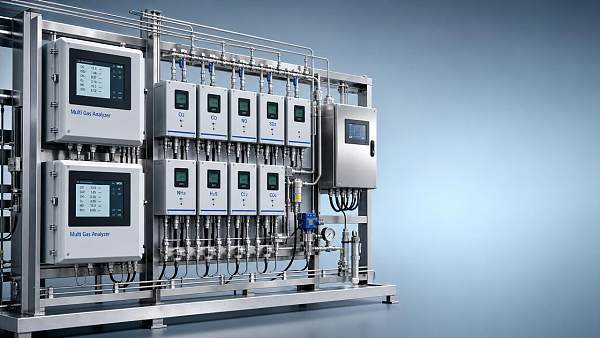
 Multi-Component Analyzers vs Single-Gas Units: Which Fits Better?Multi-component analyzers vs single-gas units: compare lifecycle cost, compliance, maintenance, and scalability to choose the best fit for safer, smarter industrial projects.
 Petrochemical Analyzers: Key Specs That Affect Safety and UptimePetrochemical analyzers directly affect safety and uptime. Learn which specs—accuracy, response time, compatibility, and maintenance—matter most for reliable plant performance.
 How to Choose Process Monitoring Instruments for Stable Plant PerformanceProcess monitoring instruments are key to stable plant performance. Learn how to choose the right devices for accuracy, compatibility, lower risk, and better efficiency.
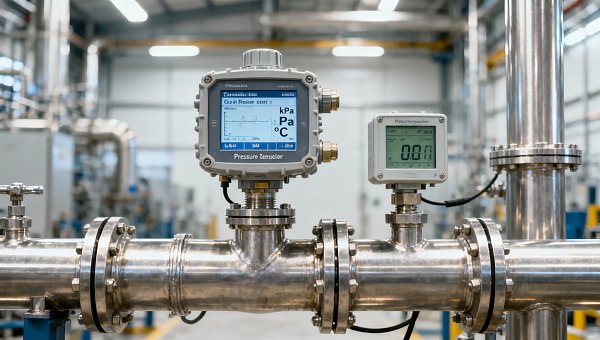
 Brazil INMETRO to Require Portuguese UI and Local Units for Industrial Instruments by 2026Brazil INMETRO mandates Portuguese UI & local units (mbar, kPa, °C) for industrial instruments by Dec 2026—key for exporters, integrators & service providers.
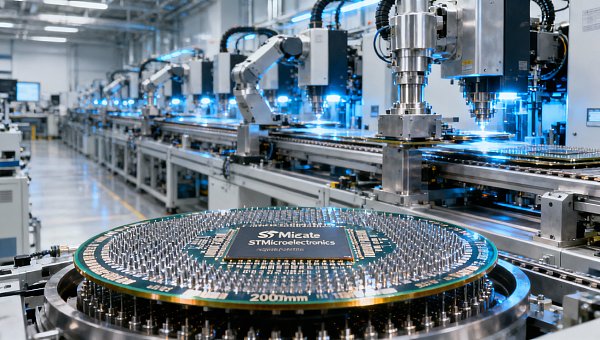
 STMicroelectronics 200mm Line Eases Industrial Sensor Chip ShortageSTMicroelectronics 200mm line eases industrial sensor chip shortage — MCUs & signal-conditioning ICs now ship in 12 weeks. Secure allocation today.
 Southeast Asia Manufacturing Re-shoring Accelerates: Vietnam/Indonesia Industrial Instrument Imports Up 37% YoYSoutheast Asia manufacturing re-shoring accelerates: Vietnam & Indonesia industrial instrument imports up 37% YoY — key insights for suppliers, OEMs & procurement teams.
 First Global White Paper on Humanoid Robot Sensor Calibration ReleasedHumanoid robot sensor calibration: First global white paper released—key for ISO/IEC JWG 23 compliance, export readiness & dynamic torque accuracy. Act now.
 SAMR to Upgrade EV Battery Recycling Standard to MandatorySAMR to upgrade EV battery recycling standard GB/T 34015—202X to mandatory by Dec 2026 — critical for exporters, BMS makers & cert labs.
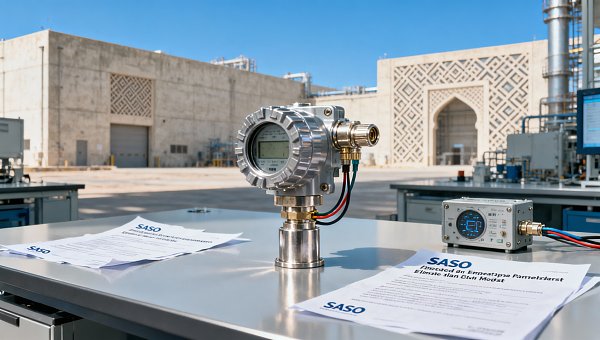
 Saudi SASO Accelerates AI Energy Efficiency Rules for TransmittersSASO AI energy efficiency rules for transmitters take effect 1 June 2026 — mandatory AI simulation, Saudi climate data, and authorized lab validation required. Act now to avoid export delays.
 IEC 63278:2026 Released for Industrial Instrument CybersecurityIEC 63278:2026 is live — the first global standard mandating cybersecurity verification for industrial instruments. Discover compliance impacts, deadlines, and actionable steps for OT/IT convergence.
 Red Sea Crisis Escalates: Gulf of Aden Navigation Ban Extended to June 15, 2026Red Sea Crisis escalates: Gulf of Aden navigation ban extended to June 15, 2026—disrupting industrial instrumentation shipments to the Middle East with 458% air freight spikes and 12–18 day delays.
 US DOE Updates Efficiency Rules for Industrial SensorsUS DOE updates industrial sensor efficiency rules: AI-driven dynamic calibration required by Sept 2026. Ensure AI-Cal Verified compliance now.
 EU Mandates PEF Carbon Footprint Module for Industrial Instruments from June 2026EU mandates PEF carbon footprint module for industrial instruments from June 2026—key for exporters, OEMs & certifiers. Act now to ensure compliance.
 Explosion-Proof Instruments: Compliance Risks Before You OrderExplosion-proof instruments can trigger delays, failed inspections, and safety risks if compliance is overlooked. Learn what to verify before ordering and make safer, smarter purchasing decisions.
 Gas Quality Monitoring Equipment Import Rules to Watch in 2026Gas quality monitoring equipment import rules for 2026 are tightening. Learn the key compliance, certification, and customs risks distributors must manage to avoid delays and protect margins.


















Search Categories
Search Categories
Latest Article
- Industrial Metrology Tools: When Accuracy Impacts OutputIndustrial metrology tools directly shape output, quality, and cost. Learn how accurate measurement reduces scrap, speeds decisions, and improves production performance.Posted by:
- Process Measurement Devices in Export Compliance UpdatesProcess measurement devices face new export compliance updates that impact classification, documents, lead times, and market access. Learn practical steps to reduce risk and protect growth.Posted by:
- Quality Control Analyzers Price Shifts in Global SupplyQuality control analyzers prices are shifting with global supply changes. Learn the key cost drivers, compliance risks, and sourcing tips buyers need to reduce total cost.Posted by:
Please give us a message
