
Process Optimization Instruments: ROI vs Maintenance Costs


When evaluating process optimization instruments, business assessors must look beyond purchase price to compare measurable ROI with long-term maintenance costs. In sectors driven by automation, compliance, and efficiency, the right instrumentation can reduce downtime, improve accuracy, and strengthen operational control. This introduction outlines how to balance investment value against service, calibration, and lifecycle expenses for smarter decision-making.
Why do process optimization instruments matter in ROI-focused evaluations?
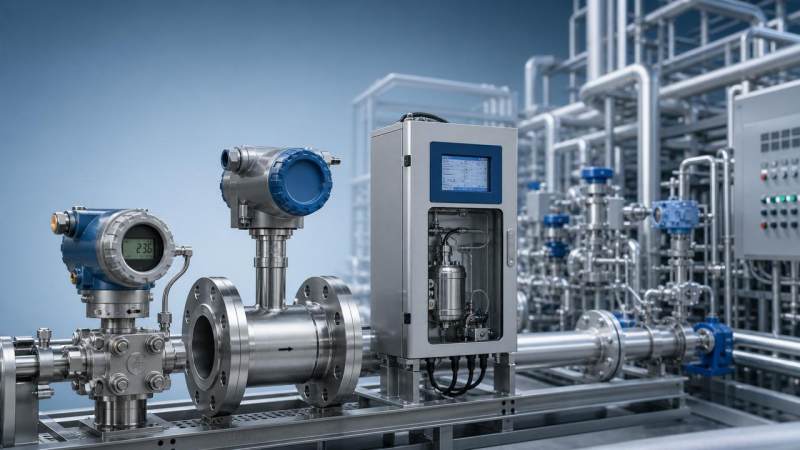
For business assessors, process optimization instruments are not just technical devices. They are cost-control tools that influence throughput, compliance risk, maintenance planning, and operational visibility across industrial, laboratory, utility, and automation environments.
In the broader instrumentation industry, these solutions include pressure, temperature, flow, level, composition analysis, calibration, and online monitoring technologies. Their value is strongest where production stability, measurement integrity, and fast decision-making directly affect commercial performance.
A weak selection often creates hidden costs. A strong selection can support digital transformation, reduce manual intervention, and improve data quality for process control systems, quality teams, and plant management.
- They reduce unplanned downtime by identifying deviations earlier through continuous monitoring and alarm integration.
- They improve process consistency, which lowers scrap, rework, and product quality variation in manufacturing and testing workflows.
- They strengthen compliance readiness by supporting traceable measurements, calibration schedules, and documented operating parameters.
- They provide operational data that supports automation upgrades, predictive maintenance, and more accurate investment planning.
What should business assessors measure beyond the purchase price?
The purchase price of process optimization instruments is only one part of total cost. Business assessors should compare lifecycle value, because low initial pricing can be offset by calibration frequency, spare part demand, integration effort, and service-related production interruptions.
A practical evaluation should separate visible costs from hidden costs. This helps procurement, finance, engineering, and operations align on a realistic business case instead of treating instrumentation as a simple commodity.
Key cost elements to include in the business case
- Acquisition cost, including sensors, transmitters, analyzers, accessories, mounting components, and communication modules.
- Installation cost, including wiring, pipework adjustments, software configuration, validation, and operator training.
- Maintenance cost, including calibration, inspection, replacement parts, cleaning, and technician labor.
- Downtime cost linked to failures, recalibration shutdowns, inaccurate readings, or delayed troubleshooting.
- Compliance cost, including documentation, audits, metrology control, and traceability requirements.
The table below helps compare ROI drivers and maintenance cost drivers for process optimization instruments in cross-industry applications such as manufacturing, energy, environmental monitoring, and laboratory control.
This comparison shows why a lower-priced instrument is not automatically the better option. In many facilities, the strongest ROI comes from stable performance, easier calibration management, and less operational disturbance over the full service life.
Which application scenarios justify higher investment in process optimization instruments?
Not every process requires premium instrumentation. However, in high-risk, highly regulated, or continuously operating environments, better process optimization instruments often justify higher capital expenditure because maintenance events and measurement failures are more expensive.
Typical scenarios where ROI outweighs maintenance concerns
- Continuous production lines where even a short stop creates major output loss or restart complexity.
- Energy and power systems where process deviations affect safety, fuel efficiency, or environmental control.
- Environmental monitoring projects where data reliability supports regulatory reporting and public accountability.
- Medical testing and laboratory analysis environments where traceability, repeatability, and calibration discipline are essential.
- Construction engineering and utility systems where remote monitoring reduces field inspection burden and improves response time.
For assessors comparing options, application context should influence acceptable maintenance cost. A plant running 24/7 may prefer instruments with higher initial and service costs if they reduce emergency visits, signal drift, and false alarms.
The next table maps common application needs to commercial evaluation priorities. It helps teams avoid choosing process optimization instruments based only on list price or isolated technical specifications.
The pattern is clear: where measurement failure has a direct operational or regulatory consequence, lifecycle economics become more important than initial acquisition cost. That is where higher-grade instrumentation often proves financially rational.
How to compare technical performance with service burden
Business assessors do not need to evaluate instruments as design engineers, but they should understand which technical attributes usually influence maintenance and ROI. The goal is to connect specification sheets to operating cost outcomes.
Technical indicators that affect lifecycle value
- Accuracy and repeatability: Better measurement stability reduces overcorrection, off-spec output, and troubleshooting time.
- Environmental resistance: Protection against heat, vibration, moisture, corrosion, or dust reduces premature failure.
- Signal and protocol compatibility: Support for common industrial communication methods can lower integration effort and shorten deployment.
- Calibration method: Instruments designed for simpler field verification can lower service labor and process interruption.
- Modularity and spare availability: Replaceable sensing elements or standard accessories often improve service efficiency.
In many industries, the most expensive maintenance issue is not the service invoice itself. It is the operational disruption created when a critical measurement point becomes unreliable, unavailable, or difficult to validate.
What procurement mistakes increase maintenance costs later?
Several common purchasing habits lead to poor outcomes with process optimization instruments. These mistakes usually happen when teams separate procurement from operations, or when technical review focuses only on headline specifications.
Frequent assessment mistakes
- Choosing by unit price alone without estimating calibration labor, service intervals, and spare part availability.
- Ignoring installation conditions such as media compatibility, vibration, ambient temperature, or contamination exposure.
- Underestimating communication and software requirements for integration into existing automation or data platforms.
- Failing to define accuracy needs correctly, which can cause over-specification or underperformance.
- Not checking service response expectations, especially for multi-site operations or time-sensitive projects.
A disciplined procurement approach should involve finance, engineering, maintenance, and quality stakeholders early. That cross-functional review often prevents hidden cost escalation after commissioning.
How should assessors build a practical selection framework?
A useful selection framework for process optimization instruments should convert technical complexity into business checkpoints. This makes supplier comparison easier and allows decision-makers to defend recommendations internally.
Recommended evaluation workflow
- Define the process objective, such as yield improvement, emission control, energy efficiency, or quality traceability.
- Identify measurement criticality by asking what happens if the data drifts, fails, or becomes unavailable.
- List site conditions and compliance expectations, including environmental exposure, maintenance access, and documentation needs.
- Compare total ownership cost, not only product cost, across a realistic service life window.
- Confirm supplier support on parameter review, lead time, startup guidance, and replacement planning.
When this framework is used consistently, business assessors can judge whether a premium instrument is justified, whether a standard model is sufficient, or whether a phased deployment is commercially safer.
What role do standards, calibration, and compliance play in ROI?
Standards and calibration obligations are often treated as unavoidable overhead, but they can also shape financial performance. In regulated or quality-sensitive operations, compliant process optimization instruments reduce audit risk, improve data defensibility, and support smoother approvals.
Depending on the application, assessors may need to consider common frameworks related to metrology control, electrical safety, environmental suitability, or documentation traceability. The exact requirement varies by industry and region, so early verification is important.
- Calibration traceability can reduce disputes over product quality or environmental reporting accuracy.
- Documented maintenance history supports asset management and replacement planning.
- Suitable standards alignment can shorten customer approval, site acceptance, or internal validation cycles.
FAQ: common questions about process optimization instruments
How do I estimate ROI for process optimization instruments?
Start with measurable operational effects: downtime reduction, scrap reduction, energy savings, labor savings, and lower compliance risk. Then compare those gains against acquisition, installation, calibration, service, and replacement costs over a defined period.
Are higher maintenance costs always a warning sign?
Not always. In critical processes, instruments with stricter calibration or specialized service needs may still deliver better lifecycle value if they prevent costly interruptions or support required precision and traceability.
Which buyers should prioritize lifecycle cost most strongly?
Organizations with continuous production, regulated testing, distributed monitoring assets, or high downtime cost should focus heavily on lifecycle cost. These environments feel the financial impact of poor instrument reliability very quickly.
What information should I request before comparing suppliers?
Ask for core parameters, application limits, recommended calibration intervals, maintenance procedures, available communication options, expected delivery time, spare part support, and any relevant compliance documentation. This creates a more complete and fair comparison.
Why choose us for process optimization instrument evaluation and sourcing?
We support business assessors who need clear, commercially grounded decisions across industrial manufacturing, energy and power, environmental monitoring, laboratory analysis, construction engineering, and automation control applications.
Our approach focuses on practical selection rather than generic recommendations. We can help review working parameters, identify fit-for-purpose process optimization instruments, compare lifecycle cost assumptions, and clarify the trade-off between ROI and maintenance burden.
- Parameter confirmation for pressure, temperature, flow, level, analysis, and monitoring requirements.
- Selection guidance based on application risk, service conditions, and automation compatibility.
- Discussion of delivery timing, implementation planning, and replacement or backup strategy.
- Support for certification-related questions, documentation preparation, and sample evaluation needs.
- Quotation communication that reflects both product cost and realistic maintenance implications.
If you are comparing process optimization instruments for a new project, upgrade, or cost review, contact us with your operating conditions, target metrics, and procurement timeline. We can help you narrow options faster and build a more defensible investment case.
Recommended for You
 Industrial Metrology Tools: When Accuracy Impacts OutputIndustrial metrology tools directly shape output, quality, and cost. Learn how accurate measurement reduces scrap, speeds decisions, and improves production performance.
 Process Measurement Devices in Export Compliance UpdatesProcess measurement devices face new export compliance updates that impact classification, documents, lead times, and market access. Learn practical steps to reduce risk and protect growth.
 Quality Control Analyzers Price Shifts in Global SupplyQuality control analyzers prices are shifting with global supply changes. Learn the key cost drivers, compliance risks, and sourcing tips buyers need to reduce total cost.
 Production Line Monitoring: How to Reduce Downtime FastProduction line monitoring helps reduce downtime fast with practical checklists, smarter alarms, and real-time insights. Learn how to improve visibility, response speed, and line reliability.
 Process Optimization Instruments: ROI vs Maintenance CostsProcess optimization instruments: compare ROI, downtime reduction, and accuracy gains against calibration and maintenance costs. Learn how to choose smarter, lower-risk solutions.
 Manufacturing Process Control Trends Shaping 2026 OutputManufacturing process control trends for 2026: explore real-time monitoring, predictive quality, compliance readiness, and smarter automation strategies to boost output and reduce risk.
 Industrial Inspection Devices for Safer Quality ChecksIndustrial inspection devices help deliver safer quality checks by detecting faults early, reducing downtime, and improving compliance across manufacturing, energy, and infrastructure.
 Industrial Control Instruments: Common Selection MistakesIndustrial control instruments selection mistakes can cause downtime, drift, and safety issues. Learn the most common errors and how to choose the right solution with confidence.
 Industrial Monitoring Solutions: Key Cost Factors in 2026Industrial monitoring solutions in 2026 cost far more than hardware alone. Learn the hidden cost drivers, compare vendor proposals wisely, and make smarter ROI-focused investment decisions.
 How to Compare Test and Measurement Equipment for Factory UseTest and measurement equipment for factory use should be compared by real application, not specs alone. Learn how to choose reliable, connected tools that cut downtime and improve control.
 Stack Gas Analyzers: When Maintenance Delays Start Raising RiskStack gas analyzers can look normal while hidden drift raises compliance, efficiency, and reliability risks. Learn the warning signs and smart maintenance checks before delays become costly.
 Industrial Measurement Systems in Export Projects: Key Compliance ChecksIndustrial measurement systems for export projects: learn the key compliance checks for certifications, calibration, safety, and documents to avoid delays and ensure smooth delivery.
 Pharmaceutical Instrumentation Upgrades: What to Evaluate FirstPharmaceutical instrumentation upgrades start with compliance, data integrity, uptime, and ROI. Learn what to evaluate first to reduce risk and make smarter buying decisions.
 Food Processing Analyzers for Compliance and Batch ConsistencyFood processing analyzers help manufacturers improve compliance, reduce batch variation, and verify quality from raw materials to final release with faster, traceable decisions.
 Biogas Analyzers Market Trends: Accuracy, Maintenance, and ROIBiogas analyzers market trends: explore how accuracy, lower maintenance, and stronger ROI help energy and industrial buyers improve gas quality, uptime, and compliance.
 Safety Monitoring Systems: Common Setup Mistakes to AvoidSafety monitoring systems fail fast when setup is wrong. Discover common installation, calibration, and alarm mistakes to avoid for safer operations and more reliable monitoring.
 Industrial Testing Equipment Costs in 2026: What Drives Pricing?Industrial testing equipment costs in 2026 depend on accuracy, compliance, automation, and lifecycle service. Learn what drives pricing and how to reduce total ownership cost.
 Multi-Component Analyzers vs Single-Gas Units: Which Fits Better?Multi-component analyzers vs single-gas units: compare lifecycle cost, compliance, maintenance, and scalability to choose the best fit for safer, smarter industrial projects.
 Petrochemical Analyzers: Key Specs That Affect Safety and UptimePetrochemical analyzers directly affect safety and uptime. Learn which specs—accuracy, response time, compatibility, and maintenance—matter most for reliable plant performance.
 How to Choose Process Monitoring Instruments for Stable Plant PerformanceProcess monitoring instruments are key to stable plant performance. Learn how to choose the right devices for accuracy, compatibility, lower risk, and better efficiency.
 Brazil INMETRO to Require Portuguese UI and Local Units for Industrial Instruments by 2026Brazil INMETRO mandates Portuguese UI & local units (mbar, kPa, °C) for industrial instruments by Dec 2026—key for exporters, integrators & service providers.
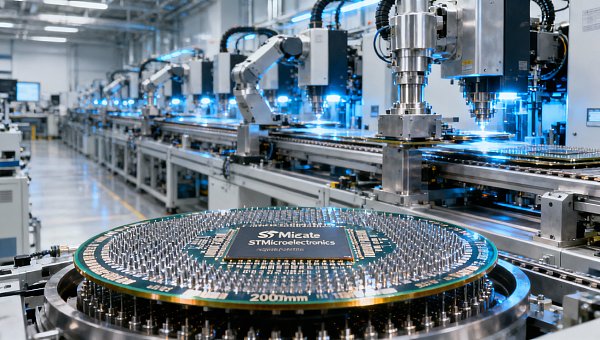
 STMicroelectronics 200mm Line Eases Industrial Sensor Chip ShortageSTMicroelectronics 200mm line eases industrial sensor chip shortage — MCUs & signal-conditioning ICs now ship in 12 weeks. Secure allocation today.
 Southeast Asia Manufacturing Re-shoring Accelerates: Vietnam/Indonesia Industrial Instrument Imports Up 37% YoYSoutheast Asia manufacturing re-shoring accelerates: Vietnam & Indonesia industrial instrument imports up 37% YoY — key insights for suppliers, OEMs & procurement teams.
 First Global White Paper on Humanoid Robot Sensor Calibration ReleasedHumanoid robot sensor calibration: First global white paper released—key for ISO/IEC JWG 23 compliance, export readiness & dynamic torque accuracy. Act now.
 SAMR to Upgrade EV Battery Recycling Standard to MandatorySAMR to upgrade EV battery recycling standard GB/T 34015—202X to mandatory by Dec 2026 — critical for exporters, BMS makers & cert labs.
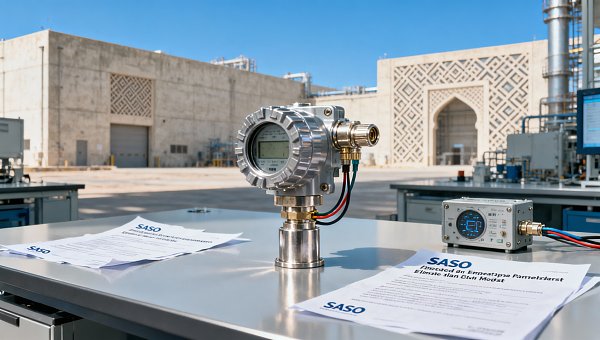
 Saudi SASO Accelerates AI Energy Efficiency Rules for TransmittersSASO AI energy efficiency rules for transmitters take effect 1 June 2026 — mandatory AI simulation, Saudi climate data, and authorized lab validation required. Act now to avoid export delays.
 IEC 63278:2026 Released for Industrial Instrument CybersecurityIEC 63278:2026 is live — the first global standard mandating cybersecurity verification for industrial instruments. Discover compliance impacts, deadlines, and actionable steps for OT/IT convergence.
 Red Sea Crisis Escalates: Gulf of Aden Navigation Ban Extended to June 15, 2026Red Sea Crisis escalates: Gulf of Aden navigation ban extended to June 15, 2026—disrupting industrial instrumentation shipments to the Middle East with 458% air freight spikes and 12–18 day delays.
 US DOE Updates Efficiency Rules for Industrial SensorsUS DOE updates industrial sensor efficiency rules: AI-driven dynamic calibration required by Sept 2026. Ensure AI-Cal Verified compliance now.
 EU Mandates PEF Carbon Footprint Module for Industrial Instruments from June 2026EU mandates PEF carbon footprint module for industrial instruments from June 2026—key for exporters, OEMs & certifiers. Act now to ensure compliance.
 Explosion-Proof Instruments: Compliance Risks Before You OrderExplosion-proof instruments can trigger delays, failed inspections, and safety risks if compliance is overlooked. Learn what to verify before ordering and make safer, smarter purchasing decisions.
 Gas Quality Monitoring Equipment Import Rules to Watch in 2026Gas quality monitoring equipment import rules for 2026 are tightening. Learn the key compliance, certification, and customs risks distributors must manage to avoid delays and protect margins.












Search Categories
Search Categories
Latest Article
- Industrial Metrology Tools: When Accuracy Impacts OutputIndustrial metrology tools directly shape output, quality, and cost. Learn how accurate measurement reduces scrap, speeds decisions, and improves production performance.Posted by:
- Process Measurement Devices in Export Compliance UpdatesProcess measurement devices face new export compliance updates that impact classification, documents, lead times, and market access. Learn practical steps to reduce risk and protect growth.Posted by:
- Quality Control Analyzers Price Shifts in Global SupplyQuality control analyzers prices are shifting with global supply changes. Learn the key cost drivers, compliance risks, and sourcing tips buyers need to reduce total cost.Posted by:
Please give us a message
