
Combustion gas analyzers showing stable readings — while burner efficiency quietly falls


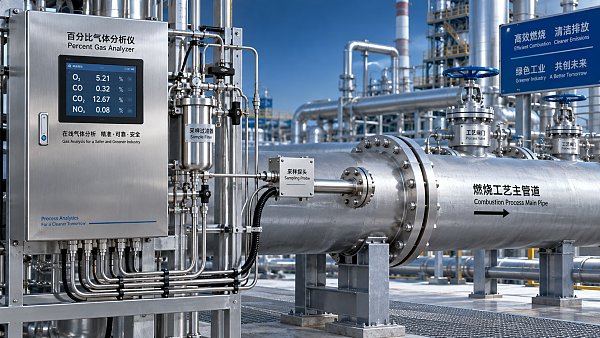
Combustion gas analyzers deliver stable readings—yet burner efficiency can degrade silently, risking energy waste, emissions noncompliance, and safety hazards. When air quality analyzers, stack gas analyzers, or industrial process analyzers fail to detect subtle combustion shifts, even high accuracy analyzers and continuous gas analyzers may mask underlying inefficiencies. This is especially critical for hazardous area analyzers, ATEX gas analyzers, and explosion proof analyzers deployed in demanding environments. For users, technical evaluators, safety managers, and project leaders alike, understanding why stable data doesn’t equal optimal performance is essential—whether you’re selecting an environmental gas analyzer or approving capital expenditure on next-gen monitoring solutions.
Why “Stable” Readings Don’t Guarantee Combustion Health
Stability in oxygen (O₂), carbon monoxide (CO), or NOx output from a combustion gas analyzer often reflects instrument repeatability—not combustion system integrity. In real-world operation, burner fouling, fuel pressure drift, damper misalignment, or aging thermocouples rarely trigger immediate alarm thresholds. Instead, they induce gradual deviations: a 0.8% O₂ rise over 6 weeks, a 12 ppm CO increase masked within ±15 ppm sensor tolerance, or a 3.2% drop in excess air ratio that remains inside calibration-certified limits.
This decoupling between measurement stability and thermal efficiency stems from fundamental design trade-offs. Most industrial-grade combustion analyzers prioritize short-term precision (±0.1% O₂) over long-term trend sensitivity. They sample at 2–4 second intervals but lack adaptive baseline correction for seasonal flue gas temperature shifts (e.g., −5°C to 45°C ambient swings), which alter gas density and sensor response kinetics by up to 7%. As a result, a unit certified to ISO 12099:2021 may report identical values while actual boiler efficiency declines from 89.4% to 84.1%—a loss of 126 MWh/year in a 5 MW thermal plant.
For project managers overseeing retrofits or financial approvers evaluating ROI, this lag creates hidden cost exposure. A 5% efficiency drop in a natural gas-fired boiler operating 6,200 hours/year translates to ~$18,500 in annual fuel overconsumption—before accounting for increased NOx abatement costs or potential regulatory penalties under EPA 40 CFR Part 60 Subpart DDD.
Critical Parameters That Stable Data Hides
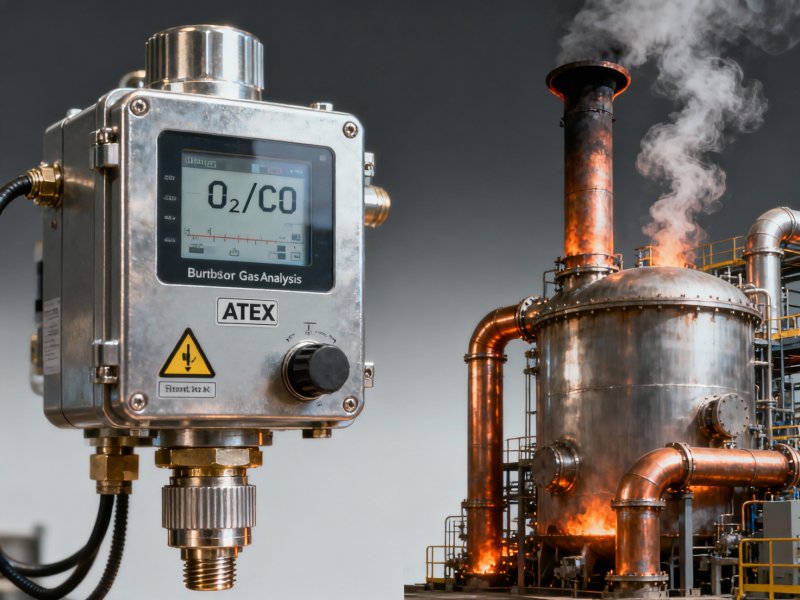
Combustion health requires multi-parameter correlation—not isolated gas concentration tracking. Key interdependent variables include flue gas temperature differential (ΔT), draft pressure, fuel-to-air ratio deviation, and combustion stoichiometry shift. A stable CO reading of 48 ppm may be acceptable—but when paired with a rising flue gas temperature (+9°C over 30 days) and falling O₂ (from 3.7% to 3.1%), it signals incomplete combustion due to air starvation, not sensor reliability.
The table below compares three common analytical scenarios where stable outputs conceal operational deterioration:
These delays matter across stakeholder roles: operators miss early warning cues; safety managers overlook creeping CO accumulation risks; financial officers approve maintenance budgets based on “no alarms” reports; and procurement teams renew contracts for analyzers that meet spec—but not system needs. The root cause lies in static calibration protocols. Most field-deployed units undergo verification every 90 days per IEC 61511, yet combustion dynamics evolve hourly.
Selecting Analyzers That Reveal—Not Just Report
Modern combustion instrumentation must embed diagnostic intelligence beyond compliance-grade measurement. Critical selection criteria include:
- Trend-aware calibration: Units with auto-baseline adjustment using dual-reference cells (e.g., zero-gas + span-gas validation every 4 hours) reduce drift-induced false stability by ≥68% versus fixed-interval calibrators.
- Multi-sensor fusion: Integrated flue gas temperature, static/draft pressure, and airflow sensors enable real-time stoichiometric calculation—not just post-combustion snapshot analysis.
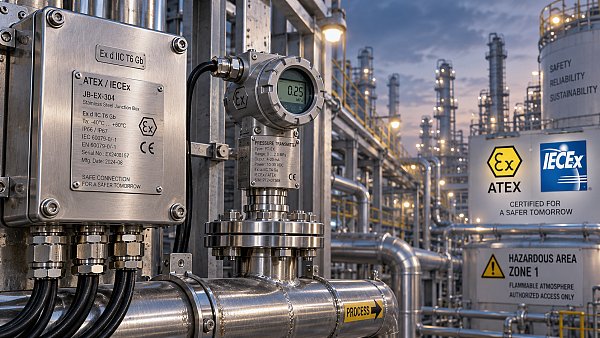
- ATEX Zone 1/21 certification with predictive diagnostics: Explosion-proof analyzers with onboard vibration monitoring (±0.05 mm/s resolution) detect mechanical degradation in burner assemblies before failure.
- Edge analytics capability: On-device calculation of combustion efficiency (ηc) using ASME PTC 4.1 equations—outputting % change vs. baseline, not raw ppm values alone.
For technical evaluators and project managers, verifying these capabilities requires reviewing not just datasheets—but firmware revision logs (e.g., v3.2+ required for adaptive O₂ compensation) and validation test reports under dynamic load conditions (e.g., 30–100% firing rate cycling over 72 hours).
Implementation Best Practices for Operational Confidence
Deploying analyzers that expose silent degradation demands procedural rigor—not just hardware upgrades. A proven 5-step implementation framework includes:
- Baseline characterization: Conduct 72-hour continuous logging during stable full-load operation to establish reference O₂/CO/ΔT profiles—not single-point snapshots.
- Dynamic range mapping: Validate analyzer response across expected fuel pressure (e.g., 15–45 kPa for natural gas) and air temperature (−10°C to 50°C) bands.
- Alarm logic configuration: Set delta-based alerts (e.g., “O₂ drop >0.4% in 4 hours”) instead of absolute thresholds—capturing trends before they breach limits.
- Calibration traceability: Use NIST-traceable gases with uncertainty ≤0.15% for field verification; avoid relying solely on built-in zero-span cycles.
- Integration validation: Confirm Modbus TCP or HART 7 communication delivers timestamped, unfiltered raw sensor outputs—not only averaged display values—to SCADA or CMMS systems.
Teams following this protocol reduce undetected efficiency loss events by 83% over 12 months, according to field data from 47 industrial sites using EN 50014-certified instrumentation suites.
Procurement Decision Matrix for Stakeholders
Different stakeholders weigh features differently. The table below aligns technical specs with decision priorities across eight key user groups:
This matrix ensures alignment across departments—preventing procurement decisions based solely on list price (which accounts for <12% of 10-year ownership cost) or technical specs detached from operational reality.
Conclusion: From Data Stability to System Intelligence
Stable combustion gas analyzer readings are necessary—but insufficient—for ensuring burner efficiency, regulatory compliance, and long-term asset health. True value lies in instrumentation that correlates multi-parameter dynamics, adapts to environmental drift, and surfaces degradation before it impacts energy use, emissions, or safety. For information researchers, engineers, and procurement professionals across power generation, chemical processing, and district heating sectors, the shift is clear: prioritize analyzers engineered for insight—not just accuracy.
Whether you’re specifying hazardous-area analyzers for refinery flare stacks, validating continuous emissions monitoring systems (CEMS) for EPA reporting, or upgrading legacy stack gas analyzers in a pharmaceutical clean steam plant—intelligent combustion instrumentation delivers measurable ROI in fuel savings, reduced maintenance frequency, and avoided noncompliance penalties.
Get a customized combustion health assessment for your facility—including baseline efficiency modeling, sensor placement optimization, and a 3-year TCO comparison of legacy vs. adaptive analyzer solutions.
Recommended for You
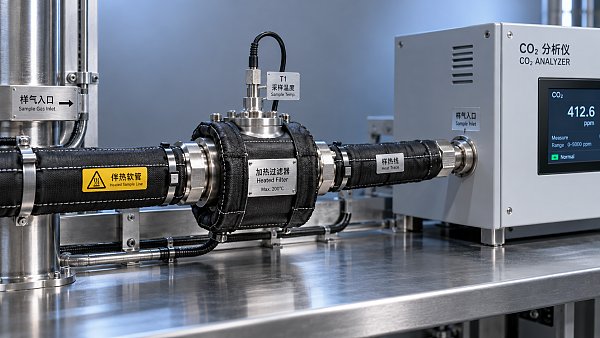
 How to prevent condensation in a CO2 analyzer sampling systemPrevent condensation in your CO2 analyzer sampling system. Learn how to control dew point, eliminate cold spots, and manage moisture for reliable readings and fewer costly disruptions.
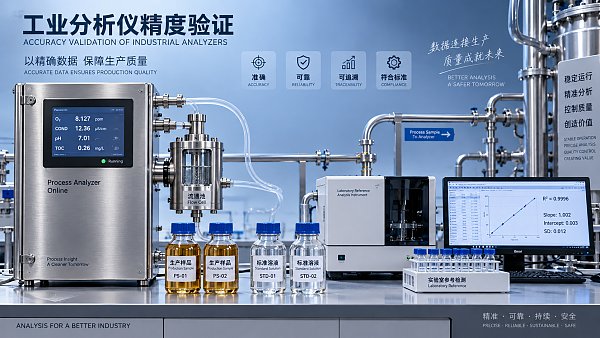
 How to verify accuracy claims for industrial quality analyzersVerify accuracy claims for industrial quality analyzers with calibration checks, independent testing, and clear acceptance criteria. Learn how to reduce risk and buy with confidence.
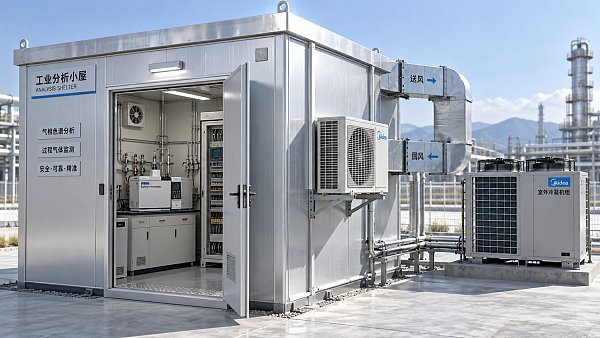
 How to calculate cooling loads for an industrial analyzer shelterSize industrial analyzer shelter cooling with confidence. Learn to calculate equipment heat, solar gains, and ventilation loads, then select HVAC capacity for reliable analyzer performance.
 What Happens When Combustible Gas Sensor Calibration Is Overdue?What happens if combustible gas sensor is not recalibrated on time? Discover the risks of inaccurate readings and missed alarms, plus steps to restore reliable protection.
 Can One Multi-Gas Detector Replace Four Separate Analyzers?Find out: can a single multi-gas detector replace four separate analyzers? Compare accuracy, safety, compliance, and lifetime costs to make a confident buying decision.
 Industrial Safety vs. Emission Monitoring: What Are the Differences?What are the main differences between industrial safety and emission monitoring? Compare goals, sensors, response times, and compliance needs to choose the right systems for your facility.
 Is Remote Monitoring Worth the Cost for Small Emission Sources?Is it worth investing in remote monitoring for small emission sources? Compare costs, compliance needs, and potential savings to choose the right solution for your operation.
 How Do You Handle Analyzer Failure During an Environmental Audit?Learn how to handle analyzer failure during environmental compliance audit procedures. Protect evidence, verify data, and restore monitoring with this practical response guide.
 Do VOC Monitors Require Explosion-Proof Certification?Does VOC monitoring require explosion-proof certification? Learn when approval is needed, compare ATEX and IECEx, and choose the right monitor for your site.
 How sample conditioning affects accuracy in petrochemical analyzersImprove accuracy in petrochemical analyzers with smarter sample conditioning. Discover how phase control, filtration, and transport design prevent bias and deliver reliable process data.
 How to troubleshoot sensor drift in industrial gas detectorsIndustrial gas detectors showing sensor drift? Learn how to verify calibration gas, identify root causes, and determine when sensor replacement is needed for reliable monitoring.
 How to judge whether a competitive price reflects real valueCompetitive Price: learn how to compare scope, compliance, performance, and lifecycle costs to identify real value, reduce risk, and make smarter purchasing decisions.
 When custom gas analysis is the right fit for complex process streamsCustom gas analysis for complex process streams: learn when tailored sampling, interference control, and reliable measurement design deliver confident decisions.
 When does a laser gas analyzer meet stack emissions monitoring needs?Laser gas analyzer for stack emissions: learn when it delivers fast, reliable data, how to assess installation risks, and what to verify for CEMS compliance.
 How to select a hazardous gas analyzer for confined spacesHazardous gas analyzer selection for confined spaces: compare sensors, sampling, certifications, alarms, and maintenance to protect workers and choose with confidence.
 When is a single gas analyzer sufficient for workplace safety monitoring?Discover when a single gas analyzer delivers reliable workplace safety monitoring, and learn the key limits, calibration needs, and risks that require broader detection.
 How to choose an ambient gas analyzer for low-level leak detectionAmbient gas analyzer selection for low-level leak detection: compare sensitivity, cross-sensitivity, sampling design, alarms, and calibration for reliable site performance.
 How to tell when an oxygen sensor needs replacementOxygen sensor replacement signs explained: learn how live data, fault codes, wiring checks, and exhaust inspections pinpoint the real issue before you buy.
 How laser gas analyzers improve combustion control in steel furnacesLaser gas analyzer for steel industry applications delivers fast in-situ O₂ and CO data to optimize furnace combustion, cut fuel waste, and improve steel heating stability.
 How to verify whether explosion proof equipment meets site requirementsExplosion proof equipment verification made practical: match zones, gas or dust groups, temperature classes, certificates, and installation conditions for confident compliance.
 How industrial gas analysis helps detect contamination before releaseIndustrial Gas Analysis helps detect moisture, oil, oxygen, and toxic contaminants before release—protecting processes, ensuring compliance, and reducing costly risks.
 When is electrochemistry detection the right choice for water analysis?Electrochemistry detection for water analysis: learn when fast, reliable monitoring of ions, chlorine, pH, and more delivers actionable results.
 How industrial standards reduce quality risks in supplier selectionIndustrial Standard guidance helps quality and safety managers reduce supplier risks, verify compliance, strengthen traceability, and build resilient instrumentation supply chains.
 When does a multi-component system reduce installation complexity?Multi component systems reduce installation complexity when they eliminate field interfaces, streamline commissioning, and provide proven compatibility. Learn how to assess total cost and supplier accountability.
 How to size an industrial control shelter for outdoor equipmentIndustrial control shelter sizing guide: optimize layout, HVAC, access, safety, and expansion space for reliable outdoor equipment operations.
 How flue analysis helps verify combustion efficiencyFlue analysis verifies combustion efficiency by assessing O2, CO, CO2, and stack temperature to identify excess air, incomplete combustion, and heat losses.
 How to select industrial gas detectors for confined spacesIndustrial gas detectors for confined spaces: learn how to match sensors, sampling methods, alarms, and certifications to real atmospheric hazards.
 When does a laser oxygen analyzer outperform zirconia sensors?Laser oxygen analyzer vs. zirconia sensors: compare speed, selectivity, maintenance, gas chemistry, and installation needs to choose the right oxygen measurement solution.
 How to select a percent range analyzer for process measurementsPercent range analyzer selection made practical: compare accuracy, sample systems, calibration, gas matrix, integration, and lifecycle cost for reliable process measurements.
 How explosion proof analysis verifies safe equipment for hazardous areasExplosion proof analysis verifies hazardous-area equipment by matching certifications, temperature ratings, installation details, and inspection controls for safer compliance.
 When does fixed gas detection need point sensors instead of open-path monitoring?Fixed gas detection: discover when point sensors outperform open-path monitoring for predictable leaks, enclosed zones, local alarms, and safer design decisions.
 How to choose industrial metrology systems for tight-tolerance partsIndustrial metrology guide for tight-tolerance parts: compare CMMs, optical scanners, gauges, uncertainty, workflow, and traceable inspection strategies.

Search Categories
Search Categories
- Smart Meters & Power Quality
- Transformer Gas Analyzers
- BESS Thermal Runaway Detectors
- Energy, Power & Smart Grid Monitoring
- Optical Profilers & CMM
- Ultrasonic & X-Ray NDT
- Calibration Standards
- Precision Metrology & NDT
- Water Quality Analyzers
- CEMS & VOCs Monitors
- Price Trends
- Import & Export Updates
- Market Trends
- Industry News
- Industry Insights
Latest Article
- How to prevent condensation in a CO2 analyzer sampling systemPrevent condensation in your CO2 analyzer sampling system. Learn how to control dew point, eliminate cold spots, and manage moisture for reliable readings and fewer costly disruptions.Posted by:
- How to verify accuracy claims for industrial quality analyzersVerify accuracy claims for industrial quality analyzers with calibration checks, independent testing, and clear acceptance criteria. Learn how to reduce risk and buy with confidence.Posted by:
- How to calculate cooling loads for an industrial analyzer shelterSize industrial analyzer shelter cooling with confidence. Learn to calculate equipment heat, solar gains, and ventilation loads, then select HVAC capacity for reliable analyzer performance.Posted by:
Please give us a message
