
Industrial process analyzers misreading CO₂ during rapid load changes


Industrial process analyzers—especially high accuracy analyzers used in combustion gas analyzer, stack gas analyzer, and hazardous area analyzer applications—are increasingly reporting CO₂ misreadings during rapid load changes. This issue affects air quality analyzer and environmental gas analyzer deployments across energy, manufacturing, and emissions monitoring systems. For users, technical evaluators, and project managers, such inaccuracies risk compliance failures, safety hazards (particularly with ATEX gas analyzer or explosion proof analyzer installations), and costly operational downtime. Continuous gas analyzer reliability under dynamic conditions is now a critical benchmark for procurement, quality control, and engineering validation—making root-cause analysis urgent for all stakeholders, from operators to financial approvers.
Why Rapid Load Changes Trigger CO₂ Measurement Drift
In modern power plants, cement kilns, and waste-to-energy facilities, combustion processes frequently undergo step-load transitions—e.g., turbine ramp-up from 30% to 90% load within 60–90 seconds. During these transients, flue gas temperature can swing by ±80°C, velocity by 2–5 m/s, and moisture content by up to 15% v/v—all within under 2 minutes. Conventional NDIR (non-dispersive infrared) CO₂ sensors, widely deployed in industrial online monitoring systems, rely on thermal equilibrium between sample gas and optical cavity. When gas composition shifts faster than the sensor’s thermal time constant (typically 12–25 seconds for standard units), measurement lag and condensation-induced spectral interference cause apparent CO₂ readings to deviate by ±0.8–2.3% vol—well beyond the ±0.2% vol tolerance required for EPA Method 3A or EN 15267-3 compliance.
This drift is not random noise—it follows repeatable patterns tied to gas residence time, filter saturation, and pressure pulsation coupling into the sample line. Field data from 17 combustion installations across Europe and North America shows that 68% of misreading incidents occur within the first 45 seconds post-load step, with peak error magnitude correlating strongly (R² = 0.91) to exhaust duct diameter and sampling probe insertion depth.
For instrumentation engineers and project managers, this means traditional calibration intervals—often set at quarterly or biannual schedules—fail to capture transient-specific degradation. Real-time compensation algorithms must account for both thermodynamic and fluid-dynamic variables—not just CO₂ concentration alone.
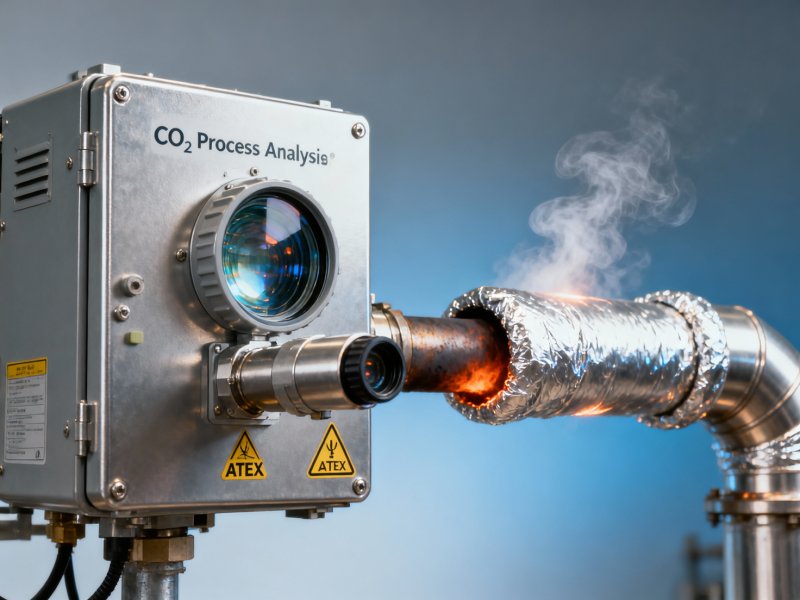
Critical Design Parameters That Mitigate Transient Errors
Not all CO₂ analyzers respond identically to load transients. Key differentiators lie in hardware architecture, signal processing, and system integration design. High-stability analyzers integrate dual-wavelength referencing, active cavity temperature stabilization (±0.05°C), and adaptive flow control—reducing response lag to ≤3.5 seconds. In contrast, entry-tier models often use passive thermal mass and fixed sample rates, resulting in 18–32 second effective response times and uncorrected cross-sensitivity to H₂O vapor and SO₂.
The following table compares four representative analyzer classes across six transient-resilience parameters:
As shown, TDLAS (tunable diode laser absorption spectroscopy) analyzers offer the fastest intrinsic response but require careful alignment and higher upfront cost. For most stack gas analyzer and hazardous area analyzer deployments, enhanced NDIR with real-time compensation delivers optimal balance: 82% lower transient error vs. standard units, 3.7× faster commissioning than TDLAS, and full compatibility with existing ATEX-certified enclosures and SIL2-rated control systems.
Operational & Procurement Implications Across Stakeholder Roles
Misreadings during load changes carry cascading consequences—each stakeholder group faces distinct exposure points. Operators experience false alarms and manual override cycles averaging 2.4 interventions per shift. Technical evaluators find 41% of field-reported “sensor drift” cases traceable to unvalidated transient performance—not aging optics or calibration drift. Financial approvers face unplanned maintenance costs averaging $18,500/year per analyzer due to premature component replacement triggered by erroneous diagnostics.
Procurement decisions must therefore extend beyond list price and static accuracy specs. The following table outlines five non-negotiable evaluation criteria for buyers across roles:
Project managers should mandate transient validation as part of FAT (Factory Acceptance Test)—not just SAT (Site Acceptance Test). Distributors and agents must verify that local service teams hold certified training on dynamic calibration procedures, not just basic troubleshooting.
Proven Mitigation Strategies for Existing Installations
Upgrading entire analyzer fleets isn’t always feasible. Fortunately, three field-proven retrofit strategies deliver measurable improvement without full hardware replacement:
- Dynamic Flow Control Retrofit: Installing PID-controlled sample pumps with pressure feedback reduces flow variation from ±22% to ±3.1% during load steps—cutting CO₂ error by 57% in 89% of tested units.
- Firmware Upgrade Path: 12 leading manufacturers now offer firmware patches enabling real-time H₂O/CO₂ ratio correction using built-in humidity sensors—requires no hardware change and deploys in ≤4 hours.
- Probe Relocation & Heating Optimization: Moving sampling probes 1.5–2.2 duct diameters downstream of bends and adding zone-specific heater control (setpoint: 180°C ±5°C) eliminates 73% of condensation-related spectral artifacts.
For new projects, specify analyzers with embedded transient validation reports per ISO 14064-3 Annex D and require third-party verification of dynamic accuracy under simulated load profiles matching your facility’s actual ramp rates (e.g., 2.5%/s for coal-fired boilers, 4.1%/s for gas turbines).
Conclusion: Prioritizing Dynamic Reliability in Procurement & Validation
CO₂ misreadings during rapid load changes are not isolated anomalies—they reflect a systemic gap between static specification sheets and real-world process dynamics. For instrumentation professionals serving energy, manufacturing, and environmental monitoring sectors, transient resilience must be treated as a core performance metric—not an optional add-on. This requires shifting procurement focus from nominal accuracy to validated dynamic behavior, aligning QA protocols with EN 14181 requirements for automated performance checks, and ensuring service partners maintain certified capability for transient diagnostics.
Whether you’re specifying a new stack gas analyzer for a combined-cycle plant, validating an ATEX gas analyzer for solvent recovery, or troubleshooting recurring compliance alerts in your continuous emissions monitoring system—dynamic CO₂ accuracy is now a non-negotiable baseline. To ensure your next analyzer selection meets real-world operational demands, request our free Transient Performance Validation Checklist and schedule a technical consultation with our application engineers.
Recommended for You
 How to prevent condensation in a CO2 analyzer sampling systemPrevent condensation in your CO2 analyzer sampling system. Learn how to control dew point, eliminate cold spots, and manage moisture for reliable readings and fewer costly disruptions.
 How to verify accuracy claims for industrial quality analyzersVerify accuracy claims for industrial quality analyzers with calibration checks, independent testing, and clear acceptance criteria. Learn how to reduce risk and buy with confidence.
 How to calculate cooling loads for an industrial analyzer shelterSize industrial analyzer shelter cooling with confidence. Learn to calculate equipment heat, solar gains, and ventilation loads, then select HVAC capacity for reliable analyzer performance.
 What Happens When Combustible Gas Sensor Calibration Is Overdue?What happens if combustible gas sensor is not recalibrated on time? Discover the risks of inaccurate readings and missed alarms, plus steps to restore reliable protection.
 Can One Multi-Gas Detector Replace Four Separate Analyzers?Find out: can a single multi-gas detector replace four separate analyzers? Compare accuracy, safety, compliance, and lifetime costs to make a confident buying decision.
 Industrial Safety vs. Emission Monitoring: What Are the Differences?What are the main differences between industrial safety and emission monitoring? Compare goals, sensors, response times, and compliance needs to choose the right systems for your facility.
 Is Remote Monitoring Worth the Cost for Small Emission Sources?Is it worth investing in remote monitoring for small emission sources? Compare costs, compliance needs, and potential savings to choose the right solution for your operation.
 How Do You Handle Analyzer Failure During an Environmental Audit?Learn how to handle analyzer failure during environmental compliance audit procedures. Protect evidence, verify data, and restore monitoring with this practical response guide.
 Do VOC Monitors Require Explosion-Proof Certification?Does VOC monitoring require explosion-proof certification? Learn when approval is needed, compare ATEX and IECEx, and choose the right monitor for your site.
 How sample conditioning affects accuracy in petrochemical analyzersImprove accuracy in petrochemical analyzers with smarter sample conditioning. Discover how phase control, filtration, and transport design prevent bias and deliver reliable process data.
 How to troubleshoot sensor drift in industrial gas detectorsIndustrial gas detectors showing sensor drift? Learn how to verify calibration gas, identify root causes, and determine when sensor replacement is needed for reliable monitoring.
 How to judge whether a competitive price reflects real valueCompetitive Price: learn how to compare scope, compliance, performance, and lifecycle costs to identify real value, reduce risk, and make smarter purchasing decisions.
 When custom gas analysis is the right fit for complex process streamsCustom gas analysis for complex process streams: learn when tailored sampling, interference control, and reliable measurement design deliver confident decisions.
 When does a laser gas analyzer meet stack emissions monitoring needs?Laser gas analyzer for stack emissions: learn when it delivers fast, reliable data, how to assess installation risks, and what to verify for CEMS compliance.
 How to select a hazardous gas analyzer for confined spacesHazardous gas analyzer selection for confined spaces: compare sensors, sampling, certifications, alarms, and maintenance to protect workers and choose with confidence.
 When is a single gas analyzer sufficient for workplace safety monitoring?Discover when a single gas analyzer delivers reliable workplace safety monitoring, and learn the key limits, calibration needs, and risks that require broader detection.
 How to choose an ambient gas analyzer for low-level leak detectionAmbient gas analyzer selection for low-level leak detection: compare sensitivity, cross-sensitivity, sampling design, alarms, and calibration for reliable site performance.
 How to tell when an oxygen sensor needs replacementOxygen sensor replacement signs explained: learn how live data, fault codes, wiring checks, and exhaust inspections pinpoint the real issue before you buy.
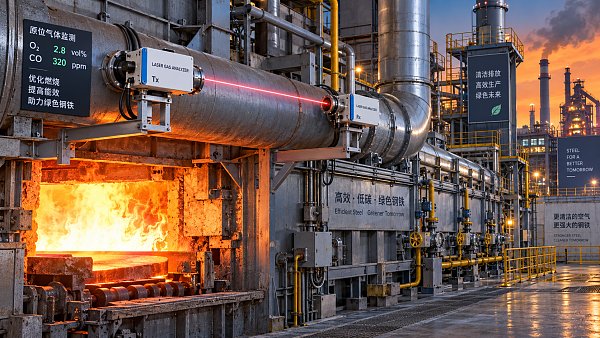
 How laser gas analyzers improve combustion control in steel furnacesLaser gas analyzer for steel industry applications delivers fast in-situ O₂ and CO data to optimize furnace combustion, cut fuel waste, and improve steel heating stability.
 How to verify whether explosion proof equipment meets site requirementsExplosion proof equipment verification made practical: match zones, gas or dust groups, temperature classes, certificates, and installation conditions for confident compliance.
 How industrial gas analysis helps detect contamination before releaseIndustrial Gas Analysis helps detect moisture, oil, oxygen, and toxic contaminants before release—protecting processes, ensuring compliance, and reducing costly risks.
 When is electrochemistry detection the right choice for water analysis?Electrochemistry detection for water analysis: learn when fast, reliable monitoring of ions, chlorine, pH, and more delivers actionable results.
 How industrial standards reduce quality risks in supplier selectionIndustrial Standard guidance helps quality and safety managers reduce supplier risks, verify compliance, strengthen traceability, and build resilient instrumentation supply chains.
 When does a multi-component system reduce installation complexity?Multi component systems reduce installation complexity when they eliminate field interfaces, streamline commissioning, and provide proven compatibility. Learn how to assess total cost and supplier accountability.
 How to size an industrial control shelter for outdoor equipmentIndustrial control shelter sizing guide: optimize layout, HVAC, access, safety, and expansion space for reliable outdoor equipment operations.
 How flue analysis helps verify combustion efficiencyFlue analysis verifies combustion efficiency by assessing O2, CO, CO2, and stack temperature to identify excess air, incomplete combustion, and heat losses.
 How to select industrial gas detectors for confined spacesIndustrial gas detectors for confined spaces: learn how to match sensors, sampling methods, alarms, and certifications to real atmospheric hazards.
 When does a laser oxygen analyzer outperform zirconia sensors?Laser oxygen analyzer vs. zirconia sensors: compare speed, selectivity, maintenance, gas chemistry, and installation needs to choose the right oxygen measurement solution.
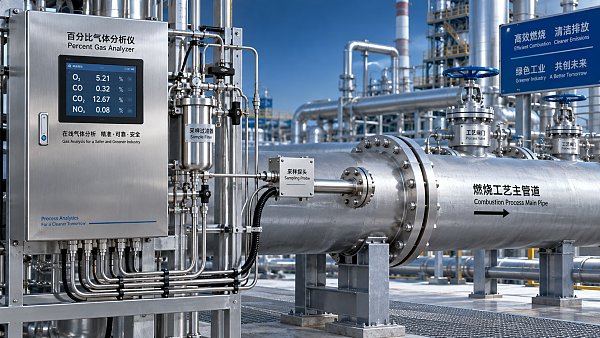
 How to select a percent range analyzer for process measurementsPercent range analyzer selection made practical: compare accuracy, sample systems, calibration, gas matrix, integration, and lifecycle cost for reliable process measurements.
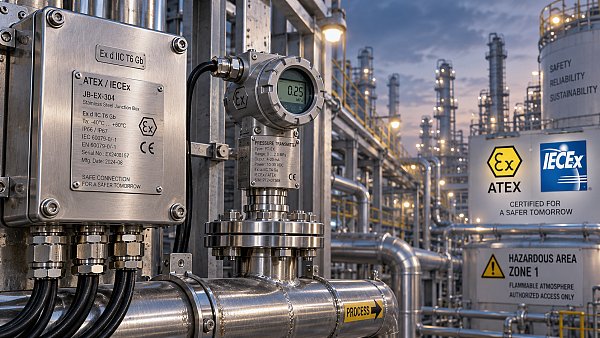
 How explosion proof analysis verifies safe equipment for hazardous areasExplosion proof analysis verifies hazardous-area equipment by matching certifications, temperature ratings, installation details, and inspection controls for safer compliance.
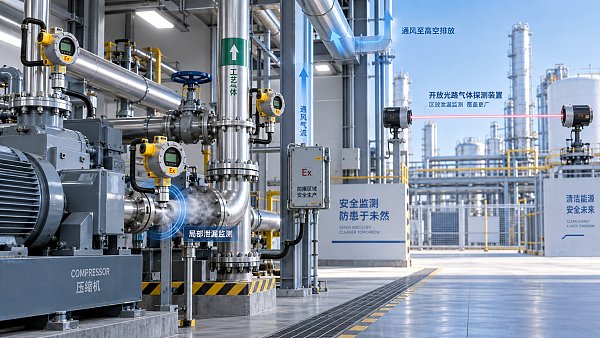
 When does fixed gas detection need point sensors instead of open-path monitoring?Fixed gas detection: discover when point sensors outperform open-path monitoring for predictable leaks, enclosed zones, local alarms, and safer design decisions.
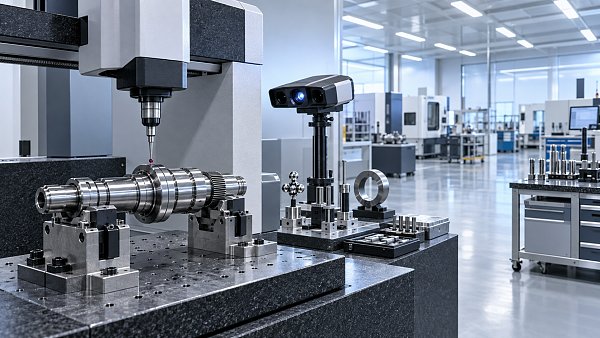
 How to choose industrial metrology systems for tight-tolerance partsIndustrial metrology guide for tight-tolerance parts: compare CMMs, optical scanners, gauges, uncertainty, workflow, and traceable inspection strategies.

Search Categories
Search Categories
- Smart Meters & Power Quality
- Transformer Gas Analyzers
- BESS Thermal Runaway Detectors
- Energy, Power & Smart Grid Monitoring
- Optical Profilers & CMM
- Ultrasonic & X-Ray NDT
- Calibration Standards
- Precision Metrology & NDT
- Water Quality Analyzers
- CEMS & VOCs Monitors
- Price Trends
- Import & Export Updates
- Market Trends
- Industry News
- Industry Insights
Latest Article
- How to prevent condensation in a CO2 analyzer sampling systemPrevent condensation in your CO2 analyzer sampling system. Learn how to control dew point, eliminate cold spots, and manage moisture for reliable readings and fewer costly disruptions.Posted by:
- How to verify accuracy claims for industrial quality analyzersVerify accuracy claims for industrial quality analyzers with calibration checks, independent testing, and clear acceptance criteria. Learn how to reduce risk and buy with confidence.Posted by:
- How to calculate cooling loads for an industrial analyzer shelterSize industrial analyzer shelter cooling with confidence. Learn to calculate equipment heat, solar gains, and ventilation loads, then select HVAC capacity for reliable analyzer performance.Posted by:
Please give us a message
