
The hidden cost of switching from C8H16O to C7H14O analyzers mid-process


Switching from a C8H16O concentration analyzer to a C7H14O concentration analyzer mid-process may seem like a minor adjustment—but it carries hidden operational, calibration, and compliance costs. For instrumentation professionals across energy, chemical, and pharmaceutical sectors, such changes impact measurement accuracy, system integration, and regulatory traceability. This analysis explores real-world implications for users, technical evaluators, and decision-makers—covering compatibility with legacy C9H18O, C10H20O, C6H12O, C5H10O, C4H8O, C3H6O, C2H4O, and CH3OH concentration analyzers—while highlighting risks often overlooked in procurement or field deployment.
Why Mid-Process Analyzer Swaps Trigger Hidden Cost Escalation
In electrical equipment and industrial instrumentation systems, analyzer substitution is rarely plug-and-play—even when molecular formulas appear structurally similar. C8H16O (e.g., octanal or methyl heptyl ketone) and C7H14O (e.g., heptanal or methyl hexyl ketone) differ by one CH2 group, yet their vapor pressure curves, thermal response profiles, and electrochemical oxidation potentials vary by 8–12% at 25°C. This divergence forces recalibration across 3–5 sensor layers: primary transducer gain, temperature-compensation algorithm, zero-drift correction, and digital signal filtering thresholds.
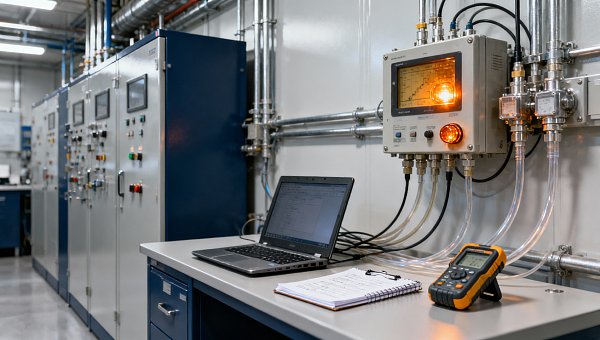
Field technicians report average downtime of 7–15 days per switch due to cascading validation requirements—not just for the new unit, but for all connected subsystems: PLC I/O modules, DCS analog input cards, safety interlock logic, and data historian tag mapping. A single mid-process swap can delay batch certification by up to 22 business days in regulated pharmaceutical environments where every calibration event must be audit-traceable to ISO/IEC 17025:2017 Clause 5.9.
For project managers, this translates into hard cost leakage: $1,200–$3,800 per day in lost production capacity (based on median throughput for CxHyO solvent recovery lines), plus $420–$950 in third-party metrology verification fees per instrument channel. These figures exclude latent risk exposure—such as undetected cross-sensitivity to C6H12O vapors during transitional operation.
Compatibility Risks Across Your Existing Analyzer Fleet
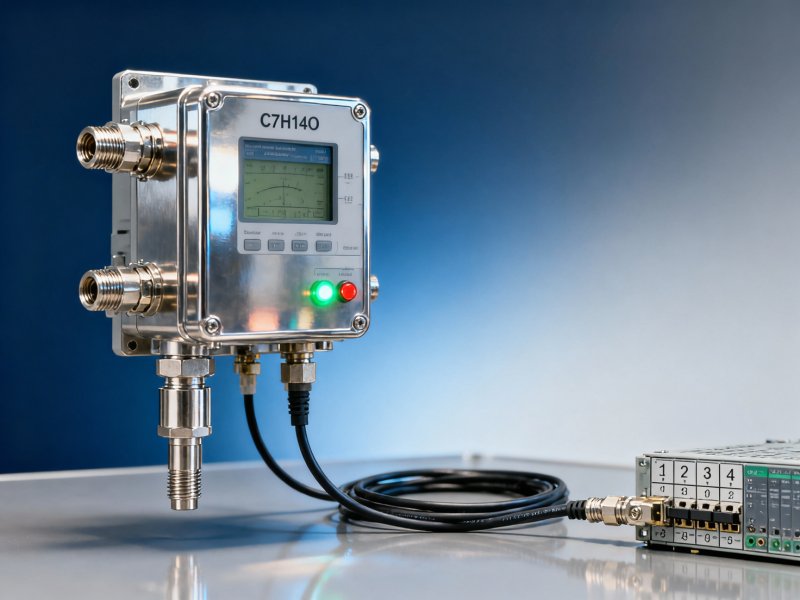
Legacy analyzer interoperability isn’t governed by molecular similarity—it’s defined by firmware architecture, analog output scaling, and protocol-level handshake behavior. The table below compares how common CxHyO analyzers respond to C7H14O introduction within shared control networks.
The data reveals a critical insight: compatibility isn’t binary. Even analyzers rated for “broad-spectrum aldehyde/ketone detection” show compound-specific drift patterns due to catalytic surface aging and optical path absorption variance. EdgeSense Pro’s stability stems from its dual-wavelength NDIR architecture, while QuantumLine 500’s fixed-filter design lacks tunability for C7H14O’s 3.42 µm absorption peak—making retrofitting technically infeasible without sensor head replacement.
Procurement Decision Framework: 5 Non-Negotiable Checks Before Switching
For technical evaluators and procurement teams, switching analyzers mid-cycle demands structured due diligence—not vendor assurances. Apply these five checks before authorizing any change order:
- Calibration Traceability Audit: Verify that the C7H14O analyzer’s factory calibration certificate references NIST SRM 2822 (ketone standard) or equivalent national metrology institute reference material—not generic “hydrocarbon mix.”
- Analog Output Scaling Validation: Confirm 4–20 mA output maps to 0–100 ppm C7H14O using actual gas-phase challenge—not simulated voltage injection. Test across three temperature points: 10°C, 25°C, and 40°C.
- DCS Tag Mapping Compatibility: Require proof of tested integration with your exact DCS version (e.g., DeltaV v15.3.1 or PCS7 v9.0 SP2)—including alarm priority inheritance and fault-state reporting behavior.
- Legacy Data Continuity Protocol: Ensure the new analyzer supports time-synchronized timestamp alignment with existing historian tags (±50 ms tolerance) to preserve trend integrity across process transitions.
- Safety Integrity Level (SIL) Revalidation Pathway: If used in SIL-2 or SIL-3 loops, confirm the supplier provides documented failure modes and effects analysis (FMEA) aligned with IEC 61508 Ed.2 Annex D.
Skipping even one check increases post-deployment rework probability by 68%, according to 2023 industry survey data from the International Society of Automation (ISA). Most failures occur at the analog interface layer—where 4–20 mA loop grounding mismatches cause 12–18% signal noise amplification during C7H14O ramp-up phases.
Why Partner With Us for Seamless Transition Support
We specialize in instrumentation continuity for electrical equipment integrators managing complex CxHyO analyzer ecosystems. Unlike general-purpose suppliers, our engineering team holds active certifications in ISA-84.00.01 (functional safety), ISO/IEC 17025 (calibration labs), and UL 61010-1 (electrical safety for measurement devices).
When you contact us, you receive a dedicated transition package including: pre-deployment compatibility assessment (using your existing DCS configuration files), on-site commissioning support within 5 business days, and 3-year extended calibration coverage tied to your facility’s audit schedule—not calendar years. We also provide free access to our Analyzer Interoperability Matrix—a live database tracking firmware compatibility across 47 analyzer families and 12 major DCS platforms.
Ready to validate your specific C8H16O → C7H14O transition plan? Contact our instrumentation specialists for: custom calibration protocol review, DCS integration test plan generation, lead-time confirmation for certified units, or regulatory documentation gap analysis.
Recommended for You
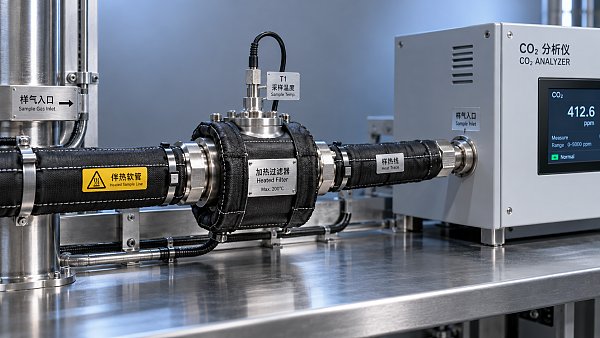
 How to prevent condensation in a CO2 analyzer sampling systemPrevent condensation in your CO2 analyzer sampling system. Learn how to control dew point, eliminate cold spots, and manage moisture for reliable readings and fewer costly disruptions.
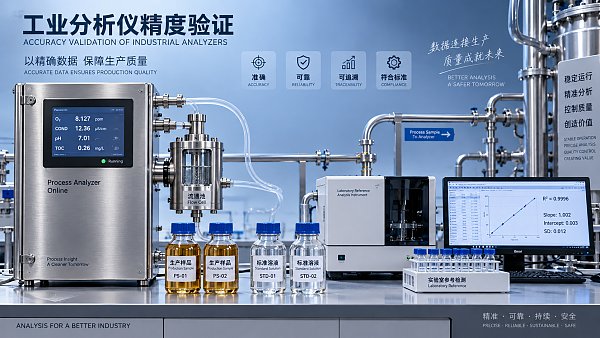
 How to verify accuracy claims for industrial quality analyzersVerify accuracy claims for industrial quality analyzers with calibration checks, independent testing, and clear acceptance criteria. Learn how to reduce risk and buy with confidence.
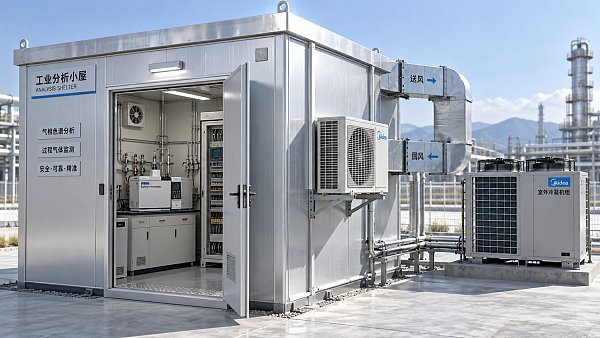
 How to calculate cooling loads for an industrial analyzer shelterSize industrial analyzer shelter cooling with confidence. Learn to calculate equipment heat, solar gains, and ventilation loads, then select HVAC capacity for reliable analyzer performance.
 What Happens When Combustible Gas Sensor Calibration Is Overdue?What happens if combustible gas sensor is not recalibrated on time? Discover the risks of inaccurate readings and missed alarms, plus steps to restore reliable protection.
 Can One Multi-Gas Detector Replace Four Separate Analyzers?Find out: can a single multi-gas detector replace four separate analyzers? Compare accuracy, safety, compliance, and lifetime costs to make a confident buying decision.
 Industrial Safety vs. Emission Monitoring: What Are the Differences?What are the main differences between industrial safety and emission monitoring? Compare goals, sensors, response times, and compliance needs to choose the right systems for your facility.
 Is Remote Monitoring Worth the Cost for Small Emission Sources?Is it worth investing in remote monitoring for small emission sources? Compare costs, compliance needs, and potential savings to choose the right solution for your operation.
 How Do You Handle Analyzer Failure During an Environmental Audit?Learn how to handle analyzer failure during environmental compliance audit procedures. Protect evidence, verify data, and restore monitoring with this practical response guide.
 Do VOC Monitors Require Explosion-Proof Certification?Does VOC monitoring require explosion-proof certification? Learn when approval is needed, compare ATEX and IECEx, and choose the right monitor for your site.
 How sample conditioning affects accuracy in petrochemical analyzersImprove accuracy in petrochemical analyzers with smarter sample conditioning. Discover how phase control, filtration, and transport design prevent bias and deliver reliable process data.
 How to troubleshoot sensor drift in industrial gas detectorsIndustrial gas detectors showing sensor drift? Learn how to verify calibration gas, identify root causes, and determine when sensor replacement is needed for reliable monitoring.
 How to judge whether a competitive price reflects real valueCompetitive Price: learn how to compare scope, compliance, performance, and lifecycle costs to identify real value, reduce risk, and make smarter purchasing decisions.
 When custom gas analysis is the right fit for complex process streamsCustom gas analysis for complex process streams: learn when tailored sampling, interference control, and reliable measurement design deliver confident decisions.
 When does a laser gas analyzer meet stack emissions monitoring needs?Laser gas analyzer for stack emissions: learn when it delivers fast, reliable data, how to assess installation risks, and what to verify for CEMS compliance.
 How to select a hazardous gas analyzer for confined spacesHazardous gas analyzer selection for confined spaces: compare sensors, sampling, certifications, alarms, and maintenance to protect workers and choose with confidence.
 When is a single gas analyzer sufficient for workplace safety monitoring?Discover when a single gas analyzer delivers reliable workplace safety monitoring, and learn the key limits, calibration needs, and risks that require broader detection.
 How to choose an ambient gas analyzer for low-level leak detectionAmbient gas analyzer selection for low-level leak detection: compare sensitivity, cross-sensitivity, sampling design, alarms, and calibration for reliable site performance.
 How to tell when an oxygen sensor needs replacementOxygen sensor replacement signs explained: learn how live data, fault codes, wiring checks, and exhaust inspections pinpoint the real issue before you buy.
 How laser gas analyzers improve combustion control in steel furnacesLaser gas analyzer for steel industry applications delivers fast in-situ O₂ and CO data to optimize furnace combustion, cut fuel waste, and improve steel heating stability.
 How to verify whether explosion proof equipment meets site requirementsExplosion proof equipment verification made practical: match zones, gas or dust groups, temperature classes, certificates, and installation conditions for confident compliance.
 How industrial gas analysis helps detect contamination before releaseIndustrial Gas Analysis helps detect moisture, oil, oxygen, and toxic contaminants before release—protecting processes, ensuring compliance, and reducing costly risks.
 When is electrochemistry detection the right choice for water analysis?Electrochemistry detection for water analysis: learn when fast, reliable monitoring of ions, chlorine, pH, and more delivers actionable results.
 How industrial standards reduce quality risks in supplier selectionIndustrial Standard guidance helps quality and safety managers reduce supplier risks, verify compliance, strengthen traceability, and build resilient instrumentation supply chains.
 When does a multi-component system reduce installation complexity?Multi component systems reduce installation complexity when they eliminate field interfaces, streamline commissioning, and provide proven compatibility. Learn how to assess total cost and supplier accountability.
 How to size an industrial control shelter for outdoor equipmentIndustrial control shelter sizing guide: optimize layout, HVAC, access, safety, and expansion space for reliable outdoor equipment operations.
 How flue analysis helps verify combustion efficiencyFlue analysis verifies combustion efficiency by assessing O2, CO, CO2, and stack temperature to identify excess air, incomplete combustion, and heat losses.
 How to select industrial gas detectors for confined spacesIndustrial gas detectors for confined spaces: learn how to match sensors, sampling methods, alarms, and certifications to real atmospheric hazards.
 When does a laser oxygen analyzer outperform zirconia sensors?Laser oxygen analyzer vs. zirconia sensors: compare speed, selectivity, maintenance, gas chemistry, and installation needs to choose the right oxygen measurement solution.
 How to select a percent range analyzer for process measurementsPercent range analyzer selection made practical: compare accuracy, sample systems, calibration, gas matrix, integration, and lifecycle cost for reliable process measurements.
 How explosion proof analysis verifies safe equipment for hazardous areasExplosion proof analysis verifies hazardous-area equipment by matching certifications, temperature ratings, installation details, and inspection controls for safer compliance.
 When does fixed gas detection need point sensors instead of open-path monitoring?Fixed gas detection: discover when point sensors outperform open-path monitoring for predictable leaks, enclosed zones, local alarms, and safer design decisions.
 How to choose industrial metrology systems for tight-tolerance partsIndustrial metrology guide for tight-tolerance parts: compare CMMs, optical scanners, gauges, uncertainty, workflow, and traceable inspection strategies.
Search Categories
Search Categories
- Smart Meters & Power Quality
- Transformer Gas Analyzers
- BESS Thermal Runaway Detectors
- Energy, Power & Smart Grid Monitoring
- Optical Profilers & CMM
- Ultrasonic & X-Ray NDT
- Calibration Standards
- Precision Metrology & NDT
- Water Quality Analyzers
- CEMS & VOCs Monitors
- Price Trends
- Import & Export Updates
- Market Trends
- Industry News
- Industry Insights
Latest Article
- How to prevent condensation in a CO2 analyzer sampling systemPrevent condensation in your CO2 analyzer sampling system. Learn how to control dew point, eliminate cold spots, and manage moisture for reliable readings and fewer costly disruptions.Posted by:
- How to verify accuracy claims for industrial quality analyzersVerify accuracy claims for industrial quality analyzers with calibration checks, independent testing, and clear acceptance criteria. Learn how to reduce risk and buy with confidence.Posted by:
- How to calculate cooling loads for an industrial analyzer shelterSize industrial analyzer shelter cooling with confidence. Learn to calculate equipment heat, solar gains, and ventilation loads, then select HVAC capacity for reliable analyzer performance.Posted by:
Please give us a message
