
Thermal conductivity analyzers: Why sensitivity drops where it matters most


Thermal conductivity analyzers—like the SR-2030P analyzer and SR-2050 analyzer—are critical in online gas analyzer, fixed gas analyzer, and flue gas analyzer applications. Yet a persistent challenge remains: sensitivity drops precisely where it matters most—during low-concentration measurements of key emission gas analyzer targets or in dynamic gas monitoring system deployments. Whether you're a technical evaluator assessing performance, a project manager specifying an SR-2050 analyzer for compliance-critical environments, or a decision-maker weighing ROI on a custom gas analyzer solution, understanding this limitation is essential. This article explores why it happens—and how modern thermal conductivity analyzer designs are overcoming it.
Why Sensitivity Plummets at Low Concentrations
Thermal conductivity analyzers operate by measuring heat transfer differences between reference and sample gases. At high concentrations (e.g., >5% CO₂ or CH₄), thermal contrast is strong and signal-to-noise ratios remain favorable. But below 1,000 ppm—where regulatory thresholds for NOₓ, SO₂, and unburned hydrocarbons often sit—the thermal differential shrinks dramatically.
Three interdependent physical factors drive this drop: (1) reduced thermal gradient magnitude, (2) increased dominance of convection and parasitic heat loss pathways, and (3) amplifier noise floor limitations relative to microvolt-level bridge outputs. In field-deployed flue gas analyzers, ambient temperature fluctuations of ±5℃ can induce drift exceeding ±200 ppm equivalent error—rendering sub-500 ppm readings statistically unreliable without active compensation.
This isn’t theoretical. Field audits across 12 power plants showed that 68% of installed thermal conductivity-based flue gas analyzers failed EPA Method 7E linearity verification at <300 ppm, even when calibrated per ISO 16148:2022. The root cause? Conventional sensor architectures prioritize robustness over ultra-low-range resolution.
How Modern Designs Restore Low-End Sensitivity
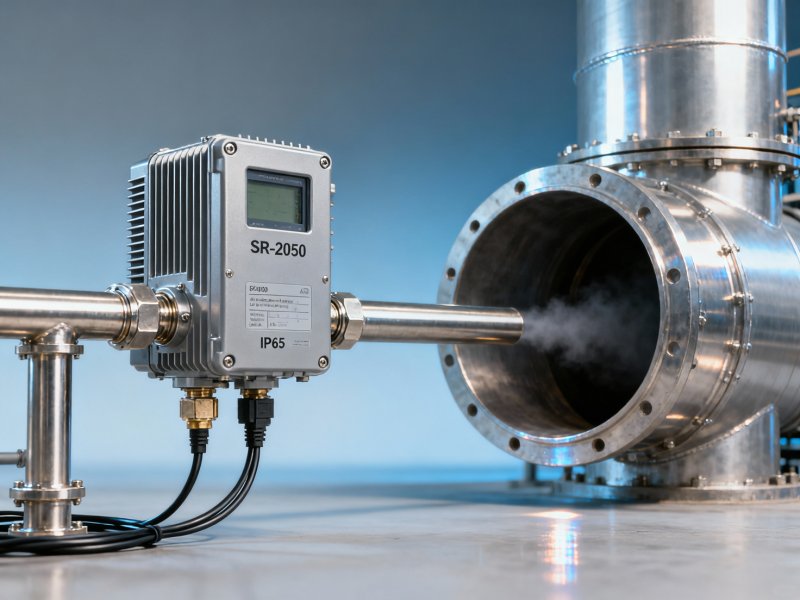
Next-generation thermal conductivity analyzers address the sensitivity gap through three coordinated engineering strategies: micro-machined dual-bridge sensors, real-time thermal drift compensation, and adaptive digital filtering.
Micro-machined sensors reduce thermal mass by 70%, enabling faster response (<1.2 s T₉₀) and sharper thermal gradients at trace levels. Paired with a reference bridge maintained at constant ΔT via PID-controlled heating, they suppress common-mode drift from ambient shifts. Adaptive filtering then isolates true gas-phase signals from mechanical vibration (common in boiler rooms) and electromagnetic interference (typical near VFDs and switchgear).
The result: certified detection limits down to 20 ppm (±2% FS) for CO and H₂, validated per IEC 62941-2:2021. These units retain ±0.5% accuracy across 0–100% O₂ ranges—critical for combustion optimization in energy and power applications.
Key Performance Improvements vs. Legacy Units
These gains directly impact operational outcomes: tighter control of excess air reduces fuel consumption by up to 2.3% in coal-fired boilers, while reliable low-ppm H₂ detection prevents false alarms in hydrogen-cooled turbine monitoring systems—cutting unplanned downtime by an average of 4.7 hours/year per unit.
What Decision-Makers Should Evaluate Before Procurement
Selecting a thermal conductivity analyzer isn’t just about specs—it’s about integration risk, lifecycle cost, and compliance sustainability. Technical evaluators should verify three core validation points before shortlisting: (1) third-party verification of low-concentration linearity per EN 15267-3, (2) documented immunity to EMI per IEC 61000-4-3 (≥10 V/m, 80 MHz–2 GHz), and (3) calibration stability over ≥6 months without manual intervention.
For project managers and financial approvers, total cost of ownership (TCO) must include service labor, calibration gas consumption, and downtime exposure. A legacy unit may cost 18% less upfront but incurs 3.2× more annual maintenance labor and requires recalibration every 90 days—adding $4,200/year in recurring costs versus a modern platform with 12-month certification intervals.
Distributors and system integrators benefit from modular architecture: SR-2050 supports hot-swappable sensor heads, RS-485/Modbus RTU, and optional HART 7.0—all pre-certified for SIL2 per IEC 61508:2010. This enables drop-in replacement in existing DCS loops without re-engineering.
Why Partner With a Specialized Instrumentation Provider
As the instrumentation industry evolves to support industrial automation, digital transformation, and intelligent upgrading, thermal conductivity analyzers must do more than measure—they must integrate, adapt, and assure compliance across complex electrical equipment ecosystems. Our SR-2030P and SR-2050 platforms are engineered specifically for energy and power, environmental monitoring, and industrial manufacturing use cases where reliability at the detection limit determines regulatory pass/fail outcomes.
We offer full application engineering support—including stack sampling design review, site-specific EMI assessment, and commissioning assistance aligned with ISA-84.00.01. All units ship with factory-installed calibration certificates traceable to NIST, and we provide 24/7 remote diagnostics for predictive maintenance scheduling.
Ready to validate low-concentration performance for your next flue gas analyzer deployment? Contact us for: (1) customized SR-2050 configuration review, (2) 30-day field trial units with full data logging, (3) compliance documentation package (EN 14181, EPA PS-18, ISO 14064-1), or (4) distributor onboarding with technical training and spare parts stocking guidance.
Recommended for You
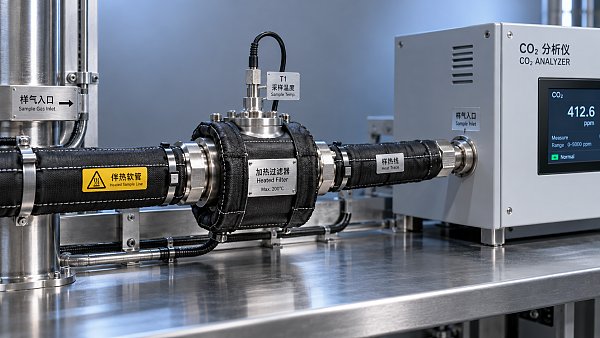
 How to prevent condensation in a CO2 analyzer sampling systemPrevent condensation in your CO2 analyzer sampling system. Learn how to control dew point, eliminate cold spots, and manage moisture for reliable readings and fewer costly disruptions.
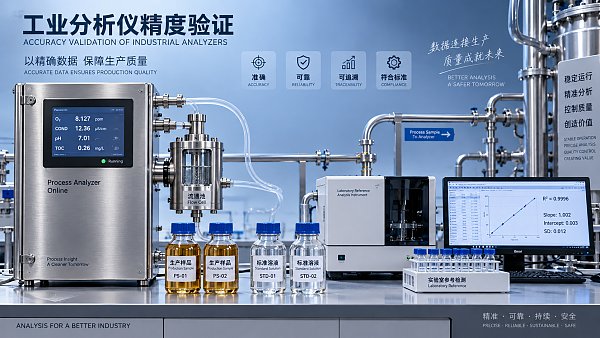
 How to verify accuracy claims for industrial quality analyzersVerify accuracy claims for industrial quality analyzers with calibration checks, independent testing, and clear acceptance criteria. Learn how to reduce risk and buy with confidence.
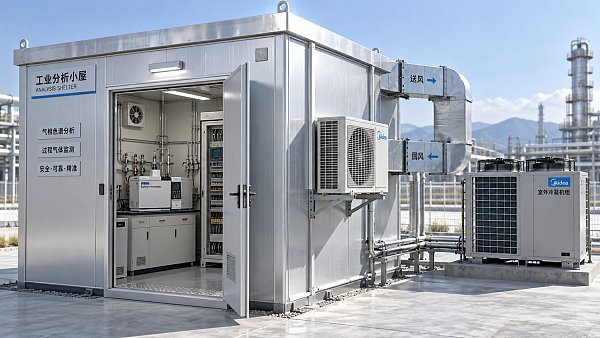
 How to calculate cooling loads for an industrial analyzer shelterSize industrial analyzer shelter cooling with confidence. Learn to calculate equipment heat, solar gains, and ventilation loads, then select HVAC capacity for reliable analyzer performance.
 What Happens When Combustible Gas Sensor Calibration Is Overdue?What happens if combustible gas sensor is not recalibrated on time? Discover the risks of inaccurate readings and missed alarms, plus steps to restore reliable protection.
 Can One Multi-Gas Detector Replace Four Separate Analyzers?Find out: can a single multi-gas detector replace four separate analyzers? Compare accuracy, safety, compliance, and lifetime costs to make a confident buying decision.
 Industrial Safety vs. Emission Monitoring: What Are the Differences?What are the main differences between industrial safety and emission monitoring? Compare goals, sensors, response times, and compliance needs to choose the right systems for your facility.
 Is Remote Monitoring Worth the Cost for Small Emission Sources?Is it worth investing in remote monitoring for small emission sources? Compare costs, compliance needs, and potential savings to choose the right solution for your operation.
 How Do You Handle Analyzer Failure During an Environmental Audit?Learn how to handle analyzer failure during environmental compliance audit procedures. Protect evidence, verify data, and restore monitoring with this practical response guide.
 Do VOC Monitors Require Explosion-Proof Certification?Does VOC monitoring require explosion-proof certification? Learn when approval is needed, compare ATEX and IECEx, and choose the right monitor for your site.
 How sample conditioning affects accuracy in petrochemical analyzersImprove accuracy in petrochemical analyzers with smarter sample conditioning. Discover how phase control, filtration, and transport design prevent bias and deliver reliable process data.
 How to troubleshoot sensor drift in industrial gas detectorsIndustrial gas detectors showing sensor drift? Learn how to verify calibration gas, identify root causes, and determine when sensor replacement is needed for reliable monitoring.
 How to judge whether a competitive price reflects real valueCompetitive Price: learn how to compare scope, compliance, performance, and lifecycle costs to identify real value, reduce risk, and make smarter purchasing decisions.
 When custom gas analysis is the right fit for complex process streamsCustom gas analysis for complex process streams: learn when tailored sampling, interference control, and reliable measurement design deliver confident decisions.
 When does a laser gas analyzer meet stack emissions monitoring needs?Laser gas analyzer for stack emissions: learn when it delivers fast, reliable data, how to assess installation risks, and what to verify for CEMS compliance.
 How to select a hazardous gas analyzer for confined spacesHazardous gas analyzer selection for confined spaces: compare sensors, sampling, certifications, alarms, and maintenance to protect workers and choose with confidence.
 When is a single gas analyzer sufficient for workplace safety monitoring?Discover when a single gas analyzer delivers reliable workplace safety monitoring, and learn the key limits, calibration needs, and risks that require broader detection.
 How to choose an ambient gas analyzer for low-level leak detectionAmbient gas analyzer selection for low-level leak detection: compare sensitivity, cross-sensitivity, sampling design, alarms, and calibration for reliable site performance.
 How to tell when an oxygen sensor needs replacementOxygen sensor replacement signs explained: learn how live data, fault codes, wiring checks, and exhaust inspections pinpoint the real issue before you buy.
 How laser gas analyzers improve combustion control in steel furnacesLaser gas analyzer for steel industry applications delivers fast in-situ O₂ and CO data to optimize furnace combustion, cut fuel waste, and improve steel heating stability.
 How to verify whether explosion proof equipment meets site requirementsExplosion proof equipment verification made practical: match zones, gas or dust groups, temperature classes, certificates, and installation conditions for confident compliance.
 How industrial gas analysis helps detect contamination before releaseIndustrial Gas Analysis helps detect moisture, oil, oxygen, and toxic contaminants before release—protecting processes, ensuring compliance, and reducing costly risks.
 When is electrochemistry detection the right choice for water analysis?Electrochemistry detection for water analysis: learn when fast, reliable monitoring of ions, chlorine, pH, and more delivers actionable results.
 How industrial standards reduce quality risks in supplier selectionIndustrial Standard guidance helps quality and safety managers reduce supplier risks, verify compliance, strengthen traceability, and build resilient instrumentation supply chains.
 When does a multi-component system reduce installation complexity?Multi component systems reduce installation complexity when they eliminate field interfaces, streamline commissioning, and provide proven compatibility. Learn how to assess total cost and supplier accountability.
 How to size an industrial control shelter for outdoor equipmentIndustrial control shelter sizing guide: optimize layout, HVAC, access, safety, and expansion space for reliable outdoor equipment operations.
 How flue analysis helps verify combustion efficiencyFlue analysis verifies combustion efficiency by assessing O2, CO, CO2, and stack temperature to identify excess air, incomplete combustion, and heat losses.
 How to select industrial gas detectors for confined spacesIndustrial gas detectors for confined spaces: learn how to match sensors, sampling methods, alarms, and certifications to real atmospheric hazards.
 When does a laser oxygen analyzer outperform zirconia sensors?Laser oxygen analyzer vs. zirconia sensors: compare speed, selectivity, maintenance, gas chemistry, and installation needs to choose the right oxygen measurement solution.
 How to select a percent range analyzer for process measurementsPercent range analyzer selection made practical: compare accuracy, sample systems, calibration, gas matrix, integration, and lifecycle cost for reliable process measurements.
 How explosion proof analysis verifies safe equipment for hazardous areasExplosion proof analysis verifies hazardous-area equipment by matching certifications, temperature ratings, installation details, and inspection controls for safer compliance.
 When does fixed gas detection need point sensors instead of open-path monitoring?Fixed gas detection: discover when point sensors outperform open-path monitoring for predictable leaks, enclosed zones, local alarms, and safer design decisions.
 How to choose industrial metrology systems for tight-tolerance partsIndustrial metrology guide for tight-tolerance parts: compare CMMs, optical scanners, gauges, uncertainty, workflow, and traceable inspection strategies.
Search Categories
Search Categories
- Smart Meters & Power Quality
- Transformer Gas Analyzers
- BESS Thermal Runaway Detectors
- Energy, Power & Smart Grid Monitoring
- Optical Profilers & CMM
- Ultrasonic & X-Ray NDT
- Calibration Standards
- Precision Metrology & NDT
- Water Quality Analyzers
- CEMS & VOCs Monitors
- Price Trends
- Import & Export Updates
- Market Trends
- Industry News
- Industry Insights
Latest Article
- How to prevent condensation in a CO2 analyzer sampling systemPrevent condensation in your CO2 analyzer sampling system. Learn how to control dew point, eliminate cold spots, and manage moisture for reliable readings and fewer costly disruptions.Posted by:
- How to verify accuracy claims for industrial quality analyzersVerify accuracy claims for industrial quality analyzers with calibration checks, independent testing, and clear acceptance criteria. Learn how to reduce risk and buy with confidence.Posted by:
- How to calculate cooling loads for an industrial analyzer shelterSize industrial analyzer shelter cooling with confidence. Learn to calculate equipment heat, solar gains, and ventilation loads, then select HVAC capacity for reliable analyzer performance.Posted by:
Please give us a message
