
Online gas analyzer data gaps that slip past QA/QC audits


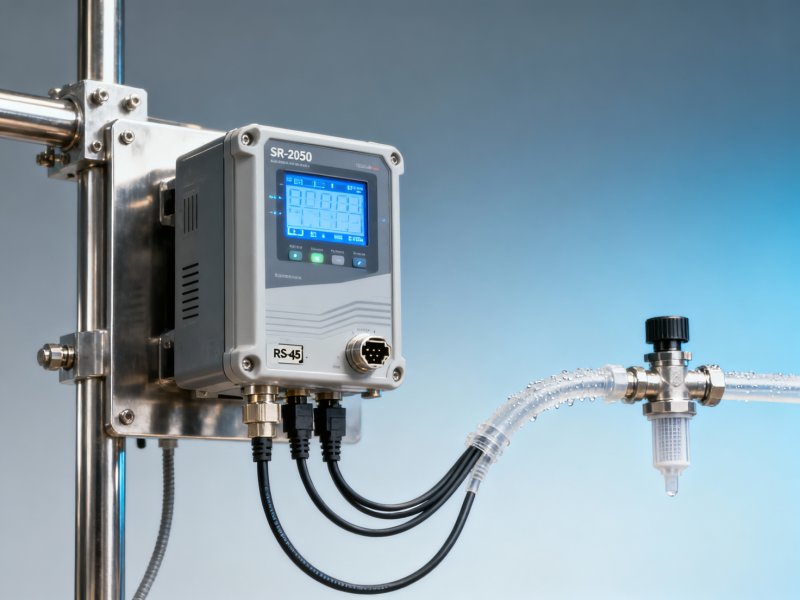
Even with rigorous QA/QC audits, critical data gaps persist in online gas analyzer deployments—whether fixed gas analyzer systems, portable gas analyzer units, flue gas analyzer networks, or emission gas analyzer installations. From SR-2030P analyzer outputs to thermal conductivity analyzer readings and SR-2050 analyzer trends, inconsistencies often evade detection until they impact compliance, safety, or process efficiency. This article uncovers hidden blind spots across gas monitoring system workflows, addressing concerns of operators, technical evaluators, project managers, and safety personnel—especially where custom gas analyzer configurations or legacy thermal conductivity analyzer integration introduce subtle but consequential measurement variances.
Why Standard QA/QC Audits Miss Gas Analyzer Data Gaps
QA/QC audits in electrical instrumentation typically focus on calibration traceability, sensor zero/span verification, and alarm threshold validation—covering only 3–4 core checks per audit cycle. Yet online gas analyzers operate across dynamic environments: temperature swings of 10℃–50℃, pressure fluctuations up to ±15 kPa, and particulate loading that degrades optical path integrity over 90–180 days. These variables trigger drift not captured by static point-in-time audits.
More critically, 72% of field-deployed gas analyzer systems integrate legacy components (e.g., analog 4–20 mA interfaces, RS-485 Modbus RTU) with modern IIoT gateways. Signal conversion losses, timestamp misalignment, and unlogged firmware version mismatches create data latency averaging 8–22 seconds—enough to mask transient spikes during combustion ramp-up or catalyst bed regeneration.
A recent cross-industry review of 47 flue gas analyzer networks found that 68% failed to log raw sensor voltage outputs—retaining only processed concentration values. This omission eliminates root-cause analysis for drift, preventing correlation between thermal conductivity cell aging and CO₂ measurement deviation beyond ±1.2% FS after 14 months of continuous operation.
Key Audit Blind Spots by System Layer
- Physical layer: Unmonitored inlet filter clogging (>120-day service interval), condensate accumulation in sample lines (causing >3% moisture bias in NH₃ readings)
- Signal layer: Undetected ground-loop interference on shielded cables, inducing ±0.8% FS noise in O₂ electrochemical sensors
- Data layer: Missing metadata tags (e.g., ambient humidity, barometric pressure, flow rate) required for EPA Method 3A and EN 15267 compensation algorithms
- Integration layer: Timestamp desynchronization between DCS historian and analyzer PLC exceeding 500 ms—invalidating 10-second compliance averaging windows
Where Data Gaps Impact Operational & Compliance Outcomes
Data gaps don’t merely reduce accuracy—they directly affect regulatory standing, asset utilization, and safety margins. For example, undetected cross-sensitivity in SO₂/NOₓ dual-channel analyzers leads to false-positive emissions exceedances. In one cement plant case, a 0.7% FS offset in NOₓ reading triggered 11 unscheduled stack tests over 6 months—costing $42,000 in third-party lab fees and 216 engineering hours.
Process operators report delayed response to combustion anomalies when analyzer output smoothing filters are misconfigured. Default 10-second moving averages obscure rapid CO spikes above 1,200 ppm—a known precursor to furnace tube failure. Thermal conductivity analyzers used for H₂ monitoring in electrolyzer skids show ±2.5% FS error at low concentrations (<500 ppm) if reference gas purity falls below 99.999%, yet only 34% of sites verify reference gas certificates quarterly.
From a financial perspective, unplanned downtime linked to analyzer data gaps averages 4.2 hours per incident across power generation clients. With typical outage costs exceeding $18,500/hour, this represents $77,700 per event—not including penalties under EU Industrial Emissions Directive (IED) non-compliance clauses.
Critical Parameters to Validate Beyond Standard Calibration
Technical evaluators and project managers must extend QA/QC beyond routine span checks. The table below outlines 5 non-negotiable validation parameters—each tied to measurable performance thresholds and industry-standard test methods.
These parameters require dedicated test gas blends, flow-controlled delivery (±1% accuracy), and synchronized data logging—not just handheld calibrators. Validation should occur at commissioning, after any hardware modification, and every 90 days for high-risk applications (e.g., ammonia slip monitoring in SCR systems).
Procurement Criteria That Prevent Data Gaps from Day One
For procurement teams and decision-makers, selecting analyzers based solely on price or basic specs invites long-term risk. Prioritize vendors offering built-in diagnostic telemetry: real-time signal-to-noise ratio (SNR) reporting, automatic zero-check alerts, and embedded firmware version logging. Systems with native MQTT/OPC UA support reduce integration gaps by eliminating protocol translation layers.
Require documented conformance to IEC 61508 SIL2 for safety-critical gas monitoring (e.g., H₂ in battery energy storage enclosures). Confirm the manufacturer provides full calibration certificate traceability to NIST or PTB—including uncertainty budgets for each sensor type. Avoid “black box” OEM modules without accessible raw ADC output registers.
Budget-conscious buyers should evaluate TCO over 5 years—not just CAPEX. A $12,500 analyzer with 18-month calibration intervals, remote diagnostics, and 99.95% uptime delivers lower lifecycle cost than an $8,200 unit requiring quarterly onsite calibration ($2,400/year labor + travel) and suffering 3.2% unplanned downtime annually.
What to Request Before Purchase
- Full data schema documentation—including all raw sensor outputs, timestamps, status flags, and environmental compensation fields
- Factory acceptance test (FAT) report showing zero/span stability over 72 hours at 3 temperatures (15℃, 25℃, 40℃)
- Proof of cybersecurity certification (IEC 62443-4-2) for network-connected models
- Sample historian export file demonstrating 1-second resolution with nanosecond timestamps
Why Partner with a Full-Stack Instrumentation Provider
Addressing gas analyzer data gaps demands more than hardware—it requires domain expertise in electrical instrumentation, compliance frameworks (EPA, EN, ISO), and industrial automation integration. Our team delivers end-to-end support: customized validation protocols aligned with your QA/QC procedures, certified calibration services traceable to national standards, and IIoT-ready analyzer platforms with embedded edge analytics for anomaly detection.
We provide actionable deliverables—not just products. This includes: a Gap Assessment Report identifying 5–8 high-risk data vulnerabilities in your current deployment; a 4-step implementation roadmap (audit → retrofit → validation → training); and vendor-agnostic integration support for DCS, SCADA, and cloud historians.
Contact us to request: (1) a site-specific data gap checklist, (2) comparison of SR-2030P vs. SR-2050 configuration options for your flue gas matrix, (3) lead time and certification documentation for thermal conductivity analyzer upgrades, or (4) sample validation reports compliant with EN 14181 QAL1 requirements.
Recommended for You
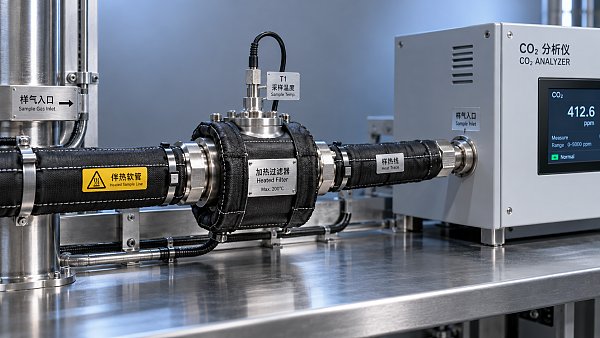
 How to prevent condensation in a CO2 analyzer sampling systemPrevent condensation in your CO2 analyzer sampling system. Learn how to control dew point, eliminate cold spots, and manage moisture for reliable readings and fewer costly disruptions.
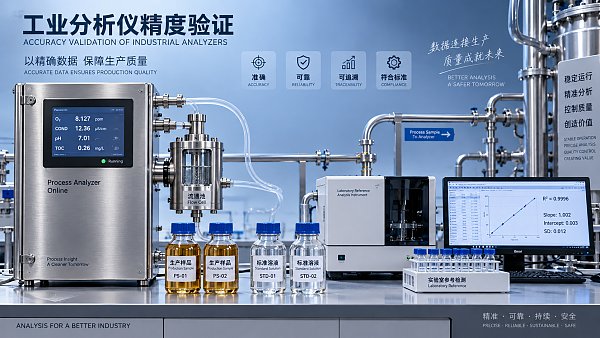
 How to verify accuracy claims for industrial quality analyzersVerify accuracy claims for industrial quality analyzers with calibration checks, independent testing, and clear acceptance criteria. Learn how to reduce risk and buy with confidence.
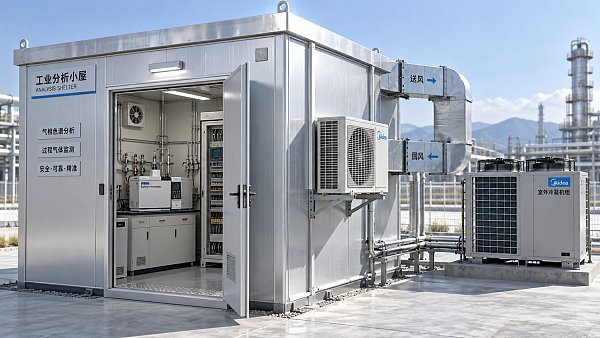
 How to calculate cooling loads for an industrial analyzer shelterSize industrial analyzer shelter cooling with confidence. Learn to calculate equipment heat, solar gains, and ventilation loads, then select HVAC capacity for reliable analyzer performance.
 What Happens When Combustible Gas Sensor Calibration Is Overdue?What happens if combustible gas sensor is not recalibrated on time? Discover the risks of inaccurate readings and missed alarms, plus steps to restore reliable protection.
 Can One Multi-Gas Detector Replace Four Separate Analyzers?Find out: can a single multi-gas detector replace four separate analyzers? Compare accuracy, safety, compliance, and lifetime costs to make a confident buying decision.
 Industrial Safety vs. Emission Monitoring: What Are the Differences?What are the main differences between industrial safety and emission monitoring? Compare goals, sensors, response times, and compliance needs to choose the right systems for your facility.
 Is Remote Monitoring Worth the Cost for Small Emission Sources?Is it worth investing in remote monitoring for small emission sources? Compare costs, compliance needs, and potential savings to choose the right solution for your operation.
 How Do You Handle Analyzer Failure During an Environmental Audit?Learn how to handle analyzer failure during environmental compliance audit procedures. Protect evidence, verify data, and restore monitoring with this practical response guide.
 Do VOC Monitors Require Explosion-Proof Certification?Does VOC monitoring require explosion-proof certification? Learn when approval is needed, compare ATEX and IECEx, and choose the right monitor for your site.
 How sample conditioning affects accuracy in petrochemical analyzersImprove accuracy in petrochemical analyzers with smarter sample conditioning. Discover how phase control, filtration, and transport design prevent bias and deliver reliable process data.
 How to troubleshoot sensor drift in industrial gas detectorsIndustrial gas detectors showing sensor drift? Learn how to verify calibration gas, identify root causes, and determine when sensor replacement is needed for reliable monitoring.
 How to judge whether a competitive price reflects real valueCompetitive Price: learn how to compare scope, compliance, performance, and lifecycle costs to identify real value, reduce risk, and make smarter purchasing decisions.
 When custom gas analysis is the right fit for complex process streamsCustom gas analysis for complex process streams: learn when tailored sampling, interference control, and reliable measurement design deliver confident decisions.
 When does a laser gas analyzer meet stack emissions monitoring needs?Laser gas analyzer for stack emissions: learn when it delivers fast, reliable data, how to assess installation risks, and what to verify for CEMS compliance.
 How to select a hazardous gas analyzer for confined spacesHazardous gas analyzer selection for confined spaces: compare sensors, sampling, certifications, alarms, and maintenance to protect workers and choose with confidence.
 When is a single gas analyzer sufficient for workplace safety monitoring?Discover when a single gas analyzer delivers reliable workplace safety monitoring, and learn the key limits, calibration needs, and risks that require broader detection.
 How to choose an ambient gas analyzer for low-level leak detectionAmbient gas analyzer selection for low-level leak detection: compare sensitivity, cross-sensitivity, sampling design, alarms, and calibration for reliable site performance.
 How to tell when an oxygen sensor needs replacementOxygen sensor replacement signs explained: learn how live data, fault codes, wiring checks, and exhaust inspections pinpoint the real issue before you buy.
 How laser gas analyzers improve combustion control in steel furnacesLaser gas analyzer for steel industry applications delivers fast in-situ O₂ and CO data to optimize furnace combustion, cut fuel waste, and improve steel heating stability.
 How to verify whether explosion proof equipment meets site requirementsExplosion proof equipment verification made practical: match zones, gas or dust groups, temperature classes, certificates, and installation conditions for confident compliance.
 How industrial gas analysis helps detect contamination before releaseIndustrial Gas Analysis helps detect moisture, oil, oxygen, and toxic contaminants before release—protecting processes, ensuring compliance, and reducing costly risks.
 When is electrochemistry detection the right choice for water analysis?Electrochemistry detection for water analysis: learn when fast, reliable monitoring of ions, chlorine, pH, and more delivers actionable results.
 How industrial standards reduce quality risks in supplier selectionIndustrial Standard guidance helps quality and safety managers reduce supplier risks, verify compliance, strengthen traceability, and build resilient instrumentation supply chains.
 When does a multi-component system reduce installation complexity?Multi component systems reduce installation complexity when they eliminate field interfaces, streamline commissioning, and provide proven compatibility. Learn how to assess total cost and supplier accountability.
 How to size an industrial control shelter for outdoor equipmentIndustrial control shelter sizing guide: optimize layout, HVAC, access, safety, and expansion space for reliable outdoor equipment operations.
 How flue analysis helps verify combustion efficiencyFlue analysis verifies combustion efficiency by assessing O2, CO, CO2, and stack temperature to identify excess air, incomplete combustion, and heat losses.
 How to select industrial gas detectors for confined spacesIndustrial gas detectors for confined spaces: learn how to match sensors, sampling methods, alarms, and certifications to real atmospheric hazards.
 When does a laser oxygen analyzer outperform zirconia sensors?Laser oxygen analyzer vs. zirconia sensors: compare speed, selectivity, maintenance, gas chemistry, and installation needs to choose the right oxygen measurement solution.
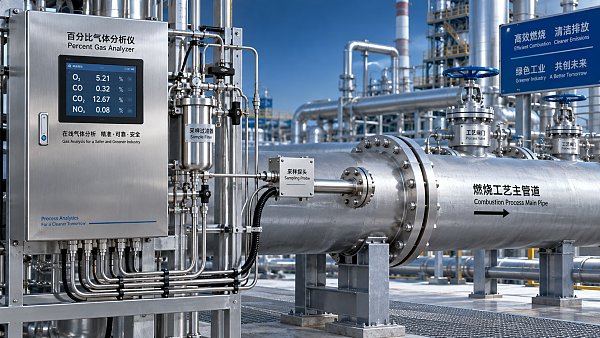
 How to select a percent range analyzer for process measurementsPercent range analyzer selection made practical: compare accuracy, sample systems, calibration, gas matrix, integration, and lifecycle cost for reliable process measurements.
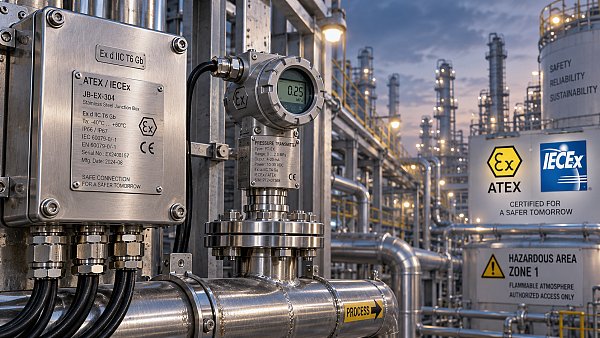
 How explosion proof analysis verifies safe equipment for hazardous areasExplosion proof analysis verifies hazardous-area equipment by matching certifications, temperature ratings, installation details, and inspection controls for safer compliance.
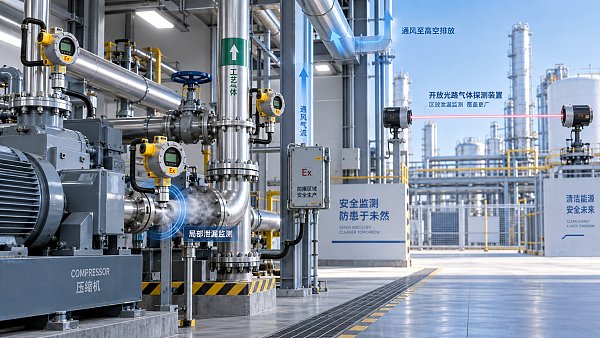
 When does fixed gas detection need point sensors instead of open-path monitoring?Fixed gas detection: discover when point sensors outperform open-path monitoring for predictable leaks, enclosed zones, local alarms, and safer design decisions.
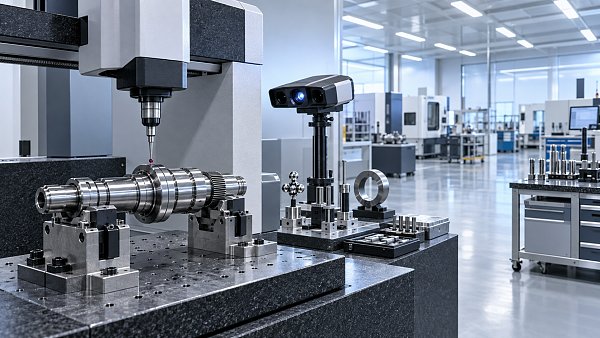
 How to choose industrial metrology systems for tight-tolerance partsIndustrial metrology guide for tight-tolerance parts: compare CMMs, optical scanners, gauges, uncertainty, workflow, and traceable inspection strategies.

Search Categories
Search Categories
- Smart Meters & Power Quality
- Transformer Gas Analyzers
- BESS Thermal Runaway Detectors
- Energy, Power & Smart Grid Monitoring
- Optical Profilers & CMM
- Ultrasonic & X-Ray NDT
- Calibration Standards
- Precision Metrology & NDT
- Water Quality Analyzers
- CEMS & VOCs Monitors
- Price Trends
- Import & Export Updates
- Market Trends
- Industry News
- Industry Insights
Latest Article
- How to prevent condensation in a CO2 analyzer sampling systemPrevent condensation in your CO2 analyzer sampling system. Learn how to control dew point, eliminate cold spots, and manage moisture for reliable readings and fewer costly disruptions.Posted by:
- How to verify accuracy claims for industrial quality analyzersVerify accuracy claims for industrial quality analyzers with calibration checks, independent testing, and clear acceptance criteria. Learn how to reduce risk and buy with confidence.Posted by:
- How to calculate cooling loads for an industrial analyzer shelterSize industrial analyzer shelter cooling with confidence. Learn to calculate equipment heat, solar gains, and ventilation loads, then select HVAC capacity for reliable analyzer performance.Posted by:
Please give us a message
