
Explosion Proof Sensor Certification Changes Worth Watching


For procurement teams in instrumentation and industrial automation, keeping up with certification updates is essential when sourcing any explosion proof sensor. Regulatory shifts can affect product compliance, project timelines, supplier selection, and long-term operating safety. This article highlights the certification changes worth watching so buyers can reduce risk, compare options more confidently, and make smarter purchasing decisions in demanding industrial environments.
The core search intent behind this topic is practical, not academic. Buyers searching for changes in explosion proof sensor certification usually want to know what is changing, whether those changes affect current or future purchasing decisions, and how to avoid compliance, delivery, or audit problems.
For procurement professionals, the biggest concern is rarely the wording of a standard by itself. What matters is whether a sensor can be legally installed in a target market, whether documentation will pass internal and external review, whether product substitutions remain compliant, and whether any hidden certification gaps could disrupt a project later.
That means the most useful article is one that translates certification developments into sourcing decisions. Instead of reviewing every technical detail of hazardous area regulation, this guide focuses on the changes and trends that can influence vendor qualification, bid comparison, lifecycle cost, and operational risk.
Why procurement teams should watch explosion proof sensor certification more closely now
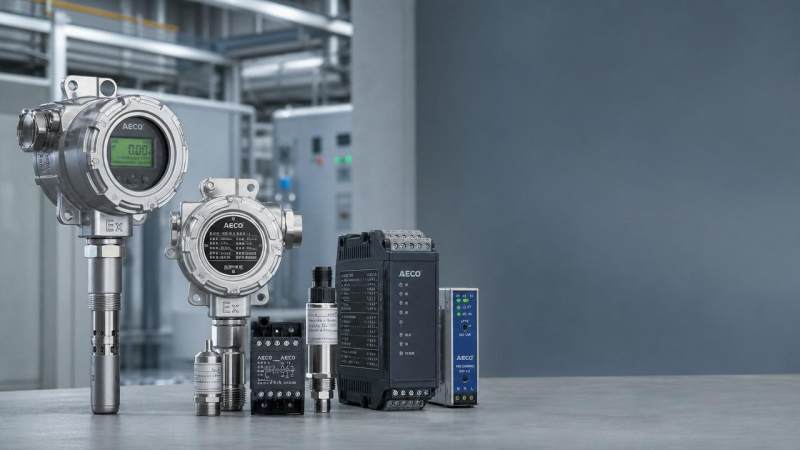
An explosion proof sensor is often purchased as one line item within a larger automation, monitoring, or safety system. Yet its certification status can affect the approval of the entire installation. In hazardous locations, documentation errors or certification mismatches can delay commissioning even when the sensor itself performs well technically.
This risk is becoming more visible because industrial projects now span multiple jurisdictions, more end users demand stricter traceability, and supply chains are under pressure to deliver faster with fewer engineering revisions. As a result, procurement is increasingly expected to verify not just product price and lead time, but also market-specific compliance readiness.
Another reason to pay attention is that the certification landscape is not static. Standards are revised, marking requirements are refined, digital documentation expectations are rising, and authorities are paying closer attention to consistency between certificates, labels, manuals, and actual product configuration.
For buyers, the practical implication is clear: a previously acceptable sourcing shortcut may no longer be safe. Assuming that all hazardous-area certified products are equivalent, or that one certificate automatically covers every application and country, can create unnecessary exposure.
What buyers are really trying to confirm when evaluating an explosion proof sensor
When procurement teams evaluate an explosion proof sensor, they are usually answering five business-critical questions. First, is the product certified for the exact hazardous area classification required by the project? Second, is the certification valid in the destination country or region? Third, is the supplied documentation complete and current?
Fourth, are there any conditions of safe use, installation limitations, or accessory dependencies that could affect the purchase? Fifth, is the supplier capable of maintaining certification continuity over the life of the equipment, including future audits, spare parts, and replacement units?
These questions matter because certification is not simply a logo on a datasheet. A sensor may hold recognized approvals, but if the approval type, protection concept, temperature class, gas or dust group, enclosure arrangement, cable entry requirement, or ambient temperature range does not match the intended use, the product may still be unsuitable.
This is why smart buyers increasingly compare not only sensor performance specifications, but also the quality of the compliance package. A supplier that can quickly provide current certificates, declarations, test references, labeling samples, and installation instructions usually creates less commercial risk than one offering vague or outdated compliance claims.
The certification changes worth watching most closely
Not every regulatory update has the same impact on sourcing. Procurement teams should focus on the changes that most directly influence approval certainty, cross-border use, and supplier accountability.
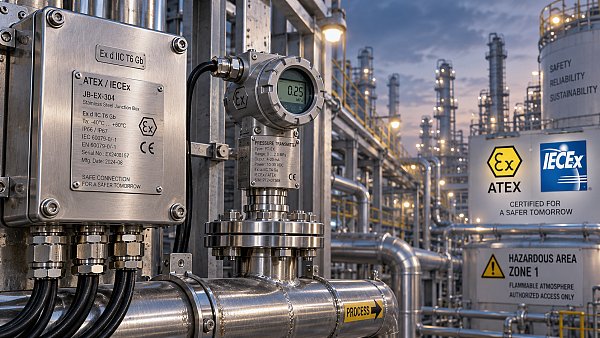
1. Greater alignment pressure between regional and international schemes. Many buyers source globally, but certification acceptance still differs by market. IECEx, ATEX, North American approvals, and local national schemes may overlap in technical intent but are not interchangeable. The trend to watch is how suppliers manage multi-market certification strategies and whether one product platform is truly supported across your required geographies.
2. More scrutiny of product marking and labeling accuracy. Authorities and end users are paying closer attention to the consistency between the marking plate, certificate, datasheet, and manual. Small discrepancies that were once overlooked can now trigger review delays. Procurement should treat labeling quality as part of supplier evaluation, especially for repeat orders and OEM integrations.
3. Stronger focus on traceability and document version control. A growing number of customers expect digital access to the latest certificates and revision history. If a supplier cannot clearly show which product revision matches which certificate revision, buyers may face audit difficulty later. This is especially important for regulated industries, export projects, and large framework contracts.
4. Tighter attention to special conditions of use. Some explosion proof sensor certifications include installation conditions that are easy to miss during purchase. These may involve cable glands, conduit practices, sealing methods, ambient limits, impact protection, mounting orientation, or electrical interface restrictions. The market trend is toward more explicit enforcement of these conditions.
5. Increasing lifecycle oversight after initial approval. Certification does not end at product launch. Manufacturing changes, component substitutions, firmware updates in smart sensors, enclosure redesigns, or supplier changes can all affect compliance status. Buyers should watch whether vendors have disciplined change-control processes and whether they communicate compliance-impacting changes proactively.
How different certification systems can affect your buying decision
One common source of confusion is assuming that “explosion proof” means the same thing everywhere. In practice, buyers must understand the relationship between protection concepts and market-specific approval systems.
For example, projects in Europe often revolve around ATEX requirements, while international projects may reference IECEx. North American projects may involve FM, CSA, UL, or jurisdiction-specific acceptance criteria. Even when the technical construction of the explosion proof sensor is similar, the documents needed for acceptance can differ.
Procurement should therefore ask a simple but important question early: which certification path is required by the end user, the local authority, and the EPC or engineering team? This avoids late-stage surprises where an otherwise qualified sensor cannot be accepted because it lacks the required regional approval format.
It is also important to confirm whether the application involves gas, dust, or both. Some buyers focus only on a broad hazardous-area claim and overlook the exact classification. A sensor certified for one environment may not automatically cover another. Zone, class, division, group, and temperature requirements should all be verified before award.
In multinational sourcing, it is often worth prioritizing suppliers that offer clear certification mapping by market. This reduces the need for internal interpretation and shortens technical-commercial alignment between procurement, engineering, and compliance teams.
Red flags that suggest certification risk during supplier evaluation
Procurement professionals do not need to become certification engineers, but they should know the warning signs that often precede problems. One red flag is a datasheet that uses broad hazardous-location language without citing specific certificate numbers or approval standards.
Another warning sign is when the supplier provides certificates that are expired, difficult to verify, or inconsistent with the exact model being quoted. If the ordering code on the quotation does not clearly match the certified configuration, there is a risk that the delivered unit may differ from what was approved.
A third issue is incomplete accessory coverage. Cable entries, barriers, displays, connectors, mounting assemblies, and communication modules can all affect the final certified arrangement. If the vendor treats these as separate commercial items without explaining certification dependencies, buyers should investigate further.
Slow or vague responses to compliance questions are also meaningful. In hazardous-area applications, supplier responsiveness often indicates the maturity of their certification management process. A qualified vendor should be able to explain approvals, provide supporting documents, and identify any application limits without excessive delay.
Finally, beware of over-reliance on generic wording like “equivalent approval,” “meets the intent,” or “suitable for hazardous areas” without formal evidence. In procurement terms, unofficial equivalence is usually not a substitute for a recognized certificate.
A practical checklist for buying an explosion proof sensor with less risk
To improve sourcing outcomes, procurement teams can use a simple structured review before placing an order. This helps convert certification complexity into a repeatable buying process.
Confirm the application classification. Verify the required zone or division, gas or dust group, temperature class, ambient range, ingress protection needs, and installation method. Do not rely on a generic project description alone.
Match the exact product configuration. Ensure the quoted model number, output type, housing material, cable entry, display option, and accessories are covered by the cited certification. If not, request written clarification before purchase.
Verify regional acceptance. Check whether the project requires ATEX, IECEx, UL, FM, CSA, or another national approval. Ask the supplier to provide the exact market-relevant documents, not just a general compliance statement.
Review conditions of safe use. Read the certificate notes and installation instructions carefully. Conditions that seem minor during procurement can become major obstacles during commissioning or inspection.
Check certificate validity and revision control. Request the latest certificate set and confirm document dates, revision numbers, and traceability to the offered product. Store this information with purchasing records.
Assess supplier change management. Ask how the vendor handles certified product modifications, discontinued parts, or component substitutions. Stable lifecycle control is especially important for long-term industrial assets.
Coordinate with engineering early. Procurement works best when technical and compliance review happens before final award, not after the product arrives on site. Early alignment reduces rework and unplanned substitution pressure.
How certification changes can influence total cost, not just compliance
Many buyers evaluate explosion proof sensor options primarily on unit price, but certification maturity affects total cost in several ways. A cheaper product can become more expensive if it creates approval delays, requires extra engineering validation, or leads to site rework because documentation is incomplete.
There is also the cost of supplier inconsistency. If future replacement units are delivered with different markings, different certification references, or unclear compatibility, maintenance teams may need additional review before installation. That adds hidden labor cost and can extend downtime.
Well-managed certification can also improve commercial flexibility. Suppliers with strong multi-market approvals and disciplined documentation processes are often better positioned to support standardization across plants, regions, or OEM product lines. That can simplify framework agreements and reduce qualification effort over time.
For procurement leaders, the takeaway is that certification quality should be treated as part of total supplier value. It influences schedule reliability, audit readiness, after-sales support, and the likelihood of smooth asset lifecycle management.
What to ask suppliers now if you want to stay ahead of future changes
If your team is planning upcoming tenders or approved vendor reviews, a few targeted questions can reveal whether a supplier is ready for evolving certification expectations.
Ask whether the quoted explosion proof sensor has active certification maintenance and how often documents are updated. Ask whether the supplier can provide digital copies of current certificates, declarations, marking examples, and installation instructions as part of the bid package.
Ask how they manage design or component changes that might affect hazardous-area approvals. Ask whether they notify customers of compliance-relevant revisions. Ask whether the same product platform is certified consistently across the regions where you operate.
It is also useful to ask for examples of recent projects with similar hazardous-area classifications and regulatory requirements. Real experience often reveals whether a vendor can support not only product delivery, but also acceptance by inspectors, integrators, and end users.
These questions do more than screen out weak suppliers. They also help build a sourcing base that is resilient as certification requirements, documentation expectations, and audit practices continue to develop.
Conclusion
For procurement professionals, the most important certification changes to watch are the ones that affect approval certainty, documentation quality, traceability, market access, and lifecycle control. In other words, the real issue is not simply whether an explosion proof sensor is certified, but whether its certification is precise, current, verifiable, and aligned with the actual project environment.
Buyers who focus on exact application matching, regional approval requirements, supplier document discipline, and long-term change control will make stronger purchasing decisions and reduce downstream risk. As industrial compliance expectations continue to rise, certification awareness is no longer a technical extra. It is a core part of smart sourcing.
If your organization regularly buys hazardous-area instrumentation, now is the time to tighten internal review criteria and ask suppliers better questions. That approach will help you compare options more confidently, avoid preventable delays, and choose an explosion proof sensor that supports both safety and commercial performance.
Recommended for You
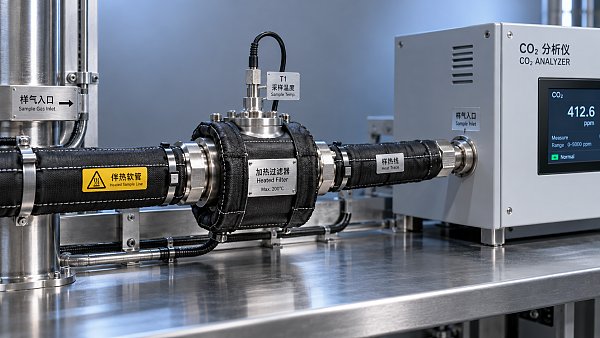
 How to prevent condensation in a CO2 analyzer sampling systemPrevent condensation in your CO2 analyzer sampling system. Learn how to control dew point, eliminate cold spots, and manage moisture for reliable readings and fewer costly disruptions.
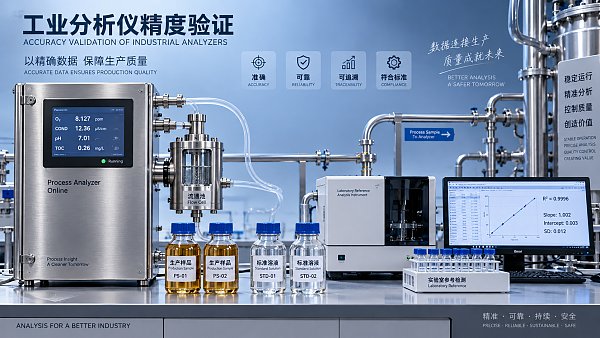
 How to verify accuracy claims for industrial quality analyzersVerify accuracy claims for industrial quality analyzers with calibration checks, independent testing, and clear acceptance criteria. Learn how to reduce risk and buy with confidence.
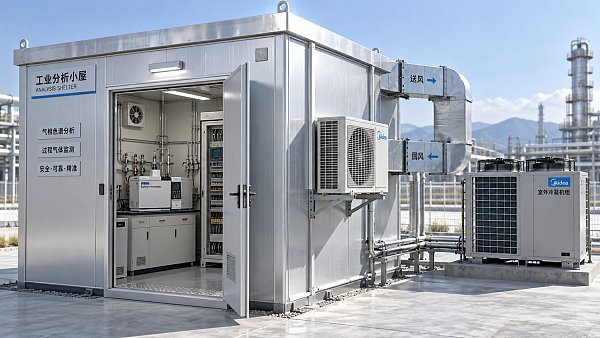
 How to calculate cooling loads for an industrial analyzer shelterSize industrial analyzer shelter cooling with confidence. Learn to calculate equipment heat, solar gains, and ventilation loads, then select HVAC capacity for reliable analyzer performance.
 What Happens When Combustible Gas Sensor Calibration Is Overdue?What happens if combustible gas sensor is not recalibrated on time? Discover the risks of inaccurate readings and missed alarms, plus steps to restore reliable protection.
 Can One Multi-Gas Detector Replace Four Separate Analyzers?Find out: can a single multi-gas detector replace four separate analyzers? Compare accuracy, safety, compliance, and lifetime costs to make a confident buying decision.
 Industrial Safety vs. Emission Monitoring: What Are the Differences?What are the main differences between industrial safety and emission monitoring? Compare goals, sensors, response times, and compliance needs to choose the right systems for your facility.
 Is Remote Monitoring Worth the Cost for Small Emission Sources?Is it worth investing in remote monitoring for small emission sources? Compare costs, compliance needs, and potential savings to choose the right solution for your operation.
 How Do You Handle Analyzer Failure During an Environmental Audit?Learn how to handle analyzer failure during environmental compliance audit procedures. Protect evidence, verify data, and restore monitoring with this practical response guide.
 Do VOC Monitors Require Explosion-Proof Certification?Does VOC monitoring require explosion-proof certification? Learn when approval is needed, compare ATEX and IECEx, and choose the right monitor for your site.
 How sample conditioning affects accuracy in petrochemical analyzersImprove accuracy in petrochemical analyzers with smarter sample conditioning. Discover how phase control, filtration, and transport design prevent bias and deliver reliable process data.
 How to troubleshoot sensor drift in industrial gas detectorsIndustrial gas detectors showing sensor drift? Learn how to verify calibration gas, identify root causes, and determine when sensor replacement is needed for reliable monitoring.
 How to judge whether a competitive price reflects real valueCompetitive Price: learn how to compare scope, compliance, performance, and lifecycle costs to identify real value, reduce risk, and make smarter purchasing decisions.
 When custom gas analysis is the right fit for complex process streamsCustom gas analysis for complex process streams: learn when tailored sampling, interference control, and reliable measurement design deliver confident decisions.
 When does a laser gas analyzer meet stack emissions monitoring needs?Laser gas analyzer for stack emissions: learn when it delivers fast, reliable data, how to assess installation risks, and what to verify for CEMS compliance.
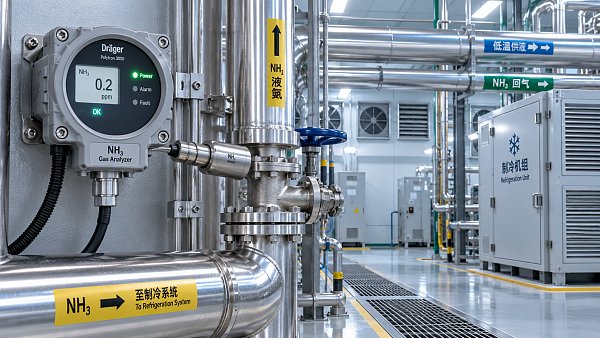
 How to select a hazardous gas analyzer for confined spacesHazardous gas analyzer selection for confined spaces: compare sensors, sampling, certifications, alarms, and maintenance to protect workers and choose with confidence.
 When is a single gas analyzer sufficient for workplace safety monitoring?Discover when a single gas analyzer delivers reliable workplace safety monitoring, and learn the key limits, calibration needs, and risks that require broader detection.
 How to choose an ambient gas analyzer for low-level leak detectionAmbient gas analyzer selection for low-level leak detection: compare sensitivity, cross-sensitivity, sampling design, alarms, and calibration for reliable site performance.
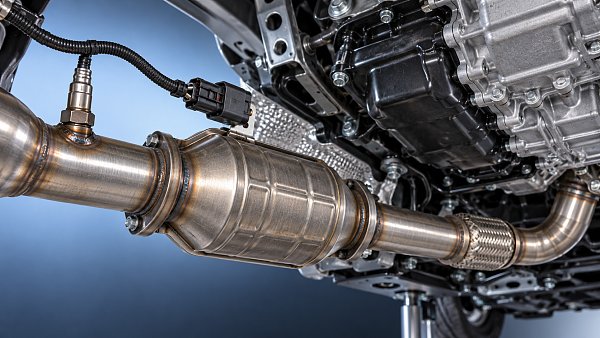
 How to tell when an oxygen sensor needs replacementOxygen sensor replacement signs explained: learn how live data, fault codes, wiring checks, and exhaust inspections pinpoint the real issue before you buy.
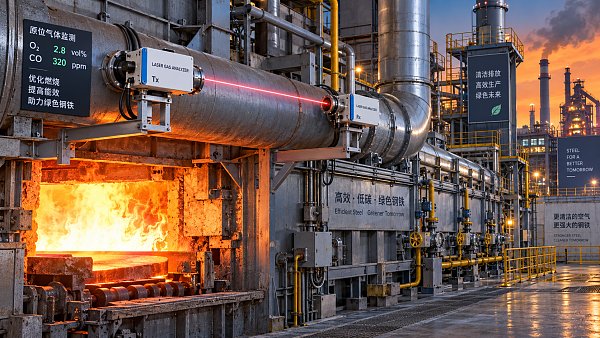
 How laser gas analyzers improve combustion control in steel furnacesLaser gas analyzer for steel industry applications delivers fast in-situ O₂ and CO data to optimize furnace combustion, cut fuel waste, and improve steel heating stability.
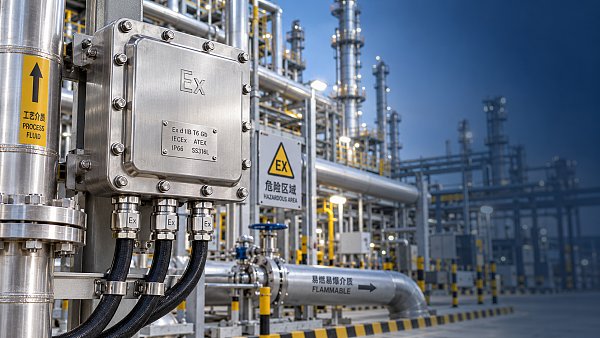
 How to verify whether explosion proof equipment meets site requirementsExplosion proof equipment verification made practical: match zones, gas or dust groups, temperature classes, certificates, and installation conditions for confident compliance.
 How industrial gas analysis helps detect contamination before releaseIndustrial Gas Analysis helps detect moisture, oil, oxygen, and toxic contaminants before release—protecting processes, ensuring compliance, and reducing costly risks.
 When is electrochemistry detection the right choice for water analysis?Electrochemistry detection for water analysis: learn when fast, reliable monitoring of ions, chlorine, pH, and more delivers actionable results.
 How industrial standards reduce quality risks in supplier selectionIndustrial Standard guidance helps quality and safety managers reduce supplier risks, verify compliance, strengthen traceability, and build resilient instrumentation supply chains.
 When does a multi-component system reduce installation complexity?Multi component systems reduce installation complexity when they eliminate field interfaces, streamline commissioning, and provide proven compatibility. Learn how to assess total cost and supplier accountability.
 How to size an industrial control shelter for outdoor equipmentIndustrial control shelter sizing guide: optimize layout, HVAC, access, safety, and expansion space for reliable outdoor equipment operations.
 How flue analysis helps verify combustion efficiencyFlue analysis verifies combustion efficiency by assessing O2, CO, CO2, and stack temperature to identify excess air, incomplete combustion, and heat losses.
 How to select industrial gas detectors for confined spacesIndustrial gas detectors for confined spaces: learn how to match sensors, sampling methods, alarms, and certifications to real atmospheric hazards.
 When does a laser oxygen analyzer outperform zirconia sensors?Laser oxygen analyzer vs. zirconia sensors: compare speed, selectivity, maintenance, gas chemistry, and installation needs to choose the right oxygen measurement solution.
 How to select a percent range analyzer for process measurementsPercent range analyzer selection made practical: compare accuracy, sample systems, calibration, gas matrix, integration, and lifecycle cost for reliable process measurements.
 How explosion proof analysis verifies safe equipment for hazardous areasExplosion proof analysis verifies hazardous-area equipment by matching certifications, temperature ratings, installation details, and inspection controls for safer compliance.
 When does fixed gas detection need point sensors instead of open-path monitoring?Fixed gas detection: discover when point sensors outperform open-path monitoring for predictable leaks, enclosed zones, local alarms, and safer design decisions.
 How to choose industrial metrology systems for tight-tolerance partsIndustrial metrology guide for tight-tolerance parts: compare CMMs, optical scanners, gauges, uncertainty, workflow, and traceable inspection strategies.








Search Categories
Search Categories
- Smart Meters & Power Quality
- Transformer Gas Analyzers
- BESS Thermal Runaway Detectors
- Energy, Power & Smart Grid Monitoring
- Optical Profilers & CMM
- Ultrasonic & X-Ray NDT
- Calibration Standards
- Precision Metrology & NDT
- Water Quality Analyzers
- CEMS & VOCs Monitors
- Price Trends
- Import & Export Updates
- Market Trends
- Industry News
- Industry Insights
Latest Article
- How to prevent condensation in a CO2 analyzer sampling systemPrevent condensation in your CO2 analyzer sampling system. Learn how to control dew point, eliminate cold spots, and manage moisture for reliable readings and fewer costly disruptions.Posted by:
- How to verify accuracy claims for industrial quality analyzersVerify accuracy claims for industrial quality analyzers with calibration checks, independent testing, and clear acceptance criteria. Learn how to reduce risk and buy with confidence.Posted by:
- How to calculate cooling loads for an industrial analyzer shelterSize industrial analyzer shelter cooling with confidence. Learn to calculate equipment heat, solar gains, and ventilation loads, then select HVAC capacity for reliable analyzer performance.Posted by:
Please give us a message
