
Stack Controller Selection Tips for Long-Term Emissions Stability


Choosing the right stack controller is critical for maintaining long-term emissions stability in industrial and environmental monitoring systems. For technical evaluators, the decision goes beyond basic compatibility and should focus on control accuracy, response reliability, data integration, and lifecycle performance. A well-matched stack controller can reduce compliance risks, improve monitoring consistency, and support smarter operational management over time.
Why stack controller evaluation is changing faster than before
Technical evaluation teams are no longer selecting a stack controller only for present-day functionality. The market has shifted toward long-horizon emissions stability, audit readiness, and integration with wider plant intelligence systems. In many facilities, stack monitoring is now expected to serve not just environmental compliance, but also maintenance planning, process optimization, ESG reporting support, and risk management. This broader role is changing what “good enough” means.
Several signals explain this shift. Industrial sites are facing tighter scrutiny of emissions consistency rather than occasional performance snapshots. Operators also expect monitoring and control devices to deliver cleaner data over longer service cycles, with fewer manual interventions. At the same time, digital transformation in instrumentation is pushing every field device and control node toward better interoperability, traceability, and remote diagnostics. As a result, stack controller selection has become a strategic technical decision instead of a narrow component purchase.
For technical evaluators, this means selection criteria must now reflect a changing operating environment: more demanding reporting expectations, more connected instrumentation architectures, and greater pressure to maintain emissions stability under variable process loads. A stack controller that performs well in a static test may still underperform over years of thermal cycling, sensor drift, communications expansion, and operational changes.
Key trend signals shaping long-term emissions stability decisions
The strongest trend is the move from isolated control hardware toward data-aware control infrastructure. Facilities increasingly want a stack controller that can support stable control behavior while also fitting into distributed monitoring systems, historian platforms, supervisory software, and compliance workflows. This does not mean every site needs the most complex platform, but it does mean future integration capability is becoming a core selection factor.
Another clear change is the growing importance of performance under non-ideal conditions. Emissions stability is often challenged during startups, shutdowns, process swings, fuel changes, ambient fluctuations, and maintenance intervals. Because of this, technical teams are paying closer attention to how a stack controller handles disturbance rejection, input noise, signal latency, fail-safe logic, and recovery after temporary faults. The evaluation standard is moving from normal-operation accuracy to whole-cycle reliability.
A third signal is lifecycle accountability. Procurement teams increasingly ask whether a stack controller will still be supportable years later, whether firmware updates are manageable, whether calibration records are traceable, and whether spare parts and service expertise will remain available. In a compliance-sensitive environment, lifecycle support is not an afterthought; it is part of emissions stability itself.
What is driving the new requirements for a stack controller
The first driver is regulatory and customer pressure for dependable emissions behavior. Even when formal rules differ by region or industry, the practical direction is similar: better records, stronger confidence in measured outputs, and quicker response to abnormal conditions. That pressure reaches the instrumentation layer directly. A stack controller is now expected to support stable operation, transparent events, and dependable data continuity.
The second driver is the rising complexity of industrial processes. Many facilities now operate with mixed fuel inputs, changing production recipes, variable energy demand, or tighter efficiency targets. These shifts can create conditions where emissions fluctuate more easily. Under such conditions, the stack controller must provide predictable response, maintain control fidelity, and avoid becoming the weak point between sensing, actuation, and reporting.
The third driver is the evolution of instrumentation from standalone measurement to networked decision support. Environmental monitoring, process control, metrology, calibration records, and maintenance diagnostics are increasingly linked. This raises the value of a stack controller that can deliver structured data, health indicators, alarm transparency, and secure communications, rather than only basic output control.
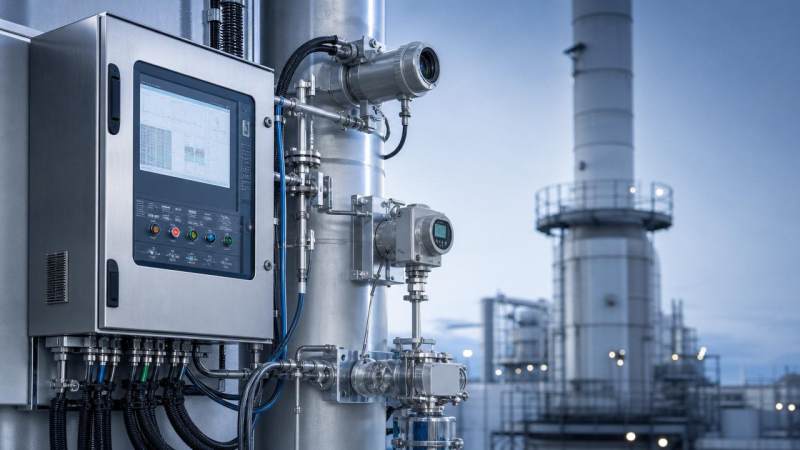
How these changes affect technical evaluators, operators, and procurement teams
The impact is not uniform. Technical evaluators are affected first because they must convert broad business and compliance concerns into concrete selection criteria. Instead of asking only whether a stack controller can receive signals and issue outputs, they must ask how it behaves over time, how it supports diagnostics, and how it fits future architecture decisions. This expands evaluation from specification matching to system-level risk judgment.
Operators are affected because controller behavior directly shapes alarm burden, intervention frequency, and confidence in emissions stability. A poorly chosen stack controller may cause unstable control loops, difficult tuning, nuisance alarms, or unclear fault states. By contrast, a suitable controller improves visibility and reduces the operational effort required to maintain acceptable emissions performance through daily variability.
Procurement teams are also influenced by these trends. Price remains important, but the cost of weak lifecycle support, difficult integration, and repeated troubleshooting is often much higher than the initial savings. As a result, procurement decisions are increasingly informed by total operating impact, not just unit cost. In technical industries, this shift often rewards vendors who can show application understanding, documentation quality, and long-term service capability.
The stack controller capabilities now worth prioritizing
A modern stack controller should first be judged on control stability under realistic load conditions. That includes accuracy, repeatability, signal filtering quality, loop responsiveness, and robustness against sensor disturbances. Long-term emissions stability depends on what happens when process conditions deviate from ideal assumptions, so dynamic behavior deserves as much attention as nameplate specifications.
Second, data integrity and integration should be treated as core technical performance. A stack controller that logs events clearly, timestamps changes reliably, and communicates cleanly with plant systems strengthens not only monitoring but also post-event analysis. This is increasingly valuable for root-cause review, maintenance planning, and demonstrating stable emissions management over time.
Third, diagnostics maturity is becoming a differentiator. Technical teams should look for meaningful fault indication, sensor health visibility, communication status awareness, and support for preventive maintenance. A stack controller that helps users see degradation before control quality suffers is more valuable than one that only reacts after failure.
Fourth, lifecycle adaptability matters. The selected controller should not trap the site in a rigid design. Firmware governance, configuration backup, calibration support, training resources, and future expansion options all influence whether the system can continue supporting emissions stability as the facility changes.
Signals that a selection process is too narrow
A common warning sign is overreliance on initial compatibility checklists. If the review only confirms input types, output ranges, and basic communication protocol, it is likely missing the conditions that most often threaten long-term stability. Another sign is treating the stack controller as isolated from analyzer behavior, actuators, control strategies, and data systems. In practice, emissions stability is a chain, and controller selection must be evaluated inside that chain.
Another narrow approach is weighting price too heavily without modeling downtime, retuning effort, maintenance visits, compliance investigations, or future integration work. Technical evaluators should also be cautious when vendors provide only idealized performance claims but limited evidence on diagnostics, support response, or complex operating scenarios. Stable stack control is proven in edge conditions, not only in brochures.
A practical framework for better long-term judgment
A stronger evaluation process usually follows four stages. First, define the emissions stability risks specific to the site: process variability, fuel changes, ambient impacts, maintenance constraints, and reporting expectations. Second, translate those risks into controller requirements such as response time behavior, diagnostics depth, communications support, and fail-safe design. Third, compare vendors using scenario-based review rather than only feature lists. Fourth, validate the lifecycle model, including service, updates, spare parts, and training.
What to watch next in stack controller selection
Looking ahead, technical evaluators should expect the stack controller market to keep moving toward smarter diagnostics, tighter system interoperability, and stronger software governance. Demand will likely grow for controllers that support better remote visibility, easier performance verification, and more efficient maintenance planning. At the same time, buyers may become more cautious about cybersecurity exposure, configuration traceability, and vendor support continuity.
That means the best selection strategy is not chasing novelty for its own sake, but choosing a stack controller that is technically stable today and adaptable enough for tomorrow’s instrumentation environment. In many industrial settings, the winning solution will be the one that balances precise control, dependable data behavior, maintainability, and realistic lifecycle support.
Final decision guidance for technical evaluators
If your team wants to judge the long-term impact of a stack controller more accurately, focus on a few decisive questions. How well will the controller maintain stable behavior during process variation, not just under normal load? How visible are faults, drift, and communication issues before they become emissions problems? How cleanly can the controller support data integration, traceability, and future system changes? And how confident are you in service, training, and lifecycle continuity over the years ahead?
Those questions reflect the real direction of the instrumentation industry: emissions stability is no longer only about measurement or hardware fit, but about resilient control performance across changing technical and regulatory conditions. A carefully selected stack controller can strengthen compliance confidence, reduce operational friction, and create a more durable foundation for intelligent environmental monitoring.
Recommended for You
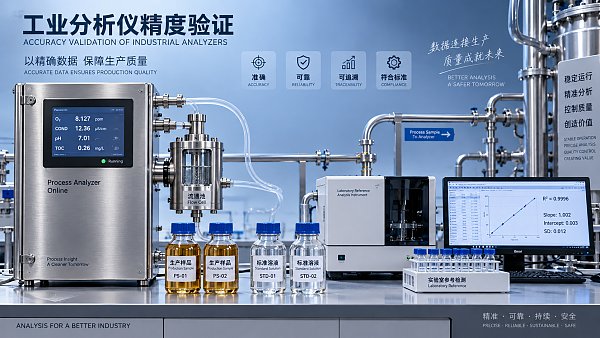
 How to verify accuracy claims for industrial quality analyzersVerify accuracy claims for industrial quality analyzers with calibration checks, independent testing, and clear acceptance criteria. Learn how to reduce risk and buy with confidence.
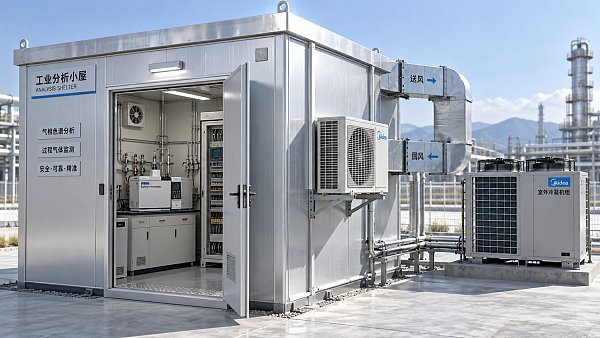
 How to calculate cooling loads for an industrial analyzer shelterSize industrial analyzer shelter cooling with confidence. Learn to calculate equipment heat, solar gains, and ventilation loads, then select HVAC capacity for reliable analyzer performance.
 Industrial Safety vs. Emission Monitoring: What Are the Differences?What are the main differences between industrial safety and emission monitoring? Compare goals, sensors, response times, and compliance needs to choose the right systems for your facility.
 Is Remote Monitoring Worth the Cost for Small Emission Sources?Is it worth investing in remote monitoring for small emission sources? Compare costs, compliance needs, and potential savings to choose the right solution for your operation.
 How Do You Handle Analyzer Failure During an Environmental Audit?Learn how to handle analyzer failure during environmental compliance audit procedures. Protect evidence, verify data, and restore monitoring with this practical response guide.
 Do VOC Monitors Require Explosion-Proof Certification?Does VOC monitoring require explosion-proof certification? Learn when approval is needed, compare ATEX and IECEx, and choose the right monitor for your site.
 How sample conditioning affects accuracy in petrochemical analyzersImprove accuracy in petrochemical analyzers with smarter sample conditioning. Discover how phase control, filtration, and transport design prevent bias and deliver reliable process data.
 How to troubleshoot sensor drift in industrial gas detectorsIndustrial gas detectors showing sensor drift? Learn how to verify calibration gas, identify root causes, and determine when sensor replacement is needed for reliable monitoring.
 How to judge whether a competitive price reflects real valueCompetitive Price: learn how to compare scope, compliance, performance, and lifecycle costs to identify real value, reduce risk, and make smarter purchasing decisions.
 When custom gas analysis is the right fit for complex process streamsCustom gas analysis for complex process streams: learn when tailored sampling, interference control, and reliable measurement design deliver confident decisions.
 When does a laser gas analyzer meet stack emissions monitoring needs?Laser gas analyzer for stack emissions: learn when it delivers fast, reliable data, how to assess installation risks, and what to verify for CEMS compliance.
 How to select a hazardous gas analyzer for confined spacesHazardous gas analyzer selection for confined spaces: compare sensors, sampling, certifications, alarms, and maintenance to protect workers and choose with confidence.
 When is a single gas analyzer sufficient for workplace safety monitoring?Discover when a single gas analyzer delivers reliable workplace safety monitoring, and learn the key limits, calibration needs, and risks that require broader detection.
 How to choose an ambient gas analyzer for low-level leak detectionAmbient gas analyzer selection for low-level leak detection: compare sensitivity, cross-sensitivity, sampling design, alarms, and calibration for reliable site performance.
 How to tell when an oxygen sensor needs replacementOxygen sensor replacement signs explained: learn how live data, fault codes, wiring checks, and exhaust inspections pinpoint the real issue before you buy.
 How laser gas analyzers improve combustion control in steel furnacesLaser gas analyzer for steel industry applications delivers fast in-situ O₂ and CO data to optimize furnace combustion, cut fuel waste, and improve steel heating stability.
 How to verify whether explosion proof equipment meets site requirementsExplosion proof equipment verification made practical: match zones, gas or dust groups, temperature classes, certificates, and installation conditions for confident compliance.
 How industrial gas analysis helps detect contamination before releaseIndustrial Gas Analysis helps detect moisture, oil, oxygen, and toxic contaminants before release—protecting processes, ensuring compliance, and reducing costly risks.
 When is electrochemistry detection the right choice for water analysis?Electrochemistry detection for water analysis: learn when fast, reliable monitoring of ions, chlorine, pH, and more delivers actionable results.
 How industrial standards reduce quality risks in supplier selectionIndustrial Standard guidance helps quality and safety managers reduce supplier risks, verify compliance, strengthen traceability, and build resilient instrumentation supply chains.
 When does a multi-component system reduce installation complexity?Multi component systems reduce installation complexity when they eliminate field interfaces, streamline commissioning, and provide proven compatibility. Learn how to assess total cost and supplier accountability.
 How to size an industrial control shelter for outdoor equipmentIndustrial control shelter sizing guide: optimize layout, HVAC, access, safety, and expansion space for reliable outdoor equipment operations.
 How flue analysis helps verify combustion efficiencyFlue analysis verifies combustion efficiency by assessing O2, CO, CO2, and stack temperature to identify excess air, incomplete combustion, and heat losses.
 How to select industrial gas detectors for confined spacesIndustrial gas detectors for confined spaces: learn how to match sensors, sampling methods, alarms, and certifications to real atmospheric hazards.
 When does a laser oxygen analyzer outperform zirconia sensors?Laser oxygen analyzer vs. zirconia sensors: compare speed, selectivity, maintenance, gas chemistry, and installation needs to choose the right oxygen measurement solution.
 How to select a percent range analyzer for process measurementsPercent range analyzer selection made practical: compare accuracy, sample systems, calibration, gas matrix, integration, and lifecycle cost for reliable process measurements.
 How explosion proof analysis verifies safe equipment for hazardous areasExplosion proof analysis verifies hazardous-area equipment by matching certifications, temperature ratings, installation details, and inspection controls for safer compliance.
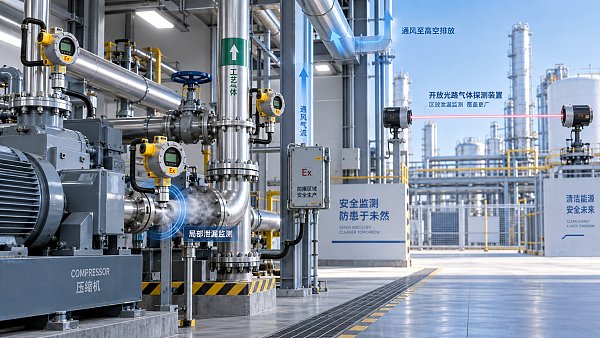
 When does fixed gas detection need point sensors instead of open-path monitoring?Fixed gas detection: discover when point sensors outperform open-path monitoring for predictable leaks, enclosed zones, local alarms, and safer design decisions.
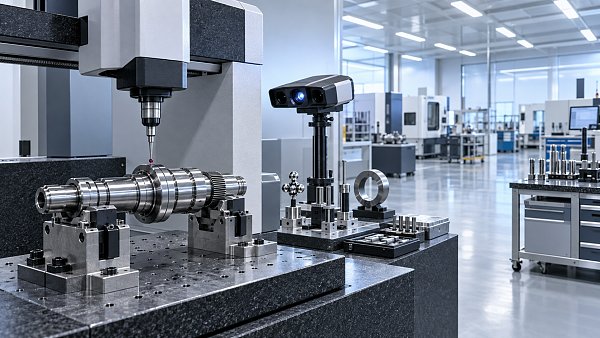
 How to choose industrial metrology systems for tight-tolerance partsIndustrial metrology guide for tight-tolerance parts: compare CMMs, optical scanners, gauges, uncertainty, workflow, and traceable inspection strategies.
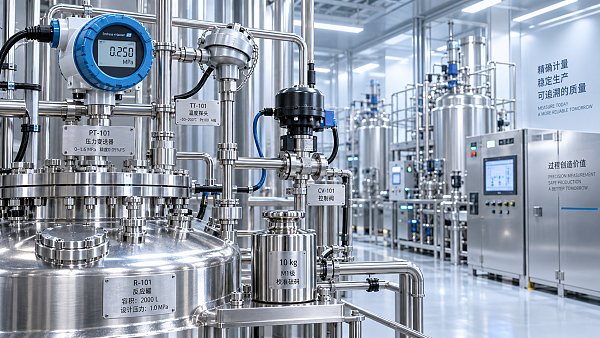
 How process metrology reduces measurement variation in productionProcess metrology reduces production measurement variation by improving traceability, uncertainty control, calibration, and reliable quality decisions.
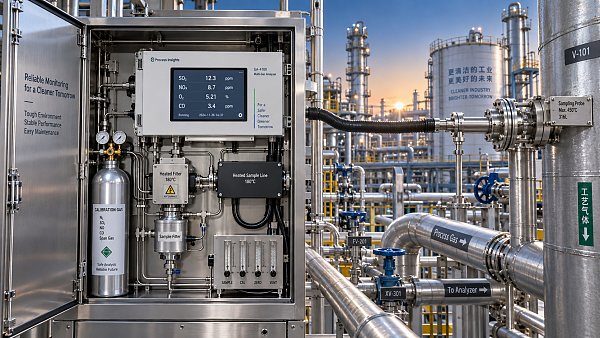
 How to select an industrial monitoring analyzer for harsh environmentsIndustrial monitoring analyzer selection for harsh environments: evaluate sampling, durability, hazardous-area compliance, accuracy, maintenance, and data reliability.
 How calibration intervals affect test and measurement equipment accuracyTest and measurement equipment calibration intervals directly affect accuracy, risk, compliance, and uptime. Learn how to set evidence-based schedules that protect critical decisions.
Search Categories
Search Categories
- Smart Meters & Power Quality
- Transformer Gas Analyzers
- BESS Thermal Runaway Detectors
- Energy, Power & Smart Grid Monitoring
- Optical Profilers & CMM
- Ultrasonic & X-Ray NDT
- Calibration Standards
- Precision Metrology & NDT
- Water Quality Analyzers
- CEMS & VOCs Monitors
- Price Trends
- Import & Export Updates
- Market Trends
- Industry News
- Industry Insights
Latest Article
- How to verify accuracy claims for industrial quality analyzersVerify accuracy claims for industrial quality analyzers with calibration checks, independent testing, and clear acceptance criteria. Learn how to reduce risk and buy with confidence.Posted by:
- How to calculate cooling loads for an industrial analyzer shelterSize industrial analyzer shelter cooling with confidence. Learn to calculate equipment heat, solar gains, and ventilation loads, then select HVAC capacity for reliable analyzer performance.Posted by:
- Industrial Safety vs. Emission Monitoring: What Are the Differences?What are the main differences between industrial safety and emission monitoring? Compare goals, sensors, response times, and compliance needs to choose the right systems for your facility.Posted by:
Please give us a message
