
When an Emission Controller Upgrade Makes Business Sense


For business decision-makers in instrumentation and industrial operations, investing in an emission controller upgrade is not just about compliance—it can directly improve efficiency, data accuracy, and long-term cost control. As regulations tighten and sustainability goals rise, understanding when an emission controller upgrade makes business sense helps companies balance operational performance, risk management, and future-ready growth.
Why a checklist approach works better than a general discussion
For most companies, the question is not whether emissions matter, but whether the timing, scope, and return of an emission controller upgrade are justified. In instrumentation-heavy environments, the answer depends on measurable conditions: equipment age, sensor reliability, reporting obligations, integration needs, production stability, and the cost of non-compliance. A checklist-based review helps decision-makers move beyond vague sustainability goals and focus on practical triggers.
This is especially important in the broader instrumentation industry, where monitoring and control systems support manufacturing lines, power systems, environmental stations, laboratories, and automated processes. An emission controller is rarely a standalone purchase. It affects data acquisition, calibration routines, alarm logic, reporting workflows, maintenance planning, and digital transformation priorities. That is why a structured evaluation is the fastest way to identify whether an upgrade supports business performance.
Start with the five signals that usually justify an emission controller upgrade
Before comparing vendors or technical options, leadership teams should first confirm whether the operation is already showing strong upgrade signals. If two or more of the following conditions are present, an emission controller upgrade often deserves immediate review.
- Compliance pressure is rising because regulations, permit conditions, customer audits, or ESG requirements now demand tighter emission monitoring, better records, or faster reporting.
- Existing controllers are creating data gaps, unstable readings, frequent manual adjustments, or inconsistent alarm performance that reduce trust in environmental or process data.
- Maintenance costs are increasing due to obsolete parts, repeated calibration failures, poor vendor support, or excessive technician time spent troubleshooting.
- Production systems have already modernized, but the current emission controller cannot communicate smoothly with SCADA, DCS, PLC, historian, or cloud monitoring tools.
- The business is expanding, adding new lines, changing fuels, modifying raw materials, or entering markets where traceable emissions control is part of procurement and risk review.
These signals matter because they connect environmental control directly to uptime, reporting quality, and business continuity. In many facilities, the real cost is not the controller itself but the operational drag caused by outdated control logic and unreliable measurements.
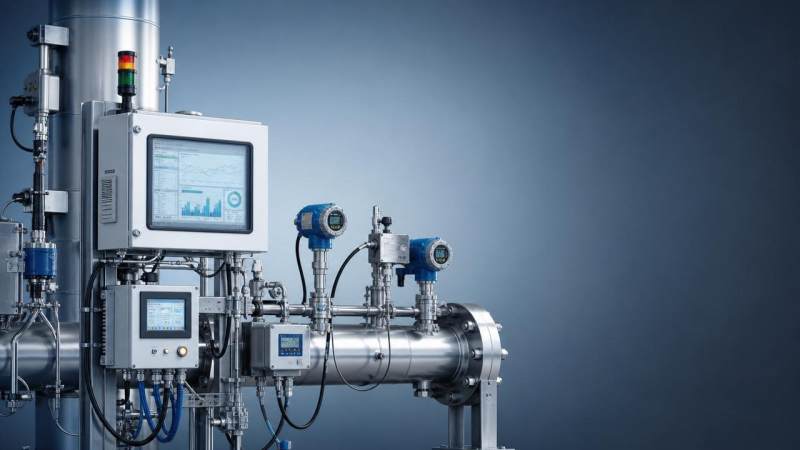
Core evaluation checklist: what to confirm before approving the project
1. Check whether the current system still meets technical performance needs
An emission controller upgrade makes business sense when the installed system can no longer support required control accuracy, response speed, signal stability, or multi-point integration. Decision-makers should ask whether current readings drift too often, whether response time is too slow during load changes, and whether control outputs align with real process conditions. In modern operations, poor control quality can affect both emissions and product consistency.
2. Verify the cost of staying with the old platform
Many businesses underestimate the hidden cost of delaying an emission controller upgrade. These costs often include emergency maintenance, production interruptions, overtime for manual reporting, consultant fees for compliance correction, and missed opportunities for energy optimization. A controller that appears “good enough” may still be more expensive than replacement when total lifecycle cost is measured.
3. Confirm data quality and reporting risk
In the instrumentation sector, data credibility is a business asset. If an emission controller produces incomplete logs, weak audit trails, or poor synchronization with monitoring instruments, the risk extends beyond environmental reporting. It can affect customer confidence, internal decision-making, and external certification. An upgrade is often justified when better traceability, timestamp integrity, and automatic reporting can reduce regulatory or contractual exposure.
4. Assess compatibility with broader automation plans
An emission controller upgrade should not be evaluated in isolation. Businesses pursuing digitalization, remote diagnostics, predictive maintenance, or centralized monitoring should confirm whether the current controller supports modern communication protocols, software integration, and scalable architecture. If it cannot fit into the larger automation roadmap, the upgrade may deliver strategic value far beyond emissions control.
5. Review vendor support and future serviceability
Even strong hardware becomes risky when spare parts are hard to source, firmware updates are no longer available, or local service capacity is weak. A practical business case for an emission controller upgrade often begins with supportability. If downtime risk is growing because the system is effectively aging out of the service ecosystem, replacement becomes a risk management decision rather than a discretionary one.
A simple business-sense matrix for decision-makers
The following comparison can help leadership teams prioritize action and determine whether an emission controller upgrade should move from discussion to planning.
What changes by application scenario
The case for an emission controller upgrade is not identical across all industrial settings. Decision-makers should adjust priorities based on the operating environment.
Manufacturing and process industries
In manufacturing, the strongest triggers are usually process variability, energy cost pressure, and the need to connect emissions control with production efficiency. If unstable control affects yield, burner performance, or line continuity, the upgrade has operational value beyond compliance.
Energy and power operations
Power and energy facilities should focus on real-time response, load-following performance, and system resilience. Here, an emission controller upgrade may be justified when plant flexibility increases, dispatch conditions fluctuate, or reporting obligations become more stringent.
Environmental monitoring and public infrastructure
For these users, data integrity and reporting transparency matter most. If an emission controller cannot support dependable monitoring records, remote oversight, or audit-ready documentation, reputational and regulatory risk rises quickly.
Laboratories, testing, and instrumentation-focused enterprises
In precision-driven environments, the upgrade decision often centers on measurement consistency, calibration discipline, and integration with digital quality systems. The more a business depends on trusted analytical data, the more valuable a modern emission controller becomes.
Common gaps companies overlook during evaluation
- Focusing only on purchase price instead of total cost of ownership, including downtime, reporting labor, and service availability.
- Assuming current compliance means future readiness, even though new customer standards or policy changes may arrive faster than replacement lead times.
- Ignoring operator usability. A technically advanced emission controller can still fail to deliver value if interface design, alarm hierarchy, and training needs are not considered.
- Underestimating integration effort with legacy instruments, signal conditioners, analyzers, and control software.
- Not defining performance targets in advance, which makes it difficult to prove whether the emission controller upgrade actually improved control quality or reduced risk.
Execution checklist: how to prepare for a successful upgrade
- Document the current problem set: compliance findings, maintenance history, data issues, alarm events, and integration limitations.
- Define business goals clearly: lower operating cost, stronger audit readiness, reduced downtime, better automation, or future expansion support.
- Map the connected instrumentation: sensors, analyzers, control loops, communication interfaces, software platforms, and calibration routines.
- Request measurable vendor commitments: response accuracy, data retention, diagnostics capability, cybersecurity support, training scope, and service response time.
- Build a phased implementation plan that reduces disruption, especially for high-availability industrial operations.
A disciplined rollout matters because an emission controller upgrade often touches both operational technology and management reporting. Projects succeed when engineering, environmental compliance, maintenance, IT, and procurement are aligned early.
FAQ: quick answers decision-makers often need
How do we know if the upgrade is urgent or optional?
It becomes urgent when compliance risk, repeated faults, unreliable data, or unsupported components threaten operations. If the current system is stable and aligned with future requirements, the upgrade may be scheduled strategically rather than immediately.
Should we upgrade only the emission controller or the wider monitoring chain?
That depends on root cause. If poor performance comes from sensors, analyzers, communication hardware, or software integration, replacing only the emission controller may not solve the issue. A system-level review is usually the smarter approach.
Can an emission controller upgrade support sustainability goals in a measurable way?
Yes, especially when it improves control precision, reporting transparency, and process efficiency. Better emissions management often supports energy optimization, lower waste, and stronger ESG reporting quality.
Final decision guide and next-step questions
An emission controller upgrade makes business sense when it solves more than a compliance issue. The strongest cases appear when the upgrade improves data trust, reduces maintenance burden, supports automation strategy, and prepares the business for changing standards or expansion. For companies in the instrumentation and broader industrial sectors, that combination can protect operations while strengthening long-term efficiency.
If your team is ready to evaluate options, the most useful next discussion points are practical: which emission controller parameters must be measured, what systems need to integrate, what uptime constraints apply, what reporting standards must be met, what budget range is realistic, and what implementation timeline fits production risk. Starting with those questions will make vendor comparisons more accurate and will turn the upgrade decision into a clear business case rather than a reactive expense.
Recommended for You
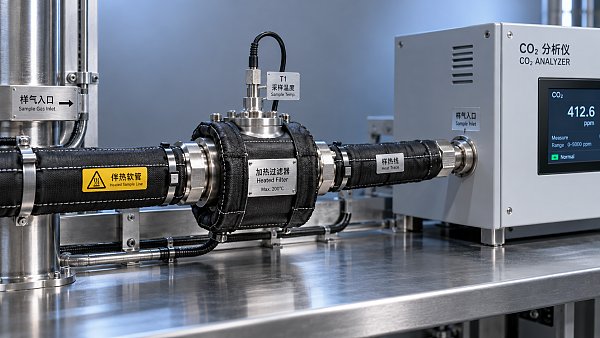
 How to prevent condensation in a CO2 analyzer sampling systemPrevent condensation in your CO2 analyzer sampling system. Learn how to control dew point, eliminate cold spots, and manage moisture for reliable readings and fewer costly disruptions.
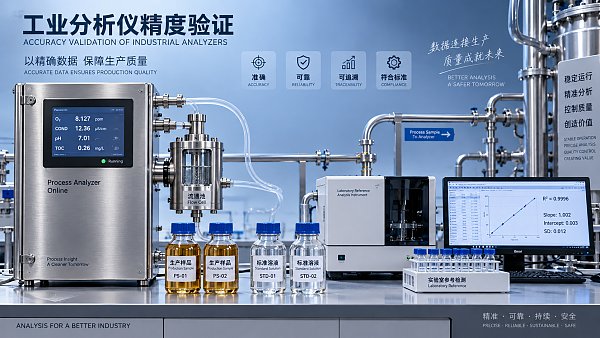
 How to verify accuracy claims for industrial quality analyzersVerify accuracy claims for industrial quality analyzers with calibration checks, independent testing, and clear acceptance criteria. Learn how to reduce risk and buy with confidence.
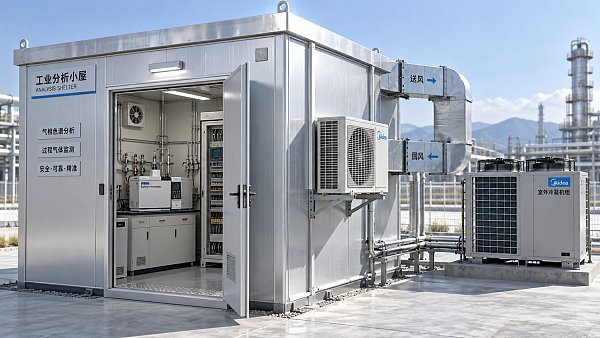
 How to calculate cooling loads for an industrial analyzer shelterSize industrial analyzer shelter cooling with confidence. Learn to calculate equipment heat, solar gains, and ventilation loads, then select HVAC capacity for reliable analyzer performance.
 What Happens When Combustible Gas Sensor Calibration Is Overdue?What happens if combustible gas sensor is not recalibrated on time? Discover the risks of inaccurate readings and missed alarms, plus steps to restore reliable protection.
 Can One Multi-Gas Detector Replace Four Separate Analyzers?Find out: can a single multi-gas detector replace four separate analyzers? Compare accuracy, safety, compliance, and lifetime costs to make a confident buying decision.
 Industrial Safety vs. Emission Monitoring: What Are the Differences?What are the main differences between industrial safety and emission monitoring? Compare goals, sensors, response times, and compliance needs to choose the right systems for your facility.
 Is Remote Monitoring Worth the Cost for Small Emission Sources?Is it worth investing in remote monitoring for small emission sources? Compare costs, compliance needs, and potential savings to choose the right solution for your operation.
 How Do You Handle Analyzer Failure During an Environmental Audit?Learn how to handle analyzer failure during environmental compliance audit procedures. Protect evidence, verify data, and restore monitoring with this practical response guide.
 Do VOC Monitors Require Explosion-Proof Certification?Does VOC monitoring require explosion-proof certification? Learn when approval is needed, compare ATEX and IECEx, and choose the right monitor for your site.
 How sample conditioning affects accuracy in petrochemical analyzersImprove accuracy in petrochemical analyzers with smarter sample conditioning. Discover how phase control, filtration, and transport design prevent bias and deliver reliable process data.
 How to troubleshoot sensor drift in industrial gas detectorsIndustrial gas detectors showing sensor drift? Learn how to verify calibration gas, identify root causes, and determine when sensor replacement is needed for reliable monitoring.
 How to judge whether a competitive price reflects real valueCompetitive Price: learn how to compare scope, compliance, performance, and lifecycle costs to identify real value, reduce risk, and make smarter purchasing decisions.
 When custom gas analysis is the right fit for complex process streamsCustom gas analysis for complex process streams: learn when tailored sampling, interference control, and reliable measurement design deliver confident decisions.
 When does a laser gas analyzer meet stack emissions monitoring needs?Laser gas analyzer for stack emissions: learn when it delivers fast, reliable data, how to assess installation risks, and what to verify for CEMS compliance.
 How to select a hazardous gas analyzer for confined spacesHazardous gas analyzer selection for confined spaces: compare sensors, sampling, certifications, alarms, and maintenance to protect workers and choose with confidence.
 When is a single gas analyzer sufficient for workplace safety monitoring?Discover when a single gas analyzer delivers reliable workplace safety monitoring, and learn the key limits, calibration needs, and risks that require broader detection.
 How to choose an ambient gas analyzer for low-level leak detectionAmbient gas analyzer selection for low-level leak detection: compare sensitivity, cross-sensitivity, sampling design, alarms, and calibration for reliable site performance.
 How to tell when an oxygen sensor needs replacementOxygen sensor replacement signs explained: learn how live data, fault codes, wiring checks, and exhaust inspections pinpoint the real issue before you buy.
 How laser gas analyzers improve combustion control in steel furnacesLaser gas analyzer for steel industry applications delivers fast in-situ O₂ and CO data to optimize furnace combustion, cut fuel waste, and improve steel heating stability.
 How to verify whether explosion proof equipment meets site requirementsExplosion proof equipment verification made practical: match zones, gas or dust groups, temperature classes, certificates, and installation conditions for confident compliance.
 How industrial gas analysis helps detect contamination before releaseIndustrial Gas Analysis helps detect moisture, oil, oxygen, and toxic contaminants before release—protecting processes, ensuring compliance, and reducing costly risks.
 When is electrochemistry detection the right choice for water analysis?Electrochemistry detection for water analysis: learn when fast, reliable monitoring of ions, chlorine, pH, and more delivers actionable results.
 How industrial standards reduce quality risks in supplier selectionIndustrial Standard guidance helps quality and safety managers reduce supplier risks, verify compliance, strengthen traceability, and build resilient instrumentation supply chains.
 When does a multi-component system reduce installation complexity?Multi component systems reduce installation complexity when they eliminate field interfaces, streamline commissioning, and provide proven compatibility. Learn how to assess total cost and supplier accountability.
 How to size an industrial control shelter for outdoor equipmentIndustrial control shelter sizing guide: optimize layout, HVAC, access, safety, and expansion space for reliable outdoor equipment operations.
 How flue analysis helps verify combustion efficiencyFlue analysis verifies combustion efficiency by assessing O2, CO, CO2, and stack temperature to identify excess air, incomplete combustion, and heat losses.
 How to select industrial gas detectors for confined spacesIndustrial gas detectors for confined spaces: learn how to match sensors, sampling methods, alarms, and certifications to real atmospheric hazards.
 When does a laser oxygen analyzer outperform zirconia sensors?Laser oxygen analyzer vs. zirconia sensors: compare speed, selectivity, maintenance, gas chemistry, and installation needs to choose the right oxygen measurement solution.
 How to select a percent range analyzer for process measurementsPercent range analyzer selection made practical: compare accuracy, sample systems, calibration, gas matrix, integration, and lifecycle cost for reliable process measurements.
 How explosion proof analysis verifies safe equipment for hazardous areasExplosion proof analysis verifies hazardous-area equipment by matching certifications, temperature ratings, installation details, and inspection controls for safer compliance.
 When does fixed gas detection need point sensors instead of open-path monitoring?Fixed gas detection: discover when point sensors outperform open-path monitoring for predictable leaks, enclosed zones, local alarms, and safer design decisions.
 How to choose industrial metrology systems for tight-tolerance partsIndustrial metrology guide for tight-tolerance parts: compare CMMs, optical scanners, gauges, uncertainty, workflow, and traceable inspection strategies.
Search Categories
Search Categories
- Smart Meters & Power Quality
- Transformer Gas Analyzers
- BESS Thermal Runaway Detectors
- Energy, Power & Smart Grid Monitoring
- Optical Profilers & CMM
- Ultrasonic & X-Ray NDT
- Calibration Standards
- Precision Metrology & NDT
- Water Quality Analyzers
- CEMS & VOCs Monitors
- Price Trends
- Import & Export Updates
- Market Trends
- Industry News
- Industry Insights
Latest Article
- How to prevent condensation in a CO2 analyzer sampling systemPrevent condensation in your CO2 analyzer sampling system. Learn how to control dew point, eliminate cold spots, and manage moisture for reliable readings and fewer costly disruptions.Posted by:
- How to verify accuracy claims for industrial quality analyzersVerify accuracy claims for industrial quality analyzers with calibration checks, independent testing, and clear acceptance criteria. Learn how to reduce risk and buy with confidence.Posted by:
- How to calculate cooling loads for an industrial analyzer shelterSize industrial analyzer shelter cooling with confidence. Learn to calculate equipment heat, solar gains, and ventilation loads, then select HVAC capacity for reliable analyzer performance.Posted by:
Please give us a message
