
Flue Calibration Intervals: How Often Is Too Often or Too Late


For after-sales maintenance teams, getting flue calibration intervals right is critical to keeping analyzers accurate, compliant, and cost-effective. Calibrating too often can waste labor and disrupt service schedules, while waiting too long may lead to drift, failed inspections, or unreliable emissions data. This article explains how to judge flue calibration frequency based on operating conditions, instrument stability, and real maintenance risk.
What does flue calibration interval really mean in day-to-day service work?
In practical terms, a flue calibration interval is the planned time between one verified calibration event and the next for a flue gas analyzer, stack monitoring instrument, or related measurement channel. For after-sales maintenance personnel, this is not just a schedule entry. It is a decision that affects analyzer credibility, service cost, compliance risk, spare parts usage, and customer trust.
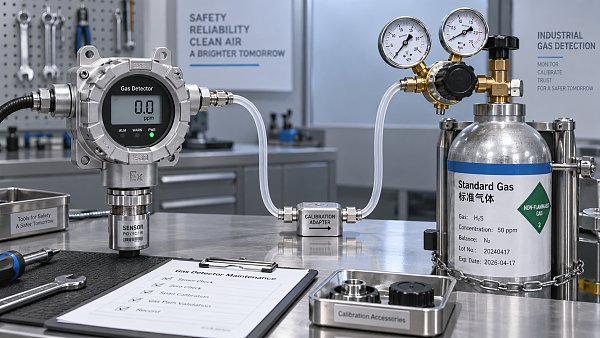
Many teams confuse zero checks, span checks, bump tests, and full calibration. A daily or weekly functional check can confirm whether an analyzer still responds normally, but that does not always replace a documented flue calibration procedure tied to traceable standards. When service teams fail to distinguish these activities, they either over-maintain stable instruments or under-maintain systems that are drifting in harsh flue environments.
The right interval depends on how fast performance changes in actual use. A portable analyzer used occasionally in clean combustion tuning may stay stable for long periods. A continuous emissions monitoring setup exposed to dust, moisture, corrosive gases, vibration, and temperature cycling may need much closer attention. In other words, flue calibration is not defined by the calendar alone. It is defined by measurement risk over time.
How often is too often for flue calibration?
Too often means the calibration frequency is higher than the instrument’s real drift pattern justifies. This usually happens when teams rely on habit instead of evidence. For example, some sites request full flue calibration every visit because it feels safer. However, if historical records show very low deviation, stable gas cells, clean sample conditioning, and no process changes, excessive calibration can create more cost than value.
Over-calibration has several hidden downsides:
- Higher labor time for field technicians and service coordinators
- More analyzer downtime during maintenance windows
- Increased use of calibration gases, regulators, filters, and consumables
- More handling of fittings and tubing, which can itself introduce leaks or wear
- Difficulty prioritizing higher-risk instruments that truly need attention
This does not mean less calibration is always better. It means the interval should be supported by data. If a flue calibration record repeatedly shows negligible adjustment and no out-of-tolerance findings, the site may be able to move from a rigid short interval to a controlled, evidence-based extension. That change should still align with manufacturer guidance, regulatory expectations, and customer quality requirements.
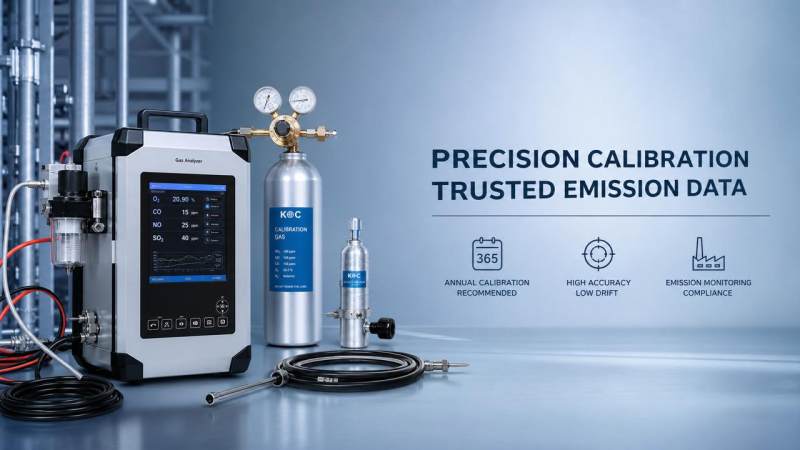
When is flue calibration already too late?
A flue calibration interval becomes too long when the probability of undetected drift starts to threaten the measurement purpose. For after-sales teams, “too late” usually shows up in one of four ways: the analyzer fails an audit or inspection, process decisions are made using biased data, emissions reporting becomes unreliable, or the instrument suddenly needs major corrective work instead of routine adjustment.
Warning signs that calibration may be overdue include repeated zero instability, slow sensor response, unusual span correction values, moisture-related sampling issues, increased alarm complaints from operators, and unexplained mismatch against reference methods or backup instruments. If field staff are frequently troubleshooting symptoms but postponing formal flue calibration, the site may already be operating beyond a safe interval.
It is especially risky to delay calibration after a major event such as sensor replacement, stack process change, burner adjustment, sample line contamination, power disturbance, software update, or long shutdown. These events can shift instrument behavior even if the previous calibration history looked stable.
Which factors should maintenance teams use to set a realistic flue calibration schedule?
The most effective flue calibration schedule combines manufacturer recommendations with site-specific evidence. Instead of asking only “How many days since the last calibration?”, maintenance teams should look at the full operating context.
Key decision factors include:
- Instrument type and sensing principle: Electrochemical, NDIR, paramagnetic, zirconia, and other technologies drift differently.
- Application criticality: Compliance reporting, safety monitoring, and contractual performance verification normally require tighter control than non-critical trend monitoring.
- Flue gas conditions: High dust, acid gases, condensate, high temperature, and pressure variation can accelerate contamination and drift.
- Usage frequency: Portable analyzers used every day usually need different planning than units used occasionally.
- Historical drift data: Past calibration adjustments are one of the best indicators for future interval planning.
- Environmental stress: Vibration, humidity, unstable power, and outdoor installation can shorten stable operation.
- Maintenance quality: Dirty probes, blocked filters, leaking sample lines, and neglected condensate management can make even good analyzers look unstable.
A strong service program does not rely on one factor alone. It weighs technical risk, operating burden, and audit requirements together. That is why two analyzers at the same customer site may justifiably have different flue calibration intervals.
Is there a practical rule of thumb for deciding calibration frequency?
Yes, but it should be treated as a starting point rather than a universal rule. After-sales maintenance teams often work best with a tiered approach: start from the manufacturer baseline, verify with short-term data, then optimize based on actual drift and consequence of failure.
The table below offers a practical decision guide for flue calibration planning.
A useful rule of thumb is this: if consecutive flue calibration results stay well within tolerance and required adjustments remain small, the interval may be reviewed for extension. If adjustments are growing, failures are becoming more frequent, or process conditions have changed, shorten the interval and inspect the sampling system, not just the analyzer electronics.
What are the most common mistakes when planning flue calibration intervals?
The biggest mistake is treating all flue analyzers the same. In the instrumentation industry, measurement performance depends heavily on process conditions, technology type, maintenance quality, and intended use. A one-size-fits-all schedule often creates blind spots.
Other frequent mistakes include:
- Using calendar intervals without trend analysis: Teams miss the value of historical adjustment data.
- Ignoring sampling system condition: Filters, pumps, coolers, and lines can distort readings even when the core sensor is healthy.
- Assuming a passed zero check means calibration is unnecessary: A stable zero does not guarantee correct span response.
- Extending intervals too early after installation: Stability must be demonstrated, not assumed.
- Failing to document as-found and as-left data: Without this, there is no evidence for interval optimization or audit defense.
For after-sales service organizations, these mistakes also affect customer communication. If you cannot explain why a flue calibration interval was shortened or extended, the customer may see the decision as arbitrary. Clear records turn maintenance recommendations into defensible technical advice.
How can after-sales teams reduce calibration frequency without increasing risk?
The safest way to reduce flue calibration frequency is not to skip discipline, but to improve control over the causes of drift. Better sample conditioning, cleaner gas paths, consistent warm-up routines, proper storage of portable units, and regular leak checks often do more for measurement stability than simply adding more calibration events.
A practical optimization process looks like this:
- Review at least several cycles of flue calibration records.
- Separate analyzer drift from sampling-system problems.
- Confirm whether process conditions have been stable.
- Introduce routine verification checks between full calibrations.
- Extend interval step by step, not all at once.
- Define a trigger list for immediate recalibration, such as repair, alarm trend, or failed verification.
This method helps maintenance teams balance cost and confidence. In many facilities, the best outcome is not the shortest flue calibration cycle, but the most predictable one.
What should be confirmed before changing a customer’s flue calibration interval?
Before recommending any change, after-sales maintenance personnel should confirm both technical and business conditions. On the technical side, review instrument history, drift trend, failure records, environmental conditions, standard gas traceability, and any applicable regulation or plant QA procedure. On the business side, understand whether the analyzer supports emissions compliance, energy efficiency targets, warranty conditions, or third-party reporting obligations.
It is also wise to align on practical questions: Who performs the field verification? How quickly can calibration gas and spare parts be supplied? Is downtime acceptable during production peaks? Are there alternative reference methods on site? These questions determine whether a longer or shorter flue calibration interval is realistic in service execution, not just in theory.
In summary, the best flue calibration interval is the one that matches instrument behavior, process severity, and the consequence of wrong data. Too often wastes resources; too late creates avoidable risk. If you need to confirm a specific service plan, interval review, maintenance cycle, or calibration support arrangement, the first points to discuss are the analyzer type, operating environment, historical drift data, compliance requirements, and the exact trigger conditions that should force earlier recalibration.
Recommended for You
 How to verify accuracy claims for industrial quality analyzersVerify accuracy claims for industrial quality analyzers with calibration checks, independent testing, and clear acceptance criteria. Learn how to reduce risk and buy with confidence.
 How to calculate cooling loads for an industrial analyzer shelterSize industrial analyzer shelter cooling with confidence. Learn to calculate equipment heat, solar gains, and ventilation loads, then select HVAC capacity for reliable analyzer performance.
 Industrial Safety vs. Emission Monitoring: What Are the Differences?What are the main differences between industrial safety and emission monitoring? Compare goals, sensors, response times, and compliance needs to choose the right systems for your facility.
 Is Remote Monitoring Worth the Cost for Small Emission Sources?Is it worth investing in remote monitoring for small emission sources? Compare costs, compliance needs, and potential savings to choose the right solution for your operation.
 How Do You Handle Analyzer Failure During an Environmental Audit?Learn how to handle analyzer failure during environmental compliance audit procedures. Protect evidence, verify data, and restore monitoring with this practical response guide.
 Do VOC Monitors Require Explosion-Proof Certification?Does VOC monitoring require explosion-proof certification? Learn when approval is needed, compare ATEX and IECEx, and choose the right monitor for your site.
 How sample conditioning affects accuracy in petrochemical analyzersImprove accuracy in petrochemical analyzers with smarter sample conditioning. Discover how phase control, filtration, and transport design prevent bias and deliver reliable process data.
 How to troubleshoot sensor drift in industrial gas detectorsIndustrial gas detectors showing sensor drift? Learn how to verify calibration gas, identify root causes, and determine when sensor replacement is needed for reliable monitoring.
 How to judge whether a competitive price reflects real valueCompetitive Price: learn how to compare scope, compliance, performance, and lifecycle costs to identify real value, reduce risk, and make smarter purchasing decisions.
 When custom gas analysis is the right fit for complex process streamsCustom gas analysis for complex process streams: learn when tailored sampling, interference control, and reliable measurement design deliver confident decisions.
 When does a laser gas analyzer meet stack emissions monitoring needs?Laser gas analyzer for stack emissions: learn when it delivers fast, reliable data, how to assess installation risks, and what to verify for CEMS compliance.
 How to select a hazardous gas analyzer for confined spacesHazardous gas analyzer selection for confined spaces: compare sensors, sampling, certifications, alarms, and maintenance to protect workers and choose with confidence.
 When is a single gas analyzer sufficient for workplace safety monitoring?Discover when a single gas analyzer delivers reliable workplace safety monitoring, and learn the key limits, calibration needs, and risks that require broader detection.
 How to choose an ambient gas analyzer for low-level leak detectionAmbient gas analyzer selection for low-level leak detection: compare sensitivity, cross-sensitivity, sampling design, alarms, and calibration for reliable site performance.
 How to tell when an oxygen sensor needs replacementOxygen sensor replacement signs explained: learn how live data, fault codes, wiring checks, and exhaust inspections pinpoint the real issue before you buy.
 How laser gas analyzers improve combustion control in steel furnacesLaser gas analyzer for steel industry applications delivers fast in-situ O₂ and CO data to optimize furnace combustion, cut fuel waste, and improve steel heating stability.
 How to verify whether explosion proof equipment meets site requirementsExplosion proof equipment verification made practical: match zones, gas or dust groups, temperature classes, certificates, and installation conditions for confident compliance.
 How industrial gas analysis helps detect contamination before releaseIndustrial Gas Analysis helps detect moisture, oil, oxygen, and toxic contaminants before release—protecting processes, ensuring compliance, and reducing costly risks.
 When is electrochemistry detection the right choice for water analysis?Electrochemistry detection for water analysis: learn when fast, reliable monitoring of ions, chlorine, pH, and more delivers actionable results.
 How industrial standards reduce quality risks in supplier selectionIndustrial Standard guidance helps quality and safety managers reduce supplier risks, verify compliance, strengthen traceability, and build resilient instrumentation supply chains.
 When does a multi-component system reduce installation complexity?Multi component systems reduce installation complexity when they eliminate field interfaces, streamline commissioning, and provide proven compatibility. Learn how to assess total cost and supplier accountability.
 How to size an industrial control shelter for outdoor equipmentIndustrial control shelter sizing guide: optimize layout, HVAC, access, safety, and expansion space for reliable outdoor equipment operations.
 How flue analysis helps verify combustion efficiencyFlue analysis verifies combustion efficiency by assessing O2, CO, CO2, and stack temperature to identify excess air, incomplete combustion, and heat losses.
 How to select industrial gas detectors for confined spacesIndustrial gas detectors for confined spaces: learn how to match sensors, sampling methods, alarms, and certifications to real atmospheric hazards.
 When does a laser oxygen analyzer outperform zirconia sensors?Laser oxygen analyzer vs. zirconia sensors: compare speed, selectivity, maintenance, gas chemistry, and installation needs to choose the right oxygen measurement solution.
 How to select a percent range analyzer for process measurementsPercent range analyzer selection made practical: compare accuracy, sample systems, calibration, gas matrix, integration, and lifecycle cost for reliable process measurements.
 How explosion proof analysis verifies safe equipment for hazardous areasExplosion proof analysis verifies hazardous-area equipment by matching certifications, temperature ratings, installation details, and inspection controls for safer compliance.
 When does fixed gas detection need point sensors instead of open-path monitoring?Fixed gas detection: discover when point sensors outperform open-path monitoring for predictable leaks, enclosed zones, local alarms, and safer design decisions.
 How to choose industrial metrology systems for tight-tolerance partsIndustrial metrology guide for tight-tolerance parts: compare CMMs, optical scanners, gauges, uncertainty, workflow, and traceable inspection strategies.
 How process metrology reduces measurement variation in productionProcess metrology reduces production measurement variation by improving traceability, uncertainty control, calibration, and reliable quality decisions.
 How to select an industrial monitoring analyzer for harsh environmentsIndustrial monitoring analyzer selection for harsh environments: evaluate sampling, durability, hazardous-area compliance, accuracy, maintenance, and data reliability.
 How calibration intervals affect test and measurement equipment accuracyTest and measurement equipment calibration intervals directly affect accuracy, risk, compliance, and uptime. Learn how to set evidence-based schedules that protect critical decisions.
Search Categories
Search Categories
- Smart Meters & Power Quality
- Transformer Gas Analyzers
- BESS Thermal Runaway Detectors
- Energy, Power & Smart Grid Monitoring
- Optical Profilers & CMM
- Ultrasonic & X-Ray NDT
- Calibration Standards
- Precision Metrology & NDT
- Water Quality Analyzers
- CEMS & VOCs Monitors
- Price Trends
- Import & Export Updates
- Market Trends
- Industry News
- Industry Insights
Latest Article
- How to verify accuracy claims for industrial quality analyzersVerify accuracy claims for industrial quality analyzers with calibration checks, independent testing, and clear acceptance criteria. Learn how to reduce risk and buy with confidence.Posted by:
- How to calculate cooling loads for an industrial analyzer shelterSize industrial analyzer shelter cooling with confidence. Learn to calculate equipment heat, solar gains, and ventilation loads, then select HVAC capacity for reliable analyzer performance.Posted by:
- Industrial Safety vs. Emission Monitoring: What Are the Differences?What are the main differences between industrial safety and emission monitoring? Compare goals, sensors, response times, and compliance needs to choose the right systems for your facility.Posted by:
Please give us a message
