
Gas Calibration Costs in 2026: What Is Driving the Increase


Gas calibration costs are rising in 2026, and for financial approvers, the increase goes far beyond routine service fees. From stricter compliance requirements and higher labor costs to supply chain pressure and equipment complexity, several factors are pushing budgets upward. Understanding what is driving gas calibration expenses can help decision-makers control risk, plan procurement more accurately, and protect both operational reliability and regulatory performance.
What gas calibration means in a business context
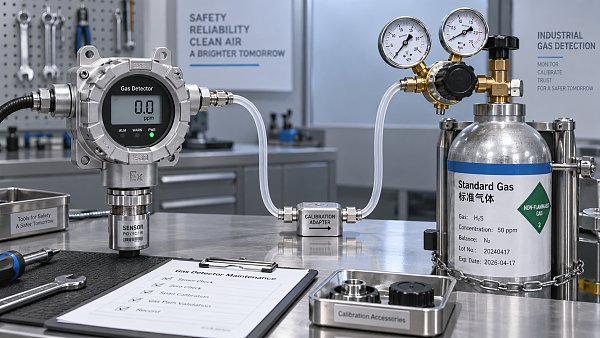
Gas calibration is the process of verifying and adjusting gas detection, analysis, or monitoring instruments against known reference gases so that readings remain accurate, repeatable, and compliant with required standards. In the instrumentation industry, this affects a wide set of assets: fixed gas detectors, portable monitors, process analyzers, emissions systems, laboratory instruments, and safety devices used across manufacturing, energy, utilities, environmental monitoring, construction, and medical or research environments.
For technical teams, gas calibration is a maintenance and reliability activity. For finance leaders and approvers, however, it is also a budget governance issue tied to uptime, compliance exposure, insurance risk, service contract planning, and lifecycle cost control. That is why gas calibration is receiving more executive attention in 2026: the cost increase is no longer small enough to be absorbed as a background operating expense.
Why the market is paying closer attention in 2026
The instrumentation sector supports modern automation, process control, laboratory quality, and industrial digitalization. As more facilities depend on sensor-based decision-making, measurement integrity becomes a business requirement rather than a technical preference. A poorly calibrated gas monitor can disrupt production, trigger false alarms, miss hazardous conditions, or compromise reporting data. As a result, organizations are increasing calibration frequency, tightening documentation, and expecting higher audit readiness.
At the same time, inflationary pressure, specialized labor shortages, and more advanced sensing technologies are lifting the total cost of gas calibration. Financial approvers are therefore seeing larger line items not only for service events themselves, but also for traceable gases, logistics, downtime coordination, digital record systems, and replacement decisions when calibration no longer remains economical.
Key cost drivers behind gas calibration increases
Several forces are working together to raise gas calibration budgets in 2026. The increase is usually cumulative rather than caused by one single factor.
- Compliance expansion: More industries now face tighter environmental, occupational safety, and quality assurance expectations. Calibration records must be more complete, traceable, and easier to audit.
- Labor cost growth: Qualified calibration technicians, metrology personnel, and field service engineers are in short supply in many regions, increasing hourly rates and travel charges.
- Reference gas pricing: Certified calibration gas cylinders, specialty mixtures, and short-shelf-life gases have become more expensive due to raw material, packaging, and transportation costs.
- Device complexity: Multi-gas instruments, smart analyzers, connected sensors, and process-integrated systems often require more time, more documentation, and sometimes proprietary procedures.
- Supply chain friction: Delays in parts, regulators, valves, and replacement sensors can extend service cycles and increase indirect operating costs.
- Downtime coordination: In some facilities, the real cost of gas calibration is the interruption needed to isolate equipment, schedule technicians, and validate restart conditions.
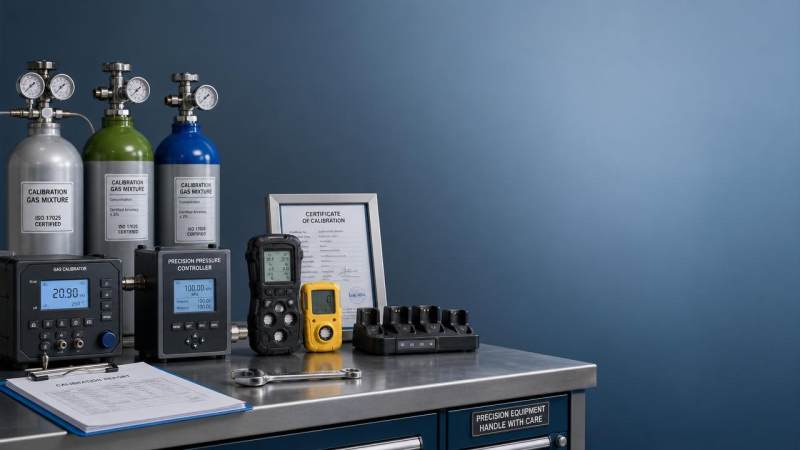
Industry overview of the main cost components
For financial review, it helps to separate gas calibration cost into direct and indirect components. This makes it easier to identify where spending is rising fastest and where control measures are most realistic.
Why compliance is a major multiplier
One of the strongest drivers of gas calibration cost is not the adjustment procedure alone, but the compliance environment around it. Across industrial manufacturing, power generation, environmental systems, laboratories, and hazardous area operations, organizations must demonstrate that measurement instruments remain fit for purpose. Regulators, customers, insurers, and internal quality teams all increasingly expect proof.
This means gas calibration now often includes certificate management, traceability to recognized standards, technician qualification records, documented tolerances, exception handling, and repeatability evidence. These tasks add time and administrative effort, especially in multi-site organizations. For finance teams, the important insight is that the service invoice may represent only part of the true compliance cost.
Where gas calibration has the most business value
Although rising prices create pressure, gas calibration still protects significant business value. In the instrumentation industry, accurate gas measurement supports safety, product quality, process stability, emissions reporting, laboratory credibility, and asset reliability. The return is not always visible in direct revenue, but it appears clearly in avoided incidents, avoided shutdowns, and stronger regulatory performance.
For financial approvers, the practical question is not whether calibration should happen, but where its frequency, method, and sourcing model should be optimized. Under-spending can create hidden liabilities; over-spending can lock the business into inefficient service patterns.
Typical scenarios and how cost pressure differs
How finance teams should evaluate gas calibration spending
A useful financial approach is to view gas calibration through total cost of ownership rather than service price alone. A lower quoted fee may not be economical if it results in longer downtime, incomplete documentation, repeat visits, or inconsistent quality across sites. Conversely, a premium service may reduce risk if it consolidates records, improves scheduling, and extends instrument usefulness.
Approval decisions should therefore consider at least five points: calibration frequency based on actual risk, device criticality, the cost of operational interruption, the value of traceable documentation, and whether older instruments are becoming too expensive to maintain. In many organizations, rising gas calibration cost is also exposing outdated asset strategies. If repeated calibration and repair exceed the value of reliable performance, replacement may become the more rational financial decision.
Practical ways to control rising costs without weakening compliance
Cost control does not mean reducing calibration discipline blindly. The stronger strategy is to remove inefficiency while preserving measurement confidence.
- Segment assets by criticality: Not all instruments require the same calibration interval or service model. High-risk safety and regulated devices should be prioritized differently from non-critical support equipment.
- Bundle service events: Coordinating gas calibration across departments or nearby sites can reduce callout fees, travel costs, and scheduling friction.
- Review contract structure: Fixed service agreements, on-demand work, and hybrid support models each have different budget implications depending on device count and utilization.
- Track failure and drift trends: Instruments with repeated out-of-tolerance results should trigger root-cause review or replacement analysis.
- Strengthen inventory planning: Better forecasting for sensors, regulators, and calibration gas can reduce rush orders and emergency spending.
- Digitize records: Centralized calibration records improve audit readiness and reduce the hidden labor cost of document retrieval and reconciliation.
Signals that a budget review is overdue
Financial approvers should pay attention when gas calibration costs rise faster than the installed base, when service frequency increases without a clear risk-based reason, or when emergency repairs start appearing alongside routine calibration spending. Other warning signs include repeated certificate corrections, inconsistent pricing across sites, and high maintenance cost on aging analyzers or detectors.
These patterns often indicate not just vendor inflation, but also fragmented calibration management. A structured review can reveal whether the issue lies in contract terms, asset age, usage intensity, poor scheduling, or a mismatch between compliance requirements and actual operating practices.
A balanced path forward for 2026 planning
In 2026, gas calibration should be treated as a strategic operating cost within the broader instrumentation lifecycle. The increase is being driven by compliance expansion, labor constraints, supply chain realities, more advanced equipment, and the growing need for trusted measurement data. For organizations that depend on safe operations, environmental reporting, laboratory quality, or automated control, these costs are closely tied to risk management and business continuity.
The most effective response is disciplined evaluation rather than simple budget resistance. If your organization is reviewing gas calibration spending, compare direct fees with hidden downtime costs, assess asset criticality, and verify that service scope matches real compliance needs. A well-structured calibration strategy can help finance teams control escalation, support reliable operations, and make better long-term approval decisions.
Recommended for You
 How to verify accuracy claims for industrial quality analyzersVerify accuracy claims for industrial quality analyzers with calibration checks, independent testing, and clear acceptance criteria. Learn how to reduce risk and buy with confidence.
 How to calculate cooling loads for an industrial analyzer shelterSize industrial analyzer shelter cooling with confidence. Learn to calculate equipment heat, solar gains, and ventilation loads, then select HVAC capacity for reliable analyzer performance.
 Industrial Safety vs. Emission Monitoring: What Are the Differences?What are the main differences between industrial safety and emission monitoring? Compare goals, sensors, response times, and compliance needs to choose the right systems for your facility.
 Is Remote Monitoring Worth the Cost for Small Emission Sources?Is it worth investing in remote monitoring for small emission sources? Compare costs, compliance needs, and potential savings to choose the right solution for your operation.
 How Do You Handle Analyzer Failure During an Environmental Audit?Learn how to handle analyzer failure during environmental compliance audit procedures. Protect evidence, verify data, and restore monitoring with this practical response guide.
 Do VOC Monitors Require Explosion-Proof Certification?Does VOC monitoring require explosion-proof certification? Learn when approval is needed, compare ATEX and IECEx, and choose the right monitor for your site.
 How sample conditioning affects accuracy in petrochemical analyzersImprove accuracy in petrochemical analyzers with smarter sample conditioning. Discover how phase control, filtration, and transport design prevent bias and deliver reliable process data.
 How to troubleshoot sensor drift in industrial gas detectorsIndustrial gas detectors showing sensor drift? Learn how to verify calibration gas, identify root causes, and determine when sensor replacement is needed for reliable monitoring.
 How to judge whether a competitive price reflects real valueCompetitive Price: learn how to compare scope, compliance, performance, and lifecycle costs to identify real value, reduce risk, and make smarter purchasing decisions.
 When custom gas analysis is the right fit for complex process streamsCustom gas analysis for complex process streams: learn when tailored sampling, interference control, and reliable measurement design deliver confident decisions.
 When does a laser gas analyzer meet stack emissions monitoring needs?Laser gas analyzer for stack emissions: learn when it delivers fast, reliable data, how to assess installation risks, and what to verify for CEMS compliance.
 How to select a hazardous gas analyzer for confined spacesHazardous gas analyzer selection for confined spaces: compare sensors, sampling, certifications, alarms, and maintenance to protect workers and choose with confidence.
 When is a single gas analyzer sufficient for workplace safety monitoring?Discover when a single gas analyzer delivers reliable workplace safety monitoring, and learn the key limits, calibration needs, and risks that require broader detection.
 How to choose an ambient gas analyzer for low-level leak detectionAmbient gas analyzer selection for low-level leak detection: compare sensitivity, cross-sensitivity, sampling design, alarms, and calibration for reliable site performance.
 How to tell when an oxygen sensor needs replacementOxygen sensor replacement signs explained: learn how live data, fault codes, wiring checks, and exhaust inspections pinpoint the real issue before you buy.
 How laser gas analyzers improve combustion control in steel furnacesLaser gas analyzer for steel industry applications delivers fast in-situ O₂ and CO data to optimize furnace combustion, cut fuel waste, and improve steel heating stability.
 How to verify whether explosion proof equipment meets site requirementsExplosion proof equipment verification made practical: match zones, gas or dust groups, temperature classes, certificates, and installation conditions for confident compliance.
 How industrial gas analysis helps detect contamination before releaseIndustrial Gas Analysis helps detect moisture, oil, oxygen, and toxic contaminants before release—protecting processes, ensuring compliance, and reducing costly risks.
 When is electrochemistry detection the right choice for water analysis?Electrochemistry detection for water analysis: learn when fast, reliable monitoring of ions, chlorine, pH, and more delivers actionable results.
 How industrial standards reduce quality risks in supplier selectionIndustrial Standard guidance helps quality and safety managers reduce supplier risks, verify compliance, strengthen traceability, and build resilient instrumentation supply chains.
 When does a multi-component system reduce installation complexity?Multi component systems reduce installation complexity when they eliminate field interfaces, streamline commissioning, and provide proven compatibility. Learn how to assess total cost and supplier accountability.
 How to size an industrial control shelter for outdoor equipmentIndustrial control shelter sizing guide: optimize layout, HVAC, access, safety, and expansion space for reliable outdoor equipment operations.
 How flue analysis helps verify combustion efficiencyFlue analysis verifies combustion efficiency by assessing O2, CO, CO2, and stack temperature to identify excess air, incomplete combustion, and heat losses.
 How to select industrial gas detectors for confined spacesIndustrial gas detectors for confined spaces: learn how to match sensors, sampling methods, alarms, and certifications to real atmospheric hazards.
 When does a laser oxygen analyzer outperform zirconia sensors?Laser oxygen analyzer vs. zirconia sensors: compare speed, selectivity, maintenance, gas chemistry, and installation needs to choose the right oxygen measurement solution.
 How to select a percent range analyzer for process measurementsPercent range analyzer selection made practical: compare accuracy, sample systems, calibration, gas matrix, integration, and lifecycle cost for reliable process measurements.
 How explosion proof analysis verifies safe equipment for hazardous areasExplosion proof analysis verifies hazardous-area equipment by matching certifications, temperature ratings, installation details, and inspection controls for safer compliance.
 When does fixed gas detection need point sensors instead of open-path monitoring?Fixed gas detection: discover when point sensors outperform open-path monitoring for predictable leaks, enclosed zones, local alarms, and safer design decisions.
 How to choose industrial metrology systems for tight-tolerance partsIndustrial metrology guide for tight-tolerance parts: compare CMMs, optical scanners, gauges, uncertainty, workflow, and traceable inspection strategies.
 How process metrology reduces measurement variation in productionProcess metrology reduces production measurement variation by improving traceability, uncertainty control, calibration, and reliable quality decisions.
 How to select an industrial monitoring analyzer for harsh environmentsIndustrial monitoring analyzer selection for harsh environments: evaluate sampling, durability, hazardous-area compliance, accuracy, maintenance, and data reliability.
 How calibration intervals affect test and measurement equipment accuracyTest and measurement equipment calibration intervals directly affect accuracy, risk, compliance, and uptime. Learn how to set evidence-based schedules that protect critical decisions.
Search Categories
Search Categories
- Smart Meters & Power Quality
- Transformer Gas Analyzers
- BESS Thermal Runaway Detectors
- Energy, Power & Smart Grid Monitoring
- Optical Profilers & CMM
- Ultrasonic & X-Ray NDT
- Calibration Standards
- Precision Metrology & NDT
- Water Quality Analyzers
- CEMS & VOCs Monitors
- Price Trends
- Import & Export Updates
- Market Trends
- Industry News
- Industry Insights
Latest Article
- How to verify accuracy claims for industrial quality analyzersVerify accuracy claims for industrial quality analyzers with calibration checks, independent testing, and clear acceptance criteria. Learn how to reduce risk and buy with confidence.Posted by:
- How to calculate cooling loads for an industrial analyzer shelterSize industrial analyzer shelter cooling with confidence. Learn to calculate equipment heat, solar gains, and ventilation loads, then select HVAC capacity for reliable analyzer performance.Posted by:
- Industrial Safety vs. Emission Monitoring: What Are the Differences?What are the main differences between industrial safety and emission monitoring? Compare goals, sensors, response times, and compliance needs to choose the right systems for your facility.Posted by:
Please give us a message
