
Stack Calibration Planning: How to Reduce Delays and Rework


In complex industrial projects, poor stack calibration planning can trigger costly delays, repeated fieldwork, and avoidable compliance risks. For project managers and engineering leaders, building a clear calibration schedule, defining responsibilities early, and aligning testing with construction milestones are critical to keeping delivery on track. This article explains how to reduce rework and improve execution through smarter stack calibration planning.
For most readers searching for stack calibration, the real question is not what calibration means in theory. It is how to plan it so the project does not stall late in the schedule, fail a performance test, or send contractors back to the field to redo work. Project leaders usually want a practical answer: what causes delays, what must be decided early, who should own each task, and how to prevent calibration from becoming a hidden critical-path problem.
That means the highest-value discussion is not a generic overview of emissions monitoring or instrumentation. It is a planning guide focused on execution: schedule logic, dependency mapping, access readiness, documentation control, vendor coordination, and risk reduction. The sections below emphasize those decisions because they are what help managers protect commissioning dates, reduce rework, and keep compliance-driven milestones achievable.
Why stack calibration becomes a project delay point
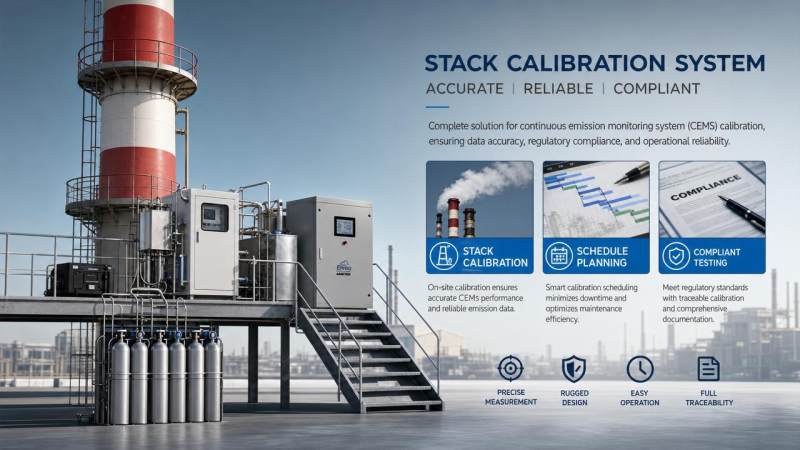
In many industrial projects, stack calibration is treated as a narrow technical activity that can be fitted in near the end of construction. That assumption is one of the main reasons delays happen. Calibration depends on far more than the instrument itself being installed. It often requires completed mechanical works, electrical power, signal continuity, control system readiness, safe access platforms, purge or utility availability, process stability, and approved test procedures.
When even one of those prerequisites is missing, the calibration team may arrive but be unable to perform meaningful work. The result is expensive standby time, partial execution, repeat mobilization, or rushed troubleshooting under schedule pressure. What appears to be a short specialist task becomes a chain reaction that affects commissioning, performance verification, compliance sign-off, and handover.
For project managers, the key insight is simple: stack calibration is rarely a single isolated event. It is a coordination milestone sitting at the intersection of instrumentation, mechanical completion, E&I readiness, environmental compliance, and operations support. If that coordination is not planned early, the field team ends up solving preventable problems at the last minute.
What project managers should prioritize from the start
The best way to reduce delay and rework is to define stack calibration as a managed work package early in the project lifecycle. That means identifying the scope, confirming the standards or compliance requirements, and listing every dependency before the site enters late-stage construction. Waiting until startup planning begins is usually too late.
At a minimum, managers should answer six questions early. What instruments or analyzers require calibration? What reference methods, tolerances, or local regulatory criteria apply? Which parties are responsible for supply, installation, testing, witnessing, and approval? What site conditions must be available before calibration starts? How does calibration connect to commissioning and performance testing? What documents are required for turnover and compliance records?
These questions sound basic, but many project problems come from vague ownership. One contractor assumes another will provide test gas or access equipment. The EPC team assumes operations will provide stable process conditions. The commissioning team assumes calibration can proceed before final control logic is validated. Each assumption creates risk.
A stronger approach is to place stack calibration on the integrated project schedule as a visible milestone sequence, not just a note under commissioning. Break it into definable stages such as engineering review, procurement of calibration equipment, installation verification, pre-calibration inspection, calibration execution, data review, corrective action, and final acceptance. This turns a specialist task into something the project can actually manage.
Common causes of rework in stack calibration planning
Rework usually comes from planning gaps rather than technical complexity alone. One common issue is late discovery of physical access problems. If ports, platforms, ladders, or analyzer shelters are incomplete or do not meet testing requirements, the calibration team may be unable to work safely or accurately. Correcting these issues after installation can require fabrication changes and schedule disruption.
Another frequent cause is incomplete loop readiness. Instruments may be installed, but wiring, terminations, signal scaling, controller logic, or historian points may not be fully checked. In that situation, calibration values may not transfer correctly to the control system. The field team then has to repeat tests after loop corrections are made.
Documentation failures are also a major source of waste. Outdated drawings, missing I/O lists, incorrect tag references, and uncontrolled revisions lead teams to test against the wrong configuration. Even if the calibration itself is technically sound, the evidence may not support final acceptance if records do not match the installed condition.
There is also the process readiness problem. Some stack-related calibrations and validations require operating conditions that are stable enough to generate reliable results. If startup sequencing is not aligned, teams may attempt calibration during fluctuating process conditions, then discover the data is not usable for compliance or performance acceptance. That often forces a second round of work during an already compressed schedule window.
How to build a realistic stack calibration plan
A realistic plan starts with dependency mapping. Instead of asking only when calibration should happen, ask what must be true before it can happen. This includes equipment installation status, electrical energization, analyzer warm-up requirements, communication checks, utility availability, environmental conditions, scaffold removal or access completion, and permit readiness. Once those prerequisites are visible, planning becomes far more accurate.
Next, create a readiness matrix. This can be a simple but disciplined tool listing each calibration point, the responsible party, planned date, prerequisites, evidence required, and status. For project managers, this matrix is useful because it exposes hidden blockers early. It also supports weekly reviews by showing whether the constraint is mechanical, electrical, controls-related, documentation-related, or operational.
It is also important to separate pre-calibration checks from the calibration activity itself. Many delays occur because highly specialized resources are mobilized before basic field verification is complete. A better model is to schedule an earlier inspection step covering installation conformity, tag verification, access, utilities, and loop status. Only after those checks pass should the calibration window be confirmed.
Where possible, build float around calibration-related activities that depend on third-party witnesses, regulator participation, or vendor specialists. These resources are often difficult to reschedule quickly. If the project plan leaves no recovery time, even a minor issue can affect major downstream milestones such as emissions testing, startup acceptance, or provisional handover.
How to align calibration with construction and commissioning milestones
One of the most effective ways to reduce rework is to stop treating calibration as an end-of-project event. It should be linked to construction completion logic and commissioning phases. In practice, that means defining when the work moves from installation complete to inspection ready, from inspection ready to loop ready, and from loop ready to calibration ready.
This staged approach helps teams avoid premature scheduling. For example, “mechanical complete” may not mean the analyzer enclosure has power, heat tracing, sample lines, drains, and communications fully functional. Likewise, “instrument installed” does not mean the signal path to the DCS is proven. By tying calibration to more specific readiness gates, the project can reduce false starts.
Commissioning teams also benefit when calibration is coordinated with adjacent activities such as loop checks, cause-and-effect testing, analyzer shelter verification, and initial startup procedures. If these activities are sequenced intelligently, one site visit can resolve multiple issues. If they are fragmented, the same team may revisit the area several times, increasing labor cost and extending schedule duration.
For stack calibration in particular, alignment with compliance-related testing is essential. If calibration certificates, records, or validation data will later support emissions reporting or acceptance testing, then the timing, documentation standard, and approval path must be planned in advance. Otherwise, the project may discover too late that technically completed work does not satisfy the required evidence standard.
Roles, responsibilities, and handoffs that prevent confusion
Projects often struggle not because people lack technical capability, but because ownership is fragmented. The EPC contractor, analyzer vendor, commissioning team, operations team, and environmental specialists may all be involved in stack calibration. Without a clear responsibility model, gaps are inevitable.
A practical solution is to define responsibility at task level rather than company level. For each calibration-related activity, specify who is responsible, who supports, who verifies, and who approves. This should include not only the calibration execution itself, but also preconditions such as access provision, power-on readiness, process isolation where needed, test gas availability, permit coordination, and final record compilation.
Handoffs deserve special attention. Many delays occur at the transition between construction and commissioning, or between commissioning and compliance testing. The receiving team often assumes prerequisites were checked, while the sending team assumes remaining issues are minor. A formal readiness review before mobilizing calibration resources can eliminate much of this uncertainty.
For project leaders, the goal is not more bureaucracy. It is fewer avoidable surprises. A short, disciplined readiness sign-off can save far more time than it consumes, especially on complex sites where specialist resources are costly and difficult to remobilize.
What documentation matters most for schedule protection and acceptance
Documentation is often seen as an administrative burden, but in stack calibration planning it is part of schedule control. Missing or inconsistent records can delay approvals even after field work is complete. To avoid this, identify the required document set early and connect it to each project milestone.
Typical critical records include instrument datasheets, approved drawings, tag lists, loop diagrams, installation check sheets, calibration procedures, reference standards certificates, calibration reports, exception lists, corrective action records, and final acceptance sign-offs. In regulated environments, document quality may matter as much as the test itself.
Revision control is especially important. If site teams work from outdated procedures or drawings, they may execute valid work against an obsolete configuration. That creates a painful situation where work must be repeated or re-documented simply to prove compliance. A controlled document release process for calibration activities is therefore a schedule risk reduction tool, not just a quality requirement.
Managers should also ensure records are reviewed promptly rather than saved for the end. Near-real-time review allows discrepancies to be corrected while the field team is still mobilized. Delayed review often means issues are found only after personnel or equipment have left the site, increasing the chance of costly return visits.
How to evaluate whether your current plan is strong enough
If you want to know whether your current stack calibration plan is likely to hold, ask a few direct questions. Are prerequisites defined in measurable terms? Can each calibration point be tied to a responsible owner and a scheduled readiness date? Have access, utilities, and loop checks been verified before specialist mobilization? Is there contingency for failed checks or unstable operating conditions? Are documentation and acceptance criteria agreed before execution?
If the answer to several of these is no, the project is probably carrying more schedule risk than it appears. That does not mean failure is inevitable. It means the plan still depends too heavily on late-stage coordination and informal problem-solving. In most industrial projects, that is exactly where delay and rework become expensive.
A strong plan is visible, staged, owned, and evidence-based. It turns calibration from a reactive troubleshooting exercise into a controlled part of project delivery. For engineering leaders, that shift improves not only schedule reliability but also commercial performance, resource utilization, and stakeholder confidence.
Final takeaway: smarter planning reduces both delay and compliance risk
Effective stack calibration planning is less about technical theory and more about disciplined project execution. Delays usually happen when calibration is scheduled too late, prerequisites are poorly defined, responsibilities are unclear, or documentation is treated as an afterthought. Rework follows when teams mobilize before the system is truly ready.
For project managers and engineering leads, the practical solution is to plan calibration as a structured work package with visible dependencies, readiness gates, accountable owners, and aligned documentation. When that happens, field execution becomes more predictable, compliance-related milestones are easier to protect, and costly repeat work is far less likely.
In short, better planning does not just make calibration smoother. It safeguards commissioning progress, improves project control, and helps industrial teams deliver with fewer surprises. That is the real value of getting stack calibration planning right from the start.
Recommended for You
 How to verify accuracy claims for industrial quality analyzersVerify accuracy claims for industrial quality analyzers with calibration checks, independent testing, and clear acceptance criteria. Learn how to reduce risk and buy with confidence.
 How to calculate cooling loads for an industrial analyzer shelterSize industrial analyzer shelter cooling with confidence. Learn to calculate equipment heat, solar gains, and ventilation loads, then select HVAC capacity for reliable analyzer performance.
 Industrial Safety vs. Emission Monitoring: What Are the Differences?What are the main differences between industrial safety and emission monitoring? Compare goals, sensors, response times, and compliance needs to choose the right systems for your facility.
 Is Remote Monitoring Worth the Cost for Small Emission Sources?Is it worth investing in remote monitoring for small emission sources? Compare costs, compliance needs, and potential savings to choose the right solution for your operation.
 How Do You Handle Analyzer Failure During an Environmental Audit?Learn how to handle analyzer failure during environmental compliance audit procedures. Protect evidence, verify data, and restore monitoring with this practical response guide.
 Do VOC Monitors Require Explosion-Proof Certification?Does VOC monitoring require explosion-proof certification? Learn when approval is needed, compare ATEX and IECEx, and choose the right monitor for your site.
 How sample conditioning affects accuracy in petrochemical analyzersImprove accuracy in petrochemical analyzers with smarter sample conditioning. Discover how phase control, filtration, and transport design prevent bias and deliver reliable process data.
 How to troubleshoot sensor drift in industrial gas detectorsIndustrial gas detectors showing sensor drift? Learn how to verify calibration gas, identify root causes, and determine when sensor replacement is needed for reliable monitoring.
 How to judge whether a competitive price reflects real valueCompetitive Price: learn how to compare scope, compliance, performance, and lifecycle costs to identify real value, reduce risk, and make smarter purchasing decisions.
 When custom gas analysis is the right fit for complex process streamsCustom gas analysis for complex process streams: learn when tailored sampling, interference control, and reliable measurement design deliver confident decisions.
 When does a laser gas analyzer meet stack emissions monitoring needs?Laser gas analyzer for stack emissions: learn when it delivers fast, reliable data, how to assess installation risks, and what to verify for CEMS compliance.
 How to select a hazardous gas analyzer for confined spacesHazardous gas analyzer selection for confined spaces: compare sensors, sampling, certifications, alarms, and maintenance to protect workers and choose with confidence.
 When is a single gas analyzer sufficient for workplace safety monitoring?Discover when a single gas analyzer delivers reliable workplace safety monitoring, and learn the key limits, calibration needs, and risks that require broader detection.
 How to choose an ambient gas analyzer for low-level leak detectionAmbient gas analyzer selection for low-level leak detection: compare sensitivity, cross-sensitivity, sampling design, alarms, and calibration for reliable site performance.
 How to tell when an oxygen sensor needs replacementOxygen sensor replacement signs explained: learn how live data, fault codes, wiring checks, and exhaust inspections pinpoint the real issue before you buy.
 How laser gas analyzers improve combustion control in steel furnacesLaser gas analyzer for steel industry applications delivers fast in-situ O₂ and CO data to optimize furnace combustion, cut fuel waste, and improve steel heating stability.
 How to verify whether explosion proof equipment meets site requirementsExplosion proof equipment verification made practical: match zones, gas or dust groups, temperature classes, certificates, and installation conditions for confident compliance.
 How industrial gas analysis helps detect contamination before releaseIndustrial Gas Analysis helps detect moisture, oil, oxygen, and toxic contaminants before release—protecting processes, ensuring compliance, and reducing costly risks.
 When is electrochemistry detection the right choice for water analysis?Electrochemistry detection for water analysis: learn when fast, reliable monitoring of ions, chlorine, pH, and more delivers actionable results.
 How industrial standards reduce quality risks in supplier selectionIndustrial Standard guidance helps quality and safety managers reduce supplier risks, verify compliance, strengthen traceability, and build resilient instrumentation supply chains.
 When does a multi-component system reduce installation complexity?Multi component systems reduce installation complexity when they eliminate field interfaces, streamline commissioning, and provide proven compatibility. Learn how to assess total cost and supplier accountability.
 How to size an industrial control shelter for outdoor equipmentIndustrial control shelter sizing guide: optimize layout, HVAC, access, safety, and expansion space for reliable outdoor equipment operations.
 How flue analysis helps verify combustion efficiencyFlue analysis verifies combustion efficiency by assessing O2, CO, CO2, and stack temperature to identify excess air, incomplete combustion, and heat losses.
 How to select industrial gas detectors for confined spacesIndustrial gas detectors for confined spaces: learn how to match sensors, sampling methods, alarms, and certifications to real atmospheric hazards.
 When does a laser oxygen analyzer outperform zirconia sensors?Laser oxygen analyzer vs. zirconia sensors: compare speed, selectivity, maintenance, gas chemistry, and installation needs to choose the right oxygen measurement solution.
 How to select a percent range analyzer for process measurementsPercent range analyzer selection made practical: compare accuracy, sample systems, calibration, gas matrix, integration, and lifecycle cost for reliable process measurements.
 How explosion proof analysis verifies safe equipment for hazardous areasExplosion proof analysis verifies hazardous-area equipment by matching certifications, temperature ratings, installation details, and inspection controls for safer compliance.
 When does fixed gas detection need point sensors instead of open-path monitoring?Fixed gas detection: discover when point sensors outperform open-path monitoring for predictable leaks, enclosed zones, local alarms, and safer design decisions.
 How to choose industrial metrology systems for tight-tolerance partsIndustrial metrology guide for tight-tolerance parts: compare CMMs, optical scanners, gauges, uncertainty, workflow, and traceable inspection strategies.
 How process metrology reduces measurement variation in productionProcess metrology reduces production measurement variation by improving traceability, uncertainty control, calibration, and reliable quality decisions.
 How to select an industrial monitoring analyzer for harsh environmentsIndustrial monitoring analyzer selection for harsh environments: evaluate sampling, durability, hazardous-area compliance, accuracy, maintenance, and data reliability.
 How calibration intervals affect test and measurement equipment accuracyTest and measurement equipment calibration intervals directly affect accuracy, risk, compliance, and uptime. Learn how to set evidence-based schedules that protect critical decisions.



















Search Categories
Search Categories
- Smart Meters & Power Quality
- Transformer Gas Analyzers
- BESS Thermal Runaway Detectors
- Energy, Power & Smart Grid Monitoring
- Optical Profilers & CMM
- Ultrasonic & X-Ray NDT
- Calibration Standards
- Precision Metrology & NDT
- Water Quality Analyzers
- CEMS & VOCs Monitors
- Price Trends
- Import & Export Updates
- Market Trends
- Industry News
- Industry Insights
Latest Article
- How to verify accuracy claims for industrial quality analyzersVerify accuracy claims for industrial quality analyzers with calibration checks, independent testing, and clear acceptance criteria. Learn how to reduce risk and buy with confidence.Posted by:
- How to calculate cooling loads for an industrial analyzer shelterSize industrial analyzer shelter cooling with confidence. Learn to calculate equipment heat, solar gains, and ventilation loads, then select HVAC capacity for reliable analyzer performance.Posted by:
- Industrial Safety vs. Emission Monitoring: What Are the Differences?What are the main differences between industrial safety and emission monitoring? Compare goals, sensors, response times, and compliance needs to choose the right systems for your facility.Posted by:
Please give us a message
