
Combustion Sensor Performance Gaps That Affect Energy Efficiency


For project managers and engineering leaders, even small performance gaps in a combustion sensor can lead to higher fuel consumption, unstable operations, and missed efficiency targets. Understanding where these gaps come from—and how they influence system accuracy, response time, and long-term reliability—is essential for improving energy performance across modern industrial applications.
Why performance gaps matter more in some applications than others
A combustion sensor is rarely judged in isolation. In real projects, it sits inside a larger chain that includes burners, fuel trains, control logic, air supply systems, emissions targets, maintenance schedules, and reporting requirements. That is why the same sensor specification can perform well in one plant and create efficiency losses in another. For project leaders, the key question is not simply whether a combustion sensor is “good,” but whether its performance profile matches the operating scenario.
In high-load continuous production, a slow sensor response can cause fuel-rich operation for long periods before controls correct the imbalance. In batch heating, drift between cycles may be a bigger issue than fast response. In distributed energy systems, environmental robustness and remote diagnostics may influence energy efficiency as much as measurement accuracy. These differences explain why sensor selection, integration, and lifecycle management should be based on application context rather than generic specification sheets.
For the instrumentation industry, this application-driven view is especially important because measurement quality directly affects automation quality. If the combustion sensor underperforms, the control loop underperforms. If the control loop underperforms, the entire energy optimization strategy loses value.
Where combustion sensor performance gaps usually appear
Most energy losses linked to a combustion sensor do not come from obvious failure. They come from subtle gaps that remain hidden during commissioning and only appear under dynamic operating conditions. Project managers should pay particular attention to five recurring areas.
1. Accuracy under changing fuel and air conditions
A sensor may look accurate at a stable reference point but lose precision when fuel quality, airflow, humidity, or load fluctuates. This is common in facilities that alternate between natural gas sources, blend fuels, or face seasonal intake-air variation.
2. Response time during load transitions
When process demand changes quickly, a slow combustion sensor delays control correction. The result is temporary over-firing, under-firing, or excess oxygen operation, all of which reduce thermal efficiency and can increase wear on burners and heat exchangers.
3. Signal stability in harsh environments
Dust, vibration, thermal cycling, moisture, and corrosive compounds can create noisy or drifting readings. In industrial plants, environmental survivability is often as important as laboratory-grade sensitivity.
4. Calibration retention over time
A combustion sensor that requires frequent recalibration may still be technically capable, but it can become economically inefficient in multi-site or labor-constrained operations. Maintenance burden is part of energy performance because poor calibration discipline leads to long periods of unnoticed inefficiency.
5. Compatibility with control architecture
Even a strong sensor can underdeliver if signal conditioning, communication latency, controller logic, or data integration are weak. Many efficiency gaps are integration gaps rather than sensing gaps alone.
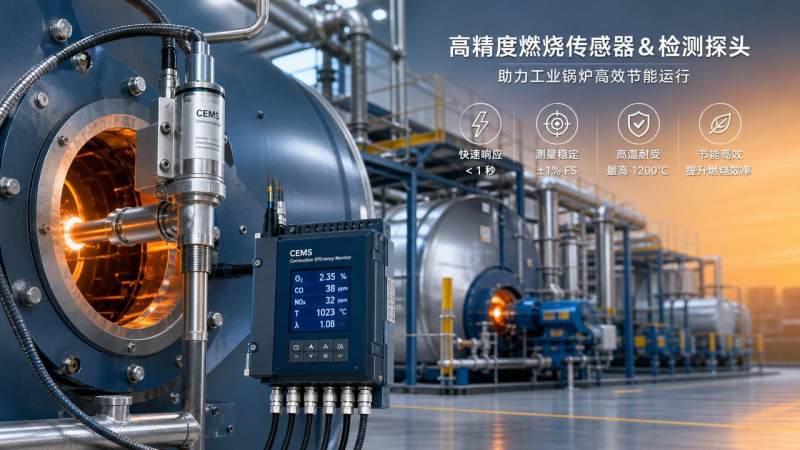
Typical application scenarios and what project teams should watch
Because combustion systems vary widely, project teams should evaluate a combustion sensor according to the dominant operating pattern. The table below highlights practical differences.
Scenario-by-scenario view of the most critical gaps
Industrial boilers: small oxygen errors become large fuel losses
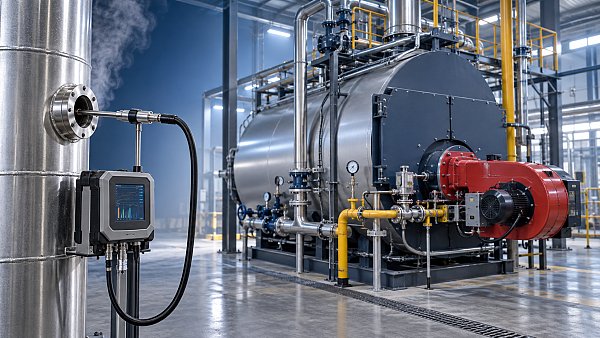
Boilers are one of the clearest examples of how combustion sensor performance affects energy efficiency. In these systems, a slight measurement bias can push operators to run with unnecessary excess air as a safety margin. That may reduce risk of incomplete combustion, but it also sends valuable heat out through the stack. For project managers overseeing utility upgrades, steam optimization, or decarbonization efforts, this is often the fastest place to identify sensor-related waste.
The right combustion sensor for a boiler application should maintain repeatable readings across low-fire and high-fire conditions, tolerate condensate and flue gas contamination, and integrate cleanly with burner management and oxygen trim controls. A common mistake is selecting for nominal accuracy only, without validating field drift over seasonal operation.
Furnaces and kilns: thermal stress changes the decision criteria
In furnaces, kilns, and other high-temperature thermal processing systems, response delay and sensor survivability can outweigh pure precision. Project teams in ceramics, metals, glass, or heat treatment environments often face rapid heating cycles, radiant heat stress, particulate exposure, and pressure fluctuations. In these scenarios, the combustion sensor must continue producing stable data despite conditions that are far more aggressive than those found in standard boiler rooms.
Energy efficiency here is linked not only to fuel rate, but also to temperature consistency, throughput, and scrap reduction. A sensor that drifts under heat can trigger uneven zones, longer cycle times, and avoidable rework. For engineering leaders, that means evaluating total process impact rather than fuel metrics alone.
Gas turbines and CHP: fast control loops demand fast sensing
Combined heat and power systems and gas turbines operate with tighter dynamic requirements. Here, a combustion sensor may support efficiency, emissions compliance, and equipment protection at the same time. If the signal lags during rapid load changes, the system can oscillate, waste fuel, or increase NOx exposure. In distributed energy projects, this becomes a business issue because unstable performance affects both electrical output and thermal recovery value.
For these applications, project managers should verify more than sensor sensitivity. They should ask whether the complete measurement chain supports high-speed processing, whether diagnostics can be integrated into the plant control system, and whether maintenance events can be predicted before performance deterioration reaches a costly level.
Process heating with variable fuels: adaptability becomes the priority
In chemical plants, refineries, and multi-fuel industrial sites, the operating environment may shift because of upstream supply changes, feedstock variation, or fuel blending strategies. In these cases, a combustion sensor that is excellent under one reference gas may deliver weaker results when combustion chemistry changes. The energy penalty appears as unstable control limits, conservative operating margins, and increased operator intervention.
A strong fit for this scenario is a sensor solution validated across the expected range of fuel composition, contamination risk, and ambient conditions. For project leaders managing modernization programs, it is worth insisting on field-condition validation rather than relying entirely on vendor bench data.
How different business needs change the right sensor decision
The best combustion sensor choice also depends on organizational priorities. Two facilities may operate similar burners but still need different solutions because their management model, risk tolerance, and maintenance resources differ.
- For energy cost reduction programs, focus on long-term measurement stability and trim control effectiveness.
- For high-availability plants, prioritize durability, diagnostics, and low unplanned service risk.
- For emissions-sensitive projects, ensure the combustion sensor supports tighter combustion balancing and reporting confidence.
- For retrofit projects, check compatibility with legacy control systems and existing instrument architecture.
- For multi-site standardization, favor solutions with manageable calibration procedures and consistent spare parts strategy.
Common misjudgments that reduce efficiency after installation
Several recurring errors explain why expected efficiency gains fail to appear even after a new combustion sensor is installed.
Treating catalog accuracy as field accuracy
Published accuracy often reflects controlled conditions. Real operating temperature, contamination, vibration, and mounting position can produce different results.
Ignoring maintenance reality
A technically advanced combustion sensor can become a poor fit if site teams cannot sustain calibration, cleaning, or replacement intervals. Efficiency depends on practical maintainability.
Overlooking control loop tuning
Sensor upgrades do not automatically produce savings unless control logic, alarms, and trim settings are revised to use the improved data correctly.
Selecting one standard for all scenarios
Standardization can simplify procurement, but using the same combustion sensor across very different thermal assets may create hidden inefficiencies in more demanding applications.
A practical evaluation checklist for project managers
Before approving a combustion sensor for a new project or retrofit, decision-makers should confirm the following points:
- What operating ranges, fuels, and ambient conditions define the real application?
- How much efficiency loss can result from response lag, drift, or signal instability?
- Does the selected combustion sensor have evidence from similar field installations?
- Can the maintenance team support calibration and diagnostics at the required interval?
- Will the control system fully use the sensor data for optimization, not just monitoring?
- What is the lifecycle cost when downtime, service effort, and efficiency drift are included?
FAQ: scenario-based questions about combustion sensor selection
Is the most accurate combustion sensor always the best for energy efficiency?
No. In many applications, robustness, response time, and calibration stability matter as much as peak accuracy. The best choice is the sensor that maintains useful control-quality data in the actual operating environment.
Which applications are most sensitive to combustion sensor performance gaps?
High-load boilers, rapidly modulating burners, gas turbines, CHP units, and thermal processing systems with strict quality requirements are especially sensitive because small measurement errors can quickly scale into energy, emissions, or production losses.
When should a retrofit team reconsider an existing combustion sensor?
If a site experiences unexplained excess fuel consumption, unstable oxygen trim behavior, repeated recalibration needs, or inconsistent performance after load changes, the existing combustion sensor should be reviewed as part of the efficiency diagnosis.
Turning sensor insight into better project outcomes
For project managers and engineering leaders, the most effective way to address combustion sensor performance gaps is to stop treating all combustion applications as technically equivalent. A boiler house, a kiln line, a CHP plant, and a variable-fuel process heater may all use a combustion sensor, but they do not reward the same performance strengths. Matching the sensor to the scenario is what protects energy efficiency, control stability, and lifecycle value.
If you are planning a retrofit, expansion, or efficiency program, start by defining your operating scenario, control objectives, environmental stresses, and maintenance reality. Then evaluate the combustion sensor not just by specification, but by fit. That application-first approach will lead to better energy outcomes, lower operating risk, and stronger returns from instrumentation investment.
Recommended for You
 How to verify accuracy claims for industrial quality analyzersVerify accuracy claims for industrial quality analyzers with calibration checks, independent testing, and clear acceptance criteria. Learn how to reduce risk and buy with confidence.
 How to calculate cooling loads for an industrial analyzer shelterSize industrial analyzer shelter cooling with confidence. Learn to calculate equipment heat, solar gains, and ventilation loads, then select HVAC capacity for reliable analyzer performance.
 Industrial Safety vs. Emission Monitoring: What Are the Differences?What are the main differences between industrial safety and emission monitoring? Compare goals, sensors, response times, and compliance needs to choose the right systems for your facility.
 Is Remote Monitoring Worth the Cost for Small Emission Sources?Is it worth investing in remote monitoring for small emission sources? Compare costs, compliance needs, and potential savings to choose the right solution for your operation.
 How Do You Handle Analyzer Failure During an Environmental Audit?Learn how to handle analyzer failure during environmental compliance audit procedures. Protect evidence, verify data, and restore monitoring with this practical response guide.
 Do VOC Monitors Require Explosion-Proof Certification?Does VOC monitoring require explosion-proof certification? Learn when approval is needed, compare ATEX and IECEx, and choose the right monitor for your site.
 How sample conditioning affects accuracy in petrochemical analyzersImprove accuracy in petrochemical analyzers with smarter sample conditioning. Discover how phase control, filtration, and transport design prevent bias and deliver reliable process data.
 How to troubleshoot sensor drift in industrial gas detectorsIndustrial gas detectors showing sensor drift? Learn how to verify calibration gas, identify root causes, and determine when sensor replacement is needed for reliable monitoring.
 How to judge whether a competitive price reflects real valueCompetitive Price: learn how to compare scope, compliance, performance, and lifecycle costs to identify real value, reduce risk, and make smarter purchasing decisions.
 When custom gas analysis is the right fit for complex process streamsCustom gas analysis for complex process streams: learn when tailored sampling, interference control, and reliable measurement design deliver confident decisions.
 When does a laser gas analyzer meet stack emissions monitoring needs?Laser gas analyzer for stack emissions: learn when it delivers fast, reliable data, how to assess installation risks, and what to verify for CEMS compliance.
 How to select a hazardous gas analyzer for confined spacesHazardous gas analyzer selection for confined spaces: compare sensors, sampling, certifications, alarms, and maintenance to protect workers and choose with confidence.
 When is a single gas analyzer sufficient for workplace safety monitoring?Discover when a single gas analyzer delivers reliable workplace safety monitoring, and learn the key limits, calibration needs, and risks that require broader detection.
 How to choose an ambient gas analyzer for low-level leak detectionAmbient gas analyzer selection for low-level leak detection: compare sensitivity, cross-sensitivity, sampling design, alarms, and calibration for reliable site performance.
 How to tell when an oxygen sensor needs replacementOxygen sensor replacement signs explained: learn how live data, fault codes, wiring checks, and exhaust inspections pinpoint the real issue before you buy.
 How laser gas analyzers improve combustion control in steel furnacesLaser gas analyzer for steel industry applications delivers fast in-situ O₂ and CO data to optimize furnace combustion, cut fuel waste, and improve steel heating stability.
 How to verify whether explosion proof equipment meets site requirementsExplosion proof equipment verification made practical: match zones, gas or dust groups, temperature classes, certificates, and installation conditions for confident compliance.
 How industrial gas analysis helps detect contamination before releaseIndustrial Gas Analysis helps detect moisture, oil, oxygen, and toxic contaminants before release—protecting processes, ensuring compliance, and reducing costly risks.
 When is electrochemistry detection the right choice for water analysis?Electrochemistry detection for water analysis: learn when fast, reliable monitoring of ions, chlorine, pH, and more delivers actionable results.
 How industrial standards reduce quality risks in supplier selectionIndustrial Standard guidance helps quality and safety managers reduce supplier risks, verify compliance, strengthen traceability, and build resilient instrumentation supply chains.
 When does a multi-component system reduce installation complexity?Multi component systems reduce installation complexity when they eliminate field interfaces, streamline commissioning, and provide proven compatibility. Learn how to assess total cost and supplier accountability.
 How to size an industrial control shelter for outdoor equipmentIndustrial control shelter sizing guide: optimize layout, HVAC, access, safety, and expansion space for reliable outdoor equipment operations.
 How flue analysis helps verify combustion efficiencyFlue analysis verifies combustion efficiency by assessing O2, CO, CO2, and stack temperature to identify excess air, incomplete combustion, and heat losses.
 How to select industrial gas detectors for confined spacesIndustrial gas detectors for confined spaces: learn how to match sensors, sampling methods, alarms, and certifications to real atmospheric hazards.
 When does a laser oxygen analyzer outperform zirconia sensors?Laser oxygen analyzer vs. zirconia sensors: compare speed, selectivity, maintenance, gas chemistry, and installation needs to choose the right oxygen measurement solution.
 How to select a percent range analyzer for process measurementsPercent range analyzer selection made practical: compare accuracy, sample systems, calibration, gas matrix, integration, and lifecycle cost for reliable process measurements.
 How explosion proof analysis verifies safe equipment for hazardous areasExplosion proof analysis verifies hazardous-area equipment by matching certifications, temperature ratings, installation details, and inspection controls for safer compliance.
 When does fixed gas detection need point sensors instead of open-path monitoring?Fixed gas detection: discover when point sensors outperform open-path monitoring for predictable leaks, enclosed zones, local alarms, and safer design decisions.
 How to choose industrial metrology systems for tight-tolerance partsIndustrial metrology guide for tight-tolerance parts: compare CMMs, optical scanners, gauges, uncertainty, workflow, and traceable inspection strategies.
 How process metrology reduces measurement variation in productionProcess metrology reduces production measurement variation by improving traceability, uncertainty control, calibration, and reliable quality decisions.
 How to select an industrial monitoring analyzer for harsh environmentsIndustrial monitoring analyzer selection for harsh environments: evaluate sampling, durability, hazardous-area compliance, accuracy, maintenance, and data reliability.
 How calibration intervals affect test and measurement equipment accuracyTest and measurement equipment calibration intervals directly affect accuracy, risk, compliance, and uptime. Learn how to set evidence-based schedules that protect critical decisions.


Search Categories
Search Categories
- Smart Meters & Power Quality
- Transformer Gas Analyzers
- BESS Thermal Runaway Detectors
- Energy, Power & Smart Grid Monitoring
- Optical Profilers & CMM
- Ultrasonic & X-Ray NDT
- Calibration Standards
- Precision Metrology & NDT
- Water Quality Analyzers
- CEMS & VOCs Monitors
- Price Trends
- Import & Export Updates
- Market Trends
- Industry News
- Industry Insights
Latest Article
- How to verify accuracy claims for industrial quality analyzersVerify accuracy claims for industrial quality analyzers with calibration checks, independent testing, and clear acceptance criteria. Learn how to reduce risk and buy with confidence.Posted by:
- How to calculate cooling loads for an industrial analyzer shelterSize industrial analyzer shelter cooling with confidence. Learn to calculate equipment heat, solar gains, and ventilation loads, then select HVAC capacity for reliable analyzer performance.Posted by:
- Industrial Safety vs. Emission Monitoring: What Are the Differences?What are the main differences between industrial safety and emission monitoring? Compare goals, sensors, response times, and compliance needs to choose the right systems for your facility.Posted by:
Please give us a message
