
Paramagnetic Sensor vs Other O2 Methods: What Changes in Practice


Choosing an oxygen measurement method affects accuracy, maintenance, response time, and long-term operating cost. This article compares the paramagnetic sensor with other common O2 technologies to show what actually changes in practice—from industrial process control to laboratory and environmental applications—so information seekers can quickly understand where each method fits best.
Why application context matters more than the sensing principle alone
When people compare oxygen analyzers, they often start with technology names: paramagnetic, zirconia, electrochemical, optical, or thermal conductivity. In real projects, however, the more useful question is not “Which method is best in theory?” but “What changes in practice in my operating environment?” A paramagnetic sensor may deliver excellent stability and fast response in one setting, yet be less attractive in another where portability, low upfront cost, or no moving gas handling is the priority.
Across the instrumentation industry, oxygen measurement appears in process control, combustion optimization, inert gas verification, emissions and environmental monitoring, laboratory analysis, medical-related systems, and safety assurance. Each scenario puts different weight on sample cleanliness, required accuracy, analyzer response speed, calibration burden, expected lifetime, and operating cost. That is why comparing the paramagnetic sensor to other O2 methods should always be done through a scene-by-scene lens.
For information seekers, this practical view is especially important. A technology that looks superior on a specification sheet may introduce hidden maintenance requirements, while a simpler sensor may be perfectly adequate if the oxygen range is broad and replacement is easy. The most valuable comparison therefore links sensing technology to actual use cases, not just laboratory performance claims.
What a paramagnetic sensor changes in daily operation
A paramagnetic sensor measures oxygen by taking advantage of oxygen’s magnetic properties. In practical terms, this usually means high selectivity for O2, good linearity, and strong performance for continuous gas analysis. It is widely valued where users need repeatable oxygen readings over long periods rather than frequent sensor replacement.
Compared with consumable-based methods, the paramagnetic sensor often reduces routine replacement costs. Compared with some high-temperature methods, it can simplify installation in ambient-temperature analyzer systems. It is also attractive in applications where operators need dependable measurements across changing process loads, such as industrial furnaces, gas blending systems, or environmental sampling skids.
That said, using a paramagnetic sensor successfully usually depends on sample conditioning. Dust, condensation, pressure fluctuation, vibration, or corrosive components can affect analyzer behavior or overall system stability. So the technology is strong, but the surrounding sampling system still matters greatly.
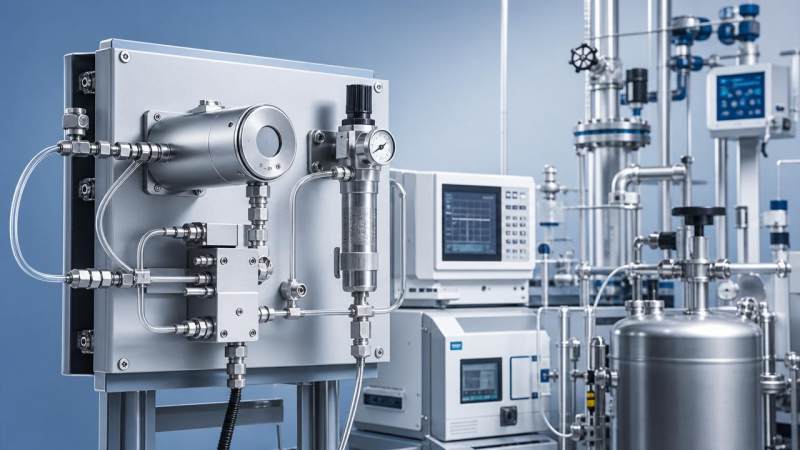
A practical comparison: paramagnetic sensor vs other O2 methods
The following table focuses on what users usually care about in real operating scenarios rather than purely academic differences.
Scenario 1: Industrial process control and combustion systems
In industrial manufacturing, energy, and automation environments, oxygen measurement often supports burner efficiency, product quality, safety, or gas balance control. Here, the main question is whether the analyzer must live directly in a hot process stream or measure a conditioned sample in an analyzer cabinet.
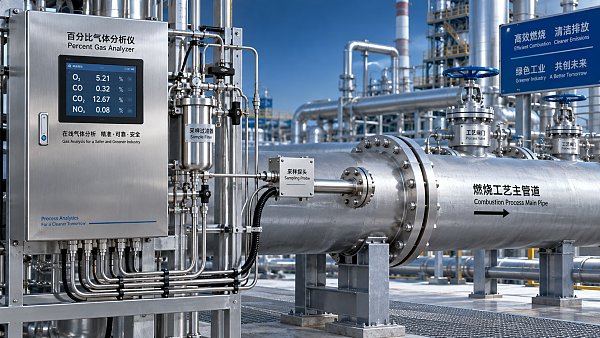
If the process favors extractive measurement with filtration, cooling, and pressure stabilization, a paramagnetic sensor can be a strong choice. It offers reliable continuous readings and works well when operators care about long-term stability, especially in plants where maintenance labor is costly and unplanned downtime is unacceptable.
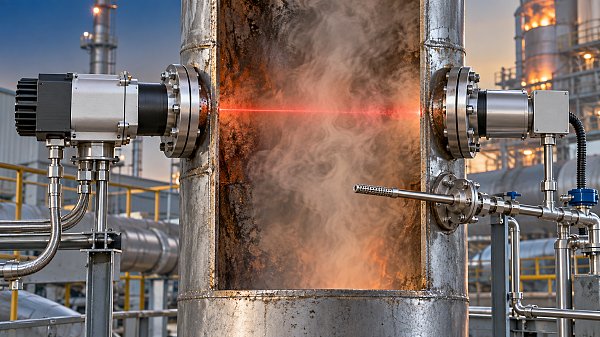
If the application is a high-temperature combustion zone and fast in-situ flue gas measurement is the norm, zirconia may fit better. In that case, what changes in practice is not only the sensor but the whole installation concept. The paramagnetic sensor usually belongs to a conditioned sample system, while zirconia often supports direct process mounting or hot measurement arrangements.
For process engineers, the decision point is simple: if you already need an extractive gas analysis system for multiple components, a paramagnetic sensor often integrates naturally. If your oxygen measurement is single-purpose and high-temperature in-situ access is preferred, another method may be more operationally efficient.
Scenario 2: Laboratory analysis and calibration environments
Laboratories and metrology-related environments usually value repeatability, traceability, and clean sample streams. In these conditions, the paramagnetic sensor stands out because its oxygen selectivity and stable behavior fit controlled testing routines. It is often preferred where analysts compare gas mixtures, verify process samples, or support calibration workflows.
Electrochemical sensors may still appear in labs for convenience, temporary setups, or lower-budget instruments. But when users need regular, high-confidence oxygen analysis without frequent consumable replacement, the paramagnetic sensor often improves workflow consistency. This is especially relevant in labs serving industrial clients, environmental projects, or quality assurance departments.
The practical change here is less about surviving harsh conditions and more about reducing uncertainty. In a laboratory, an oxygen analyzer must not create unnecessary drift, replacement scheduling, or cross-check burden. That is where a paramagnetic sensor can justify its cost over time.
Scenario 3: Environmental monitoring and emissions-related sampling
Environmental monitoring systems often use oxygen as a correction or reference parameter in stack testing, combustion assessment, or air quality-related measurements. These projects can involve changing moisture load, particulates, and field conditions. In such scenarios, technology choice depends heavily on sample conditioning quality.
A paramagnetic sensor is often selected when the monitoring system already includes a mature gas handling chain. With proper filtration and drying, it can provide dependable oxygen measurement for long-term reporting or compliance-related data workflows. Its strength is not simply sensitivity; it is the combination of analytical performance and reduced consumable replacement compared with some alternatives.
However, in rough field deployments where compactness, low initial cost, and easy swap-out matter more than premium stability, electrochemical methods may still be chosen. For environmental contractors and site operators, the key issue is whether the project is optimized for measurement quality over time or for rapid field deployment with minimal capital expense.
Scenario 4: Portable, temporary, or distributed measurement needs
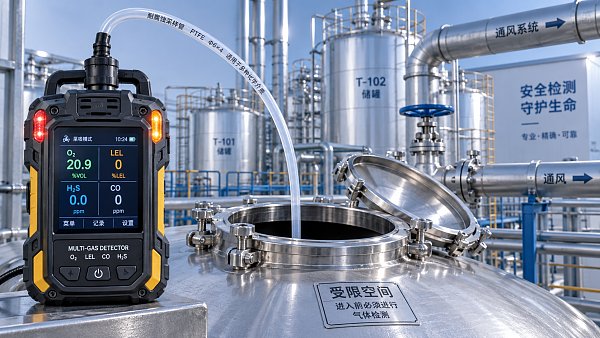
Not every oxygen application needs a fixed analyzer. In maintenance inspections, confined space checks, temporary commissioning, or decentralized monitoring points, portability often becomes the top requirement. This is where the paramagnetic sensor is not always the first choice, even if it performs strongly on paper.
Portable equipment tends to favor electrochemical or compact optical approaches because they support smaller designs, battery operation, and lower acquisition cost. In these use cases, easy deployment may matter more than highest long-term analytical stability. The user expects eventual sensor replacement and accepts it as part of the operating model.
So, one of the clearest practical differences is this: the paramagnetic sensor is usually strongest in fixed, continuous, quality-focused analysis systems, while other O2 methods may win where mobility, simplicity, or distributed installation is the real business priority.
How different users should judge fit
Different organizations ask different questions before choosing a sensor technology. The right answer for an OEM is not always the same as for a plant operator or laboratory manager.
Common selection mistakes when comparing O2 technologies
One common mistake is choosing only by purchase price. A lower-cost sensor can become more expensive if it needs frequent replacement, extra verification, or more operator attention. Another mistake is choosing the paramagnetic sensor for a dirty or unstable sample without investing in proper gas conditioning. In that case, the issue is not the oxygen method itself but a mismatch between technology and system design.
Users also sometimes underestimate response-time context. Fast response is valuable, but only if the overall sample path supports it. Long tubing, poor filters, or wet gas handling can dominate the analyzer’s practical response regardless of sensor principle. In addition, decision-makers may overlook service model differences: a plant with strong maintenance resources may accept a more complex analyzer setup than a remote site with limited technical staff.
The best comparison therefore asks five practical questions: What is the gas condition? Is the installation fixed or portable? How important are lifecycle cost and maintenance intervals? What response speed is truly needed at the system level? And does the application require premium analytical confidence or only general oxygen indication?
FAQ: when does a paramagnetic sensor make the most sense?
Is a paramagnetic sensor better than electrochemical oxygen sensing?
It is often better for continuous, accuracy-focused, fixed installations with clean sample handling. Electrochemical methods may be better for portable, lower-cost, or easily replaceable designs.
Does a paramagnetic sensor reduce maintenance?
It can reduce consumable-related maintenance, but only if the sample system is correctly designed. Filters, dryers, and pressure control still matter in practical operation.
Which industries commonly benefit from a paramagnetic sensor?
Industrial manufacturing, energy and power, environmental monitoring, laboratories, gas analysis systems, and automation-related process applications often benefit when stable oxygen measurement is a core requirement.
Final decision guide for information seekers
The most important takeaway is that the paramagnetic sensor changes practice most clearly in applications that value continuous performance, oxygen-specific measurement quality, and lower dependence on consumable sensor replacement. It is especially compelling in extractive industrial analyzers, laboratory instruments, and environmental systems with proper sample conditioning.
Other O2 methods still have strong roles. Zirconia often fits hot combustion duty. Electrochemical sensing remains practical for portable or cost-sensitive equipment. Optical methods can be attractive in specialized compact designs. The right choice depends less on abstract rankings and more on where, how, and by whom the analyzer will be used.
If you are evaluating oxygen analysis options, start with your scenario: gas composition, installation style, maintenance resources, accuracy target, and total lifecycle expectations. From there, it becomes much easier to judge whether a paramagnetic sensor is the right fit or whether another method better matches your operational reality.
Recommended for You
 How to verify accuracy claims for industrial quality analyzersVerify accuracy claims for industrial quality analyzers with calibration checks, independent testing, and clear acceptance criteria. Learn how to reduce risk and buy with confidence.
 How to calculate cooling loads for an industrial analyzer shelterSize industrial analyzer shelter cooling with confidence. Learn to calculate equipment heat, solar gains, and ventilation loads, then select HVAC capacity for reliable analyzer performance.
 Industrial Safety vs. Emission Monitoring: What Are the Differences?What are the main differences between industrial safety and emission monitoring? Compare goals, sensors, response times, and compliance needs to choose the right systems for your facility.
 Is Remote Monitoring Worth the Cost for Small Emission Sources?Is it worth investing in remote monitoring for small emission sources? Compare costs, compliance needs, and potential savings to choose the right solution for your operation.
 How Do You Handle Analyzer Failure During an Environmental Audit?Learn how to handle analyzer failure during environmental compliance audit procedures. Protect evidence, verify data, and restore monitoring with this practical response guide.
 Do VOC Monitors Require Explosion-Proof Certification?Does VOC monitoring require explosion-proof certification? Learn when approval is needed, compare ATEX and IECEx, and choose the right monitor for your site.
 How sample conditioning affects accuracy in petrochemical analyzersImprove accuracy in petrochemical analyzers with smarter sample conditioning. Discover how phase control, filtration, and transport design prevent bias and deliver reliable process data.
 How to troubleshoot sensor drift in industrial gas detectorsIndustrial gas detectors showing sensor drift? Learn how to verify calibration gas, identify root causes, and determine when sensor replacement is needed for reliable monitoring.
 How to judge whether a competitive price reflects real valueCompetitive Price: learn how to compare scope, compliance, performance, and lifecycle costs to identify real value, reduce risk, and make smarter purchasing decisions.
 When custom gas analysis is the right fit for complex process streamsCustom gas analysis for complex process streams: learn when tailored sampling, interference control, and reliable measurement design deliver confident decisions.
 When does a laser gas analyzer meet stack emissions monitoring needs?Laser gas analyzer for stack emissions: learn when it delivers fast, reliable data, how to assess installation risks, and what to verify for CEMS compliance.
 How to select a hazardous gas analyzer for confined spacesHazardous gas analyzer selection for confined spaces: compare sensors, sampling, certifications, alarms, and maintenance to protect workers and choose with confidence.
 When is a single gas analyzer sufficient for workplace safety monitoring?Discover when a single gas analyzer delivers reliable workplace safety monitoring, and learn the key limits, calibration needs, and risks that require broader detection.
 How to choose an ambient gas analyzer for low-level leak detectionAmbient gas analyzer selection for low-level leak detection: compare sensitivity, cross-sensitivity, sampling design, alarms, and calibration for reliable site performance.
 How to tell when an oxygen sensor needs replacementOxygen sensor replacement signs explained: learn how live data, fault codes, wiring checks, and exhaust inspections pinpoint the real issue before you buy.
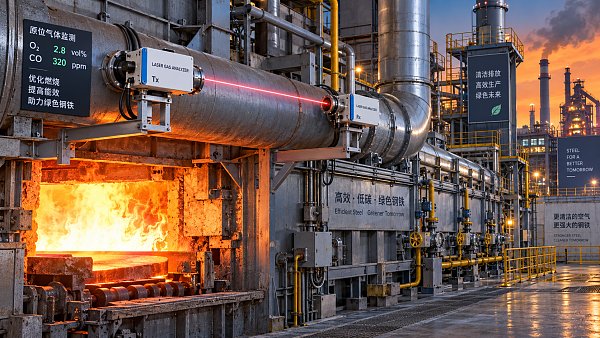
 How laser gas analyzers improve combustion control in steel furnacesLaser gas analyzer for steel industry applications delivers fast in-situ O₂ and CO data to optimize furnace combustion, cut fuel waste, and improve steel heating stability.
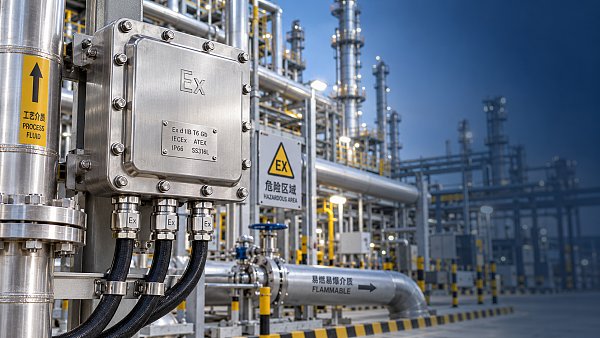
 How to verify whether explosion proof equipment meets site requirementsExplosion proof equipment verification made practical: match zones, gas or dust groups, temperature classes, certificates, and installation conditions for confident compliance.
 How industrial gas analysis helps detect contamination before releaseIndustrial Gas Analysis helps detect moisture, oil, oxygen, and toxic contaminants before release—protecting processes, ensuring compliance, and reducing costly risks.
 When is electrochemistry detection the right choice for water analysis?Electrochemistry detection for water analysis: learn when fast, reliable monitoring of ions, chlorine, pH, and more delivers actionable results.
 How industrial standards reduce quality risks in supplier selectionIndustrial Standard guidance helps quality and safety managers reduce supplier risks, verify compliance, strengthen traceability, and build resilient instrumentation supply chains.
 When does a multi-component system reduce installation complexity?Multi component systems reduce installation complexity when they eliminate field interfaces, streamline commissioning, and provide proven compatibility. Learn how to assess total cost and supplier accountability.
 How to size an industrial control shelter for outdoor equipmentIndustrial control shelter sizing guide: optimize layout, HVAC, access, safety, and expansion space for reliable outdoor equipment operations.
 How flue analysis helps verify combustion efficiencyFlue analysis verifies combustion efficiency by assessing O2, CO, CO2, and stack temperature to identify excess air, incomplete combustion, and heat losses.
 How to select industrial gas detectors for confined spacesIndustrial gas detectors for confined spaces: learn how to match sensors, sampling methods, alarms, and certifications to real atmospheric hazards.
 When does a laser oxygen analyzer outperform zirconia sensors?Laser oxygen analyzer vs. zirconia sensors: compare speed, selectivity, maintenance, gas chemistry, and installation needs to choose the right oxygen measurement solution.
 How to select a percent range analyzer for process measurementsPercent range analyzer selection made practical: compare accuracy, sample systems, calibration, gas matrix, integration, and lifecycle cost for reliable process measurements.
 How explosion proof analysis verifies safe equipment for hazardous areasExplosion proof analysis verifies hazardous-area equipment by matching certifications, temperature ratings, installation details, and inspection controls for safer compliance.
 When does fixed gas detection need point sensors instead of open-path monitoring?Fixed gas detection: discover when point sensors outperform open-path monitoring for predictable leaks, enclosed zones, local alarms, and safer design decisions.
 How to choose industrial metrology systems for tight-tolerance partsIndustrial metrology guide for tight-tolerance parts: compare CMMs, optical scanners, gauges, uncertainty, workflow, and traceable inspection strategies.
 How process metrology reduces measurement variation in productionProcess metrology reduces production measurement variation by improving traceability, uncertainty control, calibration, and reliable quality decisions.
 How to select an industrial monitoring analyzer for harsh environmentsIndustrial monitoring analyzer selection for harsh environments: evaluate sampling, durability, hazardous-area compliance, accuracy, maintenance, and data reliability.
 How calibration intervals affect test and measurement equipment accuracyTest and measurement equipment calibration intervals directly affect accuracy, risk, compliance, and uptime. Learn how to set evidence-based schedules that protect critical decisions.
Search Categories
Search Categories
- Smart Meters & Power Quality
- Transformer Gas Analyzers
- BESS Thermal Runaway Detectors
- Energy, Power & Smart Grid Monitoring
- Optical Profilers & CMM
- Ultrasonic & X-Ray NDT
- Calibration Standards
- Precision Metrology & NDT
- Water Quality Analyzers
- CEMS & VOCs Monitors
- Price Trends
- Import & Export Updates
- Market Trends
- Industry News
- Industry Insights
Latest Article
- How to verify accuracy claims for industrial quality analyzersVerify accuracy claims for industrial quality analyzers with calibration checks, independent testing, and clear acceptance criteria. Learn how to reduce risk and buy with confidence.Posted by:
- How to calculate cooling loads for an industrial analyzer shelterSize industrial analyzer shelter cooling with confidence. Learn to calculate equipment heat, solar gains, and ventilation loads, then select HVAC capacity for reliable analyzer performance.Posted by:
- Industrial Safety vs. Emission Monitoring: What Are the Differences?What are the main differences between industrial safety and emission monitoring? Compare goals, sensors, response times, and compliance needs to choose the right systems for your facility.Posted by:
Please give us a message
