
How to Choose an Industrial Controller for Stable Process Automation


Choosing the right industrial controller is critical for maintaining stable, efficient, and scalable process automation. For technical evaluators, the decision goes beyond basic specifications to include control accuracy, communication compatibility, environmental durability, and long-term integration value. This guide outlines the key factors that help identify an industrial controller capable of supporting reliable operation across complex industrial applications.
Why Scenario Differences Matter When Selecting an Industrial Controller
An industrial controller may look suitable on paper, yet still underperform when deployed in the wrong operating context. That is because process automation requirements vary sharply across industries and facilities. A wastewater treatment plant prioritizes continuous uptime and remote diagnostics. A packaging line may focus on high-speed response and motion coordination. An energy distribution site may require strong cybersecurity, redundancy, and protocol support for legacy infrastructure. For technical evaluators, the real challenge is not simply comparing products, but matching controller capability to the process environment, control task, and future expansion plan.
In the instrumentation industry, where systems support measurement, testing, monitoring, analysis, and automatic control, the industrial controller often acts as the decision-making core between field devices and higher-level platforms. It must receive signals from pressure, temperature, flow, level, and analytical instruments, execute reliable logic, and coordinate actions without introducing instability. A stable process automation strategy therefore begins with a scenario-based selection method rather than a feature-by-feature checklist alone.
Common Application Scenarios Where an Industrial Controller Plays a Critical Role
Technical evaluators typically encounter several recurring application scenarios. Each one places different demands on an industrial controller, even when the basic goal is still process stability.
Continuous Process Industries
In chemical processing, water treatment, oil and gas support systems, and thermal utilities, processes run continuously and interruptions are costly. Here, an industrial controller must support uninterrupted operation, stable analog signal handling, fail-safe logic, and dependable communication with SCADA or DCS layers. Hot standby, redundant power options, and event logging can be more important than raw speed.
Discrete Manufacturing and Equipment Automation
Production lines in electronics assembly, packaging, material handling, or machine building need fast response, high-speed I/O, and smooth coordination with HMIs, drives, and sensors. In this scenario, the industrial controller should be evaluated for scan time, motion compatibility, modular expansion, and support for industrial Ethernet networks such as EtherNet/IP, PROFINET, or Modbus TCP.
Remote Monitoring and Distributed Infrastructure
Pipeline stations, substations, pumping networks, environmental monitoring nodes, and utility assets often operate in distributed environments with limited local staffing. A suitable industrial controller in these applications should enable remote diagnostics, edge data collection, wide temperature tolerance, low maintenance, and secure communication over unstable networks. Compact design and resistance to electrical noise also become significant selection criteria.
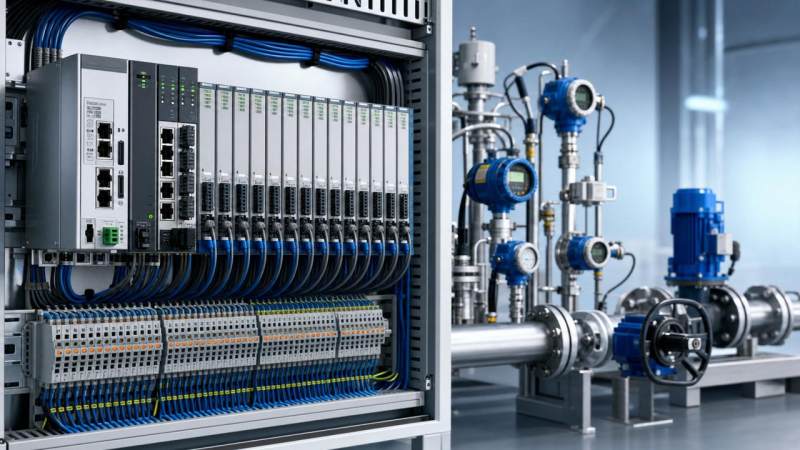
A Practical Scenario Comparison for Technical Evaluators
The table below helps map common business scenarios to the most relevant industrial controller evaluation points. This approach is useful during pre-selection, bid comparison, or design review.
How Requirements Change Across Different Process Automation Scenarios
A high-quality industrial controller is not defined by having the most features. It is defined by having the right features for the target environment. Technical evaluators should review at least the following scenario-sensitive dimensions.
Control Performance and Response Time
Fast packaging equipment, batching machines, and synchronized material transport require low latency and predictable scan cycles. By contrast, slower utility systems may tolerate longer scans but demand stronger fault tolerance. If response speed is over-specified, cost rises without clear value. If under-specified, process stability deteriorates under load.
I/O Structure and Signal Type
An industrial controller used in instrumentation-heavy environments often needs a large mix of analog inputs, analog outputs, digital points, and special modules for RTD, thermocouple, pulse, or high-speed counting. Facilities relying on flowmeters, analyzers, transmitters, and level instruments should verify signal resolution, isolation, and anti-interference performance, not just point count.
Communication and System Integration
In modern automation projects, communication support can determine whether an industrial controller adds value or creates integration friction. Some sites need compatibility with older Modbus RTU devices, while others expect OPC UA, MQTT, or cloud-ready interfaces for digital transformation initiatives. A controller that fits current I/O needs but lacks future connectivity may shorten the useful life of the overall system.
Environmental Durability
Harsh locations may involve dust, vibration, temperature swings, moisture, or electrical noise. In these cases, an industrial controller should be reviewed for enclosure requirements, EMC performance, shock resistance, and operating temperature range. This is especially important in outdoor utility cabinets, construction engineering systems, and industrial online monitoring stations.
Reliability, Safety, and Maintenance Strategy
Some applications can accept a short stop for maintenance. Others cannot. In critical processes, technical evaluators should consider watchdog functions, memory retention, redundant architecture, diagnostics, spare part availability, and lifecycle support. Stable process automation depends not only on startup success, but on sustainable maintenance over years of operation.
Scenario-Based Recommendations for Choosing the Right Industrial Controller
A structured selection path can reduce technical risk and improve procurement quality. The following scenario-based recommendations are especially relevant for evaluation teams.
If the Site Is Instrumentation-Intensive
Prioritize analog stability, signal resolution, isolation quality, and compatibility with common field instruments. The industrial controller should also support clear diagnostics for sensor faults, communication errors, and calibration-related deviations. This matters in process plants, testing facilities, and environmental monitoring systems where measurement quality directly affects control quality.
If the Site Is Expanding or Digitizing
Choose an industrial controller with modular I/O expansion, scalable software licensing, and support for modern communication protocols. Digital transformation projects often evolve from local machine control to plant-wide visibility, remote service, and data analytics. A controller with only basic local logic may become a bottleneck.
If the Process Is Critical and Downtime Is Expensive
Give priority to proven reliability, redundancy options, secure firmware management, and strong vendor support. In energy, utility, and continuous manufacturing settings, the best industrial controller is often the one with fewer surprises during abnormal conditions, not simply the one with the broadest feature list.
Common Misjudgments That Lead to Poor Controller Selection
Many selection problems come from evaluating an industrial controller in isolation rather than in process context. Several mistakes appear repeatedly across industries.
- Choosing based only on I/O quantity while ignoring analog quality, scan determinism, or protocol fit.
- Assuming all industrial controllers handle harsh environments equally well.
- Overlooking maintenance access, spare parts strategy, and software support lifecycle.
- Selecting a low-cost unit that cannot integrate smoothly with existing instrumentation, SCADA, or historian systems.
- Underestimating future expansion needs, especially when digital monitoring or remote management is expected.
For technical evaluators, avoiding these errors is often more important than identifying a perfect specification sheet. Stable process automation is achieved when the industrial controller fits the workflow, data path, environmental conditions, and operational risk profile of the site.
Questions Technical Evaluators Should Ask Before Final Approval
Before final selection, decision teams should confirm several practical points with suppliers, integrators, or internal engineering stakeholders:
- What exact field devices, signal types, and communication protocols must the industrial controller support on day one?
- How will the controller behave under power disturbance, network interruption, or sensor failure?
- Can the platform scale to additional skids, lines, remote stations, or analytics requirements?
- What diagnostics, remote access, and lifecycle support tools are available for long-term maintenance?
- Is the solution aligned with the facility’s cybersecurity, documentation, and validation requirements?
Conclusion: Match the Industrial Controller to the Real Operating Scenario
The most effective way to choose an industrial controller is to start with the application scenario, not the product catalog. Stable process automation depends on aligning control capability with actual operating demands, whether the goal is continuous process reliability, high-speed machine coordination, remote monitoring, or instrumentation-rich data handling. For technical evaluators in the instrumentation and automation field, the best decision framework is scenario-based: define the process, map the risks, verify integration needs, and assess long-term maintainability.
If you are comparing options for a new project or retrofit, begin by documenting your specific control environment, signal architecture, communication requirements, and uptime expectations. That approach will make it much easier to identify the industrial controller that delivers reliable value today while supporting future automation and digital growth.
Recommended for You
 How to verify accuracy claims for industrial quality analyzersVerify accuracy claims for industrial quality analyzers with calibration checks, independent testing, and clear acceptance criteria. Learn how to reduce risk and buy with confidence.
 How to calculate cooling loads for an industrial analyzer shelterSize industrial analyzer shelter cooling with confidence. Learn to calculate equipment heat, solar gains, and ventilation loads, then select HVAC capacity for reliable analyzer performance.
 Industrial Safety vs. Emission Monitoring: What Are the Differences?What are the main differences between industrial safety and emission monitoring? Compare goals, sensors, response times, and compliance needs to choose the right systems for your facility.
 Is Remote Monitoring Worth the Cost for Small Emission Sources?Is it worth investing in remote monitoring for small emission sources? Compare costs, compliance needs, and potential savings to choose the right solution for your operation.
 How Do You Handle Analyzer Failure During an Environmental Audit?Learn how to handle analyzer failure during environmental compliance audit procedures. Protect evidence, verify data, and restore monitoring with this practical response guide.
 Do VOC Monitors Require Explosion-Proof Certification?Does VOC monitoring require explosion-proof certification? Learn when approval is needed, compare ATEX and IECEx, and choose the right monitor for your site.
 How sample conditioning affects accuracy in petrochemical analyzersImprove accuracy in petrochemical analyzers with smarter sample conditioning. Discover how phase control, filtration, and transport design prevent bias and deliver reliable process data.
 How to troubleshoot sensor drift in industrial gas detectorsIndustrial gas detectors showing sensor drift? Learn how to verify calibration gas, identify root causes, and determine when sensor replacement is needed for reliable monitoring.
 How to judge whether a competitive price reflects real valueCompetitive Price: learn how to compare scope, compliance, performance, and lifecycle costs to identify real value, reduce risk, and make smarter purchasing decisions.
 When custom gas analysis is the right fit for complex process streamsCustom gas analysis for complex process streams: learn when tailored sampling, interference control, and reliable measurement design deliver confident decisions.
 When does a laser gas analyzer meet stack emissions monitoring needs?Laser gas analyzer for stack emissions: learn when it delivers fast, reliable data, how to assess installation risks, and what to verify for CEMS compliance.
 How to select a hazardous gas analyzer for confined spacesHazardous gas analyzer selection for confined spaces: compare sensors, sampling, certifications, alarms, and maintenance to protect workers and choose with confidence.
 When is a single gas analyzer sufficient for workplace safety monitoring?Discover when a single gas analyzer delivers reliable workplace safety monitoring, and learn the key limits, calibration needs, and risks that require broader detection.
 How to choose an ambient gas analyzer for low-level leak detectionAmbient gas analyzer selection for low-level leak detection: compare sensitivity, cross-sensitivity, sampling design, alarms, and calibration for reliable site performance.
 How to tell when an oxygen sensor needs replacementOxygen sensor replacement signs explained: learn how live data, fault codes, wiring checks, and exhaust inspections pinpoint the real issue before you buy.
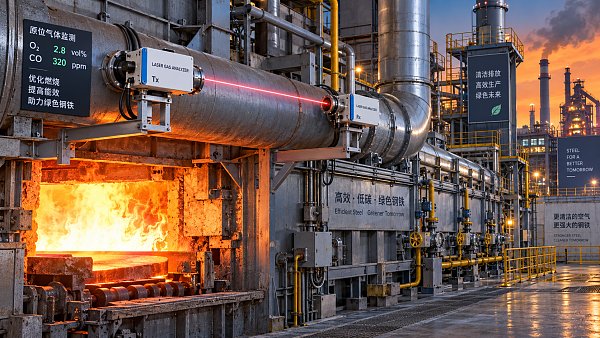
 How laser gas analyzers improve combustion control in steel furnacesLaser gas analyzer for steel industry applications delivers fast in-situ O₂ and CO data to optimize furnace combustion, cut fuel waste, and improve steel heating stability.
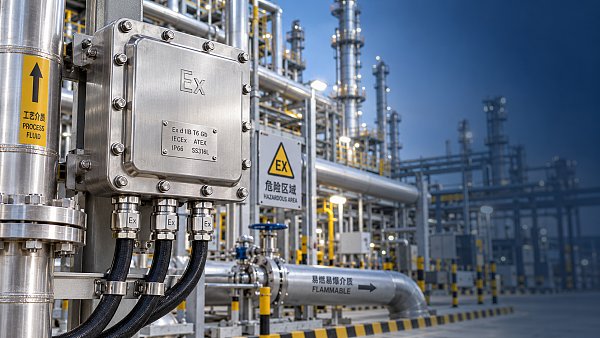
 How to verify whether explosion proof equipment meets site requirementsExplosion proof equipment verification made practical: match zones, gas or dust groups, temperature classes, certificates, and installation conditions for confident compliance.
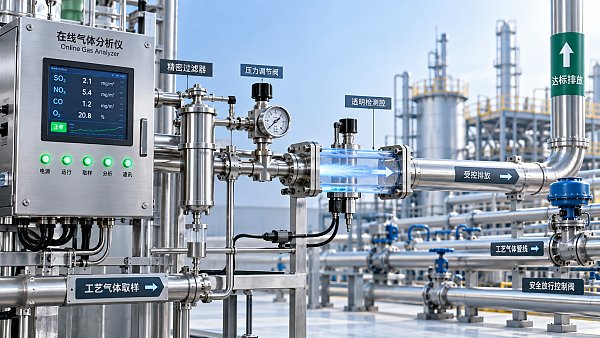
 How industrial gas analysis helps detect contamination before releaseIndustrial Gas Analysis helps detect moisture, oil, oxygen, and toxic contaminants before release—protecting processes, ensuring compliance, and reducing costly risks.
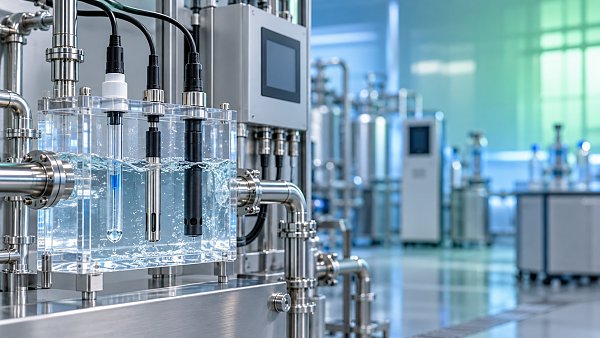
 When is electrochemistry detection the right choice for water analysis?Electrochemistry detection for water analysis: learn when fast, reliable monitoring of ions, chlorine, pH, and more delivers actionable results.
 How industrial standards reduce quality risks in supplier selectionIndustrial Standard guidance helps quality and safety managers reduce supplier risks, verify compliance, strengthen traceability, and build resilient instrumentation supply chains.
 When does a multi-component system reduce installation complexity?Multi component systems reduce installation complexity when they eliminate field interfaces, streamline commissioning, and provide proven compatibility. Learn how to assess total cost and supplier accountability.
 How to size an industrial control shelter for outdoor equipmentIndustrial control shelter sizing guide: optimize layout, HVAC, access, safety, and expansion space for reliable outdoor equipment operations.
 How flue analysis helps verify combustion efficiencyFlue analysis verifies combustion efficiency by assessing O2, CO, CO2, and stack temperature to identify excess air, incomplete combustion, and heat losses.
 How to select industrial gas detectors for confined spacesIndustrial gas detectors for confined spaces: learn how to match sensors, sampling methods, alarms, and certifications to real atmospheric hazards.
 When does a laser oxygen analyzer outperform zirconia sensors?Laser oxygen analyzer vs. zirconia sensors: compare speed, selectivity, maintenance, gas chemistry, and installation needs to choose the right oxygen measurement solution.
 How to select a percent range analyzer for process measurementsPercent range analyzer selection made practical: compare accuracy, sample systems, calibration, gas matrix, integration, and lifecycle cost for reliable process measurements.
 How explosion proof analysis verifies safe equipment for hazardous areasExplosion proof analysis verifies hazardous-area equipment by matching certifications, temperature ratings, installation details, and inspection controls for safer compliance.
 When does fixed gas detection need point sensors instead of open-path monitoring?Fixed gas detection: discover when point sensors outperform open-path monitoring for predictable leaks, enclosed zones, local alarms, and safer design decisions.
 How to choose industrial metrology systems for tight-tolerance partsIndustrial metrology guide for tight-tolerance parts: compare CMMs, optical scanners, gauges, uncertainty, workflow, and traceable inspection strategies.
 How process metrology reduces measurement variation in productionProcess metrology reduces production measurement variation by improving traceability, uncertainty control, calibration, and reliable quality decisions.
 How to select an industrial monitoring analyzer for harsh environmentsIndustrial monitoring analyzer selection for harsh environments: evaluate sampling, durability, hazardous-area compliance, accuracy, maintenance, and data reliability.
 How calibration intervals affect test and measurement equipment accuracyTest and measurement equipment calibration intervals directly affect accuracy, risk, compliance, and uptime. Learn how to set evidence-based schedules that protect critical decisions.
Search Categories
Search Categories
- Smart Meters & Power Quality
- Transformer Gas Analyzers
- BESS Thermal Runaway Detectors
- Energy, Power & Smart Grid Monitoring
- Optical Profilers & CMM
- Ultrasonic & X-Ray NDT
- Calibration Standards
- Precision Metrology & NDT
- Water Quality Analyzers
- CEMS & VOCs Monitors
- Price Trends
- Import & Export Updates
- Market Trends
- Industry News
- Industry Insights
Latest Article
- How to verify accuracy claims for industrial quality analyzersVerify accuracy claims for industrial quality analyzers with calibration checks, independent testing, and clear acceptance criteria. Learn how to reduce risk and buy with confidence.Posted by:
- How to calculate cooling loads for an industrial analyzer shelterSize industrial analyzer shelter cooling with confidence. Learn to calculate equipment heat, solar gains, and ventilation loads, then select HVAC capacity for reliable analyzer performance.Posted by:
- Industrial Safety vs. Emission Monitoring: What Are the Differences?What are the main differences between industrial safety and emission monitoring? Compare goals, sensors, response times, and compliance needs to choose the right systems for your facility.Posted by:
Please give us a message
