
Thermal Conductivity Detector Price Shifts and Supply Outlook


Thermal conductivity detector price movements are becoming a key consideration for business evaluators tracking instrumentation investment, procurement timing, and supplier risk. As demand from laboratory analysis, industrial monitoring, and process control continues to evolve, understanding the cost drivers, supply dynamics, and market signals behind the thermal conductivity detector market can support more accurate budgeting and better sourcing decisions.
For most business evaluators, the core search intent behind thermal conductivity detector pricing is not simply to find a catalog number. It is to understand whether current prices are temporary or structural, what is driving supplier quotations, how supply conditions may affect delivery and total cost, and when it makes financial sense to buy, delay, or qualify alternatives. The most useful answer, therefore, combines price logic, supply outlook, procurement risk, and practical evaluation criteria.
What Business Evaluators Need to Know First About Thermal Conductivity Detector Pricing
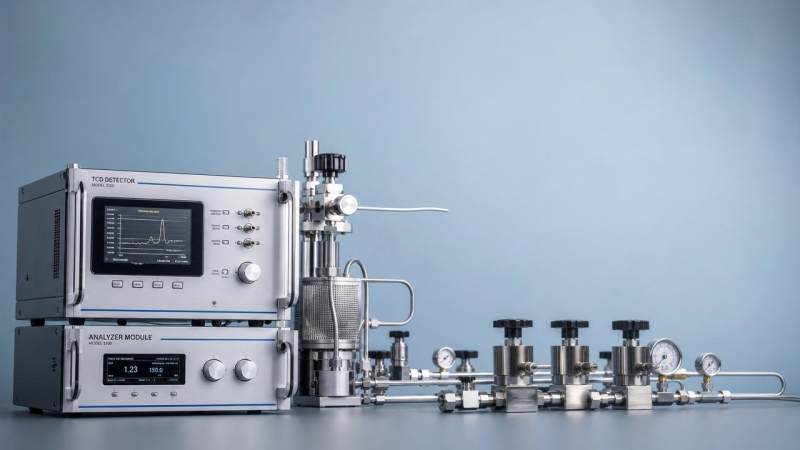
The short answer is that thermal conductivity detector prices are shifting because of a mix of component costs, manufacturing complexity, calibration requirements, supplier positioning, and demand from both laboratory and industrial users. In many cases, the quoted detector price is only one part of the investment. Integration, certification, maintenance, shipping conditions, lead time risk, and after-sales support can materially change the real procurement cost.
For buyers comparing options, the key issue is not whether one thermal conductivity detector is cheaper than another on paper. The key issue is whether the lower upfront price comes with trade-offs in sensitivity stability, service availability, spare parts continuity, or installation compatibility. In a market where downtime and qualification delays can be expensive, purchase decisions should be based on total business impact rather than unit price alone.
This is especially important in the broader instrumentation industry, where procurement decisions increasingly support automation upgrades, digital monitoring strategies, and compliance requirements. A detector that fits the process, supports repeatable analysis, and can be delivered on schedule often creates more value than a lower-priced unit that introduces uncertainty into project timelines.
Why Thermal Conductivity Detector Prices Move
Several cost layers influence thermal conductivity detector pricing. The first is materials and core component sourcing. Detectors rely on precisely manufactured sensing elements, stable housings, electronics, and in some configurations, high-grade flow path components. Even small changes in metals pricing, semiconductor availability, or machining costs can affect supplier quotations, particularly for lower-volume specialized instruments.
The second driver is manufacturing and calibration intensity. Thermal conductivity detectors are not commodity electronics in the ordinary sense. Their performance depends on thermal response consistency, mechanical tolerances, and reliable calibration. Suppliers with stronger quality systems, tighter testing procedures, and more documented traceability tend to carry higher cost structures, which often shows up in final pricing.
A third factor is application segmentation. A thermal conductivity detector intended for standard laboratory use may differ significantly from one designed for continuous industrial monitoring, hazardous area deployment, or integration into process analyzers. Environmental resistance, certification, communication features, and long-term operating stability all push prices upward when the application becomes more demanding.
Brand positioning also matters. Established suppliers frequently price at a premium because they offer validation history, global service networks, and lower perceived procurement risk. Newer or regional suppliers may quote more aggressively to win share, but buyers should verify documentation quality, maintenance responsiveness, and replacement part continuity before assuming the lower offer is better value.
How Supply Conditions Are Shaping the Market Outlook
From a supply perspective, the thermal conductivity detector market is influenced by broader instrumentation trends. Demand is being supported by laboratory modernization, environmental analysis requirements, industrial process optimization, and the continued expansion of analytical capabilities in sectors such as energy, chemicals, and advanced manufacturing. This does not always create dramatic shortages, but it can tighten availability for certain configurations.
Lead times are often the most important supply signal. Even when list prices appear stable, actual procurement conditions may be changing if suppliers extend delivery windows, limit customization, or prioritize strategic accounts. For business evaluators, a stable quote with a longer lead time can be just as meaningful as an outright price increase because it affects project execution and working capital planning.
Regional supply concentration is another issue. If a buyer depends heavily on one manufacturing geography or one distributor channel, disruptions from logistics bottlenecks, trade policy shifts, or production interruptions can quickly change the sourcing picture. In specialized instrumentation, dual sourcing is not always simple, especially when software compatibility, mounting standards, or calibration methods vary across suppliers.
Looking ahead, the supply outlook is likely to remain mixed rather than uniformly tight or relaxed. Standardized models may see more competitive pricing as suppliers seek volume, while application-specific or certified units may continue to face firmer pricing due to lower production scale and higher compliance burdens. Buyers should expect selective volatility rather than one single market trend.
What Usually Matters More Than the Quoted Unit Price
For business evaluators, the most common mistake is comparing detector prices without a structured total cost framework. The real commercial question is how much the full solution will cost over its useful life and how much operational risk it adds or removes. This includes installation effort, validation time, operator training, replacement frequency, service contracts, and unplanned downtime exposure.
If a thermal conductivity detector is part of a larger analyzer or process control chain, compatibility costs can outweigh the detector price itself. An apparently lower-priced option may require adapters, signal conversion, software changes, or requalification work. Those hidden costs can quickly erase any initial savings and may also create schedule delays that affect production or project milestones.
Maintenance economics are equally important. Evaluators should ask whether routine service can be done in-house, whether spare parts are stocked locally, and how long repair turnaround typically takes. In critical monitoring environments, the ability to restore operation quickly can be worth far more than a modest price discount at the time of purchase.
Another often overlooked issue is performance fit. Over-specifying a detector can inflate cost without creating usable business value, but under-specifying can create recurring instability, inaccurate readings, or frequent replacement. The best-value purchase is usually the one that meets process requirements with enough margin for reliability, but without unnecessary premium features.
How to Evaluate Supplier Quotes More Intelligently
When reviewing thermal conductivity detector quotations, evaluators should go beyond the headline figure and standardize comparison points. A useful quote review checklist includes technical scope, calibration method, operating range, environmental rating, expected service life, warranty terms, lead time commitment, spare part availability, and support response expectations. Without these elements, price comparisons are incomplete.
It is also wise to separate one-time project costs from recurring operating costs. Procurement teams often focus on capital expenditure approval, while operations teams later absorb maintenance and replacement costs. A disciplined business evaluation should combine both perspectives. This is particularly relevant in instrumentation projects where a low initial bid can shift costs into service or consumables later.
Supplier credibility should be assessed in practical terms. Ask for references in similar applications, evidence of stable production capacity, and details on product change management. If the supplier redesigns key components or changes production sources, will customers be informed? In regulated or quality-sensitive settings, such changes can have significant downstream effects.
Negotiation strategy matters as well. Rather than pressing only for a lower detector price, buyers may achieve better value through bundled calibration services, extended warranty coverage, committed spare stock, or firmer delivery schedules. These terms often reduce business risk more effectively than a small discount on the equipment itself.
When to Buy, When to Wait, and When to Qualify Alternatives
If a project has fixed commissioning dates or strict compliance milestones, waiting for a slightly better price is usually risky unless supply conditions are clearly improving. In specialized instrumentation, a few weeks of lead time slippage can create far greater costs than a moderate price premium. For time-sensitive projects, procurement certainty often deserves priority.
Waiting can make sense when demand is softening, when multiple suppliers are actively competing for standard configurations, or when the current quote reflects temporary logistics or material spikes rather than long-term fundamentals. However, this approach works best when the buyer has flexibility in implementation timing and clear visibility into comparable alternatives.
Qualifying alternatives is often the strongest strategy in uncertain supply conditions. Even if the preferred supplier remains the final choice, having a technically reviewed second option improves negotiating leverage and reduces concentration risk. For business evaluators, alternative qualification is not just a sourcing tactic; it is a resilience measure.
That said, not all substitutions are commercially neutral. Any alternative thermal conductivity detector should be checked for signal compatibility, mounting dimensions, analytical performance, maintenance procedures, and documentation adequacy. A backup supplier only adds value if it can be deployed without creating major technical or regulatory complications.
Key Market Signals to Monitor Over the Next Procurement Cycle
Business evaluators should track a small set of practical indicators rather than trying to predict the entire instrumentation market. First, monitor average quoted lead times from preferred suppliers and distributors. Changes here often appear before visible price adjustments. Second, watch whether suppliers are reducing validity periods on quotations, which can indicate uncertainty in cost inputs.
Third, pay attention to the availability of spare parts and calibration support. A market can appear stable at the new-equipment level while service capacity becomes constrained. Fourth, monitor major end-use industries that influence detector demand, such as petrochemical analysis, laboratory expansion, gas analysis, and industrial process automation. A shift in these sectors can tighten or loosen supply faster than general economic indicators suggest.
It is also useful to track supplier investment behavior. Vendors that are expanding regional support, increasing production capacity, or improving modular product designs may become more competitive over time. By contrast, suppliers that rely on long, opaque delivery chains or limited service infrastructure may become more vulnerable to disruption, even if current pricing looks attractive.
Finally, procurement teams should review internal consumption and replacement patterns. Understanding how often detectors are replaced, repaired, or upgraded within the organization creates a stronger basis for timing purchases and negotiating framework agreements. Internal data is often the most underused pricing tool in instrumentation sourcing.
A Practical Decision Framework for Business Evaluation Teams
A useful way to assess a thermal conductivity detector purchase is to score each option across five dimensions: price competitiveness, supply reliability, technical fit, service support, and life-cycle cost. This keeps the evaluation aligned with commercial reality and prevents the decision from being distorted by one single factor, whether that factor is budget pressure or brand preference.
For example, a supplier with a medium price but excellent lead time visibility, strong field support, and proven application fit may rank higher than the lowest bidder. This is especially true in environments where measurement continuity affects production output, product quality, or regulatory performance. In such cases, business value is created by dependable operation, not simply by reducing purchase price.
Teams should also assign a risk level to each option. If an attractive quote depends on uncertain shipping routes, limited service personnel, or nonstandard components, that risk should be priced into the decision. A disciplined evaluator treats uncertainty as a cost factor, even when it does not appear directly on the supplier quotation.
In many organizations, the best procurement outcomes happen when finance, engineering, operations, and sourcing all contribute to the decision. Thermal conductivity detector purchases may seem narrow in scope, but their downstream effects can reach maintenance budgets, production schedules, and quality systems. Cross-functional evaluation usually produces a more resilient choice.
Conclusion: Price Alone Is Not the Story
Thermal conductivity detector price shifts should be understood as part of a broader sourcing and risk picture. For business evaluators, the main takeaway is clear: current pricing is shaped by component availability, calibration intensity, application complexity, supplier strategy, and regional supply conditions. Because of this, the cheapest quote is not automatically the best economic decision.
The most effective approach is to evaluate thermal conductivity detector options through total cost, delivery confidence, technical suitability, and service resilience. Buyers who monitor lead times, validate supplier capability, and qualify alternatives are better positioned to manage both budget and operational risk. In an instrumentation market where reliability and timing matter, informed sourcing decisions can protect value far beyond the initial purchase price.
Recommended for You
 How to verify accuracy claims for industrial quality analyzersVerify accuracy claims for industrial quality analyzers with calibration checks, independent testing, and clear acceptance criteria. Learn how to reduce risk and buy with confidence.
 How to calculate cooling loads for an industrial analyzer shelterSize industrial analyzer shelter cooling with confidence. Learn to calculate equipment heat, solar gains, and ventilation loads, then select HVAC capacity for reliable analyzer performance.
 Industrial Safety vs. Emission Monitoring: What Are the Differences?What are the main differences between industrial safety and emission monitoring? Compare goals, sensors, response times, and compliance needs to choose the right systems for your facility.
 Is Remote Monitoring Worth the Cost for Small Emission Sources?Is it worth investing in remote monitoring for small emission sources? Compare costs, compliance needs, and potential savings to choose the right solution for your operation.
 How Do You Handle Analyzer Failure During an Environmental Audit?Learn how to handle analyzer failure during environmental compliance audit procedures. Protect evidence, verify data, and restore monitoring with this practical response guide.
 Do VOC Monitors Require Explosion-Proof Certification?Does VOC monitoring require explosion-proof certification? Learn when approval is needed, compare ATEX and IECEx, and choose the right monitor for your site.
 How sample conditioning affects accuracy in petrochemical analyzersImprove accuracy in petrochemical analyzers with smarter sample conditioning. Discover how phase control, filtration, and transport design prevent bias and deliver reliable process data.
 How to troubleshoot sensor drift in industrial gas detectorsIndustrial gas detectors showing sensor drift? Learn how to verify calibration gas, identify root causes, and determine when sensor replacement is needed for reliable monitoring.
 How to judge whether a competitive price reflects real valueCompetitive Price: learn how to compare scope, compliance, performance, and lifecycle costs to identify real value, reduce risk, and make smarter purchasing decisions.
 When custom gas analysis is the right fit for complex process streamsCustom gas analysis for complex process streams: learn when tailored sampling, interference control, and reliable measurement design deliver confident decisions.
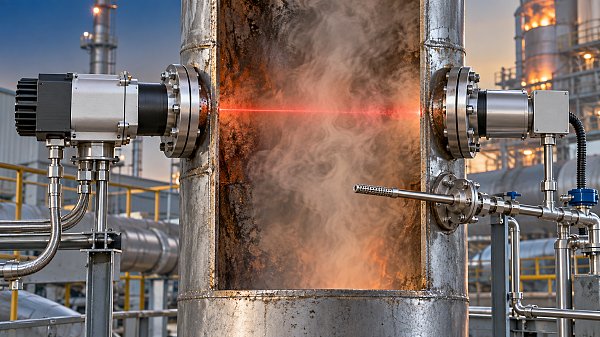
 When does a laser gas analyzer meet stack emissions monitoring needs?Laser gas analyzer for stack emissions: learn when it delivers fast, reliable data, how to assess installation risks, and what to verify for CEMS compliance.
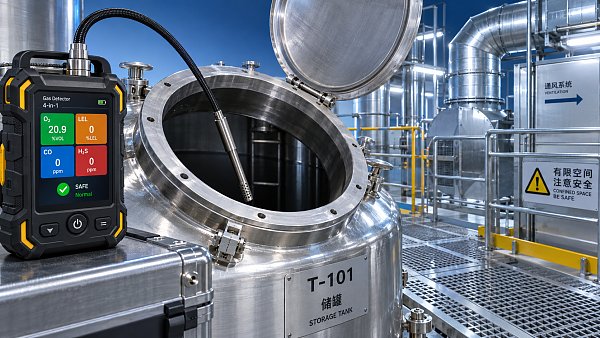
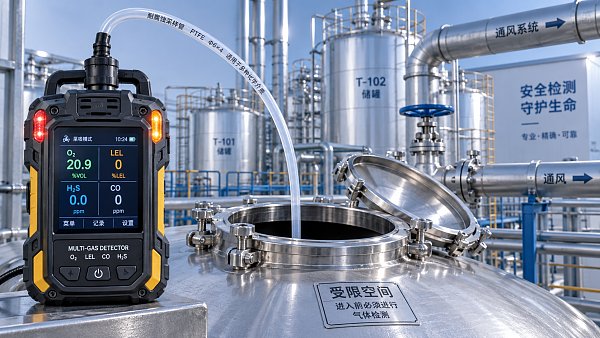
 How to select a hazardous gas analyzer for confined spacesHazardous gas analyzer selection for confined spaces: compare sensors, sampling, certifications, alarms, and maintenance to protect workers and choose with confidence.
 When is a single gas analyzer sufficient for workplace safety monitoring?Discover when a single gas analyzer delivers reliable workplace safety monitoring, and learn the key limits, calibration needs, and risks that require broader detection.
 How to choose an ambient gas analyzer for low-level leak detectionAmbient gas analyzer selection for low-level leak detection: compare sensitivity, cross-sensitivity, sampling design, alarms, and calibration for reliable site performance.
 How to tell when an oxygen sensor needs replacementOxygen sensor replacement signs explained: learn how live data, fault codes, wiring checks, and exhaust inspections pinpoint the real issue before you buy.
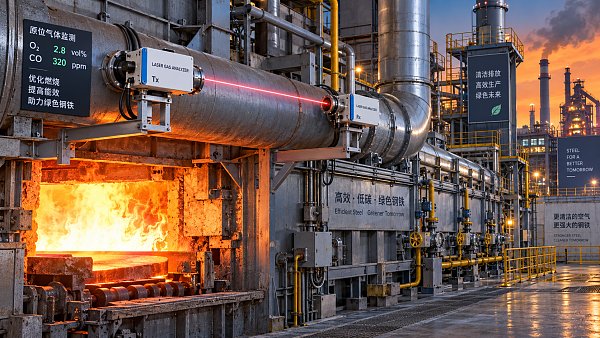
 How laser gas analyzers improve combustion control in steel furnacesLaser gas analyzer for steel industry applications delivers fast in-situ O₂ and CO data to optimize furnace combustion, cut fuel waste, and improve steel heating stability.
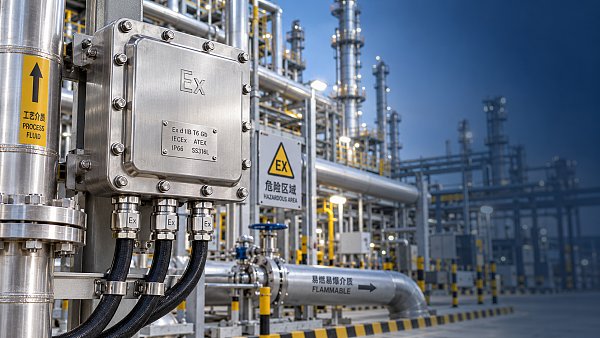
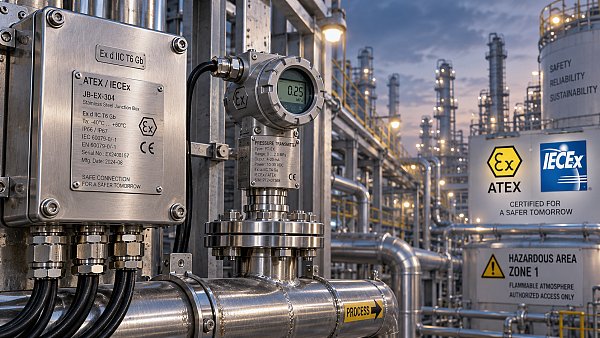
 How to verify whether explosion proof equipment meets site requirementsExplosion proof equipment verification made practical: match zones, gas or dust groups, temperature classes, certificates, and installation conditions for confident compliance.
 How industrial gas analysis helps detect contamination before releaseIndustrial Gas Analysis helps detect moisture, oil, oxygen, and toxic contaminants before release—protecting processes, ensuring compliance, and reducing costly risks.
 When is electrochemistry detection the right choice for water analysis?Electrochemistry detection for water analysis: learn when fast, reliable monitoring of ions, chlorine, pH, and more delivers actionable results.
 How industrial standards reduce quality risks in supplier selectionIndustrial Standard guidance helps quality and safety managers reduce supplier risks, verify compliance, strengthen traceability, and build resilient instrumentation supply chains.
 When does a multi-component system reduce installation complexity?Multi component systems reduce installation complexity when they eliminate field interfaces, streamline commissioning, and provide proven compatibility. Learn how to assess total cost and supplier accountability.
 How to size an industrial control shelter for outdoor equipmentIndustrial control shelter sizing guide: optimize layout, HVAC, access, safety, and expansion space for reliable outdoor equipment operations.
 How flue analysis helps verify combustion efficiencyFlue analysis verifies combustion efficiency by assessing O2, CO, CO2, and stack temperature to identify excess air, incomplete combustion, and heat losses.
 How to select industrial gas detectors for confined spacesIndustrial gas detectors for confined spaces: learn how to match sensors, sampling methods, alarms, and certifications to real atmospheric hazards.
 When does a laser oxygen analyzer outperform zirconia sensors?Laser oxygen analyzer vs. zirconia sensors: compare speed, selectivity, maintenance, gas chemistry, and installation needs to choose the right oxygen measurement solution.
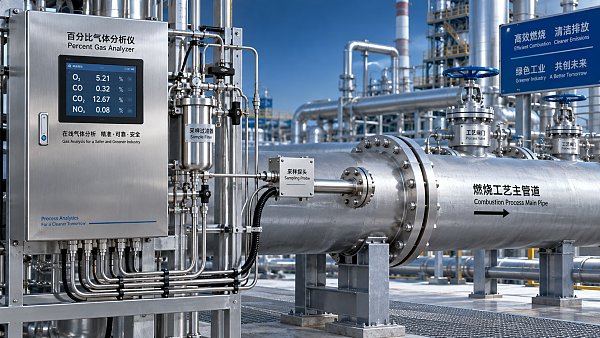
 How to select a percent range analyzer for process measurementsPercent range analyzer selection made practical: compare accuracy, sample systems, calibration, gas matrix, integration, and lifecycle cost for reliable process measurements.
 How explosion proof analysis verifies safe equipment for hazardous areasExplosion proof analysis verifies hazardous-area equipment by matching certifications, temperature ratings, installation details, and inspection controls for safer compliance.
 When does fixed gas detection need point sensors instead of open-path monitoring?Fixed gas detection: discover when point sensors outperform open-path monitoring for predictable leaks, enclosed zones, local alarms, and safer design decisions.
 How to choose industrial metrology systems for tight-tolerance partsIndustrial metrology guide for tight-tolerance parts: compare CMMs, optical scanners, gauges, uncertainty, workflow, and traceable inspection strategies.
 How process metrology reduces measurement variation in productionProcess metrology reduces production measurement variation by improving traceability, uncertainty control, calibration, and reliable quality decisions.
 How to select an industrial monitoring analyzer for harsh environmentsIndustrial monitoring analyzer selection for harsh environments: evaluate sampling, durability, hazardous-area compliance, accuracy, maintenance, and data reliability.
 How calibration intervals affect test and measurement equipment accuracyTest and measurement equipment calibration intervals directly affect accuracy, risk, compliance, and uptime. Learn how to set evidence-based schedules that protect critical decisions.










Search Categories
Search Categories
- Smart Meters & Power Quality
- Transformer Gas Analyzers
- BESS Thermal Runaway Detectors
- Energy, Power & Smart Grid Monitoring
- Optical Profilers & CMM
- Ultrasonic & X-Ray NDT
- Calibration Standards
- Precision Metrology & NDT
- Water Quality Analyzers
- CEMS & VOCs Monitors
- Price Trends
- Import & Export Updates
- Market Trends
- Industry News
- Industry Insights
Latest Article
- How to verify accuracy claims for industrial quality analyzersVerify accuracy claims for industrial quality analyzers with calibration checks, independent testing, and clear acceptance criteria. Learn how to reduce risk and buy with confidence.Posted by:
- How to calculate cooling loads for an industrial analyzer shelterSize industrial analyzer shelter cooling with confidence. Learn to calculate equipment heat, solar gains, and ventilation loads, then select HVAC capacity for reliable analyzer performance.Posted by:
- Industrial Safety vs. Emission Monitoring: What Are the Differences?What are the main differences between industrial safety and emission monitoring? Compare goals, sensors, response times, and compliance needs to choose the right systems for your facility.Posted by:
Please give us a message
