
Gas Controller Selection Mistakes That Lead to Costly Downtime


Choosing the wrong gas controller can trigger calibration drift, unstable flow, safety risks, and unplanned shutdowns that quickly inflate project costs. For project managers and engineering leaders, understanding the most common selection mistakes is essential to protecting schedules, maintaining compliance, and ensuring reliable system performance. This article outlines the critical factors that help prevent costly downtime from the start.
Why gas controller selection is becoming a higher-stakes decision
Across industrial manufacturing, energy systems, environmental monitoring, laboratory operations, and automated process lines, the role of the gas controller has changed. It is no longer treated as a simple accessory installed late in the project. It is increasingly evaluated as a performance-critical component that affects uptime, data reliability, safety management, and commissioning speed. This shift matters because many downtime events do not begin with catastrophic equipment failure. They begin with a specification mismatch that looked minor during procurement but becomes expensive under real operating conditions.
Several industry signals explain this change. Process systems are becoming more automated, traceability requirements are tighter, and facilities are expected to run with less tolerance for unstable flow, contamination, or manual intervention. At the same time, projects are often executed under compressed delivery schedules. That combination raises the risk of choosing a gas controller based on price, nominal flow range, or supplier familiarity alone, while overlooking application-specific variables such as gas composition, pressure fluctuation, turndown behavior, control response, and communication integration.
For project leaders, the central question is not simply which gas controller to buy. It is how changing operational expectations are exposing old selection habits that no longer work.
The market shift: from basic flow control to uptime-centered specification
One of the clearest trends is that buyers now expect a gas controller to support broader system objectives. In the past, flow delivery within a broad tolerance might have been enough. Today, projects often require stable control during startup, recipe changes, intermittent demand, remote monitoring, and compliance audits. This means specification errors are more visible and more disruptive than before.
In practical terms, a gas controller is being assessed against lifecycle performance rather than just initial function. Can it maintain repeatability across operating shifts? Can it tolerate pressure transients? Will it create drift when the gas temperature changes? Does it match the digital architecture of the control system? Can maintenance teams calibrate it without long production interruptions? These are now project questions, not only engineering details.
This shift is especially important in instrumentation-heavy sectors, where process quality and measurement confidence depend on consistent gas handling. A poorly chosen gas controller may still operate, but it can quietly erode throughput, increase maintenance hours, and create hidden instability that only appears during load changes or audits.
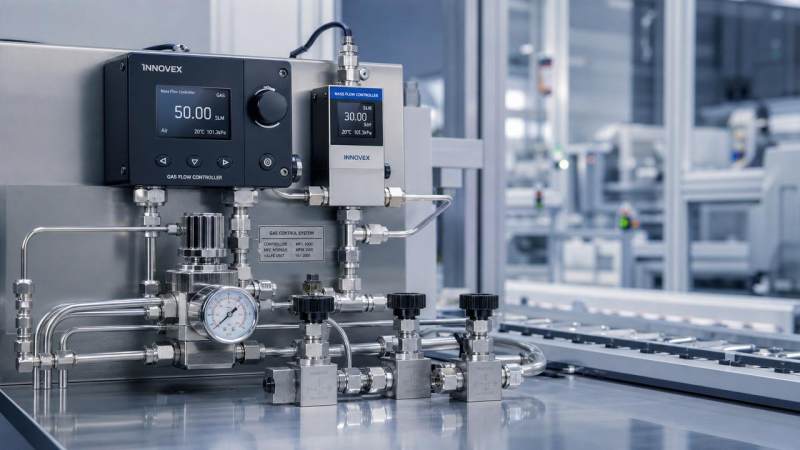
The most common selection mistakes that still cause costly downtime
The mistakes that lead to downtime are not always technical failures. More often, they are decision failures during design review, bidding, or procurement alignment. Below are the most common patterns affecting current projects.
1. Selecting by maximum flow and ignoring real operating range
Many teams choose a gas controller by matching the maximum expected flow. That seems logical, but it often results in poor control during normal operation, which may occur at only a fraction of full scale. If the process spends most of its time at low flow, oversized control hardware can hunt, respond unevenly, or fail to deliver stable repeatability. The result is off-spec process conditions, extra troubleshooting, and avoidable stoppages.
2. Assuming one gas behaves like another
A gas controller that performs well with one gas may not behave the same with another. Density, thermal properties, moisture sensitivity, purity level, and corrosive characteristics all matter. Selection based on a generic air-equivalent assumption remains a frequent source of field problems. In mixed-gas systems or specialty gas applications, this mistake can produce calibration error, unstable control, and compliance concerns.
3. Underestimating inlet pressure variation and downstream process dynamics
A gas controller does not operate in isolation. Compressor cycling, supply manifold changes, valve actions, and downstream backpressure can all affect performance. If selection is based on ideal lab conditions rather than plant reality, the controller may appear adequate on paper but fail under actual pressure swings. This creates nuisance alarms, unstable flow, and frequent operator intervention.
4. Overlooking digital integration and diagnostic visibility
As facilities adopt predictive maintenance and centralized monitoring, a standalone gas controller with limited status feedback becomes a weak point. When teams ignore communication protocols, fault reporting, or trend data access, they reduce their ability to identify drift before it turns into downtime. Recovery takes longer because maintenance teams have less information about what failed and why.
5. Treating maintenance access as a secondary issue
Even a well-specified gas controller can create trouble if it is difficult to isolate, inspect, recalibrate, or replace. In high-uptime environments, maintainability is not optional. Projects that fail to consider service intervals, spare strategy, calibration procedures, and installation access often discover that routine maintenance creates longer shutdowns than expected.
What is driving these mistakes now
The persistence of these mistakes is linked to broader project pressures. First, equipment packages are more integrated than before, so specification gaps are harder to isolate once commissioning begins. Second, procurement teams are often asked to compare technically different offers under schedule pressure. Third, operational teams expect faster ramp-up and fewer post-handover adjustments. Finally, regulatory and quality expectations continue to rise in sectors where gas measurement and control influence safety, environmental performance, or product consistency.
In short, the environment around the gas controller has changed faster than many selection practices. That is why legacy habits now generate disproportionate cost.
Who feels the impact most across a project lifecycle
The consequences of poor gas controller selection are shared across teams, but not equally. Understanding who is affected helps project managers build better decision checkpoints early.
What smarter buyers are now watching before they approve a gas controller
Leading teams are shifting from component comparison to application validation. Instead of asking only whether the gas controller meets a catalog specification, they ask whether it remains stable in the exact duty profile of the project. That means reviewing startup behavior, low-flow stability, gas purity requirements, ambient variation, and the likely pattern of pressure disturbance.
They are also watching data visibility more closely. If the gas controller supports digital diagnostics, alarm signaling, trend outputs, or remote configuration, teams can identify degrading performance earlier. This is becoming more valuable as maintenance resources are stretched and plants seek to reduce unplanned site intervention.
Another important change is cross-functional review. Stronger projects bring process, instrumentation, operations, and procurement stakeholders together before approval. That simple step often exposes hidden assumptions, such as whether the selected gas controller was sized for peak flow only, whether gas composition may change later, or whether calibration can be performed without major interruption.
How to judge gas controller risk before it becomes downtime
For project managers and engineering leads, the best response is to build a short but disciplined decision framework. The goal is not to overcomplicate procurement. It is to force the right questions early enough to avoid expensive corrections later.
- Confirm the real operating envelope, not just the design maximum.
- Verify gas-specific performance data and materials compatibility.
- Review inlet and outlet pressure variation under actual plant conditions.
- Check control response requirements during startup, cycling, and low-flow operation.
- Assess integration with control architecture, diagnostics, and maintenance workflows.
- Plan calibration, replacement access, and spare strategy before installation.
This approach reflects a broader trend in instrumentation projects: selection discipline is moving upstream. More organizations now realize that commissioning is the worst time to discover that the gas controller was technically acceptable but operationally wrong.
Signals worth monitoring over the next project cycle
Looking ahead, several signals should shape future gas controller decisions. One is the steady increase in digital expectations, including remote diagnostics and easier performance trending. Another is the growing demand for flexible systems that can handle changing gas mixes, variable production loads, and tighter process tolerances. A third is the continued emphasis on lifecycle accountability, where vendors are expected to support calibration stability, documentation quality, and maintainability rather than only shipment speed.
These signals suggest that the best gas controller choices will come from teams that treat specification as a risk management activity, not just a purchasing task. The companies most likely to reduce downtime will be those that connect technical selection with project delivery, operating discipline, and future system adaptability.
A practical decision direction for project leaders
If your team wants to avoid costly downtime, begin by reviewing where your current gas controller selection process is still based on outdated assumptions. Are you choosing by nominal flow instead of actual operating behavior? Are you relying on generic compatibility claims? Are digital diagnostics considered optional? Are maintenance and recalibration treated as post-installation issues? Each of these questions reveals whether the project is aligned with current operational realities.
For organizations navigating new builds, upgrades, or automation projects, the next step is not necessarily to buy the most advanced gas controller. It is to choose the one that best fits the application, system dynamics, integration level, and lifecycle demands of the site. If a company wants to better judge how these trends affect its own business, it should confirm five points early: actual flow profile, gas characteristics, pressure behavior, control system interface, and maintenance strategy. Those answers usually reveal whether downtime risk is already built into the specification—or whether it can still be prevented.
Recommended for You
 How to verify accuracy claims for industrial quality analyzersVerify accuracy claims for industrial quality analyzers with calibration checks, independent testing, and clear acceptance criteria. Learn how to reduce risk and buy with confidence.
 How to calculate cooling loads for an industrial analyzer shelterSize industrial analyzer shelter cooling with confidence. Learn to calculate equipment heat, solar gains, and ventilation loads, then select HVAC capacity for reliable analyzer performance.
 Industrial Safety vs. Emission Monitoring: What Are the Differences?What are the main differences between industrial safety and emission monitoring? Compare goals, sensors, response times, and compliance needs to choose the right systems for your facility.
 Is Remote Monitoring Worth the Cost for Small Emission Sources?Is it worth investing in remote monitoring for small emission sources? Compare costs, compliance needs, and potential savings to choose the right solution for your operation.
 How Do You Handle Analyzer Failure During an Environmental Audit?Learn how to handle analyzer failure during environmental compliance audit procedures. Protect evidence, verify data, and restore monitoring with this practical response guide.
 Do VOC Monitors Require Explosion-Proof Certification?Does VOC monitoring require explosion-proof certification? Learn when approval is needed, compare ATEX and IECEx, and choose the right monitor for your site.
 How sample conditioning affects accuracy in petrochemical analyzersImprove accuracy in petrochemical analyzers with smarter sample conditioning. Discover how phase control, filtration, and transport design prevent bias and deliver reliable process data.
 How to troubleshoot sensor drift in industrial gas detectorsIndustrial gas detectors showing sensor drift? Learn how to verify calibration gas, identify root causes, and determine when sensor replacement is needed for reliable monitoring.
 How to judge whether a competitive price reflects real valueCompetitive Price: learn how to compare scope, compliance, performance, and lifecycle costs to identify real value, reduce risk, and make smarter purchasing decisions.
 When custom gas analysis is the right fit for complex process streamsCustom gas analysis for complex process streams: learn when tailored sampling, interference control, and reliable measurement design deliver confident decisions.
 When does a laser gas analyzer meet stack emissions monitoring needs?Laser gas analyzer for stack emissions: learn when it delivers fast, reliable data, how to assess installation risks, and what to verify for CEMS compliance.
 How to select a hazardous gas analyzer for confined spacesHazardous gas analyzer selection for confined spaces: compare sensors, sampling, certifications, alarms, and maintenance to protect workers and choose with confidence.
 When is a single gas analyzer sufficient for workplace safety monitoring?Discover when a single gas analyzer delivers reliable workplace safety monitoring, and learn the key limits, calibration needs, and risks that require broader detection.
 How to choose an ambient gas analyzer for low-level leak detectionAmbient gas analyzer selection for low-level leak detection: compare sensitivity, cross-sensitivity, sampling design, alarms, and calibration for reliable site performance.
 How to tell when an oxygen sensor needs replacementOxygen sensor replacement signs explained: learn how live data, fault codes, wiring checks, and exhaust inspections pinpoint the real issue before you buy.
 How laser gas analyzers improve combustion control in steel furnacesLaser gas analyzer for steel industry applications delivers fast in-situ O₂ and CO data to optimize furnace combustion, cut fuel waste, and improve steel heating stability.
 How to verify whether explosion proof equipment meets site requirementsExplosion proof equipment verification made practical: match zones, gas or dust groups, temperature classes, certificates, and installation conditions for confident compliance.
 How industrial gas analysis helps detect contamination before releaseIndustrial Gas Analysis helps detect moisture, oil, oxygen, and toxic contaminants before release—protecting processes, ensuring compliance, and reducing costly risks.
 When is electrochemistry detection the right choice for water analysis?Electrochemistry detection for water analysis: learn when fast, reliable monitoring of ions, chlorine, pH, and more delivers actionable results.
 How industrial standards reduce quality risks in supplier selectionIndustrial Standard guidance helps quality and safety managers reduce supplier risks, verify compliance, strengthen traceability, and build resilient instrumentation supply chains.
 When does a multi-component system reduce installation complexity?Multi component systems reduce installation complexity when they eliminate field interfaces, streamline commissioning, and provide proven compatibility. Learn how to assess total cost and supplier accountability.
 How to size an industrial control shelter for outdoor equipmentIndustrial control shelter sizing guide: optimize layout, HVAC, access, safety, and expansion space for reliable outdoor equipment operations.
 How flue analysis helps verify combustion efficiencyFlue analysis verifies combustion efficiency by assessing O2, CO, CO2, and stack temperature to identify excess air, incomplete combustion, and heat losses.
 How to select industrial gas detectors for confined spacesIndustrial gas detectors for confined spaces: learn how to match sensors, sampling methods, alarms, and certifications to real atmospheric hazards.
 When does a laser oxygen analyzer outperform zirconia sensors?Laser oxygen analyzer vs. zirconia sensors: compare speed, selectivity, maintenance, gas chemistry, and installation needs to choose the right oxygen measurement solution.
 How to select a percent range analyzer for process measurementsPercent range analyzer selection made practical: compare accuracy, sample systems, calibration, gas matrix, integration, and lifecycle cost for reliable process measurements.
 How explosion proof analysis verifies safe equipment for hazardous areasExplosion proof analysis verifies hazardous-area equipment by matching certifications, temperature ratings, installation details, and inspection controls for safer compliance.
 When does fixed gas detection need point sensors instead of open-path monitoring?Fixed gas detection: discover when point sensors outperform open-path monitoring for predictable leaks, enclosed zones, local alarms, and safer design decisions.
 How to choose industrial metrology systems for tight-tolerance partsIndustrial metrology guide for tight-tolerance parts: compare CMMs, optical scanners, gauges, uncertainty, workflow, and traceable inspection strategies.
 How process metrology reduces measurement variation in productionProcess metrology reduces production measurement variation by improving traceability, uncertainty control, calibration, and reliable quality decisions.
 How to select an industrial monitoring analyzer for harsh environmentsIndustrial monitoring analyzer selection for harsh environments: evaluate sampling, durability, hazardous-area compliance, accuracy, maintenance, and data reliability.
 How calibration intervals affect test and measurement equipment accuracyTest and measurement equipment calibration intervals directly affect accuracy, risk, compliance, and uptime. Learn how to set evidence-based schedules that protect critical decisions.
Search Categories
Search Categories
- Smart Meters & Power Quality
- Transformer Gas Analyzers
- BESS Thermal Runaway Detectors
- Energy, Power & Smart Grid Monitoring
- Optical Profilers & CMM
- Ultrasonic & X-Ray NDT
- Calibration Standards
- Precision Metrology & NDT
- Water Quality Analyzers
- CEMS & VOCs Monitors
- Price Trends
- Import & Export Updates
- Market Trends
- Industry News
- Industry Insights
Latest Article
- How to verify accuracy claims for industrial quality analyzersVerify accuracy claims for industrial quality analyzers with calibration checks, independent testing, and clear acceptance criteria. Learn how to reduce risk and buy with confidence.Posted by:
- How to calculate cooling loads for an industrial analyzer shelterSize industrial analyzer shelter cooling with confidence. Learn to calculate equipment heat, solar gains, and ventilation loads, then select HVAC capacity for reliable analyzer performance.Posted by:
- Industrial Safety vs. Emission Monitoring: What Are the Differences?What are the main differences between industrial safety and emission monitoring? Compare goals, sensors, response times, and compliance needs to choose the right systems for your facility.Posted by:
Please give us a message
