
Electrochemical Detector Accuracy: What Matters in Daily Use


In daily operations, electrochemical detector accuracy depends on more than the sensor itself. Factors such as calibration habits, environmental conditions, response stability, and proper handling all influence whether readings remain reliable over time. For operators who rely on fast, dependable results, understanding these practical variables is essential to improving performance, reducing errors, and maintaining confidence in every measurement.
Why accuracy in daily use is getting more attention
Across industrial manufacturing, environmental monitoring, energy systems, laboratories, and building services, the role of the electrochemical detector is changing. It is no longer used only as a basic warning tool. In many operations, it now supports routine compliance checks, process verification, worker safety decisions, and maintenance scheduling. That shift means operators are being asked to trust detector readings more often and under more demanding conditions.
The trend is clear: users expect higher confidence from portable and fixed gas detection devices, yet daily working conditions remain unpredictable. Temperature swings, humidity changes, cross-sensitivity, storage habits, bump test frequency, and response drift all shape real-world electrochemical detector accuracy. As digital transformation spreads through instrumentation, more facilities also compare detector data over time, making inconsistency easier to notice and harder to ignore.
For operators, this is not just a technical issue. It affects whether a process is paused, whether an alarm is trusted, whether a confined space is entered, and whether records can stand up during internal review or external audit. In other words, the discussion around the electrochemical detector is moving from product specifications to usable accuracy in field conditions.
The most important trend signal: field conditions now matter as much as specifications
A common mistake is to assume that the accuracy stated on a data sheet will remain unchanged in normal use. In reality, the instrumentation industry is seeing a stronger focus on performance under operating conditions rather than performance at the moment of shipment. This change is affecting how companies evaluate electrochemical detector reliability, train staff, and document maintenance.
Several practical signals support this shift. First, end users increasingly ask about calibration intervals, zero stability, and warm-up behavior before they ask about purchase price. Second, maintenance teams are paying more attention to storage, transport shock, and sensor aging. Third, operators want faster response without sacrificing confidence, especially in environments where readings influence immediate action.
This change in focus is important because it reframes accuracy as a system result. The electrochemical detector, the calibration gas, the operator, the environment, and the maintenance routine all contribute to whether the displayed value remains trustworthy.
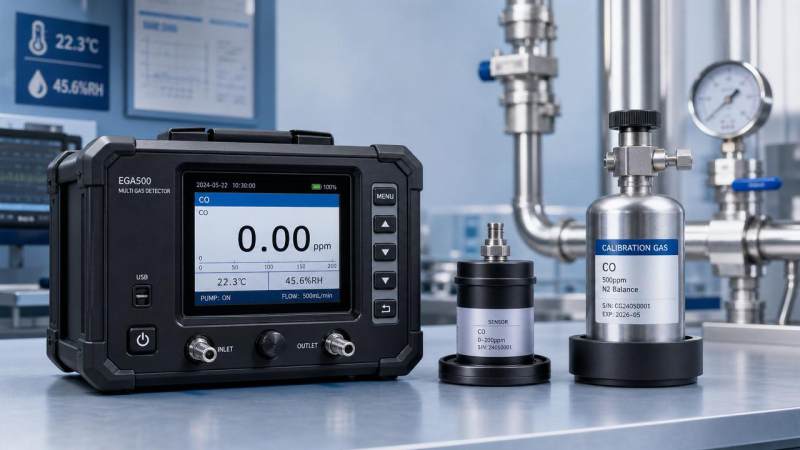
What is driving this change in electrochemical detector expectations
The first driver is operational complexity. Many facilities now run mixed-use spaces, tighter production schedules, and interconnected control systems. In such environments, a small measurement error can create unnecessary shutdowns or, worse, missed hazards. That raises the value of stable electrochemical detector performance in day-to-day use.
The second driver is the broader instrumentation trend toward lifecycle accountability. Buyers increasingly care about how a detector performs after months of use, not only at installation. Questions about sensor life, drift rate, service intervals, and calibration recovery are becoming part of normal evaluation. This is especially relevant in sectors where portable devices are shared across teams or where fixed systems operate continuously.
The third driver is workforce reality. Many operators handle multiple tasks, and not every site has specialists available at all times. A detector that is technically accurate but easily affected by poor storage, skipped bump tests, or rushed zeroing can produce unreliable outcomes. As a result, the market is rewarding equipment and workflows that reduce user error and make electrochemical detector performance easier to validate.
The fourth driver is the growing demand for decision-ready data. In environmental checks, industrial safety, emissions control, and laboratory support, a reading often feeds into a pass-or-fail judgment. That means accuracy is no longer a background quality; it is directly linked to action, documentation, and accountability.
The daily factors that now define real accuracy
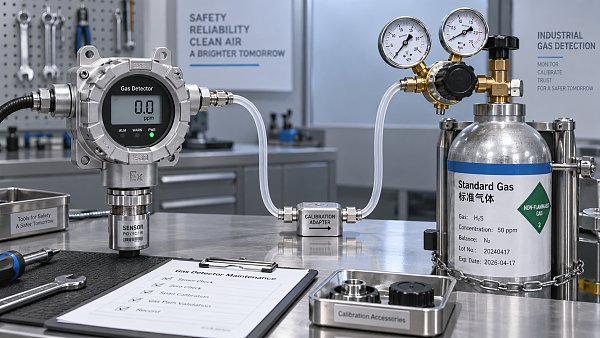
For operators, the key message is simple: real electrochemical detector accuracy is shaped by repeatable habits. Calibration remains central, but it is only one part of the picture. Zero checks, bump tests, exposure history, sensor stabilization time, battery condition, and contamination control all affect what the instrument can deliver on site.
Environmental variation is another major factor. Electrochemical sensors can respond differently when temperature or humidity changes rapidly. In some applications, condensation, dust, or interfering gases can shift the reading even if the instrument appears functional. This matters more today because detectors are being used across broader process areas and outdoor conditions, not just in controlled settings.
Response stability also deserves more attention. Operators often focus on whether the detector eventually reaches a value, but in many workflows, the timing of the response is just as important. Slow recovery, unstable readings, or delayed stabilization can change the decision that is made in the moment. In practice, a detector that responds inconsistently can create as much operational risk as one that is simply out of calibration.
Handling and storage trends are equally important. Facilities that rotate instruments between shifts, vehicles, and work zones may expose devices to shock, vibration, temperature stress, or expired consumables. Over time, these issues can reduce confidence in the electrochemical detector even when the root cause is procedural rather than electronic.
Who feels the impact most
The shift toward field-proven accuracy affects several groups differently. Operators feel it first because they interact with alarms, readings, and pass-fail decisions in real time. Maintenance teams feel it through increased expectations for traceable calibration and fewer unexplained deviations. Supervisors feel it when production speed and safety discipline must be balanced. Procurement teams are also affected because low initial cost can lead to higher support demands later.
In the broader instrumentation industry, this is why selection criteria are becoming more operational. Users want detectors that not only meet specifications but also hold accuracy under realistic routines, varying environments, and frequent handling.
How operators should judge accuracy trends instead of isolated readings
A useful trend-based approach is to stop looking at each reading as a separate event and start looking for patterns. If an electrochemical detector needs more frequent adjustment than before, shows slower stabilization, or reacts differently after transport or storage, those are trend signals. They may point to sensor aging, contamination, environmental mismatch, or process interference.
Operators should also compare behavior across similar tasks. If one unit repeatedly requires longer warm-up or produces borderline values in the same location, the issue may not be random. If readings vary by shift, the cause may be environmental or procedural. This kind of observation is becoming more valuable because many sites now store operational data and can review detector performance over time rather than relying on memory.
Another smart judgment method is to connect accuracy with context. A detector used near solvents, exhaust streams, moisture, or fluctuating temperatures deserves closer attention than one used in a stable indoor area. The same electrochemical detector can appear highly reliable in one application and inconsistent in another, simply because the exposure profile is different.
What good response looks like under current industry conditions
Under today’s conditions, a strong response is not to overreact to every deviation, but to build practical control points. That means setting clear calibration routines, defining when bump tests are mandatory, recording environmental exceptions, and training operators to recognize unstable behavior early. The goal is to create repeatability around the electrochemical detector, not just to correct problems after an alarm or audit finding.
It also helps to separate critical-use scenarios from routine-use scenarios. In higher-risk applications, shorter verification intervals and stricter handling rules may be justified. In lower-risk workflows, the focus may be on consistent daily checks and traceable records. This staged approach reflects a larger industry trend: accuracy management is becoming risk-based rather than one-size-fits-all.
What signals are worth monitoring next
Looking ahead, several signals will shape how electrochemical detector accuracy is managed. One is the continued move toward smarter diagnostics, where instruments provide more feedback on sensor condition, calibration history, and fault trends. Another is the stronger link between detector data and digital reporting systems, which will make performance variation easier to investigate.
There is also a growing expectation that suppliers support usability as much as hardware quality. Clear maintenance guidance, reliable accessories, application-specific setup advice, and operator training are becoming part of the value discussion. This reflects a broader instrumentation market direction: equipment performance is increasingly judged through the quality of the full use cycle.
For everyday users, the practical takeaway is that the electrochemical detector should be evaluated as an operating tool, not only as a purchased device. Accuracy is strongest when technical capability and daily discipline work together.
FAQ on electrochemical detector accuracy in routine work
Why can an electrochemical detector pass calibration but still seem unreliable later?
Because calibration confirms performance at a specific time and condition. Later variation may come from temperature shifts, humidity, contamination, cross-interference, rough handling, or sensor aging. A passing calibration does not remove the need for good daily practice.
What is the most overlooked factor in daily accuracy?
Consistency of operator behavior. Missed bump tests, rushed zeroing, poor storage, and ignoring slow response trends often create more practical accuracy problems than the sensor design itself.
How should operators react to small but repeated reading changes?
Treat them as a trend, not as isolated noise. Check recent calibration history, exposure conditions, sensor age, and any change in use environment. Repeated small shifts often provide an early warning before larger performance issues appear.
Final judgment and action points
The biggest change in the market is that electrochemical detector accuracy is now judged by sustained field performance, not by specification alone. That change affects operators directly because their routines determine whether a detector remains dependable between service points. Facilities that recognize this trend early can reduce false confidence, avoid unnecessary interruptions, and build stronger trust in measurement results.
If a company wants to understand how this trend affects its own operations, it should confirm a few practical questions: Are calibration and bump test habits consistent across shifts? Which environments cause the most unstable readings? Are certain units drifting faster than expected? Do operators know how to identify response problems before they become failures? These are the questions that turn the electrochemical detector from a simple instrument into a reliable daily decision tool.
Recommended for You
 How to verify accuracy claims for industrial quality analyzersVerify accuracy claims for industrial quality analyzers with calibration checks, independent testing, and clear acceptance criteria. Learn how to reduce risk and buy with confidence.
 How to calculate cooling loads for an industrial analyzer shelterSize industrial analyzer shelter cooling with confidence. Learn to calculate equipment heat, solar gains, and ventilation loads, then select HVAC capacity for reliable analyzer performance.
 Industrial Safety vs. Emission Monitoring: What Are the Differences?What are the main differences between industrial safety and emission monitoring? Compare goals, sensors, response times, and compliance needs to choose the right systems for your facility.
 Is Remote Monitoring Worth the Cost for Small Emission Sources?Is it worth investing in remote monitoring for small emission sources? Compare costs, compliance needs, and potential savings to choose the right solution for your operation.
 How Do You Handle Analyzer Failure During an Environmental Audit?Learn how to handle analyzer failure during environmental compliance audit procedures. Protect evidence, verify data, and restore monitoring with this practical response guide.
 Do VOC Monitors Require Explosion-Proof Certification?Does VOC monitoring require explosion-proof certification? Learn when approval is needed, compare ATEX and IECEx, and choose the right monitor for your site.
 How sample conditioning affects accuracy in petrochemical analyzersImprove accuracy in petrochemical analyzers with smarter sample conditioning. Discover how phase control, filtration, and transport design prevent bias and deliver reliable process data.
 How to troubleshoot sensor drift in industrial gas detectorsIndustrial gas detectors showing sensor drift? Learn how to verify calibration gas, identify root causes, and determine when sensor replacement is needed for reliable monitoring.
 How to judge whether a competitive price reflects real valueCompetitive Price: learn how to compare scope, compliance, performance, and lifecycle costs to identify real value, reduce risk, and make smarter purchasing decisions.
 When custom gas analysis is the right fit for complex process streamsCustom gas analysis for complex process streams: learn when tailored sampling, interference control, and reliable measurement design deliver confident decisions.
 When does a laser gas analyzer meet stack emissions monitoring needs?Laser gas analyzer for stack emissions: learn when it delivers fast, reliable data, how to assess installation risks, and what to verify for CEMS compliance.
 How to select a hazardous gas analyzer for confined spacesHazardous gas analyzer selection for confined spaces: compare sensors, sampling, certifications, alarms, and maintenance to protect workers and choose with confidence.
 When is a single gas analyzer sufficient for workplace safety monitoring?Discover when a single gas analyzer delivers reliable workplace safety monitoring, and learn the key limits, calibration needs, and risks that require broader detection.
 How to choose an ambient gas analyzer for low-level leak detectionAmbient gas analyzer selection for low-level leak detection: compare sensitivity, cross-sensitivity, sampling design, alarms, and calibration for reliable site performance.
 How to tell when an oxygen sensor needs replacementOxygen sensor replacement signs explained: learn how live data, fault codes, wiring checks, and exhaust inspections pinpoint the real issue before you buy.
 How laser gas analyzers improve combustion control in steel furnacesLaser gas analyzer for steel industry applications delivers fast in-situ O₂ and CO data to optimize furnace combustion, cut fuel waste, and improve steel heating stability.
 How to verify whether explosion proof equipment meets site requirementsExplosion proof equipment verification made practical: match zones, gas or dust groups, temperature classes, certificates, and installation conditions for confident compliance.
 How industrial gas analysis helps detect contamination before releaseIndustrial Gas Analysis helps detect moisture, oil, oxygen, and toxic contaminants before release—protecting processes, ensuring compliance, and reducing costly risks.
 When is electrochemistry detection the right choice for water analysis?Electrochemistry detection for water analysis: learn when fast, reliable monitoring of ions, chlorine, pH, and more delivers actionable results.
 How industrial standards reduce quality risks in supplier selectionIndustrial Standard guidance helps quality and safety managers reduce supplier risks, verify compliance, strengthen traceability, and build resilient instrumentation supply chains.
 When does a multi-component system reduce installation complexity?Multi component systems reduce installation complexity when they eliminate field interfaces, streamline commissioning, and provide proven compatibility. Learn how to assess total cost and supplier accountability.
 How to size an industrial control shelter for outdoor equipmentIndustrial control shelter sizing guide: optimize layout, HVAC, access, safety, and expansion space for reliable outdoor equipment operations.
 How flue analysis helps verify combustion efficiencyFlue analysis verifies combustion efficiency by assessing O2, CO, CO2, and stack temperature to identify excess air, incomplete combustion, and heat losses.
 How to select industrial gas detectors for confined spacesIndustrial gas detectors for confined spaces: learn how to match sensors, sampling methods, alarms, and certifications to real atmospheric hazards.
 When does a laser oxygen analyzer outperform zirconia sensors?Laser oxygen analyzer vs. zirconia sensors: compare speed, selectivity, maintenance, gas chemistry, and installation needs to choose the right oxygen measurement solution.
 How to select a percent range analyzer for process measurementsPercent range analyzer selection made practical: compare accuracy, sample systems, calibration, gas matrix, integration, and lifecycle cost for reliable process measurements.
 How explosion proof analysis verifies safe equipment for hazardous areasExplosion proof analysis verifies hazardous-area equipment by matching certifications, temperature ratings, installation details, and inspection controls for safer compliance.
 When does fixed gas detection need point sensors instead of open-path monitoring?Fixed gas detection: discover when point sensors outperform open-path monitoring for predictable leaks, enclosed zones, local alarms, and safer design decisions.
 How to choose industrial metrology systems for tight-tolerance partsIndustrial metrology guide for tight-tolerance parts: compare CMMs, optical scanners, gauges, uncertainty, workflow, and traceable inspection strategies.
 How process metrology reduces measurement variation in productionProcess metrology reduces production measurement variation by improving traceability, uncertainty control, calibration, and reliable quality decisions.
 How to select an industrial monitoring analyzer for harsh environmentsIndustrial monitoring analyzer selection for harsh environments: evaluate sampling, durability, hazardous-area compliance, accuracy, maintenance, and data reliability.
 How calibration intervals affect test and measurement equipment accuracyTest and measurement equipment calibration intervals directly affect accuracy, risk, compliance, and uptime. Learn how to set evidence-based schedules that protect critical decisions.


Search Categories
Search Categories
- Smart Meters & Power Quality
- Transformer Gas Analyzers
- BESS Thermal Runaway Detectors
- Energy, Power & Smart Grid Monitoring
- Optical Profilers & CMM
- Ultrasonic & X-Ray NDT
- Calibration Standards
- Precision Metrology & NDT
- Water Quality Analyzers
- CEMS & VOCs Monitors
- Price Trends
- Import & Export Updates
- Market Trends
- Industry News
- Industry Insights
Latest Article
- How to verify accuracy claims for industrial quality analyzersVerify accuracy claims for industrial quality analyzers with calibration checks, independent testing, and clear acceptance criteria. Learn how to reduce risk and buy with confidence.Posted by:
- How to calculate cooling loads for an industrial analyzer shelterSize industrial analyzer shelter cooling with confidence. Learn to calculate equipment heat, solar gains, and ventilation loads, then select HVAC capacity for reliable analyzer performance.Posted by:
- Industrial Safety vs. Emission Monitoring: What Are the Differences?What are the main differences between industrial safety and emission monitoring? Compare goals, sensors, response times, and compliance needs to choose the right systems for your facility.Posted by:
Please give us a message
