
MIIT Launches 'AI + Software' Initiative


On May 8, 2026, the Ministry of Industry and Information Technology (MIIT) announced the launch of the 'Artificial Intelligence + Software' Special Action. This initiative targets intelligent programming tools, compute resource scheduling optimization, and domestic substitution of industrial software—directly impacting sectors including instrumentation, laboratory analysis systems, and industrial online monitoring platforms. It signals a strategic shift toward faster iteration and customized responsiveness in hardware-software integrated solutions, with implications for technical collaboration with overseas OEM clients.
Event Overview
On May 8, 2026, MIIT officially initiated the 'Artificial Intelligence + Software' Special Action. According to publicly released information, the action focuses on three priority areas: development of intelligent programming tools; optimization of cross-platform compute resource scheduling; and acceleration of domestic substitution for industrial software. No further implementation timelines, funding mechanisms, or eligibility criteria have been disclosed at this stage.
Industries Affected by Segment
Instrumentation Manufacturers
These firms develop and integrate hardware-software systems for measurement, control, and data acquisition. The initiative directly affects their R&D cycle efficiency and capacity for rapid customization—especially where embedded software must align closely with AI-driven diagnostics or real-time analytics modules. Impact manifests in shortened time-to-prototype for new sensor-integrated devices and tighter coupling between firmware updates and cloud-based AI inference services.
Laboratory Analysis System Providers
Vendors of analytical instruments (e.g., spectrometers, chromatography platforms) rely on proprietary software for data processing, calibration, and compliance reporting. With emphasis on domestic industrial software replacement, these providers may face revised certification pathways or interoperability requirements when integrating third-party AI modules—or when exporting systems containing newly certified Chinese-developed software stacks.
Industrial Online Monitoring Platform Developers
Companies building edge-to-cloud monitoring platforms for predictive maintenance or process optimization are positioned to benefit from improved compute scheduling frameworks. However, they must adapt to evolving standards for AI model deployment across heterogeneous hardware (e.g., field gateways, industrial PCs, cloud clusters), particularly where MIIT’s action prioritizes unified orchestration layers over vendor-specific runtimes.
What Enterprises and Practitioners Should Monitor and Do Now
Track official policy documents and technical white papers
MIIT is expected to release implementation guidelines, evaluation metrics, and possibly pilot program lists in Q3 2026. Enterprises should monitor MIIT’s official website and affiliated research institutes (e.g., China Academy of Information and Communications Technology) for definitions of ‘intelligent programming tool’ and ‘domestic industrial software’—as these terms will shape eligibility and compliance expectations.
Assess dependencies on foreign-origin software components in core products
For instrumentation and monitoring platform vendors, now is the time to map software bill-of-materials (SBOM) for any non-domestic compilers, IDEs, simulation engines, or runtime libraries used in product development or embedded firmware. Early identification supports phased migration planning—not reactive substitution under deadline pressure.
Distinguish between policy signaling and operational readiness
The initiative is currently a top-level directive—not an enforcement mandate. Its near-term effect lies in shaping procurement preferences, R&D funding priorities, and certification benchmarks. Enterprises should avoid premature architecture overhauls but begin documenting current AI integration points (e.g., code-generation plugins, auto-tuning modules) to align future investments with MIIT’s stated technical focus areas.
Prepare internal coordination for cross-functional alignment
Software, hardware, and regulatory teams should jointly review how AI-enhanced development tools (e.g., LLM-assisted debugging, automated test generation) intersect with export control considerations, especially for dual-use applications. Internal alignment ensures consistent interpretation of ‘technical collaboration with overseas OEMs’—a phrase explicitly cited in the announcement.
Editorial Perspective / Industry Observation
Observably, this initiative functions primarily as a directional signal—not yet an operational framework. It reflects growing institutional recognition that AI adoption in industrial contexts hinges less on standalone models and more on tightly coupled software infrastructure: from intelligent coding assistants to adaptive scheduler middleware. Analysis shows the emphasis on ‘software’ rather than ‘AI applications’ suggests MIIT views foundational tooling and interoperability as critical bottlenecks. From an industry perspective, the move is better understood as preparatory groundwork for broader digital transformation mandates—not an immediate compliance trigger. Sustained attention is warranted because downstream effects (e.g., revised GB/T standards, localized certification requirements) typically follow such announcements by 12–18 months.
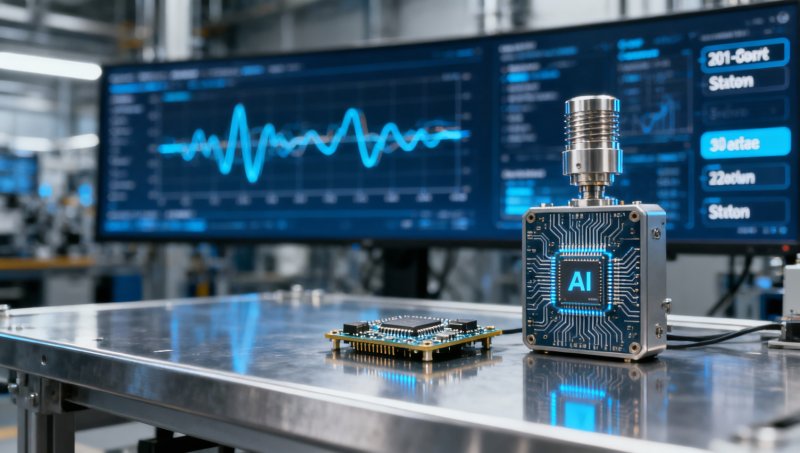
In summary, the 'AI + Software' Special Action marks a deliberate pivot toward strengthening China’s industrial software stack as an enabler—not just a beneficiary—of AI integration. Its significance lies not in immediate regulation but in reshaping long-term R&D investment logic, supply chain resilience assumptions, and technical collaboration norms. Currently, it is more appropriately understood as a strategic orientation marker than a binding operational requirement.
Source: Ministry of Industry and Information Technology (MIIT), official announcement dated May 8, 2026.
Note: Implementation details—including pilot regions, vendor qualification criteria, and timeline for domestic software certification—are pending further disclosure and remain under observation.
Recommended for You
 China's New Oil & Gas Discoveries Boost Export Demand for Analytical InstrumentsChina's new oil & gas discoveries drive export demand for analytical instruments—boosting global opportunities for chromatographic analyzers, gas detectors, and downhole sensors.
 China Academy Launches 800V HVDC Power-Computing Validation PlatformChina Academy launches 800V HVDC power-computing validation platform for IEC-compliant DC metering — accelerate CE/UL/SASO certification by 30%.
 MIIT Launches 'AI + Software' InitiativeAI + Software initiative by MIIT boosts intelligent programming tools, compute optimization & domestic industrial software—key for instrumentation, lab systems & monitoring platforms.
 China Approves New National Standards for AI, Chip, and GNSSChina's new national standards for AI, chips, and GNSS—effective Nov 2026—reshape global export compliance. Discover key impacts & actionable steps now.
 Guangzhou Port Launches Tender for 3500kW Green Diesel LocomotivesGuangzhou Port's tender for 3500kW green diesel locomotives signals urgent demand for turnkey, eco-compliant rail solutions — act now to align with China’s port decarbonization timeline.
 Industrial Metrology Tools: When Accuracy Impacts OutputIndustrial metrology tools directly shape output, quality, and cost. Learn how accurate measurement reduces scrap, speeds decisions, and improves production performance.
 Process Measurement Devices in Export Compliance UpdatesProcess measurement devices face new export compliance updates that impact classification, documents, lead times, and market access. Learn practical steps to reduce risk and protect growth.
 Quality Control Analyzers Price Shifts in Global SupplyQuality control analyzers prices are shifting with global supply changes. Learn the key cost drivers, compliance risks, and sourcing tips buyers need to reduce total cost.
 Production Line Monitoring: How to Reduce Downtime FastProduction line monitoring helps reduce downtime fast with practical checklists, smarter alarms, and real-time insights. Learn how to improve visibility, response speed, and line reliability.
 Process Optimization Instruments: ROI vs Maintenance CostsProcess optimization instruments: compare ROI, downtime reduction, and accuracy gains against calibration and maintenance costs. Learn how to choose smarter, lower-risk solutions.
 Manufacturing Process Control Trends Shaping 2026 OutputManufacturing process control trends for 2026: explore real-time monitoring, predictive quality, compliance readiness, and smarter automation strategies to boost output and reduce risk.
 Industrial Inspection Devices for Safer Quality ChecksIndustrial inspection devices help deliver safer quality checks by detecting faults early, reducing downtime, and improving compliance across manufacturing, energy, and infrastructure.
 Industrial Control Instruments: Common Selection MistakesIndustrial control instruments selection mistakes can cause downtime, drift, and safety issues. Learn the most common errors and how to choose the right solution with confidence.
 Industrial Monitoring Solutions: Key Cost Factors in 2026Industrial monitoring solutions in 2026 cost far more than hardware alone. Learn the hidden cost drivers, compare vendor proposals wisely, and make smarter ROI-focused investment decisions.
 How to Compare Test and Measurement Equipment for Factory UseTest and measurement equipment for factory use should be compared by real application, not specs alone. Learn how to choose reliable, connected tools that cut downtime and improve control.
 Stack Gas Analyzers: When Maintenance Delays Start Raising RiskStack gas analyzers can look normal while hidden drift raises compliance, efficiency, and reliability risks. Learn the warning signs and smart maintenance checks before delays become costly.
 Industrial Measurement Systems in Export Projects: Key Compliance ChecksIndustrial measurement systems for export projects: learn the key compliance checks for certifications, calibration, safety, and documents to avoid delays and ensure smooth delivery.
 Pharmaceutical Instrumentation Upgrades: What to Evaluate FirstPharmaceutical instrumentation upgrades start with compliance, data integrity, uptime, and ROI. Learn what to evaluate first to reduce risk and make smarter buying decisions.
 Food Processing Analyzers for Compliance and Batch ConsistencyFood processing analyzers help manufacturers improve compliance, reduce batch variation, and verify quality from raw materials to final release with faster, traceable decisions.
 Biogas Analyzers Market Trends: Accuracy, Maintenance, and ROIBiogas analyzers market trends: explore how accuracy, lower maintenance, and stronger ROI help energy and industrial buyers improve gas quality, uptime, and compliance.
 Safety Monitoring Systems: Common Setup Mistakes to AvoidSafety monitoring systems fail fast when setup is wrong. Discover common installation, calibration, and alarm mistakes to avoid for safer operations and more reliable monitoring.
 Industrial Testing Equipment Costs in 2026: What Drives Pricing?Industrial testing equipment costs in 2026 depend on accuracy, compliance, automation, and lifecycle service. Learn what drives pricing and how to reduce total ownership cost.
 Multi-Component Analyzers vs Single-Gas Units: Which Fits Better?Multi-component analyzers vs single-gas units: compare lifecycle cost, compliance, maintenance, and scalability to choose the best fit for safer, smarter industrial projects.
 Petrochemical Analyzers: Key Specs That Affect Safety and UptimePetrochemical analyzers directly affect safety and uptime. Learn which specs—accuracy, response time, compatibility, and maintenance—matter most for reliable plant performance.
 How to Choose Process Monitoring Instruments for Stable Plant PerformanceProcess monitoring instruments are key to stable plant performance. Learn how to choose the right devices for accuracy, compatibility, lower risk, and better efficiency.
 Brazil INMETRO to Require Portuguese UI and Local Units for Industrial Instruments by 2026Brazil INMETRO mandates Portuguese UI & local units (mbar, kPa, °C) for industrial instruments by Dec 2026—key for exporters, integrators & service providers.
 STMicroelectronics 200mm Line Eases Industrial Sensor Chip ShortageSTMicroelectronics 200mm line eases industrial sensor chip shortage — MCUs & signal-conditioning ICs now ship in 12 weeks. Secure allocation today.
 Southeast Asia Manufacturing Re-shoring Accelerates: Vietnam/Indonesia Industrial Instrument Imports Up 37% YoYSoutheast Asia manufacturing re-shoring accelerates: Vietnam & Indonesia industrial instrument imports up 37% YoY — key insights for suppliers, OEMs & procurement teams.
 First Global White Paper on Humanoid Robot Sensor Calibration ReleasedHumanoid robot sensor calibration: First global white paper released—key for ISO/IEC JWG 23 compliance, export readiness & dynamic torque accuracy. Act now.
 SAMR to Upgrade EV Battery Recycling Standard to MandatorySAMR to upgrade EV battery recycling standard GB/T 34015—202X to mandatory by Dec 2026 — critical for exporters, BMS makers & cert labs.
 Saudi SASO Accelerates AI Energy Efficiency Rules for TransmittersSASO AI energy efficiency rules for transmitters take effect 1 June 2026 — mandatory AI simulation, Saudi climate data, and authorized lab validation required. Act now to avoid export delays.
 IEC 63278:2026 Released for Industrial Instrument CybersecurityIEC 63278:2026 is live — the first global standard mandating cybersecurity verification for industrial instruments. Discover compliance impacts, deadlines, and actionable steps for OT/IT convergence.



















Search Categories
Search Categories
Latest Article
- China's New Oil & Gas Discoveries Boost Export Demand for Analytical InstrumentsChina's new oil & gas discoveries drive export demand for analytical instruments—boosting global opportunities for chromatographic analyzers, gas detectors, and downhole sensors.Posted by:
- China Academy Launches 800V HVDC Power-Computing Validation PlatformChina Academy launches 800V HVDC power-computing validation platform for IEC-compliant DC metering — accelerate CE/UL/SASO certification by 30%.Posted by:
- MIIT Launches 'AI + Software' InitiativeAI + Software initiative by MIIT boosts intelligent programming tools, compute optimization & domestic industrial software—key for instrumentation, lab systems & monitoring platforms.Posted by:
Please give us a message
