Paramagnetic Detector Drift: What Usually Causes It?


Paramagnetic detector drift can undermine measurement confidence in oxygen detector systems, whether used as a laboratory sensor, portable sensor, fixed sensor, control sensor, or monitoring sensor. For researchers, operators, engineers, and buyers comparing a paramagnetic detector with an electrochemical detector or infrared detector, understanding the common causes of drift is essential to maintaining high accuracy sensor performance, reducing downtime, and making smarter maintenance and procurement decisions.
In the instrumentation industry, oxygen analysis is rarely an isolated task. It is tied to combustion control, safety interlocks, environmental compliance, laboratory validation, gas blending, and process optimization. When a paramagnetic detector begins to drift, the issue affects not only sensor accuracy but also calibration workload, maintenance cost, process stability, and the confidence of operators and purchasing teams.
For technical evaluators, the real question is not whether drift happens, but what usually causes it, how quickly it can be detected, and which corrective actions offer the best return. For procurement and finance stakeholders, drift is also a lifecycle cost issue: a lower purchase price may be offset by more frequent service intervals, higher downtime risk, or a shorter effective calibration cycle.
This article explains the most common sources of paramagnetic detector drift, how they show up in real operating environments, what comparison points matter when evaluating alternatives, and which maintenance and purchasing practices reduce long-term risk across industrial, laboratory, and monitoring applications.
How a Paramagnetic Detector Works and Why Drift Matters
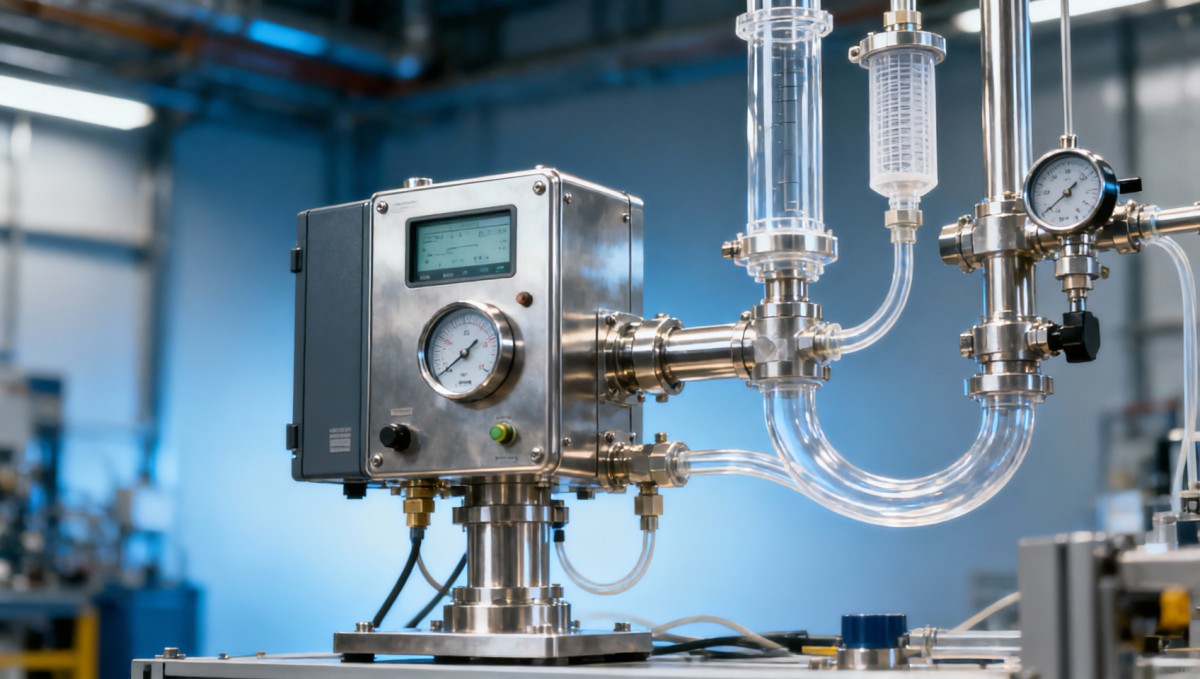
A paramagnetic detector measures oxygen because oxygen is strongly attracted to a magnetic field compared with most other common gases. In practical instruments, this physical property is translated into a signal through a magnetic sensing structure, often combined with thermal, mechanical, or pressure-sensitive elements. The detector does not consume oxygen the way an electrochemical detector does, which is one reason it is often selected for continuous analysis and higher stability expectations.
Drift occurs when the instrument output gradually moves away from the true oxygen concentration even though the actual process gas has not changed in the same way. In many plants, a drift of 0.1% to 0.5% O2 may already be meaningful for combustion tuning or gas purity verification. In laboratory and calibration-related workflows, even smaller deviations can trigger rechecks, failed quality records, or repeated test runs.
Unlike a sudden failure, drift is dangerous because it can remain unnoticed for days or weeks. Operators may assume the process is stable while the analyzer is slowly moving off reference. In fixed monitoring systems, that can distort trend data over a 24-hour or 30-day reporting cycle. In portable analyzers, it can mislead field technicians during commissioning, leak checks, or spot verification tasks.
From a B2B decision perspective, drift matters in at least 4 ways: measurement confidence, calibration frequency, maintenance labor, and process risk. A detector that requires recalibration every 7 days instead of every 30 days may still be acceptable in a lab, but it may become costly in remote or hazardous industrial sites where access, permit control, and production interruptions add hidden costs.
Why users often expect lower drift from paramagnetic technology
Paramagnetic analyzers are widely regarded as stable because they rely on a physical property of oxygen rather than a consumable electrochemical reaction. That expectation is generally justified, but “stable” does not mean drift-free. Contamination, temperature shift, pressure fluctuation, vibration, and poor sampling design can still alter the detector response over time.
In well-controlled service conditions, many systems can maintain reliable performance over calibration intervals of 2 to 8 weeks. In harsher environments, the interval may shorten to 3 to 10 days unless filtration, pressure regulation, and installation design are improved. That is why drift should be evaluated as a system-level issue, not only as a sensor-core issue.
Key signs that drift is already developing
- Zero readings no longer return to baseline within the normal stabilization window, often 2 to 10 minutes depending on analyzer design.
- Span calibration requires larger correction factors than the previous 2 or 3 service cycles.
- Readings vary between morning and afternoon due to ambient or cabinet temperature changes of 5°C to 15°C.
- Process trends look smooth, but comparison against a reference analyzer or calibration gas shows a persistent offset.
These early indicators are valuable for operators and project managers because they help prevent avoidable shutdowns. A detector rarely starts drifting without a reason, and identifying the pattern early often reduces both troubleshooting time and replacement cost.
The Most Common Causes of Paramagnetic Detector Drift
The most frequent cause of paramagnetic detector drift is sample contamination. Dust, oil mist, solvent vapor, condensate, corrosive traces, and particulate matter can interfere with the sensing chamber or associated sample path. Even when the magnetic principle itself is robust, contamination in tubing, filters, flow restrictors, or chambers can shift response characteristics. In many field installations, poor gas conditioning is responsible for more than half of recurring drift complaints.
Temperature variation is another common factor. Paramagnetic oxygen analyzers often include compensation, but rapid ambient change or uneven internal heating can still affect signal stability. For example, if a detector is installed in an enclosure that swings from 10°C at night to 35°C during daytime operation, the baseline may wander enough to force frequent recalibration. This is especially relevant in outdoor cabinets, utility areas, and temporary construction-site monitoring systems.
Pressure and flow instability also produce drift-like behavior. A paramagnetic detector is often sensitive not only to oxygen concentration but also to how the sample reaches the sensor. If inlet pressure fluctuates, if bypass flow changes, or if backpressure rises due to a clogged filter, the output may shift even when gas composition stays the same. In practical terms, a 5% to 15% change in flow can be enough to create noticeable measurement deviation in some analyzer configurations.
Mechanical disturbance matters as well. Vibration from compressors, blowers, skid-mounted equipment, or nearby rotating machinery can affect the internal measurement structure. In portable analyzers, repeated transport shock may shorten the interval between calibrations. In fixed systems, weak mounting, unsupported sample tubing, or cabinet resonance can introduce long-term instability that looks like electronic drift but is actually mechanical influence.
A fifth cause is aging or instability in supporting electronics and auxiliary components. Power supply variation, analog output circuit drift, loose terminals, deteriorating seals, or degraded sample pumps can all change the final reading. In some cases, the sensor core remains healthy while the signal conditioning path introduces the offset. This is why experienced technicians verify the complete chain, from sample inlet to final output, before deciding to replace the detector module.
Cause-to-symptom mapping in real applications
The table below helps different stakeholders connect typical drift causes with visible field symptoms and suitable first actions. This is useful during troubleshooting, technical assessment, or maintenance planning.
The main conclusion is that drift is rarely caused by one factor alone. In many instrumentation projects, 2 or 3 contributing conditions exist at the same time, such as warm outdoor cabinets combined with insufficient filtration and unstable sample pressure.
Frequent operator and maintenance mistakes
- Skipping filter replacement because the gas looks clean, even though sub-micron aerosols or moisture are still present.
- Calibrating at irregular pressure conditions, which makes the analyzer “learn” a false reference point.
- Using poor-quality calibration gas handling practices, including leaking fittings or insufficient purge time of 3 to 5 minutes.
- Replacing the detector too early without verifying power quality, flow stability, and enclosure temperature.
For safety managers and quality teams, these avoidable practices are important because they create unnecessary maintenance spend and inconsistent audit records. A structured drift investigation process usually performs better than repeated ad hoc recalibration.
Environmental and System Design Factors That Amplify Drift
Detector performance depends heavily on the complete sample handling system. A good paramagnetic detector installed in a poor sampling design will still drift. This is a common issue in industrial manufacturing, power generation, environmental monitoring, and laboratory transfer systems where the analyzer itself receives attention, but the upstream gas path does not.
One major amplifier is inadequate moisture control. If the sample gas temperature falls below dew point anywhere in the line, condensed water can collect in low points, filters, or sensing components. Even small condensation events repeated over 2 to 4 weeks can change flow resistance and contaminate internal surfaces. Heated lines, proper slope design, and knockout or membrane conditioning often improve stability more than frequent recalibration does.
Another amplifier is poor installation location. Placing the analyzer close to heavy vibration sources, doors with repeated opening, direct sunlight, or process heat radiation raises the probability of drift. Instrument cabinets should ideally maintain a more stable thermal band, often around 15°C to 30°C for general service, although the exact range depends on instrument specification. Stability in the surrounding environment usually improves stability in the oxygen reading.
Electrical quality should also be reviewed. Unstable supply voltage, grounding problems, or signal noise from adjacent variable-frequency drives may create apparent drift or noisy output. In integrated control systems, this can lead to false interpretations by DCS or PLC logic. When engineering teams evaluate analyzer performance, they should separate true measurement drift from communication or signal transmission disturbance.
Installation and operating factors worth auditing
A practical site audit often includes at least 6 checkpoints. These do not require brand-specific assumptions and are useful across most instrumentation projects.
- Verify whether sample pressure remains within the instrument’s recommended band during normal and upset operation.
- Check whether flow indication remains stable across a full shift, not only during calibration.
- Confirm whether filters are sized for the contamination load and replaced on a fixed interval, such as every 1, 3, or 6 months.
- Inspect all low points, traps, and tubing runs for condensate accumulation or corrosion staining.
- Measure enclosure temperature change over 24 hours rather than relying on one-time readings.
- Review mounting, vibration isolation, and cable routing near motors, pumps, or inverters.
These checkpoints are especially helpful for project managers and distributors supporting multi-site installations. Drift complaints that appear to be product quality issues often trace back to common deployment conditions repeated across similar projects.
Typical environments and drift risk level
The following comparison gives a practical view of how operating conditions influence the likelihood of paramagnetic detector drift and what design precautions are usually justified.
The key lesson for technical buyers is that analyzer selection and installation design should be specified together. Separating them often leads to underestimating the total cost of ownership over the first 12 to 24 months.
How to Reduce Drift Through Maintenance, Calibration, and Operating Practice
The most effective way to reduce paramagnetic detector drift is to treat maintenance as a preventive process rather than a reaction to failed readings. In many oxygen analysis systems, a simple scheduled routine lowers drift-related service events significantly. This routine usually includes filter inspection, leak checks, zero and span verification, pressure review, and response-time tracking.
Calibration discipline is especially important. If a detector is calibrated with unstable gas pressure, inadequate purge time, or contaminated tubing, the correction may hide the underlying problem for a few days while making the next drift cycle worse. As a general field practice, zero and span gas should be allowed enough stabilization time, often 3 to 10 minutes depending on line volume and analyzer response characteristics. Shortcuts here create false confidence.
Maintenance intervals should match the environment. Clean laboratory service may support monthly or even longer verification periods, while dusty or wet process lines may require weekly inspection. The correct interval is not the shortest possible one, but the shortest interval that prevents unplanned deviation. Quality and safety managers often prefer a documented 4-step or 5-step routine because it supports traceability during audits and internal reviews.
Operators should also trend calibration corrections over time. If span adjustment grows from a minor correction to a larger recurring offset over 3 consecutive cycles, that pattern usually indicates contamination, temperature influence, or pressure instability. Looking only at whether the analyzer “passes” calibration misses valuable predictive information.
A practical drift-control checklist
- Inspect sample filters and replace them at a defined interval based on contamination load, such as every 30, 60, or 90 days.
- Verify that sample pressure and flow remain within the target operating band before calibration begins.
- Allow sufficient purge and stabilization time for zero gas and span gas; avoid rushed 1-minute checks on long sample paths.
- Record zero offset, span correction, response time, and ambient temperature for each service event.
- Investigate any repeated correction increase across 2 to 3 calibration cycles instead of simply recalibrating again.
This checklist supports both individual users and multi-site service teams. It also gives purchasing and finance teams better visibility into the expected maintenance burden of a specific analyzer deployment.
When recalibration is not enough
There is a point where repeated recalibration stops being cost-effective. If a detector needs correction every few days, if response time keeps slowing, or if the drift amount grows despite clean calibration gas, deeper inspection is required. Common next steps include checking for internal contamination, replacing worn seals, validating regulators, testing power quality, or reviewing whether the application gas contains interfering contaminants outside the original assumption.
For distributors and service providers, this is where strong after-sales support matters. Clear maintenance documentation, spare parts availability, and troubleshooting workflow often matter as much as the analyzer purchase price itself.
What Buyers and Technical Evaluators Should Compare Before Selection
When comparing a paramagnetic detector with an electrochemical detector or infrared detector, drift should be evaluated together with application fit, maintenance model, and lifecycle cost. A paramagnetic detector is often preferred for oxygen measurement where continuous monitoring, non-consumptive sensing, and higher long-term stability are priorities. However, the best choice still depends on gas composition, installation conditions, target accuracy, and service resources.
Technical evaluators should define at least 4 selection criteria before requesting quotations: required measurement range, acceptable drift between calibrations, environmental conditions, and sample conditioning complexity. Procurement teams should then add 4 commercial criteria: service interval, spare parts access, training requirement, and downtime impact. This approach avoids selecting on initial price alone.
For project leaders, drift performance should be written into technical clarification, not left as a vague assumption. Questions such as “What is the expected calibration interval under field conditions?”, “How sensitive is the analyzer to pressure change?”, and “What sample conditioning is recommended for moisture or aerosol exposure?” are practical and commercially relevant. These answers affect installation budget, service planning, and handover risk.
Finance approvers also benefit from a lifecycle view. An analyzer with moderate purchase cost but stable 30-day maintenance intervals may outperform a cheaper alternative that requires weekly intervention. Hidden labor, production disturbance, and compliance risk often exceed the cost difference of the hardware.
A practical comparison framework for oxygen sensing options
The table below is not a universal ranking, but a decision aid for common instrumentation scenarios where drift and maintenance stability are major concerns.
For buyers, the practical conclusion is simple: if oxygen-specific accuracy and continuous duty are important, paramagnetic technology is often a strong choice, but only when the surrounding sample system and maintenance plan are specified with equal care.
Questions to ask suppliers before purchase
- What calibration interval is typical in clean indoor service versus outdoor industrial service?
- What inlet pressure and flow stability are recommended to avoid drift?
- What filtration, moisture control, or sample conditioning is necessary for this application?
- What spare parts should be stocked for the first 12 months of operation?
- What support is available for commissioning, troubleshooting, and operator training?
These questions help align engineering expectations with commercial terms. They also reduce disputes later about whether drift is a product fault, an application issue, or a maintenance issue.
FAQ: Common Questions About Paramagnetic Detector Drift
How often should a paramagnetic oxygen detector be calibrated?
There is no single interval for every site. In clean laboratory or controlled indoor use, calibration verification may be scheduled every 2 to 8 weeks. In process environments with dust, moisture, or thermal fluctuation, weekly or biweekly checks may be more realistic. The right interval depends on how fast zero and span correction trends change under actual service conditions.
Can pressure change look like detector drift?
Yes. In many analyzer systems, pressure variation or unstable flow creates a reading shift that looks like sensor drift. That is why technicians should always confirm sample pressure, differential pressure across filters, and flow consistency before deciding that the detector itself is unstable.
Is paramagnetic technology always better than electrochemical for oxygen measurement?
Not always. Paramagnetic detectors are often favored for continuous oxygen analysis and long-term stability, but electrochemical detectors may still fit lower-cost or simpler portable applications. The correct choice depends on measurement range, runtime, maintenance resources, and environmental stress. Selection should be based on total application fit rather than a single technology label.
What is the fastest way to reduce repeated drift complaints?
Start with the sample system. Check filters, condensate control, tubing condition, flow stability, and pressure regulation. In many cases, improving these 5 areas reduces drift more effectively than replacing the detector immediately. If the issue remains, then move to electronics, vibration review, and deeper internal inspection.
Paramagnetic detector drift usually comes from understandable and manageable causes: contamination, temperature change, pressure or flow instability, vibration, and supporting component issues. In instrumentation projects, the detector should never be assessed in isolation from the sample system, enclosure design, maintenance routine, and operator practice.
For researchers, operators, technical evaluators, procurement teams, and project managers, the best results come from combining the right oxygen sensing technology with realistic calibration planning, proper installation controls, and clear supplier support expectations. That approach improves measurement confidence, lowers avoidable service cost, and reduces the risk of process or compliance errors.
If you are evaluating oxygen analysis solutions, troubleshooting recurring drift, or planning a new instrumentation project, contact us to discuss your application, get a tailored recommendation, and explore a more stable measurement strategy for your operating environment.
Recommended for You
 Control Sensor Delays Can Undermine Process StabilityControl sensor delays can destabilize operations. Compare paramagnetic detector, electrochemical detector, infrared detector, and oxygen detector options to find a high accuracy sensor for fixed, portable, laboratory, and monitoring sensor needs.
 Laboratory Sensor Repeatability Problems Often Start With SamplingLaboratory sensor repeatability issues often begin with sampling. Compare paramagnetic detector, electrochemical detector, infrared detector, and oxygen detector solutions to improve accuracy.
 Laboratory Sensor Selection Gets Harder With Lower Detection LimitsLaboratory sensor selection gets harder at lower limits. Compare paramagnetic detector, electrochemical detector, infrared detector, oxygen detector, fixed and portable sensor options for high accuracy monitoring and control.
 Portable Sensor Battery Loss Can Distort Long Shift MonitoringPortable sensor battery loss can distort long-shift monitoring. Compare paramagnetic detector, electrochemical detector, infrared detector and oxygen detector options for high accuracy sensor performance.
 Portable Sensor Accuracy in the Field Is Not Always What It SeemsPortable sensor accuracy can differ sharply from lab results. Compare paramagnetic detector, electrochemical detector, infrared detector, and oxygen detector performance to choose a high accuracy sensor for real field use.
 Fixed Sensor vs Portable Checks: Where Results Often DivergeExplore why fixed sensor and portable sensor readings diverge in oxygen detector systems using paramagnetic detector, electrochemical detector, and infrared detector technology.
 Oxygen Detector False Alarms Often Start With Sensor PlacementOxygen detector false alarms often start with sensor placement. Compare paramagnetic detector, electrochemical detector, and infrared detector options to improve accuracy and safety.
 Infrared Detector Response Time Can Change Your ReadingInfrared detector response time shapes alarm accuracy and stable readings. Compare paramagnetic detector, electrochemical detector, and oxygen detector options for every high accuracy sensor need.
 Infrared Detector Limits That Matter in Mixed Gas ApplicationsInfrared detector limits in mixed gas applications: compare paramagnetic detector, electrochemical detector, and oxygen detector options to choose a high accuracy sensor for portable, fixed, laboratory, control, and monitoring sensor use.
 Why Electrochemical Detector Calibration Fails More Often Than ExpectedElectrochemical detector calibration fails more often than expected—learn how a paramagnetic detector, infrared detector, or oxygen detector comparison helps you choose a high accuracy sensor for fixed, portable, laboratory, control, and monitoring sensor applications.
 Electrochemical Detector Lifespan Drops Fast Under These ConditionsElectrochemical detector lifespan can drop fast in heat, humidity, and corrosive gas. Compare paramagnetic detector, infrared detector, and oxygen detector options to choose a high accuracy sensor with lower lifecycle risk.
 Paramagnetic Detector Drift: What Usually Causes It?Paramagnetic detector drift explained: learn what causes oxygen detector errors, how it compares with electrochemical detector and infrared detector options, and how to keep a high accuracy sensor stable.
 Oxygen Monitor Export Trends in 2026Oxygen monitor export trends in 2026: explore explosion proof monitor, laser monitor, portable detector, fixed detector, and high accuracy detector demand shaping smarter buying decisions.
 Infrared Monitor Market Outlook 2026Infrared monitor market outlook 2026: compare explosion proof monitor, laser monitor, oxygen monitor, fixed detector and portable detector solutions for safer, smarter industrial projects.
 Where Electrochemical Monitors Work BestElectrochemical monitor guide: compare explosion proof monitor, infrared monitor, laser monitor, oxygen monitor, fixed detector, and portable detector for safer, smarter gas detection choices.
 Paramagnetic Monitor Import Outlook 2026Paramagnetic monitor import outlook 2026: compare explosion proof monitor, laser monitor, infrared monitor, oxygen monitor, and high accuracy detector solutions to source the right fixed or portable detector.
 Thermal Conductivity Monitor Price ShiftThermal conductivity monitor price trends explained with explosion proof monitor, laser monitor, oxygen monitor, and fixed or portable detector options for smarter, safer buying.
 How Laser Monitor Demand Is ChangingLaser monitor demand is changing as buyers compare explosion proof monitor, infrared, electrochemical, and oxygen monitor options for safer, high accuracy detector solutions.
 Oxygen Measurement System Export Demand in 2026Oxygen measurement system demand in 2026 is rising across industrial control equipment, gas quality measurement, emission control system, and process monitoring system markets. Explore key trends and smarter sourcing insights.
 Industrial Control System Trends to Watch in 2026Industrial control system trends for 2026: explore industrial control equipment, process monitoring system, gas quality measurement, oxygen measurement system, and emission control system upgrades.
 How to Improve Process Monitoring System ResultsImprove process monitoring system results with industrial control equipment, gas quality measurement, and emission measurement system strategies for smarter industrial control system performance.
 Emission Control System Import Risks in 2026Emission control system import risks in 2026: learn how industrial control equipment, gas quality measurement, and process monitoring system buyers can avoid delays, compliance issues, and costly mistakes.
 Gas Quality Control for Safer Plant OperationsGas quality control improves safer plant operations with industrial control equipment, gas quality measurement, and an emission measurement system—boost efficiency, compliance, and process monitoring performance.
 What Buyers Miss in Industrial Measurement SystemsIndustrial measurement system buying guide: compare industrial control equipment, gas quality measurement, and emission measurement system risks beyond specs to reduce downtime, cost, and audit issues.
 Process Measurement System Costs ExplainedProcess measurement system costs explained: compare industrial measurement system, gas quality measurement, oxygen measurement system, and emission measurement system options to cut risk and improve control.
 2026 Emission Measurement System Market ShiftEmission measurement system trends for 2026: discover how industrial control equipment, gas quality measurement, and smarter process monitoring systems improve compliance, efficiency, and ROI.
 Why Gas Quality Measurement Fails in the FieldGas quality measurement issues often come from industrial control equipment setup, not sensor limits. Learn how a process measurement system and emission measurement system can improve gas quality control.
 2026 Industrial Control Equipment Price OutlookIndustrial control equipment price outlook for 2026: explore trends in gas quality measurement, emission measurement system, process measurement system, and industrial control system budgeting.
 How Accurate Should an Oxygen Measurement System Be?Oxygen measurement system accuracy impacts gas quality measurement, emission control system performance, and industrial control equipment ROI—learn how to choose the right level for safer, smarter process monitoring.
 Industrial Control System: Buy New or Retrofit?Industrial control system guide: buy new or retrofit? Compare industrial control equipment, process measurement system, emission control system, and gas quality measurement for smarter ROI.
 Is a Process Monitoring System Worth Upgrading?Process monitoring system upgrade guide for industrial control equipment—improve gas quality measurement, emission measurement system performance, compliance, and smarter industrial control system decisions.
 How to Size an Emission Control SystemLearn how to size an emission control system with industrial control equipment, gas quality measurement, and a process monitoring system to improve compliance, reduce risk, and optimize cost.

Search Categories
Search Categories
Latest Article
- Control Sensor Delays Can Undermine Process StabilityControl sensor delays can destabilize operations. Compare paramagnetic detector, electrochemical detector, infrared detector, and oxygen detector options to find a high accuracy sensor for fixed, portable, laboratory, and monitoring sensor needs.Posted by:
- Laboratory Sensor Repeatability Problems Often Start With SamplingLaboratory sensor repeatability issues often begin with sampling. Compare paramagnetic detector, electrochemical detector, infrared detector, and oxygen detector solutions to improve accuracy.Posted by:
- Laboratory Sensor Selection Gets Harder With Lower Detection LimitsLaboratory sensor selection gets harder at lower limits. Compare paramagnetic detector, electrochemical detector, infrared detector, oxygen detector, fixed and portable sensor options for high accuracy monitoring and control.Posted by:
Please give us a message
