Why Electrochemical Detector Calibration Fails More Often Than Expected


Electrochemical detector calibration often fails for reasons that go beyond routine maintenance, affecting accuracy, safety, and operating costs across industrial and laboratory settings. Compared with a paramagnetic detector or infrared detector, an oxygen detector using an electrochemical detector may be more sensitive to environment, handling, and drift. For buyers, operators, and engineers evaluating a high accuracy sensor, fixed sensor, portable sensor, laboratory sensor, control sensor, or monitoring sensor, understanding these hidden failure points is essential.
In instrumentation-intensive industries, calibration is not just a technical checkbox. It directly influences process safety, compliance, product quality, and maintenance planning. A calibration result that looks acceptable on day 1 can become unreliable within 7 to 30 days if the detector was exposed to temperature swings, poor gas quality, improper stabilization time, or aging consumables.
This matters to multiple decision-makers. Operators need repeatable readings. Quality and safety managers need trustworthy alarms. Procurement teams need lower lifecycle cost, not only lower purchase price. Project managers and distributors need systems that are easier to commission across different installation environments. When electrochemical detector calibration fails, the root cause is often shared across engineering, maintenance, training, and purchasing choices.
Why electrochemical calibration is more fragile than many teams expect
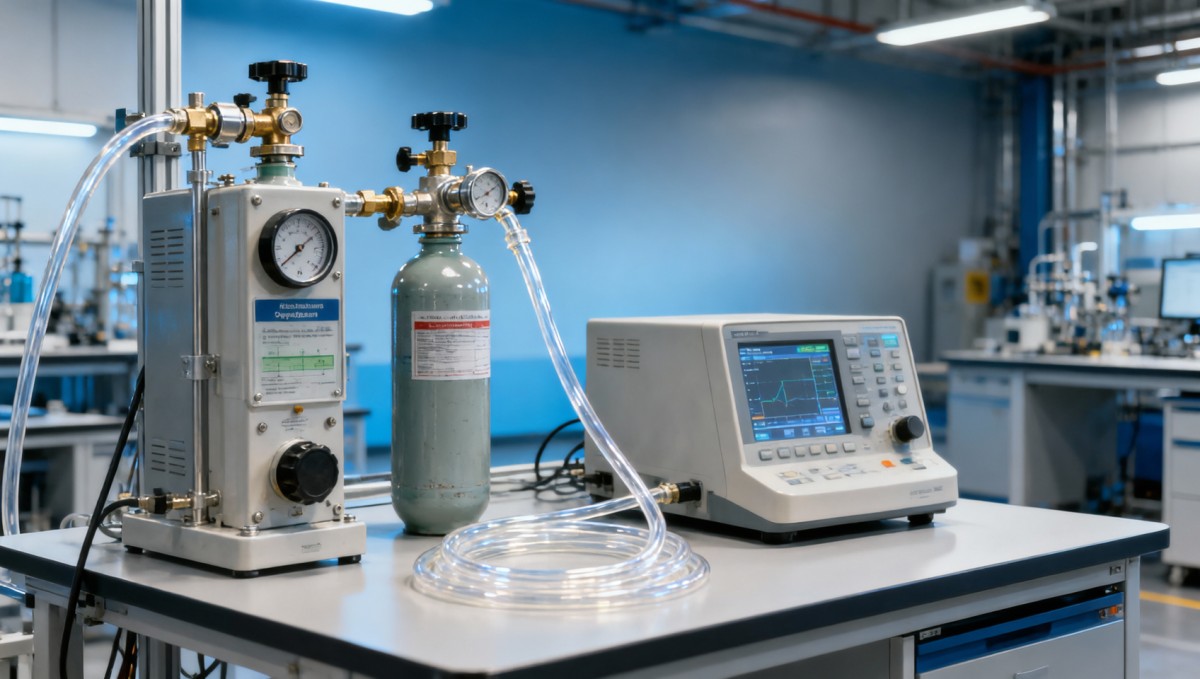
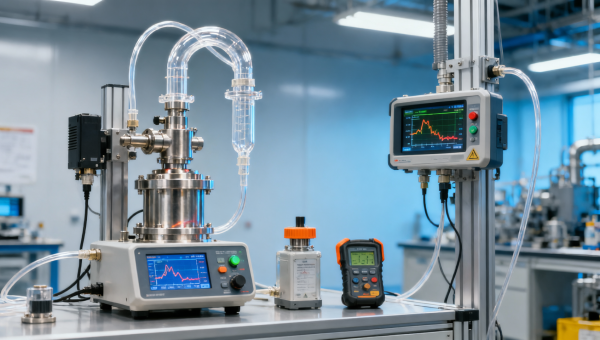
Electrochemical detectors work through a chemical reaction at the sensing electrode. That design delivers good sensitivity and compact size, but it also creates more calibration sensitivity than many users assume. In typical industrial or laboratory use, a detector may respond differently after storage, transport, electrolyte aging, or sudden humidity changes. Even a 5°C to 10°C environmental variation can affect sensor output enough to challenge a tight tolerance requirement.
Unlike some optical or paramagnetic measurement principles, electrochemical cells are consumable components. Their baseline and span can drift gradually over 6 to 24 months, depending on gas exposure, duty cycle, and contamination level. In oxygen monitoring, this means a detector that passed calibration last quarter may already be trending out of tolerance if the site has frequent solvent vapors, pressure fluctuations, or poor storage discipline.
Another issue is that calibration success is often judged too narrowly. Teams may only check whether the instrument accepts the calibration point, not whether the response time, recovery time, zero stability, and alarm accuracy remain acceptable. A detector can technically calibrate and still perform poorly in field conditions, especially when line pressure, sample flow, or enclosure ventilation differ from workshop conditions.
For B2B users, the practical lesson is clear: electrochemical detector calibration is a process, not a single adjustment. If the surrounding instrumentation chain is unstable, the sensor output becomes less trustworthy. That includes regulators, tubing, filters, sample conditioning units, flow restrictors, connectors, and software compensation settings.
Typical sources of hidden instability
- Gas cylinder concentration not matched to the detector range, such as using a span gas too close to the upper 90% of scale for a cell intended to be calibrated around 40% to 60% of range.
- Insufficient stabilization time, with users applying calibration in less than 2 to 3 minutes when the sensor needs 5 to 10 minutes after flow starts.
- Cross-sensitivity from process gases, cleaning agents, or ambient vapors that were not present during bench calibration.
- Storage or transportation outside recommended conditions, such as long exposure above 40°C or low-humidity conditions that accelerate electrolyte loss.
The most common calibration failure points in real industrial and laboratory settings
Calibration failure rarely comes from only one obvious fault. More often, it is the combined effect of environment, gas delivery, human handling, and sensor age. In a manufacturing plant, an online oxygen detector mounted near a vibrating skid may develop intermittent connection issues. In a laboratory, a portable sensor may show poor repeatability because the instrument was zeroed in one room and span-calibrated in another with different ambient conditions.
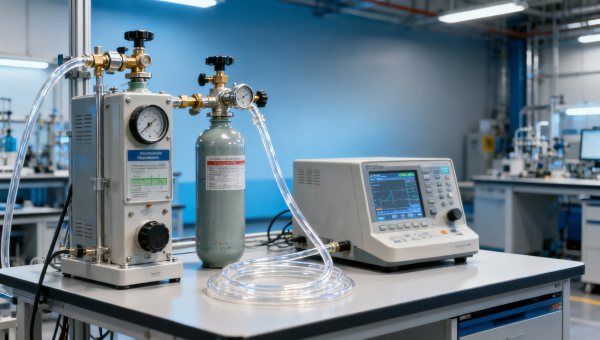
Gas quality is a frequent weak point. Calibration gas that is near expiration, improperly stored, or delivered through contaminated tubing can shift the span result enough to create false confidence. A 12-month shelf-life gas cylinder that has been opened and stored poorly may no longer behave like a fresh reference. Moisture ingress, regulator contamination, and incorrect flow rates in the 0.3 to 1.0 L/min range can all distort the actual concentration reaching the detector.
Temperature and pressure are equally important. Electrochemical detectors used in process skids, gas cabinets, environmental monitoring stations, or medical testing support equipment may be calibrated at atmospheric pressure but operated under dynamic pressure conditions. If the instrument or sample path does not compensate properly, the reading may drift even when the electrochemical cell itself is still healthy.
Human factors also deserve attention. Calibration procedures often vary by shift, site, or contractor. If one operator waits 8 minutes for stabilization and another waits only 2 minutes, the resulting data will not be comparable. Over a 3-shift operation, inconsistency becomes a hidden cost because engineering teams spend extra hours troubleshooting detectors that are not actually defective.
Field failure modes and their operational impact
The table below summarizes frequent calibration-related problems seen in industrial automation, environmental monitoring, laboratory analysis, and fixed gas detection applications.
A key pattern stands out: many “sensor failures” are really system failures. Replacing the detector without fixing gas flow, environmental control, or procedural consistency usually repeats the same problem within the next calibration cycle.
Four warning signs teams should not ignore
- Zero requires frequent correction more than once per month.
- Response time becomes noticeably longer, for example moving from under 30 seconds to over 60 seconds.
- A detector passes calibration but field readings differ from backup instruments by more than the accepted process tolerance.
- Multiple detectors from the same site show similar drift patterns, indicating site conditions rather than isolated device defects.
How to build a more reliable calibration workflow
A reliable electrochemical detector calibration workflow starts with standardization. That means defining gas concentration, gas flow, stabilization time, ambient condition window, and acceptance criteria before maintenance begins. In many facilities, simply standardizing a 5-step calibration process reduces repeat visits and troubleshooting time within the first 1 to 3 months.
The next improvement is environmental control. If the detector normally operates at 15°C to 35°C and 20% to 80% RH, calibrating it in a much colder or drier room introduces unnecessary variation. For higher accuracy applications, teams should also document barometric pressure, sample line condition, and any warm-up period required by the host analyzer or control panel.
Traceability is equally important for quality and safety teams. A good calibration record should include date, operator, gas batch, expiry date, cylinder pressure, regulator type, actual flow setting, pre-calibration reading, post-calibration reading, and remarks about site conditions. This documentation supports internal audits and makes it easier to identify whether drift is random or systematic.
Finally, treat sensor replacement as a planned lifecycle activity, not an emergency action. If a detector repeatedly needs large span corrections or cannot stabilize within the normal period, the total cost of repeated service may exceed the cost of proactive replacement. This is especially true for distributed fixed sensor networks across plants, labs, substations, environmental stations, or process units.
A practical 5-step calibration control process
- Verify site condition: confirm temperature, humidity, pressure condition, and detector warm-up status before applying gas.
- Check the gas path: inspect regulator, tubing, filters, and flow control, and replace contaminated consumables if needed.
- Apply zero and span with defined timing: use the same stabilization window every time, such as 5 to 10 minutes depending on the instrument design.
- Record performance, not only pass or fail: include response speed, drift level, and adjustment amount.
- Trend the data: review 3 to 6 calibration records together to identify gradual deterioration before it becomes a safety issue.
The table below shows how workflow discipline can improve calibration stability across common instrumentation scenarios.
For project owners and maintenance managers, the main value is predictability. A controlled workflow reduces labor waste, improves alarm integrity, and gives procurement teams better visibility into the true lifecycle cost of electrochemical detection systems.
What buyers, engineers, and procurement teams should evaluate before purchase
Selecting a detector only by upfront price is one of the most common reasons calibration problems become expensive later. A lower-cost sensor can create higher total cost if it requires more frequent calibration, shorter replacement cycles, or special handling during storage and transport. For industrial and laboratory buyers, a better decision model considers at least 4 dimensions: accuracy requirement, environmental suitability, maintenance burden, and integration fit.
Technical evaluators should ask whether the electrochemical detector is being used in the right application window. If a process has frequent temperature cycling, vibration, aggressive vapors, or continuous 24/7 operation, a higher-specification fixed sensor with better compensation and enclosure design may be more economical than a basic configuration. Portable and laboratory sensor use cases also differ significantly from permanent installations, so calibration expectations should not be mixed.
Procurement and finance teams should also review the supply chain side. Consumable availability, typical lead time, regulator compatibility, spare parts policy, and service support can influence ownership cost over 12 to 36 months. A detector that is slightly more expensive but supported by stable consumable supply and clear calibration guidance may reduce the cost of missed alarms, rejected batches, and emergency replacements.
Distributors and project integrators can gain an advantage by packaging calibration support into the offer. In many projects, the winning solution is not the lowest instrument price, but the one that reduces commissioning time by 1 to 2 days and lowers startup risk across multiple installed points.
Pre-purchase comparison factors
The comparison below helps align technical, operational, and commercial decision-making for electrochemical detector projects.
This comparison shows why cross-functional evaluation is valuable. The right detector choice supports operations, safety, maintenance, and budget control at the same time, especially in multi-site or multi-point monitoring projects.
Questions procurement teams should ask suppliers
- What is the expected sensor replacement cycle under continuous duty versus intermittent use?
- Which calibration accessories are required, and are they standard or optional items?
- How long are typical spare part lead times: 7 days, 15 days, or longer?
- What field conditions commonly cause drift, and what mitigation methods are recommended?
FAQ: practical answers for operators, quality teams, and project managers
How often should an electrochemical detector be calibrated?
There is no universal interval for every installation. In many facilities, monthly to quarterly checks are common, but the right frequency depends on exposure level, process criticality, environmental variability, and manufacturer guidance. A detector used in a clean, stable laboratory may hold calibration longer than a fixed sensor exposed to vibration, humidity swings, and trace contaminants in an industrial plant.
Why does a detector pass calibration but still read poorly in service?
This usually indicates a difference between calibration conditions and operating conditions. Common causes include pressure changes, unstable flow, sample line contamination, cross-sensitive gases, or a response time that has degraded even though the final calibration point still lands within tolerance. Reviewing both calibration data and live process conditions is essential.
Is replacing the sensor better than repeated recalibration?
If the detector needs large corrections repeatedly, shows slow response, or fails again within a short period such as 2 to 6 weeks, replacement may be more economical. Repeated service visits add labor cost, increase process risk, and reduce confidence in alarm integrity. Lifecycle cost should be reviewed, not only the cost of the replacement cell.
What should project managers include in commissioning plans?
Commissioning plans should include calibration gas specification, accessory list, environmental verification, operator training, record templates, acceptance thresholds, and a first-review date after startup. For larger projects, scheduling a review after the first 30 days and again after 90 days helps confirm whether the calibration setup remains stable under actual operating conditions.
Electrochemical detector calibration fails more often than expected because the true risk sits at the intersection of sensor chemistry, operating environment, gas handling, and human procedure. Organizations that manage calibration as a controlled system process, rather than a simple maintenance action, gain better measurement reliability, safer operations, and more predictable ownership cost.
For buyers, operators, engineers, and distributors in the instrumentation sector, the most effective strategy is to evaluate detector performance together with calibration workflow, consumable planning, and field conditions. If you are comparing fixed, portable, laboratory, control, or monitoring sensor solutions, now is the right time to review your calibration risks, clarify application requirements, and secure a more stable deployment plan.
Contact us to discuss your application, request a tailored instrumentation solution, or learn more about practical options for improving electrochemical detector calibration reliability.
Recommended for You
 Control Sensor Delays Can Undermine Process StabilityControl sensor delays can destabilize operations. Compare paramagnetic detector, electrochemical detector, infrared detector, and oxygen detector options to find a high accuracy sensor for fixed, portable, laboratory, and monitoring sensor needs.
 Laboratory Sensor Repeatability Problems Often Start With SamplingLaboratory sensor repeatability issues often begin with sampling. Compare paramagnetic detector, electrochemical detector, infrared detector, and oxygen detector solutions to improve accuracy.
 Laboratory Sensor Selection Gets Harder With Lower Detection LimitsLaboratory sensor selection gets harder at lower limits. Compare paramagnetic detector, electrochemical detector, infrared detector, oxygen detector, fixed and portable sensor options for high accuracy monitoring and control.
 Portable Sensor Battery Loss Can Distort Long Shift MonitoringPortable sensor battery loss can distort long-shift monitoring. Compare paramagnetic detector, electrochemical detector, infrared detector and oxygen detector options for high accuracy sensor performance.
 Portable Sensor Accuracy in the Field Is Not Always What It SeemsPortable sensor accuracy can differ sharply from lab results. Compare paramagnetic detector, electrochemical detector, infrared detector, and oxygen detector performance to choose a high accuracy sensor for real field use.
 Fixed Sensor vs Portable Checks: Where Results Often DivergeExplore why fixed sensor and portable sensor readings diverge in oxygen detector systems using paramagnetic detector, electrochemical detector, and infrared detector technology.
 Oxygen Detector False Alarms Often Start With Sensor PlacementOxygen detector false alarms often start with sensor placement. Compare paramagnetic detector, electrochemical detector, and infrared detector options to improve accuracy and safety.
 Infrared Detector Response Time Can Change Your ReadingInfrared detector response time shapes alarm accuracy and stable readings. Compare paramagnetic detector, electrochemical detector, and oxygen detector options for every high accuracy sensor need.
 Infrared Detector Limits That Matter in Mixed Gas ApplicationsInfrared detector limits in mixed gas applications: compare paramagnetic detector, electrochemical detector, and oxygen detector options to choose a high accuracy sensor for portable, fixed, laboratory, control, and monitoring sensor use.
 Why Electrochemical Detector Calibration Fails More Often Than ExpectedElectrochemical detector calibration fails more often than expected—learn how a paramagnetic detector, infrared detector, or oxygen detector comparison helps you choose a high accuracy sensor for fixed, portable, laboratory, control, and monitoring sensor applications.
 Electrochemical Detector Lifespan Drops Fast Under These ConditionsElectrochemical detector lifespan can drop fast in heat, humidity, and corrosive gas. Compare paramagnetic detector, infrared detector, and oxygen detector options to choose a high accuracy sensor with lower lifecycle risk.
 Paramagnetic Detector Drift: What Usually Causes It?Paramagnetic detector drift explained: learn what causes oxygen detector errors, how it compares with electrochemical detector and infrared detector options, and how to keep a high accuracy sensor stable.
 Oxygen Monitor Export Trends in 2026Oxygen monitor export trends in 2026: explore explosion proof monitor, laser monitor, portable detector, fixed detector, and high accuracy detector demand shaping smarter buying decisions.
 Infrared Monitor Market Outlook 2026Infrared monitor market outlook 2026: compare explosion proof monitor, laser monitor, oxygen monitor, fixed detector and portable detector solutions for safer, smarter industrial projects.
 Where Electrochemical Monitors Work BestElectrochemical monitor guide: compare explosion proof monitor, infrared monitor, laser monitor, oxygen monitor, fixed detector, and portable detector for safer, smarter gas detection choices.
 Paramagnetic Monitor Import Outlook 2026Paramagnetic monitor import outlook 2026: compare explosion proof monitor, laser monitor, infrared monitor, oxygen monitor, and high accuracy detector solutions to source the right fixed or portable detector.
 Thermal Conductivity Monitor Price ShiftThermal conductivity monitor price trends explained with explosion proof monitor, laser monitor, oxygen monitor, and fixed or portable detector options for smarter, safer buying.
 How Laser Monitor Demand Is ChangingLaser monitor demand is changing as buyers compare explosion proof monitor, infrared, electrochemical, and oxygen monitor options for safer, high accuracy detector solutions.
 Oxygen Measurement System Export Demand in 2026Oxygen measurement system demand in 2026 is rising across industrial control equipment, gas quality measurement, emission control system, and process monitoring system markets. Explore key trends and smarter sourcing insights.
 Industrial Control System Trends to Watch in 2026Industrial control system trends for 2026: explore industrial control equipment, process monitoring system, gas quality measurement, oxygen measurement system, and emission control system upgrades.
 How to Improve Process Monitoring System ResultsImprove process monitoring system results with industrial control equipment, gas quality measurement, and emission measurement system strategies for smarter industrial control system performance.
 Emission Control System Import Risks in 2026Emission control system import risks in 2026: learn how industrial control equipment, gas quality measurement, and process monitoring system buyers can avoid delays, compliance issues, and costly mistakes.
 Gas Quality Control for Safer Plant OperationsGas quality control improves safer plant operations with industrial control equipment, gas quality measurement, and an emission measurement system—boost efficiency, compliance, and process monitoring performance.
 What Buyers Miss in Industrial Measurement SystemsIndustrial measurement system buying guide: compare industrial control equipment, gas quality measurement, and emission measurement system risks beyond specs to reduce downtime, cost, and audit issues.
 Process Measurement System Costs ExplainedProcess measurement system costs explained: compare industrial measurement system, gas quality measurement, oxygen measurement system, and emission measurement system options to cut risk and improve control.
 2026 Emission Measurement System Market ShiftEmission measurement system trends for 2026: discover how industrial control equipment, gas quality measurement, and smarter process monitoring systems improve compliance, efficiency, and ROI.
 Why Gas Quality Measurement Fails in the FieldGas quality measurement issues often come from industrial control equipment setup, not sensor limits. Learn how a process measurement system and emission measurement system can improve gas quality control.
 2026 Industrial Control Equipment Price OutlookIndustrial control equipment price outlook for 2026: explore trends in gas quality measurement, emission measurement system, process measurement system, and industrial control system budgeting.
 How Accurate Should an Oxygen Measurement System Be?Oxygen measurement system accuracy impacts gas quality measurement, emission control system performance, and industrial control equipment ROI—learn how to choose the right level for safer, smarter process monitoring.
 Industrial Control System: Buy New or Retrofit?Industrial control system guide: buy new or retrofit? Compare industrial control equipment, process measurement system, emission control system, and gas quality measurement for smarter ROI.
 Is a Process Monitoring System Worth Upgrading?Process monitoring system upgrade guide for industrial control equipment—improve gas quality measurement, emission measurement system performance, compliance, and smarter industrial control system decisions.
 How to Size an Emission Control SystemLearn how to size an emission control system with industrial control equipment, gas quality measurement, and a process monitoring system to improve compliance, reduce risk, and optimize cost.
Search Categories
Search Categories
Latest Article
- Control Sensor Delays Can Undermine Process StabilityControl sensor delays can destabilize operations. Compare paramagnetic detector, electrochemical detector, infrared detector, and oxygen detector options to find a high accuracy sensor for fixed, portable, laboratory, and monitoring sensor needs.Posted by:
- Laboratory Sensor Repeatability Problems Often Start With SamplingLaboratory sensor repeatability issues often begin with sampling. Compare paramagnetic detector, electrochemical detector, infrared detector, and oxygen detector solutions to improve accuracy.Posted by:
- Laboratory Sensor Selection Gets Harder With Lower Detection LimitsLaboratory sensor selection gets harder at lower limits. Compare paramagnetic detector, electrochemical detector, infrared detector, oxygen detector, fixed and portable sensor options for high accuracy monitoring and control.Posted by:
Please give us a message
