Infrared Monitor Market Outlook 2026


The Infrared Monitor Market Outlook 2026 highlights how infrared monitor solutions are reshaping safety, efficiency, and process control across modern industry. From explosion proof monitor systems and laser monitor technologies to thermal conductivity monitor, paramagnetic monitor, and electrochemical monitor applications, buyers are comparing oxygen monitor options, high accuracy detector performance, and both fixed detector and portable detector deployments to support smarter procurement and safer operations.
Why is the infrared monitor market gaining attention across industrial projects?
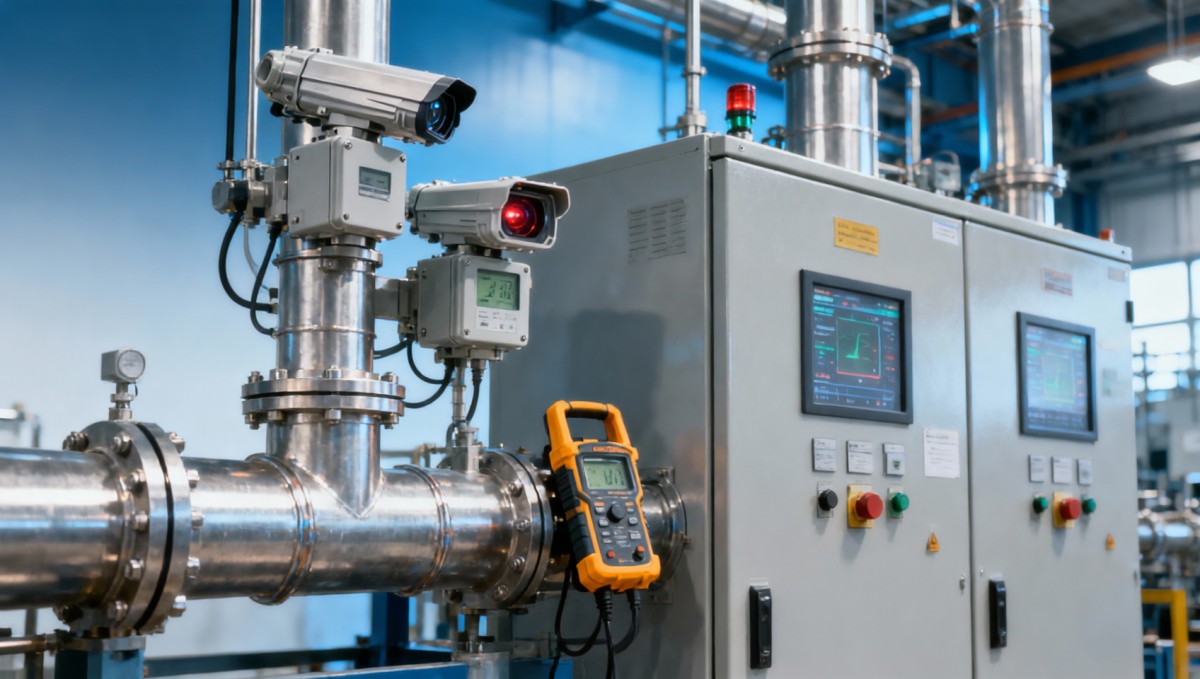
In the instrumentation industry, infrared monitor demand is rising because plants now need continuous measurement, faster alarm response, and better integration with automation systems. In industrial manufacturing, energy and power, environmental monitoring, and laboratory support, the shift from manual sampling to online monitoring is no longer optional. Buyers are looking for monitor platforms that can support 24/7 operation, stable output, and practical maintenance cycles rather than isolated devices with limited field value.
The 2026 market outlook is shaped by three forces: tighter safety expectations, wider digital transformation programs, and more complex gas analysis needs. Infrared monitor systems are often evaluated alongside thermal conductivity monitor, paramagnetic monitor, and electrochemical monitor technologies because no single principle fits every gas composition, installation condition, or budget level. This makes comparison-based procurement more important than brand-led procurement.
For procurement teams and project managers, the key issue is not only detector sensitivity. They also need to balance 3 core dimensions: process fit, compliance fit, and lifecycle cost. A monitor that performs well in a clean indoor laboratory may not be suitable for dusty process areas, outdoor utility stations, or hazardous zones requiring explosion proof monitor design. The right choice depends on where the device will run, what it needs to measure, and how often calibration can be scheduled.
For financial approvers and business decision-makers, the market is also attractive because infrared monitor systems can reduce indirect costs linked to shutdowns, quality deviations, failed inspections, and excessive labor-intensive checks. In many facilities, the real question is not unit price alone, but whether a fixed detector or portable detector configuration can prevent a production interruption that lasts 2–8 hours or a safety investigation that delays project acceptance by 1–2 weeks.
What makes infrared monitor solutions relevant in the broader instrumentation sector?
Instrumentation is the operational backbone of industrial automation and intelligent upgrading. Infrared monitor systems fit naturally into this landscape because they convert gas concentration or process condition into actionable data for control rooms, PLCs, SCADA platforms, and maintenance teams. Their value increases when users need stable trending, remote signaling, and timely fault identification instead of occasional spot checks.
This is why information researchers and distributors often search beyond a single product keyword. They compare oxygen monitor options, high accuracy detector capabilities, and hybrid system layouts that combine fixed detector units for permanent points with portable detector tools for temporary inspection, commissioning, and emergency verification. In real procurement, system logic matters as much as sensor principle.
- Continuous operation support: many projects require monitoring during full production shifts, often 8–24 hours per day, with clear alarm thresholds and output stability.
- Cross-industry adaptability: the same procurement framework may need to serve manufacturing lines, utility rooms, environmental stations, laboratories, and construction-related temporary works.
- Data-driven management: users increasingly expect signal transmission, trend records, and easier integration into plant-wide digital systems rather than standalone local readings.
Which monitor technologies fit different gases, risks, and operating environments?
A common mistake in monitor selection is to treat all gas detection technologies as interchangeable. In practice, infrared monitor, laser monitor, thermal conductivity monitor, paramagnetic monitor, and electrochemical monitor designs each serve different priorities. Some are chosen for selectivity, some for response speed, some for oxygen measurement, and some for lower initial cost. Understanding these differences helps procurement teams avoid overbuying or under-specifying.
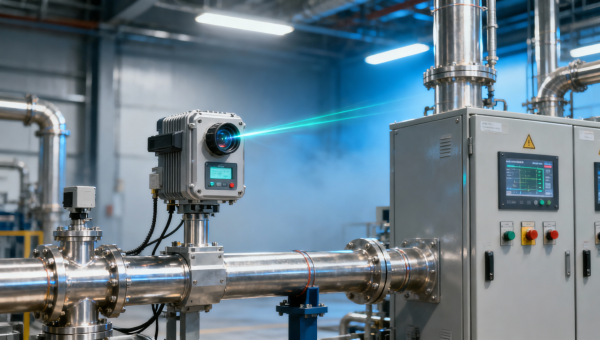
Infrared monitor systems are often selected for gases that absorb infrared radiation and for applications that benefit from stable long-term measurement with less dependence on consumable chemistry. Laser monitor solutions can be favored in applications requiring long optical paths, high selectivity, or fast line-of-sight measurement. Paramagnetic monitor units are widely considered for oxygen monitor duties where magnetic properties support accurate oxygen analysis. Electrochemical monitor products remain common when compact size or lower-entry investment is important.
The table below summarizes practical differences that buyers often review during specification, budget screening, and technical clarification. It is not a replacement for site testing, but it helps define which technology family deserves deeper evaluation for a given project stage.
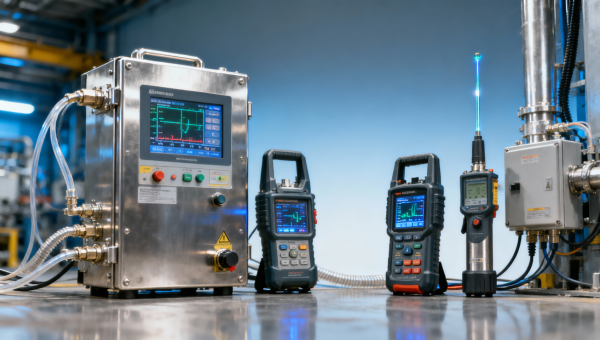
This comparison shows why many users build a mixed architecture. A fixed detector network may be installed at permanent process points, while portable detector devices support maintenance rounds, temporary works, and pre-entry safety checks. In a medium-size facility, this can mean 4–20 fixed points plus several handheld units, depending on zone classification and operating risk.
How do application scenarios change the best choice?
Application scenarios strongly influence monitor selection. In energy and power, users may prioritize reliability during long operating cycles and resistance to variable ambient conditions. In environmental monitoring, data continuity and sample treatment can be critical. In laboratory or medical testing support, response stability and measurement repeatability may outweigh rugged enclosure priorities. In construction engineering or temporary industrial projects, mobility and fast deployment can be more valuable than dense network integration.
Typical fit by scenario
- Hazardous industrial areas: explosion proof monitor or certified installation design is often necessary, especially where flammable gases, dust, or strict plant safety rules apply.
- High-purity or oxygen-sensitive processes: paramagnetic monitor and oxygen monitor solutions are often shortlisted for better process relevance.
- Multi-point safety inspection: portable detector units can reduce response time during maintenance shutdowns, especially when 5–10 locations need quick verification in sequence.
- Automated production lines: fixed detector systems with signal output and control integration usually provide better long-term management value.
What should buyers check before comparing quotations?
Many procurement errors happen before pricing begins. If the technical baseline is unclear, quotations cannot be compared fairly. A lower quote may exclude sample conditioning, alarm modules, mounting accessories, hazardous area requirements, or calibration support. A higher quote may include functions that the site does not need. To avoid delays, buyers should establish a structured checklist covering at least 5 key items before RFQ release.
First, confirm the target gas and concentration range. Second, define whether the task is safety alarm, process control, quality monitoring, or emissions-related measurement. Third, identify installation conditions such as indoor or outdoor use, dust, vibration, temperature range, and hazardous area status. Fourth, decide between fixed detector and portable detector deployment. Fifth, clarify output, communication, and panel integration needs. These 5 checks often determine 70% of selection suitability.
Project leaders should also decide whether they need a high accuracy detector for control optimization or a practical alarm unit for threshold-based warning. The cost difference can be justified in critical process loops, but may be unnecessary for low-frequency inspection tasks. This is where technical and financial teams need a common decision framework rather than separate assumptions.
The following table provides a practical procurement screening model that supports information researchers, purchasers, and finance reviewers when comparing infrared monitor solutions and related alternatives.
A useful procurement habit is to compare total delivered scope rather than instrument body price alone. For example, a lower-priced detector without mounting hardware, cable glands, sample line accessories, commissioning guidance, or calibration recommendations may create hidden cost in the next 7–15 days of project execution. Clear scope alignment reduces rework, approval delays, and site disputes.
A practical 4-step selection process
- Define the job: identify gas type, concentration range, alarm logic, and whether the objective is safety, compliance, or process optimization.
- Define the field condition: hazardous area, ambient temperature, humidity, dust level, ventilation, and mounting limitations should be documented.
- Define the system expectation: output signals, panel integration, relay requirements, and whether data logging or remote diagnostics are required.
- Define support expectations: ask about commissioning scope, recommended calibration interval, spare availability, and typical delivery window such as 2–6 weeks.
How do compliance, maintenance, and total cost affect the real investment?
For safety managers, quality teams, and finance approvers, the most important cost question is rarely the catalog price. The real investment includes installation condition, certification needs, maintenance effort, spare planning, and downtime risk. This is especially true when comparing explosion proof monitor systems with standard indoor units, or when choosing between continuous online analysis and periodic portable detector inspection.
Compliance should be reviewed early. Depending on region and application, buyers may need to consider general electrical safety, hazardous area suitability, industrial EMC expectations, and process-specific acceptance standards. If the instrument is installed in a classified zone, enclosure design, cable entry, and installation practice may matter as much as the detector principle itself. Missing this detail can delay project handover by several days or force last-minute replacement.
Maintenance planning also changes the value equation. An infrared monitor may offer advantages in long-term stability for certain gases, while electrochemical monitor solutions may require more attention to sensor replacement intervals. Paramagnetic monitor and thermal conductivity monitor systems can also have application-specific maintenance considerations linked to sampling cleanliness and process composition. A realistic ownership view should examine the first 12 months, then the next 24 months.
For distributors and engineering contractors, serviceability is a competitive factor. End users increasingly ask how fast field verification can be completed, whether spare modules are standardized, and what support is available during commissioning. A technically sound monitor that is difficult to support in the field may still lose to a slightly simpler but more maintainable solution.
Key risk points that are often overlooked
- Unclear gas background composition can affect whether a high accuracy detector actually delivers meaningful field results.
- Portable detector units are useful, but they do not automatically replace fixed detector protection at permanent risk points.
- An oxygen monitor selected without reviewing process pressure, sample treatment, or contamination risk may show unstable performance.
- Hazardous area requirements should be checked before procurement approval, not after goods arrive at site.
Typical cost-thinking framework
A practical financial review often considers 4 layers: equipment purchase, installation accessories, commissioning and training, and 1–3 year maintenance cost. This framework helps financial approvers understand why two infrared monitor quotations with similar detector names may still differ materially in business value. It also helps project teams explain when a more robust configuration reduces hidden operating cost.
What questions do buyers ask most often before final approval?
Before approval, most stakeholders want direct answers to selection, delivery, and implementation concerns. Information researchers need clear differentiation. Purchasers want scope clarity. Quality and safety teams focus on operating fit. Finance wants cost justification. The FAQ below addresses the questions that most often influence whether an infrared monitor project moves forward smoothly.
How do I choose between a fixed detector and a portable detector?
Choose a fixed detector when the monitoring point is permanent, risk exposure is continuous, or signal integration is needed for alarms and control. Choose a portable detector when the need is temporary, mobile, inspection-based, or linked to maintenance and confined-space checks. Many industrial users need both: fixed coverage for 24/7 risk points and portable verification for 3–10 temporary tasks per week.
When is an explosion proof monitor necessary?
An explosion proof monitor becomes relevant when installation is planned in hazardous areas or where plant rules require equipment suited for potentially explosive atmospheres. Buyers should confirm zone classification, local code requirements, cable entry method, and installation practice before selection. The monitor body alone is not the full answer; the full installation scheme must be suitable for the environment.
Is a high accuracy detector always the better investment?
Not always. A high accuracy detector is valuable when process optimization, quality consistency, or tight threshold control directly affects output, compliance, or product acceptance. For simpler alarm tasks, a robust and maintainable detector may create better value than a premium precision model. Match the instrument grade to the operational decision it supports, not only to the technical specification sheet.
What is a typical lead time for industrial monitor projects?
Lead time depends on configuration complexity, certification needs, quantity, and whether accessories are included. Common project windows range from 2–6 weeks for standard configurations, while customized systems or hazardous area packages may need longer. Buyers should confirm not only production time, but also documentation, accessory packing, and commissioning support readiness.
Why work with a supplier that understands instrumentation, application fit, and project delivery?
Infrared monitor procurement works best when the supplier understands more than a catalog. In the instrumentation sector, real value comes from connecting measurement technology with application conditions, installation reality, compliance expectations, and service response. That matters whether you are screening oxygen monitor options for a utility process, comparing laser monitor and thermal conductivity monitor approaches, or planning a mixed fixed detector and portable detector deployment across a plant.
A capable partner should help you clarify target gas, concentration range, installation zone, output requirement, and calibration logic before quotation finalization. They should also help distinguish between standard industrial use and explosion proof monitor needs, and explain when a high accuracy detector is necessary or when a more practical solution will provide better lifecycle value. This reduces procurement uncertainty and shortens internal approval cycles.
If you are planning for 2026 projects, now is the right time to discuss parameter confirmation, model selection, delivery timing, and integration needs. You can also request support for sample evaluation, application matching, certification review, spare planning, and quote comparison. For distributors, engineering contractors, and end users alike, early clarification often prevents 1–3 rounds of rework during procurement and commissioning.
Contact us to discuss your infrared monitor application, oxygen monitor selection, explosion proof monitor requirements, portable detector or fixed detector planning, expected lead time, and customization scope. If you already have a specification sheet, a target gas list, or a bid requirement, share it for a more focused review and solution recommendation.
Recommended for You
 What Makes a Control Sensor Reliable in Harsh Environments?Control sensor reliability in harsh environments starts with the right oxygen detector, infrared detector, electrochemical detector, or paramagnetic detector for accurate, dependable monitoring.
 Control Sensor Delays Can Undermine Process StabilityControl sensor delays can destabilize operations. Compare paramagnetic detector, electrochemical detector, infrared detector, and oxygen detector options to find a high accuracy sensor for fixed, portable, laboratory, and monitoring sensor needs.
 Laboratory Sensor Repeatability Problems Often Start With SamplingLaboratory sensor repeatability issues often begin with sampling. Compare paramagnetic detector, electrochemical detector, infrared detector, and oxygen detector solutions to improve accuracy.
 Laboratory Sensor Selection Gets Harder With Lower Detection LimitsLaboratory sensor selection gets harder at lower limits. Compare paramagnetic detector, electrochemical detector, infrared detector, oxygen detector, fixed and portable sensor options for high accuracy monitoring and control.
 Portable Sensor Battery Loss Can Distort Long Shift MonitoringPortable sensor battery loss can distort long-shift monitoring. Compare paramagnetic detector, electrochemical detector, infrared detector and oxygen detector options for high accuracy sensor performance.
 Portable Sensor Accuracy in the Field Is Not Always What It SeemsPortable sensor accuracy can differ sharply from lab results. Compare paramagnetic detector, electrochemical detector, infrared detector, and oxygen detector performance to choose a high accuracy sensor for real field use.
 Fixed Sensor vs Portable Checks: Where Results Often DivergeExplore why fixed sensor and portable sensor readings diverge in oxygen detector systems using paramagnetic detector, electrochemical detector, and infrared detector technology.
 What Shortens the Service Life of an Oxygen Detector?Oxygen detector service life can drop fast due to heat, moisture, contamination, and poor calibration. Compare paramagnetic detector, electrochemical detector, and infrared detector solutions now.
 Oxygen Detector False Alarms Often Start With Sensor PlacementOxygen detector false alarms often start with sensor placement. Compare paramagnetic detector, electrochemical detector, and infrared detector options to improve accuracy and safety.
 Infrared Detector Response Time Can Change Your ReadingInfrared detector response time shapes alarm accuracy and stable readings. Compare paramagnetic detector, electrochemical detector, and oxygen detector options for every high accuracy sensor need.
 Infrared Detector Limits That Matter in Mixed Gas ApplicationsInfrared detector limits in mixed gas applications: compare paramagnetic detector, electrochemical detector, and oxygen detector options to choose a high accuracy sensor for portable, fixed, laboratory, control, and monitoring sensor use.
 Why Electrochemical Detector Calibration Fails More Often Than ExpectedElectrochemical detector calibration fails more often than expected—learn how a paramagnetic detector, infrared detector, or oxygen detector comparison helps you choose a high accuracy sensor for fixed, portable, laboratory, control, and monitoring sensor applications.
 Electrochemical Detector Lifespan Drops Fast Under These ConditionsElectrochemical detector lifespan can drop fast in heat, humidity, and corrosive gas. Compare paramagnetic detector, infrared detector, and oxygen detector options to choose a high accuracy sensor with lower lifecycle risk.
 Paramagnetic Detector Drift: What Usually Causes It?Paramagnetic detector drift explained: learn what causes oxygen detector errors, how it compares with electrochemical detector and infrared detector options, and how to keep a high accuracy sensor stable.
 High Accuracy Detector Selection TipsHigh accuracy detector selection tips for fixed detector and portable detector needs, covering explosion proof monitor, oxygen monitor, infrared monitor, and more for safer, smarter buying.
 Oxygen Monitor Export Trends in 2026Oxygen monitor export trends in 2026: explore explosion proof monitor, laser monitor, portable detector, fixed detector, and high accuracy detector demand shaping smarter buying decisions.
 Infrared Monitor Market Outlook 2026Infrared monitor market outlook 2026: compare explosion proof monitor, laser monitor, oxygen monitor, fixed detector and portable detector solutions for safer, smarter industrial projects.
 Where Electrochemical Monitors Work BestElectrochemical monitor guide: compare explosion proof monitor, infrared monitor, laser monitor, oxygen monitor, fixed detector, and portable detector for safer, smarter gas detection choices.
 Paramagnetic Monitor Import Outlook 2026Paramagnetic monitor import outlook 2026: compare explosion proof monitor, laser monitor, infrared monitor, oxygen monitor, and high accuracy detector solutions to source the right fixed or portable detector.
 Thermal Conductivity Monitor Price ShiftThermal conductivity monitor price trends explained with explosion proof monitor, laser monitor, oxygen monitor, and fixed or portable detector options for smarter, safer buying.
 How Laser Monitor Demand Is ChangingLaser monitor demand is changing as buyers compare explosion proof monitor, infrared, electrochemical, and oxygen monitor options for safer, high accuracy detector solutions.
 Oxygen Measurement System Export Demand in 2026Oxygen measurement system demand in 2026 is rising across industrial control equipment, gas quality measurement, emission control system, and process monitoring system markets. Explore key trends and smarter sourcing insights.
 Industrial Control System Trends to Watch in 2026Industrial control system trends for 2026: explore industrial control equipment, process monitoring system, gas quality measurement, oxygen measurement system, and emission control system upgrades.
 How to Improve Process Monitoring System ResultsImprove process monitoring system results with industrial control equipment, gas quality measurement, and emission measurement system strategies for smarter industrial control system performance.
 Emission Control System Import Risks in 2026Emission control system import risks in 2026: learn how industrial control equipment, gas quality measurement, and process monitoring system buyers can avoid delays, compliance issues, and costly mistakes.
 Gas Quality Control for Safer Plant OperationsGas quality control improves safer plant operations with industrial control equipment, gas quality measurement, and an emission measurement system—boost efficiency, compliance, and process monitoring performance.
 What Buyers Miss in Industrial Measurement SystemsIndustrial measurement system buying guide: compare industrial control equipment, gas quality measurement, and emission measurement system risks beyond specs to reduce downtime, cost, and audit issues.
 Process Measurement System Costs ExplainedProcess measurement system costs explained: compare industrial measurement system, gas quality measurement, oxygen measurement system, and emission measurement system options to cut risk and improve control.
 2026 Emission Measurement System Market ShiftEmission measurement system trends for 2026: discover how industrial control equipment, gas quality measurement, and smarter process monitoring systems improve compliance, efficiency, and ROI.
 Why Gas Quality Measurement Fails in the FieldGas quality measurement issues often come from industrial control equipment setup, not sensor limits. Learn how a process measurement system and emission measurement system can improve gas quality control.
 2026 Industrial Control Equipment Price OutlookIndustrial control equipment price outlook for 2026: explore trends in gas quality measurement, emission measurement system, process measurement system, and industrial control system budgeting.
 How Accurate Should an Oxygen Measurement System Be?Oxygen measurement system accuracy impacts gas quality measurement, emission control system performance, and industrial control equipment ROI—learn how to choose the right level for safer, smarter process monitoring.





Search Categories
Search Categories
Latest Article
- What Makes a Control Sensor Reliable in Harsh Environments?Control sensor reliability in harsh environments starts with the right oxygen detector, infrared detector, electrochemical detector, or paramagnetic detector for accurate, dependable monitoring.Posted by:
- Control Sensor Delays Can Undermine Process StabilityControl sensor delays can destabilize operations. Compare paramagnetic detector, electrochemical detector, infrared detector, and oxygen detector options to find a high accuracy sensor for fixed, portable, laboratory, and monitoring sensor needs.Posted by:
- Laboratory Sensor Repeatability Problems Often Start With SamplingLaboratory sensor repeatability issues often begin with sampling. Compare paramagnetic detector, electrochemical detector, infrared detector, and oxygen detector solutions to improve accuracy.Posted by:
Please give us a message
