High Accuracy Detector Selection Tips


Choosing the right high accuracy detector is critical for safety, compliance, and process efficiency. Whether you need a fixed detector or portable detector, or are comparing an explosion proof monitor, laser monitor, thermal conductivity monitor, paramagnetic monitor, electrochemical monitor, infrared monitor, or oxygen monitor, understanding key selection factors helps buyers and decision-makers reduce risk and improve investment value.
In instrumentation-driven industries, detector selection affects more than measurement quality. It influences worker safety, audit readiness, maintenance cost, false alarm frequency, shutdown risk, and long-term asset value. For procurement teams, project managers, quality leaders, and financial approvers, the best choice is rarely the cheapest unit on the quotation sheet. It is the detector that fits the gas type, environment, response target, installation conditions, and lifecycle budget.
This guide explains how to evaluate high accuracy detectors across industrial manufacturing, energy, laboratories, environmental monitoring, automation systems, and engineering projects. It covers detector principles, fixed versus portable deployment, accuracy and calibration considerations, purchasing checkpoints, and practical implementation advice that supports safer and more efficient operations.
Understanding Detector Types and Where They Fit
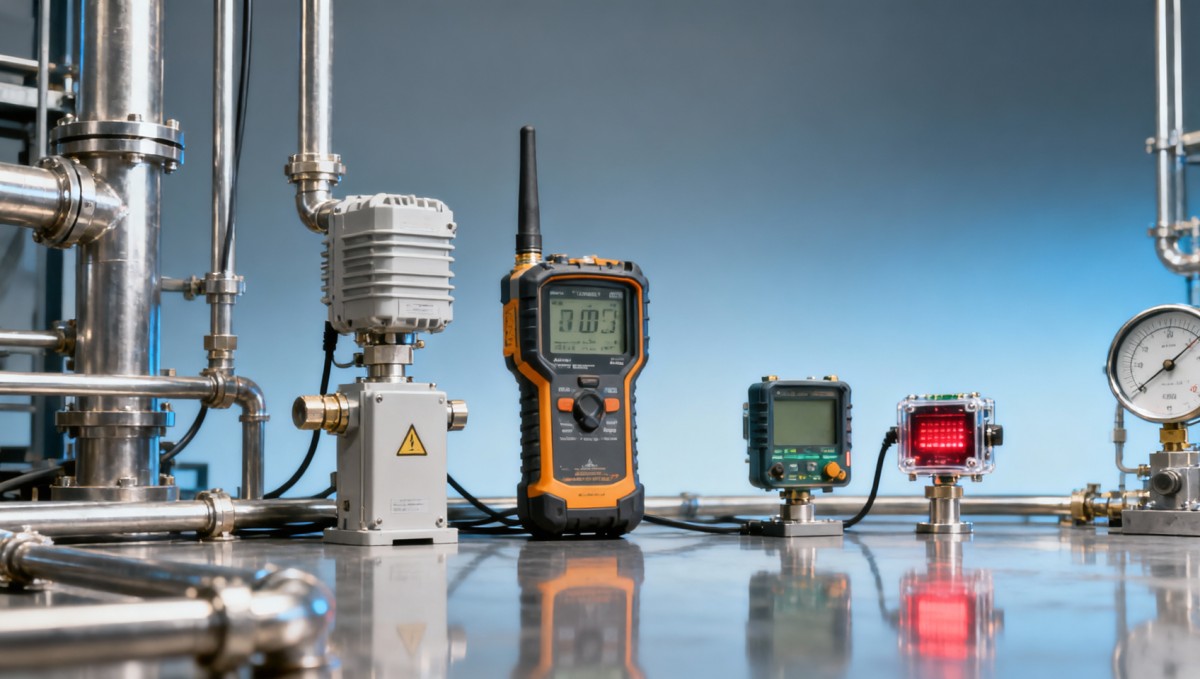
High accuracy detector selection begins with application matching. A detector designed for continuous online monitoring in a plant is different from one used by maintenance staff during confined-space entry. In most projects, the first split is between a fixed detector and a portable detector. Fixed units support 24/7 area monitoring, while portable devices are better for temporary inspection, mobile safety checks, and emergency response.
The second layer of selection is sensing technology. Different monitor types are optimized for different gases, concentration ranges, operating temperatures, and interference risks. For example, electrochemical monitor solutions are often used for toxic gases at low ppm levels, while infrared monitor systems are common for hydrocarbon gases and carbon dioxide. Oxygen monitor selection may involve electrochemical or paramagnetic principles depending on required precision and process stability.
In instrumentation projects, buyers should not treat all high accuracy detectors as interchangeable. A laser monitor can support fast optical analysis in some specialized gas measurement tasks, while a thermal conductivity monitor may fit binary gas mixture measurement under controlled process conditions. An explosion proof monitor is not a sensing principle by itself; it is a housing or safety design requirement for hazardous areas such as Zone 1 or Zone 2 environments.
Typical detector technologies by use case
The comparison below helps decision-makers narrow down the right technical path before requesting quotations. It is especially useful during early design, budget review, and vendor screening.
The key takeaway is that application conditions should drive technology choice. A high accuracy detector only performs well when the sensing method matches the gas properties, target range, and site environment. This avoids expensive redesign after installation.
Core matching questions before specification
- What gas or gases must be detected, and is the target range in ppm, %LEL, or %Vol?
- Is the detector for continuous fixed monitoring, shift-based inspection, or emergency intervention?
- Will the device operate in clean indoor air, corrosive process zones, outdoor weather exposure, or hazardous classified areas?
- What response time is acceptable: under 10 seconds, under 30 seconds, or longer for process trending?
Answering these 4 questions early can eliminate unsuitable options and shorten the sourcing cycle by 1–2 weeks in many projects. It also improves communication between engineering, purchasing, and finance teams.
Accuracy, Response, and Compliance Factors That Matter
When buyers search for a high accuracy detector, they often focus only on the stated accuracy figure, such as ±1% full scale or ±2% reading. In practice, accuracy should be reviewed together with repeatability, resolution, drift, response time, and calibration stability. A detector with attractive catalog accuracy may still perform poorly if drift is high or if the installation environment introduces interference.
For industrial safety applications, response time is often critical. A T90 response of under 30 seconds can be important in leak detection scenarios, while laboratory or process analysis systems may prioritize stability over immediate alarm speed. In oxygen monitoring, a difference between 0.1% and 0.5% Vol may be operationally significant in combustion control, inerting systems, or quality-controlled process environments.
Compliance is another major filter. Project owners should verify whether the detector supports relevant electrical safety, hazardous area design, ingress protection, and calibration traceability expectations. A portable detector used in field inspection may need robust impact protection and IP65 or IP67 enclosure performance. A fixed explosion proof monitor may need compatibility with site wiring, alarms, and control systems.
How to interpret critical specifications
The table below summarizes common specification items that influence real-world performance and purchase confidence.
For finance and procurement teams, these details explain why two detectors with similar headline descriptions may differ sharply in total cost of ownership over 2–5 years. Better stability can reduce calibration labor, spare sensor use, and false shutdown exposure.
Common specification mistakes
- Choosing by detection principle alone without checking interference gases.
- Approving a low upfront price but ignoring recalibration frequency every 30, 60, or 90 days.
- Using a non-hazardous enclosure in an area that requires explosion proof protection.
- Comparing ppm and %Vol instruments without confirming the actual process threshold.
A disciplined specification review helps quality managers and safety officers avoid underperformance after commissioning. It also supports smoother acceptance testing and fewer post-installation change requests.
How to Choose by Industry Scenario and Deployment Model
Different sectors within the broader instrumentation market require different detector strategies. In industrial manufacturing, fixed gas monitoring near process lines, storage points, and ventilation zones is often the baseline. In laboratories and medical testing environments, the focus may shift toward analytical precision, compact installation, and lower background interference. In construction engineering and temporary worksites, portability and ruggedness can be more important than permanent integration.
Energy and power facilities typically combine fixed detector networks with portable detector units for inspection teams. Environmental monitoring projects may rely on continuous analyzers with data logging, while automation control projects may prioritize communication compatibility such as analog output, relay logic, or digital integration into PLC or DCS systems. This is why project teams should think in terms of deployment model, not just product category.
A high accuracy detector should also be selected according to installation height, airflow, maintenance access, and alarm philosophy. For example, oxygen deficiency risks in enclosed spaces may require detector placement at operator breathing height, while some heavier-than-air gases need low-point placement. Poor mounting location can reduce real detection effectiveness even if the detector itself is technically suitable.
Scenario-based selection guide
The table below shows how application context changes the preferred detector configuration and project focus.
This comparison highlights a practical truth: the best detector is contextual. The same site may require 2 or 3 device types to cover operations, maintenance, and emergency response properly.
Deployment checklist for project teams
- Map gas release points, occupied zones, ventilation paths, and likely leak accumulation areas.
- Define alarm levels, such as warning, action, and shutdown thresholds, before procurement approval.
- Check whether the detector needs 4–20 mA, relay, Modbus, or other signal compatibility.
- Confirm maintenance access for bump testing, calibration, and sensor replacement every 6–12 months if required.
For EPC teams and distributors, clear deployment planning reduces late-stage accessory changes, cable rerouting, and enclosure upgrades. That protects margins and shortens installation delays.
Procurement Evaluation, Lifecycle Cost, and Vendor Review
A high accuracy detector should be purchased using lifecycle logic, not unit price logic. The initial quotation is only one part of the business case. Procurement teams should compare calibration gas needs, expected sensor replacement cycle, spare part availability, software or controller compatibility, commissioning support, and training requirements. These factors often determine whether the detector remains reliable after 12, 24, or 36 months of service.
For enterprise decision-makers and finance approvers, it helps to separate cost into 4 layers: acquisition cost, installation cost, maintenance cost, and downtime risk. A slightly higher-priced oxygen monitor or infrared monitor may deliver lower total operating cost if it reduces false alarms, service calls, and line stoppages. This is especially important in automated plants where one interruption can affect multiple process stages.
Vendor review should also include documentation quality. Strong suppliers typically provide application guidance, wiring or integration support, operating manuals, recommended calibration intervals, and after-sales response expectations. Even in generic instrumentation procurement, weak documentation can increase acceptance delays by several days and create confusion during audit or handover.
5-point procurement review framework
- Technical fit: gas type, measuring range, response time, environmental suitability, and hazardous area design.
- Integration fit: controller compatibility, output signals, local alarm functions, and commissioning simplicity.
- Operational fit: calibration frequency, consumables, battery runtime, sensor replacement complexity, and spare availability.
- Commercial fit: lead time, warranty scope, service support, and distributor stock support.
- Risk fit: false alarm tolerance, contamination sensitivity, and impact of detector failure on people or production.
In many practical purchasing cycles, standard lead time can range from 2–6 weeks depending on configuration, quantity, and accessory scope. Projects involving panels, probes, sample conditioning, or hazardous area accessories may require longer planning windows.
Common buying mistakes that increase cost
One common error is purchasing a portable detector for a duty that really needs fixed continuous monitoring. Another is specifying high laboratory-grade precision where plant-level safety monitoring only needs reliable threshold detection. Over-specification can waste budget, while under-specification can create compliance and safety exposure.
Distributors and resellers should also check accessory completeness. Missing mounting brackets, weather shields, calibration kits, docking stations, or communication modules can delay project closure and create unplanned follow-up shipments. A complete bill of materials often saves more than a small unit discount.
For large facilities, pilot deployment of 1–3 units before full rollout can be a practical risk control step. It allows teams to verify alarm stability, user acceptance, and maintenance demands in real conditions before wider purchasing commitment.
Implementation, Maintenance, and Frequently Asked Questions
Even the best high accuracy detector can lose value if installation and maintenance are weak. A structured implementation plan usually includes site survey, detector positioning, wiring or communication setup, calibration verification, alarm testing, operator training, and acceptance documentation. In many industrial projects, these steps can be completed in 5 phases over several days, but large multi-point systems may require 2–4 weeks including approvals and handover.
Maintenance planning should be documented before handover. Teams should define who performs daily checks, weekly visual inspection, monthly bump testing if required, and scheduled calibration at the manufacturer-recommended interval. Portable detector fleets also need charging discipline, sensor status tracking, and functional checks before field use. This is especially important for safety management and quality control teams.
For organizations balancing technical performance with budget control, the goal is not just to buy a detector but to keep it dependable through its service life. That requires spare planning, training, and data review processes that match the actual operating environment.
Basic implementation sequence
- Step 1: Confirm gas risk points, mounting position, and signal requirements.
- Step 2: Install detector hardware and verify environmental suitability.
- Step 3: Perform zero/span check, functional alarm test, and communication verification.
- Step 4: Train operators, maintenance staff, and safety managers on normal and alarm conditions.
- Step 5: Establish calibration schedule, spare list, and service escalation process.
Following these 5 steps reduces startup uncertainty and supports better audit readiness. It also gives finance teams a clearer view of ongoing operating obligations rather than treating the purchase as a one-time event.
FAQ: How often should a detector be calibrated?
The interval depends on sensor type, site conditions, and risk level. Some applications use monthly bump checks and calibration every 3–6 months, while cleaner and more stable environments may support longer intervals. Always align with manufacturer guidance and internal safety procedures.
FAQ: When is a portable detector better than a fixed detector?
Portable detector solutions are better for route inspections, maintenance entry, temporary work zones, and emergency response. Fixed detector systems are better for continuous monitoring of known risk areas where 24/7 protection and automatic alarm output are required.
FAQ: Which matters more, accuracy or response time?
It depends on the use case. In leak detection and personnel safety, fast response may be more important than ultra-fine analytical precision. In process control or laboratory verification, repeatable accuracy may carry greater value. The right balance should be defined at the specification stage.
FAQ: What should buyers request from suppliers?
Request a datasheet, application recommendation, installation guidance, maintenance expectations, lead time estimate, accessory list, and support scope. These documents help compare proposals on a like-for-like basis and reduce downstream purchasing risk.
Selecting a high accuracy detector is a multi-factor decision that combines safety, application fit, measurement performance, installation practicality, and lifecycle cost. Fixed detector and portable detector choices should be aligned with gas type, environment, response requirement, and operational workflow. Technology options such as electrochemical monitor, infrared monitor, thermal conductivity monitor, paramagnetic monitor, laser monitor, explosion proof monitor, and oxygen monitor each have clear strengths when matched correctly to the task.
If you are planning a new project, upgrading existing monitoring points, or comparing detector options for procurement approval, now is the right time to review your application conditions and specification criteria in detail. Contact us to discuss your requirements, get a tailored detector selection plan, and explore more instrumentation solutions for safer and more efficient operations.
Recommended for You
 Monitoring Sensor Prices in 2026: What Is Changing and WhyMonitoring sensor prices in 2026: compare portable sensor, fixed sensor, oxygen detector, infrared detector, electrochemical detector and paramagnetic detector options to choose a high accuracy sensor with better lifecycle value.
 Monitoring Sensor Data Looks Stable Until These Errors Show UpMonitoring sensor errors can hide behind stable data. Compare paramagnetic detector, electrochemical detector, infrared detector, and oxygen detector options for safer, high accuracy sensor selection.
 What Makes a Control Sensor Reliable in Harsh Environments?Control sensor reliability in harsh environments starts with the right oxygen detector, infrared detector, electrochemical detector, or paramagnetic detector for accurate, dependable monitoring.
 Control Sensor Delays Can Undermine Process StabilityControl sensor delays can destabilize operations. Compare paramagnetic detector, electrochemical detector, infrared detector, and oxygen detector options to find a high accuracy sensor for fixed, portable, laboratory, and monitoring sensor needs.
 Laboratory Sensor Repeatability Problems Often Start With SamplingLaboratory sensor repeatability issues often begin with sampling. Compare paramagnetic detector, electrochemical detector, infrared detector, and oxygen detector solutions to improve accuracy.
 Laboratory Sensor Selection Gets Harder With Lower Detection LimitsLaboratory sensor selection gets harder at lower limits. Compare paramagnetic detector, electrochemical detector, infrared detector, oxygen detector, fixed and portable sensor options for high accuracy monitoring and control.
 Portable Sensor Battery Loss Can Distort Long Shift MonitoringPortable sensor battery loss can distort long-shift monitoring. Compare paramagnetic detector, electrochemical detector, infrared detector and oxygen detector options for high accuracy sensor performance.
 Portable Sensor Accuracy in the Field Is Not Always What It SeemsPortable sensor accuracy can differ sharply from lab results. Compare paramagnetic detector, electrochemical detector, infrared detector, and oxygen detector performance to choose a high accuracy sensor for real field use.
 Fixed Sensor vs Portable Checks: Where Results Often DivergeExplore why fixed sensor and portable sensor readings diverge in oxygen detector systems using paramagnetic detector, electrochemical detector, and infrared detector technology.
 Why a High Accuracy Sensor May Still Miss Critical ChangesHigh accuracy sensor limits explained: compare paramagnetic detector, electrochemical detector, infrared detector and oxygen detector options to choose the right fixed, portable, laboratory or monitoring sensor.
 High Accuracy Sensor Claims: Which Specs Actually Prove It?High accuracy sensor selection starts with the right specs. Compare paramagnetic detector, electrochemical detector, infrared detector, and oxygen detector options for fixed, portable, laboratory, control, and monitoring sensor use.
 What Shortens the Service Life of an Oxygen Detector?Oxygen detector service life can drop fast due to heat, moisture, contamination, and poor calibration. Compare paramagnetic detector, electrochemical detector, and infrared detector solutions now.
 Oxygen Detector False Alarms Often Start With Sensor PlacementOxygen detector false alarms often start with sensor placement. Compare paramagnetic detector, electrochemical detector, and infrared detector options to improve accuracy and safety.
 Infrared Detector Response Time Can Change Your ReadingInfrared detector response time shapes alarm accuracy and stable readings. Compare paramagnetic detector, electrochemical detector, and oxygen detector options for every high accuracy sensor need.
 Infrared Detector Limits That Matter in Mixed Gas ApplicationsInfrared detector limits in mixed gas applications: compare paramagnetic detector, electrochemical detector, and oxygen detector options to choose a high accuracy sensor for portable, fixed, laboratory, control, and monitoring sensor use.
 Why Electrochemical Detector Calibration Fails More Often Than ExpectedElectrochemical detector calibration fails more often than expected—learn how a paramagnetic detector, infrared detector, or oxygen detector comparison helps you choose a high accuracy sensor for fixed, portable, laboratory, control, and monitoring sensor applications.
 Electrochemical Detector Lifespan Drops Fast Under These ConditionsElectrochemical detector lifespan can drop fast in heat, humidity, and corrosive gas. Compare paramagnetic detector, infrared detector, and oxygen detector options to choose a high accuracy sensor with lower lifecycle risk.
 Paramagnetic Detector Drift: What Usually Causes It?Paramagnetic detector drift explained: learn what causes oxygen detector errors, how it compares with electrochemical detector and infrared detector options, and how to keep a high accuracy sensor stable.
 Portable Detector Trends to WatchPortable detector trends: explore explosion proof monitor, laser monitor, infrared monitor, oxygen monitor, and high accuracy detector solutions that integrate with fixed detector systems.
 Fixed Detector Setup Mistakes to AvoidFixed detector setup mistakes can impact safety and costs. Learn how explosion proof monitor, oxygen monitor, infrared monitor, and portable detector users avoid false readings.
 High Accuracy Detector Selection TipsHigh accuracy detector selection tips for fixed detector and portable detector needs, covering explosion proof monitor, oxygen monitor, infrared monitor, and more for safer, smarter buying.
 Oxygen Monitor Export Trends in 2026Oxygen monitor export trends in 2026: explore explosion proof monitor, laser monitor, portable detector, fixed detector, and high accuracy detector demand shaping smarter buying decisions.
 Infrared Monitor Market Outlook 2026Infrared monitor market outlook 2026: compare explosion proof monitor, laser monitor, oxygen monitor, fixed detector and portable detector solutions for safer, smarter industrial projects.
 Where Electrochemical Monitors Work BestElectrochemical monitor guide: compare explosion proof monitor, infrared monitor, laser monitor, oxygen monitor, fixed detector, and portable detector for safer, smarter gas detection choices.
 Paramagnetic Monitor Import Outlook 2026Paramagnetic monitor import outlook 2026: compare explosion proof monitor, laser monitor, infrared monitor, oxygen monitor, and high accuracy detector solutions to source the right fixed or portable detector.
 Thermal Conductivity Monitor Price ShiftThermal conductivity monitor price trends explained with explosion proof monitor, laser monitor, oxygen monitor, and fixed or portable detector options for smarter, safer buying.
 How Laser Monitor Demand Is ChangingLaser monitor demand is changing as buyers compare explosion proof monitor, infrared, electrochemical, and oxygen monitor options for safer, high accuracy detector solutions.
 Oxygen Measurement System Export Demand in 2026Oxygen measurement system demand in 2026 is rising across industrial control equipment, gas quality measurement, emission control system, and process monitoring system markets. Explore key trends and smarter sourcing insights.
 Industrial Control System Trends to Watch in 2026Industrial control system trends for 2026: explore industrial control equipment, process monitoring system, gas quality measurement, oxygen measurement system, and emission control system upgrades.
 How to Improve Process Monitoring System ResultsImprove process monitoring system results with industrial control equipment, gas quality measurement, and emission measurement system strategies for smarter industrial control system performance.
 Emission Control System Import Risks in 2026Emission control system import risks in 2026: learn how industrial control equipment, gas quality measurement, and process monitoring system buyers can avoid delays, compliance issues, and costly mistakes.
 Gas Quality Control for Safer Plant OperationsGas quality control improves safer plant operations with industrial control equipment, gas quality measurement, and an emission measurement system—boost efficiency, compliance, and process monitoring performance.








Search Categories
Search Categories
Latest Article
- Monitoring Sensor Prices in 2026: What Is Changing and WhyMonitoring sensor prices in 2026: compare portable sensor, fixed sensor, oxygen detector, infrared detector, electrochemical detector and paramagnetic detector options to choose a high accuracy sensor with better lifecycle value.Posted by:
- Monitoring Sensor Data Looks Stable Until These Errors Show UpMonitoring sensor errors can hide behind stable data. Compare paramagnetic detector, electrochemical detector, infrared detector, and oxygen detector options for safer, high accuracy sensor selection.Posted by:
- What Makes a Control Sensor Reliable in Harsh Environments?Control sensor reliability in harsh environments starts with the right oxygen detector, infrared detector, electrochemical detector, or paramagnetic detector for accurate, dependable monitoring.Posted by:
Please give us a message
