Why a High Accuracy Sensor May Still Miss Critical Changes


A high accuracy sensor can still fail to capture critical changes when response speed, operating conditions, and application fit are overlooked. Whether you rely on a paramagnetic detector, electrochemical detector, infrared detector, oxygen detector, fixed sensor, portable sensor, laboratory sensor, control sensor, or monitoring sensor, true performance depends on more than precision alone. Understanding these limits helps buyers, engineers, and safety teams make smarter decisions.
Why accuracy alone does not guarantee reliable change detection
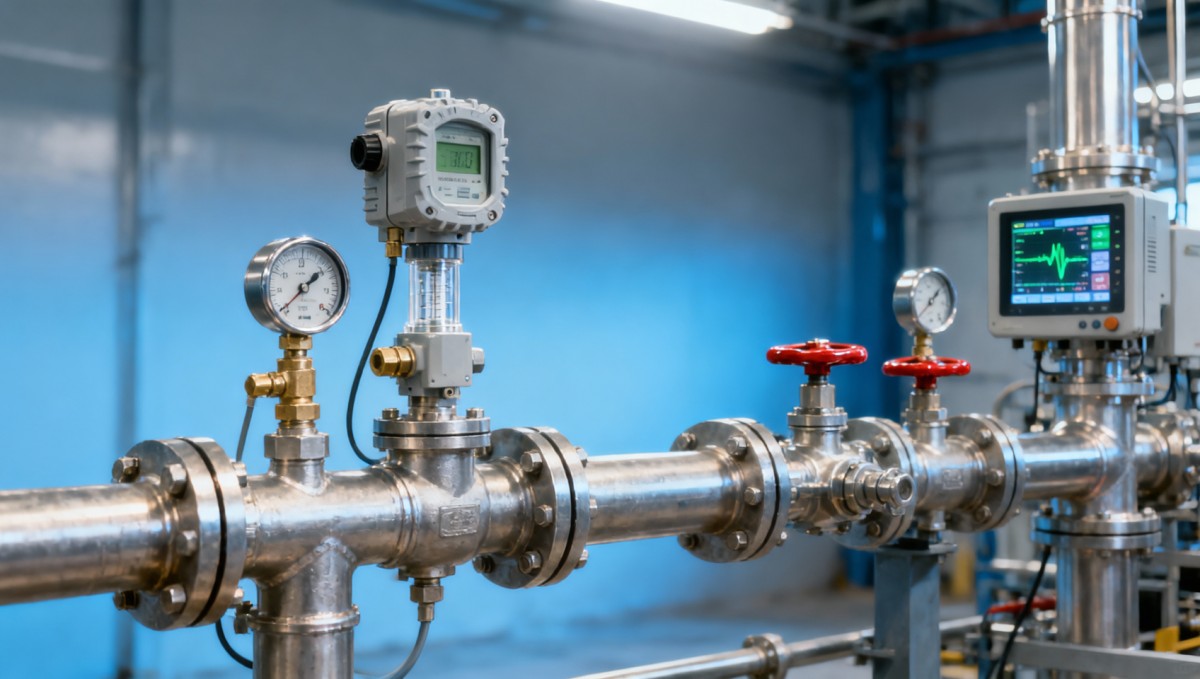
In the instrumentation industry, accuracy is often the first parameter people compare. It is easy to understand why. A specification such as ±1% of reading or ±0.1% full scale appears objective, clean, and comparable. Yet in industrial manufacturing, energy systems, laboratory analysis, environmental monitoring, and safety control, critical events often happen faster or under harsher conditions than a sensor’s accuracy number suggests.
A sensor may be highly accurate in a stable calibration environment of 20°C–25°C, low vibration, and controlled humidity, but still miss a dangerous concentration spike, a pressure pulse, or a temperature swing in the field. This gap matters to operators, technical evaluators, procurement teams, quality managers, and project leaders because missed changes create risk far beyond measurement error. They can affect process control, product quality, maintenance timing, and site safety.
For example, an oxygen detector with excellent static accuracy may not respond quickly enough to a rapid gas displacement event in a confined space. A laboratory sensor may produce highly precise results in batch testing, but a monitoring sensor installed for continuous duty may drift when exposed to dust, solvent vapors, or temperature cycling over 8–24 hours of operation. In these cases, the issue is not whether the sensor is “good” or “bad.” The issue is application fit.
For B2B buyers, the practical question is not simply “How accurate is the sensor?” It is “How accurately does the sensor represent the real process under my conditions, at the speed my process changes, across the maintenance cycle I can actually support?” That is a broader and more useful evaluation standard.
The four performance factors that often matter more than headline accuracy
When measurement performance is reviewed in real projects, four factors repeatedly determine whether a high accuracy sensor performs well or fails to capture critical changes. These factors should be evaluated together during early selection, pilot validation, and final approval.
- Response time: In many gas, flow, and thermal applications, a T90 response time of a few seconds versus tens of seconds can change the usefulness of the reading. Fast process changes demand fast sensor behavior.
- Environmental tolerance: Temperature, humidity, pressure fluctuation, vibration, and contamination can alter signal stability even when nominal accuracy remains attractive on paper.
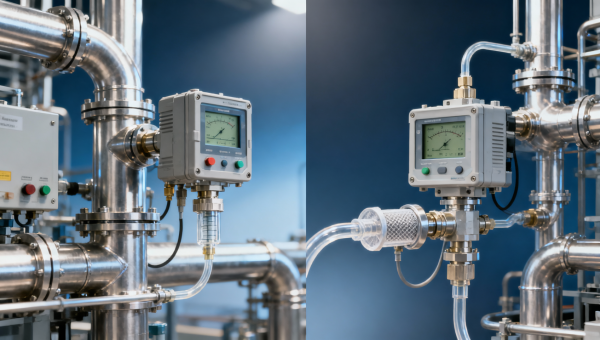
- Installation and sampling path: A detector mounted too far from the event point, or connected through a slow sample line, may detect the change too late for control or alarm action.
- Maintenance and calibration interval: A sensor that is precise on day 1 but drifts after 30–90 days without proper service may not support long-term operational reliability.
This broader view is especially important in modern automation and digital transformation projects. As plants demand tighter control loops, more continuous monitoring, and more integrated safety systems, the cost of slow or misleading detection grows. Instrumentation must support not only measurement, but decision-making in real time.
Which technical limits cause high accuracy sensors to miss critical changes?
A high accuracy sensor can miss meaningful process shifts for several technical reasons. Some are rooted in sensor physics. Others come from system integration. In practice, these limitations are most visible in oxygen analysis, gas detection, process control loops, and online monitoring where dynamic conditions matter more than static calibration results.
Different detector technologies behave differently. A paramagnetic detector may offer strong oxygen measurement performance in suitable gas analysis conditions, while an electrochemical detector may be preferred for portable use or lower-concentration monitoring depending on operating duration and service expectations. Infrared detector technology works well for selected gases but is influenced by optical path conditions and target gas compatibility. No single technology is universally superior.
The table below summarizes the most common reasons a high accuracy sensor may still fail to capture critical changes across industrial and analytical settings. It is intended as a practical screening tool during technical evaluation and procurement review.
For technical teams, this table shifts the conversation from isolated specification review to system performance review. That change is valuable because many failures originate between the sensing element and the process environment, not inside the sensor datasheet itself.
Dynamic measurement is different from static measurement
A static test asks whether the reading is close to a reference point. A dynamic test asks whether the sensor can follow a change as it happens. In many control and safety applications, dynamic performance is more critical. A detector that reaches the correct value after 45 seconds may still be ineffective if the process upset lasts only 10–15 seconds.
This distinction is often overlooked during procurement because accuracy is easier to compare than dynamic behavior. Financial approvers may favor a lower-cost option with attractive stated precision, while operations and safety teams care more about time-to-detection, repeatability under load, and maintenance burden over 6–12 months of use.
Project managers should therefore ask suppliers for application-oriented validation: expected response profile, warm-up period, recommended calibration frequency, allowable ambient range, and known interference conditions. These points often reveal more decision value than one line in a specification sheet.
Common hidden causes in integrated systems
- Signal filtering in the transmitter or PLC slows recognition of a fast process event.
- Sampling pumps, tubing length, and dead volume delay gas arrival by several seconds or more.
- Improper range selection causes a small but important variation to disappear within a broad measuring span.
- Calibration gas or reference condition does not match the actual process matrix, reducing field relevance.
In other words, if a sensor misses a critical change, the root cause may be the entire measurement chain rather than the sensing element alone. That is why integrated instrumentation engineering matters in digital plants and intelligent monitoring systems.
How should different users evaluate sensor fit by application scenario?
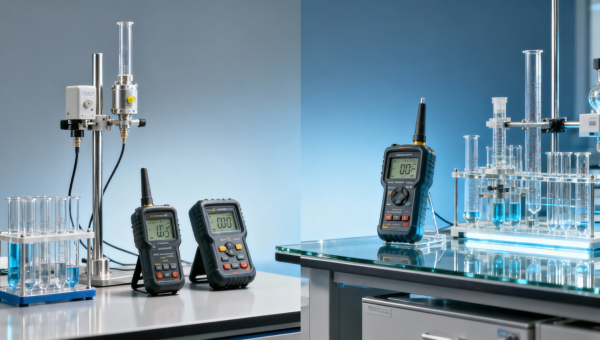
Sensor selection should change with the application. A portable sensor for field safety checks, a fixed sensor for continuous plant monitoring, a laboratory sensor for analytical validation, and a control sensor used inside an automated process loop do not face the same priorities. Accuracy remains important, but its weight changes when response, durability, service interval, and integration needs are different.
For example, an operator performing spot checks may value fast start-up and clear alarms within a 1–5 minute inspection workflow. A quality manager in laboratory analysis may prioritize repeatability, calibration traceability, and environmental stability. A project owner commissioning an online monitoring point may focus on communication output, enclosure suitability, and maintenance access during 24/7 operation.
The table below helps compare typical sensor priorities by scenario. It can be used by distributors, procurement teams, and engineering reviewers to align specification review with actual operating needs rather than generic assumptions.
The key message is simple: the best sensor is not the one with the most impressive isolated number. It is the one whose performance profile matches the task, environment, and maintenance reality of the site.
A practical evaluation checklist for multi-role buying teams
In many instrumentation purchases, final approval involves at least 4 roles: user or operator, technical evaluator, purchaser, and approver. For larger projects, quality, safety, and project management also participate. A shared checklist reduces disagreement and prevents selection based on only one viewpoint.
- Define the event that must be detected: Is it a slow drift over hours, or a fast upset within seconds?
- Map the environment: List temperature range, humidity, vibration, contaminants, installation height, and access limitations.
- Confirm lifecycle requirements: Decide whether calibration is expected weekly, monthly, quarterly, or at another service interval.
- Review integration needs: Check analog output, digital protocol, alarm interface, and enclosure suitability before purchase order release.
- Validate total operational cost: Include spare parts, calibration gases, labor hours, and downtime risk, not just unit price.
This process is especially useful for distributors and resellers who must balance technical suitability with stock strategy, delivery timing, and after-sales service expectations across different customer sectors.
What should procurement and finance teams compare before approving a sensor?
Procurement decisions in the instrumentation sector often become difficult when technical specifications are dense and project timelines are short. Buyers may receive several offers that all claim high precision, but differ in response behavior, calibration needs, operating life, and service support. Finance teams then see price gaps without a clear explanation of value. A structured comparison reduces both technical and commercial risk.
The most useful approach is to compare sensor solutions across 3 layers: acquisition cost, operating cost over 12–24 months, and risk cost if a critical change is missed. This last layer is often ignored, yet in safety, product quality, or process stability applications, it can be the most expensive layer of all.
Before approval, teams should request not only price and nominal accuracy, but also delivery lead time, recommended spare parts, calibration frequency, environmental limitations, communication options, and application notes. In many projects, a 7–15 day supply difference or an added maintenance cycle every month can influence final project economics more than the initial purchase price.
Core comparison points for commercial and technical approval
- Detection reliability: Can the sensor identify the event at the required speed and concentration or range threshold?
- Service burden: How many maintenance actions are expected per quarter, and what consumables are needed?
- Integration cost: Will extra converters, mounting hardware, sampling accessories, or software configuration be required?
- Downtime impact: If recalibration or replacement is needed, how long will the point be unavailable?
A simple total-cost decision model
Teams do not need a complex financial model to make a better decision. Even a simple 4-part review can reveal hidden cost drivers and support cross-functional approval.
This comparison method helps finance teams understand why a moderate price premium may be justified when the sensor reduces maintenance frequency, improves event capture, or shortens commissioning by 1–2 weeks.
For procurement professionals, the goal is not to buy the highest specification on paper. It is to buy the lowest-risk solution that fits budget, installation schedule, and operating model. That is a stronger purchasing outcome.
What are the most common misconceptions, and how can teams avoid them?
Many sensor projects fail not because the technology is weak, but because common assumptions go unchallenged. These misconceptions appear in both new installations and replacement projects, especially when users switch from one detection principle to another without reviewing process differences.
The first misconception is that higher accuracy automatically means better safety or better control. In reality, if the event is transient, the sensor must be fast enough, correctly positioned, and resistant to interference. The second misconception is that one detector type can cover all scenarios. Portable and fixed applications, for instance, often require different design priorities even when they measure the same gas.
A third misconception is that calibration solves everything. Calibration is essential, but it does not remove installation delays, cross-sensitivity, clogged filters, long sample paths, or poor process matching. Teams should treat calibration as one part of performance assurance, not the entire solution.
FAQ for buyers, engineers, and safety teams
How do I know whether response time matters more than accuracy?
Ask how quickly the process can change and how quickly a decision must be made. If a leak, purge event, combustion upset, or oxygen drop can develop within seconds, response time may be more important than marginal improvements in static accuracy. In contrast, slow laboratory equilibrium measurements may place greater weight on repeatability and calibration stability.
Are fixed sensors always better than portable sensors?
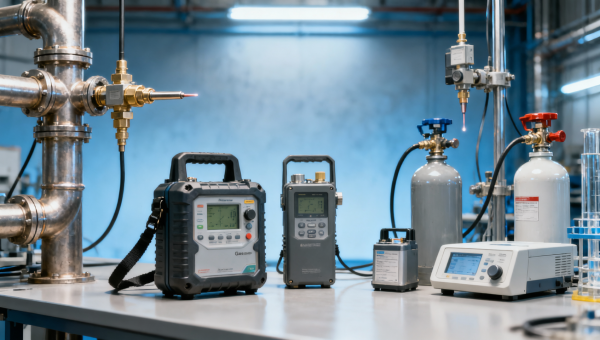
No. Fixed sensors are better for continuous coverage and integration into alarms or control systems, especially in 24/7 operations. Portable sensors are better for flexible spot checks, entry testing, troubleshooting, and mobile safety routines. Many facilities need both, not one or the other.
What should technical evaluators request from suppliers during selection?
Request application-relevant information such as response time, operating temperature range, maintenance interval, known interference gases, installation orientation guidance, calibration method, and output options. If possible, ask for a scenario-based review covering the expected concentration range, environmental conditions, and duty cycle over a normal month or quarter.
How long is a typical delivery and implementation cycle?
This depends on configuration complexity, documentation needs, and whether sampling assemblies or communication accessories are included. Standard items may move faster, while integrated packages often require additional time for accessory confirmation, signal planning, and commissioning support. Teams should confirm delivery, installation preparation, and site acceptance as separate milestones.
A disciplined review of these questions can prevent expensive rework. In practice, 3 early checks usually catch most issues: confirm application conditions, verify dynamic performance, and review service requirements over the planned operating period.
Why work with a partner that understands instrumentation beyond the datasheet?
In instrumentation, the best result comes from aligning sensor technology, process conditions, installation method, and maintenance plan from the start. That requires more than quoting a model number. It requires understanding measurement objectives across industrial manufacturing, energy and power, environmental monitoring, medical testing, laboratory analysis, construction engineering, and automation control.
A capable instrumentation partner helps you compare paramagnetic detector, electrochemical detector, infrared detector, oxygen detector, fixed sensor, portable sensor, laboratory sensor, control sensor, and monitoring sensor options against actual operating conditions. That support is valuable when you need to balance 5 key factors at once: performance, integration, compliance expectations, delivery timing, and lifecycle cost.
If you are evaluating a new project or replacing an underperforming sensor, you can contact us for practical support on parameter confirmation, product selection, detector technology comparison, operating condition review, sample path planning, communication interface matching, delivery lead time, sample availability, and quotation discussion. We can also help structure a 3-step review covering application analysis, configuration recommendation, and implementation planning.
This approach helps information researchers gather useful technical input, supports operators with workable field solutions, gives procurement clearer comparison logic, and gives project leaders a smoother path from specification to deployment. When critical changes matter, the right sensor decision starts with the right evaluation framework.
Recommended for You
 How to Choose an Oxygen Sensor That LastsOxygen sensor selection made practical: learn how to choose a durable sensor for oxygen analysis, combustion analysis, environmental analysis, safety analysis, and air monitoring.
 Monitoring Sensor Prices in 2026: What Is Changing and WhyMonitoring sensor prices in 2026: compare portable sensor, fixed sensor, oxygen detector, infrared detector, electrochemical detector and paramagnetic detector options to choose a high accuracy sensor with better lifecycle value.
 Monitoring Sensor Data Looks Stable Until These Errors Show UpMonitoring sensor errors can hide behind stable data. Compare paramagnetic detector, electrochemical detector, infrared detector, and oxygen detector options for safer, high accuracy sensor selection.
 What Makes a Control Sensor Reliable in Harsh Environments?Control sensor reliability in harsh environments starts with the right oxygen detector, infrared detector, electrochemical detector, or paramagnetic detector for accurate, dependable monitoring.
 Control Sensor Delays Can Undermine Process StabilityControl sensor delays can destabilize operations. Compare paramagnetic detector, electrochemical detector, infrared detector, and oxygen detector options to find a high accuracy sensor for fixed, portable, laboratory, and monitoring sensor needs.
 Laboratory Sensor Repeatability Problems Often Start With SamplingLaboratory sensor repeatability issues often begin with sampling. Compare paramagnetic detector, electrochemical detector, infrared detector, and oxygen detector solutions to improve accuracy.
 Laboratory Sensor Selection Gets Harder With Lower Detection LimitsLaboratory sensor selection gets harder at lower limits. Compare paramagnetic detector, electrochemical detector, infrared detector, oxygen detector, fixed and portable sensor options for high accuracy monitoring and control.
 Portable Sensor Battery Loss Can Distort Long Shift MonitoringPortable sensor battery loss can distort long-shift monitoring. Compare paramagnetic detector, electrochemical detector, infrared detector and oxygen detector options for high accuracy sensor performance.
 Portable Sensor Accuracy in the Field Is Not Always What It SeemsPortable sensor accuracy can differ sharply from lab results. Compare paramagnetic detector, electrochemical detector, infrared detector, and oxygen detector performance to choose a high accuracy sensor for real field use.
 Fixed Sensor vs Portable Checks: Where Results Often DivergeExplore why fixed sensor and portable sensor readings diverge in oxygen detector systems using paramagnetic detector, electrochemical detector, and infrared detector technology.
 Fixed Sensor Installation Mistakes That Lead to Unstable DataFixed sensor installation mistakes can destabilize data from paramagnetic detector, electrochemical detector, infrared detector, and oxygen detector systems. Learn how high accuracy sensor setup improves monitoring sensor and control sensor performance.
 Why a High Accuracy Sensor May Still Miss Critical ChangesHigh accuracy sensor limits explained: compare paramagnetic detector, electrochemical detector, infrared detector and oxygen detector options to choose the right fixed, portable, laboratory or monitoring sensor.
 High Accuracy Sensor Claims: Which Specs Actually Prove It?High accuracy sensor selection starts with the right specs. Compare paramagnetic detector, electrochemical detector, infrared detector, and oxygen detector options for fixed, portable, laboratory, control, and monitoring sensor use.
 What Shortens the Service Life of an Oxygen Detector?Oxygen detector service life can drop fast due to heat, moisture, contamination, and poor calibration. Compare paramagnetic detector, electrochemical detector, and infrared detector solutions now.
 Oxygen Detector False Alarms Often Start With Sensor PlacementOxygen detector false alarms often start with sensor placement. Compare paramagnetic detector, electrochemical detector, and infrared detector options to improve accuracy and safety.
 Infrared Detector Response Time Can Change Your ReadingInfrared detector response time shapes alarm accuracy and stable readings. Compare paramagnetic detector, electrochemical detector, and oxygen detector options for every high accuracy sensor need.
 Infrared Detector Limits That Matter in Mixed Gas ApplicationsInfrared detector limits in mixed gas applications: compare paramagnetic detector, electrochemical detector, and oxygen detector options to choose a high accuracy sensor for portable, fixed, laboratory, control, and monitoring sensor use.
 Why Electrochemical Detector Calibration Fails More Often Than ExpectedElectrochemical detector calibration fails more often than expected—learn how a paramagnetic detector, infrared detector, or oxygen detector comparison helps you choose a high accuracy sensor for fixed, portable, laboratory, control, and monitoring sensor applications.
 Electrochemical Detector Lifespan Drops Fast Under These ConditionsElectrochemical detector lifespan can drop fast in heat, humidity, and corrosive gas. Compare paramagnetic detector, infrared detector, and oxygen detector options to choose a high accuracy sensor with lower lifecycle risk.
 Paramagnetic Detector Drift: What Usually Causes It?Paramagnetic detector drift explained: learn what causes oxygen detector errors, how it compares with electrochemical detector and infrared detector options, and how to keep a high accuracy sensor stable.
 When Does a Paramagnetic Detector Outperform Other O2 Methods?Paramagnetic detector vs electrochemical detector and infrared detector: learn when this oxygen detector delivers high accuracy sensor performance for fixed, portable, laboratory, control, and monitoring sensor applications.
 Portable Detector Trends to WatchPortable detector trends: explore explosion proof monitor, laser monitor, infrared monitor, oxygen monitor, and high accuracy detector solutions that integrate with fixed detector systems.
 Fixed Detector Setup Mistakes to AvoidFixed detector setup mistakes can impact safety and costs. Learn how explosion proof monitor, oxygen monitor, infrared monitor, and portable detector users avoid false readings.
 High Accuracy Detector Selection TipsHigh accuracy detector selection tips for fixed detector and portable detector needs, covering explosion proof monitor, oxygen monitor, infrared monitor, and more for safer, smarter buying.
 Oxygen Monitor Export Trends in 2026Oxygen monitor export trends in 2026: explore explosion proof monitor, laser monitor, portable detector, fixed detector, and high accuracy detector demand shaping smarter buying decisions.
 Infrared Monitor Market Outlook 2026Infrared monitor market outlook 2026: compare explosion proof monitor, laser monitor, oxygen monitor, fixed detector and portable detector solutions for safer, smarter industrial projects.
 Where Electrochemical Monitors Work BestElectrochemical monitor guide: compare explosion proof monitor, infrared monitor, laser monitor, oxygen monitor, fixed detector, and portable detector for safer, smarter gas detection choices.
 Paramagnetic Monitor Import Outlook 2026Paramagnetic monitor import outlook 2026: compare explosion proof monitor, laser monitor, infrared monitor, oxygen monitor, and high accuracy detector solutions to source the right fixed or portable detector.
 Thermal Conductivity Monitor Price ShiftThermal conductivity monitor price trends explained with explosion proof monitor, laser monitor, oxygen monitor, and fixed or portable detector options for smarter, safer buying.
 How Laser Monitor Demand Is ChangingLaser monitor demand is changing as buyers compare explosion proof monitor, infrared, electrochemical, and oxygen monitor options for safer, high accuracy detector solutions.
 Oxygen Measurement System Export Demand in 2026Oxygen measurement system demand in 2026 is rising across industrial control equipment, gas quality measurement, emission control system, and process monitoring system markets. Explore key trends and smarter sourcing insights.
 Industrial Control System Trends to Watch in 2026Industrial control system trends for 2026: explore industrial control equipment, process monitoring system, gas quality measurement, oxygen measurement system, and emission control system upgrades.


Search Categories
Search Categories
Latest Article
- How to Choose an Oxygen Sensor That LastsOxygen sensor selection made practical: learn how to choose a durable sensor for oxygen analysis, combustion analysis, environmental analysis, safety analysis, and air monitoring.Posted by:
- Monitoring Sensor Prices in 2026: What Is Changing and WhyMonitoring sensor prices in 2026: compare portable sensor, fixed sensor, oxygen detector, infrared detector, electrochemical detector and paramagnetic detector options to choose a high accuracy sensor with better lifecycle value.Posted by:
- Monitoring Sensor Data Looks Stable Until These Errors Show UpMonitoring sensor errors can hide behind stable data. Compare paramagnetic detector, electrochemical detector, infrared detector, and oxygen detector options for safer, high accuracy sensor selection.Posted by:
Please give us a message
