Fixed Detector Setup Mistakes to Avoid


Avoiding setup errors is essential to getting reliable results from any fixed detector system. Whether you use an explosion proof monitor, laser monitor, thermal conductivity monitor, paramagnetic monitor, electrochemical monitor, infrared monitor, oxygen monitor, high accuracy detector, fixed detector, or portable detector, small installation mistakes can lead to false readings, safety risks, and higher operating costs. This guide highlights the most common issues and how to prevent them.
For instrumentation buyers, plant managers, safety teams, and project engineers, detector setup is not only a technical task. It affects compliance, shutdown risk, maintenance cost, and procurement value over a service life that often runs 5 to 10 years. A well-selected fixed detector can still underperform if the mounting location, calibration plan, wiring method, or environmental protection level is wrong.
In industrial manufacturing, power generation, laboratory analysis, environmental monitoring, and construction engineering, setup mistakes often appear during fast-track installation, retrofit projects, or cost-driven procurement. The practical goal is simple: get accurate readings, stable alarms, and predictable maintenance from day 1. The sections below explain where setup errors happen most often and how to reduce them before commissioning.
Wrong Installation Location: The Most Expensive Early Mistake

A fixed detector must be installed where the target gas or condition is most likely to be present, not where mounting is easiest. In many projects, teams place units near cable routes, existing brackets, or low-interference areas for convenience. That shortcut can create a detection delay of several minutes, which is unacceptable in confined spaces, chemical handling zones, fuel gas lines, or oxygen monitoring points.
Density and process behavior matter. Lighter gases tend to accumulate higher, while heavier gases often settle near floor level or low pockets. Airflow from fans, ducts, doors, and process exhaust can also push gases away from the detector face. A detector installed even 2 to 5 meters from the likely leak point may produce slower response than expected, especially in outdoor or high-ventilation environments.
Another frequent error is ignoring service access. If calibration caps, bump testing ports, or sensor replacement areas are blocked by pipework or platforms, routine maintenance becomes irregular. Over 12 to 24 months, this usually leads to missed testing cycles, higher labor time, and reduced confidence in alarm reliability.
Key placement factors to assess before mounting
- Leak source distance: keep the detector close enough to the credible release point, often within a practical range defined by site risk assessment and airflow pattern.
- Mounting height: match gas behavior, such as high-level placement for lighter gases and low-level placement for heavier gases.
- Ventilation impact: review fans, louvers, open doors, and seasonal wind effects.
- Access clearance: leave room for calibration, sensor replacement, and periodic inspection.
- Obstruction risk: avoid dead zones behind equipment, columns, or enclosed machine frames.
The table below provides a practical location checklist for common detector types used across instrumentation projects. It can help procurement teams and installers align the specification with actual field conditions before final mounting.
The main takeaway is that location should be based on release behavior, ventilation, and maintenance access, not only on drawing convenience. A 30-minute site walk with process, safety, and instrumentation personnel often prevents months of nuisance alarms or blind spots after startup.
Ignoring Environmental and Process Conditions
Many fixed detector problems start with a mismatch between the sensor technology and the real operating environment. A detector may be suitable on paper, yet unstable in the field because of humidity, ambient temperature, vibration, dust loading, corrosive vapors, or washdown cycles. In industrial online monitoring, even a small environmental mismatch can shorten sensor life by 20% to 40%.
Electrochemical monitor performance can drift in high humidity or under repeated temperature swings. Infrared monitor optics may be affected by condensation, contamination, or steam. Thermal conductivity monitor applications often require stable flow and controlled sampling conditions. Paramagnetic monitor systems can also become unreliable if sample lines are long, leaking, or contaminated.
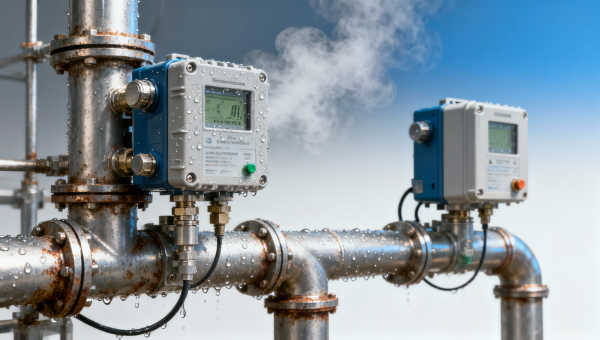
Outdoor installations need special attention. Rain shields, sun exposure, enclosure ratings, cable glands, and condensation control all matter. A detector operating in temperatures from -20°C to 50°C may require different mounting and protection details than one installed in a climate-controlled laboratory at 18°C to 25°C. The setup team should verify both process temperature and ambient temperature, because the two are not always the same.
High-risk environmental mismatches
Temperature, humidity, and ingress protection
If the selected enclosure and accessories do not match the site, moisture ingress and corrosion become common failure points. For example, a high accuracy detector installed in a wet utility corridor without proper sealing may pass factory inspection but fail within 6 to 12 months due to connector oxidation or unstable readings.
Vibration, dust, and chemical interference
In compressor rooms, generator skids, and heavy manufacturing lines, vibration can loosen terminals and shift alignment. In dusty areas, a laser monitor or infrared monitor may require more frequent lens checks. In chemical plants or wastewater zones, background compounds may interfere with readings unless cross-sensitivity is reviewed during selection.
Use the following comparison to match setup conditions with practical controls during design and commissioning.
This step is especially important for procurement teams comparing detector quotes. A lower upfront price may not include the accessories needed for washdown, hazardous area sealing, or outdoor durability. When lifecycle cost is reviewed over 3 to 5 years, the cheaper configuration can become the more expensive option.
Calibration, Bump Testing, and Commissioning Gaps
Even the best fixed detector setup is incomplete without a realistic commissioning and verification plan. One common mistake is treating calibration as a one-time startup step rather than an ongoing control process. Another is skipping bump testing because the detector powers on and appears stable. Power-up status alone does not confirm correct sensor response.
A practical setup plan should include baseline verification, alarm simulation, signal loop confirmation, and maintenance access checks. For many installations, bump testing before handover and then at defined intervals is more useful than relying only on annual calibration. In higher-risk applications, monthly or quarterly checks are common, while lower-exposure environments may use a longer interval based on site policy and sensor type.
Commissioning gaps also appear in control system integration. If the detector output is scaled incorrectly at the PLC, DCS, or BMS side, the field device may be accurate while the control room shows the wrong value. A simple 4–20 mA scaling error can turn a real alarm into a delayed response event. This is why setup should include both local and system-side verification.
A 5-step startup verification process
- Confirm model, sensor type, and range match the purchase specification and process requirement.
- Inspect mounting, cable glands, grounding, and environmental protection details.
- Verify local zero/span or equivalent baseline checks according to the manufacturer guidance.
- Test alarms, output signals, and control system mapping from detector to final interface.
- Record commissioning date, test gas details, responsible personnel, and next service interval.
How often should checks be scheduled?
There is no single universal interval, but many industrial users plan visual inspection every 1 to 4 weeks, bump testing every 1 to 3 months, and full calibration every 3 to 12 months depending on process severity, detector type, and regulatory environment. The key is consistency. A good fixed detector setup includes a maintenance plan before the equipment is handed over.
For buyers and finance approvers, this is where service support matters. A detector with shorter calibration time, simpler sensor exchange, or better diagnostic prompts may reduce labor hours significantly across 20, 50, or 100 installed points. Initial price should be reviewed together with annual service effort, spare part availability, and downtime exposure.
Wiring, Power, and Integration Errors That Distort Readings
Electrical and communication mistakes are another major cause of false readings in detector projects. In instrumentation systems, stable measurement depends on more than the sensor alone. It also depends on correct supply voltage, grounding, shielding, cable routing, and signal mapping. A fixed detector that is electrically noisy can behave like a bad sensor even when the sensing element is healthy.
Common installation issues include shared grounding with high-power equipment, long cable runs without compensation, incorrect polarity, undersized power supply, and mixing signal cables with motor lines. In plants with variable-frequency drives, welding equipment, or large pumps, electromagnetic interference can create erratic outputs, dropped communication, or nuisance alarms. These issues often appear intermittently, making troubleshooting expensive.
Another overlooked issue is accessory compatibility. Explosion proof monitor installations may require specific cable entries, sealing fittings, and certified connection practices for hazardous areas. If installers use general-purpose accessories to save time, the detector may lose the protection intent of the overall setup. This can trigger project delays during inspection or site acceptance.
Electrical checks that should be completed before handover
- Verify supply voltage under load, not only at no-load condition.
- Check loop scaling for 4–20 mA or equivalent output across detector, barrier, PLC, and HMI.
- Separate signal and power cabling where practical, especially near motors or drives.
- Confirm grounding and shielding method according to the site instrumentation standard.
- Test alarm relay logic, fail-safe behavior, and communication mapping point by point.
A robust handover package should include wiring diagrams, terminal schedules, signal range settings, and a point-by-point test record. For projects with 10 or more detectors, these documents reduce troubleshooting time substantially. For distributors and system integrators, clear documentation also improves after-sales support and spare-part accuracy.
From a procurement perspective, installation quality should be treated as part of total system value. Choosing a qualified supplier or service partner who can support wiring review, commissioning, and integration testing often prevents costly rework after startup.
Selection and Procurement Mistakes That Create Setup Problems Later
Many setup failures actually begin during specification and purchasing. If the detector range, sensor technology, enclosure protection, or maintenance method does not match the application, field installation teams are forced to work around the mismatch. That usually increases engineering time and lowers operating confidence. A good procurement process reduces setup risk before equipment even arrives on site.
A common mistake is buying by product label alone. Terms such as oxygen monitor, infrared monitor, or high accuracy detector describe broad categories, not application suitability. The real questions are more specific: What is the target gas or parameter? What is the expected concentration range? Is the area indoor or outdoor? Is the response point continuous or occasional? What is the maintenance capability of the plant?
Another issue is underestimating lifecycle items. Sensor replacement interval, consumables, calibration gas access, spare lead time, and service support affect annual budget more than many buyers expect. A detector with a 2-week spare lead time may be manageable in one site, but not in a critical utility or energy application where any outage is costly.
Procurement criteria that reduce future setup trouble
The table below can be used by project managers, purchasing teams, and technical approvers to compare detector solutions beyond price alone.
The best purchasing outcome is not the lowest unit cost. It is the detector package that matches the process, installs cleanly, integrates predictably, and can be maintained within the site’s actual resources. For many B2B projects, asking 6 to 8 technical questions before purchase saves more money than negotiating a small discount on hardware alone.
FAQ for buyers and project teams
How do I know if a fixed detector is suitable for my site?
Start with four checks: target media, concentration range, environmental condition, and integration method. If any one of these is unclear, request a technical review before ordering. This is especially important for retrofits, mixed-technology sites, and outdoor hazardous areas.
What is the usual project timeline for setup and commissioning?
For a straightforward project, installation and commissioning may take 2 to 7 days after equipment arrival, depending on cable readiness and system integration. Larger projects with 20 or more points often require staged verification and documentation over 2 to 4 weeks.
Which mistake causes the most rework?
Incorrect location is usually the most expensive because it affects response time, cable routing, maintenance access, and sometimes detector quantity. Repositioning after startup often costs far more than planning the layout properly during design review.
Practical Setup Guidance for Better Long-Term Performance
To avoid fixed detector setup mistakes, teams should treat installation as a cross-functional task that involves engineering, safety, procurement, operations, and maintenance. A detector is part of a larger measurement and control system, so success depends on the full chain: specification, placement, wiring, commissioning, and service planning.
The most effective projects use a simple review sequence before handover. First, confirm application fit. Second, validate placement by process risk and airflow. Third, check electrical and integration details. Fourth, complete documented commissioning. Fifth, lock in a realistic maintenance interval. These 5 steps reduce the chance of false alarms, blind spots, and avoidable service calls.
For instrumentation buyers and decision-makers, the real value of a detector solution lies in stable performance over years of operation, not only in catalog specifications. If you are selecting an explosion proof monitor, electrochemical monitor, infrared monitor, oxygen monitor, or another fixed detector for industrial, laboratory, environmental, or utility use, a technically aligned setup plan will protect both safety and budget.
If you need help comparing detector types, reviewing installation conditions, or building a commissioning checklist for your project, contact us to discuss your application. You can also request a tailored solution, product details, or additional guidance on detector selection, integration, and maintenance planning.
Recommended for You
 How to Choose an Oxygen Sensor That LastsOxygen sensor selection made practical: learn how to choose a durable sensor for oxygen analysis, combustion analysis, environmental analysis, safety analysis, and air monitoring.
 Monitoring Sensor Prices in 2026: What Is Changing and WhyMonitoring sensor prices in 2026: compare portable sensor, fixed sensor, oxygen detector, infrared detector, electrochemical detector and paramagnetic detector options to choose a high accuracy sensor with better lifecycle value.
 Monitoring Sensor Data Looks Stable Until These Errors Show UpMonitoring sensor errors can hide behind stable data. Compare paramagnetic detector, electrochemical detector, infrared detector, and oxygen detector options for safer, high accuracy sensor selection.
 What Makes a Control Sensor Reliable in Harsh Environments?Control sensor reliability in harsh environments starts with the right oxygen detector, infrared detector, electrochemical detector, or paramagnetic detector for accurate, dependable monitoring.
 Control Sensor Delays Can Undermine Process StabilityControl sensor delays can destabilize operations. Compare paramagnetic detector, electrochemical detector, infrared detector, and oxygen detector options to find a high accuracy sensor for fixed, portable, laboratory, and monitoring sensor needs.
 Laboratory Sensor Repeatability Problems Often Start With SamplingLaboratory sensor repeatability issues often begin with sampling. Compare paramagnetic detector, electrochemical detector, infrared detector, and oxygen detector solutions to improve accuracy.
 Laboratory Sensor Selection Gets Harder With Lower Detection LimitsLaboratory sensor selection gets harder at lower limits. Compare paramagnetic detector, electrochemical detector, infrared detector, oxygen detector, fixed and portable sensor options for high accuracy monitoring and control.
 Portable Sensor Battery Loss Can Distort Long Shift MonitoringPortable sensor battery loss can distort long-shift monitoring. Compare paramagnetic detector, electrochemical detector, infrared detector and oxygen detector options for high accuracy sensor performance.
 Portable Sensor Accuracy in the Field Is Not Always What It SeemsPortable sensor accuracy can differ sharply from lab results. Compare paramagnetic detector, electrochemical detector, infrared detector, and oxygen detector performance to choose a high accuracy sensor for real field use.
 Fixed Sensor vs Portable Checks: Where Results Often DivergeExplore why fixed sensor and portable sensor readings diverge in oxygen detector systems using paramagnetic detector, electrochemical detector, and infrared detector technology.
 Fixed Sensor Installation Mistakes That Lead to Unstable DataFixed sensor installation mistakes can destabilize data from paramagnetic detector, electrochemical detector, infrared detector, and oxygen detector systems. Learn how high accuracy sensor setup improves monitoring sensor and control sensor performance.
 Why a High Accuracy Sensor May Still Miss Critical ChangesHigh accuracy sensor limits explained: compare paramagnetic detector, electrochemical detector, infrared detector and oxygen detector options to choose the right fixed, portable, laboratory or monitoring sensor.
 High Accuracy Sensor Claims: Which Specs Actually Prove It?High accuracy sensor selection starts with the right specs. Compare paramagnetic detector, electrochemical detector, infrared detector, and oxygen detector options for fixed, portable, laboratory, control, and monitoring sensor use.
 What Shortens the Service Life of an Oxygen Detector?Oxygen detector service life can drop fast due to heat, moisture, contamination, and poor calibration. Compare paramagnetic detector, electrochemical detector, and infrared detector solutions now.
 Oxygen Detector False Alarms Often Start With Sensor PlacementOxygen detector false alarms often start with sensor placement. Compare paramagnetic detector, electrochemical detector, and infrared detector options to improve accuracy and safety.
 Infrared Detector Response Time Can Change Your ReadingInfrared detector response time shapes alarm accuracy and stable readings. Compare paramagnetic detector, electrochemical detector, and oxygen detector options for every high accuracy sensor need.
 Infrared Detector Limits That Matter in Mixed Gas ApplicationsInfrared detector limits in mixed gas applications: compare paramagnetic detector, electrochemical detector, and oxygen detector options to choose a high accuracy sensor for portable, fixed, laboratory, control, and monitoring sensor use.
 Why Electrochemical Detector Calibration Fails More Often Than ExpectedElectrochemical detector calibration fails more often than expected—learn how a paramagnetic detector, infrared detector, or oxygen detector comparison helps you choose a high accuracy sensor for fixed, portable, laboratory, control, and monitoring sensor applications.
 Electrochemical Detector Lifespan Drops Fast Under These ConditionsElectrochemical detector lifespan can drop fast in heat, humidity, and corrosive gas. Compare paramagnetic detector, infrared detector, and oxygen detector options to choose a high accuracy sensor with lower lifecycle risk.
 Paramagnetic Detector Drift: What Usually Causes It?Paramagnetic detector drift explained: learn what causes oxygen detector errors, how it compares with electrochemical detector and infrared detector options, and how to keep a high accuracy sensor stable.
 When Does a Paramagnetic Detector Outperform Other O2 Methods?Paramagnetic detector vs electrochemical detector and infrared detector: learn when this oxygen detector delivers high accuracy sensor performance for fixed, portable, laboratory, control, and monitoring sensor applications.
 Portable Detector Trends to WatchPortable detector trends: explore explosion proof monitor, laser monitor, infrared monitor, oxygen monitor, and high accuracy detector solutions that integrate with fixed detector systems.
 Fixed Detector Setup Mistakes to AvoidFixed detector setup mistakes can impact safety and costs. Learn how explosion proof monitor, oxygen monitor, infrared monitor, and portable detector users avoid false readings.
 High Accuracy Detector Selection TipsHigh accuracy detector selection tips for fixed detector and portable detector needs, covering explosion proof monitor, oxygen monitor, infrared monitor, and more for safer, smarter buying.
 Oxygen Monitor Export Trends in 2026Oxygen monitor export trends in 2026: explore explosion proof monitor, laser monitor, portable detector, fixed detector, and high accuracy detector demand shaping smarter buying decisions.
 Infrared Monitor Market Outlook 2026Infrared monitor market outlook 2026: compare explosion proof monitor, laser monitor, oxygen monitor, fixed detector and portable detector solutions for safer, smarter industrial projects.
 Where Electrochemical Monitors Work BestElectrochemical monitor guide: compare explosion proof monitor, infrared monitor, laser monitor, oxygen monitor, fixed detector, and portable detector for safer, smarter gas detection choices.
 Paramagnetic Monitor Import Outlook 2026Paramagnetic monitor import outlook 2026: compare explosion proof monitor, laser monitor, infrared monitor, oxygen monitor, and high accuracy detector solutions to source the right fixed or portable detector.
 Thermal Conductivity Monitor Price ShiftThermal conductivity monitor price trends explained with explosion proof monitor, laser monitor, oxygen monitor, and fixed or portable detector options for smarter, safer buying.
 How Laser Monitor Demand Is ChangingLaser monitor demand is changing as buyers compare explosion proof monitor, infrared, electrochemical, and oxygen monitor options for safer, high accuracy detector solutions.
 Oxygen Measurement System Export Demand in 2026Oxygen measurement system demand in 2026 is rising across industrial control equipment, gas quality measurement, emission control system, and process monitoring system markets. Explore key trends and smarter sourcing insights.
 Industrial Control System Trends to Watch in 2026Industrial control system trends for 2026: explore industrial control equipment, process monitoring system, gas quality measurement, oxygen measurement system, and emission control system upgrades.









Search Categories
Search Categories
Latest Article
- How to Choose an Oxygen Sensor That LastsOxygen sensor selection made practical: learn how to choose a durable sensor for oxygen analysis, combustion analysis, environmental analysis, safety analysis, and air monitoring.Posted by:
- Monitoring Sensor Prices in 2026: What Is Changing and WhyMonitoring sensor prices in 2026: compare portable sensor, fixed sensor, oxygen detector, infrared detector, electrochemical detector and paramagnetic detector options to choose a high accuracy sensor with better lifecycle value.Posted by:
- Monitoring Sensor Data Looks Stable Until These Errors Show UpMonitoring sensor errors can hide behind stable data. Compare paramagnetic detector, electrochemical detector, infrared detector, and oxygen detector options for safer, high accuracy sensor selection.Posted by:
Please give us a message
