Oxygen Detector False Alarms Often Start With Sensor Placement


False alarms from an oxygen detector often begin with poor sensor placement, not equipment failure. Whether you use a fixed sensor, portable sensor, laboratory sensor, control sensor, or monitoring sensor, correct positioning is critical to stable readings and safety. This article explains how paramagnetic detector, electrochemical detector, and infrared detector technologies, together with a high accuracy sensor strategy, can reduce nuisance alarms and improve decision-making.
Why sensor placement is often the real cause of oxygen detector false alarms
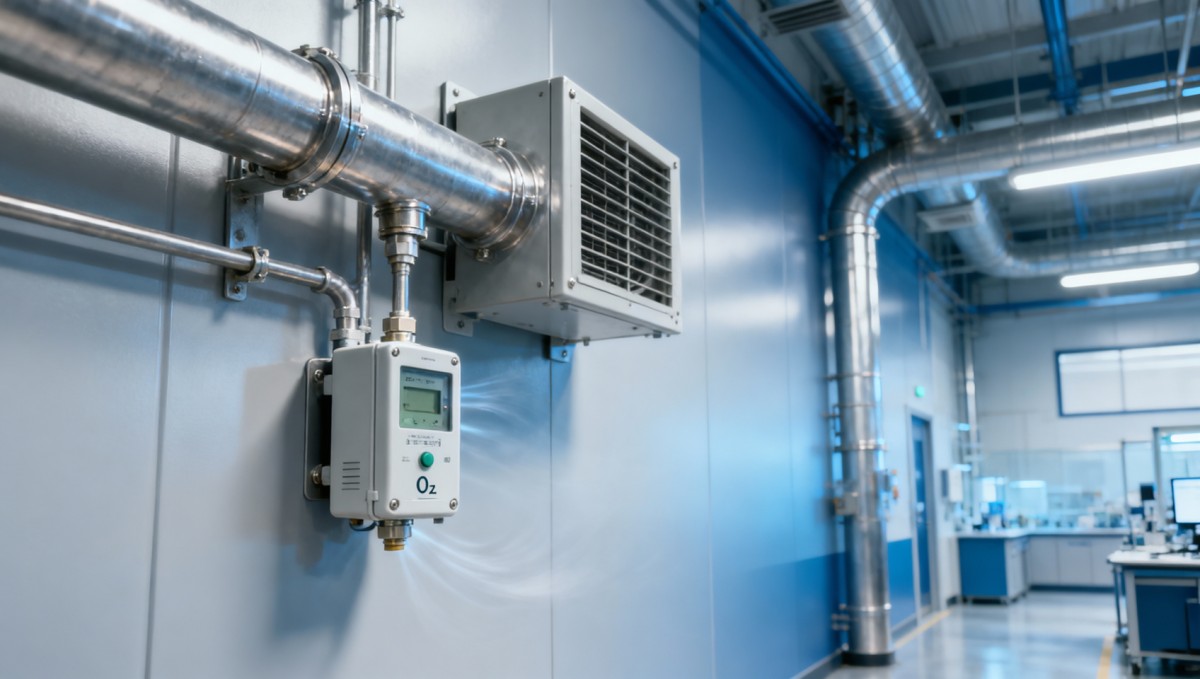
In the instrumentation industry, oxygen detection is not an isolated safety task. It is part of a broader measurement and control chain that supports industrial manufacturing, energy and power systems, environmental monitoring, medical testing, laboratory analysis, construction engineering, and automation control. When an oxygen detector reports unstable values, many teams first suspect sensor drift or electronic failure. In practice, poor placement is often the first issue to audit because it directly affects gas exposure, response time, and alarm behavior.
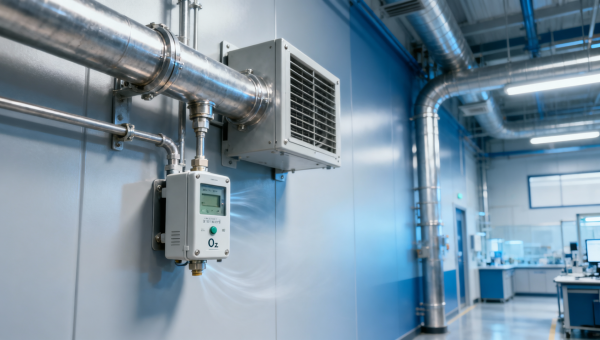
A fixed sensor installed too close to a vent, doorway, fan discharge, steam source, or intermittent process release can produce rapid concentration swings that trigger nuisance alarms. A portable sensor clipped in a dead-air pocket can do the opposite and respond too late. For operators and safety managers, this means more alarm fatigue. For technical evaluators and project managers, it creates avoidable troubleshooting cycles that may consume 2–4 weeks during commissioning or root-cause review.
The challenge is more complex because oxygen behaves differently from many toxic gases. It is affected by dilution, displacement, enclosure airflow, temperature gradients, and process pressure changes. In confined spaces, storage rooms, gas mixing skids, laboratories, and utility corridors, a sensor that is only 1–3 meters away from the best sampling point may still deliver misleading trends. This is why placement design should be treated as an engineering parameter, not a final installation detail.
For procurement teams and financial approvers, false alarms are also a cost issue. They increase investigation time, interrupt production, trigger unnecessary evacuation checks, and can lead to early sensor replacement even when the detector itself is functioning normally. In many projects, the more economical decision is not simply buying another detector. It is reviewing sensor technology, mounting height, airflow path, cable routing, calibration access, and control logic as one integrated measurement strategy.
What placement errors appear most often in real projects?
- Installing the oxygen detector near forced ventilation, where short-term dilution causes repeated low or high readings that do not represent the room average.
- Mounting a laboratory sensor or monitoring sensor too close to doors, windows, or access routes with frequent air exchange every few minutes.
- Selecting a single point for a large area when the room actually has 3 functional zones, such as gas storage, process use, and personnel access.
- Ignoring maintenance reach, which leads to infrequent bump tests or delayed calibration every 30–90 days.
These errors are common across integrated instrumentation environments because oxygen monitoring is often added late in the design phase. The result is a detector that is technically compliant on paper but poorly aligned with process reality. A better approach starts with hazard mapping, airflow review, and operating routine analysis before choosing mounting points.
How detector technology changes placement decisions
Sensor placement should never be separated from sensor technology. A paramagnetic detector, electrochemical detector, and infrared detector each respond differently to oxygen measurement tasks, environmental conditions, and maintenance expectations. For a technical assessment team, the key question is not which technology is universally better. The real question is which technology remains stable in the actual installation zone, under the expected duty cycle, and within the available maintenance resources.
A paramagnetic detector is widely valued for continuous oxygen analysis where high accuracy sensor performance is required. It is often considered for process gas measurement, control loops, and applications where precise composition tracking matters. An electrochemical detector is commonly used in portable sensor platforms and area safety monitoring because it can support compact design and broad deployment. Infrared detector solutions are more application-specific in oxygen work and are generally evaluated carefully against process compatibility and system architecture.
Placement implications differ. A paramagnetic detector used in a sampling system may allow remote analysis, reducing local airflow interference but increasing tubing and response considerations. An electrochemical detector mounted directly in the field can respond quickly at the point of exposure, but its behavior can be influenced by temperature, humidity, and cross-environment stresses if the location is poorly selected. For monitoring sensor networks, these tradeoffs affect both alarm quality and lifecycle cost over 12–24 months of operation.
The table below helps information researchers, buyers, and engineers compare typical technology and placement relationships without assuming one sensor fits every industrial site.
For decision-makers, the main lesson is clear: technology and placement must be evaluated together. A high accuracy sensor can still produce poor operational results if the mounting point ignores airflow, sampling delay, or maintenance access. Conversely, an appropriately placed detector with realistic calibration planning often outperforms a more expensive device installed in the wrong location.
Questions a technical evaluator should ask before approving the layout
Site and process review
Confirm whether the oxygen detector is intended for life safety, process quality, or control interlock service. These 3 goals often require different alarm logic, different placement tolerances, and sometimes different detector types.
Environmental review
Check ambient temperature range, humidity swings, washdown exposure, vibration, and enclosure class. Even within one facility, these conditions can vary significantly between laboratory rooms, skid packages, and production lines.
Maintenance review
Verify how calibration gas, bump testing, and replacement access will be managed. A location that saves 30 minutes in cable installation may create years of higher service labor and missed inspection intervals.
Which placement rules work best in industrial, laboratory, and utility scenarios?
There is no single mounting rule for every oxygen detector because the risk profile changes by site. In manufacturing workshops, the concern may be gas displacement near process lines. In laboratories, repeated door opening and local extraction can distort readings. In utility rooms, cylinders, manifolds, or inert gas systems may create pockets of changing oxygen concentration. The right layout is therefore scenario-based and should be aligned with the actual source, airflow path, and personnel exposure zone.
For operators and safety teams, one practical method is to divide the area into 3 layers: release source, breathing zone, and ventilation influence zone. Then review whether a fixed sensor or monitoring sensor sees the gas condition that matters for alarm action. In larger rooms, one detector may not be enough. A multi-point arrangement can be more reliable than forcing one device to represent several airflow patterns over 50–200 square meters.
Portable sensor use adds another layer. Personal monitors should be worn in the breathing zone and not buried under outer garments or tools. For entry checks in confined spaces, pre-entry readings and continuous monitoring are both important because concentration can change within minutes as ventilation starts or process conditions shift. This makes work practice as important as the detector itself.
The following table summarizes typical oxygen detector placement logic across common instrumentation-driven environments.
These scenario rules improve both safety and procurement clarity. Instead of debating detector price alone, teams can compare how many sensing points are needed, whether a control sensor should be remote-sampled, and how often the site can realistically test and recalibrate. This is especially useful for distributors, EPC teams, and plant owners handling mixed-use facilities.
A practical 4-step placement workflow
- Map gas sources, purge points, cylinders, doors, and ventilation outlets on the actual floor plan.
- Identify the alarm objective: personnel protection, process control, or quality verification.
- Match detector type to environment, then select mounting points that represent the hazard instead of the easiest cable route.
- Validate the final layout during live or simulated operating conditions over at least 1 full workflow cycle.
This workflow reduces rework during startup and helps finance, procurement, and safety teams align around measurable criteria rather than assumptions.
What should buyers and project teams evaluate before selecting an oxygen detector system?
For many organizations, the buying problem is not finding an oxygen detector. It is choosing a solution that fits the site, budget, maintenance capability, and compliance expectations. A lower initial price can become a higher total cost if the detector causes frequent false alarms, needs difficult access, or cannot integrate cleanly with the plant control system. This matters to purchasing teams, financial approvers, and project leaders who must balance CAPEX, operating effort, and safety performance.
A disciplined selection review usually focuses on 5 core dimensions: sensing technology, placement suitability, calibration method, alarm integration, and lifecycle service. In many instrumentation projects, delivery timing is another key factor. Standard configurations may be available within 2–6 weeks, while custom panel integration, special enclosures, or additional documentation can extend schedules. Early parameter confirmation reduces delay and avoids change orders later.
Compliance is also relevant. Depending on the environment, teams may need to assess enclosure protection, electrical installation rules, hazardous area suitability, calibration traceability, and site-specific safety procedures. The article does not assume a single certification path because requirements vary by country and application. However, buyers should request documentation that clearly supports installation, operation, maintenance, and system integration review.
The checklist below provides a practical framework for technical and commercial evaluation before issuing a quotation request or approving a purchase order.
5-point procurement checklist for oxygen detector projects
- Define whether you need a fixed sensor, portable sensor, laboratory sensor, control sensor, or a mixed architecture across several zones.
- Confirm the required signal path, such as local display only, relay alarm, controller integration, or plant monitoring platform.
- Review calibration frequency, service accessibility, and expected consumable replacement intervals over 12–24 months.
- Check environmental conditions including humidity, washdown exposure, temperature swings, and vibration before selecting enclosure and placement.
- Ask for documentation on delivery scope, spare parts, commissioning support, and any sample or pilot verification options.
For distributors and resellers, this checklist also supports better customer qualification. It helps distinguish whether the end user is solving a simple room alarm need or implementing a broader instrumentation and automation upgrade tied to digital monitoring, safety reporting, or intelligent facility management.
Cost and alternative decisions that affect the final project
When budgets are tight, some buyers consider reducing the number of sensing points or switching from fixed sensor systems to portable sensor routines. That can work in limited, low-complexity areas, but it is not always equivalent. Portable checks depend on operator discipline and timing. Fixed monitoring provides continuous coverage, supports alarms and interlocks, and usually offers better incident traceability. The right choice depends on occupancy pattern, gas source frequency, and inspection workflow.
A practical alternative analysis compares not just hardware price but service hours, calibration logistics, shutdown impact, and false-alarm response burden. In many plants, one well-placed high accuracy sensor combined with a clear maintenance plan is more cost-effective than several poorly positioned units that demand repeated troubleshooting.
FAQ: common mistakes, implementation timing, and when to ask for support
Teams researching oxygen detector projects usually ask the same questions: How many sensors are enough? Is a false alarm a sensor defect? How long does implementation take? These questions are valid because oxygen monitoring sits at the intersection of safety, instrumentation engineering, maintenance, and procurement. The answers should therefore combine technical reasoning with practical deployment expectations.
The most useful approach is to treat false alarms as a system symptom. Review detector type, mounting location, airflow, calibration status, alarm delay settings, and site changes together. This prevents a common mistake where teams replace the sensor first and analyze the environment later.
Implementation timing also varies. A straightforward room monitor replacement may move quickly, while a new multi-point oxygen detector system with control integration, documentation review, and onsite validation can take several stages. Planning for layout confirmation, procurement, installation, and functional testing often reduces later disruption.
How do I know if false alarms are caused by placement rather than failure?
Start by checking whether alarms occur during predictable events such as door opening, ventilation startup, process purge, washdown, or traffic peaks. If alarm behavior correlates with airflow or operating routine, placement is a likely factor. Also compare nearby reference readings or perform a controlled test. Repeated instability in one location, while the detector passes calibration, often points to environmental influence rather than hardware failure.
How many oxygen detectors are usually needed in one area?
There is no universal number because area size alone is not enough. Consider at least 4 variables: source points, airflow pattern, occupancy, and alarm objective. A small room with one cylinder manifold may need only one fixed sensor, while a larger process area with multiple gas use points and separate ventilation zones may require several. If the space has 2–3 distinct risk zones, a single detector is often not representative.
What is a realistic project timeline?
For standard products, quotation and technical confirmation may take a few working days, while regular supply can fall in the 2–6 week range depending on scope. Installation and commissioning may add several days to a few weeks based on wiring, control integration, site access, and testing requirements. Custom skids, panel systems, or documentation-heavy projects generally require more time than single-point replacements.
What should be included in a support request to speed up selection?
Provide the application area, gas source description, detector type preference if known, expected environmental conditions, mounting limitations, integration requirements, and delivery schedule. It is also helpful to note whether you need samples, calibration accessories, compliance documents, or distributor pricing support. With these details, suppliers can recommend a more accurate oxygen detector configuration instead of offering a generic quote.
Why choose a solution partner that understands both instrumentation and application reality
Oxygen detector performance depends on more than the device specification. It depends on how the detector fits into the wider instrumentation ecosystem of measurement, testing, monitoring, analysis, and control. That is especially important in facilities pursuing industrial automation, digital transformation, and intelligent upgrades, where gas monitoring is expected to connect cleanly with alarms, data logging, maintenance plans, and operational decision-making.
A capable partner should be able to discuss not only sensor technology, but also application zoning, signal integration, calibration workflow, environmental constraints, and realistic delivery planning. This reduces risk for information researchers, buyers, safety managers, and project teams who need evidence-based recommendations instead of one-size-fits-all proposals.
If you are reviewing false alarms, planning a new oxygen detector layout, or comparing paramagnetic detector, electrochemical detector, and infrared detector options, you can move faster by confirming a few items early: the monitoring objective, the installation environment, the number of sensing points, the maintenance interval, and the required documents or approvals.
Contact us to discuss parameter confirmation, sensor placement review, fixed or portable sensor selection, control integration, expected lead time, sample support, certification-related documentation, and quotation planning. If your project involves laboratories, industrial plants, utility rooms, automation upgrades, or distributor supply needs, we can help structure a practical solution path before procurement and installation begin.
Recommended for You
 Monitoring Sensor Data Looks Stable Until These Errors Show UpMonitoring sensor errors can hide behind stable data. Compare paramagnetic detector, electrochemical detector, infrared detector, and oxygen detector options for safer, high accuracy sensor selection.
 What Makes a Control Sensor Reliable in Harsh Environments?Control sensor reliability in harsh environments starts with the right oxygen detector, infrared detector, electrochemical detector, or paramagnetic detector for accurate, dependable monitoring.
 Control Sensor Delays Can Undermine Process StabilityControl sensor delays can destabilize operations. Compare paramagnetic detector, electrochemical detector, infrared detector, and oxygen detector options to find a high accuracy sensor for fixed, portable, laboratory, and monitoring sensor needs.
 Laboratory Sensor Repeatability Problems Often Start With SamplingLaboratory sensor repeatability issues often begin with sampling. Compare paramagnetic detector, electrochemical detector, infrared detector, and oxygen detector solutions to improve accuracy.
 Laboratory Sensor Selection Gets Harder With Lower Detection LimitsLaboratory sensor selection gets harder at lower limits. Compare paramagnetic detector, electrochemical detector, infrared detector, oxygen detector, fixed and portable sensor options for high accuracy monitoring and control.
 Portable Sensor Battery Loss Can Distort Long Shift MonitoringPortable sensor battery loss can distort long-shift monitoring. Compare paramagnetic detector, electrochemical detector, infrared detector and oxygen detector options for high accuracy sensor performance.
 Portable Sensor Accuracy in the Field Is Not Always What It SeemsPortable sensor accuracy can differ sharply from lab results. Compare paramagnetic detector, electrochemical detector, infrared detector, and oxygen detector performance to choose a high accuracy sensor for real field use.
 Fixed Sensor vs Portable Checks: Where Results Often DivergeExplore why fixed sensor and portable sensor readings diverge in oxygen detector systems using paramagnetic detector, electrochemical detector, and infrared detector technology.
 High Accuracy Sensor Claims: Which Specs Actually Prove It?High accuracy sensor selection starts with the right specs. Compare paramagnetic detector, electrochemical detector, infrared detector, and oxygen detector options for fixed, portable, laboratory, control, and monitoring sensor use.
 What Shortens the Service Life of an Oxygen Detector?Oxygen detector service life can drop fast due to heat, moisture, contamination, and poor calibration. Compare paramagnetic detector, electrochemical detector, and infrared detector solutions now.
 Oxygen Detector False Alarms Often Start With Sensor PlacementOxygen detector false alarms often start with sensor placement. Compare paramagnetic detector, electrochemical detector, and infrared detector options to improve accuracy and safety.
 Infrared Detector Response Time Can Change Your ReadingInfrared detector response time shapes alarm accuracy and stable readings. Compare paramagnetic detector, electrochemical detector, and oxygen detector options for every high accuracy sensor need.
 Infrared Detector Limits That Matter in Mixed Gas ApplicationsInfrared detector limits in mixed gas applications: compare paramagnetic detector, electrochemical detector, and oxygen detector options to choose a high accuracy sensor for portable, fixed, laboratory, control, and monitoring sensor use.
 Why Electrochemical Detector Calibration Fails More Often Than ExpectedElectrochemical detector calibration fails more often than expected—learn how a paramagnetic detector, infrared detector, or oxygen detector comparison helps you choose a high accuracy sensor for fixed, portable, laboratory, control, and monitoring sensor applications.
 Electrochemical Detector Lifespan Drops Fast Under These ConditionsElectrochemical detector lifespan can drop fast in heat, humidity, and corrosive gas. Compare paramagnetic detector, infrared detector, and oxygen detector options to choose a high accuracy sensor with lower lifecycle risk.
 Paramagnetic Detector Drift: What Usually Causes It?Paramagnetic detector drift explained: learn what causes oxygen detector errors, how it compares with electrochemical detector and infrared detector options, and how to keep a high accuracy sensor stable.
 Fixed Detector Setup Mistakes to AvoidFixed detector setup mistakes can impact safety and costs. Learn how explosion proof monitor, oxygen monitor, infrared monitor, and portable detector users avoid false readings.
 High Accuracy Detector Selection TipsHigh accuracy detector selection tips for fixed detector and portable detector needs, covering explosion proof monitor, oxygen monitor, infrared monitor, and more for safer, smarter buying.
 Oxygen Monitor Export Trends in 2026Oxygen monitor export trends in 2026: explore explosion proof monitor, laser monitor, portable detector, fixed detector, and high accuracy detector demand shaping smarter buying decisions.
 Infrared Monitor Market Outlook 2026Infrared monitor market outlook 2026: compare explosion proof monitor, laser monitor, oxygen monitor, fixed detector and portable detector solutions for safer, smarter industrial projects.
 Where Electrochemical Monitors Work BestElectrochemical monitor guide: compare explosion proof monitor, infrared monitor, laser monitor, oxygen monitor, fixed detector, and portable detector for safer, smarter gas detection choices.
 Paramagnetic Monitor Import Outlook 2026Paramagnetic monitor import outlook 2026: compare explosion proof monitor, laser monitor, infrared monitor, oxygen monitor, and high accuracy detector solutions to source the right fixed or portable detector.
 Thermal Conductivity Monitor Price ShiftThermal conductivity monitor price trends explained with explosion proof monitor, laser monitor, oxygen monitor, and fixed or portable detector options for smarter, safer buying.
 How Laser Monitor Demand Is ChangingLaser monitor demand is changing as buyers compare explosion proof monitor, infrared, electrochemical, and oxygen monitor options for safer, high accuracy detector solutions.
 Oxygen Measurement System Export Demand in 2026Oxygen measurement system demand in 2026 is rising across industrial control equipment, gas quality measurement, emission control system, and process monitoring system markets. Explore key trends and smarter sourcing insights.
 Industrial Control System Trends to Watch in 2026Industrial control system trends for 2026: explore industrial control equipment, process monitoring system, gas quality measurement, oxygen measurement system, and emission control system upgrades.
 How to Improve Process Monitoring System ResultsImprove process monitoring system results with industrial control equipment, gas quality measurement, and emission measurement system strategies for smarter industrial control system performance.
 Emission Control System Import Risks in 2026Emission control system import risks in 2026: learn how industrial control equipment, gas quality measurement, and process monitoring system buyers can avoid delays, compliance issues, and costly mistakes.
 Gas Quality Control for Safer Plant OperationsGas quality control improves safer plant operations with industrial control equipment, gas quality measurement, and an emission measurement system—boost efficiency, compliance, and process monitoring performance.
 What Buyers Miss in Industrial Measurement SystemsIndustrial measurement system buying guide: compare industrial control equipment, gas quality measurement, and emission measurement system risks beyond specs to reduce downtime, cost, and audit issues.
 Process Measurement System Costs ExplainedProcess measurement system costs explained: compare industrial measurement system, gas quality measurement, oxygen measurement system, and emission measurement system options to cut risk and improve control.
 2026 Emission Measurement System Market ShiftEmission measurement system trends for 2026: discover how industrial control equipment, gas quality measurement, and smarter process monitoring systems improve compliance, efficiency, and ROI.


Search Categories
Search Categories
Latest Article
- Monitoring Sensor Data Looks Stable Until These Errors Show UpMonitoring sensor errors can hide behind stable data. Compare paramagnetic detector, electrochemical detector, infrared detector, and oxygen detector options for safer, high accuracy sensor selection.Posted by:
- What Makes a Control Sensor Reliable in Harsh Environments?Control sensor reliability in harsh environments starts with the right oxygen detector, infrared detector, electrochemical detector, or paramagnetic detector for accurate, dependable monitoring.Posted by:
- Control Sensor Delays Can Undermine Process StabilityControl sensor delays can destabilize operations. Compare paramagnetic detector, electrochemical detector, infrared detector, and oxygen detector options to find a high accuracy sensor for fixed, portable, laboratory, and monitoring sensor needs.Posted by:
Please give us a message
