Infrared Detector Response Time Can Change Your Reading


In gas analysis and process monitoring, an infrared detector’s response time can directly affect reading stability, alarm accuracy, and operational decisions. Whether compared with a paramagnetic detector or electrochemical detector, today’s oxygen detector solutions rely on a high accuracy sensor design across fixed sensor, portable sensor, laboratory sensor, control sensor, and monitoring sensor applications.
Why response time matters more than many teams expect
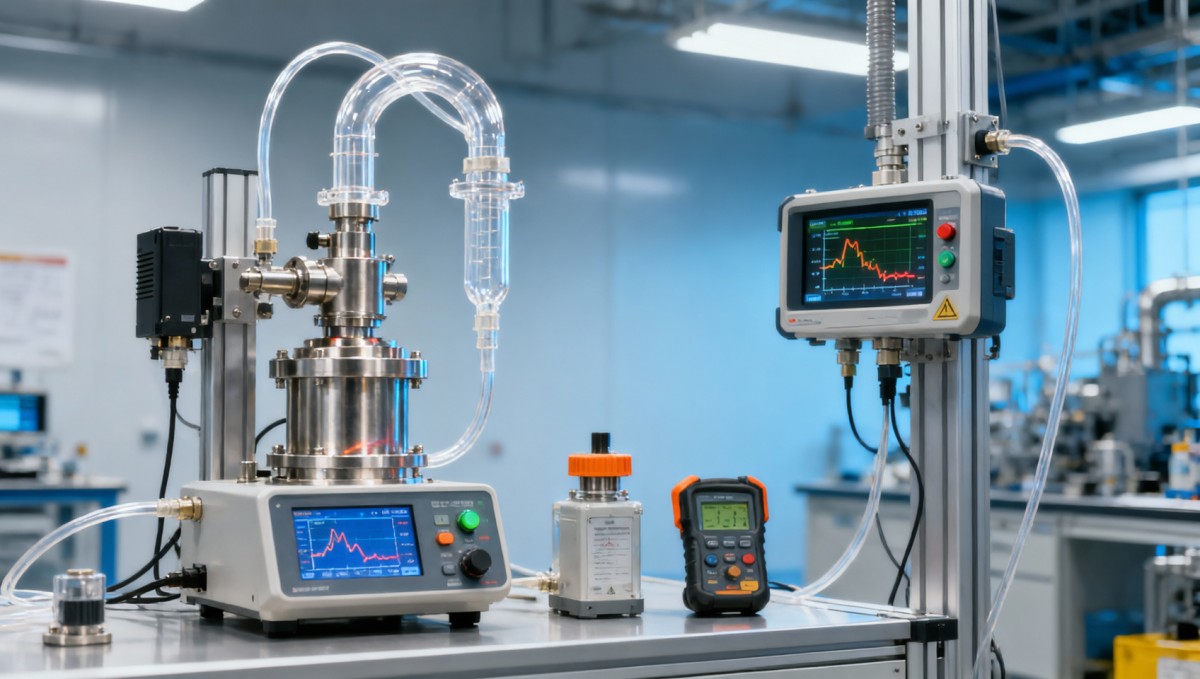
For information researchers and technical evaluators, infrared detector response time is not just a specification line. It influences how quickly a gas analyzer tracks process changes, how stable a displayed value appears, and whether an alarm reflects the real condition of the sampling point. In industrial manufacturing, energy systems, laboratory analysis, and environmental monitoring, even a difference of a few seconds can change operator judgment.
Response time is commonly discussed as T90, meaning the time required for the reading to reach 90% of the final value after a step change in gas concentration. In practical instrumentation projects, common ranges may fall between 2–15 seconds for optimized systems, while complete analyzer response including sampling line delay, filters, and chambers can extend to 20–60 seconds. Buyers should therefore separate sensor response from total system response.
For operators, a slower detector may look stable, but that apparent stability can hide fast process fluctuations. For safety managers and quality teams, a delayed reading may shift an alarm beyond an acceptable intervention window. For project managers, response time also affects control loop performance, startup tuning, and acceptance criteria during commissioning, especially in systems that run continuously over 8–24 hours per day.
The instrumentation industry supports digital transformation by turning process conditions into reliable signals. In that context, infrared detector response time affects not only one sensor but also data quality across monitoring platforms, trend analysis, automated control actions, and plant reporting. A detector that reacts too slowly can distort root-cause analysis and create disagreement between field staff, engineering teams, and procurement reviewers.
What can change the reading in real operation?
Many teams focus on detector core technology but overlook the rest of the measurement chain. In real projects, reading behavior is influenced by several linked factors rather than a single component.
- Sampling path length: a 1–3 meter line behaves differently from a 10–20 meter line, especially in low-flow systems.
- Flow rate and chamber design: insufficient flow can increase lag time and worsen recovery after a concentration spike.
- Filter loading and contamination: dust, moisture, and condensate can slow diffusion and create damping effects.
- Signal processing settings: averaging over 3–10 seconds may smooth noise but can also delay alarms and displayed transitions.
This is why procurement teams should request test conditions when reviewing datasheets. A quoted response time without gas type, flow, temperature range, and sample path details is not enough for a serious technical comparison.
Infrared vs paramagnetic vs electrochemical: which detector changes the reading fastest?
When a purchasing team compares detector technologies, response time is only one decision point, but it often becomes the hidden reason for later dissatisfaction. Infrared detector systems are widely used in gas analysis because they support stable long-term monitoring, non-contact optical measurement principles, and broad application across fixed sensor and laboratory sensor designs. However, oxygen-specific applications may also evaluate paramagnetic detector and electrochemical detector options.
The right comparison must consider the gas target, maintenance interval, ambient conditions, expected drift, and process dynamics. In a slow-changing storage environment, a moderate response time may be acceptable. In burner control, enclosure purge verification, or fast leak indication, a shorter total response can have greater operational value than a marginal price saving.
The table below gives a practical comparison framework for technical assessment, distributor communication, and budget review. It does not replace project testing, but it helps cross-functional teams discuss trade-offs using the same language.
For finance approvers, the key takeaway is that a lower purchase price does not always create lower operating cost over 12–36 months. For users and safety personnel, the better choice is the one that delivers dependable response under the actual process conditions, not only under ideal bench conditions.
Which teams usually prefer each option?
Different stakeholder groups often prioritize detector technology differently. Understanding that difference can speed up internal approval and reduce procurement delays.
Typical decision focus by role
- Operators look first at reading stability, warm-up time, false alarm frequency, and ease of calibration checks every week or every month.
- Technical evaluators focus on T90, repeatability, drift trend, environmental tolerance, and integration with PLC, DCS, or data logging systems.
- Procurement and finance teams compare acquisition cost, maintenance interval, spare parts cycle, and expected service life over 1–3 years.
- Distributors and project managers pay attention to delivery windows such as 2–4 weeks, documentation completeness, and after-sales support load.
Which application scenarios are most sensitive to infrared detector response time?
Not every process needs the fastest possible reading, but several scenarios are highly sensitive to response time and recovery characteristics. In industrial automation, gas concentration often feeds a display, an alarm, and a control decision at the same time. If the detector lags, all three outputs may become less useful. This is especially important in integrated monitoring sensor and control sensor projects.
In combustion-related processes, oxygen concentration can change quickly during startup, shutdown, or load adjustment. A delayed signal can affect air-fuel balancing and push operators to compensate manually. In environmental sampling, unstable response can create misleading trend data across a 15-minute, 1-hour, or 24-hour reporting cycle. In laboratory analysis, slower recovery between samples can reduce throughput and increase waiting time between tests.
Portable sensor users should also care about response time, although the context differs. When performing spot checks in confined spaces, storage areas, or field inspection routes, a sensor that needs too long to stabilize may slow the work sequence and create uncertainty around pass/fail decisions. Fixed sensor installations, by contrast, usually emphasize continuous trend reliability, alarm timing, and integration with plant control systems.
The table below helps teams decide where fast response, stable response, or balanced response matters most. It is useful for project scoping, bid comparison, and distributor consultation.
A useful rule for project managers is to define acceptable delay by function. A display-only point may accept a slower update, but an alarm point or control point often needs a tighter requirement. Separating these functions early can prevent overdesign in one area and underperformance in another.
Three common scenario-based mistakes
- Using the same response target for a laboratory sensor and a fixed sensor in a long sampling system, even though sample transport delay is completely different.
- Comparing quoted detector response times without checking gas range, humidity conditions, or whether signal averaging is enabled by default.
- Ignoring recovery time after high exposure, which can be just as important as forward response in batch processing and periodic inspection work.
How to evaluate specifications before procurement and approval
A good procurement decision connects technical data with operational cost and project risk. For infrared detector projects, response time should be reviewed together with measurement range, accuracy statement, drift behavior, calibration interval, operating temperature, and installation method. A high accuracy sensor is valuable only if the reading arrives soon enough to support the intended action.
Procurement teams should build a 5-point review process. First, confirm the target gas and range. Second, define whether the point is for indication, control, compliance monitoring, or safety alarm. Third, ask for both sensor response and complete system response. Fourth, confirm maintenance items such as filters, optical cleaning, and calibration checks. Fifth, align delivery timing, spare parts availability, and commissioning support with the project schedule, often 2–6 weeks depending on configuration.
For finance reviewers, total cost should be assessed across purchase, installation, downtime risk, service visits, and replacement cycles. For quality and safety personnel, acceptance should include response verification under site-relevant conditions rather than only static accuracy checks. For distributors and integrators, documentation quality matters because unclear manuals can increase startup time and support burden.
The table below provides a practical selection checklist that can be used in RFQ comparison, technical clarification, and internal approval meetings.
A strong review process can shorten technical clarification from several rounds to one or two rounds. It also helps avoid the common procurement mistake of buying a detector with acceptable accuracy but unsuitable response behavior for the real process.
What should be included in acceptance testing?
Acceptance testing should not stop at power-on confirmation. A practical 4-step check improves confidence before full deployment.
- Verify installation conditions such as ambient temperature, sample line routing, and flow stability.
- Confirm zero and span behavior according to the instrument manual and site procedure.
- Measure response and recovery under representative process or calibration gas exposure.
- Check signal output, alarm transfer, and data logging performance over at least one short operating cycle.
Common misconceptions, compliance points, and risk control
One misconception is that faster is always better. In reality, an unstable reading with excessive noise can be just as problematic as a slow reading. Signal filtering, chamber design, and installation optimization should create a balanced result: fast enough for the process and stable enough for action. Another misconception is treating oxygen detector technologies as interchangeable across all environments. Process gas composition, vibration, humidity, and maintenance access can all change the best choice.
Compliance considerations also matter in B2B projects. Depending on the application, teams may need to review electrical safety, EMC compatibility, calibration traceability, and documentation aligned with internal quality systems. In hazardous or regulated environments, additional project-specific requirements may apply. Even where no special certification is mandated, traceable maintenance records and clear operating procedures support audit readiness and safer operation.
Risk control should cover the full lifecycle from specification to operation. During planning, define the intended response window and alarm strategy. During installation, avoid unnecessary sample path volume and moisture traps. During operation, schedule checks every month or every quarter based on process severity. During replacement planning, keep critical spares available if downtime exposure is high.
For distributors and engineering teams, the most effective way to reduce disputes is to document assumptions early: target gas, concentration range, ambient range, expected flow, sampling method, and whether the response requirement refers to detector-only or full system. This one step can prevent expensive misunderstandings later.
FAQ: the questions buyers and users ask most often
How fast should an infrared detector respond for process monitoring?
It depends on the task. For display-only monitoring, a slower stabilized reading may be acceptable. For alarms and closed-loop control, many projects target a total response in the seconds-to-tens-of-seconds range. The correct value should match the process change rate, not just the detector datasheet.
Why does the reading change even when the detector is accurate?
Accuracy and dynamic response are different characteristics. A detector may be accurate at steady state but still show delay, overshoot, or damping during a rapid concentration change. Sampling line length, flow, filter condition, humidity, and digital averaging can all affect what the operator sees.
Is a paramagnetic detector always better for oxygen measurement?
Not always. Paramagnetic detector technology can be very attractive in oxygen-focused applications, but suitability depends on installation conditions, maintenance strategy, and system integration needs. Infrared detector systems and electrochemical detector solutions may still be more practical in some portable, multi-gas, or cost-sensitive projects.
What delivery and implementation timeline is typical?
For standard configurations, quotation clarification may take several working days, while delivery can often fall in a 2–4 week range. More complex integrated systems, customized sampling assemblies, or documentation-heavy projects may require longer. Commissioning and acceptance are usually planned as a separate stage.
Why work with us when response time, accuracy, and project fit all matter?
In instrumentation projects, the right answer is rarely a generic detector recommendation. It is a matched solution that connects sensor behavior, process conditions, operating workflow, and procurement targets. We support customers across industrial manufacturing, energy and power, environmental monitoring, laboratory analysis, construction engineering, and automation control with a practical approach to gas analysis and process monitoring.
If you are comparing an infrared detector with a paramagnetic detector or electrochemical detector, we can help you review the real decision points: target gas, response time expectation, fixed sensor or portable sensor format, high accuracy sensor requirements, maintenance interval, and integration needs for control sensor or monitoring sensor applications. This helps technical teams and purchasing teams make decisions using the same framework.
You can contact us for specific support on 6 key items: parameter confirmation, detector technology selection, delivery schedule planning, sampling system matching, documentation and certification review, and quotation comparison. If required, we can also discuss typical configuration ranges, acceptance checkpoints, and how to reduce the gap between datasheet response and field response.
For faster project evaluation, send your gas type, concentration range, installation method, ambient conditions, and target response window. With those 5 basic inputs, it becomes much easier to identify whether your application needs a faster detector, a more stable reading, or a better total system design rather than a simple sensor replacement.
Recommended for You
 What Makes a Control Sensor Reliable in Harsh Environments?Control sensor reliability in harsh environments starts with the right oxygen detector, infrared detector, electrochemical detector, or paramagnetic detector for accurate, dependable monitoring.
 Control Sensor Delays Can Undermine Process StabilityControl sensor delays can destabilize operations. Compare paramagnetic detector, electrochemical detector, infrared detector, and oxygen detector options to find a high accuracy sensor for fixed, portable, laboratory, and monitoring sensor needs.
 Laboratory Sensor Repeatability Problems Often Start With SamplingLaboratory sensor repeatability issues often begin with sampling. Compare paramagnetic detector, electrochemical detector, infrared detector, and oxygen detector solutions to improve accuracy.
 Laboratory Sensor Selection Gets Harder With Lower Detection LimitsLaboratory sensor selection gets harder at lower limits. Compare paramagnetic detector, electrochemical detector, infrared detector, oxygen detector, fixed and portable sensor options for high accuracy monitoring and control.
 Portable Sensor Battery Loss Can Distort Long Shift MonitoringPortable sensor battery loss can distort long-shift monitoring. Compare paramagnetic detector, electrochemical detector, infrared detector and oxygen detector options for high accuracy sensor performance.
 Portable Sensor Accuracy in the Field Is Not Always What It SeemsPortable sensor accuracy can differ sharply from lab results. Compare paramagnetic detector, electrochemical detector, infrared detector, and oxygen detector performance to choose a high accuracy sensor for real field use.
 Fixed Sensor vs Portable Checks: Where Results Often DivergeExplore why fixed sensor and portable sensor readings diverge in oxygen detector systems using paramagnetic detector, electrochemical detector, and infrared detector technology.
 What Shortens the Service Life of an Oxygen Detector?Oxygen detector service life can drop fast due to heat, moisture, contamination, and poor calibration. Compare paramagnetic detector, electrochemical detector, and infrared detector solutions now.
 Oxygen Detector False Alarms Often Start With Sensor PlacementOxygen detector false alarms often start with sensor placement. Compare paramagnetic detector, electrochemical detector, and infrared detector options to improve accuracy and safety.
 Infrared Detector Response Time Can Change Your ReadingInfrared detector response time shapes alarm accuracy and stable readings. Compare paramagnetic detector, electrochemical detector, and oxygen detector options for every high accuracy sensor need.
 Infrared Detector Limits That Matter in Mixed Gas ApplicationsInfrared detector limits in mixed gas applications: compare paramagnetic detector, electrochemical detector, and oxygen detector options to choose a high accuracy sensor for portable, fixed, laboratory, control, and monitoring sensor use.
 Why Electrochemical Detector Calibration Fails More Often Than ExpectedElectrochemical detector calibration fails more often than expected—learn how a paramagnetic detector, infrared detector, or oxygen detector comparison helps you choose a high accuracy sensor for fixed, portable, laboratory, control, and monitoring sensor applications.
 Electrochemical Detector Lifespan Drops Fast Under These ConditionsElectrochemical detector lifespan can drop fast in heat, humidity, and corrosive gas. Compare paramagnetic detector, infrared detector, and oxygen detector options to choose a high accuracy sensor with lower lifecycle risk.
 Paramagnetic Detector Drift: What Usually Causes It?Paramagnetic detector drift explained: learn what causes oxygen detector errors, how it compares with electrochemical detector and infrared detector options, and how to keep a high accuracy sensor stable.
 High Accuracy Detector Selection TipsHigh accuracy detector selection tips for fixed detector and portable detector needs, covering explosion proof monitor, oxygen monitor, infrared monitor, and more for safer, smarter buying.
 Oxygen Monitor Export Trends in 2026Oxygen monitor export trends in 2026: explore explosion proof monitor, laser monitor, portable detector, fixed detector, and high accuracy detector demand shaping smarter buying decisions.
 Infrared Monitor Market Outlook 2026Infrared monitor market outlook 2026: compare explosion proof monitor, laser monitor, oxygen monitor, fixed detector and portable detector solutions for safer, smarter industrial projects.
 Where Electrochemical Monitors Work BestElectrochemical monitor guide: compare explosion proof monitor, infrared monitor, laser monitor, oxygen monitor, fixed detector, and portable detector for safer, smarter gas detection choices.
 Paramagnetic Monitor Import Outlook 2026Paramagnetic monitor import outlook 2026: compare explosion proof monitor, laser monitor, infrared monitor, oxygen monitor, and high accuracy detector solutions to source the right fixed or portable detector.
 Thermal Conductivity Monitor Price ShiftThermal conductivity monitor price trends explained with explosion proof monitor, laser monitor, oxygen monitor, and fixed or portable detector options for smarter, safer buying.
 How Laser Monitor Demand Is ChangingLaser monitor demand is changing as buyers compare explosion proof monitor, infrared, electrochemical, and oxygen monitor options for safer, high accuracy detector solutions.
 Oxygen Measurement System Export Demand in 2026Oxygen measurement system demand in 2026 is rising across industrial control equipment, gas quality measurement, emission control system, and process monitoring system markets. Explore key trends and smarter sourcing insights.
 Industrial Control System Trends to Watch in 2026Industrial control system trends for 2026: explore industrial control equipment, process monitoring system, gas quality measurement, oxygen measurement system, and emission control system upgrades.
 How to Improve Process Monitoring System ResultsImprove process monitoring system results with industrial control equipment, gas quality measurement, and emission measurement system strategies for smarter industrial control system performance.
 Emission Control System Import Risks in 2026Emission control system import risks in 2026: learn how industrial control equipment, gas quality measurement, and process monitoring system buyers can avoid delays, compliance issues, and costly mistakes.
 Gas Quality Control for Safer Plant OperationsGas quality control improves safer plant operations with industrial control equipment, gas quality measurement, and an emission measurement system—boost efficiency, compliance, and process monitoring performance.
 What Buyers Miss in Industrial Measurement SystemsIndustrial measurement system buying guide: compare industrial control equipment, gas quality measurement, and emission measurement system risks beyond specs to reduce downtime, cost, and audit issues.
 Process Measurement System Costs ExplainedProcess measurement system costs explained: compare industrial measurement system, gas quality measurement, oxygen measurement system, and emission measurement system options to cut risk and improve control.
 2026 Emission Measurement System Market ShiftEmission measurement system trends for 2026: discover how industrial control equipment, gas quality measurement, and smarter process monitoring systems improve compliance, efficiency, and ROI.
 Why Gas Quality Measurement Fails in the FieldGas quality measurement issues often come from industrial control equipment setup, not sensor limits. Learn how a process measurement system and emission measurement system can improve gas quality control.
 2026 Industrial Control Equipment Price OutlookIndustrial control equipment price outlook for 2026: explore trends in gas quality measurement, emission measurement system, process measurement system, and industrial control system budgeting.
 How Accurate Should an Oxygen Measurement System Be?Oxygen measurement system accuracy impacts gas quality measurement, emission control system performance, and industrial control equipment ROI—learn how to choose the right level for safer, smarter process monitoring.




Search Categories
Search Categories
Latest Article
- What Makes a Control Sensor Reliable in Harsh Environments?Control sensor reliability in harsh environments starts with the right oxygen detector, infrared detector, electrochemical detector, or paramagnetic detector for accurate, dependable monitoring.Posted by:
- Control Sensor Delays Can Undermine Process StabilityControl sensor delays can destabilize operations. Compare paramagnetic detector, electrochemical detector, infrared detector, and oxygen detector options to find a high accuracy sensor for fixed, portable, laboratory, and monitoring sensor needs.Posted by:
- Laboratory Sensor Repeatability Problems Often Start With SamplingLaboratory sensor repeatability issues often begin with sampling. Compare paramagnetic detector, electrochemical detector, infrared detector, and oxygen detector solutions to improve accuracy.Posted by:
Please give us a message
