Portable Detector Trends to Watch


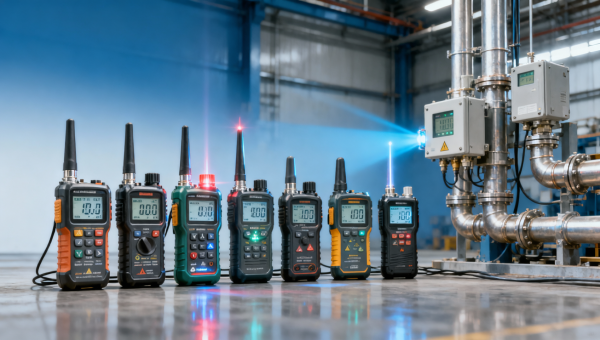
Portable detector technologies are evolving fast, helping buyers and decision-makers improve safety, accuracy, and compliance across industries. From explosion proof monitor systems to laser monitor, infrared monitor, oxygen monitor, electrochemical monitor, thermal conductivity monitor, and paramagnetic monitor solutions, today’s market also demands every high accuracy detector to work seamlessly with fixed detector networks. Here are the key portable detector trends worth watching.
For instrumentation buyers, safety managers, project leaders, distributors, and financial approvers, the portable detector market is no longer about choosing a single handheld device. It is about matching detection principles, operating environments, calibration requirements, data workflows, and lifecycle cost. In sectors such as industrial manufacturing, energy, environmental monitoring, laboratories, construction, and automation control, wrong selection decisions can increase downtime, rework, compliance exposure, and maintenance burden within as little as 6 to 12 months.
This article examines the most important portable detector trends shaping procurement and deployment decisions today. It focuses on how portable instruments are changing in performance, connectivity, usability, and application fit, and what practical criteria organizations should use when comparing detector options for field and plant operations.
Smarter Detection Platforms Are Replacing Single-Purpose Handheld Tools
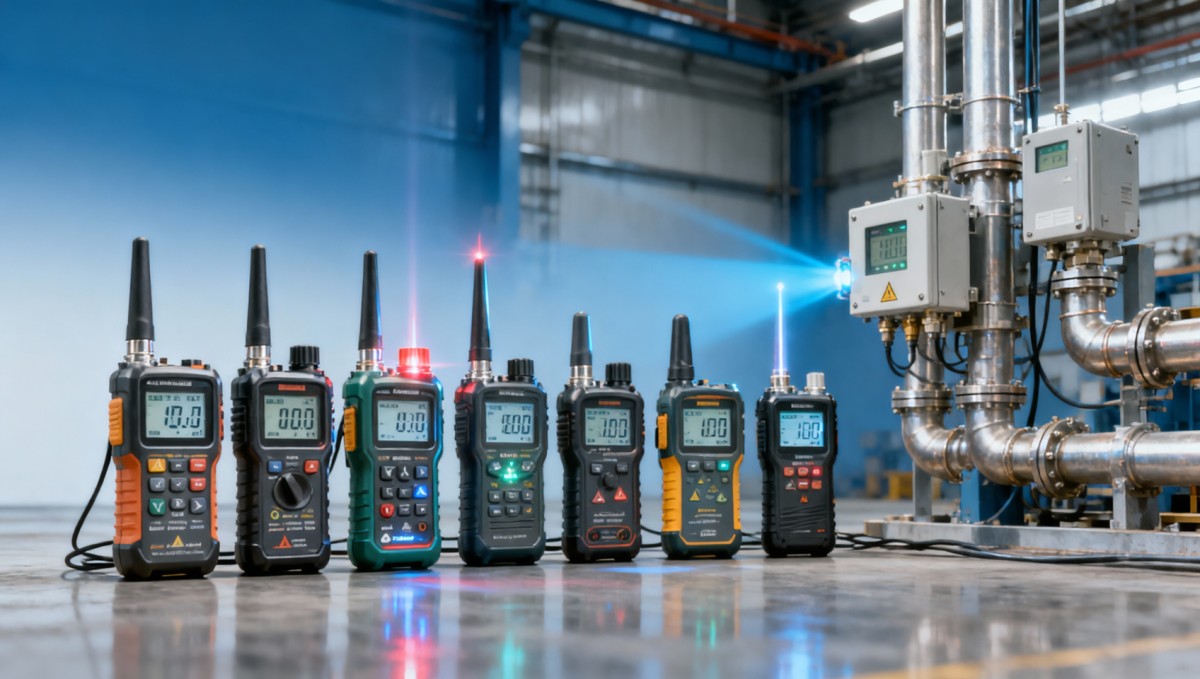
One of the clearest trends is the shift from isolated portable detectors toward smarter detection platforms. In the past, many users bought one instrument for one task: an oxygen monitor for confined space work, an electrochemical monitor for toxic gases, or an infrared monitor for hydrocarbon screening. Today, buyers increasingly expect 2-in-1, 4-gas, or modular configurations that support broader field use without multiplying device inventories.
This matters because cross-functional teams now share equipment across maintenance, EHS, quality control, and contractor supervision. A portable detector used in a refinery shutdown, for example, may need to support spot checks in 3 to 5 work zones in one shift. A construction engineering project may also require quick transfer from commissioning teams to safety inspectors. Flexibility reduces idle assets and improves utilization rates.
Another driver is sensor fusion. Instead of relying on one sensing principle only, advanced portable detector solutions increasingly combine electrochemical, thermal conductivity, paramagnetic, infrared, or laser monitor capabilities depending on target gases and required precision. This helps users address both broad screening and higher-selectivity measurement in the same workflow.
For procurement teams, the key question is not just whether a unit is portable. The real question is whether it can cover the top 3 application scenarios in the operation while keeping calibration intervals, sensor replacement cycles, and training complexity under control. In many B2B settings, a portable detector that saves even 10 to 15 minutes per inspection round can produce meaningful labor savings over a 12-month period.
Why Multi-Scenario Capability Is Becoming Essential
Industrial sites are becoming more dynamic. Mobile crews work across tank farms, substations, process skids, laboratory support areas, and temporary maintenance zones. A detector designed only for one narrowly defined environment may create gaps in real operations. This is why buyers increasingly look for portable detector platforms that can handle variable temperature ranges, dust levels, humidity, and vibration during transport.
In practical terms, many projects now define selection criteria around 4 dimensions: gas compatibility, response time, data capture, and survivability. A response time of under 30 seconds may be suitable for one task, while another high accuracy detector may require tighter selectivity for quality assurance or leak localization. The best choice depends on the workflow, not on a single headline feature.
Typical platform evaluation points
- Whether the detector supports single-gas, multi-gas, or modular sensor architecture for 2 to 6 common field applications.
- Whether the instrument can share alarms, logs, or readings with fixed detector systems and maintenance software.
- Whether daily bump testing, weekly verification, or monthly calibration can be performed without excessive downtime.
- Whether user training can be completed in 1 to 2 sessions for operators, supervisors, and service personnel.
The following comparison shows how different portable detector types are generally positioned in instrumentation-driven field applications.
The main takeaway is that portability alone is no longer enough. Buyers increasingly prefer instruments that can serve multiple workflows, reduce fleet complexity, and fit broader digital instrumentation strategies across safety, quality, and process control.
Connectivity With Fixed Detector Networks Is Becoming a Purchase Requirement
Another major trend is the integration of portable detector data with fixed detector networks. Plants and infrastructure sites no longer want portable readings to remain trapped in standalone devices. They want event logs, alarm histories, calibration records, and inspection results to flow into centralized maintenance or compliance systems. This is especially important in energy, environmental monitoring, and automation-heavy operations where audit trails matter.
For enterprise decision-makers, this trend changes the procurement conversation. The detector is now part of a broader measurement architecture. If a portable oxygen monitor or explosion proof monitor cannot share records with plant software, the organization may face duplicate manual entry, fragmented reports, and slower incident review. In large sites, even 5 minutes of manual documentation per instrument per day adds up quickly across 20, 50, or 100 devices.
Connectivity does not always mean full industrial IoT complexity. In many cases, basic functions such as USB data export, docking station synchronization, Bluetooth transfer, or alarm history download are enough to improve traceability. What matters is whether the portable detector fits the site’s real reporting workflow and security policy.
For distributors and project managers, this also affects proposal design. Customers now ask whether a portable detector can support phased deployment: start with 10 units, link them to a fixed detector environment, and scale to 30 or more as the plant expands. Scalability has become a practical specification, not just a future wish.
Key integration checkpoints before approval
Before approving a portable detector purchase, technical and financial stakeholders should verify how portable data will be used after collection. Some organizations need simple downloadable logs for monthly compliance review. Others need timestamped records connected to permit-to-work systems, service tickets, or corrective action workflows. Defining this early reduces implementation friction later.
- Map the top 3 reporting needs: safety audits, maintenance records, and quality verification are common starting points.
- Confirm whether the site requires real-time transfer, end-of-shift upload, or weekly synchronization.
- Check compatibility with fixed detector dashboards, CMMS tools, or laboratory information systems where relevant.
- Review user permissions, data retention periods, and cybersecurity restrictions before rollout.
The table below helps compare common integration approaches for portable detector programs in instrumentation-centered operations.
In short, portable detector selection increasingly overlaps with digital transformation planning. Devices that fit existing fixed detector and data workflows often create better long-term value than cheaper units that remain disconnected from the rest of the instrumentation environment.
Higher Accuracy and Application Matching Are Driving Better Buying Decisions
A high accuracy detector is attractive, but accuracy by itself does not guarantee field success. The more important trend is better application matching. Buyers are becoming more careful about choosing the correct sensing principle for the target gas, concentration range, environmental conditions, and operational objective. For example, the right portable detector for leak checking may not be the right device for occupational exposure monitoring or process verification.
In instrumentation-heavy sectors, this shift is driven by the cost of false confidence. If a detector has excellent lab-level performance but poor field resilience, the organization may still face missed alarms, nuisance alarms, or unstable readings. Conversely, a robust field unit with moderate precision may be the better operational choice for first-line screening where fast response and durability matter more than extremely low-level quantification.
This is especially relevant for oxygen monitor, electrochemical monitor, thermal conductivity monitor, and paramagnetic monitor selections. Each technology has strengths and boundaries. A smart buyer compares not only specification sheets, but also calibration gas availability, drift behavior, warm-up time, user skill requirements, and expected maintenance intervals over 12 to 24 months.
Financial approvers should also look beyond purchase price. A detector with a lower upfront cost may require more frequent sensor replacement, more calibration gas use, or more service intervention. When lifecycle cost is calculated over 2 years, the least expensive quotation is not always the most economical option.
How to evaluate application fit
A practical evaluation starts with four questions: what are you detecting, in what range, under what environmental conditions, and for which decision? A detector used to clear a work area before maintenance may prioritize speed and alarm reliability. A detector used in gas composition validation may require tighter repeatability and more controlled sampling procedures.
Selection criteria that reduce mismatch risk
- Confirm the target gas family and whether interfering gases are likely in the same process area.
- Review the expected concentration range, such as ppm-level safety checks versus percentage-level composition analysis.
- Check the required response window, for example under 15 seconds, under 30 seconds, or under 60 seconds depending on the task.
- Assess temperature, humidity, dust, and vibration exposure during transport and use.
- Verify calibration frequency, service access, and operator training requirements for a 6-month or 12-month operating cycle.
Well-matched portable detector solutions improve not only compliance but also process confidence. For quality control and engineering teams, better matching means fewer retests and fewer delays in acceptance or handover. For distributors, it also lowers return rates and post-sale support issues because the product is aligned with the user’s real field conditions.
Explosion-Proof Design, Field Durability, and Serviceability Are Gaining Priority
Portable detector demand is expanding in harsh and regulated environments, so mechanical durability and hazardous-area suitability are receiving more attention. In industries such as petrochemical processing, power generation, industrial maintenance, and construction engineering, an explosion proof monitor or ruggedized handheld device may be necessary not as a premium feature, but as a baseline operational requirement.
This trend reflects a practical reality: portable detectors are dropped, transported in vehicles, exposed to rain, and used during turnaround projects or emergency inspections. If the housing, pump, display, or connectors fail after repeated use, measurement performance on paper becomes irrelevant. A device that survives 18 to 24 months of daily field handling may deliver far better value than a more delicate instrument with slightly stronger laboratory specifications.
Serviceability is equally important. Buyers increasingly ask how quickly sensors, filters, pumps, batteries, and sample lines can be replaced. They also want to know whether planned maintenance can be performed on site within 15 to 30 minutes or whether units must be sent away, causing longer downtime. For organizations running multiple shifts, service delay can disrupt safety checks and maintenance schedules.
For project managers and approvers, rugged design should be evaluated alongside total support readiness. Spare parts lead times, calibration accessories, service documentation, and technician training all influence how usable the detector remains after purchase. In many cases, after-sales readiness is one of the top 4 factors separating a practical solution from a risky one.
Field-readiness checklist for industrial deployment
Before a portable detector program is rolled out, teams should validate whether the instrument can handle real site conditions rather than ideal test bench conditions. This is particularly important for mobile contractors, multi-site manufacturers, and distributors supporting regional end users.
The operational lesson is simple: a portable detector should be judged as a field asset, not just an instrument specification. Durability, battery endurance, parts availability, and service speed often have direct impact on site safety continuity and budget efficiency.
Procurement Teams Are Focusing More on Lifecycle Cost, Training, and Rollout Speed
The final trend to watch is the growing maturity of procurement criteria. Buyers are no longer evaluating portable detector products only by unit price and technical brochure claims. They are comparing total cost of ownership, implementation speed, user adoption, and service support. This is particularly relevant in cross-departmental purchases where safety, operations, engineering, procurement, and finance all influence the final decision.
A strong procurement process usually examines at least 5 dimensions: detector performance, environmental fit, calibration and maintenance demand, data handling, and supplier support. If one of these areas is weak, the detector program may underperform even when the device itself is technically capable. This is why structured evaluation is becoming a standard practice in larger industrial and infrastructure projects.
Rollout speed also matters more than before. Projects often need devices commissioned within 2 to 4 weeks to align with shutdown windows, new line startup, safety audits, or contractor mobilization. Portable detector solutions that require excessive software setup, difficult user onboarding, or uncommon accessories can slow deployment and delay operational benefits.
Training is another hidden cost. If users need repeated retraining because menu structures are unclear or maintenance steps are too complex, the organization absorbs extra labor cost and increases the risk of misuse. For many B2B buyers, a detector that can be adopted in 1 day of training is more valuable than one that offers marginally better specifications but creates ongoing usability issues.
A practical buying framework
The most effective procurement teams use a phased decision process rather than a simple price comparison. This reduces mismatch risk and creates a stronger business case for capital or operating budget approval.
- Define use cases by area: safety inspection, leak checking, quality verification, or mobile maintenance support.
- Shortlist 2 to 3 detector types based on sensing principle and environmental fit.
- Estimate 12-month operating cost, including calibration gas, consumables, service time, and spare units.
- Review integration needs with fixed detector networks and reporting processes.
- Run a pilot with representative users before larger fleet purchase.
FAQ for buyers and project teams
Below are some of the most common questions raised during portable detector selection and rollout discussions.
How do I choose between a portable detector and a fixed detector?
A portable detector is best for mobile inspections, temporary work zones, confined space entry, maintenance tasks, and rapid verification across changing locations. A fixed detector is better for continuous 24/7 monitoring of stable risk points. Many sites need both. The strongest approach is usually to connect portable checks with fixed detector data to improve traceability and response planning.
What purchase mistakes are most common?
The most common mistakes are choosing by price alone, ignoring calibration workload, underestimating training needs, and selecting a sensing principle that does not match the gas or environment. Another frequent issue is buying a detector that works well on paper but cannot integrate with existing maintenance or compliance workflows.
How long does implementation usually take?
For a simple deployment of 5 to 10 units with basic training, setup may take about 1 to 2 weeks. For larger programs involving docking systems, reporting integration, and multi-team training, 3 to 6 weeks is a more realistic planning window. Pilot testing can shorten later adjustments if done early.
Which users benefit most from modern portable detector platforms?
The biggest gains usually go to safety teams, maintenance crews, project engineers, quality staff, and operations managers who need reliable field data without delays. Distributors and service partners also benefit because easier-to-support detector fleets create fewer post-sale issues and more repeat procurement opportunities.
Portable detector trends are moving the market toward smarter platforms, stronger integration with fixed detector systems, better application matching, and more disciplined lifecycle-based buying decisions. For organizations in manufacturing, energy, environmental monitoring, laboratories, construction, and automation control, these trends directly influence safety performance, compliance readiness, and operating efficiency. If you are evaluating portable detector options, now is the right time to compare technologies, define your field requirements, and build a rollout plan that balances accuracy, serviceability, and long-term value. Contact us to discuss product details, request a tailored solution, or explore more instrumentation options for your application.
Recommended for You
 How to Choose an Oxygen Sensor That LastsOxygen sensor selection made practical: learn how to choose a durable sensor for oxygen analysis, combustion analysis, environmental analysis, safety analysis, and air monitoring.
 Monitoring Sensor Prices in 2026: What Is Changing and WhyMonitoring sensor prices in 2026: compare portable sensor, fixed sensor, oxygen detector, infrared detector, electrochemical detector and paramagnetic detector options to choose a high accuracy sensor with better lifecycle value.
 Monitoring Sensor Data Looks Stable Until These Errors Show UpMonitoring sensor errors can hide behind stable data. Compare paramagnetic detector, electrochemical detector, infrared detector, and oxygen detector options for safer, high accuracy sensor selection.
 What Makes a Control Sensor Reliable in Harsh Environments?Control sensor reliability in harsh environments starts with the right oxygen detector, infrared detector, electrochemical detector, or paramagnetic detector for accurate, dependable monitoring.
 Control Sensor Delays Can Undermine Process StabilityControl sensor delays can destabilize operations. Compare paramagnetic detector, electrochemical detector, infrared detector, and oxygen detector options to find a high accuracy sensor for fixed, portable, laboratory, and monitoring sensor needs.
 Laboratory Sensor Repeatability Problems Often Start With SamplingLaboratory sensor repeatability issues often begin with sampling. Compare paramagnetic detector, electrochemical detector, infrared detector, and oxygen detector solutions to improve accuracy.
 Laboratory Sensor Selection Gets Harder With Lower Detection LimitsLaboratory sensor selection gets harder at lower limits. Compare paramagnetic detector, electrochemical detector, infrared detector, oxygen detector, fixed and portable sensor options for high accuracy monitoring and control.
 Portable Sensor Battery Loss Can Distort Long Shift MonitoringPortable sensor battery loss can distort long-shift monitoring. Compare paramagnetic detector, electrochemical detector, infrared detector and oxygen detector options for high accuracy sensor performance.
 Portable Sensor Accuracy in the Field Is Not Always What It SeemsPortable sensor accuracy can differ sharply from lab results. Compare paramagnetic detector, electrochemical detector, infrared detector, and oxygen detector performance to choose a high accuracy sensor for real field use.
 Fixed Sensor vs Portable Checks: Where Results Often DivergeExplore why fixed sensor and portable sensor readings diverge in oxygen detector systems using paramagnetic detector, electrochemical detector, and infrared detector technology.
 Fixed Sensor Installation Mistakes That Lead to Unstable DataFixed sensor installation mistakes can destabilize data from paramagnetic detector, electrochemical detector, infrared detector, and oxygen detector systems. Learn how high accuracy sensor setup improves monitoring sensor and control sensor performance.
 Why a High Accuracy Sensor May Still Miss Critical ChangesHigh accuracy sensor limits explained: compare paramagnetic detector, electrochemical detector, infrared detector and oxygen detector options to choose the right fixed, portable, laboratory or monitoring sensor.
 High Accuracy Sensor Claims: Which Specs Actually Prove It?High accuracy sensor selection starts with the right specs. Compare paramagnetic detector, electrochemical detector, infrared detector, and oxygen detector options for fixed, portable, laboratory, control, and monitoring sensor use.
 What Shortens the Service Life of an Oxygen Detector?Oxygen detector service life can drop fast due to heat, moisture, contamination, and poor calibration. Compare paramagnetic detector, electrochemical detector, and infrared detector solutions now.
 Oxygen Detector False Alarms Often Start With Sensor PlacementOxygen detector false alarms often start with sensor placement. Compare paramagnetic detector, electrochemical detector, and infrared detector options to improve accuracy and safety.
 Infrared Detector Response Time Can Change Your ReadingInfrared detector response time shapes alarm accuracy and stable readings. Compare paramagnetic detector, electrochemical detector, and oxygen detector options for every high accuracy sensor need.
 Infrared Detector Limits That Matter in Mixed Gas ApplicationsInfrared detector limits in mixed gas applications: compare paramagnetic detector, electrochemical detector, and oxygen detector options to choose a high accuracy sensor for portable, fixed, laboratory, control, and monitoring sensor use.
 Why Electrochemical Detector Calibration Fails More Often Than ExpectedElectrochemical detector calibration fails more often than expected—learn how a paramagnetic detector, infrared detector, or oxygen detector comparison helps you choose a high accuracy sensor for fixed, portable, laboratory, control, and monitoring sensor applications.
 Electrochemical Detector Lifespan Drops Fast Under These ConditionsElectrochemical detector lifespan can drop fast in heat, humidity, and corrosive gas. Compare paramagnetic detector, infrared detector, and oxygen detector options to choose a high accuracy sensor with lower lifecycle risk.
 Paramagnetic Detector Drift: What Usually Causes It?Paramagnetic detector drift explained: learn what causes oxygen detector errors, how it compares with electrochemical detector and infrared detector options, and how to keep a high accuracy sensor stable.
 When Does a Paramagnetic Detector Outperform Other O2 Methods?Paramagnetic detector vs electrochemical detector and infrared detector: learn when this oxygen detector delivers high accuracy sensor performance for fixed, portable, laboratory, control, and monitoring sensor applications.
 Portable Detector Trends to WatchPortable detector trends: explore explosion proof monitor, laser monitor, infrared monitor, oxygen monitor, and high accuracy detector solutions that integrate with fixed detector systems.
 Fixed Detector Setup Mistakes to AvoidFixed detector setup mistakes can impact safety and costs. Learn how explosion proof monitor, oxygen monitor, infrared monitor, and portable detector users avoid false readings.
 High Accuracy Detector Selection TipsHigh accuracy detector selection tips for fixed detector and portable detector needs, covering explosion proof monitor, oxygen monitor, infrared monitor, and more for safer, smarter buying.
 Oxygen Monitor Export Trends in 2026Oxygen monitor export trends in 2026: explore explosion proof monitor, laser monitor, portable detector, fixed detector, and high accuracy detector demand shaping smarter buying decisions.
 Infrared Monitor Market Outlook 2026Infrared monitor market outlook 2026: compare explosion proof monitor, laser monitor, oxygen monitor, fixed detector and portable detector solutions for safer, smarter industrial projects.
 Where Electrochemical Monitors Work BestElectrochemical monitor guide: compare explosion proof monitor, infrared monitor, laser monitor, oxygen monitor, fixed detector, and portable detector for safer, smarter gas detection choices.
 Paramagnetic Monitor Import Outlook 2026Paramagnetic monitor import outlook 2026: compare explosion proof monitor, laser monitor, infrared monitor, oxygen monitor, and high accuracy detector solutions to source the right fixed or portable detector.
 Thermal Conductivity Monitor Price ShiftThermal conductivity monitor price trends explained with explosion proof monitor, laser monitor, oxygen monitor, and fixed or portable detector options for smarter, safer buying.
 How Laser Monitor Demand Is ChangingLaser monitor demand is changing as buyers compare explosion proof monitor, infrared, electrochemical, and oxygen monitor options for safer, high accuracy detector solutions.
 Oxygen Measurement System Export Demand in 2026Oxygen measurement system demand in 2026 is rising across industrial control equipment, gas quality measurement, emission control system, and process monitoring system markets. Explore key trends and smarter sourcing insights.
 Industrial Control System Trends to Watch in 2026Industrial control system trends for 2026: explore industrial control equipment, process monitoring system, gas quality measurement, oxygen measurement system, and emission control system upgrades.








Search Categories
Search Categories
Latest Article
- How to Choose an Oxygen Sensor That LastsOxygen sensor selection made practical: learn how to choose a durable sensor for oxygen analysis, combustion analysis, environmental analysis, safety analysis, and air monitoring.Posted by:
- Monitoring Sensor Prices in 2026: What Is Changing and WhyMonitoring sensor prices in 2026: compare portable sensor, fixed sensor, oxygen detector, infrared detector, electrochemical detector and paramagnetic detector options to choose a high accuracy sensor with better lifecycle value.Posted by:
- Monitoring Sensor Data Looks Stable Until These Errors Show UpMonitoring sensor errors can hide behind stable data. Compare paramagnetic detector, electrochemical detector, infrared detector, and oxygen detector options for safer, high accuracy sensor selection.Posted by:
Please give us a message
