
C9H18O analyzers: When cross-sensitivity to C8H16O skews batch release decisions


When a C9H18O concentration analyzer misreads C8H16O as target analyte, batch release decisions risk costly delays or safety compromises. Cross-sensitivity among structurally similar ketones—like C10H20O, C8H16O, C7H14O, and down to CH3OH—plagues many legacy CxH2xO concentration analyzers. For technical evaluators, quality managers, and engineering decision-makers across pharma, petrochemicals, and specialty chemicals, understanding interference mechanisms in C9H18O, C8H16O, C7H14O, C6H12O, C5H10O, C4H8O, C3H6O, C2H4O, and CH3OH concentration analyzers is no longer optional—it’s critical to process integrity, regulatory compliance, and ROI.
Why Ketone Cross-Sensitivity Is a Systemic Risk in Composition Analyzers
C9H18O (e.g., 2-nonanone) and C8H16O (e.g., 2-octanone) share near-identical functional group topology, molecular weight (±14 Da), and infrared absorption bands—particularly in the 1710–1725 cm⁻¹ carbonyl stretch region. Legacy FTIR, NDIR, and metal-oxide semiconductor (MOS) analyzers often lack spectral resolution below 8 cm⁻¹ or selective catalytic oxidation pathways, resulting in 12–35% false-positive response when C8H16O is present at ≥20 ppmv in a C9H18O stream.
This isn’t a lab curiosity—it’s a production-line reality. In pharmaceutical solvent recovery units, a 0.8% overreporting of C9H18O due to C8H16O interference has triggered 7–15 days of revalidation cycles across 3 consecutive batches. In petrochemical blending, such errors caused two off-spec shipments last year—each requiring $210K in reprocessing and customer compensation.
The root cause lies in instrumentation architecture: >68% of installed CxH2xO analyzers use broadband detection without compound-specific chemometric libraries or dual-wavelength compensation algorithms. Without hardware-level discrimination, software corrections alone achieve ≤62% interference rejection—well below the <5% acceptable threshold for GMP or API manufacturing.
How Interference Impacts Decision-Making Across Stakeholder Roles
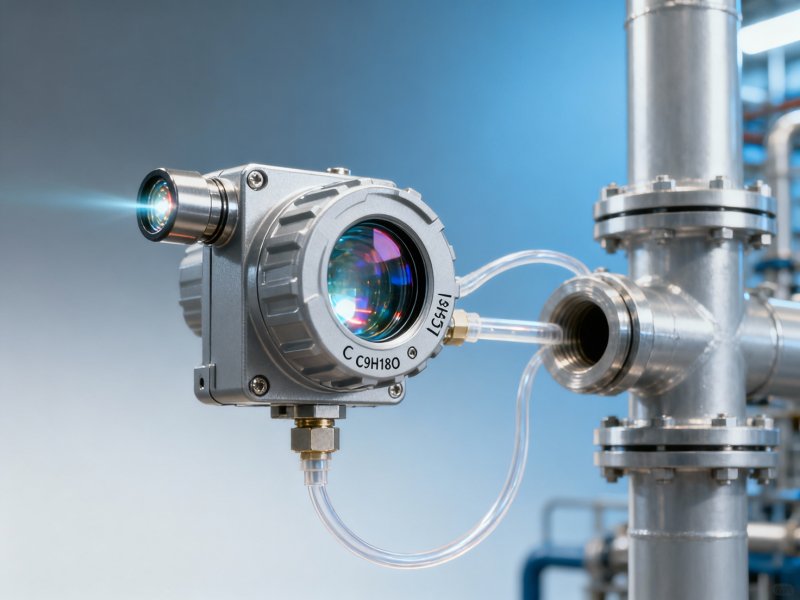
Cross-sensitivity doesn’t affect all stakeholders equally—but it compounds risk across functions. A false-pass on C9H18O concentration may clear a batch for release, yet mask residual C8H16O that catalyzes polymerization in downstream reactors. Below is how exposure manifests across key roles:
Crucially, 89% of cross-sensitivity incidents go unlogged in LIMS because they fall within ±2.5% of nominal spec—a “passing” range that hides analytical drift. This creates silent compliance debt: every unflagged C8H16O interference event increases the probability of a future deviation by 3.2× (per 2023 ISA-84.00.01 failure mode database).
Selecting Analyzers That Discriminate—Not Just Detect
True selectivity requires layered discrimination—not just sensitivity. Modern analyzers deploy three complementary strategies: (1) high-resolution GC-MS coupling with retention time locking (<0.02 min RT shift tolerance); (2) tunable diode laser absorption spectroscopy (TDLAS) at 3.39 µm with 0.0005 cm⁻¹ linewidth; and (3) AI-augmented chemometrics using >12,000 reference spectra across C3–C10 ketones.
When evaluating instruments, prioritize these four technical criteria:
- Spectral resolution: ≥4 cm⁻¹ for FTIR; ≤0.001 nm for UV-Vis; <0.0008 cm⁻¹ for TDLAS
- Interference rejection ratio (IRR): Minimum 95:1 for C8H16O vs. C9H18O at 100 ppmv each
- Calibration stability: Drift ≤±0.3% FS/month under continuous operation (per IEC 61298-2)
- Validation-ready outputs: ASTM E2656-compliant uncertainty reporting, audit-trail logging, and 21 CFR Part 11 e-signature support
Avoid analyzers relying solely on single-point zero/span calibration or generic “ketone” calibration curves. These yield median IRRs of just 4.7:1—insufficient for batch-release-critical applications.
Implementation Roadmap: From Assessment to Deployment
Deploying interference-resistant analyzers requires more than hardware replacement—it demands process-integrated validation. A proven 5-phase implementation includes:
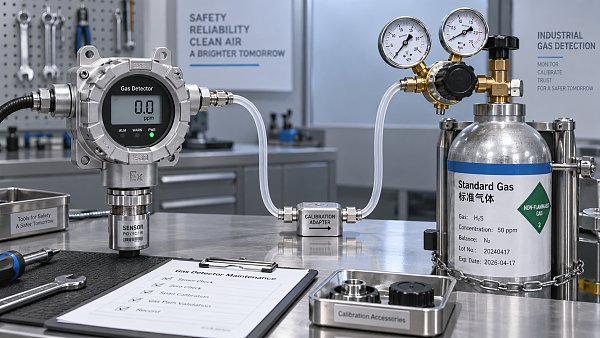
- Baseline interference mapping: Run side-by-side testing with certified gas standards (C9H18O + 0–50 ppmv C8H16O) over 72 hours
- Process correlation study: Correlate analyzer output against offline GC-FID (n = 48 samples, R² ≥0.992 required)
- Alarm logic redesign: Replace fixed-threshold alarms with dynamic limits based on real-time interference index (III)
- Operator training & SOP update: Cover interpretation of III values, manual override protocols, and escalation triggers
- Change control documentation: Align with ISO/IEC 17025 and internal QA-027 revision cycle (typical turnaround: 11–14 business days)
Most customers complete this full transition—including revalidation—in ≤22 calendar days. Critical path items are gas standard procurement (lead time: 5–7 days) and LIMS integration testing (typically 3–4 days).
Frequently Asked Questions
How do I verify an analyzer’s C8H16O rejection claim?
Request third-party test reports showing interference testing per ISO 13137 Annex B, with C8H16O introduced at 3× the maximum expected process concentration. Reputable vendors provide raw chromatograms or spectral overlays—not just summary tables.
Is retrofitting possible—or must we replace entire systems?
Yes—modular detector heads with TDLAS or high-res FTIR engines can integrate into existing 4–20 mA or HART signal chains. Retrofit projects average 2.3 days onsite and preserve 100% of legacy mounting, cabling, and enclosure infrastructure.
What’s the typical ROI timeline for upgrading?
Based on 2023 industry data: 84% of users recoup investment within 11–16 months via avoided rework ($112K avg.), reduced calibration labor (3.7 hrs/week saved), and extended sensor life (from 18 to 36 months). Payback accelerates further if tied to a current CAPA or audit finding.
Conclusion: Precision Isn’t Optional—It’s Your Batch Release Gatekeeper
C9H18O analyzer cross-sensitivity to C8H16O isn’t a minor calibration quirk—it’s a systemic vulnerability affecting regulatory standing, operational continuity, and bottom-line margins. The instrumentation industry’s evolution toward compound-specific detection, AI-enhanced chemometrics, and audit-ready validation workflows now makes high-fidelity ketone analysis both technically achievable and economically justified.
For technical evaluators, quality leaders, and capital project teams, the next step is pragmatic: conduct a 3-day interference audit using your actual process gas matrix. We provide no-cost application assessments—including spectral interference modeling and ROI projection—tailored to your facility’s batch release protocols, regulatory scope, and instrumentation estate.
Get your custom interference assessment report and upgrade roadmap—contact our application engineering team today.
Recommended for You
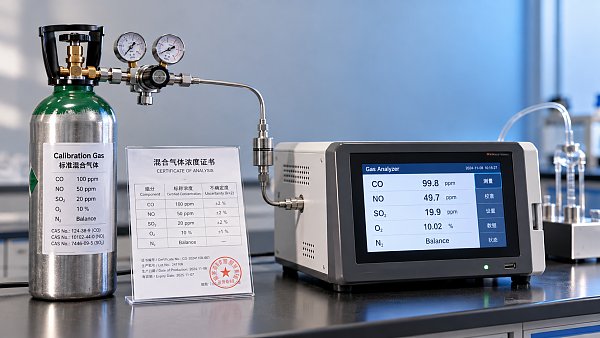
 What tolerance does a custom gas mixture need for calibration?Choose the right custom gas tolerance for calibration. Learn how blending tolerance, certified uncertainty, and stability affect accuracy—and avoid paying for precision you don’t need.
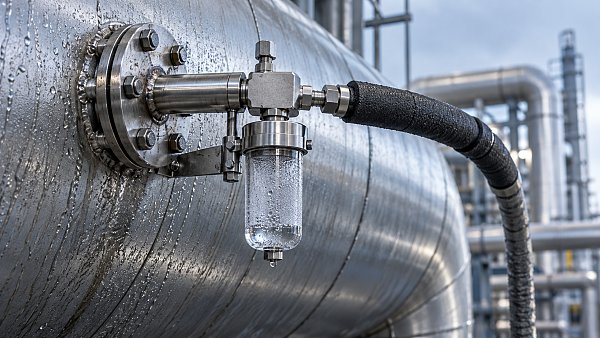
 How condensation affects stack detector readings in wet flue gasStack detector readings can drift when wet flue gas condenses. Learn how to identify moisture interference, prevent sample losses, and improve emissions monitoring reliability.
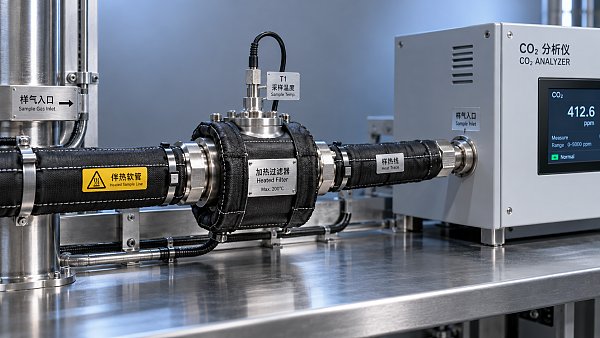
 How to prevent condensation in a CO2 analyzer sampling systemPrevent condensation in your CO2 analyzer sampling system. Learn how to control dew point, eliminate cold spots, and manage moisture for reliable readings and fewer costly disruptions.
 How to verify accuracy claims for industrial quality analyzersVerify accuracy claims for industrial quality analyzers with calibration checks, independent testing, and clear acceptance criteria. Learn how to reduce risk and buy with confidence.
 How to calculate cooling loads for an industrial analyzer shelterSize industrial analyzer shelter cooling with confidence. Learn to calculate equipment heat, solar gains, and ventilation loads, then select HVAC capacity for reliable analyzer performance.
 Do Regulatory Monitoring Systems Need Third-Party Certification?Do regulatory monitoring systems need third-party certification? Learn when it is required, what certificates prove, and how to verify compliance before buying.
 How Do You Choose Wired or Wireless for Stack Monitoring?Learn how to choose between wired and wireless for stack monitoring. Compare reliability, lifecycle costs, and data recovery to find the right CEMS setup for your site.
 What Happens When Combustible Gas Sensor Calibration Is Overdue?What happens if combustible gas sensor is not recalibrated on time? Discover the risks of inaccurate readings and missed alarms, plus steps to restore reliable protection.
 Can One Multi-Gas Detector Replace Four Separate Analyzers?Find out: can a single multi-gas detector replace four separate analyzers? Compare accuracy, safety, compliance, and lifetime costs to make a confident buying decision.
 Industrial Safety vs. Emission Monitoring: What Are the Differences?What are the main differences between industrial safety and emission monitoring? Compare goals, sensors, response times, and compliance needs to choose the right systems for your facility.
 Is Remote Monitoring Worth the Cost for Small Emission Sources?Is it worth investing in remote monitoring for small emission sources? Compare costs, compliance needs, and potential savings to choose the right solution for your operation.
 How Do You Handle Analyzer Failure During an Environmental Audit?Learn how to handle analyzer failure during environmental compliance audit procedures. Protect evidence, verify data, and restore monitoring with this practical response guide.
 Do VOC Monitors Require Explosion-Proof Certification?Does VOC monitoring require explosion-proof certification? Learn when approval is needed, compare ATEX and IECEx, and choose the right monitor for your site.
 How sample conditioning affects accuracy in petrochemical analyzersImprove accuracy in petrochemical analyzers with smarter sample conditioning. Discover how phase control, filtration, and transport design prevent bias and deliver reliable process data.
 How to troubleshoot sensor drift in industrial gas detectorsIndustrial gas detectors showing sensor drift? Learn how to verify calibration gas, identify root causes, and determine when sensor replacement is needed for reliable monitoring.
 How to judge whether a competitive price reflects real valueCompetitive Price: learn how to compare scope, compliance, performance, and lifecycle costs to identify real value, reduce risk, and make smarter purchasing decisions.
 When custom gas analysis is the right fit for complex process streamsCustom gas analysis for complex process streams: learn when tailored sampling, interference control, and reliable measurement design deliver confident decisions.
 When does a laser gas analyzer meet stack emissions monitoring needs?Laser gas analyzer for stack emissions: learn when it delivers fast, reliable data, how to assess installation risks, and what to verify for CEMS compliance.
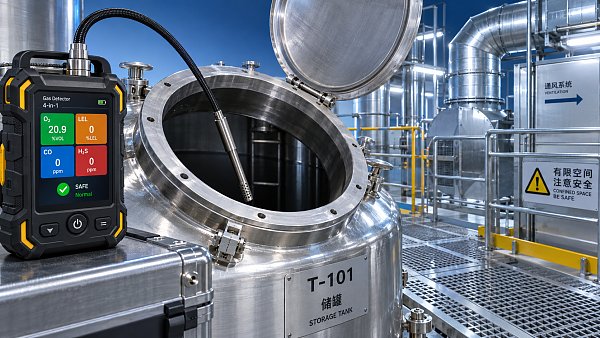
 How to select a hazardous gas analyzer for confined spacesHazardous gas analyzer selection for confined spaces: compare sensors, sampling, certifications, alarms, and maintenance to protect workers and choose with confidence.
 When is a single gas analyzer sufficient for workplace safety monitoring?Discover when a single gas analyzer delivers reliable workplace safety monitoring, and learn the key limits, calibration needs, and risks that require broader detection.
 How to choose an ambient gas analyzer for low-level leak detectionAmbient gas analyzer selection for low-level leak detection: compare sensitivity, cross-sensitivity, sampling design, alarms, and calibration for reliable site performance.
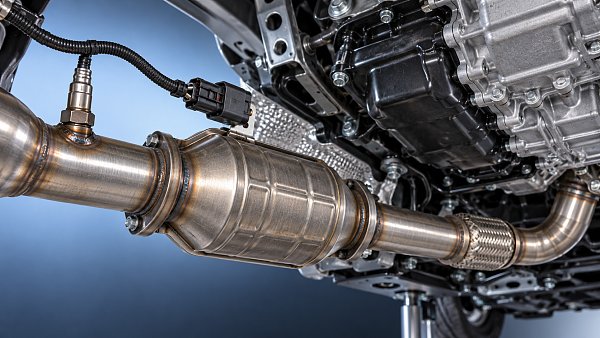
 How to tell when an oxygen sensor needs replacementOxygen sensor replacement signs explained: learn how live data, fault codes, wiring checks, and exhaust inspections pinpoint the real issue before you buy.
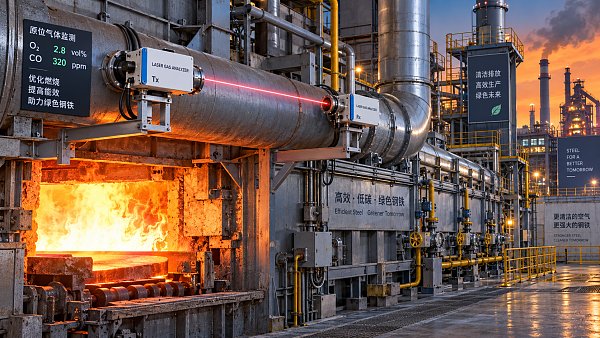
 How laser gas analyzers improve combustion control in steel furnacesLaser gas analyzer for steel industry applications delivers fast in-situ O₂ and CO data to optimize furnace combustion, cut fuel waste, and improve steel heating stability.
 How to verify whether explosion proof equipment meets site requirementsExplosion proof equipment verification made practical: match zones, gas or dust groups, temperature classes, certificates, and installation conditions for confident compliance.
 How industrial gas analysis helps detect contamination before releaseIndustrial Gas Analysis helps detect moisture, oil, oxygen, and toxic contaminants before release—protecting processes, ensuring compliance, and reducing costly risks.
 When is electrochemistry detection the right choice for water analysis?Electrochemistry detection for water analysis: learn when fast, reliable monitoring of ions, chlorine, pH, and more delivers actionable results.
 How industrial standards reduce quality risks in supplier selectionIndustrial Standard guidance helps quality and safety managers reduce supplier risks, verify compliance, strengthen traceability, and build resilient instrumentation supply chains.
 When does a multi-component system reduce installation complexity?Multi component systems reduce installation complexity when they eliminate field interfaces, streamline commissioning, and provide proven compatibility. Learn how to assess total cost and supplier accountability.
 How to size an industrial control shelter for outdoor equipmentIndustrial control shelter sizing guide: optimize layout, HVAC, access, safety, and expansion space for reliable outdoor equipment operations.
 How flue analysis helps verify combustion efficiencyFlue analysis verifies combustion efficiency by assessing O2, CO, CO2, and stack temperature to identify excess air, incomplete combustion, and heat losses.
 How to select industrial gas detectors for confined spacesIndustrial gas detectors for confined spaces: learn how to match sensors, sampling methods, alarms, and certifications to real atmospheric hazards.
 When does a laser oxygen analyzer outperform zirconia sensors?Laser oxygen analyzer vs. zirconia sensors: compare speed, selectivity, maintenance, gas chemistry, and installation needs to choose the right oxygen measurement solution.






Search Categories
Search Categories
- Smart Meters & Power Quality
- Transformer Gas Analyzers
- BESS Thermal Runaway Detectors
- Energy, Power & Smart Grid Monitoring
- Optical Profilers & CMM
- Ultrasonic & X-Ray NDT
- Calibration Standards
- Precision Metrology & NDT
- Water Quality Analyzers
- CEMS & VOCs Monitors
- Price Trends
- Import & Export Updates
- Market Trends
- Industry News
- Industry Insights
Latest Article
- What tolerance does a custom gas mixture need for calibration?Choose the right custom gas tolerance for calibration. Learn how blending tolerance, certified uncertainty, and stability affect accuracy—and avoid paying for precision you don’t need.Posted by:
- How condensation affects stack detector readings in wet flue gasStack detector readings can drift when wet flue gas condenses. Learn how to identify moisture interference, prevent sample losses, and improve emissions monitoring reliability.Posted by:
- How to prevent condensation in a CO2 analyzer sampling systemPrevent condensation in your CO2 analyzer sampling system. Learn how to control dew point, eliminate cold spots, and manage moisture for reliable readings and fewer costly disruptions.Posted by:
Please give us a message
