
Regulatory Compliance Risks in Industrial Emissions Monitoring


Industrial emissions monitoring is no longer just an environmental reporting function—it is a board-level risk area tied to operational continuity, market access, and corporate credibility. As regulations tighten across regions, Regulatory Compliance failures can expose enterprises to penalties, shutdowns, reputational damage, and costly retrofits. For business decision-makers, understanding the compliance risks behind CEMS, sensor accuracy, data integrity, calibration, and audit readiness is essential to building resilient environmental monitoring strategies and making confident investment decisions.
For industrial groups operating across power generation, chemicals, cement, metals, waste treatment, and advanced manufacturing, emissions data now influences permits, financing, supply chain access, and ESG disclosures.
Global Instrument Hub views emissions monitoring as part of the industrial “sensory system”: measurement quality determines whether executives see operational reality or a distorted compliance picture.
Why Regulatory Compliance Risk Has Moved to the Executive Agenda
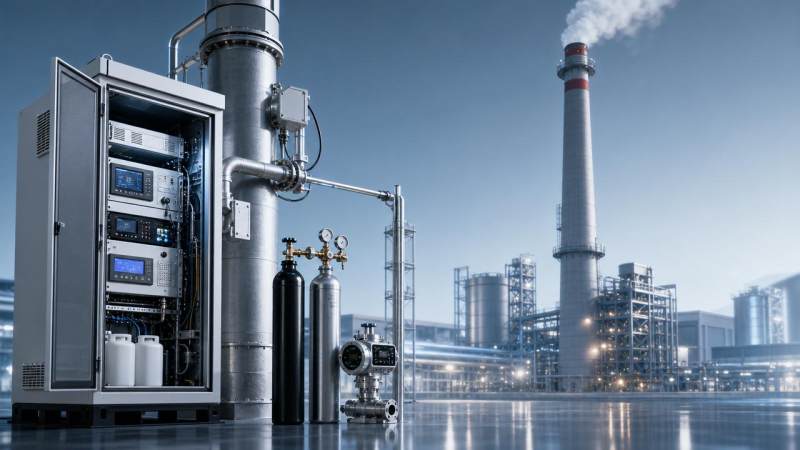
Regulatory Compliance risk is rising because environmental obligations are becoming more frequent, more digital, and more closely linked to production licenses and market entry.
A single industrial site may monitor 3–8 major pollutants, including SO2, NOx, CO, CO2, particulate matter, VOCs, oxygen, and moisture.
When monitoring systems fail, the issue is rarely limited to one instrument. It can affect reporting validity, process control, maintenance planning, and legal defensibility.
From Environmental Reporting to Business Continuity
Many enterprises still treat emissions monitoring as a back-office reporting requirement. That mindset underestimates the operational impact of non-compliant data streams.
In regulated facilities, invalid monitoring data for 24–72 hours may trigger corrective actions, regulator notification, or temporary production restrictions.
For multinational manufacturers, inconsistent emissions data across 5 or more plants can also weaken group-level carbon accounting and supplier qualification.
The Risk Chain Behind a Compliance Event
Regulatory Compliance breakdowns usually follow a chain: inaccurate measurement, weak calibration control, poor data handling, delayed maintenance, then failed inspection evidence.
- Measurement risk: sensor drift, sample conditioning failure, incorrect analyzer range, or unsuitable installation point.
- Data risk: missing timestamps, manual edits without traceability, weak cybersecurity controls, or unstable acquisition systems.
- Audit risk: incomplete calibration certificates, undocumented maintenance, expired gas standards, or inconsistent standard operating procedures.
Executives need a risk view that connects field devices, laboratory verification, automation architecture, and regulatory documentation into one controlled system.
Key Compliance Failure Points in Industrial Emissions Monitoring
The largest Regulatory Compliance exposure often sits in routine details: probe placement, sample temperature, calibration frequency, data retention, and alarm response.
A robust program should review at least 6 control layers: measurement principle, sampling path, analyzer performance, calibration, data governance, and audit readiness.
CEMS Design and Installation Risks
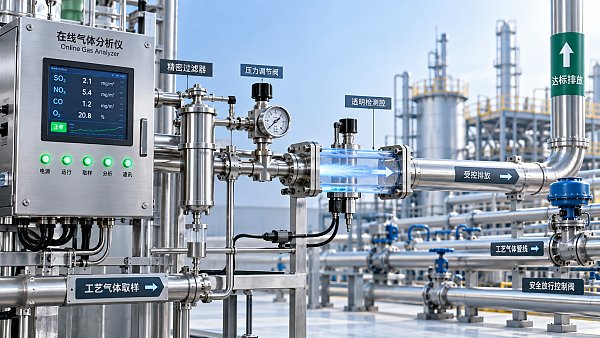
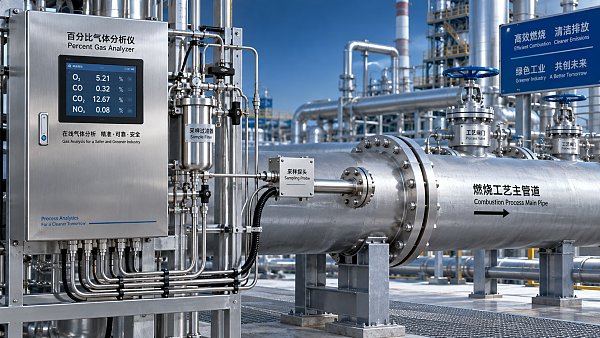
Continuous Emission Monitoring Systems must be selected according to stack conditions, pollutant profile, moisture content, dust load, and expected concentration range.
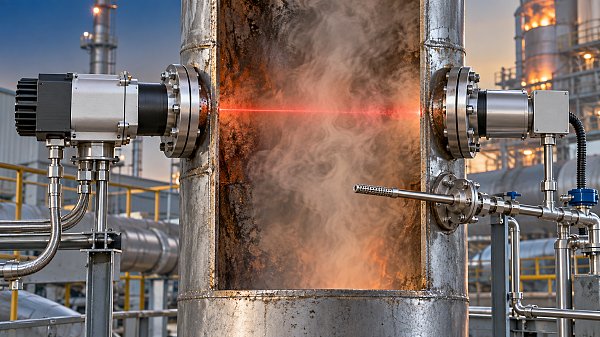
For example, extractive systems may require heated lines around 120°C–180°C to prevent condensation, while in-situ systems face alignment and optical contamination issues.
Incorrect sampling locations can create biased readings. Common engineering practice avoids turbulent zones and considers upstream and downstream straight-run distances.
Data Integrity and Traceability Gaps
Modern Regulatory Compliance depends on credible data. A compliant measurement may still fail an audit if records cannot prove how values were generated.
Decision-makers should verify whether the data acquisition system supports automatic time synchronization, role-based access, edit logs, alarm history, and backup routines.
Retention periods vary by jurisdiction, but many industrial operators maintain emissions records for 3–5 years to support inspections and internal reviews.
The following table summarizes frequent risk points and the practical controls procurement teams should request during system evaluation.
The key conclusion is simple: compliance reliability is designed before purchase, not repaired after an inspection notice or production interruption.
How to Build a Risk-Based Monitoring Strategy
A risk-based emissions strategy aligns Regulatory Compliance requirements with production realities, maintenance capacity, and long-term instrumentation lifecycle costs.
Rather than buying isolated analyzers, enterprises should define a 3-layer architecture: field measurement, data acquisition, and governance documentation.
Step 1: Map Regulatory Obligations by Site
Start with a site-level compliance matrix covering permits, pollutants, limits, reporting frequency, calibration duties, data retention, and emergency notification procedures.
For groups operating in 2 or more jurisdictions, the strictest requirement should often become the internal baseline to reduce system fragmentation.
Step 2: Define Measurement Performance Requirements
Procurement specifications should include measurable requirements such as response time, operating temperature, detection range, repeatability, zero drift, span drift, and availability.
Many industrial teams target system availability above 95%, but the acceptable threshold depends on local rules and process criticality.
Practical Specification Checklist
- Define pollutant range and expected peak concentration for normal, startup, and abnormal operations.
- Confirm stack temperature, pressure, humidity, dust load, and corrosive components before selecting analyzers.
- Require calibration procedures using traceable standards and documented acceptance criteria.
- Specify data export format, audit trail requirements, and backup frequency.
- Plan spare parts, service response, and preventive maintenance for at least 12 months.
This checklist helps purchasing teams compare suppliers on engineering evidence, not only equipment price or claimed analyzer accuracy.
Procurement Criteria for CEMS and Compliance Instrumentation
For business decision-makers, the right procurement question is not “Which analyzer is cheapest?” but “Which system reduces lifetime Regulatory Compliance exposure?”
A 10% lower capital cost can be outweighed by frequent downtime, high calibration gas consumption, weak documentation, or limited local service capacity.
Supplier Evaluation Beyond Technical Brochures
Suppliers should provide application references by industry type, installation conditions, maintenance intervals, documentation samples, and integration experience with PLC, DCS, or SCADA platforms.
A serious evaluation typically includes 4 dimensions: technical fit, compliance documentation, lifecycle support, and integration capability.
The table below offers a practical comparison model for executives, engineering managers, procurement leaders, and environmental compliance teams.
This framework makes supplier discussions more objective and prevents compliance-critical decisions from being reduced to unit price comparison.
Lifecycle Cost and Retrofit Risk
Industrial emissions systems often operate for 7–10 years. During that period, maintenance labor, consumables, calibration gases, and downtime can exceed initial purchase differences.
Retrofits are especially expensive when civil works, stack access platforms, sample line routing, or control cabinet redesign must be repeated.
A well-scoped project should include factory acceptance testing, site acceptance testing, operator training, and a 30–90 day stabilization period.
Audit Readiness, Calibration, and Data Governance
Regulatory Compliance is proven through records. Inspectors and corporate auditors need evidence that systems were maintained, calibrated, and operated under controlled procedures.
A strong audit file includes calibration certificates, maintenance logs, alarm records, validation reports, user access records, and corrective action documentation.
Calibration Discipline as a Management Control
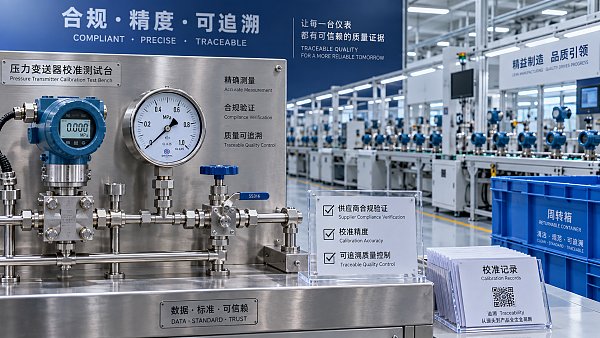
Calibration is not only a technical activity. It is a management control that links measurement confidence to legal defensibility.
Zero and span checks may be daily, weekly, or monthly depending on regulation, analyzer type, and site risk profile.
Calibration gases should be stored correctly, tracked by expiry date, and matched to analyzer ranges to avoid misleading pass results.
Data Governance for Multi-Site Enterprises
Enterprises with 3 or more production sites should standardize tag naming, report templates, alarm categories, and exception handling rules.
Centralized dashboards can help executives compare compliance status, downtime, invalid data hours, and corrective actions across regions.
However, centralization must not weaken site accountability. Each facility still needs trained personnel and clear escalation paths for abnormal readings.
Common Audit Questions
- Can the site prove when each analyzer was calibrated and by whom?
- Are invalid data periods explained, approved, and corrected within defined timelines?
- Do user permissions prevent unauthorized changes to reported emissions values?
- Are spare parts and consumables available before critical failure occurs?
If these questions cannot be answered within 1 working day, audit readiness is weaker than many executives assume.
Strategic Recommendations for Decision-Makers
Executives should manage Regulatory Compliance as a cross-functional program involving operations, environment, engineering, procurement, IT, and finance.
The most effective programs assign ownership across 5 areas: system performance, maintenance execution, data integrity, supplier management, and regulatory change tracking.
What to Prioritize in the Next 90 Days
A practical 90-day improvement plan should begin with a gap assessment, then move into quick controls and long-cycle investment planning.
- Review permits and reporting obligations for all monitored emission points.
- Check analyzer availability, calibration records, and invalid data history for the last 12 months.
- Rank sites by regulatory exposure, production importance, and retrofit difficulty.
- Update procurement specifications to include data integrity and audit evidence requirements.
- Engage qualified instrumentation intelligence support before committing capital budgets.
This approach helps organizations move from reactive troubleshooting to proactive compliance resilience without overengineering every monitoring point.
Where Global Instrument Hub Adds Value
Global Instrument Hub supports decision-makers by clarifying instrumentation categories, supplier capabilities, technical risk factors, and procurement evaluation logic.
For emissions monitoring, GIH focuses on CEMS barriers, online analyzer selection, calibration discipline, data credibility, and supply chain confidence.
Our role is to reduce information asymmetry, helping buyers ask sharper questions and compare solutions against measurable compliance and operational criteria.
Industrial emissions monitoring is now a strategic control system, not a peripheral environmental expense. Regulatory Compliance depends on accurate instruments, disciplined procedures, and trustworthy data.
Enterprises that invest early in robust monitoring architecture can reduce shutdown risk, improve audit confidence, and protect market access across tightening regulatory environments.
If your organization is planning a CEMS upgrade, supplier evaluation, or multi-site compliance review, contact Global Instrument Hub to explore tailored intelligence and solution guidance.
Recommended for You
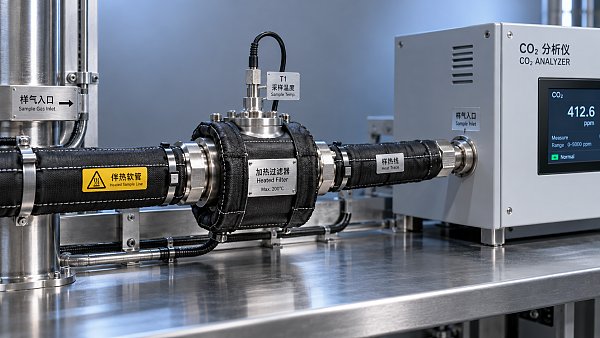
 How to prevent condensation in a CO2 analyzer sampling systemPrevent condensation in your CO2 analyzer sampling system. Learn how to control dew point, eliminate cold spots, and manage moisture for reliable readings and fewer costly disruptions.
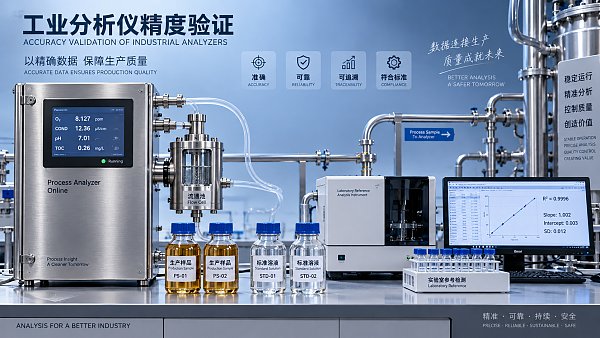
 How to verify accuracy claims for industrial quality analyzersVerify accuracy claims for industrial quality analyzers with calibration checks, independent testing, and clear acceptance criteria. Learn how to reduce risk and buy with confidence.
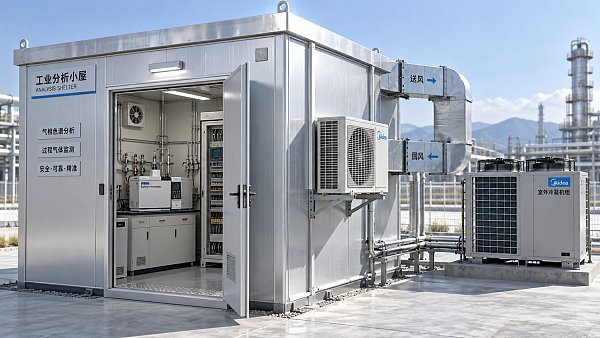
 How to calculate cooling loads for an industrial analyzer shelterSize industrial analyzer shelter cooling with confidence. Learn to calculate equipment heat, solar gains, and ventilation loads, then select HVAC capacity for reliable analyzer performance.
 What Happens When Combustible Gas Sensor Calibration Is Overdue?What happens if combustible gas sensor is not recalibrated on time? Discover the risks of inaccurate readings and missed alarms, plus steps to restore reliable protection.
 Can One Multi-Gas Detector Replace Four Separate Analyzers?Find out: can a single multi-gas detector replace four separate analyzers? Compare accuracy, safety, compliance, and lifetime costs to make a confident buying decision.
 Industrial Safety vs. Emission Monitoring: What Are the Differences?What are the main differences between industrial safety and emission monitoring? Compare goals, sensors, response times, and compliance needs to choose the right systems for your facility.
 Is Remote Monitoring Worth the Cost for Small Emission Sources?Is it worth investing in remote monitoring for small emission sources? Compare costs, compliance needs, and potential savings to choose the right solution for your operation.
 How Do You Handle Analyzer Failure During an Environmental Audit?Learn how to handle analyzer failure during environmental compliance audit procedures. Protect evidence, verify data, and restore monitoring with this practical response guide.
 Do VOC Monitors Require Explosion-Proof Certification?Does VOC monitoring require explosion-proof certification? Learn when approval is needed, compare ATEX and IECEx, and choose the right monitor for your site.
 How sample conditioning affects accuracy in petrochemical analyzersImprove accuracy in petrochemical analyzers with smarter sample conditioning. Discover how phase control, filtration, and transport design prevent bias and deliver reliable process data.
 How to troubleshoot sensor drift in industrial gas detectorsIndustrial gas detectors showing sensor drift? Learn how to verify calibration gas, identify root causes, and determine when sensor replacement is needed for reliable monitoring.
 How to judge whether a competitive price reflects real valueCompetitive Price: learn how to compare scope, compliance, performance, and lifecycle costs to identify real value, reduce risk, and make smarter purchasing decisions.
 When custom gas analysis is the right fit for complex process streamsCustom gas analysis for complex process streams: learn when tailored sampling, interference control, and reliable measurement design deliver confident decisions.
 When does a laser gas analyzer meet stack emissions monitoring needs?Laser gas analyzer for stack emissions: learn when it delivers fast, reliable data, how to assess installation risks, and what to verify for CEMS compliance.
 How to select a hazardous gas analyzer for confined spacesHazardous gas analyzer selection for confined spaces: compare sensors, sampling, certifications, alarms, and maintenance to protect workers and choose with confidence.
 When is a single gas analyzer sufficient for workplace safety monitoring?Discover when a single gas analyzer delivers reliable workplace safety monitoring, and learn the key limits, calibration needs, and risks that require broader detection.
 How to choose an ambient gas analyzer for low-level leak detectionAmbient gas analyzer selection for low-level leak detection: compare sensitivity, cross-sensitivity, sampling design, alarms, and calibration for reliable site performance.
 How to tell when an oxygen sensor needs replacementOxygen sensor replacement signs explained: learn how live data, fault codes, wiring checks, and exhaust inspections pinpoint the real issue before you buy.
 How laser gas analyzers improve combustion control in steel furnacesLaser gas analyzer for steel industry applications delivers fast in-situ O₂ and CO data to optimize furnace combustion, cut fuel waste, and improve steel heating stability.
 How to verify whether explosion proof equipment meets site requirementsExplosion proof equipment verification made practical: match zones, gas or dust groups, temperature classes, certificates, and installation conditions for confident compliance.
 How industrial gas analysis helps detect contamination before releaseIndustrial Gas Analysis helps detect moisture, oil, oxygen, and toxic contaminants before release—protecting processes, ensuring compliance, and reducing costly risks.
 When is electrochemistry detection the right choice for water analysis?Electrochemistry detection for water analysis: learn when fast, reliable monitoring of ions, chlorine, pH, and more delivers actionable results.
 How industrial standards reduce quality risks in supplier selectionIndustrial Standard guidance helps quality and safety managers reduce supplier risks, verify compliance, strengthen traceability, and build resilient instrumentation supply chains.
 When does a multi-component system reduce installation complexity?Multi component systems reduce installation complexity when they eliminate field interfaces, streamline commissioning, and provide proven compatibility. Learn how to assess total cost and supplier accountability.
 How to size an industrial control shelter for outdoor equipmentIndustrial control shelter sizing guide: optimize layout, HVAC, access, safety, and expansion space for reliable outdoor equipment operations.
 How flue analysis helps verify combustion efficiencyFlue analysis verifies combustion efficiency by assessing O2, CO, CO2, and stack temperature to identify excess air, incomplete combustion, and heat losses.
 How to select industrial gas detectors for confined spacesIndustrial gas detectors for confined spaces: learn how to match sensors, sampling methods, alarms, and certifications to real atmospheric hazards.
 When does a laser oxygen analyzer outperform zirconia sensors?Laser oxygen analyzer vs. zirconia sensors: compare speed, selectivity, maintenance, gas chemistry, and installation needs to choose the right oxygen measurement solution.
 How to select a percent range analyzer for process measurementsPercent range analyzer selection made practical: compare accuracy, sample systems, calibration, gas matrix, integration, and lifecycle cost for reliable process measurements.
 How explosion proof analysis verifies safe equipment for hazardous areasExplosion proof analysis verifies hazardous-area equipment by matching certifications, temperature ratings, installation details, and inspection controls for safer compliance.
 When does fixed gas detection need point sensors instead of open-path monitoring?Fixed gas detection: discover when point sensors outperform open-path monitoring for predictable leaks, enclosed zones, local alarms, and safer design decisions.
 How to choose industrial metrology systems for tight-tolerance partsIndustrial metrology guide for tight-tolerance parts: compare CMMs, optical scanners, gauges, uncertainty, workflow, and traceable inspection strategies.
Search Categories
Search Categories
- Smart Meters & Power Quality
- Transformer Gas Analyzers
- BESS Thermal Runaway Detectors
- Energy, Power & Smart Grid Monitoring
- Optical Profilers & CMM
- Ultrasonic & X-Ray NDT
- Calibration Standards
- Precision Metrology & NDT
- Water Quality Analyzers
- CEMS & VOCs Monitors
- Price Trends
- Import & Export Updates
- Market Trends
- Industry News
- Industry Insights
Latest Article
- How to prevent condensation in a CO2 analyzer sampling systemPrevent condensation in your CO2 analyzer sampling system. Learn how to control dew point, eliminate cold spots, and manage moisture for reliable readings and fewer costly disruptions.Posted by:
- How to verify accuracy claims for industrial quality analyzersVerify accuracy claims for industrial quality analyzers with calibration checks, independent testing, and clear acceptance criteria. Learn how to reduce risk and buy with confidence.Posted by:
- How to calculate cooling loads for an industrial analyzer shelterSize industrial analyzer shelter cooling with confidence. Learn to calculate equipment heat, solar gains, and ventilation loads, then select HVAC capacity for reliable analyzer performance.Posted by:
Please give us a message
