
NH3 Analyzer for Refrigeration Systems: Common Drift and Fixes


When does drift in an NH3 analyzer for refrigeration systems become a real problem?
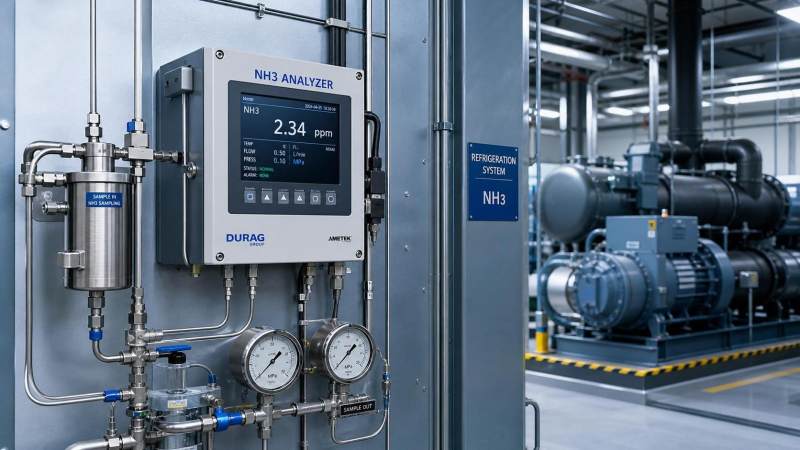
An NH3 analyzer for refrigeration systems does more than show a number. It supports leak response, process stability, energy use, and compliance decisions.
In practice, drift becomes serious long before the reading looks obviously wrong. A few ppm offset can distort trending and trigger unnecessary service actions.
The more common issue is not total failure. It is slow bias caused by heat, moisture, contamination, aging sensors, or poor calibration habits.
That matters in ammonia refrigeration because operating conditions are rarely gentle. Vibration, compressor cycling, washdown, and temperature swings all challenge analyzer stability.
A reliable NH3 analyzer for refrigeration systems should hold zero and span under real plant stress, not only in a clean workshop test.
This is also why data quality has become a broader instrumentation issue. GIH often frames measurement devices as the sensory layer of industrial control, and ammonia analysis fits that view exactly.
If the sensing layer drifts, alarm logic, ventilation response, and maintenance planning start from the wrong assumption. The consequence is wasted time at best, unsafe delay at worst.
What usually causes an NH3 analyzer to drift in refrigeration service?
Most drift comes from a small group of repeat causes. The reading problem may appear electrical, but the source is often mechanical or environmental.
A useful way to sort it is to separate sensor drift, sample path drift, and installation drift. Each one leaves different clues.
Contamination is especially common. Oil mist, dust, cleaner residue, and corrosion products can all alter diffusion, optics, or electrochemical response.
Temperature is another frequent driver. If the analyzer enclosure sees direct sun, defrost heat, or poor ventilation, compensation may not keep up.
Needle valves, filters, and tubing should not be treated as passive parts. In ammonia service, sample integrity is part of the measurement system.
How can you tell whether the drift is from the sensor or the installation?
This is where many troubleshooting hours are lost. Recalibrating too early can hide the real fault instead of proving where it sits.
A better approach is to check the analyzer in layers. Start with the easiest isolation points before changing settings.
- Confirm the displayed zero using clean reference gas or verified fresh air, depending on the analyzer design.
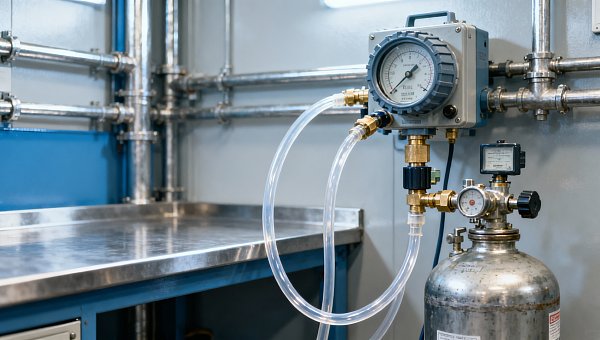
- Apply a known span gas at the instrument inlet, not only at the cylinder regulator.
- Compare response time and peak value against the last accepted maintenance record.
- Inspect pump flow, filter condition, and tubing for kinks, liquid traps, or absorption-prone materials.
- Review enclosure temperature, grounding, and nearby electrical noise sources.
If zero and span are stable at the analyzer inlet but unstable at the sample point, the installation is the stronger suspect.
If instability remains even with direct gas application, sensor aging or internal electronics become more likely.
In real facilities, mixed faults are common. A partially aged sensor plus a damp line can look like one problem until both are separated.
That is why disciplined records matter. GIH often emphasizes metrology thinking across instrumentation categories, and trend history is central to that discipline.
Which fixes work fastest when an NH3 analyzer for refrigeration systems starts reading high or low?
When the reading drifts, the fastest fix is rarely a full component swap. Short-cycle troubleshooting usually restores the analyzer sooner.
For high readings, start by checking moisture, contamination, and zero reference quality. A false high often comes from wet internals or biased zero.
For low readings, focus on sample losses. Long tubing runs, clogged filters, slow pumps, and adsorption can all suppress ammonia concentration.
Fast recovery steps that usually pay off
- Replace the sample filter if pressure drop or contamination is visible.
- Drain or dry any condensation traps and inspect for cold spots.
- Check pump output against the specified flow range.
- Verify calibration gas concentration, regulator condition, and gas expiration date.
- Re-seat electrical terminals and inspect shield continuity.
- Perform zero and span only after the analyzer reaches thermal stability.
A common mistake is calibrating while the environment is still changing. If the enclosure temperature is drifting, the correction may not hold.
Another mistake is using calibration gas flow that does not match the analyzer expectation. Too high or too low can distort the result.
For any NH3 analyzer for refrigeration systems, quick fixes should end with a response check, not just a successful calibration menu.
Are some drift problems really maintenance issues disguised as analyzer faults?
Yes, and this is more common than many sites expect. The analyzer gets blamed because it is visible, while the root cause sits upstream.
Poor mounting location is one example. If the device sits near steam, washdown spray, or vibration, drift will repeat even after replacement.
Another issue is maintenance interval design. Fixed monthly checks may be too long for harsh rooms and too short for stable zones.
A condition-based routine works better. Review drift history, alarm frequency, filter loading, and environmental exposure before locking the schedule.
It also helps to compare one analyzer against nearby process signals. Pressure events, defrost cycles, and ventilation changes may explain apparent drift patterns.
This broader view matches how industrial intelligence platforms such as GIH approach instrumentation: devices should be judged within the operating system around them.
When troubleshooting stays isolated at the sensor face, repeated failures look random. Once operating context is included, the pattern often becomes obvious.
What should be checked before replacing the analyzer completely?
Full replacement is justified when the sensing element is exhausted, spare parts are unavailable, or compliance requires an updated design.
Still, replacement should be the last step after a short decision review. That avoids swapping hardware into the same failure conditions.
Replacement decision checkpoints
If a new NH3 analyzer for refrigeration systems is being considered, evaluate support quality, documentation depth, and calibration traceability along with price.
The stronger long-term choice is usually the one with clear maintenance data, robust environmental limits, and consistent spare availability.
So what is the best next step when drift keeps coming back?
Treat recurring drift as a system issue first and a device issue second. That mindset prevents endless recalibration loops.
Document the exact symptom, when it appears, and what changed nearby. Time of day, room condition, and operating mode often tell the story.
Then review the full measurement chain: sensor health, sample path, enclosure condition, power quality, and calibration method.
For any NH3 analyzer for refrigeration systems, repeat stability matters more than a single successful test. A reading that holds under stress is the real target.
A practical next move is to build a short site checklist with zero trend, span recovery, filter age, tubing condition, and ambient temperature history.
That gives a firmer basis for deciding whether to adjust maintenance intervals, redesign the installation, or replace the analyzer with a better-matched model.
Reliable ammonia analysis is not just about fixing drift once. It is about keeping measurement trustworthy every day the refrigeration system is running.
Recommended for You
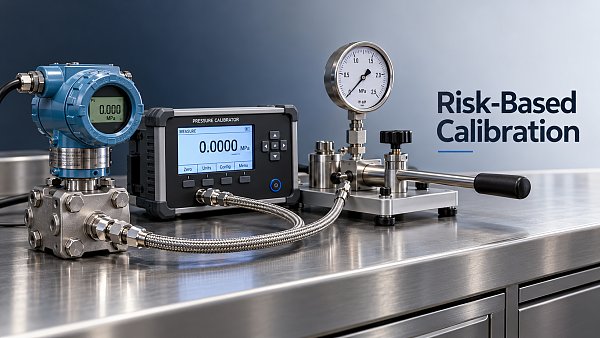
 How to set industrial calibration intervals based on equipment riskSet industrial calibration intervals based on equipment risk, drift, and as-found data. Learn when to shorten or extend schedules to improve reliability and avoid unnecessary costs.
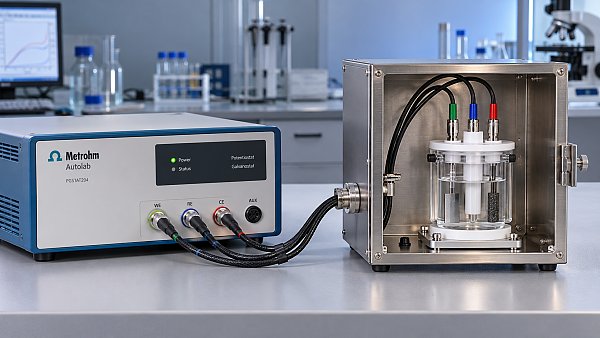
 How to choose electrochemical analyzers for low-current measurementsCompare electrochemical analyzers for precise low-current measurements. Learn how noise, leakage, bandwidth, and real-cell testing help you choose the right instrument.
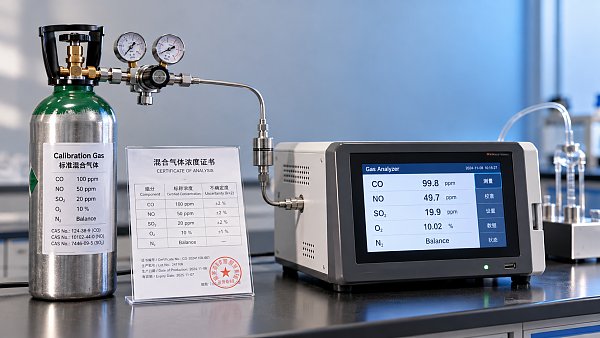
 What tolerance does a custom gas mixture need for calibration?Choose the right custom gas tolerance for calibration. Learn how blending tolerance, certified uncertainty, and stability affect accuracy—and avoid paying for precision you don’t need.
 How condensation affects stack detector readings in wet flue gasStack detector readings can drift when wet flue gas condenses. Learn how to identify moisture interference, prevent sample losses, and improve emissions monitoring reliability.
 How to prevent condensation in a CO2 analyzer sampling systemPrevent condensation in your CO2 analyzer sampling system. Learn how to control dew point, eliminate cold spots, and manage moisture for reliable readings and fewer costly disruptions.
 How to verify accuracy claims for industrial quality analyzersVerify accuracy claims for industrial quality analyzers with calibration checks, independent testing, and clear acceptance criteria. Learn how to reduce risk and buy with confidence.
 How to calculate cooling loads for an industrial analyzer shelterSize industrial analyzer shelter cooling with confidence. Learn to calculate equipment heat, solar gains, and ventilation loads, then select HVAC capacity for reliable analyzer performance.
 Where to Place CO Analyzers for Effective Parking Garage VentilationOptimize your CO analyzer for parking garage ventilation with practical placement tips. Learn how sensor height, airflow, and zone coverage support timely detection and effective fan control.
 NDIR vs. FTIR Gas Analyzers: Which Fits Your Environmental Research?Find the right infrared gas analyzer for environmental research. Compare NDIR vs. FTIR on sensitivity, gas coverage, sampling needs, and cost to choose confidently for your study.
 Oxygen Analyzers for Diving: Calibration Checks Before Nitrox BlendingUsing an oxygen analyzer for diving applications? Discover essential calibration, sensor, and sampling checks before nitrox blending to support reliable readings.
 How Paramagnetic Oxygen Analyzers Work and Why Sample Pressure MattersLearn how a paramagnetic oxygen analyzer works, why sample pressure affects accuracy, and what to check in compensation and calibration before choosing your system.
 How Much Does a Complete CEMS Integration Project Typically Cost?How much does a complete CEMS integration project typically cost? Explore budget ranges, hidden installation costs, and compliance needs to compare quotes and plan confidently.
 What Is the Typical Response Time for Industrial Air Monitors?What is the typical response time for industrial air monitors? Explore T90, sampling delays, and alarm settings to compare performance and choose the right monitor with confidence.
 Do Regulatory Monitoring Systems Need Third-Party Certification?Do regulatory monitoring systems need third-party certification? Learn when it is required, what certificates prove, and how to verify compliance before buying.
 How Do You Choose Wired or Wireless for Stack Monitoring?Learn how to choose between wired and wireless for stack monitoring. Compare reliability, lifecycle costs, and data recovery to find the right CEMS setup for your site.
 What Happens When Combustible Gas Sensor Calibration Is Overdue?What happens if combustible gas sensor is not recalibrated on time? Discover the risks of inaccurate readings and missed alarms, plus steps to restore reliable protection.
 Can One Multi-Gas Detector Replace Four Separate Analyzers?Find out: can a single multi-gas detector replace four separate analyzers? Compare accuracy, safety, compliance, and lifetime costs to make a confident buying decision.
 Industrial Safety vs. Emission Monitoring: What Are the Differences?What are the main differences between industrial safety and emission monitoring? Compare goals, sensors, response times, and compliance needs to choose the right systems for your facility.
 Is Remote Monitoring Worth the Cost for Small Emission Sources?Is it worth investing in remote monitoring for small emission sources? Compare costs, compliance needs, and potential savings to choose the right solution for your operation.
 How Do You Handle Analyzer Failure During an Environmental Audit?Learn how to handle analyzer failure during environmental compliance audit procedures. Protect evidence, verify data, and restore monitoring with this practical response guide.
 Do VOC Monitors Require Explosion-Proof Certification?Does VOC monitoring require explosion-proof certification? Learn when approval is needed, compare ATEX and IECEx, and choose the right monitor for your site.
 How sample conditioning affects accuracy in petrochemical analyzersImprove accuracy in petrochemical analyzers with smarter sample conditioning. Discover how phase control, filtration, and transport design prevent bias and deliver reliable process data.
 How to troubleshoot sensor drift in industrial gas detectorsIndustrial gas detectors showing sensor drift? Learn how to verify calibration gas, identify root causes, and determine when sensor replacement is needed for reliable monitoring.
 How to judge whether a competitive price reflects real valueCompetitive Price: learn how to compare scope, compliance, performance, and lifecycle costs to identify real value, reduce risk, and make smarter purchasing decisions.
 When custom gas analysis is the right fit for complex process streamsCustom gas analysis for complex process streams: learn when tailored sampling, interference control, and reliable measurement design deliver confident decisions.
 When does a laser gas analyzer meet stack emissions monitoring needs?Laser gas analyzer for stack emissions: learn when it delivers fast, reliable data, how to assess installation risks, and what to verify for CEMS compliance.
 How to select a hazardous gas analyzer for confined spacesHazardous gas analyzer selection for confined spaces: compare sensors, sampling, certifications, alarms, and maintenance to protect workers and choose with confidence.
 When is a single gas analyzer sufficient for workplace safety monitoring?Discover when a single gas analyzer delivers reliable workplace safety monitoring, and learn the key limits, calibration needs, and risks that require broader detection.
 How to choose an ambient gas analyzer for low-level leak detectionAmbient gas analyzer selection for low-level leak detection: compare sensitivity, cross-sensitivity, sampling design, alarms, and calibration for reliable site performance.
 How to tell when an oxygen sensor needs replacementOxygen sensor replacement signs explained: learn how live data, fault codes, wiring checks, and exhaust inspections pinpoint the real issue before you buy.
 How laser gas analyzers improve combustion control in steel furnacesLaser gas analyzer for steel industry applications delivers fast in-situ O₂ and CO data to optimize furnace combustion, cut fuel waste, and improve steel heating stability.
 How to verify whether explosion proof equipment meets site requirementsExplosion proof equipment verification made practical: match zones, gas or dust groups, temperature classes, certificates, and installation conditions for confident compliance.
Search Categories
Search Categories
- Smart Meters & Power Quality
- Transformer Gas Analyzers
- BESS Thermal Runaway Detectors
- Energy, Power & Smart Grid Monitoring
- Optical Profilers & CMM
- Ultrasonic & X-Ray NDT
- Calibration Standards
- Precision Metrology & NDT
- Water Quality Analyzers
- CEMS & VOCs Monitors
- Price Trends
- Import & Export Updates
- Market Trends
- Industry News
- Industry Insights
Latest Article
- How to set industrial calibration intervals based on equipment riskSet industrial calibration intervals based on equipment risk, drift, and as-found data. Learn when to shorten or extend schedules to improve reliability and avoid unnecessary costs.Posted by:
- How to choose electrochemical analyzers for low-current measurementsCompare electrochemical analyzers for precise low-current measurements. Learn how noise, leakage, bandwidth, and real-cell testing help you choose the right instrument.Posted by:
- What tolerance does a custom gas mixture need for calibration?Choose the right custom gas tolerance for calibration. Learn how blending tolerance, certified uncertainty, and stability affect accuracy—and avoid paying for precision you don’t need.Posted by:
Please give us a message
