
Laser Gas Analyzers vs Conventional Sensors: What Changes in Accuracy


Laser Gas Analyzers vs Conventional Sensors: What Changes in Accuracy
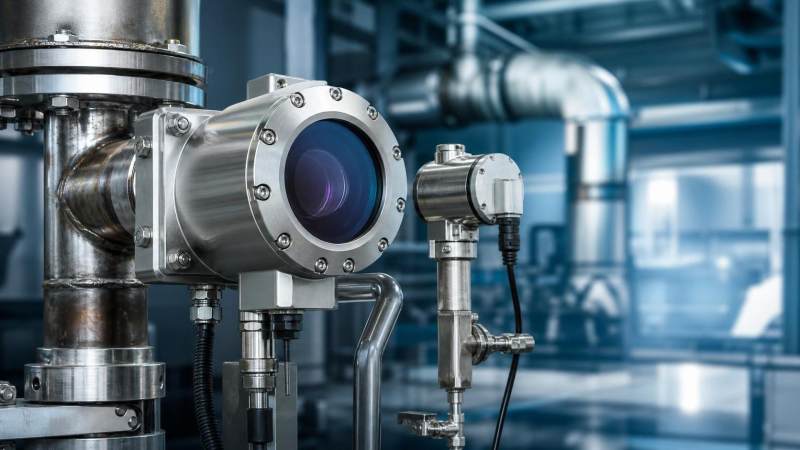
For enterprise decision-makers, the shift from conventional sensors to laser gas analyzers changes more than instrument architecture. It changes how reliably a plant sees gas concentration under real operating stress.
That matters because measurement error rarely stays inside the analyzer. It spreads into safety margins, control logic, maintenance planning, compliance exposure, and energy efficiency.
Conventional sensors still have value. They are common, familiar, and often cheaper upfront. But laser gas analyzers are changing the standard for accuracy where process conditions are harsh or variability is costly.
The real question is not whether laser technology is newer. The practical question is what accuracy actually improves, under which conditions, and whether that improvement delivers measurable business value.
Why Accuracy Changes in the First Place
Traditional gas sensors usually infer concentration through chemical reaction, thermal response, electrochemical behavior, or catalytic change. Those methods work, but they are more exposed to drift, contamination, and sensor aging.
Laser gas analyzers measure gas molecules through optical absorption at specific wavelengths. In simple terms, they read a molecular fingerprint rather than waiting for a sensor surface to react.
This is why accuracy often changes so noticeably. The sensing principle itself is less dependent on consumable parts and less vulnerable to the physical wear that distorts conventional readings over time.
In actual operations, that means a laser gas analyzer can hold calibration longer, respond faster to concentration swings, and maintain better repeatability across changing process loads.
The Core Accuracy Differences
- Lower drift over time, especially in continuous duty applications.
- Higher selectivity for target gases in mixed backgrounds.
- Faster response to transient changes in process gas composition.
- Less sensitivity to poisoning, fouling, and routine sensor degradation.
- Better stability in high temperature, high dust, or corrosive environments.
What “Better Accuracy” Means in Real Plants
Accuracy is often discussed as a specification sheet number. That is too narrow for procurement decisions. In practice, accuracy includes stability, repeatability, cross-interference resistance, and usable confidence under non-ideal conditions.
A conventional sensor may look acceptable in laboratory calibration. Yet the same device can lose reliability when process gas contains moisture, particles, pressure fluctuations, or interfering compounds.
Laser gas analyzers tend to perform better when the question is not “What is the reading today?” but “How trustworthy is the reading every day for the next twelve months?”
This distinction becomes critical in combustion optimization, emissions monitoring, chemical process control, and hazardous area monitoring, where small errors can create large downstream costs.
Where the Difference Shows Up Fastest
- Low-concentration measurement, where weak signals can be buried by drift.
- Multi-gas environments, where cross-sensitivity distorts conventional outputs.
- High-value process loops, where delayed response reduces control quality.
- Compliance applications, where traceable accuracy must stand up to audits.
Laser Gas Analyzers and Cross-Interference Control
One of the biggest reasons buyers move toward laser gas analyzers is selectivity. Conventional sensors can confuse similar gases or react to background components that should not affect the result.
That creates a hidden accuracy problem. The reading may be stable, but it can still be wrong because the sensor is responding to something other than the target gas.
Laser gas analyzers reduce this risk by targeting narrow absorption lines. When configured correctly, they can distinguish the intended gas with much stronger immunity to cross-interference.
For process industries, that often means fewer false alarms, more precise combustion tuning, and better confidence when operating close to specification limits.
Typical Interference Risks
- Water vapor affecting electrochemical or infrared baseline behavior.
- Hydrocarbon mixtures masking target gas concentration.
- Dust and corrosive compounds shortening conventional sensor life.
- Temperature swings shifting calibration performance.
Response Time, Drift, and Calibration Burden
From a business perspective, accuracy is inseparable from maintenance effort. A sensor that needs constant recalibration does not deliver the same operational value as one that stays reliable with less intervention.
Laser gas analyzers usually show an advantage here. Because they avoid many contact-based degradation mechanisms, they often drift more slowly than conventional sensors.
That slower drift supports longer calibration intervals, less manual adjustment, and fewer disruptions to measurement continuity. Over time, those gains can matter more than the initial purchase price difference.
Faster response also improves usable accuracy. If concentration changes quickly, a slow sensor gives technically correct data too late to protect process quality or safety performance.
Why This Matters Financially
A laser gas analyzer often reduces hidden costs linked to labor, downtime, unplanned recalibration, and off-spec production. For continuous processes, that cost profile deserves close attention during vendor evaluation.
Accuracy Under Harsh Industrial Conditions
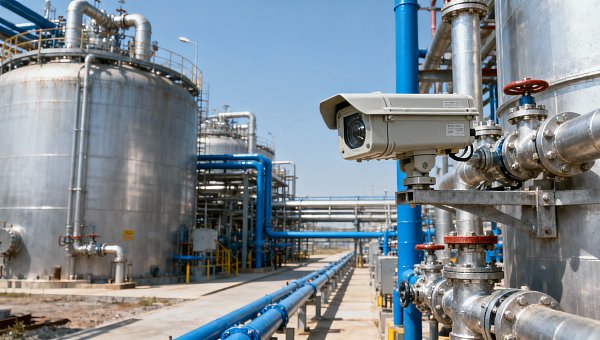
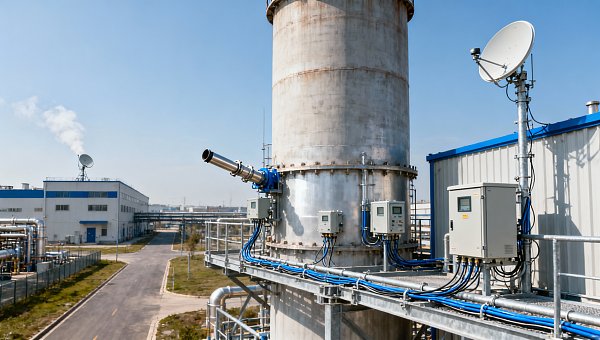
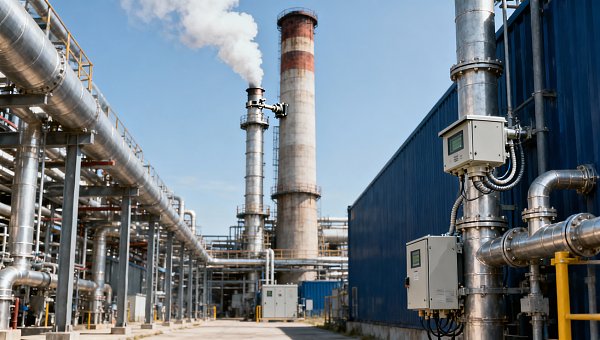
The strongest case for laser gas analyzers appears in difficult environments. Think high temperature furnaces, stack monitoring, reformers, chemical reactors, and zones with heavy particulate load.
Conventional sensors can still be useful in controlled, low-complexity settings. But when process conditions become unstable, the probability of reading distortion rises quickly.
Laser gas analyzers are often chosen because they preserve measurement integrity where contact sensors struggle. That does not mean they are maintenance-free, but it does mean they usually hold accuracy better in demanding duty.
This is especially relevant for industries balancing productivity with environmental compliance, where bad data can trigger both process waste and regulatory exposure.
Standards, Compliance, and Audit Confidence
In technical and standard-driven procurement, measurement accuracy is not only an engineering issue. It is also a governance issue. Data must be defensible, traceable, and consistent under audit.
That is why analyzer selection increasingly connects to frameworks such as ISO/IEC 17025, CEMS requirements, internal QA protocols, and industry-specific emissions obligations.
Laser gas analyzers can support stronger audit confidence because they generally offer better repeatability, lower drift, and clearer validation pathways when properly integrated and maintained.
For buyers, this means the evaluation should include not just instrument specs, but also calibration traceability, diagnostics, documentation quality, and vendor support capability.
Procurement Questions Worth Asking
- How does the analyzer perform under actual gas matrix conditions?
- What is the verified drift rate over the intended maintenance cycle?
- How is cross-interference tested and documented?
- What calibration and validation standards are supported?
- Can the supplier demonstrate field performance in similar processes?
When Conventional Sensors Still Make Sense
A balanced view matters. Not every site needs laser gas analyzers for every gas point. Conventional sensors remain practical for simpler duties, lower-risk applications, and budgets where high precision is not the main driver.
If the environment is stable, the target gas is easy to isolate, and maintenance access is straightforward, a conventional sensor can still be the right economic choice.
The issue is not replacing everything. It is identifying where accuracy risk is high enough that laser gas analyzers produce a better return through fewer errors and stronger decision confidence.
A Practical Decision Framework
A useful selection process starts with the consequences of wrong data. If a measurement error can affect safety, compliance, fuel use, catalyst life, or product quality, accuracy deserves a higher capital priority.
Then review operating conditions, expected interference, calibration resources, and total lifecycle cost. This usually reveals whether conventional sensors are sufficient or laser gas analyzers are the more resilient choice.
The change in accuracy is real, but it should be judged in business terms. Better gas data means tighter control, lower uncertainty, and fewer expensive surprises across critical operations.
For organizations investing in long-horizon reliability, laser gas analyzers are often less about buying a premium instrument and more about buying cleaner decisions from the data layer upward.
Recommended for You
 Can a C4H8O concentration analyzer distinguish between isomers?Can a C4H8O concentration analyzer distinguish isomers? Compare GC, FTIR and MS methods, uncover selectivity limits, and learn what to validate before choosing your instrument.
 How to identify a reliable supplier using on-time delivery recordsIdentify a Reliable Supplier by verifying on-time delivery records, original commitments, and complete shipments. Learn practical checks to reduce purchasing risk and protect your project schedule.
 How sensitive should a portable hydrogen analyzer be for lab use?Choose a portable hydrogen analyzer for laboratory use with the right quantification limit, accuracy, and range. Learn how to verify performance and avoid costly buying mistakes.
 How to set industrial calibration intervals based on equipment riskSet industrial calibration intervals based on equipment risk, drift, and as-found data. Learn when to shorten or extend schedules to improve reliability and avoid unnecessary costs.
 How to choose electrochemical analyzers for low-current measurementsCompare electrochemical analyzers for precise low-current measurements. Learn how noise, leakage, bandwidth, and real-cell testing help you choose the right instrument.
 What tolerance does a custom gas mixture need for calibration?Choose the right custom gas tolerance for calibration. Learn how blending tolerance, certified uncertainty, and stability affect accuracy—and avoid paying for precision you don’t need.
 How condensation affects stack detector readings in wet flue gasStack detector readings can drift when wet flue gas condenses. Learn how to identify moisture interference, prevent sample losses, and improve emissions monitoring reliability.
 How to prevent condensation in a CO2 analyzer sampling systemPrevent condensation in your CO2 analyzer sampling system. Learn how to control dew point, eliminate cold spots, and manage moisture for reliable readings and fewer costly disruptions.
 How to verify accuracy claims for industrial quality analyzersVerify accuracy claims for industrial quality analyzers with calibration checks, independent testing, and clear acceptance criteria. Learn how to reduce risk and buy with confidence.
 How to calculate cooling loads for an industrial analyzer shelterSize industrial analyzer shelter cooling with confidence. Learn to calculate equipment heat, solar gains, and ventilation loads, then select HVAC capacity for reliable analyzer performance.
 Hydrogen Analyzers for Energy Storage: Purity Monitoring vs. Leak DetectionChoosing a hydrogen analyzer for energy storage systems? Compare purity monitoring and leak detection to select the right sensors, improve safety, and protect fuel cell performance.
 NH3 Monitoring in Fertilizer Plants: Where Should Leak Analyzers Be Installed?NH3 analyzer for fertilizer production: discover where to place leak detectors around storage, compressors, and loading areas to reduce blind spots and improve early warning.
 Diesel Engine NOx Analyzers: Response Time and NO2 Conversion ExplainedChoosing a NOX analyzer for diesel engines? Learn how response time, NO2 conversion, and sampling design affect accuracy—and make a smarter, evidence-based purchase.
 SO2 Analyzers for Smelter Emissions: Sampling Hot, Dust-Laden Flue GasSelect an SO2 analyzer for smelting industry applications. Discover how to handle hot, dust-laden flue gas, prevent sample losses, and achieve reliable emissions monitoring.
 Unstable CH4 Readings in Biogas Monitoring? Check Moisture and Sample FlowCH4 analyzer for biogas monitoring giving unstable readings? Discover how moisture, sample flow, and pressure checks help pinpoint faults and restore reliable methane measurements.
 Buying a CO2 Analyzer for Brewery Gas Recovery: Costs Beyond the Purchase PriceBuying a CO2 analyzer for brewery applications? Compare sampling, installation, calibration, and downtime costs to uncover hidden expenses and make a smarter gas recovery investment.
 Where to Place CO Analyzers for Effective Parking Garage VentilationOptimize your CO analyzer for parking garage ventilation with practical placement tips. Learn how sensor height, airflow, and zone coverage support timely detection and effective fan control.
 NDIR vs. FTIR Gas Analyzers: Which Fits Your Environmental Research?Find the right infrared gas analyzer for environmental research. Compare NDIR vs. FTIR on sensitivity, gas coverage, sampling needs, and cost to choose confidently for your study.
 Oxygen Analyzers for Diving: Calibration Checks Before Nitrox BlendingUsing an oxygen analyzer for diving applications? Discover essential calibration, sensor, and sampling checks before nitrox blending to support reliable readings.
 How Paramagnetic Oxygen Analyzers Work and Why Sample Pressure MattersLearn how a paramagnetic oxygen analyzer works, why sample pressure affects accuracy, and what to check in compensation and calibration before choosing your system.
 How Much Does a Complete CEMS Integration Project Typically Cost?How much does a complete CEMS integration project typically cost? Explore budget ranges, hidden installation costs, and compliance needs to compare quotes and plan confidently.
 What Is the Typical Response Time for Industrial Air Monitors?What is the typical response time for industrial air monitors? Explore T90, sampling delays, and alarm settings to compare performance and choose the right monitor with confidence.
 Do Regulatory Monitoring Systems Need Third-Party Certification?Do regulatory monitoring systems need third-party certification? Learn when it is required, what certificates prove, and how to verify compliance before buying.
 How Do You Choose Wired or Wireless for Stack Monitoring?Learn how to choose between wired and wireless for stack monitoring. Compare reliability, lifecycle costs, and data recovery to find the right CEMS setup for your site.
 What Happens When Combustible Gas Sensor Calibration Is Overdue?What happens if combustible gas sensor is not recalibrated on time? Discover the risks of inaccurate readings and missed alarms, plus steps to restore reliable protection.
 Can One Multi-Gas Detector Replace Four Separate Analyzers?Find out: can a single multi-gas detector replace four separate analyzers? Compare accuracy, safety, compliance, and lifetime costs to make a confident buying decision.
 Industrial Safety vs. Emission Monitoring: What Are the Differences?What are the main differences between industrial safety and emission monitoring? Compare goals, sensors, response times, and compliance needs to choose the right systems for your facility.
 Is Remote Monitoring Worth the Cost for Small Emission Sources?Is it worth investing in remote monitoring for small emission sources? Compare costs, compliance needs, and potential savings to choose the right solution for your operation.
 How Do You Handle Analyzer Failure During an Environmental Audit?Learn how to handle analyzer failure during environmental compliance audit procedures. Protect evidence, verify data, and restore monitoring with this practical response guide.
 Do VOC Monitors Require Explosion-Proof Certification?Does VOC monitoring require explosion-proof certification? Learn when approval is needed, compare ATEX and IECEx, and choose the right monitor for your site.
 How sample conditioning affects accuracy in petrochemical analyzersImprove accuracy in petrochemical analyzers with smarter sample conditioning. Discover how phase control, filtration, and transport design prevent bias and deliver reliable process data.
 How to troubleshoot sensor drift in industrial gas detectorsIndustrial gas detectors showing sensor drift? Learn how to verify calibration gas, identify root causes, and determine when sensor replacement is needed for reliable monitoring.
Search Categories
Search Categories
- Smart Meters & Power Quality
- Transformer Gas Analyzers
- BESS Thermal Runaway Detectors
- Energy, Power & Smart Grid Monitoring
- Optical Profilers & CMM
- Ultrasonic & X-Ray NDT
- Calibration Standards
- Precision Metrology & NDT
- Water Quality Analyzers
- CEMS & VOCs Monitors
- Price Trends
- Import & Export Updates
- Market Trends
- Industry News
- Industry Insights
Latest Article
- Can a C4H8O concentration analyzer distinguish between isomers?Can a C4H8O concentration analyzer distinguish isomers? Compare GC, FTIR and MS methods, uncover selectivity limits, and learn what to validate before choosing your instrument.Posted by:
- How to identify a reliable supplier using on-time delivery recordsIdentify a Reliable Supplier by verifying on-time delivery records, original commitments, and complete shipments. Learn practical checks to reduce purchasing risk and protect your project schedule.Posted by:
- How sensitive should a portable hydrogen analyzer be for lab use?Choose a portable hydrogen analyzer for laboratory use with the right quantification limit, accuracy, and range. Learn how to verify performance and avoid costly buying mistakes.Posted by:
Please give us a message
