
Long term supply agreements can reduce risk or lock it in


Long term supply agreements can help instrumentation buyers secure Stable Supply, Timely Delivery, and Wholesale Price advantages, especially for gas monitoring projects with Bulk Order needs. But they can also lock in cost, quality, and Logistics Support risks if market conditions change. For teams managing Worldwide Shipping, Fast Delivery, and Custom Solution requirements, understanding where Long Term Supply creates resilience—or exposure—is critical before making strategic sourcing decisions.
When do long term supply agreements actually reduce risk in instrumentation procurement?
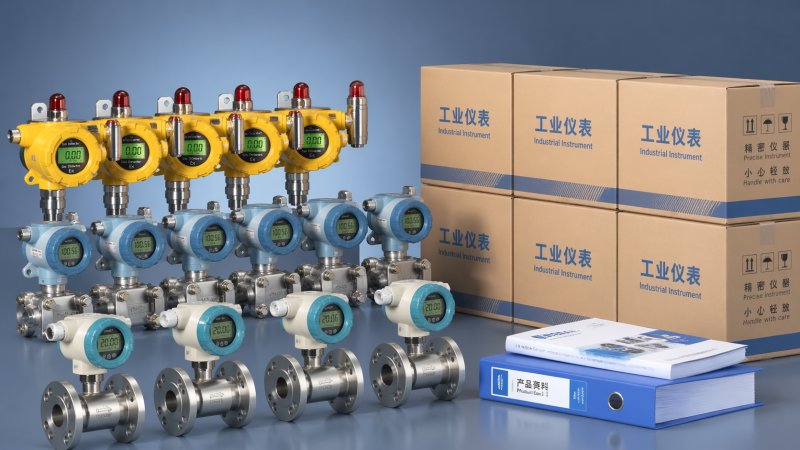
In the instrumentation industry, supply continuity is rarely just a purchasing issue. It directly affects commissioning schedules, safety compliance, calibration planning, spare parts readiness, and plant uptime. For buyers of gas monitoring systems, transmitters, analyzers, flow instruments, level devices, laboratory equipment, and industrial online monitoring tools, a long term supply agreement can reduce procurement volatility when demand is predictable over 12–36 months.
This is especially true in projects with phased delivery. A power plant upgrade may require instruments in 3 stages over 6–18 months. An environmental monitoring rollout may involve repeated shipments to multiple sites every quarter. In these cases, locking in framework terms can protect the buyer against sudden lead time extension, production slot shortages, and repeated negotiation cycles.
However, not every long term supply arrangement creates resilience. If technical specifications are still evolving, if process conditions may change, or if installation standards differ across regions, a rigid agreement can freeze the wrong configuration. The result is not lower risk, but delayed approval, unusable stock, and expensive engineering changes after contract signature.
For procurement teams, technical evaluators, project managers, and financial approvers, the real question is not whether long term supply agreements are good or bad. The real question is which risks are being transferred, which are being shared, and which are being hidden inside price, lead time, customization, and after-sales obligations.
Typical situations where long term supply supports better sourcing control
A structured agreement is often useful when the buyer already knows the instrument category, quantity range, compliance baseline, and project rollout plan. That usually applies to repeat purchases of standard pressure, temperature, flow, level, and gas detection devices, or to multi-site industrial automation programs using similar bill-of-material structures.
- Stable demand over 2–4 quarters, with forecast visibility good enough to reserve production capacity.
- Repeated SKUs or approved alternates, reducing requalification time for every batch.
- Projects requiring worldwide shipping, where logistics coordination and export documentation must be repeated across multiple shipments.
- Applications with strict maintenance planning, where spare parts and calibration schedules depend on consistent product families.
If these conditions are absent, buyers should be cautious. Long term supply works best when technical certainty, demand planning, and supplier execution discipline are all reasonably mature. If one of those three is weak, risk often shifts rather than disappears.
What can a long term supply agreement lock in: savings, service, or hidden exposure?
Many organizations enter long term supply agreements to secure wholesale price terms, but price is only one layer. In instrumentation sourcing, total exposure also includes calibration consistency, documentation quality, batch traceability, packaging for sensitive devices, firmware or configuration control, and field support response. A lower unit price can be offset by higher costs in rework, delay, or replacement logistics.
A practical way to evaluate this is to compare what becomes fixed and what remains flexible. If unit pricing is fixed for 12 months, but raw material surcharges, freight adjustments, and engineering change fees are excluded, the commercial certainty may be weaker than expected. Similarly, if delivery windows are promised but inventory reservation is not defined, fast delivery may not be guaranteed when the market tightens.
For technical users and quality teams, another major concern is whether the agreement preserves specification discipline. A supply contract should clearly identify performance baselines such as measurement range, output signal, enclosure requirement, media compatibility, calibration scope, and environmental limits. Without these controls, the same model family may vary in ways that complicate installation and maintenance.
The table below shows the most common dimensions that either reduce risk or lock risk in. It is designed for buyers comparing framework agreements for industrial instruments, gas monitoring systems, analytical devices, and automation components.
The main lesson is simple: a long term supply agreement is only as strong as its exceptions, revision rules, and execution details. Buyers should not focus only on price validity. They should also check change control, alternates approval, minimum order logic, shipment split rules, and response time for nonconformance issues.
Three cost layers that are often underestimated
1. Specification drift cost
If process data changes after the agreement starts, the original instrument range or material selection may no longer fit. Even a small mismatch in pressure class, wetted material, communication protocol, or alarm threshold can trigger redesign, retesting, and site delay.
2. Inventory holding cost
Reserved stock helps fast delivery, but excessive stocking can tie up cash for 3–6 months, especially for configured analyzers, gas detectors, or project-tagged control instruments that are not easy to redeploy.
3. Service gap cost
A contract that looks competitive at order stage may become expensive if document revision, commissioning support, replacement coordination, or calibration certificates are billed separately. This matters most in regulated or safety-sensitive projects.
How should buyers evaluate long term supply for gas monitoring and industrial instrumentation projects?
A sound procurement decision should combine commercial review with technical and operational screening. In instrumentation projects, this means looking beyond catalog descriptions. Procurement staff may focus on unit cost and lead time, while engineers focus on range, signal, and compatibility. Yet the contract succeeds only when both sides validate the same operating assumptions.
For gas monitoring projects with bulk order needs, buyers should define the scope in practical layers: standard units, configured units, consumables, accessories, and spare parts. Each layer has different lead-time behavior. Standard items may ship within 7–15 days in normal conditions, while configured systems or region-specific compliance packages may require 3–8 weeks depending on documentation and assembly complexity.
For project managers and decision makers, it is useful to apply a 5-point screening model before signing any long term supply agreement. This helps prevent a common mistake: approving a framework contract before the technical baseline and service assumptions are fully aligned.
The following table can be used as a practical procurement checklist for instrumentation sourcing, including sensors, transmitters, gas detectors, online analyzers, laboratory instruments, and automation accessories.
This checklist is most effective when engineering, procurement, quality, and finance all review it together. In many failed sourcing arrangements, one function assumes another function has validated the details. A 45–60 minute cross-functional review before signing often prevents months of friction later.
A practical 4-step review process before contract approval
- Classify items into standard, configurable, and custom solution groups. Each group should have a different delivery and revision rule.
- Define forecast accuracy bands, such as monthly call-off, quarterly planning, and annual volume expectation. This reduces dispute over reserved capacity.
- Confirm inspection and acceptance content, including document package, labeling, serial traceability, and any calibration or test records needed for handover.
- Set escalation paths for delays, shortages, and technical deviations, including response windows within 24–72 hours for urgent project issues.
This kind of structure is valuable not only for large end users but also for distributors, system integrators, and regional agents. It helps them protect downstream commitments while keeping enough flexibility to respond to project variation.
Which contract terms matter most when markets, specifications, or logistics conditions change?
Long term supply becomes risky when the contract assumes stability in a market that is not stable. In instrumentation, change can come from raw material pricing, electronic component availability, transport disruption, updated plant safety requirements, or revised process conditions. A framework agreement should therefore be built around change management, not only purchase commitment.
For example, a buyer may sign for 1 year expecting regular shipments of gas monitoring devices. If the project later requires different sensor ranges, alarm logic, enclosure ratings, or communication interfaces, a rigid contract can force procurement teams to buy non-optimal hardware just to preserve the unit price. That is a false economy.
The same logic applies to logistics support. Worldwide shipping sounds straightforward until import labeling, destination certification, or protective packaging requirements differ across 5–10 countries. If the agreement does not address split shipments, document variation, and destination-specific handling, the buyer may still face avoidable delay.
To keep flexibility without losing control, buyers should focus on a few contract mechanisms that are especially relevant in industrial instrumentation and automation supply.
Key clauses that deserve careful review
- Price review window: Define whether pricing is fixed for 6 months, 12 months, or subject to input-cost triggers after a threshold is reached.
- Forecast tolerance: Clarify whether the supplier accepts volume deviation of ±10%, ±20%, or another range without repricing or delayed supply.
- Engineering change procedure: State how revised specifications, alternate models, firmware changes, or accessory updates are approved and costed.
- Delivery split rights: Specify whether call-off orders can be divided across several shipments to support site readiness or staged installation.
- Nonconformance response: Set response timing, such as first technical feedback within 24–48 hours and replacement decision within a defined review cycle.
Quality and safety managers should also confirm whether the agreement protects traceability. For instruments used in regulated, hazardous, or audit-sensitive settings, serial number traceability, calibration records, and inspection documentation are not optional extras. They are part of the operating risk profile.
Relevant compliance and documentation considerations
Instrumentation procurement often intersects with common standards and documentation practices, even when project-specific certification details vary. Depending on application, buyers may need to consider electrical safety, EMC expectations, pressure-related requirements, hazardous area suitability, calibration documentation, or material declarations. The exact need depends on destination market and process environment.
The safest approach is to define compliance needs at the quotation stage, not after production release. A 2-week delay caused by missing document format, incorrect labeling, or unplanned certificate requests can erase the benefit of a favorable unit price. This is one reason long term supply agreements must include document scope, revision responsibility, and delivery package detail.
Common misconceptions, decision traps, and practical FAQ
Long term supply agreements are often treated as a sign of procurement maturity, but maturity comes from structure, not duration alone. Some buyers sign too early because they want budget certainty. Others avoid long term supply entirely because they fear lock-in. Both positions can be costly if they ignore the actual sourcing profile of the project.
In practice, the best sourcing model depends on order predictability, customization level, logistics complexity, and internal approval speed. A framework agreement for standard transmitters and gas detectors may work well. A fully fixed contract for evolving analyzer packages may not. The distinction matters for end users, integrators, distributors, and finance teams alike.
The FAQ below addresses common search and purchasing questions raised during technical evaluation, sourcing review, and approval planning.
These answers are intentionally practical. They focus on what teams should verify before committing to bulk orders, repeat deliveries, or multi-site instrumentation supply.
How do I know whether a long term supply agreement is suitable for my project?
It is usually suitable when at least 3 conditions are present: predictable demand over 6–12 months, stable technical specifications, and repeated purchasing of the same or compatible models. If the project still has open engineering questions, uncertain site timing, or high customization content, a staged or hybrid agreement is often safer than a rigid long term commitment.
What should buyers focus on besides unit price?
Focus on 5 areas: technical consistency, lead time definition, documentation scope, logistics support, and change management. In many instrumentation purchases, the cost of delay, mismatch, or incomplete documentation is more damaging than a small difference in unit price. This is especially true in safety, compliance, and commissioning-driven projects.
How long is the normal delivery cycle for instrumentation orders?
There is no single answer, but common industry ranges are useful. Standard catalog items may be available in 7–15 days under normal supply conditions. Configured units often need 2–6 weeks. More complex custom solution packages, region-specific document sets, or multi-sensor assemblies may need longer. Buyers should ask for separate lead times by product group rather than one blended promise.
Can a long term agreement still allow custom solution changes?
Yes, but only if the contract defines how changes are reviewed. Good agreements separate standard supply from configurable or custom items, define approval windows, and set pricing logic for variation. Without that structure, every change becomes a dispute over cost, timing, or responsibility.
What is the biggest mistake in long term instrumentation sourcing?
The biggest mistake is assuming a long term supply agreement solves uncertainty by itself. It does not. It only formalizes the assumptions already made about volume, specification, delivery, documentation, and service. If those assumptions are weak, the agreement locks in weakness. If they are well designed, it becomes a useful control tool.
Why choose us for long term instrumentation supply planning and project sourcing support?
In instrumentation sourcing, buyers do not only need products. They need a workable path from parameter confirmation to delivery execution. That includes model selection, quantity planning, document alignment, logistics coordination, and after-sales response. This is particularly important for projects involving gas monitoring, industrial automation, environmental monitoring, laboratory analysis, and multi-site equipment deployment.
We support customers by aligning commercial terms with technical reality. Instead of treating long term supply as a simple discount mechanism, we help define which items should be fixed, which should remain flexible, and which should be handled as custom solution packages. This reduces the chance of locking in the wrong specification or the wrong delivery model.
If you are evaluating a long term supply agreement, you can consult us on practical issues such as parameter confirmation, product selection, alternative models, standard versus custom configuration, lead time by item category, sample support, documentation expectations, worldwide shipping arrangements, and quotation structure for bulk orders.
You can also discuss 4 specific planning topics before placing an order: which instruments are suitable for framework pricing, what delivery cycle is realistic for standard and configured items, what certification or document package may be needed for your market, and how to build a supply plan that protects both budget and project timing. That kind of early clarification often saves far more than late-stage price negotiation.
- Need help with technical parameters? Share medium, range, output, environment, and installation conditions for faster selection.
- Need a sourcing comparison? We can help distinguish standard items, configurable items, and custom solution requirements.
- Need delivery clarity? Ask about normal lead time, split shipment options, and stock or production reservation logic.
- Need quotation support? We can discuss sample requests, batch pricing, required documents, and shipping arrangements for your target region.
If your team is comparing supply options now, send the application details, expected order horizon, and any compliance or logistics requirements. A clear review of product scope, delivery cycle, and contract flexibility can help you decide whether a long term supply agreement will reduce risk—or lock it in.
Recommended for You
 IEC Approves China-Led Smart Sensor Semantic Interoperability GuideSmart sensor semantic interoperability takes a leap: IEC TR 63382—China-led, globally approved—sets the first semantic guide for IoT sensor data modeling, ontology, and APIs.
 SABIC Launches 'Smart Factory 2030' with China Sourcing PrioritySABIC's 'Smart Factory 2030' prioritizes China sourcing for AI-driven process analyzers — discover how ISA-88/95 compliance and Saudi data sovereignty unlock new market access.
 China Leads Global Offshore Wind Installations for 5th Consecutive YearChina leads global offshore wind installations for the 5th year — discover how domestic submarine cable monitoring, corrosion robots & FBG sensors drive export growth to UK, Vietnam, Brazil.
 Germany Enforces New EMC Standard EN IEC 61000-6-4:2026 for AI Edge DevicesEN IEC 61000-6-4:2026 is now mandatory in Germany for AI edge devices — discover radiated emission limits (1–6 GHz), CE impact, and urgent compliance actions.
 FDA Updates IVD Software Guidance for AI Diagnostic ToolsFDA updates IVD software guidance for AI diagnostic tools—new data transparency & bias assessment rules impact global manufacturers. Act now to align.
 MIIT Launches Enforcement Campaign on EV Battery RecyclingMIIT Launches EV Battery Recycling Enforcement: Key for compliance, data security & global exports. Act now to avoid delays and seize market advantage.
 Released") Guidelines for Domestic Trade Transactions (Trial) ReleasedGuidelines for Domestic Trade Transactions (Trial) released—key for instrumentation, automation & global procurement teams navigating quality, IP, data & dispute clauses.
Guidelines for Domestic Trade Transactions (Trial) ReleasedGuidelines for Domestic Trade Transactions (Trial) released—key for instrumentation, automation & global procurement teams navigating quality, IP, data & dispute clauses. China's Shipbuilding Industry Sees 195.2% YOY Growth in Q1 New OrdersChina's shipbuilding industry surges 195.2% YoY in Q1 2026 new orders — driving demand for marine survey instruments, LNG bunkering ships & integrated sensor systems.
 China Releases AI Terminal Intelligence Grading StandardChina's new AI Terminal Intelligence Grading Standard (GB/Z 177—2026) defines L1–L5 AI capabilities for smart sensors, automotive cockpits & edge controllers—key for EU/SEA market access.
 China-Europe Railway Express Hits 130,000 Trains, $520B Cargo ValueChina-Europe Railway Express hits 130,000 trains & $520B cargo value — discover how CERX boosts supply chain resilience, cuts carbon, and outperforms sea freight for high-value, time-sensitive shipments.
 Plant Automation Instruments: Upgrade Signals You Should Not IgnorePlant automation instruments show upgrade signals before costly failures happen. Learn the warning signs, business value, and smart replacement steps to improve uptime, safety, and control.
 How Industrial Quality Analyzers Reduce Rework and ScrapIndustrial quality analyzers help manufacturers detect defects early, reduce rework and scrap, improve compliance, and boost process efficiency with faster, data-driven control.
 Industrial Process Analyzers: What to Check Before ImportingIndustrial process analyzers: learn what to check before importing, from certifications and technical fit to maintenance and supplier support, to reduce risk and buy with confidence.
 Real-Time Analyzers vs Lab Testing for Faster Process ControlReal-time analyzers vs lab testing: learn how faster process data improves control, cuts delays, and boosts quality while lab methods ensure validation and compliance.
 Smart Measurement Devices in 2026: Where Adoption Is Growing FastSmart measurement devices are seeing rapid 2026 adoption across manufacturing, energy, labs, and environmental monitoring. Discover where demand is rising fastest and why buyers are acting now.
 Industrial Detection Systems: Common Selection Mistakes to AvoidIndustrial detection systems selection mistakes can trigger delays, compliance risks, and higher lifecycle costs. Learn how to choose smarter, integrate better, and avoid costly rework.
 When High-Accuracy Instruments Justify the Extra CostHigh-accuracy instruments justify extra cost when precision reduces waste, strengthens compliance, and improves ROI. Learn when premium accuracy delivers measurable business value.
 Utility Monitoring Equipment Costs: What Shapes 2026 BudgetsUtility monitoring equipment costs in 2026 are shaped by accuracy, integration, cybersecurity, and lifecycle service. See what drives budgets and how to plan smarter investments.
 ATEX Certified Analyzers: Key Specs That Matter in Hazardous PlantsATEX certified analyzers: discover the key specs that impact safety, accuracy, uptime, and maintenance in hazardous plants—essential guidance for smarter selection.
 How to Choose Plant Safety Instruments for High-Risk AreasPlant safety instruments selection for high-risk areas starts with the right standards, durability, and integration. Learn how to compare options, avoid costly mistakes, and improve plant safety.
 China's New Oil & Gas Discoveries Boost Export Demand for Analytical InstrumentsChina's new oil & gas discoveries drive export demand for analytical instruments—boosting global opportunities for chromatographic analyzers, gas detectors, and downhole sensors.
 China Academy Launches 800V HVDC Power-Computing Validation PlatformChina Academy launches 800V HVDC power-computing validation platform for IEC-compliant DC metering — accelerate CE/UL/SASO certification by 30%.
 MIIT Launches 'AI + Software' InitiativeAI + Software initiative by MIIT boosts intelligent programming tools, compute optimization & domestic industrial software—key for instrumentation, lab systems & monitoring platforms.
 China Approves New National Standards for AI, Chip, and GNSSChina's new national standards for AI, chips, and GNSS—effective Nov 2026—reshape global export compliance. Discover key impacts & actionable steps now.
 Guangzhou Port Launches Tender for 3500kW Green Diesel LocomotivesGuangzhou Port's tender for 3500kW green diesel locomotives signals urgent demand for turnkey, eco-compliant rail solutions — act now to align with China’s port decarbonization timeline.
 Industrial Metrology Tools: When Accuracy Impacts OutputIndustrial metrology tools directly shape output, quality, and cost. Learn how accurate measurement reduces scrap, speeds decisions, and improves production performance.
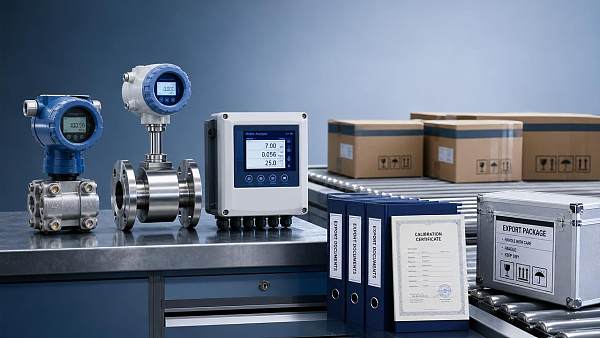
 Process Measurement Devices in Export Compliance UpdatesProcess measurement devices face new export compliance updates that impact classification, documents, lead times, and market access. Learn practical steps to reduce risk and protect growth.
 Quality Control Analyzers Price Shifts in Global SupplyQuality control analyzers prices are shifting with global supply changes. Learn the key cost drivers, compliance risks, and sourcing tips buyers need to reduce total cost.
 Production Line Monitoring: How to Reduce Downtime FastProduction line monitoring helps reduce downtime fast with practical checklists, smarter alarms, and real-time insights. Learn how to improve visibility, response speed, and line reliability.
 Process Optimization Instruments: ROI vs Maintenance CostsProcess optimization instruments: compare ROI, downtime reduction, and accuracy gains against calibration and maintenance costs. Learn how to choose smarter, lower-risk solutions.
 Manufacturing Process Control Trends Shaping 2026 OutputManufacturing process control trends for 2026: explore real-time monitoring, predictive quality, compliance readiness, and smarter automation strategies to boost output and reduce risk.
 Industrial Inspection Devices for Safer Quality ChecksIndustrial inspection devices help deliver safer quality checks by detecting faults early, reducing downtime, and improving compliance across manufacturing, energy, and infrastructure.


























Search Categories
Search Categories
Latest Article
- IEC Approves China-Led Smart Sensor Semantic Interoperability GuideSmart sensor semantic interoperability takes a leap: IEC TR 63382—China-led, globally approved—sets the first semantic guide for IoT sensor data modeling, ontology, and APIs.Posted by:
- SABIC Launches 'Smart Factory 2030' with China Sourcing PrioritySABIC's 'Smart Factory 2030' prioritizes China sourcing for AI-driven process analyzers — discover how ISA-88/95 compliance and Saudi data sovereignty unlock new market access.Posted by:
- China Leads Global Offshore Wind Installations for 5th Consecutive YearChina leads global offshore wind installations for the 5th year — discover how domestic submarine cable monitoring, corrosion robots & FBG sensors drive export growth to UK, Vietnam, Brazil.Posted by:
Please give us a message
