
Timely delivery claims sound similar until delays start


Timely delivery claims often sound interchangeable on a quote sheet, but in the instrumentation industry the difference becomes obvious the moment a shipment slips. A late gas monitor, sensor, transmitter, analyzer, or calibration device can delay commissioning, disrupt compliance work, increase labor costs, and force unsafe temporary workarounds. For buyers, engineers, project managers, and decision-makers, the real question is not whether a supplier promises fast delivery, but whether that promise is backed by stable supply, logistics support, predictable lead times, and the ability to handle bulk orders or custom solutions without creating hidden risk.
In practice, delivery reliability is a commercial and operational issue at the same time. The best supplier is rarely the one that simply says “fast delivery.” It is the one that can prove how products move, how stock is managed, how lead times are protected, and what happens when demand changes unexpectedly. That is where purchasing confidence is built.
Why “timely delivery” matters more than the wording on the sales page
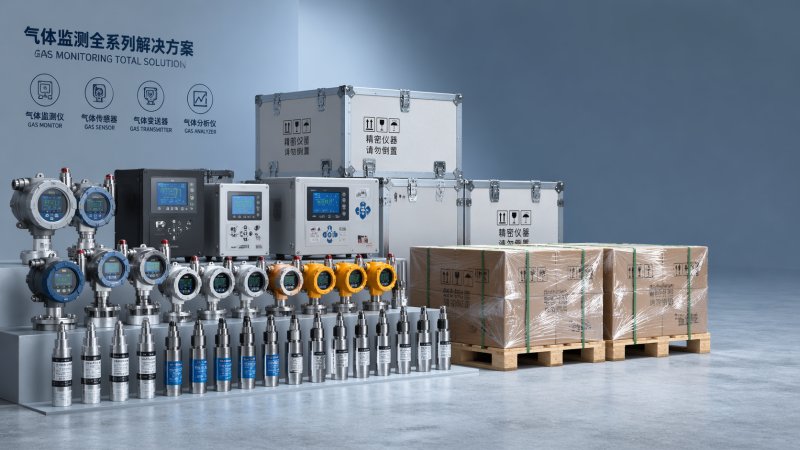
Many suppliers use similar phrases: Worldwide Shipping, Logistics Support, Timely Delivery, Fast Delivery, Stable Supply, and Long Term Supply. On paper, these claims sound equally strong. In real projects, however, their meaning depends on execution.
In gas monitoring and broader instrumentation applications, delivery affects more than convenience. It can directly influence:
- Project schedules for installation, testing, and commissioning
- Production continuity when replacement instruments are needed quickly
- Safety compliance in regulated or hazardous environments
- Budget control through reduced expediting fees, labor idle time, and emergency sourcing
- Inventory strategy for distributors, integrators, and end users managing spare parts
That is why experienced buyers do not evaluate delivery language alone. They look for evidence that a supplier can deliver consistently across normal orders, urgent replenishment, large-volume procurement, and customized technical requirements.
What buyers and evaluators actually want to know before placing an order
Different stakeholders ask different questions, but their concerns usually connect to the same core issue: can this supplier support the real operating timeline?
Technical evaluators and operators usually care about whether the right specification will arrive on time, whether accessories and documentation are complete, and whether replacement units will be available later for maintenance or expansion.
Procurement teams focus on quoted lead time accuracy, bulk order handling, shipping transparency, and whether a low unit price is offset by delay-related risk.
Project managers and engineering leaders want to know whether delivery can align with installation windows, site readiness, and contractor schedules. A one-week delay in instrumentation can trigger much larger downstream delays.
Financial approvers and business decision-makers usually ask whether the supplier offers a stable long-term supply model, whether the commercial terms support planning, and whether the sourcing decision reduces total cost instead of just purchase price.
Quality and safety managers care about whether late or partial delivery could affect compliance, monitoring continuity, traceability, or testing readiness.
For all of these groups, the common need is clear: they need a reliable way to judge whether “fast delivery” is a true operating capability or just a sales phrase.
How to tell whether a supplier’s delivery promise is credible
A practical evaluation should go beyond marketing language. In the instrumentation industry, a credible supplier usually shows strength in several areas.
1. Clear lead-time structure
Ask whether the supplier distinguishes between in-stock items, standard production items, and custom-configured products. A reliable company can explain these categories clearly instead of giving one generic estimate for everything.
2. Stable supply chain visibility
Suppliers with stable supply can usually discuss material planning, core component availability, alternate sourcing strategies, and how they handle disruption. This matters especially for pressure, flow, gas detection, laboratory, and process control products with specialized parts.
3. Logistics support that goes beyond shipping
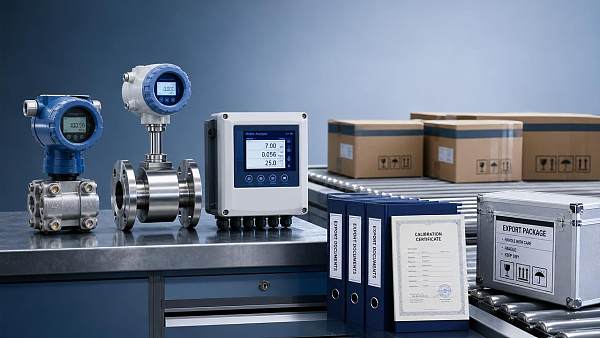
Worldwide Shipping is useful, but real Logistics Support also includes packing quality, export documentation, route planning, customs coordination, and communication during transit. Fast shipment means little if goods are delayed in paperwork or damaged in transport.
4. Bulk order and phased delivery capability
If your project involves multiple sites, staged installation, or distributor inventory planning, ask whether the supplier can support partial shipments, batch deliveries, or scheduled release orders. This is often more valuable than one-time speed.
5. Custom solution management
Custom Solution requests often create the biggest lead-time gap between promise and reality. If a supplier offers customized ranges, outputs, materials, interfaces, or packaging, ask how engineering review, approval, and production planning are handled.
6. After-sales and replacement support
Long Term Supply is critical for instruments that require calibration, periodic replacement, expansion, or maintenance. Buyers should confirm whether equivalent models, spare parts, consumables, and support are available over time.
Why stable supply is often more valuable than the fastest quoted lead time
For many buyers, the temptation is to choose the shortest delivery promise. But in instrumentation procurement, the best outcome often comes from stable supply rather than the most aggressive timeline.
A supplier that consistently delivers in 3 to 4 weeks may be less risky than one that promises 7 days but frequently misses target dates. Reliability supports better planning in purchasing, installation, staffing, and cash flow. It also reduces the need for emergency substitutions that may compromise performance or compliance.
Stable supply becomes even more important when:
- You need recurring orders for the same product family
- Your equipment is used in regulated environments
- Your maintenance team relies on standardization across sites
- You are building distributor channels or local stock programs
- You need long-term support for installed instruments
In other words, the right supplier should not only deliver the first order. They should help protect continuity over the life of the project or product line.
How delivery performance affects total cost, not just schedule
One of the biggest sourcing mistakes is treating delivery as a logistics detail instead of a cost driver. Delays often create expenses that are far larger than the price difference between suppliers.
These hidden costs may include:
- Idle installation teams waiting for equipment
- Delayed commissioning and postponed revenue generation
- Extra freight charges for urgent replacement shipments
- Temporary rental equipment or substitute monitoring measures
- Administrative costs from rescheduling inspections or site access
- Risk exposure if monitoring or control devices are unavailable when required
This is why Wholesale Price and Bulk Order pricing should always be evaluated together with delivery reliability. A lower unit price is not necessarily a better business decision if the supplier cannot support the operational timeline.
Questions to ask before choosing an instrumentation supplier
To make a better sourcing decision, buyers can use a simple evaluation checklist. These questions often reveal more than brochure claims:
- What products are regularly stocked, and in what quantity?
- What is the standard lead time for normal, urgent, and customized orders?
- How often do actual shipment dates match quoted dates?
- Can the supplier support Worldwide Shipping to our destination with full export documents?
- What Logistics Support is included after the order is placed?
- Can they manage Bulk Order schedules or split shipments by project phase?
- How do they handle supply disruption or component shortages?
- Is Long Term Supply available for this model or series?
- How are custom technical changes reviewed and confirmed?
- What replacement, spare part, or calibration support is available later?
These questions help distinguish between a supplier that sounds good and one that can actually support business continuity.
What a strong delivery partner looks like in real-world instrumentation procurement
In this industry, a dependable supplier usually combines commercial flexibility with operational discipline. That means competitive pricing, but also realistic lead times. It means Fast Delivery where possible, but not at the expense of consistency or quality. It means offering Custom Solution support, while still protecting manufacturability and shipment accuracy.
The strongest partners are typically those that understand the buyer’s full context: technical specification, approval process, project timing, safety requirements, and long-term replenishment needs. They do not treat shipping as the final step. They treat delivery performance as part of the product value itself.
For distributors and channel partners, this also supports stronger market reputation. For manufacturers and project owners, it supports smoother execution. For finance teams, it reduces avoidable cost and uncertainty. For end users and operators, it means fewer interruptions and greater confidence in the equipment supply chain.
Conclusion
Timely delivery claims only start to mean something when a project is under pressure. In the instrumentation industry, the real difference between suppliers is not who uses the best wording, but who can provide stable supply, dependable logistics support, realistic lead times, and long-term product availability. Buyers should evaluate delivery capability as seriously as technical performance and price.
If you are comparing suppliers for gas monitoring or other instrumentation needs, focus on proof, not slogans. A supplier with reliable Worldwide Shipping, true Timely Delivery, Bulk Order flexibility, Wholesale Price discipline, and a workable Custom Solution process will usually create more value than one that simply promises speed. In the end, delivery reliability is not a secondary service feature. It is a core part of project success.
Recommended for You
 IEC Approves China-Led Smart Sensor Semantic Interoperability GuideSmart sensor semantic interoperability takes a leap: IEC TR 63382—China-led, globally approved—sets the first semantic guide for IoT sensor data modeling, ontology, and APIs.
 SABIC Launches 'Smart Factory 2030' with China Sourcing PrioritySABIC's 'Smart Factory 2030' prioritizes China sourcing for AI-driven process analyzers — discover how ISA-88/95 compliance and Saudi data sovereignty unlock new market access.
 China Leads Global Offshore Wind Installations for 5th Consecutive YearChina leads global offshore wind installations for the 5th year — discover how domestic submarine cable monitoring, corrosion robots & FBG sensors drive export growth to UK, Vietnam, Brazil.
 Germany Enforces New EMC Standard EN IEC 61000-6-4:2026 for AI Edge DevicesEN IEC 61000-6-4:2026 is now mandatory in Germany for AI edge devices — discover radiated emission limits (1–6 GHz), CE impact, and urgent compliance actions.
 FDA Updates IVD Software Guidance for AI Diagnostic ToolsFDA updates IVD software guidance for AI diagnostic tools—new data transparency & bias assessment rules impact global manufacturers. Act now to align.
 MIIT Launches Enforcement Campaign on EV Battery RecyclingMIIT Launches EV Battery Recycling Enforcement: Key for compliance, data security & global exports. Act now to avoid delays and seize market advantage.
 Released") Guidelines for Domestic Trade Transactions (Trial) ReleasedGuidelines for Domestic Trade Transactions (Trial) released—key for instrumentation, automation & global procurement teams navigating quality, IP, data & dispute clauses.
Guidelines for Domestic Trade Transactions (Trial) ReleasedGuidelines for Domestic Trade Transactions (Trial) released—key for instrumentation, automation & global procurement teams navigating quality, IP, data & dispute clauses. China's Shipbuilding Industry Sees 195.2% YOY Growth in Q1 New OrdersChina's shipbuilding industry surges 195.2% YoY in Q1 2026 new orders — driving demand for marine survey instruments, LNG bunkering ships & integrated sensor systems.
 China Releases AI Terminal Intelligence Grading StandardChina's new AI Terminal Intelligence Grading Standard (GB/Z 177—2026) defines L1–L5 AI capabilities for smart sensors, automotive cockpits & edge controllers—key for EU/SEA market access.
 China-Europe Railway Express Hits 130,000 Trains, $520B Cargo ValueChina-Europe Railway Express hits 130,000 trains & $520B cargo value — discover how CERX boosts supply chain resilience, cuts carbon, and outperforms sea freight for high-value, time-sensitive shipments.
 Plant Automation Instruments: Upgrade Signals You Should Not IgnorePlant automation instruments show upgrade signals before costly failures happen. Learn the warning signs, business value, and smart replacement steps to improve uptime, safety, and control.
 How Industrial Quality Analyzers Reduce Rework and ScrapIndustrial quality analyzers help manufacturers detect defects early, reduce rework and scrap, improve compliance, and boost process efficiency with faster, data-driven control.
 Industrial Process Analyzers: What to Check Before ImportingIndustrial process analyzers: learn what to check before importing, from certifications and technical fit to maintenance and supplier support, to reduce risk and buy with confidence.
 Real-Time Analyzers vs Lab Testing for Faster Process ControlReal-time analyzers vs lab testing: learn how faster process data improves control, cuts delays, and boosts quality while lab methods ensure validation and compliance.
 Smart Measurement Devices in 2026: Where Adoption Is Growing FastSmart measurement devices are seeing rapid 2026 adoption across manufacturing, energy, labs, and environmental monitoring. Discover where demand is rising fastest and why buyers are acting now.
 Industrial Detection Systems: Common Selection Mistakes to AvoidIndustrial detection systems selection mistakes can trigger delays, compliance risks, and higher lifecycle costs. Learn how to choose smarter, integrate better, and avoid costly rework.
 When High-Accuracy Instruments Justify the Extra CostHigh-accuracy instruments justify extra cost when precision reduces waste, strengthens compliance, and improves ROI. Learn when premium accuracy delivers measurable business value.
 Utility Monitoring Equipment Costs: What Shapes 2026 BudgetsUtility monitoring equipment costs in 2026 are shaped by accuracy, integration, cybersecurity, and lifecycle service. See what drives budgets and how to plan smarter investments.
 ATEX Certified Analyzers: Key Specs That Matter in Hazardous PlantsATEX certified analyzers: discover the key specs that impact safety, accuracy, uptime, and maintenance in hazardous plants—essential guidance for smarter selection.
 How to Choose Plant Safety Instruments for High-Risk AreasPlant safety instruments selection for high-risk areas starts with the right standards, durability, and integration. Learn how to compare options, avoid costly mistakes, and improve plant safety.
 China's New Oil & Gas Discoveries Boost Export Demand for Analytical InstrumentsChina's new oil & gas discoveries drive export demand for analytical instruments—boosting global opportunities for chromatographic analyzers, gas detectors, and downhole sensors.
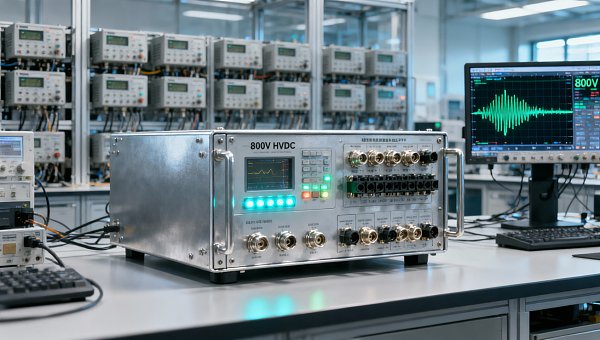
 China Academy Launches 800V HVDC Power-Computing Validation PlatformChina Academy launches 800V HVDC power-computing validation platform for IEC-compliant DC metering — accelerate CE/UL/SASO certification by 30%.
 MIIT Launches 'AI + Software' InitiativeAI + Software initiative by MIIT boosts intelligent programming tools, compute optimization & domestic industrial software—key for instrumentation, lab systems & monitoring platforms.
 China Approves New National Standards for AI, Chip, and GNSSChina's new national standards for AI, chips, and GNSS—effective Nov 2026—reshape global export compliance. Discover key impacts & actionable steps now.
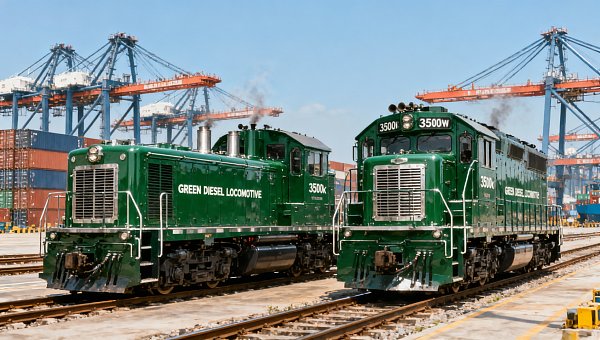
 Guangzhou Port Launches Tender for 3500kW Green Diesel LocomotivesGuangzhou Port's tender for 3500kW green diesel locomotives signals urgent demand for turnkey, eco-compliant rail solutions — act now to align with China’s port decarbonization timeline.
 Industrial Metrology Tools: When Accuracy Impacts OutputIndustrial metrology tools directly shape output, quality, and cost. Learn how accurate measurement reduces scrap, speeds decisions, and improves production performance.
 Process Measurement Devices in Export Compliance UpdatesProcess measurement devices face new export compliance updates that impact classification, documents, lead times, and market access. Learn practical steps to reduce risk and protect growth.
 Quality Control Analyzers Price Shifts in Global SupplyQuality control analyzers prices are shifting with global supply changes. Learn the key cost drivers, compliance risks, and sourcing tips buyers need to reduce total cost.
 Production Line Monitoring: How to Reduce Downtime FastProduction line monitoring helps reduce downtime fast with practical checklists, smarter alarms, and real-time insights. Learn how to improve visibility, response speed, and line reliability.
 Process Optimization Instruments: ROI vs Maintenance CostsProcess optimization instruments: compare ROI, downtime reduction, and accuracy gains against calibration and maintenance costs. Learn how to choose smarter, lower-risk solutions.
 Manufacturing Process Control Trends Shaping 2026 OutputManufacturing process control trends for 2026: explore real-time monitoring, predictive quality, compliance readiness, and smarter automation strategies to boost output and reduce risk.
 Industrial Inspection Devices for Safer Quality ChecksIndustrial inspection devices help deliver safer quality checks by detecting faults early, reducing downtime, and improving compliance across manufacturing, energy, and infrastructure.


























Search Categories
Search Categories
Latest Article
- IEC Approves China-Led Smart Sensor Semantic Interoperability GuideSmart sensor semantic interoperability takes a leap: IEC TR 63382—China-led, globally approved—sets the first semantic guide for IoT sensor data modeling, ontology, and APIs.Posted by:
- SABIC Launches 'Smart Factory 2030' with China Sourcing PrioritySABIC's 'Smart Factory 2030' prioritizes China sourcing for AI-driven process analyzers — discover how ISA-88/95 compliance and Saudi data sovereignty unlock new market access.Posted by:
- China Leads Global Offshore Wind Installations for 5th Consecutive YearChina leads global offshore wind installations for the 5th year — discover how domestic submarine cable monitoring, corrosion robots & FBG sensors drive export growth to UK, Vietnam, Brazil.Posted by:
Please give us a message
