
Why gas monitoring data may not match on-site conditions


Gas monitoring data does not always reflect actual on-site conditions, and even small deviations can affect safety, compliance, and operational decisions. In most cases, the mismatch is not caused by a single failure but by a chain of factors: sensor limitations, installation position, environmental interference, calibration quality, response lag, sampling system design, and data handling issues. For buyers, engineers, safety teams, and decision-makers, the key question is not simply whether a gas monitor works, but whether its data is trustworthy under real operating conditions. That is the standard that should guide equipment evaluation, supplier selection, Custom Solution planning, and long-term deployment.
Why gas monitoring data may differ from actual on-site conditions
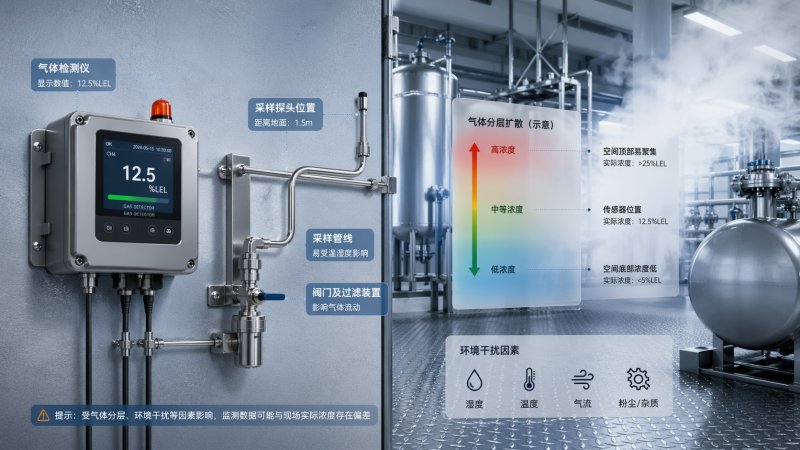
When people search for reasons behind inconsistent gas monitoring readings, they are usually trying to solve one practical problem: why the number on the screen does not match what operators see, smell, expect, or measure elsewhere. This concern matters across industrial manufacturing, environmental monitoring, laboratories, energy facilities, construction sites, and process plants because inaccurate gas data can lead to false alarms, missed hazards, shutdowns, quality problems, and poor decisions.
In real-world applications, a gas monitoring system does not measure “the whole site.” It measures gas concentration at a specific point, using a specific sensing method, under specific conditions, at a specific time. If any of those conditions differ from the real exposure situation, the data may appear inconsistent. That does not always mean the instrument is defective. It often means the measurement context has been misunderstood.
The most common causes of inaccurate or misleading gas monitoring readings
1. Poor sensor placement
Location is one of the biggest reasons gas monitoring data may not match on-site conditions. Gas concentration can vary significantly across a room, tank, pipeline area, tunnel, or enclosed space. A detector placed too high, too low, too far from the leak source, or too close to ventilation may not represent the true hazard zone.
For example, some gases are heavier than air and accumulate near the floor, while others rise. If monitor placement does not match gas behavior, readings can be consistently misleading even when the instrument itself is functioning correctly.
2. Gas stratification and uneven distribution
Gas does not always mix uniformly in real environments. Temperature gradients, air movement, humidity, equipment heat, barriers, and confined-space geometry can create pockets where gas concentration is much higher or lower than in surrounding areas. A fixed gas monitor may capture only one layer of the environment, not the actual breathing zone or leak zone that matters most.
3. Sensor cross-sensitivity and interference
Many gas sensors can respond not only to the target gas but also to other substances in the air. Solvents, vapors, cleaning chemicals, exhaust, dust, moisture, and other gases may affect readings. This is especially important in mixed industrial environments where multiple compounds are present. A reading that seems “wrong” may actually be the result of cross-interference rather than direct detection of the intended gas.
4. Calibration drift
Even high-quality instruments can drift over time. Sensor aging, contamination, environmental stress, and normal use can gradually reduce accuracy. If calibration intervals are too long, if bump testing is skipped, or if calibration gas quality is poor, the monitor may still operate but no longer provide dependable data.
5. Sampling system delays
In extractive or pump-based gas monitoring systems, there is often a delay between the gas being present at the site and the sensor receiving the sample. Long tubing, clogged filters, condensate buildup, leaks in the sampling line, and low pump performance can all create slow or distorted readings. In fast-changing conditions, this delay can make operators think the data does not match reality when the real issue is response time.
6. Environmental effects on sensor performance
Temperature extremes, high humidity, pressure variation, vibration, corrosive atmospheres, and dust can all affect sensor behavior. Instruments that perform well in a controlled test setting may behave differently on an actual job site or in a harsh production area. This is why buyers and technical evaluators should compare not only measurement range but also environmental suitability.
7. Data transmission, logging, or integration errors
Sometimes the sensor reading is correct at the instrument, but the displayed or recorded data is wrong due to communication faults, software scaling errors, signal conversion issues, delayed updates, or system integration mistakes. This is especially relevant in networked monitoring systems, DCS/PLC environments, remote telemetry, and cloud-based data platforms.
How to judge whether the problem is the environment, the installation, or the instrument
For users and purchasers, the most useful approach is structured troubleshooting rather than assumption. If gas monitoring data seems inconsistent with on-site conditions, start by separating the issue into three categories:
Environment-related mismatch
If gas concentrations vary by location, time, airflow, or process condition, then the “inconsistency” may be real. In such cases, a single detector may simply be insufficient to represent the area. Additional points, portable verification, or a Custom Solution may be needed.
Installation-related mismatch
If the detector is installed in the wrong position, too far from the risk source, exposed to drafts, blocked by structures, or connected through poorly designed sample lines, then the issue is likely with system design rather than the sensor itself.
Instrument-related mismatch
If bump tests fail, calibration is unstable, response is slow, the sensor shows unexpected cross-sensitivity, or there is clear drift compared with reference equipment, then the instrument or sensing element may need maintenance, replacement, or a different technology selection.
A practical verification method includes comparing readings across multiple points, checking calibration records, testing known gas response, reviewing environmental conditions, and inspecting signal transmission from sensor to display or control system. For technical assessment teams, this method is far more useful than evaluating a product only by catalog specifications.
What buyers, safety managers, and project teams should check before selecting a gas monitoring solution
If your goal is reliable gas monitoring rather than just buying hardware, several decision points matter more than price alone.
Application fit
Choose based on the actual gas, concentration range, site conditions, required response speed, and regulatory needs. A monitor suited for a clean indoor environment may not be suitable for a corrosive industrial area or a humid outdoor installation.
Sensor technology suitability
Electrochemical, infrared, catalytic, PID, semiconductor, and other sensing technologies each have strengths and limitations. The right choice depends on target gas type, interference risk, maintenance expectations, and life-cycle cost.
Installation design support
A capable supplier should not only provide equipment but also help evaluate monitor location, sampling path, alarm logic, environmental exposure, and maintenance access. This is where Custom Solution capability becomes especially valuable.
Calibration and maintenance practicality
If the system is hard to maintain, accuracy will degrade in actual use. Ask whether the equipment supports easy calibration, sensor replacement, diagnostics, and maintenance planning.
Supply continuity
For industrial operations, laboratory networks, contractors, and distributors, Stable Supply and Long Term Supply are not minor advantages. They reduce risk in spare parts planning, expansion, standardization, and service continuity. If a project depends on regular replacement sensors or calibration accessories, procurement reliability matters as much as initial performance.
Delivery and logistics capability
In urgent projects or distributed operations, Worldwide Shipping, Logistics Support, Timely Delivery, and Fast Delivery can directly affect commissioning schedules and downtime risk. This is particularly important for EPC teams, maintenance contractors, international buyers, and channel partners.
Commercial scalability
For distributors, project purchasers, and organizations with multiple installation points, Bulk Order support and Wholesale Price structures can improve budgeting and procurement efficiency, especially when deploying standardized monitoring across several sites.
How to improve confidence in gas monitoring data in daily operation
Reliable readings are usually the result of good system management, not just good product selection. The following practices help reduce the gap between monitoring data and real on-site conditions:
- Place detectors based on gas density, process risk, airflow, and exposure zone—not convenience.
- Use portable instruments to verify fixed-system performance in critical areas.
- Perform regular bump tests and calibration with certified gas.
- Inspect sampling lines, filters, pumps, and condensate traps where applicable.
- Review cross-sensitivity risks in mixed-gas environments.
- Check data transmission pathways, alarm settings, and system integration logic.
- Record environmental conditions when analyzing abnormal readings.
- Reassess detector layout whenever process conditions, ventilation, or plant layout changes.
For safety managers and quality teams, these steps help turn gas monitoring from a compliance checkbox into a dependable operational tool. For enterprise decision-makers, they also reduce hidden costs linked to false alarms, unnecessary shutdowns, inspection disputes, and incident exposure.
Conclusion: accurate gas monitoring depends on the whole measurement system
Gas monitoring data may not match on-site conditions because real environments are dynamic, and measurement systems are only as good as their sensor choice, installation method, calibration discipline, and data handling process. In many cases, the issue is not that the monitor is “wrong,” but that the system was expected to represent conditions it was never properly designed to capture.
For buyers, engineers, and safety teams, the right decision is to evaluate gas monitoring as a complete solution: sensing technology, placement, environmental fit, maintenance workflow, integration quality, and supplier support. When backed by Custom Solution capability, Stable Supply, Long Term Supply, Worldwide Shipping, Logistics Support, Timely Delivery, Fast Delivery, Bulk Order support, and competitive Wholesale Price options, the right instrumentation partner helps transform raw data into trustworthy action.
Recommended for You
 IEC Approves China-Led Smart Sensor Semantic Interoperability GuideSmart sensor semantic interoperability takes a leap: IEC TR 63382—China-led, globally approved—sets the first semantic guide for IoT sensor data modeling, ontology, and APIs.
 SABIC Launches 'Smart Factory 2030' with China Sourcing PrioritySABIC's 'Smart Factory 2030' prioritizes China sourcing for AI-driven process analyzers — discover how ISA-88/95 compliance and Saudi data sovereignty unlock new market access.
 China Leads Global Offshore Wind Installations for 5th Consecutive YearChina leads global offshore wind installations for the 5th year — discover how domestic submarine cable monitoring, corrosion robots & FBG sensors drive export growth to UK, Vietnam, Brazil.
 Germany Enforces New EMC Standard EN IEC 61000-6-4:2026 for AI Edge DevicesEN IEC 61000-6-4:2026 is now mandatory in Germany for AI edge devices — discover radiated emission limits (1–6 GHz), CE impact, and urgent compliance actions.
 FDA Updates IVD Software Guidance for AI Diagnostic ToolsFDA updates IVD software guidance for AI diagnostic tools—new data transparency & bias assessment rules impact global manufacturers. Act now to align.
 MIIT Launches Enforcement Campaign on EV Battery RecyclingMIIT Launches EV Battery Recycling Enforcement: Key for compliance, data security & global exports. Act now to avoid delays and seize market advantage.
 Released") Guidelines for Domestic Trade Transactions (Trial) ReleasedGuidelines for Domestic Trade Transactions (Trial) released—key for instrumentation, automation & global procurement teams navigating quality, IP, data & dispute clauses.
Guidelines for Domestic Trade Transactions (Trial) ReleasedGuidelines for Domestic Trade Transactions (Trial) released—key for instrumentation, automation & global procurement teams navigating quality, IP, data & dispute clauses. China's Shipbuilding Industry Sees 195.2% YOY Growth in Q1 New OrdersChina's shipbuilding industry surges 195.2% YoY in Q1 2026 new orders — driving demand for marine survey instruments, LNG bunkering ships & integrated sensor systems.
 China Releases AI Terminal Intelligence Grading StandardChina's new AI Terminal Intelligence Grading Standard (GB/Z 177—2026) defines L1–L5 AI capabilities for smart sensors, automotive cockpits & edge controllers—key for EU/SEA market access.
 China-Europe Railway Express Hits 130,000 Trains, $520B Cargo ValueChina-Europe Railway Express hits 130,000 trains & $520B cargo value — discover how CERX boosts supply chain resilience, cuts carbon, and outperforms sea freight for high-value, time-sensitive shipments.
 Plant Automation Instruments: Upgrade Signals You Should Not IgnorePlant automation instruments show upgrade signals before costly failures happen. Learn the warning signs, business value, and smart replacement steps to improve uptime, safety, and control.
 How Industrial Quality Analyzers Reduce Rework and ScrapIndustrial quality analyzers help manufacturers detect defects early, reduce rework and scrap, improve compliance, and boost process efficiency with faster, data-driven control.
 Industrial Process Analyzers: What to Check Before ImportingIndustrial process analyzers: learn what to check before importing, from certifications and technical fit to maintenance and supplier support, to reduce risk and buy with confidence.
 Real-Time Analyzers vs Lab Testing for Faster Process ControlReal-time analyzers vs lab testing: learn how faster process data improves control, cuts delays, and boosts quality while lab methods ensure validation and compliance.
 Smart Measurement Devices in 2026: Where Adoption Is Growing FastSmart measurement devices are seeing rapid 2026 adoption across manufacturing, energy, labs, and environmental monitoring. Discover where demand is rising fastest and why buyers are acting now.
 Industrial Detection Systems: Common Selection Mistakes to AvoidIndustrial detection systems selection mistakes can trigger delays, compliance risks, and higher lifecycle costs. Learn how to choose smarter, integrate better, and avoid costly rework.
 When High-Accuracy Instruments Justify the Extra CostHigh-accuracy instruments justify extra cost when precision reduces waste, strengthens compliance, and improves ROI. Learn when premium accuracy delivers measurable business value.
 Utility Monitoring Equipment Costs: What Shapes 2026 BudgetsUtility monitoring equipment costs in 2026 are shaped by accuracy, integration, cybersecurity, and lifecycle service. See what drives budgets and how to plan smarter investments.
 ATEX Certified Analyzers: Key Specs That Matter in Hazardous PlantsATEX certified analyzers: discover the key specs that impact safety, accuracy, uptime, and maintenance in hazardous plants—essential guidance for smarter selection.
 How to Choose Plant Safety Instruments for High-Risk AreasPlant safety instruments selection for high-risk areas starts with the right standards, durability, and integration. Learn how to compare options, avoid costly mistakes, and improve plant safety.
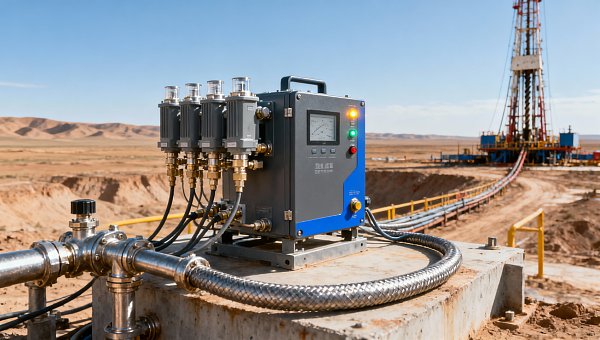
 China's New Oil & Gas Discoveries Boost Export Demand for Analytical InstrumentsChina's new oil & gas discoveries drive export demand for analytical instruments—boosting global opportunities for chromatographic analyzers, gas detectors, and downhole sensors.
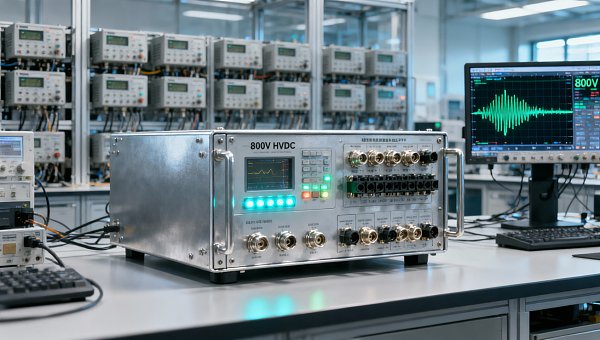
 China Academy Launches 800V HVDC Power-Computing Validation PlatformChina Academy launches 800V HVDC power-computing validation platform for IEC-compliant DC metering — accelerate CE/UL/SASO certification by 30%.
 MIIT Launches 'AI + Software' InitiativeAI + Software initiative by MIIT boosts intelligent programming tools, compute optimization & domestic industrial software—key for instrumentation, lab systems & monitoring platforms.
 China Approves New National Standards for AI, Chip, and GNSSChina's new national standards for AI, chips, and GNSS—effective Nov 2026—reshape global export compliance. Discover key impacts & actionable steps now.
 Guangzhou Port Launches Tender for 3500kW Green Diesel LocomotivesGuangzhou Port's tender for 3500kW green diesel locomotives signals urgent demand for turnkey, eco-compliant rail solutions — act now to align with China’s port decarbonization timeline.
 Industrial Metrology Tools: When Accuracy Impacts OutputIndustrial metrology tools directly shape output, quality, and cost. Learn how accurate measurement reduces scrap, speeds decisions, and improves production performance.
 Process Measurement Devices in Export Compliance UpdatesProcess measurement devices face new export compliance updates that impact classification, documents, lead times, and market access. Learn practical steps to reduce risk and protect growth.
 Quality Control Analyzers Price Shifts in Global SupplyQuality control analyzers prices are shifting with global supply changes. Learn the key cost drivers, compliance risks, and sourcing tips buyers need to reduce total cost.
 Production Line Monitoring: How to Reduce Downtime FastProduction line monitoring helps reduce downtime fast with practical checklists, smarter alarms, and real-time insights. Learn how to improve visibility, response speed, and line reliability.
 Process Optimization Instruments: ROI vs Maintenance CostsProcess optimization instruments: compare ROI, downtime reduction, and accuracy gains against calibration and maintenance costs. Learn how to choose smarter, lower-risk solutions.
 Manufacturing Process Control Trends Shaping 2026 OutputManufacturing process control trends for 2026: explore real-time monitoring, predictive quality, compliance readiness, and smarter automation strategies to boost output and reduce risk.
 Industrial Inspection Devices for Safer Quality ChecksIndustrial inspection devices help deliver safer quality checks by detecting faults early, reducing downtime, and improving compliance across manufacturing, energy, and infrastructure.

















Search Categories
Search Categories
Latest Article
- IEC Approves China-Led Smart Sensor Semantic Interoperability GuideSmart sensor semantic interoperability takes a leap: IEC TR 63382—China-led, globally approved—sets the first semantic guide for IoT sensor data modeling, ontology, and APIs.Posted by:
- SABIC Launches 'Smart Factory 2030' with China Sourcing PrioritySABIC's 'Smart Factory 2030' prioritizes China sourcing for AI-driven process analyzers — discover how ISA-88/95 compliance and Saudi data sovereignty unlock new market access.Posted by:
- China Leads Global Offshore Wind Installations for 5th Consecutive YearChina leads global offshore wind installations for the 5th year — discover how domestic submarine cable monitoring, corrosion robots & FBG sensors drive export growth to UK, Vietnam, Brazil.Posted by:
Please give us a message
