
When does a bulk order actually lower unit cost?


A Bulk Order can unlock a better Wholesale Price, but lower unit cost depends on more than quantity alone. In gas monitoring and other instrumentation projects, Stable Supply, Logistics Support, Timely Delivery, and even a Custom Solution all affect the true landed cost. For buyers seeking Worldwide Shipping, Fast Delivery, and Long Term Supply, understanding these cost drivers is essential before scaling procurement.
What really determines whether a bulk order reduces unit cost?
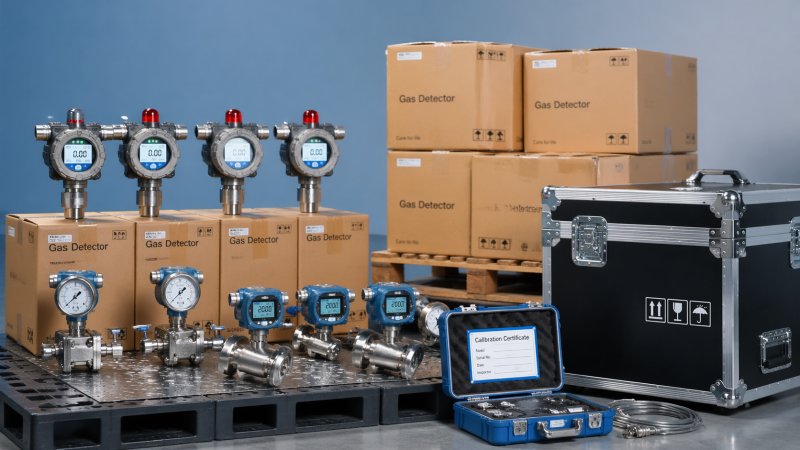
In the instrumentation industry, a bulk order does not automatically mean a lower real cost per unit. The visible price on a quotation is only one layer. Buyers also need to evaluate calibration needs, accessory consistency, packaging method, shipment mode, import handling, spare ratio, and after-sales response. In many projects, especially for gas detection, pressure, flow, temperature, and online monitoring equipment, the best decision comes from total cost control across 3 stages: procurement, deployment, and operation.
For procurement teams, the first question is not “How many units should we buy?” but “At what volume does the supplier’s production, quality inspection, and logistics model become more efficient?” A small order of 10–20 units may carry setup costs that are almost identical to an order of 80–150 units. However, if the extra volume increases inventory pressure, storage risk, or model mismatch, the lower quoted unit price may not translate into lower business cost.
For technical evaluators and end users, consistency matters just as much as price. If a larger order improves batch uniformity, firmware alignment, accessory compatibility, and documentation standardization, installation and training time may drop by 15%–30% in practical project execution. That reduction can matter more than a modest price discount, especially when site commissioning windows are limited to 2–4 weeks.
For financial approvers and enterprise decision-makers, the key metric is landed unit cost, not factory unit cost. Landed cost includes the product price, freight allocation, customs-related charges where applicable, packaging protection, sample validation expense, replacement risk, and supplier coordination workload. A bulk order lowers unit cost only when these surrounding costs either remain stable or rise more slowly than order volume.
The 5 cost layers buyers should separate
Breaking cost into layers helps cross-functional teams speak the same language. Purchasing may focus on unit price, engineering may focus on fit-for-purpose performance, and quality teams may focus on traceability and inspection records. A structured view avoids internal disagreement and reduces re-quotation cycles.
- Product cost: base unit price, sensor type, display or communication options, enclosure material, and included accessories.
- Transaction cost: documentation review, payment handling, contract clarification, and engineering communication time.
- Logistics cost: export packing, air or sea freight allocation, insurance where needed, and local delivery handling.
- Deployment cost: installation labor, commissioning hours, software setup, training, and site acceptance.
- Lifecycle cost: calibration interval, consumables, spare replacement, downtime risk, and long term supply continuity.
When these 5 layers are reviewed together, buyers can see whether a bulk order creates true efficiency or simply shifts cost from the purchase order to storage, support, or site operations.
A practical threshold view
In many instrumentation categories, cost behavior tends to change around 3 purchasing bands: small batch, medium batch, and project-scale batch. These are not fixed legal definitions, but they are useful for budgeting and supplier negotiation. The actual threshold depends on product complexity, test requirements, and whether customization is needed.
The table below shows a practical way to think about when a bulk order starts to lower unit cost in instrumentation sourcing. The ranges are typical planning references rather than universal rules, and buyers should confirm them against the product category and delivery scope.
This comparison highlights a simple truth: quantity helps most when technical specifications are stable. If the project still has unresolved sensor range, output protocol, enclosure grade, or certification requirements, increasing volume too early can lock in the wrong configuration and raise the real unit cost later.
Which cost drivers matter most in instrumentation and gas monitoring projects?
Instrumentation projects have cost patterns that differ from many standard consumer or commodity purchases. Buyers are not only buying hardware; they are also buying measurement consistency, documentation reliability, and the ability to deploy safely in a real operating environment. This is especially important for gas monitoring, industrial online analysis, laboratory testing, and automation control, where device accuracy and response stability directly affect operations.
One major cost driver is product standardization. If 50 units share the same sensor range, output type such as 4–20 mA, relay, or RS485, and the same power and mounting configuration, the supplier can simplify procurement and assembly. If the order includes 8–12 different configurations, even within the same product family, the expected wholesale price advantage often weakens because production and inspection become fragmented.
Another cost driver is delivery planning. A single urgent shipment may look efficient, but rush manufacturing, last-minute calibration, and air freight can sharply increase the landed unit cost. In contrast, a 2-stage or 3-stage delivery plan often lowers pressure on both sides. For project managers, phased delivery also aligns better with installation schedules, reducing warehouse dwell time and accidental damage risk.
Service scope also changes the economics. A quotation that includes user manuals, calibration records where applicable, spare recommendations, remote technical support, and replacement handling can produce a higher listed price but a lower total procurement burden. This matters for distributors, EPC teams, and enterprise buyers who need long term supply rather than a one-time low number.
Where buyers often lose money without noticing
Many hidden costs appear outside the formal quote. They show up during site handover, internal approval, or maintenance planning. These costs are often larger in technically sensitive fields such as environmental monitoring, medical testing support equipment, industrial safety systems, and laboratory instruments.
- Specification drift: the approved sample differs from the final bulk order in connector, display language, output protocol, or mounting accessories.
- Documentation gaps: missing packing details, inconsistent labels, or incomplete traceability records delay receiving and internal acceptance.
- Inadequate spare planning: buying exactly the installation quantity with no 2%–5% contingency can create downtime risk.
- Freight mismatch: low-value devices shipped by urgent air on a repeated basis often erase the price advantage of bulk purchasing.
These issues explain why the cheapest line-item price is not always the lowest unit cost. A technically aligned order with stable supply, predictable delivery, and support readiness often wins over a superficially lower quote.
A cost driver matrix for cross-functional review
The following matrix helps procurement, engineering, quality, and finance teams assess whether a bulk order supports cost control. It is especially useful when comparing multiple suppliers or deciding between standard products and a custom solution.
This table shows why cost control must be shared across teams. A supplier that supports phased delivery, standardized configuration, and stable documentation may help lower the real unit cost more effectively than a supplier offering a low initial price without process reliability.
How should buyers compare bulk ordering, staged purchasing, and custom solutions?
Not every project should move directly into a large-volume purchase. In instrumentation, the best sourcing model depends on technical maturity, forecast confidence, and installation timing. A research-driven buyer may start with samples or a pilot lot. A mature production line may benefit from annual framework purchasing. A regulated or site-specific application may require a custom solution from the beginning.
Bulk ordering works best when 4 conditions are already clear: the measured medium or application is defined, the installation environment is known, the communication or output interface is fixed, and the approval workflow is complete. If even one of these remains uncertain, staged purchasing often reduces the risk of expensive correction. This is common in automation upgrades, environmental stations, and distributed gas alarm projects.
Custom solutions can lower unit cost in the long run, even when the first quotation appears higher. For example, a custom cable length, enclosure arrangement, alarm logic, or communication package can reduce site adaptation work and installation time. In a project with 50–200 points, saving 20–30 minutes per installation point can materially change labor cost.
Distributors and resellers should assess one more factor: stock rotation. A broad bulk order may improve unit price but weaken cash flow if local demand is fragmented across multiple sensor ranges or regional standards. In those cases, a mixed approach works better: standard core items in bulk, special variants by project request.
A decision framework for different buyer types
Different stakeholders judge value in different ways. The right sourcing model should match the decision structure of the organization, not just the production preferences of the supplier.
- Information researchers should request application fit details, lead time ranges, and support scope before focusing on price.
- Technical evaluators should verify measurement range, output compatibility, environmental protection level, and maintenance interval.
- Procurement teams should compare landed cost, reorder predictability, and packaging consistency across at least 2–3 sourcing options.
- Financial approvers should review payment timing, inventory exposure, and replacement risk over a 6–12 month horizon.
This approach keeps the sourcing decision practical. It also prevents a common failure point: buying in bulk before the technical and commercial conditions have actually stabilized.
Comparison of three procurement models
The table below compares common procurement paths used in instrumentation, monitoring, and control projects. It can help teams choose a cost model that fits both operational risk and budget control.
A bulk order lowers unit cost most effectively when it is paired with planning discipline. If demand is uncertain or the application is still changing, staged purchasing or a framework agreement may deliver better overall economics than a single large shipment.
What should procurement, engineering, and quality teams check before scaling order volume?
Before increasing order size, teams should complete a practical review covering technical fit, delivery capability, and quality consistency. In many companies, cost problems arise because each function approves only its own portion. Procurement sees the discount, engineering sees a workable specification, and quality sees a passable sample, but no one validates the full delivery model. A short cross-functional checklist can prevent expensive corrections later.
For instrumentation products, 5 checks are especially useful. First, confirm the exact operating requirement, such as range, medium, ambient conditions, and interface. Second, confirm standard and optional accessories. Third, confirm packaging and labeling rules for receiving and traceability. Fourth, confirm lead time in both normal and peak periods. Fifth, confirm replacement policy and spare recommendations for the first 6–12 months of operation.
Quality and safety personnel should also focus on consistency. A bulk shipment of sensors or controllers should not contain mixed hardware revisions, unclear nameplates, or incomplete documentation. For projects involving environmental monitoring, laboratory analysis, or industrial safety, traceable labeling and consistent records reduce acceptance delays and simplify maintenance scheduling.
Project managers should verify supplier responsiveness under deadline pressure. Fast delivery claims are only valuable if they are linked to realistic production planning. A normal lead time may be 7–15 days for standard products and 2–4 weeks or longer for more complex assemblies, custom wiring, or additional inspection requirements. Clear lead-time segmentation is better than vague promises.
A pre-bulk order checklist
- Confirm whether the order is fully standardized or contains multiple variants that should be split by application.
- Verify whether sample approval and final order specifications are identical in output, accessories, labeling, and packaging.
- Assess whether worldwide shipping is necessary and which transport mode best fits urgency, budget, and protection needs.
- Define whether the project needs a 2%–5% spare ratio or staggered replenishment instead of a single overstocked purchase.
- Check whether certification, compliance marking, or local documentation requirements affect lead time or acceptance.
Using a checklist like this supports better purchasing decisions and improves communication between decision-makers, operators, and technical reviewers.
Compliance and documentation are part of cost control
In measurement and control applications, compliance is not a formality. Depending on the market and application, buyers may need to review general electrical safety, electromagnetic compatibility, material suitability, calibration records, or transport-related documentation. Even when the product itself is technically correct, incomplete paperwork can delay customs clearance, site acceptance, or internal sign-off.
That is why experienced buyers treat documentation as part of the unit cost equation. If correct labeling, packing lists, and technical files reduce receiving time by even a few hours per batch, the operational savings can be meaningful across repeated projects or distributor channels.
Common misconceptions and buyer FAQ about lower unit cost
Many buyers assume that larger volume always wins. In practice, lower unit cost depends on volume plus fit, timing, and process control. The questions below reflect common concerns from procurement teams, engineers, distributors, and decision-makers evaluating whether to scale orders.
Does ordering more always secure the best wholesale price?
Not always. The best wholesale price appears when order volume matches production efficiency and specification stability. If the order contains too many variations, urgent delivery demands, or incomplete technical details, the supplier may still face high handling cost. In those cases, a larger quantity may lower the nominal unit price but not the true landed unit cost.
When is phased delivery better than one bulk shipment?
Phased delivery is often better when installation is spread across 2–6 months, when warehouse conditions are limited, or when final site conditions may still change. It can also help buyers maintain cash flow and reduce the risk of holding the wrong configuration. For engineering projects, phased delivery usually gives better schedule alignment than receiving all units at once.
Should buyers choose standard products or a custom solution?
Standard products are often the fastest route when the application is conventional and lead time is tight. A custom solution becomes attractive when installation constraints, communication protocols, enclosure layout, or labeling requirements would otherwise create repeated on-site adaptation work. If the project scale is medium to large, that adaptation cost can exceed the initial premium of customization.
What delivery timeline should buyers expect?
For standard instrumentation products, a typical lead time can fall within 7–15 days, depending on stock, testing steps, and packaging requirements. For custom assemblies, mixed-configuration orders, or projects requiring special documentation, 2–4 weeks or more is more realistic. Buyers should ask for separate timelines for production, inspection, and shipping, not just one combined estimate.
How can a buyer reduce cost without over-ordering?
Start by reducing variation, not just increasing quantity. Standardize interfaces, accessories, and installation requirements. Use pilot approval before scaling. Request staged delivery where suitable. Define a spare strategy based on risk, not guesswork. And compare suppliers on stable supply, technical response, and packaging consistency as well as quotation level. These steps often lower total unit cost more effectively than simply buying more units.
Why work with a supplier that understands cost, delivery, and long term supply?
In instrumentation sourcing, the right partner helps buyers make the volume decision at the right time. That means discussing application details before quoting, identifying where standardization will reduce cost, and advising when phased delivery or a custom solution is the smarter route. It also means supporting stable supply for repeat orders rather than pushing volume that the project does not yet need.
For industrial manufacturing, energy and power, environmental monitoring, laboratory analysis, automation control, and related sectors, professional support should cover more than products alone. Buyers often need help confirming parameters, comparing output options, checking compatibility with existing systems, estimating realistic lead time, and understanding packaging and shipment strategy for domestic or worldwide shipping.
If you are evaluating whether a bulk order will actually lower unit cost, the most useful next step is a structured review of 6 items: application scenario, quantity band, configuration standardization, target delivery window, documentation requirements, and long term replenishment expectations. With those inputs, it becomes much easier to judge whether direct bulk purchase, staged supply, or a tailored solution will produce the best business outcome.
Contact us to discuss parameter confirmation, product selection, delivery cycle planning, custom solution feasibility, certification-related requirements, sample support, or quotation alignment for your next instrumentation project. A clear technical and commercial review at the start can save time, reduce hidden cost, and improve procurement confidence across the full decision chain.
Recommended for You
 Laser Oxygen Analyzer Selection Guide for Harsh ConditionsLaser oxygen analyzer selection guide for harsh conditions: compare in-situ vs extractive designs, durability, accuracy, and supplier fit to reduce downtime and procurement risk.
 Industrial Safety Checklist for High-Risk Process AreasIndustrial Safety starts with a smarter checklist for high-risk process areas. Learn how reliable instrumentation, alarms, and safeguards help prevent incidents and improve control.
 Industrial Gas Price Trends and Supply Risks in 2026Industrial gas markets in 2026 face rising price volatility and supply risks. Discover key trends, regional gaps, and smart sourcing insights to protect operations and cut risk.
 Safety Monitoring Gaps That Increase Plant Shutdown RiskSafety Monitoring gaps often trigger shutdown risk through drift, weak alarm logic, and poor integration. Learn how plants can detect hidden failures earlier and improve uptime.
 How Process Control Reduces Energy Waste in Gas OperationsProcess Control helps gas operators cut energy waste, stabilize pressure, flow, and temperature, and lower operating costs. See where smarter control delivers the fastest efficiency gains.
![]() CO Analyzer With Fast Response Time for Real-Time Process ControlCO analyzer with fast response time helps plants improve real-time process control, reduce energy loss, catch CO spikes early, and enhance safety, compliance, and combustion efficiency.
CO Analyzer With Fast Response Time for Real-Time Process ControlCO analyzer with fast response time helps plants improve real-time process control, reduce energy loss, catch CO spikes early, and enhance safety, compliance, and combustion efficiency.![]() Industrial Control Trends Shaping Smarter Plant UpgradesIndustrial Control is reshaping smarter plant upgrades through better instrumentation, safer architecture, and stronger efficiency. Explore the trends driving reliable, future-ready modernization.
Industrial Control Trends Shaping Smarter Plant UpgradesIndustrial Control is reshaping smarter plant upgrades through better instrumentation, safer architecture, and stronger efficiency. Explore the trends driving reliable, future-ready modernization.![]() Emission Gas Analyzer Errors That Affect Compliance ResultsEmission gas analyzer errors can quietly distort compliance data, trigger failed inspections, and raise audit risk. Learn the key causes and practical fixes to protect accurate reporting.
Emission Gas Analyzer Errors That Affect Compliance ResultsEmission gas analyzer errors can quietly distort compliance data, trigger failed inspections, and raise audit risk. Learn the key causes and practical fixes to protect accurate reporting.![]() Test and Measurement Equipment Price Factors in 2026Test and measurement equipment price factors in 2026 go beyond specs alone. Discover how compliance, software, support, and total ownership cost shape smarter buying decisions.
Test and Measurement Equipment Price Factors in 2026Test and measurement equipment price factors in 2026 go beyond specs alone. Discover how compliance, software, support, and total ownership cost shape smarter buying decisions.![]() Percent Range Analyzer: How to Choose the Right Measurement SpanPercent range analyzer selection affects signal accuracy, alarms, and stability. Learn how to choose the right measurement span for reliable data and smarter control decisions.
Percent Range Analyzer: How to Choose the Right Measurement SpanPercent range analyzer selection affects signal accuracy, alarms, and stability. Learn how to choose the right measurement span for reliable data and smarter control decisions. Process Equipment Monitoring Trends in 2026: Smarter Analysis, Lower RiskProcess equipment monitoring in 2026 is shifting to predictive analysis, better data quality, and lower risk. Discover smarter strategies to cut downtime and improve decisions.
 Precision Analyzers vs Standard Instruments: What Affects Total CostPrecision analyzers can cost more upfront, but lower drift, stronger compliance support, and reduced downtime often cut total cost over time. See what really affects ROI.
 Multi Component Monitoring in Process Equipment: Key Benefits and LimitsMulti component monitoring helps process equipment teams improve fault detection, control, compliance, and uptime—while understanding integration limits, data quality risks, and ROI.
 Common Oxygen Detection Errors in Process Equipment and How to Prevent ThemOxygen detection errors can trigger false alarms, unsafe conditions, and quality losses. Learn the most common causes in process equipment and how to prevent them effectively.
 How to Choose a Precision Gas Analyzer for Stable Oxygen MeasurementPrecision gas analyzer selection starts with stable oxygen measurement. Learn how to compare sensor types, calibration stability, sample systems, and support for reliable long-term performance.
 Industrial Safety Monitoring Trends for 2026: What Plants Should WatchIndustrial safety monitoring trends for 2026: discover smarter sensors, evidence-based compliance, and practical plant actions to reduce risk, improve uptime, and plan with confidence.
 Dual Gas Analyzer vs Single-Gas Setup: Cost and Control Trade-OffsDual gas analyzer vs single-gas setup: compare real costs, control accuracy, maintenance, and scalability to choose the smarter solution for long-term performance.
 Continuous Analyzer Downtime: 7 Causes and Practical FixesContinuous analyzer downtime can disrupt control, compliance, and output. Discover 7 common causes, practical fixes, and a fast field triage routine to restore reliable performance.
 How to Choose a Paramagnetic Oxygen Analyzer for Process StabilityParamagnetic oxygen analyzer selection starts with process fit. Learn how to improve process stability, reduce maintenance risk, and choose a model your control team can trust.
 Infrared Gas Detection: Key Limits in Harsh Industrial EnvironmentsInfrared gas detection in harsh industrial environments has clear limits. Learn how humidity, dust, vibration, and mixed gases affect accuracy, safety, and sensor selection.
 IECEx Analyzer Basics: Key Compliance Points ExplainedIECEx analyzer basics explained: learn the key compliance checks, common risks, and purchase review points that help ensure safer installations, smoother audits, and smarter buying decisions.
 Process Gas Control: How to Reduce Drift and DowntimeProcess gas control insights to reduce drift and downtime across combustion, lab, analyzer, and harsh plant systems. Learn practical diagnostics, calibration priorities, and maintenance strategies.
 Gas Testing Costs: What Affects Total Spend in 2026Gas testing costs in 2026 depend on scope, compliance, calibration, reporting, and retest risk. Learn what really drives total spend and compare quotes with confidence.
 Laboratory Gas Analyzer: Common Testing Errors to AvoidLaboratory Gas Analyzer testing can fail due to small setup, sampling, calibration, and maintenance mistakes. Learn the most common errors to avoid for more accurate, reliable results.
 CO Analyzer Selection: Accuracy, Range, and MaintenanceCO analyzer selection made practical: compare accuracy, range, and maintenance needs to find a reliable fit for safer operations, compliance, and lower lifecycle cost.
 Process Instrumentation Selection Tips for Stable ProductionProcess instrumentation selection tips for stable production: learn how to match process conditions, control goals, and lifecycle needs to reduce downtime, improve compliance, and boost reliability.
 Emission Reduction Costs: Where Projects Often OverspendEmission Reduction projects often overspend due to weak baselines, poor instrument fit, and hidden compliance costs. Learn how smarter procurement protects budgets and results.
 2026 Industrial Air Monitors: What Features Matter MostIndustrial air monitors in 2026 are judged by fit, not specs alone. Discover the features that improve compliance, uptime, data trust, and safer decisions across industries.
 Gas Detection Equipment: Fixed vs Portable in High-Risk AreasGas detection equipment for high-risk areas: compare fixed vs portable systems, key use cases, and why a layered strategy delivers faster alarms, safer operations, and smarter compliance decisions.
 Flue Measurement Errors That Skew Emissions DataFlue measurement errors can quietly distort emissions data, raising compliance and operational risks. Learn the hidden causes and practical checks to improve reporting confidence.
![]() Industrial Analyzer Price Factors and Hidden Lifecycle CostsIndustrial analyzer price is only the beginning. Learn the key cost drivers, hidden lifecycle expenses, and smart sourcing tips to reduce risk and improve long-term ROI.
Industrial Analyzer Price Factors and Hidden Lifecycle CostsIndustrial analyzer price is only the beginning. Learn the key cost drivers, hidden lifecycle expenses, and smart sourcing tips to reduce risk and improve long-term ROI.![]() Explosion Proof Monitor Selection: Key Specs That MatterExplosion proof monitor selection starts with certification, but real performance depends on visibility, durability, and system compatibility. Discover the key specs that improve safety and uptime.
Explosion Proof Monitor Selection: Key Specs That MatterExplosion proof monitor selection starts with certification, but real performance depends on visibility, durability, and system compatibility. Discover the key specs that improve safety and uptime.

















Search Categories
Search Categories
- Smart Meters & Power Quality
- Transformer Gas Analyzers
- BESS Thermal Runaway Detectors
- Energy, Power & Smart Grid Monitoring
- Optical Profilers & CMM
- Ultrasonic & X-Ray NDT
- Calibration Standards
- Precision Metrology & NDT
- Water Quality Analyzers
- CEMS & VOCs Monitors
- Price Trends
- Import & Export Updates
- Market Trends
- Industry News
- Industry Insights
Latest Article
- Laser Oxygen Analyzer Selection Guide for Harsh ConditionsLaser oxygen analyzer selection guide for harsh conditions: compare in-situ vs extractive designs, durability, accuracy, and supplier fit to reduce downtime and procurement risk.Posted by:
- Industrial Safety Checklist for High-Risk Process AreasIndustrial Safety starts with a smarter checklist for high-risk process areas. Learn how reliable instrumentation, alarms, and safeguards help prevent incidents and improve control.Posted by:
- Industrial Gas Price Trends and Supply Risks in 2026Industrial gas markets in 2026 face rising price volatility and supply risks. Discover key trends, regional gaps, and smart sourcing insights to protect operations and cut risk.Posted by:
Please give us a message
