
Continuous Monitoring vs Spot Checks: Which Reduces Risk Better?


Risk rarely appears when a team is ready for it. In process plants, power systems, laboratories, and environmental networks, small parameter shifts often build quietly before they become quality failures, safety incidents, or compliance breaches.
That is why the debate around continuous monitoring versus spot checks matters now. The issue is not only how often data is collected, but how quickly an organization can detect drift, understand exposure, and act before losses expand.
Across the instrumentation landscape tracked by Global Instrument Hub, this choice affects procurement logic, control strategy, audit readiness, and supplier selection. It also shapes how confidently a business can operate in a more automated and regulated environment.
Two methods, two very different views of risk
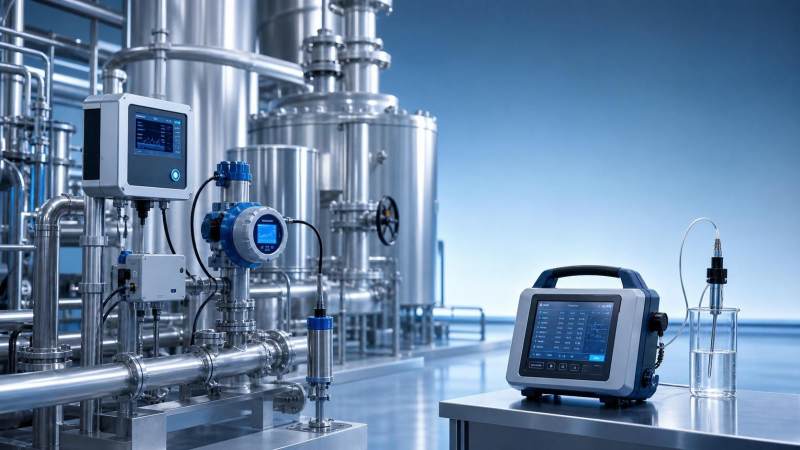
A spot check captures a condition at a single moment. It may be manual or scheduled, and it is often useful for routine verification, calibration support, and low-volatility processes.
Continuous monitoring creates a live stream of operational evidence. Sensors, analyzers, transmitters, software, and alarms work together to show not just a value, but a pattern over time.
This difference is critical. Risk is usually dynamic, not static. A single acceptable reading can hide instability, intermittent spikes, or a trend toward failure.
In other words, spot checks answer, “Was it acceptable then?” Continuous monitoring answers, “What is happening now, and where is it heading?”
Why continuous monitoring is gaining ground
Industry 4.0 has changed expectations around visibility. Operations are more connected, production tolerances are tighter, and downtime costs are more visible at board level.
At the same time, regulatory pressure has grown. Environmental emissions, lab traceability, power quality, and process safety increasingly require defensible records, not occasional snapshots.
This is where continuous monitoring becomes more than a technical upgrade. It becomes part of enterprise risk control, especially when a process has high consequence, fast-changing variables, or strict reporting obligations.
GIH’s coverage of CEMS, online water quality analyzers, smart grid diagnostics, PLC/DCS architectures, and precision metrology reflects the same direction. The market is rewarding systems that improve signal quality, shorten response time, and reduce blind spots.
Where spot checks still make sense
Spot checks are not obsolete. They remain practical where conditions change slowly, where the cost of instrumentation is disproportionate, or where direct manual confirmation adds value.
Examples include incoming material inspection, periodic dimensional verification, maintenance validation, or secondary confirmation of automated readings.
They are also useful in early-stage operations that are still mapping process behavior. A business does not need to digitize every measurement point immediately.
The limitation is clear, though. Spot checks reduce risk only when the interval between checks is shorter than the speed at which risk develops. In many critical systems, that condition does not hold.
Comparing risk reduction in practical terms
The better method depends on what kind of failure matters most. A missed event, a slow drift, and a sudden excursion do not behave the same way.
For high-stakes environments, continuous monitoring usually reduces risk better because it compresses the time between deviation and response. That shorter gap is often where the real financial and operational value sits.
Typical scenarios across the instrumentation economy
Industrial process control
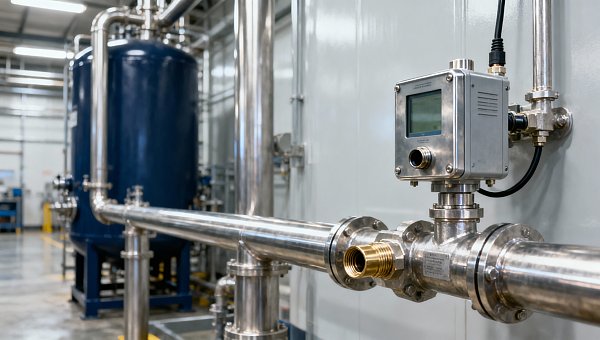
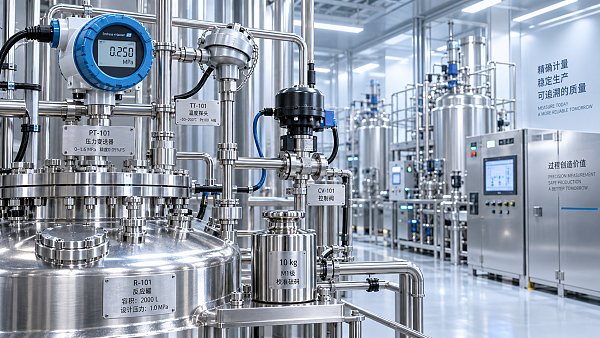
Pressure, temperature, flow, and level can shift faster than a manual round can catch. In reactors, pipelines, and automated lines, continuous monitoring supports alarm logic, closed-loop control, and predictive intervention.
Laboratory and life sciences
Sample integrity, equipment stability, and controlled environments depend on traceable conditions. Spot checks may confirm status, but continuous monitoring is stronger for incubators, storage, cleanrooms, and sensitive analytical workflows.
Environmental monitoring
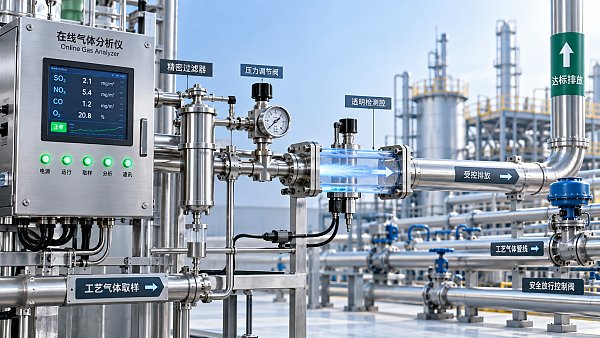
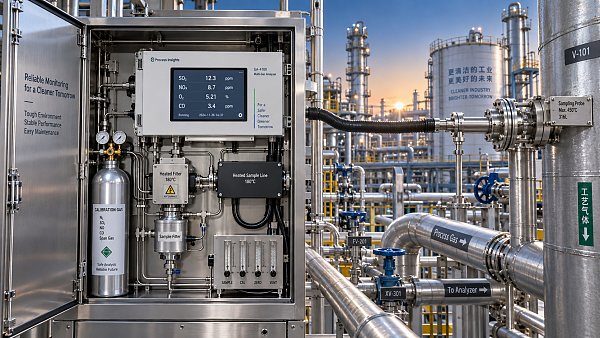
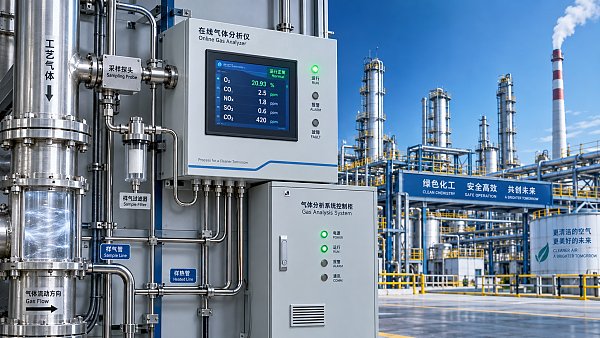
Emissions and discharge do not always exceed limits during inspection windows. That is why CEMS and online analyzers are central in sectors where compliance depends on sustained evidence rather than occasional readings.
Energy and smart grid systems
Voltage instability, thermal events, and asset health deterioration can escalate quickly. Continuous monitoring improves early warning and helps prevent wider system impact, especially in renewable integration and storage assets.
The hidden issue is not data volume, but decision quality
Some organizations hesitate because continuous monitoring appears to create too much data. That concern is valid, but the real issue is whether the data is structured into useful thresholds, alerts, and response workflows.
Poorly configured continuous monitoring can overwhelm teams. Well-designed systems do the opposite. They isolate critical variables, rank abnormal events, and support faster, more confident decisions.
This is where instrumentation intelligence matters. Sensor quality, calibration discipline, communication reliability, and standards alignment all affect whether monitoring becomes a trust signal or just another dashboard.
GIH’s focus on supplier research and technical trend analysis is relevant here. Risk reduction depends not only on choosing continuous monitoring, but on choosing components and architectures that can hold accuracy under real operating conditions.
How to decide what belongs on continuous monitoring
A practical approach is to classify measurement points by consequence, volatility, and recoverability. Not every variable deserves the same monitoring depth.
- Use continuous monitoring where a missed deviation can trigger safety, environmental, quality, or financial damage.
- Prefer it where process conditions move faster than a scheduled inspection cycle.
- Apply it when audit trails and standards compliance require continuous proof, not sampled confirmation.
- Keep spot checks for low-variability points, independent verification, or noncritical support measurements.
- Review whether the instrumentation stack can maintain accuracy, connectivity, and calibration traceability.
In many operations, the answer is not one method replacing the other. The strongest control model is often layered: continuous monitoring for critical parameters, plus targeted spot checks for validation and governance.
What a stronger next step looks like
If risk reduction is the goal, begin with the moments where delayed detection hurts most. Map the variables linked to unplanned downtime, compliance exposure, product loss, and safety escalation.
Then compare current spot-check intervals against how quickly those variables can move out of tolerance. That simple exercise often reveals whether continuous monitoring is optional, useful, or already overdue.
The final decision should also include supplier credibility, standard compatibility, lifecycle support, and data integration readiness. Better monitoring is not just a sensor purchase. It is an operational confidence system.
For organizations navigating instrumentation choices across process control, labs, environmental systems, and energy infrastructure, the most reliable path is to build a clear measurement hierarchy first. Once that is in place, the right balance between spot checks and continuous monitoring becomes much easier to judge.
Recommended for You
 How to verify accuracy claims for industrial quality analyzersVerify accuracy claims for industrial quality analyzers with calibration checks, independent testing, and clear acceptance criteria. Learn how to reduce risk and buy with confidence.
 How to calculate cooling loads for an industrial analyzer shelterSize industrial analyzer shelter cooling with confidence. Learn to calculate equipment heat, solar gains, and ventilation loads, then select HVAC capacity for reliable analyzer performance.
 How Do You Handle Analyzer Failure During an Environmental Audit?Learn how to handle analyzer failure during environmental compliance audit procedures. Protect evidence, verify data, and restore monitoring with this practical response guide.
 Do VOC Monitors Require Explosion-Proof Certification?Does VOC monitoring require explosion-proof certification? Learn when approval is needed, compare ATEX and IECEx, and choose the right monitor for your site.
 How sample conditioning affects accuracy in petrochemical analyzersImprove accuracy in petrochemical analyzers with smarter sample conditioning. Discover how phase control, filtration, and transport design prevent bias and deliver reliable process data.
 How to troubleshoot sensor drift in industrial gas detectorsIndustrial gas detectors showing sensor drift? Learn how to verify calibration gas, identify root causes, and determine when sensor replacement is needed for reliable monitoring.
 How to judge whether a competitive price reflects real valueCompetitive Price: learn how to compare scope, compliance, performance, and lifecycle costs to identify real value, reduce risk, and make smarter purchasing decisions.
 When custom gas analysis is the right fit for complex process streamsCustom gas analysis for complex process streams: learn when tailored sampling, interference control, and reliable measurement design deliver confident decisions.
 When does a laser gas analyzer meet stack emissions monitoring needs?Laser gas analyzer for stack emissions: learn when it delivers fast, reliable data, how to assess installation risks, and what to verify for CEMS compliance.
 How to select a hazardous gas analyzer for confined spacesHazardous gas analyzer selection for confined spaces: compare sensors, sampling, certifications, alarms, and maintenance to protect workers and choose with confidence.
 When is a single gas analyzer sufficient for workplace safety monitoring?Discover when a single gas analyzer delivers reliable workplace safety monitoring, and learn the key limits, calibration needs, and risks that require broader detection.
 How to choose an ambient gas analyzer for low-level leak detectionAmbient gas analyzer selection for low-level leak detection: compare sensitivity, cross-sensitivity, sampling design, alarms, and calibration for reliable site performance.
 How to tell when an oxygen sensor needs replacementOxygen sensor replacement signs explained: learn how live data, fault codes, wiring checks, and exhaust inspections pinpoint the real issue before you buy.
 How laser gas analyzers improve combustion control in steel furnacesLaser gas analyzer for steel industry applications delivers fast in-situ O₂ and CO data to optimize furnace combustion, cut fuel waste, and improve steel heating stability.
 How to verify whether explosion proof equipment meets site requirementsExplosion proof equipment verification made practical: match zones, gas or dust groups, temperature classes, certificates, and installation conditions for confident compliance.
 How industrial gas analysis helps detect contamination before releaseIndustrial Gas Analysis helps detect moisture, oil, oxygen, and toxic contaminants before release—protecting processes, ensuring compliance, and reducing costly risks.
 When is electrochemistry detection the right choice for water analysis?Electrochemistry detection for water analysis: learn when fast, reliable monitoring of ions, chlorine, pH, and more delivers actionable results.
 How industrial standards reduce quality risks in supplier selectionIndustrial Standard guidance helps quality and safety managers reduce supplier risks, verify compliance, strengthen traceability, and build resilient instrumentation supply chains.
 When does a multi-component system reduce installation complexity?Multi component systems reduce installation complexity when they eliminate field interfaces, streamline commissioning, and provide proven compatibility. Learn how to assess total cost and supplier accountability.
 How to size an industrial control shelter for outdoor equipmentIndustrial control shelter sizing guide: optimize layout, HVAC, access, safety, and expansion space for reliable outdoor equipment operations.
 How flue analysis helps verify combustion efficiencyFlue analysis verifies combustion efficiency by assessing O2, CO, CO2, and stack temperature to identify excess air, incomplete combustion, and heat losses.
 How to select industrial gas detectors for confined spacesIndustrial gas detectors for confined spaces: learn how to match sensors, sampling methods, alarms, and certifications to real atmospheric hazards.
 When does a laser oxygen analyzer outperform zirconia sensors?Laser oxygen analyzer vs. zirconia sensors: compare speed, selectivity, maintenance, gas chemistry, and installation needs to choose the right oxygen measurement solution.
 How to select a percent range analyzer for process measurementsPercent range analyzer selection made practical: compare accuracy, sample systems, calibration, gas matrix, integration, and lifecycle cost for reliable process measurements.
 How explosion proof analysis verifies safe equipment for hazardous areasExplosion proof analysis verifies hazardous-area equipment by matching certifications, temperature ratings, installation details, and inspection controls for safer compliance.
 When does fixed gas detection need point sensors instead of open-path monitoring?Fixed gas detection: discover when point sensors outperform open-path monitoring for predictable leaks, enclosed zones, local alarms, and safer design decisions.
 How to choose industrial metrology systems for tight-tolerance partsIndustrial metrology guide for tight-tolerance parts: compare CMMs, optical scanners, gauges, uncertainty, workflow, and traceable inspection strategies.
 How process metrology reduces measurement variation in productionProcess metrology reduces production measurement variation by improving traceability, uncertainty control, calibration, and reliable quality decisions.
 How to select an industrial monitoring analyzer for harsh environmentsIndustrial monitoring analyzer selection for harsh environments: evaluate sampling, durability, hazardous-area compliance, accuracy, maintenance, and data reliability.
 How calibration intervals affect test and measurement equipment accuracyTest and measurement equipment calibration intervals directly affect accuracy, risk, compliance, and uptime. Learn how to set evidence-based schedules that protect critical decisions.
 When does process gas monitoring need continuous measurement?Process gas monitoring needs continuous measurement when rapid changes threaten safety, quality, compliance, or uptime. Learn how to specify reliable, actionable monitoring systems.
 How to prevent false alarms in power plant instrumentationPower plant instrumentation guide: prevent false alarms with reliable signal checks, smarter alarm settings, mode-based control, and actionable operator responses.





Search Categories
Search Categories
- Smart Meters & Power Quality
- Transformer Gas Analyzers
- BESS Thermal Runaway Detectors
- Energy, Power & Smart Grid Monitoring
- Optical Profilers & CMM
- Ultrasonic & X-Ray NDT
- Calibration Standards
- Precision Metrology & NDT
- Water Quality Analyzers
- CEMS & VOCs Monitors
- Price Trends
- Import & Export Updates
- Market Trends
- Industry News
- Industry Insights
Latest Article
- How to verify accuracy claims for industrial quality analyzersVerify accuracy claims for industrial quality analyzers with calibration checks, independent testing, and clear acceptance criteria. Learn how to reduce risk and buy with confidence.Posted by:
- How to calculate cooling loads for an industrial analyzer shelterSize industrial analyzer shelter cooling with confidence. Learn to calculate equipment heat, solar gains, and ventilation loads, then select HVAC capacity for reliable analyzer performance.Posted by:
- How Do You Handle Analyzer Failure During an Environmental Audit?Learn how to handle analyzer failure during environmental compliance audit procedures. Protect evidence, verify data, and restore monitoring with this practical response guide.Posted by:
Please give us a message
