
Oxygen Detector Buying Guide: Sensor Life, Alarms, and Cost


Why does an oxygen detector purchase deserve more scrutiny than the price tag suggests?
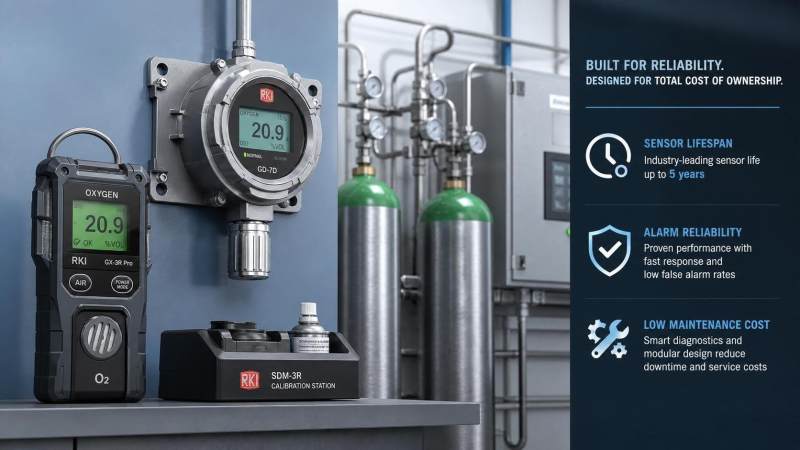
An oxygen detector looks simple on a quote sheet, yet its real value shows up during daily operation, audits, and emergency response.
That is why many buying mistakes start with a narrow comparison of unit price, alarm volume, or display type.
In practice, the better question is whether the oxygen detector will stay reliable across its intended duty cycle.
Industrial plants, laboratories, energy facilities, confined spaces, and medical support areas all create different oxygen risks.
Some locations face oxygen depletion from inert gases.
Others worry about oxygen enrichment, which can intensify combustion hazards.
A good oxygen detector buying guide therefore needs to cover sensor life, alarm logic, calibration demand, and ownership cost together.
This is also where industry intelligence matters.
Global Instrument Hub, or GIH, often frames instrumentation as the sensing layer behind safe automation and measurable control.
That perspective is useful here.
An oxygen detector is not an isolated gadget.
It is part of a broader decision about risk visibility, compliance confidence, and maintenance discipline.
How should you define the right oxygen detector for your site conditions?
Start with the hazard, not the catalog.
The same oxygen detector can perform very differently in a clean lab and a humid process area.
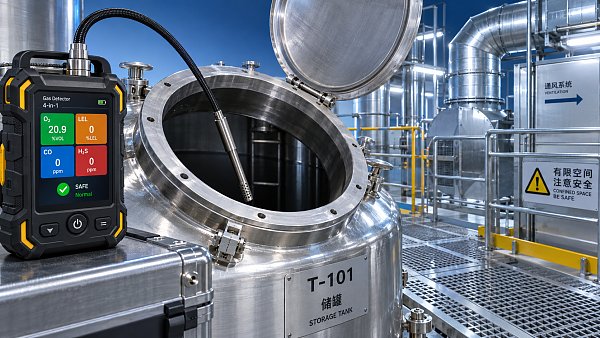
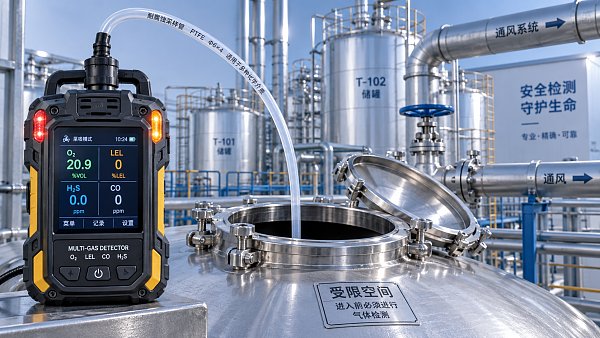
Portable units suit entry checks, maintenance routes, and temporary work.
Fixed detectors fit continuous monitoring near storage manifolds, tank farms, utility rooms, and enclosed production zones.
The next filter is environment.
Temperature swings, dust, washdown exposure, vibration, and cross-interference can shorten performance stability.
Needlepoint accuracy matters less if the sensor degrades too quickly in the field.
More useful screening questions include the following:
- Is the area mainly exposed to nitrogen, argon, carbon dioxide, or cryogenic systems?
- Will the oxygen detector be bump tested daily, weekly, or only during scheduled maintenance?
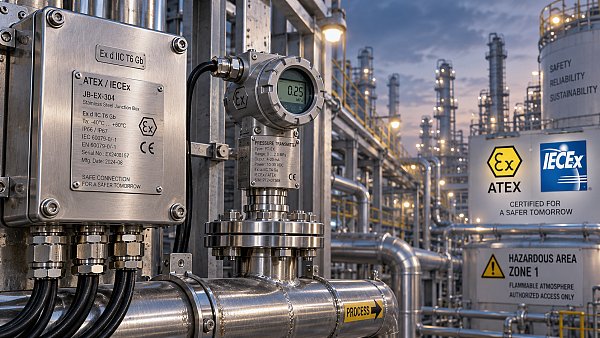
- Does the site require ATEX, IECEx, or other hazardous area approvals?
- Will alarm data need to integrate with PLC, DCS, or building management systems?
When these questions are answered early, supplier comparisons become more meaningful and less sales-driven.
Sensor life: what really affects it, and why do datasheets often mislead?
This is one of the most searched oxygen detector questions for good reason.
Sensor life shapes replacement cycles, spare planning, downtime risk, and annual maintenance budgets.
Most oxygen detector models use electrochemical sensors.
These are proven, responsive, and cost-effective, but they are consumable components.
The advertised life may look attractive, yet it usually reflects controlled conditions.
Actual service life changes with oxygen exposure patterns, humidity, temperature, contaminant load, and storage conditions.
A detector stored poorly can lose useful life before installation.
A detector used in hot, wet, or chemically aggressive areas may need earlier replacement than planned.
A practical way to compare options is to move from headline life to usable life.
The strongest proposals usually include replacement assumptions, not just warranty language.
That detail often separates a credible instrumentation partner from a basic reseller.
Are alarm settings and response features more important than display accuracy?
Very often, yes.
An oxygen detector protects people through timely warning, not through impressive brochure numbers alone.
Alarm design should match site procedures, noise levels, visibility, and escalation rules.
A busy mechanical room may need bright visual alarms and strong vibration support for portable devices.
A fixed system may need relays, analog output, event logs, and remote fault alerts.
Response time also deserves attention.
A slower alarm in a rapidly changing confined space can undermine the purpose of the oxygen detector.
At the same time, over-sensitive settings may trigger nuisance alarms that reduce trust in the device.
A balanced review usually checks:
- Low and high alarm thresholds, plus fault alarms
- Audible, visual, and vibration alarm effectiveness
- Response time under realistic sampling conditions
- Data logging, event memory, and connectivity needs
- Fail-safe behavior during low battery or sensor fault
This is especially relevant in Industry 4.0 environments, where alarm information may feed broader safety or maintenance workflows.
GIH often emphasizes that measurement devices create value when they become actionable signals.
For an oxygen detector, alarm usability is that action layer.
What hidden costs usually appear after the oxygen detector arrives on site?
The purchase order rarely captures the full cost picture.
That is why cost comparisons based only on unit pricing can become misleading within the first year.
The hidden costs are usually operational.
Calibration gas, bump test stations, spare sensors, replacement batteries, docking systems, and technician time all add up.
A lower-cost oxygen detector may become expensive if it needs frequent calibration or has short sensor life.
Lead time is another overlooked factor.
If replacement sensors take weeks to arrive, operations may need extra spare inventory or temporary workarounds.
The smarter comparison is total cost of ownership over two to five years.
A simple checklist helps keep quotes honest:
- Initial device price and included accessories
- Sensor replacement interval and unit cost
- Calibration frequency and gas consumption
- Battery life, charging method, and replacement cost
- Software, docking, or data export fees
- Service response time and local support availability
When supplier research is handled rigorously, these cost elements are easier to verify before contract signing.
That is where supply chain intelligence from platforms like GIH can support clearer benchmarking.
Which buying mistakes show up most often, and how can they be avoided early?
One common mistake is choosing a general-purpose oxygen detector for a highly specific environment.
Another is assuming compliance marks automatically mean application fit.
Certifications matter, but they do not replace application review.
A third mistake is ignoring the service model.
An oxygen detector with limited local support can create delays far beyond its hardware value.
More subtle errors include overbuying advanced features that never get used, or underbuying data functions needed for audits.
A sensible buying path usually includes these checks:
- Map the actual oxygen risk, including depletion and enrichment scenarios
- Match portable or fixed design to monitoring duration
- Confirm approvals, ingress protection, and environmental tolerance
- Request maintenance schedules with realistic labor assumptions
- Check spare availability, training support, and documentation quality
In other words, the best oxygen detector choice usually comes from disciplined elimination, not from the longest feature list.
So what does a confident oxygen detector shortlist look like?
A strong shortlist is easy to defend internally because it links technical fit with operating cost and support reliability.
It does not rely on one metric.
Instead, it balances sensor life, alarm performance, environmental suitability, compliance, and supply continuity.
For most teams, the next step is to standardize an evaluation sheet before requesting final quotations.
Include expected duty conditions, calibration approach, target replacement cycle, alarm requirements, and spare strategy.
That structure reduces spec ambiguity and makes supplier responses easier to compare.
An oxygen detector is ultimately a small device with large consequences.
When the selection process reflects real field conditions and lifetime cost, the result is usually safer operation and a cleaner return on investment.
If deeper market validation is needed, use industry intelligence sources that understand instrumentation, compliance, and supplier credibility together.
That is often the difference between a fast purchase and a well-grounded one.
Recommended for You
 How to verify accuracy claims for industrial quality analyzersVerify accuracy claims for industrial quality analyzers with calibration checks, independent testing, and clear acceptance criteria. Learn how to reduce risk and buy with confidence.
 How to calculate cooling loads for an industrial analyzer shelterSize industrial analyzer shelter cooling with confidence. Learn to calculate equipment heat, solar gains, and ventilation loads, then select HVAC capacity for reliable analyzer performance.
 Industrial Safety vs. Emission Monitoring: What Are the Differences?What are the main differences between industrial safety and emission monitoring? Compare goals, sensors, response times, and compliance needs to choose the right systems for your facility.
 Is Remote Monitoring Worth the Cost for Small Emission Sources?Is it worth investing in remote monitoring for small emission sources? Compare costs, compliance needs, and potential savings to choose the right solution for your operation.
 How Do You Handle Analyzer Failure During an Environmental Audit?Learn how to handle analyzer failure during environmental compliance audit procedures. Protect evidence, verify data, and restore monitoring with this practical response guide.
 Do VOC Monitors Require Explosion-Proof Certification?Does VOC monitoring require explosion-proof certification? Learn when approval is needed, compare ATEX and IECEx, and choose the right monitor for your site.
 How sample conditioning affects accuracy in petrochemical analyzersImprove accuracy in petrochemical analyzers with smarter sample conditioning. Discover how phase control, filtration, and transport design prevent bias and deliver reliable process data.
 How to troubleshoot sensor drift in industrial gas detectorsIndustrial gas detectors showing sensor drift? Learn how to verify calibration gas, identify root causes, and determine when sensor replacement is needed for reliable monitoring.
 How to judge whether a competitive price reflects real valueCompetitive Price: learn how to compare scope, compliance, performance, and lifecycle costs to identify real value, reduce risk, and make smarter purchasing decisions.
 When custom gas analysis is the right fit for complex process streamsCustom gas analysis for complex process streams: learn when tailored sampling, interference control, and reliable measurement design deliver confident decisions.
 When does a laser gas analyzer meet stack emissions monitoring needs?Laser gas analyzer for stack emissions: learn when it delivers fast, reliable data, how to assess installation risks, and what to verify for CEMS compliance.
 How to select a hazardous gas analyzer for confined spacesHazardous gas analyzer selection for confined spaces: compare sensors, sampling, certifications, alarms, and maintenance to protect workers and choose with confidence.
 When is a single gas analyzer sufficient for workplace safety monitoring?Discover when a single gas analyzer delivers reliable workplace safety monitoring, and learn the key limits, calibration needs, and risks that require broader detection.
 How to choose an ambient gas analyzer for low-level leak detectionAmbient gas analyzer selection for low-level leak detection: compare sensitivity, cross-sensitivity, sampling design, alarms, and calibration for reliable site performance.
 How to tell when an oxygen sensor needs replacementOxygen sensor replacement signs explained: learn how live data, fault codes, wiring checks, and exhaust inspections pinpoint the real issue before you buy.
 How laser gas analyzers improve combustion control in steel furnacesLaser gas analyzer for steel industry applications delivers fast in-situ O₂ and CO data to optimize furnace combustion, cut fuel waste, and improve steel heating stability.
 How to verify whether explosion proof equipment meets site requirementsExplosion proof equipment verification made practical: match zones, gas or dust groups, temperature classes, certificates, and installation conditions for confident compliance.
 How industrial gas analysis helps detect contamination before releaseIndustrial Gas Analysis helps detect moisture, oil, oxygen, and toxic contaminants before release—protecting processes, ensuring compliance, and reducing costly risks.
 When is electrochemistry detection the right choice for water analysis?Electrochemistry detection for water analysis: learn when fast, reliable monitoring of ions, chlorine, pH, and more delivers actionable results.
 How industrial standards reduce quality risks in supplier selectionIndustrial Standard guidance helps quality and safety managers reduce supplier risks, verify compliance, strengthen traceability, and build resilient instrumentation supply chains.
 When does a multi-component system reduce installation complexity?Multi component systems reduce installation complexity when they eliminate field interfaces, streamline commissioning, and provide proven compatibility. Learn how to assess total cost and supplier accountability.
 How to size an industrial control shelter for outdoor equipmentIndustrial control shelter sizing guide: optimize layout, HVAC, access, safety, and expansion space for reliable outdoor equipment operations.
 How flue analysis helps verify combustion efficiencyFlue analysis verifies combustion efficiency by assessing O2, CO, CO2, and stack temperature to identify excess air, incomplete combustion, and heat losses.
 How to select industrial gas detectors for confined spacesIndustrial gas detectors for confined spaces: learn how to match sensors, sampling methods, alarms, and certifications to real atmospheric hazards.
 When does a laser oxygen analyzer outperform zirconia sensors?Laser oxygen analyzer vs. zirconia sensors: compare speed, selectivity, maintenance, gas chemistry, and installation needs to choose the right oxygen measurement solution.
 How to select a percent range analyzer for process measurementsPercent range analyzer selection made practical: compare accuracy, sample systems, calibration, gas matrix, integration, and lifecycle cost for reliable process measurements.
 How explosion proof analysis verifies safe equipment for hazardous areasExplosion proof analysis verifies hazardous-area equipment by matching certifications, temperature ratings, installation details, and inspection controls for safer compliance.
 When does fixed gas detection need point sensors instead of open-path monitoring?Fixed gas detection: discover when point sensors outperform open-path monitoring for predictable leaks, enclosed zones, local alarms, and safer design decisions.
 How to choose industrial metrology systems for tight-tolerance partsIndustrial metrology guide for tight-tolerance parts: compare CMMs, optical scanners, gauges, uncertainty, workflow, and traceable inspection strategies.
 How process metrology reduces measurement variation in productionProcess metrology reduces production measurement variation by improving traceability, uncertainty control, calibration, and reliable quality decisions.
 How to select an industrial monitoring analyzer for harsh environmentsIndustrial monitoring analyzer selection for harsh environments: evaluate sampling, durability, hazardous-area compliance, accuracy, maintenance, and data reliability.
 How calibration intervals affect test and measurement equipment accuracyTest and measurement equipment calibration intervals directly affect accuracy, risk, compliance, and uptime. Learn how to set evidence-based schedules that protect critical decisions.



Search Categories
Search Categories
- Smart Meters & Power Quality
- Transformer Gas Analyzers
- BESS Thermal Runaway Detectors
- Energy, Power & Smart Grid Monitoring
- Optical Profilers & CMM
- Ultrasonic & X-Ray NDT
- Calibration Standards
- Precision Metrology & NDT
- Water Quality Analyzers
- CEMS & VOCs Monitors
- Price Trends
- Import & Export Updates
- Market Trends
- Industry News
- Industry Insights
Latest Article
- How to verify accuracy claims for industrial quality analyzersVerify accuracy claims for industrial quality analyzers with calibration checks, independent testing, and clear acceptance criteria. Learn how to reduce risk and buy with confidence.Posted by:
- How to calculate cooling loads for an industrial analyzer shelterSize industrial analyzer shelter cooling with confidence. Learn to calculate equipment heat, solar gains, and ventilation loads, then select HVAC capacity for reliable analyzer performance.Posted by:
- Industrial Safety vs. Emission Monitoring: What Are the Differences?What are the main differences between industrial safety and emission monitoring? Compare goals, sensors, response times, and compliance needs to choose the right systems for your facility.Posted by:
Please give us a message
